

OBD-II Code B2420: A Comprehensive Guide for All Makes
What B2420 means, why it triggers, and how to fix it. This code has critically different meanings for Nissan, Ford, Chevrolet, Toyota, and Mitsubishi.
- Code B2420 has completely different meanings across brands: it flags a failed power liftgate latch on Nissan/Infiniti, a broken passenger power seat on Chevrolet, or a dead radio circuit on Mitsubishi.
- On Nissan and Infiniti SUVs, B2420 almost exclusively points to a failed 'close switch' inside the power liftgate latch assembly, requiring a $300-$500 replacement.
- While safe to drive, a B2420 liftgate fault creates a parasitic battery drain that kills a healthy 12V battery in under 3 days if left unaddressed.
- Basic $20 engine code readers cannot see B2420; you must use an advanced OBD-II scanner capable of reading Body Control Module (BCM) codes to diagnose and clear this fault.
- Before buying replacement parts, perform a free 15-minute hard reset by disconnecting the negative battery terminal to clear potential software glitches.
What Does B2420 Mean?
Code B2420 is a manufacturer-specific Body Control Module (BCM) code with distinct meanings based on the vehicle brand. On Nissan and Infiniti vehicles, it indicates a fault in the power liftgate system, specifically the 'close switch' that confirms the trunk is latched. The control module detects an incorrect switch signal and disables the power function for safety. On other vehicles, this code points to entirely different problems: an invalid liftgate position sensor signal on Fords, a passenger power seat motor circuit failure on Chevrolets, an internal radio fault on Mitsubishis, or an adaptive headlight ECU malfunction on Toyotas.
Technical definition: The formal definition of B2420 varies by manufacturer. For Nissan/Infiniti, the Back Door Control Unit (BDCU) detects the 'CLOSE SW' (close switch) signal failed to change from ON to OFF after multiple liftgate operations. For Ford/Lincoln, it means 'POWER LIFTGATE/TRUNK SENSOR 2 INVALID', indicating a position sensor fault. For Chevrolet, it flags a 'Passenger Seat Motor Circuit Failure', typically for the lumbar or vertical adjustment motor. For Mitsubishi, it indicates a 'Power integrated circuit' malfunction where the radio detects improper voltage sent to the speakers. For Toyota, it signifies an 'AFS ECU Malfunction'.
Can I Drive With B2420?
Yes, But With Caution. The vehicle remains safe to drive as B2420 does not affect core engine, transmission, or braking systems. However, secondary risks exist. For liftgate failures (Nissan, Ford), a faulty latch combined with weak struts causes the gate to fall unexpectedly, posing an injury risk. For power seat failures (Chevrolet), a stuck seat compromises driver visibility and control. Repair the issue promptly to restore full functionality and eliminate these non-critical safety risks.
Common Causes
- Faulty Power Liftgate Latch Assembly (Nissan/Infiniti) (Very Common) — The position switch is integrated directly into the latch mechanism. The entire assembly fails as a single unit and is the absolute most frequent cause of this code on vehicles like the Nissan Armada, Rogue, and Infiniti QX56. 🎬 Watch: This DIY fix can restore your Rogue's liftgate function.
- Low or Unstable Battery Voltage (Common) — Body control modules are highly sensitive to voltage drops. A weak battery provides enough power to start the engine but fails to sustain the high current required by power liftgates or seats, causing the module to log a B2420 fault.
- Damaged Wiring or Corroded Connector (Common) — The wiring harness passing through the flexible rubber boot between the body and liftgate suffers constant bending. Wires break internally, and connectors corrode from moisture, causing complete signal loss.
- Faulty Power Seat Motor or Switch (Chevrolet) (Common) — On Chevrolet vehicles, this code isolates a failure in the passenger seat. The root cause is typically a spilled liquid shorting the adjustment switch, a severed wire under the seat track, or a burned-out adjustment motor.
- Weak Liftgate Support Struts (Misdiagnosis) (Common) — Gas struts that lift the gate weaken over time. The extra strain on the liftgate motor triggers the control unit's obstruction sensor, causing it to stop and reverse. This creates identical symptoms to a B2420 latch failure and is frequently misdiagnosed.
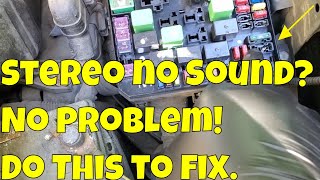
- Failed Audio Unit (Mitsubishi) (Very Common) — On applicable Mitsubishi models, this code points exclusively to an internal failure of the radio/CD player's power integrated circuit, requiring a complete replacement of the head unit. 🎬 See how to troubleshoot a Mitsubishi stereo with no sound.
- Control Module Software Glitch or Failure (Less Common) — The control module itself (BDCU or RGTM) occasionally loses calibration or suffers a software error. On Ford vehicles, a known software bug in the RGTM mimics a hardware failure and requires a dealer-level reprogramming update.
Symptoms
- Power liftgate/trunk will not open or close automatically — The primary symptom is the complete failure of the power function. The liftgate must be opened and closed manually.
- Passenger power seat is inoperative — For Chevrolet models, the passenger seat refuses to adjust in one or more directions (e.g., up/down, lumbar).
- Liftgate starts to move then stops or reverses — The system attempts to operate but stops immediately as it detects an inconsistent switch signal or an obstruction from weak struts.
- Multiple warning beeps from the liftgate — The vehicle emits a rapid series of warning beeps to indicate a fault when pressing any liftgate control button.
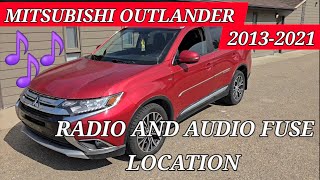
- No sound from car radio/audio system — On affected Mitsubishi vehicles, the radio powers on but produces zero audio output. 🎬 Check these Mitsubishi radio fuse locations before replacing the unit.
- BCM-related Diagnostic Trouble Code (DTC) is stored (scan-tool only — no driver-felt sign) — The Body Control Module stores the B2420 code, readable only by an advanced OBD-II scanner capable of accessing body systems.
Diagnostic Flowchart
Tap your situation to follow the diagnostic path that matches what you're seeing on this code.
Common Fixes & Costs
- Replace Power Liftgate Latch Assembly
— Parts: $150-$250, Labor: $150-$250, ~1.5 hr book time
(Intermediate)
: OEM
: OEM - Replace Power Seat Motor or Switch
— Parts: $50-$150, Labor: $130-$200, ~1.2 hr book time
(Intermediate)
: OEM - Repair Damaged Wiring Harness — Parts: $10-$30, Labor: $150-$400, ~2.0 hr book time (Advanced)
- Perform Liftgate Initialization/Relearn Procedure — Parts: $0, Labor: $0-$125, ~0.5 hr book time (DIY)
- Reprogram or Replace Control Module — Parts: $0-$600, Labor: $100-$200, ~1.0 hr book time (Professional)
Used vs. New Parts: Buying Guide
When a used part is worth it: For a power liftgate latch assembly, a used OEM part from a reputable auto recycler is a highly sensible option. These parts are sourced from low-mileage vehicles where the latch itself is undamaged.
Donor-vehicle mileage cap: roughly under 80000 miles for the part to have meaningful remaining life.
Donor quality checklist:
- Verify the part number on the used component exactly matches the original.
- Purchase from a supplier offering a 90-day warranty.
- Avoid parts with visible corrosion on the electrical connector pins.
Decision logic:
- If The vehicle is older (10+ years) and budget is a primary concern → A used OEM part offers the best value, providing original fitment at a 50% discount.
- If A new aftermarket part (e.g., Dorman) is similarly priced to a used OEM part → Buy the new aftermarket part for the longer 1-year warranty.
- If The failure is a control module requiring programming → Buy a new OEM part. Used modules are often 'locked' to the donor vehicle's VIN and cannot be reprogrammed.
Warranty tradeoff: Used parts carry a 30-90 day functional warranty. New aftermarket parts offer 1-year warranties. New OEM parts carry a 12-month manufacturer warranty.
Worst-case if a used part fails: $150-$250 (If a used part fails, you pay the labor cost again to install a replacement.)
What Happens If You Wait — Timeline
- 0-1 month: The code sets and the associated feature (power liftgate, power seat) stops working. This is an inconvenience with no immediate risk of further damage. (MPG impact: 0%% · Added cost: $0)
- 1-6 months: A faulty latch switch fails to send the 'closed' signal, preventing the vehicle's computers from entering sleep mode. This persistent parasitic drain kills the 12V battery. (MPG impact: 0%% · Added cost: $150-$250 (Cost of a replacement 12V battery))
- 6-12 months: Continued manual operation of a broken power liftgate causes premature wear on the manual handle, hinges, and gas struts. (MPG impact: 0%% · Added cost: $100-$300 (Cost to replace damaged mechanical liftgate components))
Cost of Not Fixing It
- Immediate: Loss of convenience feature (power liftgate, power seat). For liftgates, there is a risk of the heavy door falling unexpectedly if struts are weak. (Added cost: 0)
- 1-6 months: A faulty latch switch fails to send the 'closed' signal, causing a persistent parasitic battery drain that kills the 12V battery. (Added cost: $150-$250 (Cost of a replacement 12V battery))
- 6+ months: Continued manual operation of a broken power liftgate causes premature wear and physical damage to the manual handle, hinges, and gas struts. (Added cost: $250-$800 (Cost to replace damaged mechanical liftgate components))
Diagnosis Steps
- Verify the Complaint and Check Basics
Confirm the symptom. For a liftgate, ensure the master power switch on the dash is 'ON'. For a power seat, check for physical obstructions jammed in the seat tracks.
Tools: None (Beginner) - Scan for Codes with a Capable Tool
Use an OBD-II scanner capable of reading Body ('B') codes to confirm B2420 is active. Generic engine code readers cannot see this fault.
Tools: OBD-II Scanner (with BCM capability) (Beginner) - Perform a Hard Reset and Relearn
Disconnect the negative battery terminal for 15 minutes to clear software glitches. Reconnect, manually close the liftgate fully, and cycle the power button once to re-initialize the module limits.
Tools: 10mm Wrench (Beginner) - Inspect the Relevant Wiring Harness
Visually inspect the wiring inside the rubber boot between the body and liftgate, or under the power seat. Look for pinched, chafed, or broken wires. Gently pull individual wires to check for hidden internal breaks.
Tools: Flashlight, Trim Removal Tools (Intermediate) - Monitor Live Data for Switch Status
Using an advanced scan tool, monitor the live data for the 'Close Switch'. Manually operate the latch with a screwdriver. If the switch status does not change from 'Open' to 'Closed', the latch assembly has failed.
Tools: Advanced Bi-directional Scan Tool, Screwdriver (Advanced) - Test Component Circuit (Latch or Seat)
Disconnect the component connector. For a seat, check for 12V at the motor while pressing the switch; if voltage is present but the motor doesn't run, the motor is bad. For a latch, test the switch pins for continuity changes when manually closing the latch.
Tools: Multimeter, Wiring Diagram (Advanced) - Check Module Power and Ground
If the component tests good, verify the control module (RGTM/BDCU) is receiving 12V power and has a solid ground connection using a multimeter. A bad ground prevents the entire module from operating.
Tools: Multimeter, Wiring Diagram (Advanced)
When This Code Triggers (Freeze-Frame Conditions)
- Control Module Voltage: 11.5V - 14.5V (The code sets immediately when voltage drops below the threshold required to operate the high-current liftgate or seat motor.)
- Commanded State: Active/On (The fault logs at the exact moment the driver commands the system to operate via a button press.)
- System Status: Fault (Captured when the control module detects a mismatch between the command and the expected outcome, such as a switch failing to change state.)
Related Codes
- B2417 — Diagnostic Distinction (Nissan/Infiniti): B2417 points specifically to a fault in the anti-pinch safety sensor strip on the edge of the liftgate. If you have B2420, the problem is in the latch mechanism, not the pinch strip.
- B2422 — Diagnostic Distinction (Nissan/Infiniti): B2422 is a logic fault triggered because the stuck close switch (B2420) tells the module the gate is closed while other sensors say it is open. Diagnosing B2420 first resolves B2422.
- B2409 — Diagnostic Distinction (Nissan/Infiniti): B2409 indicates a fault within the Control Module itself. If you have only B2420, the latch/wiring is the suspect. If you have B2409, the module is the root cause.
- P0705 — Symptom Overlap (All Makes): A faulty Transmission Range Sensor prevents the power liftgate from operating because the module requires a 'Park' signal. This mimics a B2420 fault symptom perfectly.
Climate & Environmental Factors
- Cold Weather: Low temperatures cause gas-filled support struts to lose pressure, forcing the liftgate motor to work harder and trip the obstacle detection system. Freezing conditions also drop battery performance by 50%, providing insufficient voltage for high-current motors.
- High Humidity / Rain: Water seeps into the liftgate latch mechanism, wiring harness connectors, or the flexible boot between the body and liftgate, causing immediate short circuits and long-term corrosion.
How to Talk to a Mechanic About This Code
Say this: "I have a B2420 code on my vehicle and the power feature is not working. Based on my research, the issue is often the liftgate latch switch or power seat wiring harness. Please start the diagnosis there to avoid unnecessary costs."
This signals you are an informed consumer. It directs the technician toward the most likely point of failure, saving diagnostic time and preventing them from immediately suggesting the most expensive part.
Avoid saying:
- 'My trunk is broken, can you fix it?'
- 'The car is acting weird, please check it out.'
- 'Just do whatever it takes to fix it.'
Questions to ask before authorizing the repair:
- For a Nissan/Infiniti: Did you confirm the 'close switch' signal is failing using a scan tool's live data? Have you ruled out weak struts?
- For a Chevrolet: Did you test for voltage at the non-working motor's connector before condemning the motor?
- For a Ford/Lincoln: Have you checked for any Technical Service Bulletins (TSBs) related to a software update for the liftgate module?
- Can you provide a written estimate separating the cost of parts and labor?
Where to Take It: Dealer vs Independent vs Chain
- Dealer:
Best for: Ford/Lincoln vehicles where a software reprogram (TSB) is the likely fix., Vehicles still under the original or an extended warranty., Complex network issues (Hyundai's 'Lost Communication' definition).
Downsides: Highest labor rates, often 1.5-2x more than independent shops., More likely to replace an entire assembly rather than perform a smaller wiring repair. (Typical cost: +50% vs. baseline) - Independent Shop:
Best fit for most common B2420 scenarios (Nissan latch, Chevy seat). Their lower labor rates and willingness to perform targeted repairs offer the best value.
Best for: Out-of-warranty Nissan/Infiniti liftgate latch replacements., Out-of-warranty Chevrolet power seat diagnosis., General electrical diagnosis where cost is a major factor.
Downsides: May lack access to the latest manufacturer-specific software for reprogramming modules. (Typical cost: +0% vs. baseline) - Chain Shop:
AVOID. This type of electrical diagnosis is outside the scope of most chain shops and carries a high risk of misdiagnosis.
Best for: Simple maintenance like oil changes and tires, not diagnostics.
Downsides: Technicians lack the specialized diagnostic tools and experience for body electrical codes., Business model encourages upselling unnecessary services. (Typical cost: -10% vs. baseline)
When to Walk Away From the Repair
If the estimated repair cost exceeds 40% of the car's current private-party value, reconsider the repair. Since a B2420 fix is typically under $600, it rarely triggers this rule on its own.
- Car worth $8000, fix is $500: Fix it. The repair cost is less than 10% of the vehicle's value and restores a key feature.
- Car worth $4000, fix is $2100: Walk away. The total repair cost (a $500 B2420 fix plus a $1600 transmission issue) exceeds 50% of the car's value.
What Scan Tool You Need for This Code
Minimum: A scanner that reads and clears codes from the Body Control Module (BCM), listed as 'ABS/SRS/BCM' capability.
A basic $20 engine code reader will NOT see the B2420 code. This fault is stored in the Body Control Module, not the Engine Control Module.
Budget: BlueDriver Pro or Ancel BD310 (~$100) — Reads and clears BCM codes and displays live data on your smartphone. Sufficient to confirm the code and check basic switch status.
Mid-range: Foxwell NT510 Elite or Autel MaxiPRO MP808 (~$150) — Provides bidirectional control. Allows you to command the liftgate motor or individual seat motors directly from the tool to isolate the failure.
Professional: Autel MaxiCOM MK808 (~$450) — Offers full dealer-level bidirectional controls, module coding, and advanced diagnostics. Overkill for a DIYer but standard for a repair shop.
Rent vs buy: For a one-time fix, check if your local AutoZone offers a capable scanner through their Loan-A-Tool program. Otherwise, buying a mid-range scanner is a wise investment.
How to Clear the Code After You Fix It
- Use a BCM-capable OBD-II scan tool to clear the diagnostic trouble code (DTC).
- Perform a hard reset by disconnecting the negative battery terminal for 15 minutes to discharge control module capacitors.
- Perform the manufacturer-specific initialization procedure, manually closing the liftgate and power-cycling it once.
Drive cycle (~15 minutes): A specific drive cycle is not required for Body Control Module codes. After clearing the code, operate the affected component (power liftgate, power seat) through three full cycles to confirm the repair.
Readiness monitors affected: None
Watch out for:
- Using a basic engine code reader that cannot access or clear codes from the Body Control Module.
- Forgetting to perform the system-specific initialization procedure after replacing a part.
- Assuming disconnecting the battery clears the code; an active clearing with a scan tool is required.
Will This Fail Emissions / State Inspection?
No — by itself this code doesn't fail OBD inspection (but it can keep readiness monitors from setting, which causes a separate fail).
- California: This code will NOT cause a smog check failure. California's test ignores Body ('B') codes because they do not illuminate the Check Engine Light or affect emissions.
- General Note: While B2420 passes emissions tests, states with strict safety inspections (like Virginia or Massachusetts) fail vehicles if a liftgate refuses to latch shut securely.
Most Commonly Affected Vehicles
- Infiniti QX56 / QX80 (2011-2015) — The internal close switch in the latch assembly fails constantly. TSB ITB14-054 directly addresses code B2420 for this issue.
- Nissan Armada (2004-2015) — Shares the same platform and liftgate components as the Infiniti QX56. Check TSB NTB16-071 regarding a loose motor linkage bolt causing identical symptoms.
- Nissan Rogue (2014-2020) — Sets B2420 due to latch failure or wiring issues in the harness boot. A weak 12V battery is also a primary trigger on this model.
- Ford / Lincoln Explorer, Aviator, MKX (2011-2020) — Caused by a software issue in the Rear Gate Trunk Module (RGTM) per TSBs SSM 49914 and SSM 49015, requiring dealer reprogramming.
- Chevrolet Equinox, Traverse, Impala (2010-2017) — Indicates 'Passenger Seat Motor Circuit Failure.' Diagnosis reveals a bad switch, severed wiring under the seat, or a failed lumbar motor.
- Hyundai Elantra, Sonata (2011-2018) — Signifies 'Lost Communication with ECM/PCM,' indicating a complex CAN bus network problem, not a specific component failure.
- Mitsubishi Outlander, Lancer (2007-2013) — Points to an internal 'Power integrated circuit' fault in the radio/CD player unit, causing a complete no-sound condition.
- Toyota / Lexus Sienna, RX350 (2004-2010) — Indicates an internal malfunction of the adaptive headlight control ECU, requiring module replacement.
Manufacturer-Specific Notes
- Nissan / Infiniti: B2420 is almost exclusively tied to the power liftgate close switch inside the latch. Before replacing the latch, always rule out weak lift struts and the loose motor linkage bolt (TSB NTB16-071).
- Ford / Lincoln: The definition 'Power Liftgate/Trunk Sensor 2 Invalid' is frequently a software issue. Check for TSBs related to RGTM reprogramming before replacing any physical motors or sensors.
- Chevrolet: This code isolates a passenger seat motor circuit. The main wiring connector under the seat frequently becomes loose or corroded, requiring a harness repair rather than a motor replacement.
- Hyundai: A 'Lost Communication' code is a network issue, not a component failure. Diagnosis requires checking the CAN bus wiring for shorts between the body modules and the engine computer.
- Mitsubishi: This code has absolutely nothing to do with body components. It specifically means the radio/CD player detected an internal power supply fault, requiring replacement of the audio unit.
Real Owner Stories
2013 Infiniti QX56 with power liftgate failure
The power liftgate buttons on the dash, key fob, and door stopped working. The power-latching function also failed during manual closing.
What they tried:
- Checked all related fuses.
- Replaced the expensive liftgate actuator and motor assembly.
Outcome: The owner took the vehicle to an Infiniti dealership. Technicians diagnosed a faulty power liftgate latch assembly, which contains the internal 'close switch'. Replacing the $250 latch assembly (OEM Part #90502-1LA0A) resolved the B2420 code.
Lesson: For Nissan/Infiniti, B2420 specifically points to the latch's internal switch. Never assume the expensive lift motor is bad; the latch assembly is the actual failure point.
2012 Chevrolet Equinox with inoperative driver's power seat
The driver's seat refused to move backward. The owner took it to a dealership for repair.
What they tried:
- The dealer diagnosed a bad lower seat track and replaced the entire assembly for $450.
Outcome: After replacing the seat track, the problem remained. Further diagnosis revealed the pins in the main wiring harness connector under the seat were loose. Replacing the unrepairable harness fixed the issue permanently.
Lesson: On Chevrolet models, power seat issues stem frequently from wiring problems under the seat. Thoroughly inspect the main connector for loose pins or breaks before replacing expensive motors.
2017 Nissan Rogue with sudden liftgate failure
The power liftgate stopped opening electronically. The only access was via the manual release button on the hatch.
What they tried:
- Attempted a hard reset by disconnecting the battery.
- Considered replacing the liftgate module.
Outcome: The owner tested the vehicle's main battery and found it was 8 years old and failing under load. Replacing the weak 12V battery immediately restored all power liftgate functions.
Lesson: Power liftgate modules are extremely sensitive to low voltage. If your liftgate acts up and the battery is over 4 years old, test the battery's health before replacing liftgate components.
2020 Ford Explorer with intermittent liftgate operation
The power liftgate opened partially by itself and triggered false anti-theft alarms.
What they tried:
- The owner planned to replace the liftgate motor.
Outcome: The problem was identified as a known software error in the Rear Gate Trunk Module (RGTM). Ford issued TSB SSM 49015 for this exact issue. A simple software reprogram performed by the dealer fixed the vehicle.
Lesson: For Ford/Lincoln vehicles, always check for Technical Service Bulletins (TSBs) before replacing parts. Software glitches frequently cause B2420 and require a dealer update, not hardware.
How to Prevent This Code From Triggering
- Lubricate Liftgate and Door Latch Mechanisms (Once per year) — Factory grease dries out, causing mechanical parts to stick and internal micro-switches to bind. Using a silicone-based lubricant keeps the mechanism moving freely and prevents electrical faults.
- Inspect and Clean Wiring Harness Boots (Every 2 years) — Rubber boots protect wiring from the elements. Water intrusion from a cracked boot is the primary cause of corrosion and short circuits in the liftgate harness.
- Test Vehicle Battery Health (Annually (for batteries over 3 years old)) — An aging battery provides enough power to start the car but fails to reliably operate high-draw accessories like power liftgates, causing them to malfunction and set codes.
- Keep Power Seat Tracks Clear (As needed) — Small objects fall into seat tracks and jam the mechanism. This stalls the motor, causing it to overheat or trip an internal circuit breaker.
Frequently Asked Questions
Can I just lubricate the latch to fix a B2420 code?
Lubricating a sticky latch mechanism with a silicone spray is good maintenance, but it will not fix a B2420 code. The code indicates an electrical failure of the internal micro-switch, not a mechanical jam. You must replace the latch assembly to restore the failed switch.
Why did my power liftgate stop working after a car wash?
High-pressure water forces its way into connectors or switches, causing a temporary short circuit. In some cases, the water pressure itself triggers the external release button. If the problem persists after drying, inspect the latch connector and wiring harness boot for permanent moisture intrusion.
What are the most common misdiagnoses for a B2420 code on a Nissan/Infiniti?
The most common mistake is replacing the expensive liftgate motor instead of the latch assembly. Before condemning any parts, check for weak gas support struts and a loose motor linkage bolt (TSB NTB16-071), as both cause identical symptoms.
Why did my power liftgate stop working after replacing the battery?
Many vehicles require a relearn procedure after the battery is disconnected because the control module forgets the gate's fully open and closed limits. Manually close the gate completely, then use the power button to cycle it fully open and closed one time to re-establish these limits.
Why doesn't my scanner show a B2420 code?
B2420 is a Body ('B') code, not a Powertrain ('P') code. Basic OBD-II scanners only read 'P' codes related to the engine and emissions. You need an advanced scanner that communicates with the Body Control Module (BCM) to detect this fault.
I replaced the part but the code is still there. What now?
First, clear the code from the control module's memory using a capable scan tool, as body codes rarely clear themselves. Second, perform the system's initialization procedure to teach the module the new part's position limits.
Why does B2420 mean different things on different cars?
While OBD-II codes have some standardization, manufacturers have significant freedom in defining non-emissions body electronics codes. This allows the exact same B2420 code to flag a trunk on a Nissan, a radio on a Mitsubishi, and a power seat on a Chevrolet.
Key Takeaways
- Code B2420 has completely different meanings across brands: it flags a failed power liftgate latch on Nissan/Infiniti, a broken passenger power seat on Chevrolet, or a dead radio circuit on Mitsubishi.
- On Nissan and Infiniti SUVs, B2420 almost exclusively points to a failed 'close switch' inside the power liftgate latch assembly, requiring a $300-$500 replacement.
- While safe to drive, a B2420 liftgate fault creates a parasitic battery drain that kills a healthy 12V battery in under 3 days if left unaddressed.
- Basic $20 engine code readers cannot see B2420; you must use an advanced OBD-II scanner capable of reading Body Control Module (BCM) codes to diagnose and clear this fault.
- Before buying replacement parts, perform a free 15-minute hard reset by disconnecting the negative battery terminal to clear potential software glitches.
Helpful Videos

Shop the Parts Behind B2420
Below are the parts most often responsible for code B2420, ranked by how frequently each one is the actual culprit (per the diagnosis above). Tap any to see what we have for your vehicle.



The information in this article is provided for general reference and educational purposes only. Vehicle specifications, procedures, and part compatibility can vary by production date, trim level, and region. Always consult your vehicle's factory service manual and verify part numbers before purchasing or performing repairs. Safety-critical components such as airbags, seat belts, and braking systems should be installed by a qualified professional.
- 🧭 Diagnostic Flowchart
- 🎬 Helpful Videos
- 🛍️ Shop This Part
- What Does B2420 Mean?
- Can I Drive With B2420?
- Common Causes
- Symptoms
- Common Fixes & Costs
- Used vs. New Parts: Buying Guide
- What Happens If You Wait — Timeline
- Cost of Not Fixing It
- Diagnosis Steps
- When This Code Triggers (Freeze-Frame Conditions)
- Related Codes
- Climate & Environmental Factors
- How to Talk to a Mechanic About This Code
- Where to Take It: Dealer vs Independent vs Chain
- When to Walk Away From the Repair
- What Scan Tool You Need for This Code
- How to Clear the Code After You Fix It
- Will This Fail Emissions / State Inspection?
- Most Commonly Affected Vehicles
- Manufacturer-Specific Notes
- Real Owner Stories
- 2013 Infiniti QX56 with power liftgate failure
- 2012 Chevrolet Equinox with inoperative driver's power seat
- 2017 Nissan Rogue with sudden liftgate failure
- 2020 Ford Explorer with intermittent liftgate operation
- How to Prevent This Code From Triggering
- Frequently Asked Questions
- Can I just lubricate the latch to fix a B2420 code?
- Why did my power liftgate stop working after a car wash?
- What are the most common misdiagnoses for a B2420 code on a Nissan/Infiniti?
- Why did my power liftgate stop working after replacing the battery?
- Why doesn't my scanner show a B2420 code?
- I replaced the part but the code is still there. What now?
- Why does B2420 mean different things on different cars?
- Key Takeaways
- 🎟️ Get 5% Off