

OBD-II Code B2422: A Comprehensive Guide to Body Control Module Faults
What B2422 means, why it triggers, and how to fix it like a pro
- Code B2422 is a manufacturer-specific body control fault that disables convenience features like the power liftgate, windows, or passenger seat.
- On Nissan and Infiniti models, a B2422 code often triggers after 12 hours of the liftgate being open; fix this instantly for $0 by manually closing the hatch.
- The most frequent physical cause across all makes is a broken wire inside the flexible rubber boot connecting the door or liftgate to the vehicle body.
- Never confuse B2422 with P2422; B2422 requires diagnosing 12V body electrical circuits, while P2422 is a powertrain code pointing to a stuck EVAP emissions valve.
What Does B2422 Mean?
Code B2422 indicates the Body Control Module (BCM) detected an electrical fault or unexpected state in a comfort and convenience circuit. The exact meaning depends entirely on the manufacturer. On Nissan and Infiniti, it points to a power liftgate system fault. On Chevrolet and GM, it signifies a passenger power seat motor circuit failure. For Ford and Fiat, it flags a central locking or power window system error.
Technical definition: Manufacturers assign proprietary definitions to B2422. Nissan and Infiniti define it as 'Back Door State', flagging a power liftgate position sensor, motor, or control unit error. Hyundai defines it as 'Drive Motor Short Low' for the power tailgate. Chevrolet translates it to 'Passenger Seat Motor Circuit Low'. 🎬 See how to check the power seat module and fuses. Always verify the specific definition for your vehicle's make and model using a professional scan tool.
Can I Drive With B2422?
Yes. This code disables convenience features like the power liftgate, power locks, windows, or power seats. It does not impact engine performance, braking, or primary safety systems like airbags. The vehicle remains completely safe to drive, though an inoperative power lock poses a minor security risk.
Common Causes
- Broken or Damaged Wiring (Very Common) — The wiring harness passing from the body into the doors or liftgate flexes constantly. Over time, wires fatigue, break, or chafe inside the rubber boot, creating an open or short circuit. This is the most frequent physical cause across all makes.
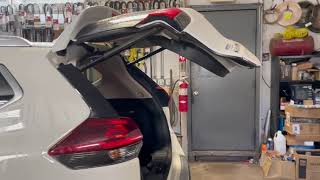
- Battery-Saver Mode Activation (Nissan/Infiniti) (Very Common) — Per Nissan TSB NTB15-033, leaving the power liftgate open for over 12 hours triggers the BCM to intentionally disable power functions to save the battery. This normal feature sets a B2422 code and requires a simple manual reset. 🎬 Watch: How to reset or recalibrate your Nissan liftgate.
- Worn Liftgate Struts (Nissan/Infiniti) (Common) — Gas-charged struts supporting the power liftgate weaken over time. When they fail to hold the gate fully open, it sags. The position sensor detects this uncommanded drop and logs a B2422 fault.
- Weak Vehicle Battery (Common) — Body control modules require stable system voltage. A weak 12V battery provides insufficient power for high-draw liftgate or seat motors, causing immediate malfunctions and logging this code.
- Faulty Actuator or Motor (Common) — Electronic lock actuators, window motors, and liftgate drive units wear out. A failed motor ignores BCM commands, triggering a fault.
- Corroded Connectors (Less Common) — Moisture and vibration in doors and liftgates corrode connector pins. This creates high electrical resistance, interrupting the signal between the BCM and the component.
- Faulty Body Control Module (BCM) (Rare) — An internal BCM failure sends incorrect signals or drops communication entirely. Only consider this after exhaustively testing all wiring, components, and connectors.
Symptoms
- Power Liftgate Inoperative or Sagging — The liftgate refuses to open or close, opens partially and stops, or opens fully and immediately sags down several inches.
- Power Door Locks Fail — One or more doors fail to lock or unlock using the key fob or interior switches. You hear a faint click from the BCM, but the door lock does not actuate.
- Power Windows Fail — One or more power windows become completely inoperative.
- Passenger Power Seat Inoperative (Chevrolet/GM) — Passenger power seat adjustments (lumbar, recline, vertical) fail to respond to switch inputs.
- Audible Beeping from Liftgate — Pressing the liftgate button triggers a series of warning beeps from the rear of the vehicle, indicating the system detected a fault and aborted the operation.
Diagnostic Flowchart
Tap your situation to follow the diagnostic path that matches what you're seeing on this code.
Common Fixes & Costs
- Repairing Door or Liftgate Wiring Harness — Parts: $10-$50, Labor: $150-$300, ~2.0 hr book time (Intermediate)
- Replacing Power Liftgate Struts — Parts: $150-$400, Labor: $100-$200, ~1.0 hr book time (DIY)
- Replacing Vehicle Battery — Parts: $150-$300, Labor: $50-$100, ~0.5 hr book time (Beginner)
- Replacing a Door Lock Actuator — Parts: $100-$300, Labor: $150-$300, ~1.5 hr book time (Intermediate)
- Replacing the Body Control Module (BCM) — Parts: $400-$800, Labor: $200-$500, ~2.5 hr book time (Professional)
DIY vs Professional
- Replacing Vehicle Battery — Beginner: True
Tools: Wrench set (10mm/12mm), terminal cleaning brush. - Replacing Power Liftgate Struts — Beginner: True
Tools: Sturdy support rod (broom handle or 2x4), small flathead screwdriver. - Repairing Door or Liftgate Wiring Harness — Beginner: False
Tools: Wire strippers, crimpers, heat shrink butt connectors, multimeter, trim removal tools. - Replacing a Door Lock Actuator — Beginner: False
Tools: Trim removal tools, socket set, Torx driver set. - Replacing the Body Control Module (BCM) — Beginner: False
Tools: Professional diagnostic scan tool with programming capabilities.
Used vs. New Parts: Buying Guide
When a used part is worth it: Buy a used OEM power liftgate actuator if the vehicle has over 100,000 miles; new OEM parts cost upwards of $800, making a $150 used part a better value. Avoid parts from rust-belt regions.
Donor-vehicle mileage cap: roughly under 60000 miles for the part to have meaningful remaining life.
Donor quality checklist:
- Verify the donor vehicle's VIN to ensure compatibility.
- Inspect for rust or corrosion around ball joints and electrical connectors.
- Require a functional guarantee or a 30-day warranty.
Decision logic:
- If The part is a simple wiring pigtail or connector → Buy new aftermarket; the cost is low and quality is sufficient.
- If The part is a power liftgate strut/actuator → A quality used OEM part offers the best balance of cost and expected life. Aftermarket options are cheaper but fail faster.
- If The part is the Body Control Module (BCM) → Buy a new OEM part from a dealer. A used BCM is highly risky as it often cannot be reprogrammed to a different VIN.
Warranty tradeoff: Used parts typically carry a 30-90 day warranty. New aftermarket parts offer 1-year warranties but inconsistent quality. New OEM parts carry the best warranty at the highest cost.
Worst-case if a used part fails: 300 - 600
What Happens If You Wait — Timeline
- 0-1 month: A single function becomes intermittent or fails (e.g., power liftgate won't open). The root cause is likely a single broken wire or a weak component. (Added cost: 0)
- 1-6 months: Continued flexing from door use causes more wires to break in the harness. The initial problem is joined by power window and mirror failures. (Added cost: 0 - 50)
- 6-12 months: A frayed wire intermittently shorts to the metal chassis, blowing fuses repeatedly. (Added cost: 50 - 150)
- 12+ months: The persistent short circuit overloads and destroys an internal driver circuit within the Body Control Module (BCM). (Added cost: 800 - 1500)
Cost of Not Fixing It
- 0-1 month: Inconvenience and loss of function (e.g., must open liftgate manually, can't use power locks). Potential security risk if a door cannot be locked. (Added cost: 0)
- 1-6 months: Continued flexing of a damaged wiring harness breaks adjacent wires, leading to additional failures (e.g., power windows and mirrors). A weak liftgate strut fails completely, becoming a safety hazard. (Added cost: 50 - 500)
- 6+ months: A broken wire shorts to another circuit or ground, blowing multiple fuses or permanently damaging the Body Control Module (BCM). (Added cost: 500 - 1500)
Diagnosis Steps
- Check for Simple Resets (Nissan/Infiniti)
Ensure the 'Power Back Door' switch is turned 'ON'. Manually close the liftgate completely. This action resets the battery-saver system, clears the code, and restores normal function instantly.
Tools: None (Beginner) - Inspect the Wiring Harness Boot
Open the affected door or liftgate and locate the flexible rubber boot connecting the door to the body. Peel back the boot and meticulously inspect the wires for breakage, chafing, or cracked insulation. Gently tug each wire to check for internal breaks.
Tools: Flashlight, Trim removal tool (Intermediate) - Verify Battery Health
Use a multimeter to check battery voltage with the engine off; it must be above 12.4V. Start the engine and verify charging voltage is between 13.7V and 14.7V. Replace a weak battery before proceeding.
Tools: Digital Multimeter (Beginner) - Inspect Fuses
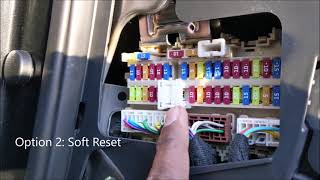
Locate the fuse panels and inspect all fuses related to the BCM, power liftgate, locks, and seats. A blown fuse indicates a short circuit that must be repaired before replacing the fuse.
Tools: Fuse puller or needle-nose pliers (Beginner) - Scan BCM with a Bi-Directional Tool
Use an advanced scanner to read the BCM. Command the failed component (e.g., 'Power Liftgate: Open') directly from the tool. If the component works via the scanner but not the physical switch, the switch or its wiring is faulty. If it fails via the scanner, the motor or main wiring is bad.
Tools: Advanced Bi-Directional OBD-II Scanner (Professional) - Perform Liftgate Calibration (Nissan/Infiniti)
Manually push the liftgate to the desired fully open position. Press and hold the close button on the liftgate for 5-10 seconds until you hear a confirmation beep. Use the power function to close it and test the new memory position.
Tools: None (Intermediate) - Test the Actuator/Motor
Access the electrical connector for the non-functional component. Use a multimeter to check for 12V when the switch is activated. If voltage is present but the motor doesn't run, replace the motor.
Tools: Multimeter or Power Probe, Trim removal tools (Advanced) - Perform Wiring Continuity Test
Disconnect the battery. Disconnect the harness at the BCM and the component. Set a multimeter to Ohms and probe both ends of the suspect wire. A reading of 'OL' indicates a complete break requiring repair. Resistance should be under 2 Ohms.
Tools: Digital Multimeter, Wiring Diagram (Advanced) - Check for Technical Service Bulletins (TSBs)
Search online for TSBs related to your specific year, make, model, and the B2422 code. Manufacturers frequently release software updates or specific diagnostic routines for recurring body control issues.
Tools: Internet access (Beginner)
When This Code Triggers (Freeze-Frame Conditions)
- Battery Voltage: 11.5V - 14.5V (Fault triggers on low voltage during motor activation or normal voltage if an open circuit occurs.)
- Ignition Status: ON / RUN (Logged when the BCM is active and attempts to operate the component.)
- Component Status: Commanded ON (Set when the BCM sends a command (e.g., 'Open Liftgate') and does not receive the expected sensor feedback.)
- Ignition Cycles Since Fault: 0 (Indicates the fault occurred during the current key cycle.)
Related Codes
- B2417 — Specific to Nissan/Infiniti, indicating a fault in the liftgate 'Touch Sensor Circuit'. If present with B2422, diagnose the touch sensor first.
- B2420 — Specific to Nissan/Infiniti, indicating a fault in the liftgate 'Close Switch' circuit. Test the close switch before investigating broader B2422 causes.
- B2428 — A Nissan-specific code for the 'Automatic Back Door Control Unit'. Strongly suggests the control unit itself has an internal failure.
- B1328 / B1329 — Ford codes for 'Door Ajar' circuit faults. A broken wire in the door harness causing B2422 often triggers these codes simultaneously.
Climate & Environmental Factors
- Cold Weather: Temperatures below 32°F (0°C) reduce 12V battery output by up to 50%, depressurize gas-charged liftgate struts, and make aging wire insulation brittle enough to snap.
- High Humidity / Water Intrusion: Moisture intrusion in door jambs and liftgate seals corrodes electrical connector pins, creating high resistance that blocks BCM signals.
How to Talk to a Mechanic About This Code
Say this: "I have a B2422 code on my [Vehicle Make/Model]. I believe it relates to the [power liftgate/passenger seat/door locks]. I've already checked the battery and fuses, so I suspect a wiring or component issue and need a diagnostic."
This signals you are an informed customer. It directs the technician to the correct system, shows you've done basic troubleshooting, and reduces the chance of upselling unnecessary services.
Avoid saying:
- 'My trunk is broken.'
- 'My check engine light is on, can you look at it?'
- 'Just fix whatever's wrong, I don't care what it costs.'
Questions to ask before authorizing the repair:
- What was the specific point of failure? Was it a broken wire, a bad motor, or something else?
- If it's a wiring repair, what method will you use to splice the wires?
- If the BCM needs replacement, is the cost of programming included in the quote?
- Will you provide a written estimate with a full breakdown of parts and labor costs?
- What is the warranty on the parts and the labor for this specific repair?
Where to Take It: Dealer vs Independent vs Chain
- Dealer:
Take the vehicle to a dealer if BCM replacement and programming are required.
Best for: Vehicles under warranty., Complex BCM replacement and programming, as they have guaranteed access to the latest proprietary software., Diagnosing manufacturer-specific quirks covered by a Technical Service Bulletin (TSB).
Downsides: Highest labor rates and OEM part costs., Defaults to replacing an entire assembly (e.g., full wiring harness) when a simpler repair is possible. (Typical cost: +50% vs. baseline) - Independent Shop:
Best fit for most B2422 repairs, especially wiring repairs and mechanical part swaps.
Best for: Out-of-warranty vehicles where cost is a major factor., Diagnosing and repairing common wiring issues, like broken wires in a door boot., Component replacement (e.g., liftgate struts, door lock actuators).
Downsides: Quality and expertise vary widely., Lacks the expensive, up-to-date tools to program a new BCM for all makes and models. (Typical cost: +0% vs. baseline) - Chain Shop:
Avoid for diagnosing a B2422 code. Their scope is limited to brakes, tires, and oil changes.
Best for: Simple, related fixes like a battery replacement.
Downsides: Not equipped for complex electrical diagnostics or module programming., Technician skill and experience are inconsistent., High pressure to upsell leads to incorrect diagnosis. (Typical cost: -10% vs. baseline)
When to Walk Away From the Repair
If the estimated repair cost exceeds 40% of the car's private-party value, and the loss of function isn't critical, sell the car as-is.
- Car worth $12000, fix is $500: Fix it. The cost is a small fraction of the car's value.
- Car worth $5000, fix is $1500: Borderline. This is a significant cost for a non-essential feature. Consider your daily need for the function before proceeding.
- Car worth $3000, fix is $1800: Walk away. The repair cost is over half the car's value. It is not economically sensible to invest this much in a convenience feature.
What Scan Tool You Need for This Code
Minimum: A scanner that reads and clears 'B' (Body) codes. Basic powertrain-only readers will not see this code.
A $20 code reader cannot see 'B' codes. To properly diagnose B2422, you must see the code's specific definition for your car and view live data from the BCM.
Budget: BlueDriver Pro (~$119) — Confirms the B2422 code and provides manufacturer-specific definitions. Reads BCM data and live data streams on many supported vehicles.
Mid-range: Foxwell NT809 / Autel MaxiCOM MK808S (~$300-450) — Provides full bi-directional control. Allows you to command the liftgate motor, door locks, or seat motors directly from the tool to isolate the fault.
Professional: Launch X431 series / Autel MaxiSys MS906 (~$500-1200+) — Offers full bi-directional control plus advanced functions like BCM module coding and programming. Necessary if you need to replace the BCM itself.
Rent vs buy: Auto parts stores offer free code scanning, but their tools rarely read 'B' codes or offer bi-directional control. Buying a mid-range bi-directional scanner is a mandatory investment for DIY electrical diagnosis.
How to Clear the Code After You Fix It
- Use an OBD-II scan tool to clear the 'B' codes from the Body Control Module.
- For Nissan/Infiniti liftgates, manually close the hatch completely to clear the code.
- Operate the repaired component (liftgate, lock, window, seat) multiple times to verify the fix.
Drive cycle (~10 minutes): A specific drive cycle is not required for BCM codes. After clearing the code, start the vehicle and test the affected function. If the repair was successful, the code will not return.
Readiness monitors affected: None
Watch out for:
- Using a basic code reader that only clears 'P' (Powertrain) codes fails to clear a 'B' (Body) code.
- The code returns immediately if the root mechanical or electrical cause remains unfixed.
- On Nissan vehicles, forgetting to manually close the liftgate after a battery disconnect causes the code to persist.
Will This Fail Emissions / State Inspection?
No — by itself this code doesn't fail OBD inspection (but it can keep readiness monitors from setting, which causes a separate fail).
- California: This 'B' code does not cause a failure in the BAR-OIS smog check, which focuses strictly on powertrain ('P') codes.
- New York: The OBD-II emissions inspection passes with a 'B' code present. However, an inoperative door lock fails the separate annual safety inspection.
- Texas: This code passes the emissions portion of the state inspection. A non-functional door latch fails the safety inspection at the inspector's discretion.
Most Commonly Affected Vehicles
- Nissan Rogue (2014-2023) — Extremely common. Prone to B2422 from weak liftgate struts causing the hatch to sag, broken wires, and needing recalibration after manual closing.
- Nissan Murano (2015-2024) — Subject of TSB NTB15-033, detailing the battery-saver feature disabling the liftgate and setting B2422.
- Infiniti QX60 (2014-2020) — Shares the Pathfinder/Murano power liftgate system and is highly susceptible to control unit issues, wiring faults, and strut weakness.
- Chevrolet Equinox / Traverse (2010-2024) — On GM vehicles, B2422 specifically means 'Passenger Seat Motor Circuit Low.' Diagnosis must focus entirely on the passenger seat motors and wiring.
- Ford Explorer / Escape (2011-2023) — Commonly traced to broken wires in the driver's door wiring harness boot due to high usage, affecting locks and windows.
- Hyundai Veracruz (2007-2012) — Sets B2422 ('Drive Motor Short Low') for power tailgate failure. Often linked to alternator damage from valve cover oil leaks.
Manufacturer-Specific Notes
- Nissan / Infiniti: Per TSB NTB15-033, if the power liftgate is left open for over 12 hours, the BCM intentionally disables it to save the battery. Manually closing the liftgate restores function instantly. Disconnecting the battery with the liftgate open also triggers this.
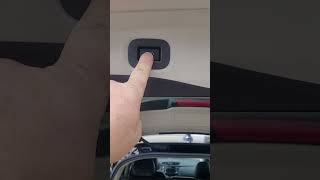
- Nissan / Infiniti: The power liftgate opening height is user-programmable. If it opens partially, manually move the gate to the desired position, then press and hold the close button until it beeps to store the new height.
- Chevrolet / GM: B2422 has nothing to do with doors or liftgates on GM products. It points specifically to the 'Passenger Seat Motor Circuit.' Do not waste time inspecting the liftgate.
- Ford: The driver's side door harness is the primary failure point. Wires for power windows, locks, and mirrors break inside the rubber boot between the door and the A-pillar due to high open/close cycles.
Real Owner Stories
2016 Nissan Rogue SL with B2422
The power liftgate opened to its full height, then immediately sagged down a quarter of the way, triggering code B2422.
Outcome: Replacing the weak struts resolved the sagging issue and permanently cleared the code.
Lesson: The 'sagging liftgate' symptom is a classic mechanical failure causing an electrical code. Test mechanical parts before replacing expensive control modules.
2003 Ford Explorer with multiple electrical failures
The driver's side power windows and locks stopped working. The owner had repaired broken wires in the door jamb boot two years prior.
Outcome: The owner successfully soldered jumper wires to fix the four broken wires, restoring full function.
Lesson: Wire fatigue is a recurring problem on high-use doors. Use high-quality butt connectors or solder, and add extra wire length for strain relief.
Nissan Rogue with multiple liftgate codes
The power liftgate was completely inoperative, showing codes B2422, B2417 (Touch sensor), and B2420 (Close switch).
Outcome: The technician discovered a trunk motor wire was connected to the wrong component during the prior repair. Correcting the wiring restored all functions.
Lesson: Multiple related codes often point to a single harness connector or a bad wiring repair rather than multiple component failures.
2012 Ford Focus with a fried BCM
The owner hired an electrician to fix aftermarket LED headlights. The improper wiring shorted the BCM, causing total headlight failure.
Outcome: The owner learned replacing the BCM requires security reprogramming by a shop, costing $200 for programming alone. The improper wiring also had to be removed.
Lesson: Improper aftermarket wiring destroys the BCM. Replacing a BCM is never a simple swap; it always requires professional programming.
How to Prevent This Code From Triggering
- Lubricate Power Liftgate Strut Shafts and Ball Joints (Every 1-2 years) — Applying a silicone-based lubricant to the strut shafts and pivot balls reduces friction, prevents squeaking, and reduces strain on the electric motor.
- Inspect and Protect Wiring Harness Boots (Annually) — The rubber boots in door and liftgate jambs protect vulnerable wires. Ensure boots are properly seated and not torn to prevent water intrusion.
- Apply Dielectric Grease to At-Risk Connectors (When exposed during other repairs, or every 3-5 years.) — Dielectric grease seals connectors in wet areas (doors, liftgates), preventing moisture from entering and causing high-resistance corrosion.
- Exercise All Power Functions Regularly (Monthly) — Operating power windows, locks, seats, and liftgates keeps mechanical parts from seizing and ensures electrical contacts remain clean.
- Maintain a Healthy Battery and Clean Terminals (Annually) — BCM faults trigger easily on low system voltage. Test the battery before winter and clean terminal corrosion to ensure stable power delivery.
Frequently Asked Questions
Can I fix a B2422 code myself?
Yes, many fixes are DIY-friendly. On a Nissan, manually closing an open liftgate often resets the system and clears the code instantly. Inspecting fuses and checking for broken wires in the door jamb are also excellent beginner tasks.
Is B2422 the same as P2422?
No, they are completely different codes. B2422 is a 'Body' code for comfort and convenience features like liftgates and locks. P2422 is a 'Powertrain' code indicating an emissions system issue with the EVAP vent valve.
How do you reset a Nissan Rogue liftgate?
First, manually close the liftgate completely to reset the BCM's battery-saver mode. If the opening height is incorrect, manually move the gate to the desired height. Then, press and hold the close button on the hatch for 5-10 seconds until it beeps to store the new position.
Can a weak battery cause my power liftgate to stop working?
Yes. Power liftgate motors draw a significant amount of electrical current. A weak or aging 12V battery fails to supply enough power, causing the operation to abort and the BCM to log a B2422 fault.
What are the most common misdiagnosis mistakes for B2422?
The biggest mistake is confusing B2422 with the P2422 emissions code. Another common error on Nissans is replacing expensive liftgate motors before trying a simple manual close to reset the battery-saver mode. Finally, technicians often replace the BCM before exhaustively testing the wiring harness for hidden breaks.
My liftgate stopped working after the battery was replaced. What happened?
Disconnecting the battery while the power liftgate is open triggers a B2422 code and disables the power function as a protective measure. To fix this, simply close the liftgate manually. This resets the system and restores normal operation without requiring any parts.
How much does it cost to diagnose a B2422 code?
Most repair shops charge a diagnostic fee ranging from $125 to $250. This covers the technician's time to use a professional bi-directional scan tool and pinpoint the exact electrical fault. This fee is typically applied toward the final repair cost if you authorize the work.
My liftgate opens but then sags down a few inches. Is that a B2422 issue?
Yes, this is a classic mechanical failure causing an electrical code. The gas struts are too weak to hold the full weight of the liftgate. The position sensor detects this uncommanded drop, reports an invalid state to the BCM, and logs code B2422.
Key Takeaways
- Code B2422 is a manufacturer-specific body control fault that disables convenience features like the power liftgate, windows, or passenger seat.
- On Nissan and Infiniti models, a B2422 code often triggers after 12 hours of the liftgate being open; fix this instantly for $0 by manually closing the hatch.
- The most frequent physical cause across all makes is a broken wire inside the flexible rubber boot connecting the door or liftgate to the vehicle body.
- Never confuse B2422 with P2422; B2422 requires diagnosing 12V body electrical circuits, while P2422 is a powertrain code pointing to a stuck EVAP emissions valve.
Helpful Videos




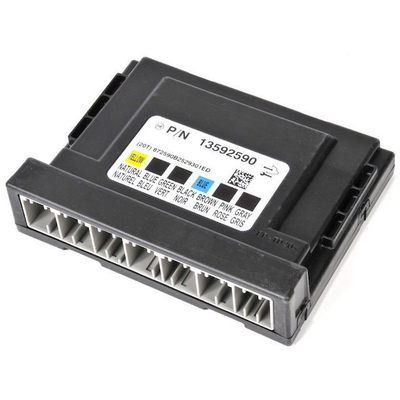
Shop the Parts Behind B2422
Below are the parts most often responsible for code B2422, ranked by how frequently each one is the actual culprit (per the diagnosis above). Tap any to see what we have for your vehicle.



The information in this article is provided for general reference and educational purposes only. Vehicle specifications, procedures, and part compatibility can vary by production date, trim level, and region. Always consult your vehicle's factory service manual and verify part numbers before purchasing or performing repairs. Safety-critical components such as airbags, seat belts, and braking systems should be installed by a qualified professional.
- 🧭 Diagnostic Flowchart
- 🎬 Helpful Videos
- 🛍️ Shop This Part
- What Does B2422 Mean?
- Can I Drive With B2422?
- Common Causes
- Symptoms
- Common Fixes & Costs
- DIY vs Professional
- Used vs. New Parts: Buying Guide
- What Happens If You Wait — Timeline
- Cost of Not Fixing It
- Diagnosis Steps
- When This Code Triggers (Freeze-Frame Conditions)
- Related Codes
- Climate & Environmental Factors
- How to Talk to a Mechanic About This Code
- Where to Take It: Dealer vs Independent vs Chain
- When to Walk Away From the Repair
- What Scan Tool You Need for This Code
- How to Clear the Code After You Fix It
- Will This Fail Emissions / State Inspection?
- Most Commonly Affected Vehicles
- Manufacturer-Specific Notes
- Real Owner Stories
- 2016 Nissan Rogue SL with B2422
- 2003 Ford Explorer with multiple electrical failures
- Nissan Rogue with multiple liftgate codes
- 2012 Ford Focus with a fried BCM
- How to Prevent This Code From Triggering
- Frequently Asked Questions
- Can I fix a B2422 code myself?
- Is B2422 the same as P2422?
- How do you reset a Nissan Rogue liftgate?
- Can a weak battery cause my power liftgate to stop working?
- What are the most common misdiagnosis mistakes for B2422?
- My liftgate stopped working after the battery was replaced. What happened?
- How much does it cost to diagnose a B2422 code?
- My liftgate opens but then sags down a few inches. Is that a B2422 issue?
- Key Takeaways
- 🎟️ Get 5% Off