

OBD-II Code B2426: Manufacturer-Specific Fault (Power Liftgate, Sunload Sensor, etc.)
What B2426 means, why it triggers, and how to fix it — The Ultimate Guide
- B2426 is a manufacturer-specific code that indicates a failed power liftgate on Nissan/Infiniti, a faulty sunload sensor on Ford, or a transmission fault on Hyundai.
- For Nissan and Infiniti models, replacing the left-side power liftgate spindle assembly (costing $500 to $1,200) resolves the B2426 code in 80% of cases.
- Ford and Lincoln owners seeing B2426 must test the sunload sensor's 5-volt reference circuit before spending $100 on a replacement part.
- Hyundai drivers experiencing harsh shifting with a B2426 code must stop driving immediately to prevent a catastrophic $4,000 transmission failure.
- Always test the 12V battery first; a resting voltage below 12.2V frequently triggers a false B2426 liftgate code on vehicles like the Nissan Rogue.
What Does B2426 Mean?
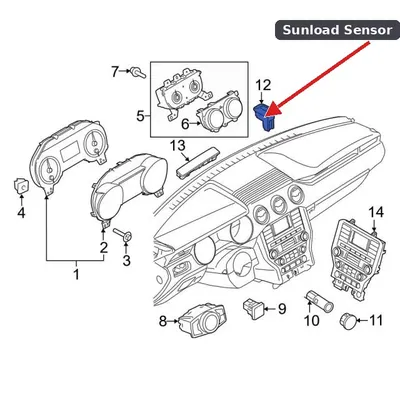
B2426 is a manufacturer-specific code with entirely different definitions based on the vehicle brand. For Nissan and Infiniti, it signals a failed left-side spindle sensor in the power liftgate system. For Ford, Lincoln, and Jaguar, it points to an open circuit in the sunload (solar radiation) sensor, disabling automatic climate control. For Hyundai and Kia, it indicates critical transmission or EVAP system faults, making exact vehicle identification the mandatory first step in diagnosis.
Technical definition: Code B2426 lacks a universal SAE/OBD-II definition. Manufacturer-specific definitions include: 'Spindle Sensor LH' (Nissan/Infiniti), 'Passenger Solar Radiation Sensor Circuit Open' (Jaguar), 'A/C Solar Radiation Sensor Circuit Open' (Ford), 'Clutch Pressure Control (PC) Solenoid 5 - Stuck On' (Hyundai), 'Left Pinch Strip Stuck Low' (Hyundai), and 'EVAP Emission Control LDP Circuit Malfunction' (Kia). These definitions indicate a control module detected an open circuit, short, or missing signal in a specific monitored circuit.
Can I Drive With B2426?

Yes, But With Caution. Driving with code B2426 is safe for Nissan, Infiniti, and Ford vehicles, but poses a severe safety risk for Hyundai models. For Nissan/Infiniti, a failing power liftgate is a physical hazard if it falls unexpectedly, but it does not affect drivability. For Ford/Jaguar, a faulty sunload sensor only disables automatic climate control comfort. However, for Hyundai, this code indicates a transmission solenoid fault; continued driving causes severe internal transmission damage and unpredictable shifting.
Common Causes

- Defective Power Liftgate Spindle/Motor Assembly (Very Common) — This causes 80% of B2426 codes on Nissan and Infiniti vehicles. The internal position sensor within the motorized strut (spindle) fails, preventing the control module from tracking the liftgate's position. The sensor is permanently integrated and requires replacing the entire motor assembly.
- Low or Unstable Battery Voltage (Very Common) — A weak 12V battery causes unpredictable behavior in vehicle electronic modules, particularly the Nissan power liftgate controller. A resting voltage below 12.2V triggers spurious B2426 codes even if the battery still successfully starts the engine.
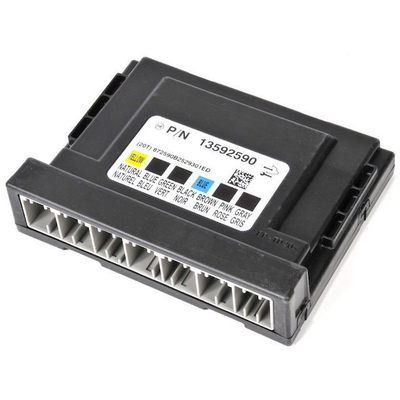
- Faulty Automatic Back Door Control Unit (Common) — The primary control module operating the power liftgate fails internally, storing false spindle sensor codes. Nissan issued multiple technical service bulletins (TSBs) mandating the replacement of this module on Pathfinder, Rogue, and QX60 models. 🎬 Watch: How to fix an Infiniti QX60 liftgate that won't open.
- Wiring Harness Damage or Corrosion (Common) — Wires leading to the liftgate spindle or sunload sensor break or corrode. On liftgates, this happens inside the flexible rubber boot between the body and the hatch. The 2022 Infiniti QX60 suffers from a specific factory defect involving 'spread terminals' in the harness connector, causing a loose connection.
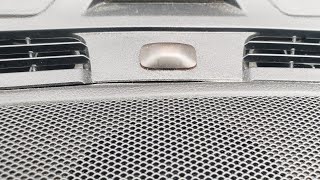
- Failed Sunload (Solar Radiation) Sensor (Common) — On Ford and Jaguar vehicles, the dashboard photodiode measuring sunlight intensity fails. When the internal resistance stops changing with light intensity, the HVAC module logs B2426 and defaults to manual climate control. 🎬 See this walkthrough on replacing a Ford sunload sensor.
- Control Module Software Glitch (Common) — On 2015-2018 Nissan Murano models, a software glitch causes the B2426 code. TSB NTB15-073d requires technicians to reprogram the Automatic Back Door Control Unit to resolve operational errors without replacing hardware.
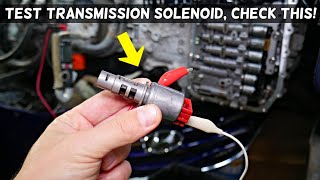
- Failed Transmission Solenoid (Hyundai) (Less Common) — On specific Hyundai models, this code flags a stuck pressure control solenoid inside the automatic transmission valve body. This restricts fluid flow, causing harsh shifting and requiring immediate professional repair.
- Failed Leak Detection Pump (Kia) (Less Common) — For Kia vehicles, B2426 indicates a broken EVAP Leak Detection Pump (LDP) circuit. The LDP fails to pressurize the fuel system for emissions testing, triggering the Check Engine Light.
Symptoms
- Power Liftgate is Inoperative or Works Erratically — The automatic rear hatch fails to open or close electronically. It opens partially and stops, reverses unexpectedly, or only functions in manual mode.
- Growling or Grinding Noise from Liftgate Motor — A loud grinding noise comes from the rear of the vehicle when operating the power liftgate. This indicates stripped internal gears in the spindle drive unit, a documented failure on the Infiniti QX50.
- Automatic Climate Control Fails to Regulate Temperature — On Ford or Jaguar models, the A/C blows hot air or fails to cool the cabin on sunny days because the HVAC module receives no solar intensity data.
- Harsh Shifting or Slipping Gears (Hyundai) — Hyundai drivers experience delayed gear engagement, violent shifts, or transmission slipping where engine RPMs spike without vehicle acceleration.
- Warning Chime or Dashboard Message (also visible on scanner) — The vehicle produces a persistent beeping sound or displays a 'Check Power Back Door' warning on the instrument cluster.
- Check Engine Light is Illuminated (also visible on scanner) — The vehicle's computer stores the B2426 code and illuminates the Check Engine Light (primarily on Kia and Hyundai models).
Diagnostic Flowchart
Tap your situation to follow the diagnostic path that matches what you're seeing on this code.
Common Fixes & Costs
- Replace Power Liftgate Spindle/Motor Assembly — Parts: $500-$1200, Labor: $150-$300, ~1.5 hr book time (Intermediate)
- Replace Automatic Back Door Control Unit — Parts: $250-$500, Labor: $100-$200, ~1.2 hr book time (Intermediate)
- Replace Sunload (Solar Radiation) Sensor — Parts: $30-$150, Labor: $75-$150, ~0.8 hr book time (DIY)
- Reprogramming and Calibrating Control Modules — Parts: $0, Labor: $100-$250, ~1.0 hr book time (Professional)
- Repair Damaged Wiring or Connectors — Parts: $10-$50, Labor: $200-$500, ~3.0 hr book time (Professional)
Used vs. New Parts: Buying Guide
When a used part is worth it: A used OEM liftgate motor from a low-mileage, rear-end collision vehicle is a cost-effective alternative to a $1,000 new OEM part. Never buy used control modules or sunload sensors.
Donor-vehicle mileage cap: roughly under 60000 miles for the part to have meaningful remaining life.
Donor quality checklist:
- Verify the donor vehicle was not scrapped due to flood damage.
- Match the part number exactly, including the final suffix letter.
- Inspect the liftgate motor wiring harness for cuts or severe bends.
Decision logic:
- If The cost of a new aftermarket liftgate motor is under $250 → Buy new aftermarket for the warranty.
- If The OEM new part costs over $800 and the vehicle is 10+ years old → Buy a tested, warranted used OEM part.
- If The failed part is the Automatic Back Door Control Unit → Buy new. Used modules contain incompatible software versions or hidden water damage.
Warranty tradeoff: Used parts carry a 30-day warranty covering only the part, not the 2 hours of labor required to install it. New aftermarket parts offer 1-year warranties.
Worst-case if a used part fails: $450 if a used liftgate motor fails prematurely, requiring you to pay labor twice.
What Happens If You Wait — Timeline
- Immediate: Nissan/Ford: Liftgate or auto A/C stops working. Kia: Check Engine Light illuminates. Hyundai: Transmission shifting becomes harsh. (MPG impact: 0-5%% · Added cost: $0)
- 1-3 Months: Nissan: Gas struts weaken without motor assistance. Hyundai: Incorrect fluid pressure causes the transmission to run hot, accelerating fluid breakdown. (MPG impact: 5-10% (Hyundai only)% · Added cost: $150 (Hyundai fluid degradation))
- 3-6 Months: Nissan: Liftgate becomes a physical safety hazard, risking falling on the user. Hyundai: Internal clutch packs burn up from sustained incorrect pressures. (MPG impact: 10-15% (Hyundai)% · Added cost: $2000 (Hyundai internal damage))
- 6+ Months: Hyundai: Catastrophic transmission failure requiring a full rebuild. Kia: Vehicle registration suspended due to failed emissions. (MPG impact: N/A% · Added cost: $4000+ (Hyundai transmission replacement))
Cost of Not Fixing It
- Immediate: Nissan/Infiniti: Loss of power liftgate function. Ford: Inaccurate automatic climate control. Hyundai: Unpredictable shifting and safety risk. Kia: Guaranteed failed emissions test. (Added cost: $0)
- 1-3 months: Nissan/Infiniti: Liftgate gas struts weaken, creating a safety hazard where the heavy door falls on the user. Hyundai: Continued driving on a faulty solenoid overheats transmission fluid and burns clutch packs. (Added cost: $500 - $1500)
- 6+ months: Hyundai: Catastrophic transmission failure requiring a full rebuild or replacement. Kia: Expired vehicle registration due to failed emissions. (Added cost: $3500 - $7000)
Diagnosis Steps

- Verify the Symptom and Check Basic Settings
Confirm which system is affected based on your vehicle make. For a dead power liftgate, verify the master power liftgate switch (located in the glovebox or lower dashboard) is turned ON. For climate control issues, test if the A/C blows cold in manual mode versus 'Auto' mode.
Tools: None (DIY) - Inspect Fuses and Test Battery Voltage
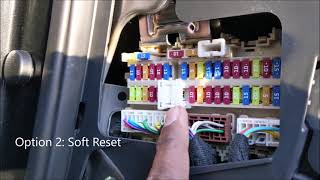
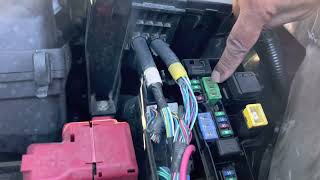
Check the engine bay fuse box for blown 'P/DOOR OPNR', 'BCM', or 'HVAC' fuses. Next, test the 12V battery with a multimeter. A resting voltage below 12.2V, or a drop below 10.0V during engine cranking, causes control modules to set false B2426 codes.
Tools: Fuse Puller, Multimeter (DIY) - Perform a Control Module Hard Reset
Disconnect the negative terminal of the 12V battery for 15 minutes to force the body control modules to reboot. Reconnect the battery and test the liftgate or A/C operation. This clears temporary software glitches on Nissan and Infiniti models.
Tools: 10mm Wrench (DIY) - Scan for All Trouble Codes
Connect a professional-grade OBD-II scanner capable of reading Body ('B') codes. Document any accompanying codes. If B2427 (Spindle Sensor RH) appears alongside B2426 on a Nissan, the fault is likely the central control unit rather than a single motor.
Tools: OBD-II Scanner (Body Code Capable) (Intermediate) - Inspect Wiring Harness and Connectors
Visually inspect the wiring harness running to the affected component. For liftgates, pull back the flexible rubber conduit between the hatch and the roof to check for severed wires. For 2022+ Infiniti models, check the harness connector for spread terminals causing loose connections.
Tools: Flashlight, Trim Removal Tools (Intermediate) - Test the Component Itself
If wiring and power are intact, test the component. For the Ford sunload sensor, measure its internal resistance with an ohmmeter while shining a flashlight directly on it; the resistance must change smoothly. If it reads 'OL' (open loop), replace the sensor.
Tools: Multimeter (Intermediate) - Pro Tip: Analyze Live Sensor Data
Use an advanced scan tool to view live data. For Nissan liftgates, compare the 'Spindle sensor LH' and 'Spindle sensor RH' pulse rates while manually moving the hatch. If the LH pulse rate is zero or erratic, the internal sensor has failed.
Tools: Advanced OBD-II Scan Tool (Professional) - Pro Tip: Test the Sunload Sensor Circuit (Ford)
Disconnect the Ford sunload sensor. Turn the ignition ON and A/C to 'AUTO'. Measure the voltage between the ground pin and the signal pin on the harness connector. A reading of 4.7V to 5.1V confirms the wiring and HVAC module are good, proving the sensor itself is dead.
Tools: Multimeter, Wiring Diagram (Professional) - Advanced: Test Kia EVAP Leak Detection Pump
For a Kia B2426 fault, disconnect the LDP connector. Measure the resistance across the LDP motor terminals. A healthy pump reads between 30 and 40 ohms. A reading of infinity (OL) confirms a burned-out pump motor requiring replacement.
Tools: Multimeter, Service Manual (Advanced)
When This Code Triggers (Freeze-Frame Conditions)
- System State: Ignition ON (The Body Control Module (BCM) or HVAC module is powered and actively monitoring circuits.)
- Component Activation: Command Received (The code sets the moment the liftgate open/close button is pressed, or when the climate control is turned to 'AUTO'.)
- Battery Voltage: 9.0V - 15.5V (Voltage drops below 10.5V during engine cranking trigger false B2426 codes in sensitive Nissan modules.)
- Fault Type: Open Circuit / No Signal (The module expected a 5V return signal or specific resistance from the sensor but received zero volts, indicating a severed wire.)
Related Codes
- B2427 — Defined as 'Spindle Sensor RH' (Right Hand). If B2426 and B2427 appear together on a Nissan/Infiniti, the fault is likely the central control unit or a shared ground wire, rather than two simultaneously failed motors.
- B242A — Defined as 'Closure Condition'. Often accompanies B2426 on Nissan vehicles, indicating the liftgate latch cannot physically secure the door due to the spindle failure.
- B2417 — Defined as 'Touch Sensor LH Open'. Points to a broken anti-pinch strip on the left side of the liftgate, disabling the closing function for safety.
- B2795 / B2796 — On Ford vehicles, these codes also relate to the sunload sensor circuit. B2426/B2796 correspond to the left-hand sensor circuit and B2427/B2795 to the right-hand.
Climate & Environmental Factors
- Cold Weather: Freezing temperatures reduce the lifting power of gas-filled support struts, forcing the electric liftgate motor to pull more amperage. This triggers over-current faults and accelerates motor burnout.
- Road Salt and High Humidity: Salty moisture penetrates the rubber wiring boot between the vehicle body and liftgate, corroding the thin wires for the spindle sensor until they snap.
How to Talk to a Mechanic About This Code
Say this: "My [Vehicle Make] has a B2426 code. For Nissan: 'The power liftgate is failing. I've checked the master switch and battery. Can you diagnose if it's the spindle, control unit, or wiring?' For Ford: 'The auto climate control is failing. Please test the sunload sensor's 5V reference circuit before replacing the sensor.' For Hyundai: 'It is shifting harshly. I need a formal transmission diagnostic for a stuck pressure control solenoid.'"
This proves you are educated on the specific manufacturer definition of the code. It directs the technician to the correct diagnostic path, preventing them from wasting an hour diagnosing the A/C system on a Ford when the issue is just a dashboard sensor.
Avoid saying:
- 'Just fix whatever's wrong.'
- 'My check engine light is on, can you look at it?'
- 'The internet says I need a new liftgate motor.' (Let them diagnose first)
Questions to ask before authorizing the repair:
- For Nissan: 'Did you check for any Technical Service Bulletins related to the liftgate control module?'
- For Ford: 'Was the 5-volt reference present at the sensor connector, confirming the sensor itself is dead?'
- For Hyundai: 'Does this require replacing a single solenoid or the entire transmission valve body?'
- What is the warranty on the parts and labor for this specific repair?
Where to Take It: Dealer vs Independent vs Chain
- Dealer:
Required for Nissan/Infiniti software reprogramming. Best choice for Hyundai transmission issues if still under the 10-year/100k warranty.
Best for: Vehicles under warranty., Nissan/Infiniti repairs requiring software updates to the liftgate control unit per TSBs.
Downsides: Highest labor rates ($150-$250/hr)., Will refuse to install cheaper aftermarket liftgate motors. (Typical cost: +50% vs. baseline) - Independent Shop:
Best fit for Ford, Jaguar, and Kia versions. Excellent for Nissan liftgate motor replacement, provided you confirm they have the scan tool to perform the final calibration.
Best for: Out-of-warranty vehicles., Straightforward component swaps like the Ford sunload sensor or Kia EVAP pump.
Downsides: May lack the $5,000 bi-directional scan tools required to calibrate a new Nissan liftgate motor. (Typical cost: +0% vs. baseline) - Chain Shop:
AVOID. Chain shops are not equipped to diagnose manufacturer-specific B-codes or internal transmission solenoids.
Best for: Oil changes, tires, and brakes.
Downsides: Technicians lack training for complex, manufacturer-specific body codes., High risk of misdiagnosing a Ford sunload sensor as a $1,000 A/C compressor failure. (Typical cost: -10% vs. baseline)
When to Walk Away From the Repair
If the estimated repair cost exceeds 40% of your car's current private-party market value, seriously consider selling the vehicle.
- Car worth $12000, fix is $1100: Fix it. A $1,100 liftgate motor replacement on a Nissan Rogue is well below the threshold and restores a critical daily feature.
- Car worth $5000, fix is $1100: Borderline. The repair is 22% of the car's value. Consider living with manual liftgate operation or sourcing a used part.
- Car worth $6000, fix is $4500: Walk away. A $4,500 transmission replacement for the Hyundai version of this code ruins the vehicle's financial viability.
What Scan Tool You Need for This Code
Minimum: A scanner capable of reading manufacturer-specific Body ('B'), Chassis ('C'), and Network ('U') codes. A basic $20 code reader only handles Powertrain ('P') codes and will display 'No Codes Found'.
Basic scanners cannot communicate with the Body Control Module (BCM) or HVAC module where the Nissan and Ford versions of B2426 are stored.
Budget: BlueDriver Pro (~$90) — Reads and clears enhanced codes (ABS, Airbag, BCM) via a smartphone app. Allows you to view freeze-frame data to confirm when the code triggered.
Mid-range: Foxwell NT510 Elite (~$180) — Provides OE-level diagnostics for a single car brand. Reads live data from the liftgate spindle sensors and performs basic module calibrations.
Professional: Autel MaxiCOM MK808S (~$450) — Offers full bi-directional control. You can command the liftgate motor or A/C actuators directly from the tablet, proving the component works before replacing it.
Rent vs buy: Auto parts store 'loaner' scanners are basic code readers and will NOT read B2426. You must buy at least a budget-tier enhanced scanner.
How to Clear the Code After You Fix It
- Fix the underlying mechanical or electrical fault.
- Use an OBD-II scan tool capable of reading 'B' codes to clear the fault from the module's memory.
- For Nissan liftgates, perform the manual height re-initialization procedure.
- For Kia EVAP versions, perform a complete drive cycle to run the readiness monitor.
Drive cycle (~30 minutes): A standard drive cycle involves a cold start, 5 minutes of idling, 15 minutes of steady highway driving at 55 mph, coasting down to 20 mph without braking, and 10 minutes of stop-and-go city driving.
Readiness monitors affected: EVAP System Monitor (Kia), Comprehensive Component Monitor
Before emissions retest: drive at least 50 miles to fully set monitors.
Watch out for:
- Using a cheap $20 scanner that only reads 'P' (Powertrain) codes; it will not see or clear a 'B' (Body) code.
- Clearing the code without fixing the root cause guarantees the code returns immediately.
- Disconnecting the battery resets all emissions readiness monitors, causing an automatic failure at an emissions test station.
Will This Fail Emissions / State Inspection?
Yes — this code typically fails an OBD-II emissions inspection.
- California: The Nissan/Ford body code versions of B2426 will not fail a smog check. However, the Kia EVAP version illuminates the Check Engine Light, causing an automatic failure. Disconnecting the battery to clear it resets readiness monitors, also causing a failure.
- New York: NYVIP3 inspections fail any vehicle with a commanded-on Malfunction Indicator Lamp (MIL). The Hyundai and Kia versions of B2426 trigger the MIL and result in failure.
- Texas: In the 17 emissions-testing counties, the OBD-II scan fails the vehicle if the Check Engine Light is on. Body-related versions (Nissan, Ford) pass; emissions/transmission versions (Kia, Hyundai) fail.
Most Commonly Affected Vehicles
- Nissan Murano (2015-2018) — Prone to storing B2426 due to software errors. TSB NTB15-073d requires a control unit reprogram to fix this issue.
- Infiniti QX60 (2016-2022) — Commonly experiences faulty spindle sensors or spread terminals in the wiring harness. TSB ITB23-018A advises replacing the control unit on 2022 models.
- Infiniti QX50 (2019-2021) — TSB ITB21-021 addresses a loud growling noise from the liftgate and a stored B2426 code, requiring spindle unit replacement.
- Nissan Pathfinder (2022-2023) — Exhibits a partially opening back door. TSB NTB23-043 points to a faulty Automatic Back Door Control Unit.
- Nissan Rogue (2014-2023) — Experiences complete liftgate failure. TSB NTB23-042 recommends replacing the control unit for 2022-2023 models. Older models suffer from battery-voltage-induced false codes.
- Ford F-250/F-350 Super Duty (2008-2015) — B2426 indicates a failed sunload sensor, disabling the automatic climate control temperature regulation.
- Ford Expedition (2008-2017) — Shares the sunload sensor fault definition, causing the A/C to blow hot air on sunny days.
- Ford Thunderbird (2002-2005) — B2426 indicates a fault with the sunload sensor, causing the climate control to blow full hot or full cold air exclusively.
Manufacturer-Specific Notes
- Nissan / Infiniti: This code exclusively points to the power liftgate. Nissan issued a safety recall (NHTSA 16V-219) for 2014-2016 Rogue models because corroding liftgate support stays caused the heavy hatch to fall unexpectedly.
- Ford / Lincoln: These brands use B2426 to indicate an open circuit in the A/C sunload sensor. The sensor is easily accessible on top of the dashboard and takes 5 minutes to replace.
- Hyundai: Hyundai uses B2426 for a critical powertrain fault: 'Clutch Pressure Control Solenoid 5 - Stuck On'. Driving with this code destroys the transmission internal clutches.
- Kia: Kia defines B2426 as 'EVAP Emission Control LDP Circuit Malfunction'. This triggers the Check Engine Light and guarantees an automatic failure at state emissions testing.
Real Owner Stories
2015 Infiniti QX60 liftgate completely inoperative.
The power liftgate suddenly stopped working. Pressing the fob, dash, or hatch buttons produced no sound or movement.
What they tried:
- Checked the cabin fuse box and found nothing blown.
- Discovered the primary 'P/DOOR OPNR' fuse is actually located in the engine compartment.
- Removed the fuse, cleaned the oxidized contacts, and re-inserted it.
Outcome: The liftgate began working immediately. The fuse was not blown, but oxidation caused a voltage drop that disabled the module.
Lesson: On Nissan/Infiniti vehicles, check the engine compartment fuse box first. Cleaning and reseating the fuse solves the problem for free.
2014 Nissan Rogue liftgate would not open; multiple attempted fixes.
The power liftgate clicked but refused to open. Manual operation worked fine.
What they tried:
- Performed a soft reset by pulling the cabin storage fuse.
- Performed a hard reset by disconnecting the battery for 15 minutes.
- Tested the 8-year-old battery and found it resting at 11.9V.
Outcome: Replacing the weak 12V battery resolved the issue completely. The new battery provided the required voltage for the liftgate module to operate.
Lesson: The Nissan Rogue power liftgate module is hyper-sensitive to voltage drops. Always test and replace an old battery before buying a $1,000 liftgate motor.
2013 Ford F-150 auto climate control blew warm air in the heat.
The A/C worked poorly on 'Auto' mode during hot, sunny days, failing to increase fan speed or lower the temperature.
What they tried:
- Replaced the Thermal Expansion Valve (TXV) assuming a mechanical A/C failure.
- Scanned the HVAC module and found code B2426 for the sunload sensor.
Outcome: The owner tested the sunload sensor connector and found the 5V reference signal was present. Replacing the $40 sunload sensor restored perfect automatic A/C function.
Lesson: Don't assume poor A/C performance is a mechanical refrigerant issue. Scan the HVAC module for B2426 and test the sunload sensor circuit first.
How to Prevent This Code From Triggering
- Lubricate Liftgate Struts and Hinges (Every 6 months) — Applying dry graphite lubricant to the strut shafts reduces friction, lowering the amperage draw on the electric motor and preventing premature burnout.
- Maintain a Healthy 12V Battery (Test annually after 3 years) — The Nissan power liftgate controller is highly sensitive to voltage drops. Replacing a weak battery prevents spurious B2426 codes and module lockouts.
- Avoid Manually Forcing the Power Liftgate (Daily habit) — Slamming or forcing the power liftgate open strips the plastic gears inside the spindle assembly, causing mechanical failure and grinding noises.
- Clean Liftgate Anti-Pinch Sensors (During car washes) — Dirt or ice blocking the rubber anti-pinch strips causes the system to reverse unexpectedly or disable itself as a safety precaution.
Frequently Asked Questions
What are the most common misdiagnoses for B2426?
On Infiniti models, owners mistakenly replace the liftgate spindle because they see a 'fluid leak' at the base. Infiniti TSBs clarify these spindles are electric, not hydraulic, and the 'leak' is just normal water drainage. Another major pitfall is replacing expensive motors without testing the 12V battery first.
Can I replace just the liftgate sensor or do I need the whole motor?
For Nissan and Infiniti models, the position sensor is permanently integrated into the power liftgate motor/spindle assembly. It cannot be purchased or replaced separately. You must replace the entire $500+ spindle unit.
How do I recalibrate my Nissan/Infiniti liftgate after disconnecting the battery?
Turn the main liftgate power switch off, then manually open the hatch to your desired height. Press and hold the close button on the liftgate for 5 seconds until it beeps. This sets the new opening height in the module's memory.
Is it safe to use the liftgate manually if the power function is broken?
Yes, you can operate the liftgate by hand. However, if the internal gas struts have weakened, the heavy liftgate will not stay up on its own and will fall, posing a severe injury risk.
Will clearing the code fix the problem?
No. The code returns the moment the control module runs its self-test and detects the broken wire or failed sensor again.
What does the sunload sensor do in the winter?
The sunload sensor measures the intensity of sunlight regardless of ambient temperature. On a bright winter day, it tells the climate control system to reduce heat output to compensate for the solar heating effect on the cabin.
My liftgate seems to be leaking fluid, is this related to B2426?
Infiniti service bulletins confirm the power liftgate spindle units are not hydraulic. What appears to be a fluid leak is simply normal water drainage from rain or a car wash. Never replace the spindles for a suspected leak unless a related trouble code like B2426 is present.
Key Takeaways
- B2426 is a manufacturer-specific code that indicates a failed power liftgate on Nissan/Infiniti, a faulty sunload sensor on Ford, or a transmission fault on Hyundai.
- For Nissan and Infiniti models, replacing the left-side power liftgate spindle assembly (costing $500 to $1,200) resolves the B2426 code in 80% of cases.
- Ford and Lincoln owners seeing B2426 must test the sunload sensor's 5-volt reference circuit before spending $100 on a replacement part.
- Hyundai drivers experiencing harsh shifting with a B2426 code must stop driving immediately to prevent a catastrophic $4,000 transmission failure.
- Always test the 12V battery first; a resting voltage below 12.2V frequently triggers a false B2426 liftgate code on vehicles like the Nissan Rogue.
Helpful Videos

Shop the Parts Behind B2426
Below are the parts most often responsible for code B2426, ranked by how frequently each one is the actual culprit (per the diagnosis above). Tap any to see what we have for your vehicle.


The information in this article is provided for general reference and educational purposes only. Vehicle specifications, procedures, and part compatibility can vary by production date, trim level, and region. Always consult your vehicle's factory service manual and verify part numbers before purchasing or performing repairs. Safety-critical components such as airbags, seat belts, and braking systems should be installed by a qualified professional.
- 🧭 Diagnostic Flowchart
- 🎬 Helpful Videos
- 🛍️ Shop This Part
- What Does B2426 Mean?
- Can I Drive With B2426?
- Common Causes
- Symptoms
- Common Fixes & Costs
- Used vs. New Parts: Buying Guide
- What Happens If You Wait — Timeline
- Cost of Not Fixing It
- Diagnosis Steps
- When This Code Triggers (Freeze-Frame Conditions)
- Related Codes
- Climate & Environmental Factors
- How to Talk to a Mechanic About This Code
- Where to Take It: Dealer vs Independent vs Chain
- When to Walk Away From the Repair
- What Scan Tool You Need for This Code
- How to Clear the Code After You Fix It
- Will This Fail Emissions / State Inspection?
- Most Commonly Affected Vehicles
- Manufacturer-Specific Notes
- Real Owner Stories
- 2015 Infiniti QX60 liftgate completely inoperative.
- 2014 Nissan Rogue liftgate would not open; multiple attempted fixes.
- 2013 Ford F-150 auto climate control blew warm air in the heat.
- How to Prevent This Code From Triggering
- Frequently Asked Questions
- What are the most common misdiagnoses for B2426?
- Can I replace just the liftgate sensor or do I need the whole motor?
- How do I recalibrate my Nissan/Infiniti liftgate after disconnecting the battery?
- Is it safe to use the liftgate manually if the power function is broken?
- Will clearing the code fix the problem?
- What does the sunload sensor do in the winter?
- My liftgate seems to be leaking fluid, is this related to B2426?
- Key Takeaways
- 🎟️ Get 5% Off