

OBD-II Code B2428: Right Rear Speaker Circuit Fault (And Other Meanings)
What B2428 means, why it triggers, and how to fix it on GM, Toyota, Nissan, and more
- Code B2428 has entirely different meanings across brands: it indicates a broken right rear speaker wire on GM vehicles, a disabled adaptive headlight system on Toyotas, and a power liftgate safety sensor failure on Nissan and Hyundai models.
- On GM trucks and SUVs from 2007-2018, B2428 almost exclusively points to a broken wire inside the right rear door jamb boot, requiring a $120-$450 wiring repair or a simple DIY splice.
- For Nissan and Infiniti SUVs, do not immediately replace the $400+ power liftgate control unit; TSB NTB21-081C warns this code is frequently triggered by mistake during routine diagnostics and requires a manual recalibration first.
- Driving with B2428 is safe for GM audio faults, but Toyota owners face a 100% loss of adaptive headlight swiveling, and Nissan/Hyundai owners risk physical injury from a disabled liftgate pinch sensor.
What Does B2428 Mean?
B2428 is a body control module (BCM) code with highly specific meanings depending on the manufacturer. On General Motors vehicles, it indicates an electrical open in the right rear speaker circuit, usually a broken wire. For Toyota, Nissan, and Hyundai, this code points to safety system failures in adaptive headlights or power liftgates, completely unrelated to the audio system.
Technical definition: The technical definition for B2428 varies significantly. For General Motors, it is 'Right Rear Audio Speaker Circuit Open'. For Toyota/Lexus, it is 'Vehicle Speed Signal Malfunction' for the Adaptive Front-lighting System (AFS). For Nissan/Infiniti, it is 'PBD Controller Calibration Lost' related to the power back door. For Hyundai, it is 'Right Pinch Strip Stuck Low', a fault in the power tailgate's safety sensor. Always verify the definition for your specific vehicle with a model-specific service manual.
Can I Drive With B2428?
Yes, But With Caution. For the most common meaning (a GM speaker fault), it is perfectly safe to drive. However, on Toyota and Lexus vehicles, it indicates an Adaptive Front-lighting System (AFS) fault, reducing nighttime visibility. On Nissan, Infiniti, or Hyundai models, it points to a power liftgate safety pinch sensor failure, creating an injury risk if the gate closes unexpectedly. Drive to a shop, but treat the affected safety feature as inoperative.
Common Causes
- Damaged or broken speaker wiring (GM) (Very Common) — On GM vehicles, wires running through the flexible rubber boot in the door hinge area are the #1 cause. They break or fray from the repeated stress of opening and closing the door, causing an open circuit.
- Failed right rear speaker (GM) (Common) — The speaker's internal voice coil burns out or the connection terminals fail, creating an open circuit that the BCM detects.
- Faulty Power Liftgate Component (Nissan/Hyundai) (Common) — On applicable models, the code is triggered by a failed pinch sensor, a faulty latch mechanism, or a malfunctioning motor, not just the control unit.
- Faulty AFS Control Module or Speed Sensor Input (Toyota) (Common) — On Toyotas with adaptive headlights, this code triggers when the AFS control unit receives an error signal regarding vehicle speed from the skid control ECU, preventing the headlights from swiveling correctly.
- Loose or corroded connector (Common) — The electrical connector on the back of the speaker, at the radio/amplifier, or at a liftgate sensor becomes loose or corroded due to water intrusion.
- Improperly installed aftermarket equipment (Less Common) — Aftermarket stereos, amplifiers, or remote start systems installed with incorrect wiring adapters interfere with the vehicle's data bus system (CAN bus) and trigger false diagnostic codes.
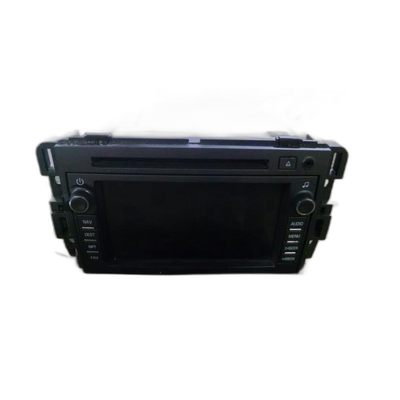
- Faulty radio (head unit) or amplifier (Less Common) — The internal amplifier circuit within the factory radio or a separate factory amplifier fails. This is highly likely if multiple speaker channel codes (like B2427, B2431) are present simultaneously.
- Faulty Body Control Module (BCM) (Rare) — The BCM itself malfunctions and incorrectly reports a fault. This is almost never the cause for a single circuit fault and is accompanied by multiple, unrelated electrical issues throughout the vehicle.
Symptoms
- No sound from the right rear speaker — This is the most direct symptom for the GM application. All other speakers work correctly.
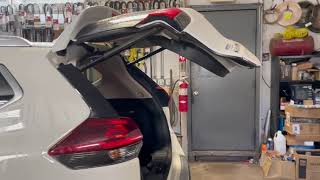
- Power liftgate inoperative or behaving erratically (Nissan/Hyundai) — The rear hatch does not open or close with the power function, stops moving mid-cycle, or reverses unexpectedly. 🎬 See this DIY fix for a Nissan liftgate that won't open
- Adaptive Headlight (AFS) warning light on dashboard (Toyota) — A warning light or message appears, and the headlights stop swiveling when turning, remaining in a fixed, centered position.
- Sound from the right rear speaker cuts in and out — If a wire is frayed or a connection is loose, the speaker works intermittently, especially when driving over bumps or opening/closing the rear door.
- Popping or static from the speaker — Before failing completely, a bad connection or a failing speaker voice coil produces crackling, static, or popping noises.
- Multiple, unrelated electrical issues (also visible on scanner) — If the cause is a faulty BCM or a major wiring short, you notice other problems like flickering lights, erratic door locks, or false warnings on the instrument cluster.
Diagnostic Flowchart
Tap your situation to follow the diagnostic path that matches what you're seeing on this code.
Common Fixes & Costs
- Repair open or shorted wiring in door harness — Parts: $5-$20, Labor: $120-$450, ~1.5 hr book time (Intermediate)
- Replace the right rear speaker — Parts: $40-$250 (per pair), Labor: $75-$200, ~0.8 hr book time (DIY)
- Replace/Recalibrate Power Liftgate Components (Nissan/Hyundai) — Parts: $200-$600+, Labor: $150-$400, ~1.5 hr book time (Professional)
- Repair AFS Headlight System (Toyota) — Parts: $150-$800+, Labor: $200-$500, ~2.5 hr book time (Professional)
- Replace the factory radio/head unit — Parts: $300-$800+, Labor: $100-$350, ~1.2 hr book time (Professional)
Used vs. New Parts: Buying Guide
When a used part is worth it: For electronic modules like radios, AFS controllers, or liftgate ECUs, a used part from a reputable seller with a warranty offers significant savings. For speakers, new aftermarket units are inexpensive and provide better sound quality than used OEM.
Donor-vehicle mileage cap: roughly under 100000 miles for the part to have meaningful remaining life.
Donor quality checklist:
- Verify the part number matches exactly.
- For electronic modules, ensure the seller guarantees it is not VIN-locked or has a return policy.
- Inspect connectors for corrosion or damage.
- For speakers, test them with a 9V battery before installation to ensure they 'pop'.
Decision logic:
- If Part is a simple speaker → Buy new aftermarket; the cost is low and quality is often higher.
- If Part is an expensive electronic module (Radio, AFS, Liftgate ECU) and budget is tight → A used part is a viable option, but be aware of potential programming/VIN-locking issues.
- If Part is a safety component like a pinch sensor → Buy new OEM to ensure reliability and proper function.
Warranty tradeoff: Used parts typically have a 30-90 day warranty. New aftermarket parts often have a 1-year to limited lifetime warranty. New OEM parts carry a 1-year warranty.
Worst-case if a used part fails: $200-500 if a used electronic module is faulty or VIN-locked, requiring repeat labor and a replacement part.
What Happens If You Wait — Timeline
- Immediate: GM Speaker: Right rear speaker stops working. Toyota AFS: 'AFS OFF' light appears, headlights stop swiveling. Nissan/Hyundai Liftgate: Gate becomes inoperative or fails to auto-reverse. (MPG impact: 0%% · Added cost: $0)
- 1-3 months: GM Speaker: If the cause is a short-to-ground instead of an open, the sustained short overheats and damages the output amplifier channel in the factory radio. Toyota AFS: Continued driving with a disabled system increases accident risk in low-light, winding conditions. Nissan/Hyundai Liftgate: A failed pinch sensor creates an ongoing, serious risk of injury. (MPG impact: 0%% · Added cost: $0 - $400 (If radio amplifier is damaged))
- 3-6 months: GM Speaker: A damaged radio amplifier fails completely, causing other audio issues or a dead head unit. Toyota AFS: No direct additional damage, but risk of an accident remains. Nissan/Hyundai Liftgate: A malfunctioning latch or motor places continuous strain on the control module, causing it to fail. There are recalls related to liftgate module failures causing fires due to water intrusion and short circuits. (MPG impact: 0%% · Added cost: $200 - $800+ (Cost of a replacement radio or liftgate control module))
- 6+ months: Worst-case scenarios include a complete failure of the audio system (GM), an accident due to poor visibility (Toyota), or a significant personal injury from a malfunctioning liftgate (Nissan/Hyundai). In rare cases, a shorted liftgate module poses a fire risk. (MPG impact: 0%% · Added cost: Potential for thousands in costs related to accident repair, personal injury, or fire damage.)
Cost of Not Fixing It
- Immediate: GM (Speaker): Annoyance due to no sound from one speaker. A shorted wire potentially damages the radio's amplifier output channel over time. (Added cost: $0 - $350)
- Immediate: Toyota (AFS): Reduced nighttime visibility on turns and potential to blind oncoming traffic, increasing accident risk. (Added cost: Increased risk of accident.)
- Immediate: Nissan/Hyundai (Liftgate): Significant safety risk of injury if the pinch sensor fails and the gate closes on a person. Inconvenience if the gate is stuck closed or opens/closes erratically. (Added cost: Potential for personal injury.)
Diagnosis Steps
- Verify Code Meaning for Your Vehicle
Before any diagnosis, confirm what B2428 means for your specific Make, Model, and Year. A GM fault is diagnosed at the speaker; a Toyota fault is diagnosed at the AFS system. Do not assume it is a speaker problem.
Tools: OBD-II scanner, vehicle-specific service information (Beginner) - Visual Inspection of Speaker and Door Harness (GM)
Remove the door panel to access the right rear speaker. Look for obvious damage to the speaker cone or wiring. Check that the connector is secure. Critically, inspect the rubber boot between the door and the car body for broken or chafed wires, as this is the most common point of failure.
Tools: Trim removal tools, screwdriver/socket set (Beginner) - Test the Speaker with a 9V Battery (GM)
Disconnect the speaker and briefly touch its two terminals with a 9-volt battery. A good speaker makes a distinct 'pop' as the cone moves. If there is no sound, the speaker has failed and needs to be replaced.
Tools: 9-volt battery, short jumper wires (Intermediate) - Scan Tool Live Data (Non-GM Faults)
For Toyota AFS or Nissan/Hyundai liftgate faults, a professional scan tool is required. For Toyota, monitor the 'Vehicle Speed Signal' PID in the AFS ECU data list; it should match the vehicle's actual speed. For Nissan/Hyundai, monitor PIDs for the 'Pinch Sensor Status' or 'Liftgate Latch Position'. An abnormal reading points to the specific faulty component.
Tools: Professional Bi-Directional Scan Tool (Advanced) - Check Related Systems (Non-GM Faults)
For Toyota, diagnosis involves checking the AFS ECU and the vehicle speed sensor inputs from the skid control ECU. For Nissan/Infiniti, follow TSB NTB21-081C to diagnose the power back door latch and wiring before suspecting the control unit. For Hyundai, inspect the rubber pinch strip sensor on the right side of the tailgate for damage or a short circuit.
Tools: Professional scan tool, service manuals, multimeter (Advanced) - Check Wiring Continuity and for Shorts
Disconnect the harness at the radio/amplifier and at the speaker. Using a multimeter on the continuity setting, check each speaker wire end-to-end. It should beep and read less than 1 ohm of resistance. Next, check each wire for a short by testing continuity between the wire and a known chassis ground, and then between the wire and the 12V power pin at the radio harness. It should show 'OL' in both tests.
Tools: Digital multimeter, vehicle wiring diagram (Advanced) - Check for AC Voltage Signal at the Speaker Connector (GM)
Turn the radio on with music playing at a moderate volume. Set a multimeter to measure AC Voltage (V~). Probe the two terminals in the speaker's electrical connector (with the speaker unplugged). You should see a fluctuating voltage reading that changes with the music's rhythm. No voltage points to a problem with the wiring or the radio/amp.
Tools: Digital multimeter (Intermediate) - Check Audio Settings (GM)
Ensure the 'Balance' and 'Fader' settings on your car radio are centered. If they are set all the way to the front or left, it prevents sound from playing on the right rear speaker.
Tools: None (Beginner) - Test Speaker Impedance with a Multimeter (GM)
For a more precise test, set a multimeter to the lowest Ohms (Ω) setting. Disconnect the speaker and probe its terminals. A good 4-ohm car speaker reads between 3 and 5 ohms. A reading of 'OL' (Open Loop) or infinite resistance means the speaker's internal coil is broken.
Tools: Digital multimeter (Intermediate) - Visualize the Signal with an Oscilloscope (GM)
For advanced diagnosis, connect an oscilloscope to the speaker output wires. Play a test tone (e.g., 1kHz sine wave). You should see a clean, uniform sine wave on the display. A flat line confirms no signal is being sent. A clipped or distorted waveform indicates a problem with the amplifier itself.
Tools: Oscilloscope, function generator (optional) (Professional)
When This Code Triggers (Freeze-Frame Conditions)
- Ignition Status: ON (Run) (Code is typically set during the BCM's power-on self-test.)
- System Voltage: 11.5 - 14.5V (The fault is detected when the module is operating under normal voltage.)
- Component Status (GM): Radio ON (For the speaker fault, the BCM runs the circuit check when the audio system is active.)
- Component Status (Nissan/Toyota): System Activated (For AFS or liftgate faults, the code is set when the respective system is commanded to operate or during initialization.)
Related Codes
- B2427 — The direct counterpart for a 'Left Rear Audio Speaker Circuit Open' on GM vehicles. The diagnostic process is identical, just on the opposite side. If both are present, a faulty radio/amplifier is highly likely.
- B2431 / B2432 — These codes correspond to the 'Right Front' and 'Left Front' audio speaker circuits on GM vehicles. The presence of multiple speaker circuit codes makes a faulty head unit or amplifier more probable than multiple individual wiring breaks.
- B2436 / B2437 — On Nissan vehicles, these codes for 'Spindle Motor LH/RH' appear along with B2428 if the power liftgate is cycled too many times and overheats, or if there is a mechanical failure in the lift motors.
- U0230 — On vehicles where B2428 relates to the liftgate, U0230 'Lost Communication with Rear Gate Module' is often present. U0230 is a network error, while B2428 is a specific fault within the module's system.
Climate & Environmental Factors
- Cold Weather: Low temperatures make wire insulation brittle and less flexible, increasing the likelihood of wires breaking inside the door harness from repeated flexing. Lubricants in liftgate latches also thicken, causing mechanical stress.
- High Humidity & Salt: Moisture and road salt accelerate corrosion on speaker terminals, harness connectors, and electronic modules. This causes intermittent connections, short circuits, or outright failure of components like pinch sensors and control units.
- Extreme Heat: High ambient temperatures accelerate the breakdown of wire insulation over time and cause electronic modules, like a BCM or radio amplifier, to overheat and fail.
How to Talk to a Mechanic About This Code
Say this: "I have a B2428 code on my [Your Vehicle's Make, Model, and Year]. Based on my research, for this vehicle, the code points to a potential issue with the [Right Rear Speaker Circuit / Adaptive Front-Lighting System / Power Liftgate System]. I would like to schedule a diagnostic to confirm the fault and get an estimate for the repair."
This statement immediately signals that you are an informed consumer. It directs the technician to the correct system (speaker, headlights, or liftgate), saving diagnostic time and preventing them from suggesting irrelevant repairs. It frames the conversation around a specific system, reducing the chance of a vague, open-ended diagnosis that can lead to upselling.
Avoid saying:
- 'My check engine light is on.' (This is a Body code, not an engine code, and is too vague.)
- 'My rear speaker/headlight/liftgate isn't working.' (This is a good start, but providing the code adds critical technical context.)
- 'Just fix whatever is wrong with it.' (This invites the shop to perform any and all repairs they find, potentially without your full consent on cost.)
Questions to ask before authorizing the repair:
- For GM: Did you test the speaker directly, and did you check for broken wires in the door jamb boot before recommending a new radio?
- For Toyota: Did you inspect the AFS ride height sensor and its connector for corrosion before quoting a new headlight assembly or control module?
- For Nissan/Infiniti: Have you consulted TSB NTB21-081C? Can you confirm this code wasn't set accidentally during other diagnostics before replacing the liftgate control unit?
- Can you provide a written estimate that breaks down the cost of parts and labor?
- What is the warranty on the parts and the labor for this specific repair?
Where to Take It: Dealer vs Independent vs Chain
- Dealer:
Recommended for Toyota AFS and Nissan/Hyundai liftgate faults due to the need for specialized tools and software.
Best for: Toyota AFS and Nissan/Hyundai liftgate repairs, especially on newer vehicles., Repairs requiring manufacturer-specific software for calibration or programming (e.g., AFS initialization, liftgate recalibration)., Vehicles still under warranty or with an active recall related to the system.
Downsides: Typically the highest labor rates and parts costs., More inclined to replace an entire assembly (e.g., full headlight unit) rather than repair a specific component (e.g., a corroded sensor connector). (Typical cost: +40% vs. baseline) - Independent Shop:
Best fit for the common GM speaker fault. A viable, cost-effective option for non-GM faults IF they demonstrate they have the proper diagnostic tools and experience.
Best for: The GM speaker/wiring fault. This is a common, well-understood repair that does not require proprietary tools., Out-of-warranty vehicles where cost is a major factor., Shops that specialize in electrical diagnostics or a specific vehicle make.
Downsides: Shop quality and expertise vary widely., May lack the expensive, manufacturer-specific scan tools required for AFS or liftgate calibration on newer models. (Typical cost: +0% vs. baseline) - Chain Shop:
Not recommended. The diagnostic complexity of B2428 (especially non-GM versions) is beyond the scope of most chain shops.
Best for: Simple parts replacement like swapping a speaker if the problem has already been correctly diagnosed.
Downsides: Technicians are often less experienced with complex electrical diagnostics., High pressure to upsell common services (e.g., fluid flushes, alignments) that are unrelated to the B2428 code., Very unlikely to have the tools or knowledge for AFS or power liftgate system diagnosis. (Typical cost: -10% vs. baseline)
When to Walk Away From the Repair
If the estimated repair cost exceeds 50% of the car's current private-party value, seriously consider not doing the repair.
- Car worth $5000, fix is $450: Fix it. A GM speaker wiring repair is a common and relatively inexpensive fix that resolves the issue completely.
- Car worth $8000, fix is $2200: Borderline. A costly Toyota AFS or Nissan liftgate repair is approaching the 50% threshold. Get a second opinion and evaluate the car's overall condition before proceeding.
- Car worth $3500, fix is $2500: Walk away. The repair cost is over 70% of the car's value. It is not economically sensible to proceed.
What Scan Tool You Need for This Code
Minimum: A scanner that reads and clears codes from the Body Control Module (BCM), not just the engine (PCM). A basic $20 engine code reader will not see 'B' codes like B2428.
A basic engine code reader is blind to the modules that generate this code. To diagnose B2428, you must access the BCM to confirm the code and see its manufacturer-specific definition. For Toyota AFS or Nissan liftgate issues, live data from the relevant module is essential.
Budget: BlueDriver Pro Scan Tool (~$119) — Reads and clears enhanced codes (ABS, SRS, BCM, etc.) for major brands (GM, Toyota, Nissan), allowing you to confirm the B2428 code and see its specific definition for your vehicle. It also views live data, which is helpful for diagnosis.
Mid-range: Foxwell NT510 Elite / XTOOL D7 (~$180-350) — Offers manufacturer-specific software. Provides full-system diagnostics, live data graphing, and bidirectional controls (active tests) to command components like liftgate motors or AFS actuators, crucial for pinpointing failures in non-GM applications.
Professional: Autel MaxiCOM MK808BT Pro / Launch X431 Series (~$500-1200) — Provides extensive bidirectional controls to test individual components and run system calibrations. Required after replacing an AFS module or liftgate components to make the new parts work correctly.
Rent vs buy: Most auto parts store loaner tools are basic engine code readers and will NOT diagnose a B2428 code. If you plan to do any serious DIY diagnostics beyond simple check engine lights, buying a budget or mid-range pick that reads BCM codes is a worthwhile investment.
How to Clear the Code After You Fix It
- Use an OBD-II scan tool to clear the code from the Body Control Module.
- Disconnecting the battery for 10-15 minutes clears the code, but a scan tool is preferred.
- For Nissan/Hyundai liftgates, perform the manual recalibration procedure after repair.
- For Toyota AFS, a system re-initialization is required with a professional scan tool.
Drive cycle (~15 minutes): A specific 'drive cycle' is not required for this body code. After clearing the code, simply start the vehicle and operate the affected system (e.g., turn on the radio, operate the power liftgate, or drive to activate AFS) to confirm the code does not return.
Readiness monitors affected: None
Watch out for:
- Simply clearing the code will not fix the underlying electrical or mechanical problem; it returns immediately.
- Forgetting to perform a system recalibration on a Nissan power liftgate after a repair causes continued malfunction.
- Disconnecting the battery resets other vehicle systems like radio presets and idle learn values.
Will This Fail Emissions / State Inspection?
No — by itself this code doesn't fail OBD inspection (but it can keep readiness monitors from setting, which causes a separate fail).
- California: This code is a 'B' (Body) code and will NOT cause a failure of the OBD-II emissions (smog) test, which focuses on 'P' (Powertrain) codes. However, if the AFS light is on, a technician notes it as a safety issue.
- New York: The NYS inspection includes a check of required lighting. A malfunctioning adaptive headlight system (the Toyota fault) causes a safety inspection failure. The speaker or liftgate faults do not.
- Texas: As of 2025, most non-commercial vehicles are exempt from the annual safety inspection, but emissions testing is still required in 17 counties. This B-code does not cause an emissions test failure. However, if the fault relates to headlights, it is grounds for a traffic citation.
Most Commonly Affected Vehicles
- Chevrolet Silverado, Trailblazer, Tahoe (2007-2018) — Extremely common for B2428 to indicate a right rear speaker fault due to broken wires in the door jamb. On some models, B2428 also means 'Driver Heated Seat Circuit High Voltage'.
- GMC Sierra, Yukon (2007-2018) — Shares platforms and wiring with Chevrolet models, suffering from the same common speaker and door harness wiring faults.
- Toyota Highlander, Avalon, Prius (2008-2015) — On many Toyota and Lexus models, B2428 indicates a 'Vehicle Speed Signal Malfunction' for the Adaptive Front-lighting System (AFS), which controls swiveling headlights. This is unrelated to the audio system.
- Nissan Pathfinder, Rogue (2021-2025) — B2428 relates to a power back door control unit calibration failure. See TSB NTB21-081C, which warns this code is often set by mistake during other diagnostics.
- Infiniti QX60 (2022-2025) — Shares the power back door system with the Nissan Pathfinder. B2428 points to a control unit calibration fault per TSB ITB22-011, which is generated by improper diagnostic procedures.
- Hyundai Veracruz / ix55 (2007-2012) — For this model, B2428 indicates 'Right Pinch Strip Stuck Low,' a fault with the power tailgate's safety sensor strip.
- Dodge / Chrysler Grand Caravan, Town & Country (2012) — While not always logging a B2428, these vehicles were subject to Safety Recall M17 for a malfunctioning right side power liftgate pinch sensor that would not reverse as intended, increasing injury risk.
- Ford F-150, Explorer (2009-2020) — Ford vehicles are known for similar body codes related to speaker circuit faults caused by broken wires in the door jamb harness, a problem shared with GM trucks.
Manufacturer-Specific Notes
- General Motors: This is the primary user of B2428 to mean 'Right Rear Audio Speaker Circuit Open'. However, on some models it also refers to a 'Driver Heated Seat Circuit High Voltage'.
- Nissan / Infiniti: Uses B2428 to indicate a 'Power Back Door Control Unit' calibration fault. TSBs NTB21-081C and ITB22-011 warn this code is accidentally set by technicians during diagnosis of other liftgate parts, leading to misdiagnosis.
- Toyota / Lexus: Defines B2428 as a 'Vehicle Speed Signal Malfunction' that affects the Adaptive Front-lighting System (AFS), which controls swiveling headlights. The fault lies with the AFS ECU or its inputs, not the headlights themselves.
- Hyundai: Uses B2428 for 'Right Pinch Strip Stuck Low', a fault in the safety sensor for the power tailgate on models like the Veracruz. This indicates a short in the sensor's signal harness.
- Chrysler / Dodge: Does not commonly use B2428, but issued a safety recall (M17) for the exact same issue Hyundai flags with this code: a faulty right-side power liftgate pinch sensor on 2012 minivans.
Real Owner Stories
2006 Chevy Silverado - Intermittent Right Speaker
The right side speakers cut out intermittently. The owner replaced the speaker, but the problem returned shortly after.
What they tried:
- Replaced the right side speaker, but the issue persisted.
- Removed the door panel and wiggled the plastic connector between the door's wiring and the speaker's harness.
- Discovered that applying pressure to the connector made the sound come back, indicating a poor connection inside the plastic plug.
Outcome: The owner cut off the plastic connectors and directly spliced the wires from the door to the speaker harness using crimp caps and electrical tape. This permanently fixed the connection and the speaker has worked flawlessly since.
Lesson: Don't assume the speaker or head unit is bad. The plastic connectors themselves fail over time. Before replacing parts, check for a loose connection by wiggling the harness plug at the speaker.
2019 Nissan Rogue - Power Liftgate Stuck Open
After a trip to the grocery store, the power liftgate on his wife's Rogue got stuck in the fully open position and would not close using any of the buttons.
What they tried:
- Initially, he manually forced the gate closed, which is not recommended as it damages the struts.
- He tried pressing and holding the interior liftgate button for 5+ seconds to reset the system, but this did not work.
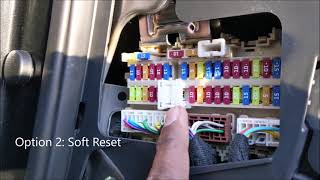
- Finally, he performed a 'hard reset' by disconnecting the negative battery terminal for about 15 minutes.
Outcome: Disconnecting the battery reset the vehicle's computer systems, including the liftgate control module. After reconnecting the battery, the liftgate functioned normally again, saving a trip to the dealership.
Lesson: For a power liftgate that is unresponsive or acting erratically, a simple computer reset often solves the problem. Try holding the liftgate button for 5-10 seconds first, and if that fails, a 15-minute battery disconnect is a viable DIY fix before seeking professional repair.
2005 Acura RL with AFS Light - Misdiagnosis Avoided
The 'AFS' warning light illuminated on the dashboard, indicating a failure in the adaptive front lighting system.
What they tried:
- The owner found forum posts suggesting the problem was a corroded headlight stroke sensor located in the rear left wheel well, not the AFS motor itself.
- Upon inspection, the connector was so corroded it broke off.
- Instead of buying an expensive OEM replacement part from Acura, he found a visually identical sensor for a Lexus/Toyota on eBay for $17.50.
Outcome: The owner installed the inexpensive Toyota/Lexus sensor, and it resolved the AFS error code. The headlights performed their self-test correctly upon startup, confirming the fix. This saved him from a dealership repair that could have cost over $200.
Lesson: For AFS faults on Toyota/Lexus/Acura/Honda, the issue is often a small, inexpensive position sensor near the rear suspension, not the expensive headlight assembly or control module. Cross-referencing parts from similar models leads to significant savings.
How to Prevent This Code From Triggering
- Periodically lubricate the door harness boot (Every 1-2 years) — Applying a silicone-based spray lubricant to the rubber boot in the door jamb keeps it flexible. This reduces friction and stress on the internal wires as they flex, preventing the insulation from cracking and the wires from breaking, which is the #1 cause of the GM speaker fault.
- Apply dielectric grease to key connectors (When servicing or replacing components) — When a speaker, liftgate sensor, or AFS module is exposed, applying a small amount of dielectric grease to the outside of the connector seal blocks moisture and prevents corrosion. This is crucial for components exposed to the elements, like liftgate latches and AFS sensors in wheel wells.
- Clean and lubricate power liftgate struts and latches (Annually) — Wiping down the shiny shafts of the power liftgate struts and applying a dry graphite or silicone lubricant helps them operate smoothly, reducing strain on the motors. Cleaning dirt and old grease out of the latch mechanism with a brake cleaner and re-lubricating it prevents binding that stresses the control module.
- Avoid forcing power liftgates manually (Daily habit) — Manually forcing a power liftgate open or closed damages the internal gears of the motorized struts or causes the system to lose its position calibration. If the gate must be moved manually, do so slowly and smoothly. If it feels stuck, investigate the cause rather than using brute force.
- Ensure door and liftgate drain holes are clear (Annually or after noticing water sloshing) — Doors and liftgates have drain holes at the bottom edge. If these become clogged with debris, water accumulates inside, submerging speaker connections, pinch sensors, and latch mechanisms, leading to corrosion and electrical shorts.
Frequently Asked Questions
Can I fix code B2428 myself?
It depends on the vehicle. For a GM speaker fault, replacing a bad speaker or splicing a broken door wire is a straightforward DIY job. Faults with Toyota AFS headlights or Nissan power liftgate control units require professional scan tools and recalibration.
What is the most common misdiagnosis for B2428?
On Nissan and Infiniti vehicles, technicians frequently misdiagnose this as a failed Automatic Back Door Control Unit. TSB NTB21-081C warns that trying to recalibrate the unit while another fault exists erroneously triggers code B2428. Always verify the latch and motor before replacing the $400+ control module.
Could a new aftermarket stereo have caused this code?
Yes. An improper installation, a cheap wiring harness adapter, or an incompatible stereo triggers false diagnostic codes on the CAN bus. If B2428 appeared immediately after a radio install, check the wiring adapter first.
Will clearing the code fix the problem?
No. Clearing the code with a scan tool is only a temporary measure. The code returns as soon as the body control module re-evaluates the circuit and detects the persistent electrical fault.
Can a weak battery cause code B2428?
Yes. A weak battery causes low voltage conditions that lead to unpredictable behavior in electronic modules, including the BCM. If you experience multiple strange electrical issues simultaneously, test the battery and alternator before replacing specific components.
What is a power liftgate pinch sensor and why is it important?
A pinch sensor is a rubber safety strip located on the side of a power tailgate opening that detects obstructions. If an object presses against it, the sensor signals the control module to immediately reverse the gate to prevent injury. A B2428 code on a Hyundai indicates this critical safety sensor has failed.
What are adaptive headlights and what happens when they fail?
Adaptive headlights pivot left and right based on steering angle and speed to illuminate corners. When they fail due to a B2428 code on a Toyota, they stop swiveling and default to a fixed forward position. This significantly reduces visibility on dark, winding roads.
Key Takeaways
- Code B2428 has entirely different meanings across brands: it indicates a broken right rear speaker wire on GM vehicles, a disabled adaptive headlight system on Toyotas, and a power liftgate safety sensor failure on Nissan and Hyundai models.
- On GM trucks and SUVs from 2007-2018, B2428 almost exclusively points to a broken wire inside the right rear door jamb boot, requiring a $120-$450 wiring repair or a simple DIY splice.
- For Nissan and Infiniti SUVs, do not immediately replace the $400+ power liftgate control unit; TSB NTB21-081C warns this code is frequently triggered by mistake during routine diagnostics and requires a manual recalibration first.
- Driving with B2428 is safe for GM audio faults, but Toyota owners face a 100% loss of adaptive headlight swiveling, and Nissan/Hyundai owners risk physical injury from a disabled liftgate pinch sensor.
Helpful Videos
Shop the Parts Behind B2428
Below are the parts most often responsible for code B2428, ranked by how frequently each one is the actual culprit (per the diagnosis above). Tap any to see what we have for your vehicle.

The information in this article is provided for general reference and educational purposes only. Vehicle specifications, procedures, and part compatibility can vary by production date, trim level, and region. Always consult your vehicle's factory service manual and verify part numbers before purchasing or performing repairs. Safety-critical components such as airbags, seat belts, and braking systems should be installed by a qualified professional.
- 🧭 Diagnostic Flowchart
- 🎬 Helpful Videos
- 🛍️ Shop This Part
- What Does B2428 Mean?
- Can I Drive With B2428?
- Common Causes
- Symptoms
- Common Fixes & Costs
- Used vs. New Parts: Buying Guide
- What Happens If You Wait — Timeline
- Cost of Not Fixing It
- Diagnosis Steps
- When This Code Triggers (Freeze-Frame Conditions)
- Related Codes
- Climate & Environmental Factors
- How to Talk to a Mechanic About This Code
- Where to Take It: Dealer vs Independent vs Chain
- When to Walk Away From the Repair
- What Scan Tool You Need for This Code
- How to Clear the Code After You Fix It
- Will This Fail Emissions / State Inspection?
- Most Commonly Affected Vehicles
- Manufacturer-Specific Notes
- Real Owner Stories
- 2006 Chevy Silverado - Intermittent Right Speaker
- 2019 Nissan Rogue - Power Liftgate Stuck Open
- 2005 Acura RL with AFS Light - Misdiagnosis Avoided
- How to Prevent This Code From Triggering
- Frequently Asked Questions
- Can I fix code B2428 myself?
- What is the most common misdiagnosis for B2428?
- Could a new aftermarket stereo have caused this code?
- Will clearing the code fix the problem?
- Can a weak battery cause code B2428?
- What is a power liftgate pinch sensor and why is it important?
- What are adaptive headlights and what happens when they fail?
- Key Takeaways
- 🎟️ Get 5% Off