

OBD-II Code B2430: A Comprehensive Guide to a Multi-System Fault
What B2430 means, why it triggers, and how to diagnose and fix it like a pro
- Identify your vehicle's manufacturer first, as B2430 means a passenger heated seat failure on GM vehicles and a driver's side LED headlight failure on Toyota and Lexus models.
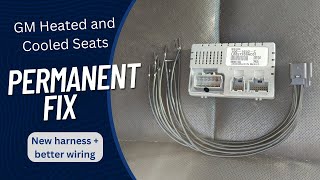
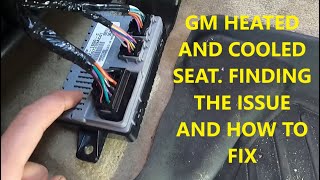
- Inspect the 12-pin connector under the passenger seat on 2007-2014 GM trucks, as a melted power pin causes over 80% of B2430 heated seat codes.
- Diagnose Toyota and Lexus B2430 codes by checking the LIN bus communication wire, as incompatible aftermarket headlights frequently trigger this fault after collision repairs.
- Test the seat cushion heating element for resistance between 2.5 and 8.5 ohms before spending $250 on a new GM control module.
What Does B2430 Mean?
B2430 is a manufacturer-specific Body Control Module (BCM) code, meaning its definition changes entirely based on your vehicle. On General Motors vehicles (Chevrolet, GMC, Cadillac), it signals a fault in the passenger's heated seat circuit. On Toyota and Lexus, it indicates a circuit malfunction in the driver's side (LH) LED headlight system. On certain Ford models, it points to an issue with the power seat's auto-glide function. You must identify your vehicle's make to diagnose this code.
Technical definition: For General Motors, B2430 is a 'Passenger Seat Heater Circuit' malfunction, stored by the Heated Seat Module (HSM) when it detects a short to voltage, short to ground, or an open circuit. For Toyota/Lexus, it is an 'LED Headlight LH Circuit Malfunction,' stored when the main body ECU detects an operational or communication failure with the low beam headlight. For Ford, it indicates a 'Seat Back Autoglide Rearward Switch Circuit Short to Ground'.
Can I Drive With B2430?
Yes, But With Caution. For GM vehicles, driving is safe since it only affects the passenger heated seat. However, if you smell burning plastic, pull the heated seat fuse immediately to prevent a fire. For Toyota/Lexus, driving at night without a driver's side low-beam headlight is illegal and unsafe. Treat this as an urgent repair to avoid accidents and traffic citations.
Common Causes
- Melted Power Connector Under Seat (GM) (Very Common) — The main 12-pin connector (X305) under the GM passenger seat overheats. The power and ground pins melt the plastic housing, causing high resistance or an open circuit.
- Broken Heating Element in Seat Pad (GM) (Very Common) — The thin resistive wires inside the GM seat cushion's heating pad fracture from occupant weight, creating an open circuit. 🎬 See this walkthrough on replacing broken seat heating elements.
- Faulty LED Headlight Assembly (Toyota/Lexus) (Common) — The internal circuitry or integrated cooling fan of the sealed LED headlight unit fails. This frequently occurs if an incompatible aftermarket headlight is installed after a collision.
- Damaged Wiring or Corroded Connector (Common) — Wires under a seat get kicked and severed. Headlight connectors exposed to moisture corrode. A loose ground connection (like G304 on a GM truck) also triggers this code.
- Blown Fuse or Faulty Relay (Less Common) — A blown fuse for the heated seat ('HTD SEAT') or headlight ('H-LP LH') circuit causes a total loss of power and triggers the code.
- Incorrectly Installed Seat Heaters (GM) (Uncommon) — If replacement seat heaters are installed, reversing the connectors for the seat back and cushion elements causes the module to detect incorrect resistance values.
- Failed Control Module (Rare) — The Heated Seat Module or Headlight Control ECU fails internally. Rule out wiring and component failures before replacing a module.
Symptoms
- Passenger heated seat fails and switch light flashes — On GM vehicles, the passenger heated seat will not turn on. The switch indicator light flashes for a few seconds when pressed, then goes out, indicating the module disabled the system.
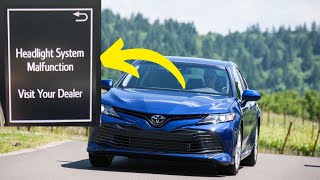
- Driver's side headlight fails with dash warning — On Toyota/Lexus vehicles, the driver's side low-beam headlight goes out or dims. A 'Headlight System Malfunction' warning message appears on the dashboard.
- Burning smell from under the passenger seat — A severe short circuit in the GM heated seat system causes the connector to melt, producing a distinct burning plastic smell or visible smoke.
Diagnostic Flowchart
Tap your situation to follow the diagnostic path that matches what you're seeing on this code.
Common Fixes & Costs
- Repair Damaged Wiring or Replace Connector Pigtail — Parts: $30-$70, Labor: $150-$250, ~1.5 hr book time (Intermediate)
- Replace Heated Seat Element (Heating Pad) — Parts: $80-$180, Labor: $300-$450, ~2.5 hr book time (Intermediate)
- Replace Headlight Assembly — Parts: $600-$1500, Labor: $150-$300, ~1.5 hr book time (DIY)
- Replace Blown Fuse / Relay — Parts: $5-$20, Labor: $0-$50, ~0.2 hr book time (Beginner)
- Replace Control Module (Seat or Headlight) — Parts: $250-$900, Labor: $100-$250, ~1.0 hr book time (Professional)
Used vs. New Parts: Buying Guide
When a used part is worth it: For Toyota/Lexus, a used OEM headlight assembly avoids communication errors common with aftermarket units and saves money. For GM, a used heated seat module is cost-effective, but never buy used heating elements.
Donor-vehicle mileage cap: roughly under 100000 miles for the part to have meaningful remaining life.
Donor quality checklist:
- Verify headlight part numbers exactly. Ensure the donor vehicle avoided front-end collisions.
- Inspect electronic module pins for corrosion or heat damage.
- Avoid parts from flood-damaged vehicles.
Decision logic:
- If Fix is a Toyota/Lexus headlight and new OEM is over $1000 → Buy a used OEM assembly. New aftermarket is a high risk for this code.
- If Fix is a GM heated seat element → Buy a new OEM or quality aftermarket element. Used elements fail quickly.
- If Fix is a control module → Buy used if the return policy is good, but only after proving the original module is faulty.
Warranty tradeoff: Used parts carry 30-90 day warranties. New aftermarket parts offer 1-year to lifetime warranties. New OEM parts carry 1-year warranties.
Worst-case if a used part fails: $150-$300 (Cost of repeat labor if a used part fails)
What Happens If You Wait — Timeline
- 0-2 weeks: GM: Passenger heated seat stops working; switch light flashes. Toyota: 'Headlight System Malfunction' message appears; driver's headlight is out. (MPG impact: 0%% · Added cost: $0 (GM). $150-$300 (Toyota - traffic ticket for headlight out).)
- 2 weeks - 3 months: GM: Heat degrades the plastic connector and surrounding wire insulation. Toyota: Continued risk of accidents and failed safety inspections. (MPG impact: 0%% · Added cost: $50-$150 (GM - damage to adjacent wires). $500+ (Toyota - at-fault accident).)
- 3-12 months: GM: High resistance damages the Heated Seat Module. The connector becomes brittle and breaks upon removal. (MPG impact: 0%% · Added cost: $250-$400 (GM - cost of a new Heated Seat Module).)
- 12+ months: GM: The overheated connector melts completely, shorts to other wires, or poses a fire risk. Ford: Shorted switch causes a dead battery. (MPG impact: 0%% · Added cost: $500-$1500+ (Cost to repair main wiring harness or replace dead battery).)
Cost of Not Fixing It
- Immediate: For Toyota/Lexus: Inoperative driver's side headlight is a major safety hazard and illegal. For GM: Loss of passenger heated seat. (Added cost: $100-$500 (Traffic citation for inoperative headlight))
- 1-6 months: For GM: A melting connector damages the wiring harness or the seat control module. For Toyota: Continued safety risk and failed safety inspections. (Added cost: $150-$400 (Cost to replace a damaged wiring pigtail or control module))
- 6+ months: For GM: A severe short circuit in the heated seat connector becomes a fire risk. For Ford: A shorted switch causes a parasitic battery drain. (Added cost: $100-$300 (Cost of new battery and diagnostic time for parasitic draw))
Diagnosis Steps
- Confirm the Faulty System
Determine what B2430 means for your specific vehicle. Diagnose the passenger heated seat for GM, the driver's side headlight for Toyota/Lexus, or the power seat movement for Ford.
Tools: Vehicle Owner's Manual (Beginner) - Perform a Targeted Visual Inspection
For GM, slide the passenger seat forward and inspect the large 12-pin connector (X305) on the silver control module for melted plastic or charring. For Toyota/Lexus, inspect the wiring harness at the back of the headlight for corrosion or loose pins.
Tools: Flashlight (Beginner) - Check Fuses and Relays
Locate the fuses for the affected system (e.g., 'PASS SEAT HEAT' or 'H-LP LH'). Test for continuity using a multimeter. Swap the relevant relay with an identical one from a non-critical system (like the horn) to see if the problem moves.
Tools: Owner's Manual, Fuse Puller, Multimeter (Beginner) - Check for Power at the Component Connector
Disconnect the main electrical connector from the seat module or headlight. Probe the power supply pin on the vehicle side with a multimeter. With the ignition and component switched on, verify battery voltage (11-14V) is present.
Tools: Multimeter, Vehicle-specific wiring diagram (Intermediate) - [Pro Tip] Test Heated Seat Element Resistance (GM)
Disconnect the heating element connectors. Set a multimeter to Ohms (Ω). A healthy seat cushion element reads 2.5-8.5 ohms; a seat back element reads 3.5-11.5 ohms. A reading of infinity (OL) confirms a broken wire inside the pad.
Tools: Multimeter, Service manual for pinout (Intermediate) - [Pro Tip] Check LIN Bus Communication (Toyota/Lexus)
Back-probe the LIN bus wire at the headlight connector using an oscilloscope. A healthy LIN bus shows a square wave pattern cycling between 0V and 12V. A flat line indicates a communication failure, common with aftermarket headlights.
Tools: Oscilloscope, Wiring Diagram (Advanced) - Swap Components for Diagnosis (Toyota/Lexus)
Swap the driver's side (faulty) headlight with the passenger's side (working) headlight if they are interchangeable. If the code changes to B2431 (RH side fault), the headlight assembly itself is defective.
Tools: Basic hand tools, Known-good headlight assembly (Advanced) - Check for Parasitic Draw (Ford)
If diagnosing a Ford 'Seat Back Autoglide' issue, a faulty switch fails to sleep and drains the battery. Perform a parasitic draw test with a multimeter set to amps, pulling fuses to isolate the circuit.
Tools: Multimeter (with Amp setting), Basic hand tools (Advanced) - [Advanced] Check Heated Seat Temperature Sensor (GM)
Monitor live data for the heated seat temperature sensor using a scan tool. Voltage should read between 1.0V and 4.0V. Readings outside this range indicate a faulty sensor or circuit.
Tools: Professional Scan Tool, Multimeter, Service Manual (Advanced) - [Advanced] Analyze Scan Tool Live Data (GM)
Command the Heated Seat Module (HSM) to 'High' using a scan tool. The 'Heated Seat PWM Ground Duty Cycle' PID should read approximately 90%. A lower value means the module detects a fault and is limiting output.
Tools: Professional Scan Tool (e.g., GM Tech2/GDS2) (Advanced)
When This Code Triggers (Freeze-Frame Conditions)
- System Voltage: 11.5-14.5V (Code sets when the module detects an out-of-spec voltage or resistance reading in the circuit.)
- Component Status: Commanded On (The fault is detected when the driver attempts to activate the heated seat switch or turn on the headlights.)
- Vehicle State: Key On / Engine Running (The control module for the affected system must be powered on to detect the fault and store the code.)
Related Codes
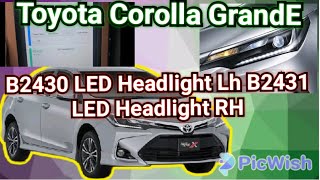
- B2431 — On Toyota/Lexus, this is the passenger side counterpart to B2430, indicating an 'LED Headlight RH Circuit Malfunction'.
- B2425 — On GM vehicles, this indicates a 'Driver Seat Heater Circuit' fault. It is the driver's side equivalent of the B2430 passenger side code.
- B2430 0D / B2430 0E — On GM vehicles, a two-digit symptom code provides detail. '0D' means 'High Resistance' (open wire), and '0E' means 'Low Resistance' (short circuit).
- U0xxx Codes — On Toyota/Lexus, a B2430 accompanied by a 'U' code (e.g., U0129) indicates a loss of communication. The problem is in the wiring or network, not the headlight itself.
Climate & Environmental Factors
- Cold Weather: Repeated flexing of GM heating element wires in freezing temperatures makes them brittle and prone to fracturing. Failures spike during the first cold snaps of the season.
- High Humidity / Road Salt: Moisture intrusion causes corrosion on terminal pins, especially on Toyota/Lexus headlights. Road salt accelerates this, leading to high resistance and short circuits.
How to Talk to a Mechanic About This Code
Where to Take It: Dealer vs Independent vs Chain
- Dealer:
Best for: Toyota/Lexus vehicles, especially if the issue occurred after an accident or if communication (U-codes) are present., Vehicles under warranty., Complex Body Control Module issues requiring proprietary software like Techstream or GDS2.
Downsides: Highest labor rates and parts costs., Defaults to replacing entire expensive assemblies rather than repairing wiring. (Typical cost: +50% vs. baseline) - Independent Shop:
Best fit for the GM heated seat fault. For Toyota/Lexus headlights, use a dealer or specialist for complex diagnostics.
Best for: GM heated seat repairs. This is a common issue that competent independent shops handle easily., Out-of-warranty vehicles where cost is a primary concern.
Downsides: Quality varies; look for ASE certifications., Lacks manufacturer-specific diagnostic tools for complex Toyota/Lexus headlight communication issues. (Typical cost: +0% vs. baseline) - Chain Shop:
AVOID. Both GM and Toyota versions of B2430 require specific knowledge unlikely found at a chain shop.
Best for: Simple maintenance like oil changes or tires.
Downsides: Technician skill varies dramatically., Lacks diagnostic tools for manufacturer-specific 'B' codes., High pressure to upsell parts. (Typical cost: -10% vs. baseline)
When to Walk Away From the Repair
If the estimated repair cost exceeds 40-50% of the car's private-party value, seriously consider selling or trading the vehicle as-is.
- Car worth $8000, fix is $350: Fix it. This GM heated seat repair is a small fraction of the vehicle's value.
- Car worth $15000, fix is $1500: Fix it, but get a second opinion. This Toyota headlight repair is expensive but critical for safety.
- Car worth $4000, fix is $1500: Borderline. Explore using a salvaged OEM headlight to reduce cost before authorizing the full repair.
What Scan Tool You Need for This Code
Minimum: A scanner that reads manufacturer-specific Body Control Module (BCM) codes. Basic $20 engine-only code readers will NOT see B2430.
A simple engine code reader cannot connect to the BCM. It will show 'No Codes Found' while the fault is active.
Budget: Foxwell NT301 / Ancel AD410 / BlueDriver Pro (~$70) — Reads and clears 'B' codes from the BCM, allowing you to confirm the code before proceeding with visual inspection.
Mid-range: Foxwell NT510 Elite / Autel MK808 / XTOOL D7W (~$350) — Offers bidirectional control to command the heated seat module or headlight on/off. Displays live data streams critical for diagnosis.
Professional: GM Tech2 (clone) / Autel MaxiSys / Launch X431 (~$500-1200) — Provides dealer-level access to all module functions. Performs advanced diagnostics and ECU calibrations needed after replacement.
Rent vs buy: Auto parts stores offer free code reading, but their scanners often miss BCM codes. Buy a budget pick that reads B-codes if diagnosing yourself.
How to Clear the Code After You Fix It
- Use an OBD-II scan tool to clear the code from the Body Control Module.
- For GM, disconnect the main seat connector under the seat for 5 minutes to reset the module.
- Perform a functional test: turn the repaired component on and off multiple times to verify the fix.
- For Toyota, turn the ignition on, operate the headlight switch, and wait 10 seconds to see if the code returns.
Drive cycle (~5 minutes): A drive cycle is not required. Turn the ignition on, activate the component (heated seat or headlight), let it run for 1-2 minutes, then turn it off. Repeat 2-3 times. If the code stays away, the repair is successful.
Readiness monitors affected: None
Watch out for:
- Disconnecting the battery fails to clear codes from the body control module's memory.
- The code returns immediately if the underlying electrical fault (broken wire, bad component) remains.
- Skipping the functional test leads to the false assumption that clearing the code fixed the problem.
Will This Fail Emissions / State Inspection?
No — by itself this code doesn't fail OBD inspection (but it can keep readiness monitors from setting, which causes a separate fail).
- California: This 'B' code does not fail the OBD-II emissions test. However, an inoperative headlight fails the visual safety inspection.
- New York: NYS inspection includes a safety check. A non-functioning headlight is an automatic failure. The B2430 code itself is ignored.
- Texas: Texas requires an annual safety inspection. A non-working low-beam headlight results in an inspection failure.
Most Commonly Affected Vehicles
- Chevrolet Silverado, Suburban, Tahoe (2007-2014) — Extremely common. TSB 10-08-50-008B addresses the melted connector under the passenger seat. The original terminal pins are undersized for the current draw.
- GMC Sierra, Yukon, Yukon XL (2007-2014) — Identical to Chevrolet models. Caused by a broken heating element in the passenger seat cushion or a burnt power connector at the module.
- Toyota RAV4, Corolla, Camry (2018-2024) — Frequently logs B2430 for a driver's side LED headlight circuit malfunction. Often appears after collision repair when non-OEM parts are used.
- Lexus RX, CT, ES (2013-2023) — Points to a fault in the complex LED headlight system. Diagnosis requires a professional scan tool to check communication with the Main Body ECU.
- Ford Mustang, Expedition, F-150 (2005-2014) — B2430 is defined as 'Seat Back Autoglide Rearward Switch Circuit Short To Ground,' an issue with the power seat adjustment mechanism.
- Cadillac Escalade (2007-2014) — Shares the GM platform and suffers from the exact same melted connector and broken heating element issues as Chevrolet/GMC.
- Toyota Prius (2012-2022) — Common for the driver's side (LH) LED headlight. Replacing the headlight control ECU (ballast) separately sometimes resolves it, but often requires full assembly replacement.
Manufacturer-Specific Notes
- General Motors (Chevrolet/GMC): The melted power connector under the passenger seat is the signature failure. TSB 10-08-50-008B confirms original terminal pins were undersized. Replacement pigtails use heavier gauge wires.
- Toyota / Lexus: This code notoriously appears after front-end body work. The main body ECU fails to recognize cheaper aftermarket headlights, triggering B2430 even if the light illuminates.
- Ford: Ford uses B2430 for a 'Seat Back Autoglide Rearward Switch'. The fault is usually in the switch itself or wiring within the seat track, completely unrelated to heating or lighting.
Real Owner Stories
2010 GMC Yukon Denali at 130K miles
Passenger heated seat stopped working. The switch light flashed and turned off.
What they tried:
- Checked the 'HTD SEAT' fuse, which was intact.
- Inspected the wiring under the passenger seat and found the main 12-pin connector melted around the power pins.
Outcome: Owner spliced in a replacement connector pigtail (WPT928) for $35. This permanently fixed the issue.
Lesson: On 2007-2014 GM trucks, a flashing heated seat light almost always means a melted connector. Visually inspect it before buying parts.
2018 Toyota Tundra after minor accident
A 'Headlight System Malfunction' message appeared a month after collision repair. The driver's side headlight still worked.
What they tried:
- Took the truck to a dealer, who scanned code B2430.
- Dealer determined the body shop installed an aftermarket headlight.
Outcome: The aftermarket headlight failed to communicate with the body ECU. The owner forced the body shop's insurance to install a genuine Toyota OEM headlight, resolving the code.
Lesson: If B2430 appears on a Toyota/Lexus after a front-end repair, an incompatible aftermarket headlight is the culprit. Insist on OEM lighting parts.
2012 Chevrolet Silverado at 95K miles
Passenger heated seat would not turn on. Switch light blinked. No visible melting on the connector.
What they tried:
- Disconnected the heating element and tested resistance with a multimeter.
- The seat cushion element showed infinite resistance (Open Loop), indicating a broken wire.
Outcome: Owner removed the seat upholstery, found the broken wire in the heating pad, and soldered it. Total cost was $0.
Lesson: If the GM connector looks fine, test the seat cushion heating element for resistance to confirm a broken wire.
How to Prevent This Code From Triggering
- Avoid placing sharp or heavy objects on the seat (GM) (Daily habit) — Kneeling on the seat puts focused pressure on delicate heating element wires, causing them to fatigue and break.
- Apply dielectric grease to connectors (During any related repair) — Dielectric grease seals out moisture, preventing pin corrosion that leads to high resistance in humid or salt-belt climates.
- Be gentle with under-seat wiring (When vacuuming or retrieving items) — Carelessly shoving a vacuum wand under the seat snags wiring and dislodges connectors, causing failures.
Frequently Asked Questions
Why does B2430 mean different things for different cars?
OBD-II codes starting with 'B' (Body) are manufacturer-specific. This allows carmakers to assign codes to unique electronic features. Therefore, B2430 means 'heated seat' on a Chevy but 'headlight' on a Toyota.
Can I fix a broken GM heated seat element myself?
Yes, this is a common DIY repair. It involves removing the seat upholstery, locating the broken wire in the heating pad, and soldering it. This saves hundreds of dollars over replacing the entire pad.
My Toyota dealer quoted $1,800 for a new headlight. Is that correct?
Yes. Modern OEM LED headlights are complex, sealed units with integrated control modules and cooling fans. If an internal component fails, the entire assembly requires replacement.
I had my bumper repaired and now have a B2430 code. Are they related?
Yes, highly likely on a Toyota or Lexus. This indicates the body shop installed an incompatible aftermarket headlight. The Body Control Module cannot communicate with it, triggering the code.
What is a common misdiagnosis for B2430 on a Toyota?
A common mistake is immediately replacing the expensive headlight assembly. The actual fault is often a poor ground connection, a blown fuse, or a broken LIN bus communication wire.
Can I just replace the LED bulb in my Toyota headlight?
No. Modern LED headlights integrate the emitters directly into internal circuit boards. If an emitter fails, you must replace the entire headlight assembly.
Is a B2430 heated seat fault a fire hazard?
The risk is low, but present. A short to ground or a melted connector generates significant heat. If you smell burning plastic from under the seat, pull the heated seat fuse immediately.
Key Takeaways
- Identify your vehicle's manufacturer first, as B2430 means a passenger heated seat failure on GM vehicles and a driver's side LED headlight failure on Toyota and Lexus models.
- Inspect the 12-pin connector under the passenger seat on 2007-2014 GM trucks, as a melted power pin causes over 80% of B2430 heated seat codes.
- Diagnose Toyota and Lexus B2430 codes by checking the LIN bus communication wire, as incompatible aftermarket headlights frequently trigger this fault after collision repairs.
- Test the seat cushion heating element for resistance between 2.5 and 8.5 ohms before spending $250 on a new GM control module.
Helpful Videos
Shop the Parts Behind B2430
Below are the parts most often responsible for code B2430, ranked by how frequently each one is the actual culprit (per the diagnosis above). Tap any to see what we have for your vehicle.



The information in this article is provided for general reference and educational purposes only. Vehicle specifications, procedures, and part compatibility can vary by production date, trim level, and region. Always consult your vehicle's factory service manual and verify part numbers before purchasing or performing repairs. Safety-critical components such as airbags, seat belts, and braking systems should be installed by a qualified professional.
- 🧭 Diagnostic Flowchart
- 🎬 Helpful Videos
- 🛍️ Shop This Part
- What Does B2430 Mean?
- Can I Drive With B2430?
- Common Causes
- Symptoms
- Common Fixes & Costs
- Used vs. New Parts: Buying Guide
- What Happens If You Wait — Timeline
- Cost of Not Fixing It
- Diagnosis Steps
- When This Code Triggers (Freeze-Frame Conditions)
- Related Codes
- Climate & Environmental Factors
- How to Talk to a Mechanic About This Code
- Where to Take It: Dealer vs Independent vs Chain
- When to Walk Away From the Repair
- What Scan Tool You Need for This Code
- How to Clear the Code After You Fix It
- Will This Fail Emissions / State Inspection?
- Most Commonly Affected Vehicles
- Manufacturer-Specific Notes
- Real Owner Stories
- 2010 GMC Yukon Denali at 130K miles
- 2018 Toyota Tundra after minor accident
- 2012 Chevrolet Silverado at 95K miles
- How to Prevent This Code From Triggering
- Frequently Asked Questions
- Why does B2430 mean different things for different cars?
- Can I fix a broken GM heated seat element myself?
- My Toyota dealer quoted $1,800 for a new headlight. Is that correct?
- I had my bumper repaired and now have a B2430 code. Are they related?
- What is a common misdiagnosis for B2430 on a Toyota?
- Can I just replace the LED bulb in my Toyota headlight?
- Is a B2430 heated seat fault a fire hazard?
- Key Takeaways
- 🎟️ Get 5% Off