

B2430 on 2007-2013 Chevrolet Avalanche: Heated Seat Malfunction Causes & Fixes
On a 2007-2013 Avalanche, code B2430 means there is a problem with the passenger-side heated seat. The most common causes are a broken heating element wire in the seat cushion (Part No. 20792748) or a melted electrical connector (Pigtail No. 19167755) at the heated seat module under the passenger seat. Expect to pay $20-$200 for parts.
- B2430 on your Avalanche means the passenger heated seat has an electrical fault.
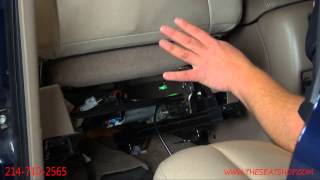
- Before buying parts, slide the passenger seat forward and inspect the large electrical connector on the module underneath for any signs of melting or burn marks.
- The two most likely fixes are replacing a melted connector pigtail (an inexpensive part) or replacing the heating element inside the seat cushion (more labor-intensive).
- You can test the heating element with a basic multimeter to confirm if it's broken before taking the seat apart.
- This is a comfort feature fault; it is safe to continue driving the vehicle without addressing it immediately.
What's Unique About the 2007-2013 Chevrolet AVALANCHE
On the GMT900 platform, which includes the Avalanche, Silverado, and Tahoe, the heated seat system has two well-documented weak points. First, the main power connector for the heated seat module (located under the passenger seat) is known to be undersized for the electrical current it carries, often causing it to overheat and melt. This is because the full current load is routed through a single power and ground pin. Second, the heating element wires within the seat cushion are thin and can break from the repeated stress of someone sitting in the seat over many years. These two issues account for the vast majority of B2430 faults on these trucks.
Diagnostic Flowchart
Tap your situation to follow the diagnostic path that matches what you're seeing on this vehicle.
Symptoms You May Notice
- Passenger heated seat does not work
- Heated seat indicator light turns on for a moment, may flash, and then turns off (often within 3-30 seconds).
- A burning plastic smell from under the passenger seat (in cases of a melted connector).
- Hearing a single 'click' from the module under the passenger seat, followed by another 'click' shortly after as the system shuts down.
- Replacing the heated seat switch in the door panel. While the switch can fail (often due to broken solder joints), it's not a common cause for the B2430 code, which specifically points to a circuit issue monitored by the module under the seat.
Most Likely Causes
- Broken Heating Element in Passenger Seat Cushion 🔴 High Probability The wires in the heating element grid are fine and can break over time due to the repeated flexing and pressure of passengers getting in and out of the vehicle. This creates an open circuit.
How to confirm: Disconnect the seat cushion heater element connector under the seat and measure the resistance across its two terminals with a multimeter. A healthy element should read between 3.5 and 11.5 Ohms. A reading of infinity or 'OL' indicates a broken, open circuit. This was the confirmed failure in a thread on PerformanceTrucks.net.
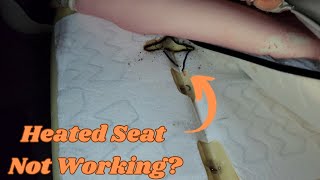
Typical fix: Replace the passenger seat heater element pad (GM Part #20792748). This requires removing the seat from the truck and then removing the seat's upholstery to access and replace the pad. Some owners have successfully located the single broken wire and soldered it as a less expensive repair. 🎬 See how to perform a quick and inexpensive heating element repair.
Est. part cost: $50-$200 - Overheated or Melted Heated Seat Module Connector 🔴 High Probability → Shop Heated Seat Module The main power and ground wires (typically a large gauge Red/White and Black wire) in the 12-pin connector at the module are known to be undersized for the current draw, causing them to overheat, melt the plastic housing, and create a poor connection. This is a very common failure discussed in numerous forums.
How to confirm: Visually inspect the main electrical connector at the heated seat control module, which is located under the passenger seat. Look for any signs of charring, melting, or discoloration, especially on the larger gauge power and ground wires.
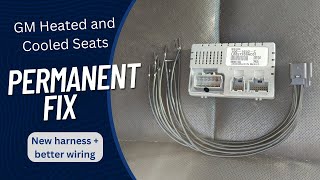
Typical fix: If the connector is melted, it must be cut out and replaced with a new connector pigtail (e.g., ACDelco 19167755 / PT2388). The wires should be spliced using quality butt connectors with heat shrink. A popular long-term fix involves splitting the single power and ground wires to feed two pins each on the new connector to better distribute the electrical load. 🎬 Watch this guide on how to permanently fix the melted connector.
Est. part cost: $20-$40 - Incorrectly Installed Accessory Heated Seat Harness 🟡 Medium Probability This applies only if GM accessory heated seats were installed after the vehicle was built. The wiring harness has two identical connectors for the seat bottom and seat back elements, and they are easily reversed during installation.
How to confirm: Per TSB #PIT5215A, inspect the two heater element connectors. The longer lead (covered in convoluted tubing) should go to the seat back element, while the shorter lead goes to the seat bottom element.
Typical fix: Correctly plug the connectors into their respective heating elements.
Est. part cost: $0 - Faulty Heated Seat Control Module ⚪ Low Probability → Shop Power Seat Control Module While electronic modules can fail, it is far less common than wiring or element issues. Severe overheating of the connector can sometimes damage the pins on the module itself, requiring replacement of both. In one forum case, after replacing a burnt connector, the passenger seat still didn't work, pointing to a damaged module or element.
How to confirm: This is typically diagnosed by exclusion. If the fuse, wiring, connector, and heating elements all test good, the module itself is the likely culprit. A user on Reddit with similar symptoms planned to source a used module from a junkyard after confirming his wiring was clean.
Typical fix: Replace the heated seat control module, located under the passenger seat. A new module may require programming by a dealership or a shop with the appropriate tools.
Est. part cost: $70-$150
Rare But Worth Checking
- Blown Underhood Fuse:
Diagnosis Steps
- Check the 'HTD SEAT' fuse (typically a 30-amp fuse in the underhood fuse block) to ensure it's not blown. Also check the 'SEO B2' 30A fuse as a rare possibility.
- Using a scan tool capable of reading body codes, confirm B2430 is present and note any symptom bytes (e.g., '0D' for high resistance, '0E' for low resistance, or '04' for open circuit).
- Move the passenger seat to its highest and most forward position to gain access underneath.
- Locate the Heated Seat Control Module (a black plastic box bolted to the seat frame).
- Carefully inspect the main 12-pin connector for any signs of melting or charring, paying close attention to the heavy-gauge Red/White (power) and Black (ground) wires.
- If the connector looks good, locate and disconnect the connector for the seat *bottom* heating element.
- Using a multimeter, measure the resistance of the heating element. A good element will read between 3.5 and 11.5 ohms. An 'OL' or infinite reading means the element is broken and needs replacement.
- If the element tests good, check for power and ground at the element connector when the seat heater is commanded on (may require a helper).
- Check the primary ground points for the seats, G303 and G304, which are typically under the front seats near the transmission tunnel, for looseness or corrosion.
- If all wiring, grounds, and the element are confirmed good, the Heated Seat Control Module is the most likely remaining point of failure.
Parts You'll Likely Need
- Passenger Seat Heater Element Pad
(OEM #20792748 (replaces 15232559))— This is the most common failure point, where a wire inside the pad breaks, creating an open circuit and triggering code B2430 0D.
Trusted brands: ACDelco (GM Genuine), Dorman
OEM price range: $90-$140
Aftermarket price range: $50-$90 - Heated Seat Module Connector Pigtail
(OEM #19167755 (ACDelco PT2388))— The factory connector is prone to overheating and melting at the power and ground pins, causing an open or high-resistance connection. This pigtail is used to replace the damaged connector.
Trusted brands: ACDelco, Dorman 926-007, Ford WPT-928 (a commonly cited alternative in forums)
OEM price range: $30-$50
Aftermarket price range: $20-$35
Related Codes That Often Appear With This One
- B2425 — B2425 is the equivalent code for the driver's side heated seat circuit. If both seats stop working at the same time, it could point more strongly to the shared power/ground connector at the passenger-side module, as this module controls both seats.
Technical Service Bulletins (TSBs) & Recalls
- PIT5215A: Notes that B2430 can be set if GM Accessory Heated Seat kit element connectors are reversed during installation. The TSB clarifies the longer, convoluted-tube-covered lead goes to the seat back, and the shorter, taped lead goes to the seat bottom.
- 10-08-50-008B: Addresses inoperative heated seats that may set B2430 0D due to loose terminal tension and high resistance in the heated seat module harness connector, which leads to the melting/burning issue.
Platform-Specific Known Issues
- A known issue, documented in TSB PIT5215A, involves the incorrect installation of accessory heated seat wiring, where the seat back and seat bottom heater element connectors are reversed, causing this code.
- Another TSB, 10-08-50-008B, addresses the heated seat turning off after a few minutes and setting B2430 0D due to loose terminal tension in the module harness connector, causing high resistance.
Mechanic-Grade Diagnostic Values
- Seat Cushion Heater Element Resistance — expected: Approximately 3.0 to 4.0 Ohms. TSB PIT5434C gives a range of 5.0 to 7.5 Ohms but notes the value changes with temperature.. Failure: A reading over 5.0-5.5 Ohms, or an open circuit ('OL'), indicates a faulty element. Test while flexing the cushion, as a break may be intermittent.
- Seat Back Heater Element Resistance — expected: Approximately 5.3 to 5.5 Ohms.. Failure: A reading over 7.0-8.0 Ohms indicates a faulty element.
Hidden / Shadow Codes Worth Checking
- B2430 04: Right Seat Heater Cushion Circuit Open. This can be set if the module does not detect a temperature change from the thermistor within 210 seconds of activation. (see via Professional scan tool (e.g., GM Tech2, GDS2) capable of reading body/chassis codes.)
- B2430 0B: Right Seat Heater Cushion Circuit Current Above Threshold. This indicates a short to ground or a shorted element. (see via Professional scan tool (e.g., GM Tech2, GDS2) capable of reading body/chassis codes.)
- B2430 0D: Right Seat Heater Cushion Circuit Resistance Above Threshold. This is the most common symptom, indicating an open circuit from a broken element wire or melted connector. (see via Professional scan tool (e.g., GM Tech2, GDS2) capable of reading body/chassis codes.)
- B2430 0E: Right Seat Heater Cushion Circuit Resistance Below Threshold. This indicates a short circuit. (see via Professional scan tool (e.g., GM Tech2, GDS2) capable of reading body/chassis codes.)
- B2430 1F: Right Seat Heater Cushion Circuit Intermittent. Indicates the fault is not currently active but has occurred in the past. (see via Professional scan tool (e.g., GM Tech2, GDS2) capable of reading body/chassis codes.)
Scan Tool Commands That Help
- GM Tech 2 / GDS2: Heated Seat Output Control Test — Use this command to manually activate the heated seat elements to verify if the control module is functioning and sending power. This helps isolate the fault between the control side (switch, module) and the circuit side (wiring, element). The path is typically Body > Driver Seat Module > Special Functions > Output Control.
- GM Tech 2 / GDS2: View Live Data (HSM/DCSM) — Monitor the live data stream from the Heated Seat Module to see real-time resistance values from the elements, temperature sensor data, and switch status. This is crucial for identifying intermittent faults or confirming if a resistance reading is borderline.
Wiring & Ground Locations
- X305 — The main 12-pin connector at the Heated Seat Control Module, located under the front passenger seat.. This is the primary failure point for melted wires. The power and ground pins in this connector are known to overheat, causing high resistance and triggering B2430 0D.
- G303 — Near the base of the left (driver's side) 'B' pillar.. This is a primary body ground for driver's side seat components. A poor connection here can cause various electrical issues on the driver's side.
- G304 — Near the base of the right (passenger's side) 'B' pillar.. This is a primary body ground for passenger side seat components. A poor connection here can cause various electrical issues, including for the heated seat module.
- G302 — Under the right side of the passenger seat.. This is another primary ground point for components under the passenger seat. A loose or corroded G302 can directly impact the heated seat module's ground path.
Real Owner Repair Stories
- User on Chevy Truck Forum (2008 Silverado LTZ (GMT900 Platform)) — Heated seat lights for both seats would turn on, then go out after 2-3 seconds. Clicks heard from module under driver's seat. Seats did not warm up.
❌ Tried (didn't work) Disconnecting seat heaters individually, Disconnecting seat motors, Disconnecting adjustable pedal sensor, Visually inspecting all plugs and connectors under both seats (no visible melting or burning was found)
✅ What actually fixed it The under-seat control module was faulty and had to be replaced. After replacement, all functions returned to normal. - YouTube video by 'Ideal Garage' (2010 Cadillac Escalade (GMT900 Platform)) — Heated and cooled seats were not working.
❌ Tried (didn't work) A temporary fix of cleaning the melted plastic off the connector pins and plugging it back in. The fix did not last.
✅ What actually fixed it The owner performed a permanent fix by cutting off the melted 12-pin connector (X305) and splicing in a new pigtail (Ford part WPT-928). The single power wire was split to feed two power pins, and the single ground wire was split to feed two ground pins on the new connector to better distribute the electrical load.
When the Usual Fixes Don't Work
- While the most common fixes are replacing a broken heating element or a melted connector pigtail, there are confirmed cases where these parts appear perfectly fine. In one instance on a 2008 Silverado, after extensive troubleshooting of the wiring and elements showed no visible faults, the problem was ultimately a failed heated seat control module itself.
OEM Part Supersession History
15232559→20792748— Standard part revision/update by GM.
Helpful Videos

The information in this article is provided for general reference and educational purposes only. Vehicle specifications, procedures, and part compatibility can vary by production date, trim level, and region. Always consult your vehicle's factory service manual and verify part numbers before purchasing or performing repairs. Safety-critical components such as airbags, seat belts, and braking systems should be installed by a qualified professional.
- Chevrolet AVALANCHE:
- 🧭 Diagnostic Flowchart
- 🎬 Helpful Videos
- What's Unique About the 2007-2013 Chevrolet AVALANCHE
- Symptoms You May Notice
- Most Likely Causes
- Rare But Worth Checking
- Diagnosis Steps
- Parts You'll Likely Need
- Related Codes That Often Appear With This One
- Technical Service Bulletins (TSBs) & Recalls
- Platform-Specific Known Issues
- Mechanic-Grade Diagnostic Values
- Hidden / Shadow Codes Worth Checking
- Scan Tool Commands That Help
- Wiring & Ground Locations
- Real Owner Repair Stories
- When the Usual Fixes Don't Work
- OEM Part Supersession History
- 🎟️ Get 5% Off