

OBD-II Code B2462: GPS Signal Fault
What B2462 means, why it triggers, and how to fix it
- Code B2462 flags a GPS antenna circuit failure, immediately disabling navigation, satellite radio, and emergency services like OnStar Automatic Crash Response.
- On 2014-2018 GM vehicles, a leaking roof-mounted 'shark fin' antenna gasket causes 90% of B2462 codes by allowing water to destroy the internal circuit board.
- Visible water stains on the headliner near the overhead console confirm a failed antenna gasket and require immediate replacement to prevent $1,000+ in electrical damage.
- Permanently fix the issue by installing an updated OEM antenna (like GM P/N 84423823) and applying a 4-5mm bead of clear automotive seam sealer to the new gasket.
What Does B2462 Mean?
B2462 means the vehicle's main computer detects a fault in the GPS antenna circuit. The controlling module (radio, telematics unit, or APIM) sees an open circuit, a short, or a complete loss of signal from the antenna. This fault disables any system relying on precise vehicle location.
Technical definition: The SAE/ISO definition for DTC B2462 is Global Positioning System (GPS) Signal Fault. The controlling module detects an electrical failure—such as a short to ground, short to battery, or an open/high resistance—in the GPS antenna circuit. Professional scan tools display specific subtypes like B2462-02 (Short to Ground) or B2462-04 (Open Circuit).
Can I Drive With B2462?
Yes, But With Caution. The vehicle is mechanically safe to drive, but GPS navigation, satellite radio, and critical safety services like OnStar Automatic Crash Response are disabled. The most common cause is a water leak; ignoring it allows water to travel down the A-pillar to the fuse block or Body Control Module (BCM), causing short circuits, parasitic battery drain, and over $1,000 in additional electrical damage.
Common Causes
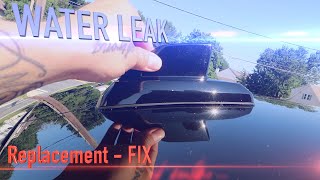
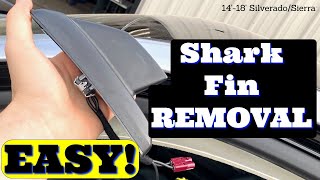
- Water-Damaged Roof 'Shark Fin' Antenna (Very Common) — On 2014-2018 GM trucks and SUVs, the foam gasket sealing the roof antenna shrinks and cracks, allowing water to enter the housing. The water corrodes the internal circuit board, destroying the antenna. GM TSB 17-NA-214 acknowledges this design flaw 🎬 Watch: How to fix a leaking Chevy shark fin antenna; the original part trapped water, while the updated replacement relocates the drain hole.
- Faulty Coaxial Cable Splitter (Common) — Certain Ford and Saab models use a small splitter behind the glovebox to divide the signal from a single antenna between the satellite radio and GPS modules. This splitter contains a small circuit board that fails, causing a loss of GPS signal even if the roof antenna and main cable are perfectly fine.
- Damaged or Corroded Antenna Coaxial Cable (Common) — The wire connecting the antenna to the radio or telematics module gets pinched, cut, or damaged during unrelated interior repairs. If the roof antenna leaks, water runs down the outside of the cable and corrodes the metal connectors where they plug into the control module.
- Incorrect or Incompatible Aftermarket Antenna (Less Common) — Upgrading an infotainment system (e.g., Ford SYNC 2 to SYNC 3) or installing a cheap aftermarket GPS antenna triggers this code. The control module requires a specific electrical resistance and voltage from the antenna; out-of-spec parts are immediately flagged as a fault.
- Internal Antenna Component Failure (Non-Water Related) (Rare) — The low-noise amplifier (LNA) inside an active GPS antenna fails due to age, extreme vibration, or manufacturing defects, even without water intrusion. This stops the signal from reaching the control module.
- Faulty Telematics Module or Radio Head Unit (Rare) — The main radio or telematics module (like the OnStar module or Ford APIM) that processes the GPS signal malfunctions internally. This is an expensive failure and must only be considered after proving the antenna, wiring, and splitters are fully functional.
Symptoms
- GPS, Navigation, and Compass Not Working — The map shows the wrong location, displays a 'No GPS' message, or shows a GPS symbol with a slash through it. The dashboard compass freezes or disappears entirely.
- Red OnStar Light — On GM vehicles, the OnStar indicator light on the mirror or overhead console turns red. The system cannot locate the vehicle for emergency services.
- Satellite Radio Has No Signal — SiriusXM radio stops working and displays a 'No Signal' or 'Check Antenna' message, because it shares the same roof antenna housing as the GPS.
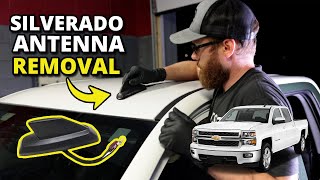
- Water Stains on Headliner — Discoloration or dampness appears on the interior roof fabric near the sun visors, overhead console, or microphone grille. 🎬 See this walkthrough for replacing GM high frequency antennas This confirms the antenna gasket is leaking.
- Dead Battery — Moisture from the leaking antenna travels down the A-pillar wiring to the fuse block or Body Control Module (BCM), causing a short circuit and parasitic drain that kills the battery overnight.
Diagnostic Flowchart
Tap your situation to follow the diagnostic path that matches what you're seeing on this code.
Common Fixes & Costs
- Replace Roof Antenna Assembly — Parts: $80-$150, Labor: $150-$300, ~1.3 hr book time (Intermediate)
- Replace Damaged Antenna Coaxial Cable — Parts: $40-$100, Labor: $150-$300, ~2.0 hr book time (Intermediate)
- Replace Telematics Control Module (e.g., OnStar Module, APIM) — Parts: $500-$1000, Labor: $150-$300, ~1.5 hr book time (Professional)
- Replace Radio/Navigation Head Unit — Parts: $500-$1500, Labor: $150-$300, ~1.5 hr book time (Professional)
Used vs. New Parts: Buying Guide
When a used part is worth it: A used OEM antenna only makes sense if the donor vehicle is confirmed to be a later model year with the updated antenna design.
Donor-vehicle mileage cap: roughly under 50000 miles for the part to have meaningful remaining life.
Donor quality checklist:
- Verify the part number is the latest superseded version; older designs will fail again.
- Inspect the gasket and housing for cracking, brittleness, or prior sealant application.
- Match the color and electrical connectors exactly.
Decision logic:
- If The vehicle is a 2014-2018 GM model with the known antenna flaw → Buy new OEM. A used part likely has the same defect and is not worth the risk of repeat labor.
- If A new OEM part is under $150 → Buy new. The small savings on a used part do not justify the risk of premature failure.
- If Budget is the absolute primary concern → A used part is an option, but understand it has a limited lifespan and no meaningful warranty.
Warranty tradeoff: Used parts offer a 30-day warranty at best. New OEM parts offer a 1-year or longer warranty and guaranteed compatibility.
Worst-case if a used part fails: $250 - $600 if a used part fails, requiring repeat labor costs plus a new antenna.
What Happens If You Wait — Timeline
- 0-1 month: Code B2462 sets. GPS, OnStar, and XM radio stop working. The OnStar light turns red. No physical symptoms are present yet. (MPG impact: 0%% · Added cost: $0)
- 1-6 months: Water saturates the headliner backing. A musty smell develops, and visible water stains appear near the console. Intermittent parasitic battery drain begins as moisture reaches wiring. (MPG impact: 0%% · Added cost: $250 - $900 (Cost to replace stained headliner).)
- 6-12 months: Water travels down the A-pillar wiring harness to the Body Control Module (BCM) or fuse block. Corrosion causes bizarre electrical issues like flickering lights. Parasitic drain requires frequent jump starts. (MPG impact: 0%% · Added cost: $450 - $1500 (Headliner replacement plus new battery and drain diagnostics).)
- 12+ months: The BCM or fuse block is severely damaged by corrosion. The vehicle fails to start, or multiple systems fail simultaneously. The original antenna leak has caused catastrophic collateral damage. (MPG impact: 0%% · Added cost: $1500 - $3000+ (Cost to replace/program a new BCM, repair wiring, and replace the headliner and antenna).)
Cost of Not Fixing It
- Immediate: Loss of GPS navigation, satellite radio, and all OnStar services, including critical Automatic Crash Response. (Added cost: Negligible)
- 1-6 Months: Water stains the interior headliner. A parasitic battery drain develops, requiring jump starts or a new battery. (Added cost: $200 - $600)
- 6+ Months: Persistent water intrusion damages the Body Control Module (BCM) or main fuse block, leading to widespread electrical failures. (Added cost: $1000 - $2500+)
Diagnosis Steps
- Verify Symptoms and Check for TSBs
Confirm GPS, OnStar, and satellite radio are offline. Search online for Technical Service Bulletins (TSBs) for your specific vehicle plus 'B2462' or 'GPS antenna leak'. For GM vehicles, TSB 17-NA-214 directly addresses this.
Tools: Internet access (Beginner) - Inspect for Water Leaks
Examine the headliner inside the vehicle directly beneath the roof antenna. Look and feel for water stains, discoloration, or dampness. Finding moisture confirms a failed antenna gasket.
Tools: Flashlight (Beginner) - Perform a Water Test
With doors closed, have an assistant sit inside while you gently pour water from a bottle around the base of the roof antenna. Have the assistant check for water dripping inside. Do not use a high-pressure hose.
Tools: Water bottle, an assistant (Beginner) - Access and Inspect Antenna Connections
Partially lower the headliner by removing sun visors, grab handles, and A-pillar trim. Unplug the antenna connectors and inspect for obvious damage, moisture, or green/white corrosion on the pins.
Tools: Trim removal tools, socket set, Torx driver (Intermediate) - Test Coaxial Cable for Continuity
Disconnect the coaxial cable from both the antenna and the module. Set a multimeter to resistance (Ω). Test for continuity on the center pin from end to end; it must be under 5.0 ohms. Test the outer shield; it must also be under 5.0 ohms.
Tools: Multimeter, trim removal tools, socket set (Advanced) - Test Coaxial Cable for Shorts
With the cable disconnected at both ends, test for resistance between the center pin and the outer shield. The multimeter must read infinite resistance or 'OL' (Open Loop). Any other reading means the cable is shorted internally.
Tools: Multimeter (Advanced) - Check for Bias Voltage from the Control Module
Reconnect the coaxial cable to the module but leave it disconnected from the antenna. Turn the ignition on. Set the multimeter to DC Volts and measure between the center pin and the outer shield at the antenna end. A healthy module supplies 4.0-5.5 volts.
Tools: Multimeter (Advanced) - Use a Known-Good Test Antenna
If voltage is present, connect a known-good test antenna (like GM tool EL-49903) directly to the coaxial cable. Place it with a clear view of the sky. If GPS function returns, the roof antenna is faulty. If it fails, the coaxial cable is bad.
Tools: Known-good GPS test antenna (Professional) - Use Scan Tool to View Live Data
Connect a bi-directional scan tool to view live data from the telematics module. Monitor 'Number of Satellites Tracked' and 'GPS Signal Status'. A healthy antenna tracks 3-4 satellites and shows a '3D Fix'. Zero satellites confirms a hardware failure.
Tools: Professional bi-directional scan tool (Professional)
When This Code Triggers (Freeze-Frame Conditions)
- System Voltage: 9-16V (The control module must have proper operating voltage to run electrical self-tests.)
- Ignition Status: RUN or ACC (The telematics or radio module is powered on and actively checking the antenna circuit.)
- Time Since Power On: >10 seconds (The fault must be present for a minimum duration (e.g., 10 seconds) for the code to set.)
- Vehicle Speed: Any (This is an electrical self-test that runs continuously and is not dependent on vehicle movement.)
Related Codes
- B2470 — Indicates a fault with the cellular antenna (OnStar). Seeing B2470 alongside B2462 confirms the entire multi-function roof antenna assembly has failed due to water damage.
- B125C — A general antenna fault code for digital satellite radio (SiriusXM). Seeing it with B2462 is a strong clue that the entire roof antenna assembly has failed as a unit.
- B119F — On Ford vehicles, B119F:13 'Circuit Open' is the equivalent of B2462. It points to an open circuit caused by a failed antenna or a faulty coaxial cable splitter.
- B2462-04 — A specific subtype indicating an 'Open Circuit'. This is the most common variant seen when water corrodes the antenna electronics, physically breaking the electrical connection.
- B2462-02 — A specific subtype indicating a 'Short to Ground'. The center conductor of the coaxial cable is making electrical contact with the chassis, blocking the signal.
- B2462-01 — Indicates a 'Short to Battery'. A rare fault where the antenna's signal circuit shorts to a power source, potentially damaging the radio or telematics module.
Climate & Environmental Factors
- High Rainfall / Wet Climates: The primary cause of B2462 is a water leak past the antenna gasket. Vehicles in regions with heavy or frequent rain experience this failure at a much higher rate.
- Extreme Temperature Cycles (Hot/Cold): Swings between hot and cold accelerate the aging of the antenna's foam gasket. Heat dries it out, and cold makes it brittle, causing the seal to crack and allow water intrusion.
- High Humidity: Once water enters the antenna housing, high ambient humidity prevents evaporation. The internal circuit board stays wet longer, accelerating corrosion and failure.
How to Talk to a Mechanic About This Code
Say this: "I have a B2462 GPS antenna fault, and I suspect the roof antenna is leaking. I'd like an estimate to replace the roof antenna assembly and apply seam sealer per the TSB. Please also check for water stains on the headliner."
This directs the technician to the most likely cause, mentions the TSB, and shows you're aware of collateral water damage, preventing costly, broad 'electrical diagnostics'.
Avoid saying:
- 'My GPS isn't working, can you look at it?' (Invites expensive, unnecessary diagnostics on the radio head unit).
- 'My OnStar light is red.' (Less specific than providing the B2462 code).
- 'Just fix whatever's wrong.' (Gives a shop a blank check to replace parts without proper diagnosis).
Questions to ask before authorizing the repair:
- Did you find evidence of a water leak from the antenna?
- Are you using the updated OEM part number for the antenna?
- Does the estimate include applying automotive seam sealer to the new gasket?
- What is your warranty on parts and labor for this repair?
Where to Take It: Dealer vs Independent vs Chain
- Dealer:
Recommended only if under warranty or if the problem is a known software issue. For the common GM antenna leak, a dealer is an expensive choice.
Best for: Vehicles still under the original bumper-to-bumper warranty., Complex cases where a telematics module requires programming., Subaru owners needing a Starlink firmware update.
Downsides: Highest labor rate, often 1.5-2x an independent shop., Less flexible on using customer-supplied parts. (Typical cost: +50% vs. baseline) - Independent Shop:
Best fit for this code. Antenna replacement is a straightforward mechanical repair that does not require dealer-specific software.
Best for: Out-of-warranty vehicles, especially GM trucks and SUVs with the known antenna leak., Cost-conscious owners.
Downsides: Quality varies; look for shops with good reviews and ASE certifications., May not have access to the latest TSBs, which is why you should mention it. (Typical cost: +0% vs. baseline) - Chain Shop:
AVOID for this code. This repair requires careful work with interior panels, which is not a core competency of chain shops.
Best for: Simple maintenance like oil changes and tires.
Downsides: Technicians lack experience removing interior trim and headliners, risking damage., High pressure to upsell leads to misdiagnosis, like recommending a new radio instead of the antenna. (Typical cost: -10% vs. baseline)
When to Walk Away From the Repair
If the estimated repair cost exceeds 40-50% of the car's Kelley Blue Book private-party value, reconsider the repair.
- Car worth $15000, fix is $750: Fix it. The repair cost is 5% of the vehicle's value and restores important safety features.
- Car worth $4000, fix is $2200: Walk away. The repair cost is 55% of the car's value, likely due to a BCM damaged by the leak. The cost is too high for an older vehicle.
- Car worth $8000, fix is $3500: Borderline. The cost is 44% of the car's value. Get a second opinion to ensure the high cost is accurate before proceeding.
What Scan Tool You Need for This Code
Minimum: A scanner that reads 'B' (Body) codes, not just standard 'P' (Powertrain) codes.
A basic $20 OBD-II code reader shows 'No Codes' because it only accesses the engine computer. B2462 is stored in the Telematics, Radio, or Body Control Module, requiring an 'all-system' scanner.
Budget: BlueDriver Pro (~$100) — Reads enhanced codes (including B-codes) for specific manufacturers, allowing you to confirm B2462 is present and clear it after repair.
Mid-range: Innova 5610 or Foxwell NT510 Elite (~$350) — Provides access to live data from the telematics module, such as 'Number of Satellites Tracked', to confirm if the antenna is the issue before removing trim.
Professional: Autel MaxiCOM MK808 / MK906BT (~$500-1200) — Offers full OEM-level diagnostics. Reads specific fault subtypes like B2462-04 (Open Circuit) and performs module programming if required.
Rent vs buy: You cannot rent a scanner with B-code capability; free rental tools at auto parts stores are basic powertrain readers. You must buy a capable scanner or pay a shop for diagnosis.
How to Clear the Code After You Fix It
- Use an OBD-II scan tool to clear the code from the Telematics or Radio module memory.
- Cycle the ignition off and then on.
- Verify the repair by checking for GPS signal and ensuring the OnStar light is green.
Drive cycle (~10 minutes): A specific drive cycle is not required. To verify the fix, drive the vehicle for 5-10 minutes with a clear view of the sky to allow the system to acquire satellite signals.
Readiness monitors affected: None
Watch out for:
- Clearing the code with a scan tool will not fix the problem; the code returns immediately if the hardware fault is not repaired.
- Disconnecting the battery is not a reliable way to clear body codes and causes other modules to lose their settings.
Will This Fail Emissions / State Inspection?
No — by itself this code doesn't fail OBD inspection (but it can keep readiness monitors from setting, which causes a separate fail).
- California: This is a 'B' (Body) code and does not affect emissions readiness monitors. It will not cause a smog check failure.
- New York: NYS inspections fail for an illuminated Check Engine Light. B2462 does not turn on the CEL and will not cause a failure.
- Texas: Texas OBD inspections fail vehicles for emissions-related codes that turn on the Check Engine Light. This code is not emissions-related.
Most Commonly Affected Vehicles
- Chevrolet Tahoe / Suburban (2015-2018) — Extremely common failure of the 'shark fin' antenna due to a leaking gasket, documented in GM TSB 17-NA-214. The updated antenna part relocates the drain hole.
- GMC Yukon / Yukon XL (2015-2018) — Shares the K2XX platform and faulty roof antenna design with the Tahoe. Early 2015 models are covered by TSB PIT5362B.
- Cadillac Escalade / Escalade ESV (2015-2018) — Suffers from the same water-damaged antenna problem. Using an OEM color-matched antenna is critical for this luxury model.
- Chevrolet / GMC Silverado / Sierra (2014-2018) — The pickup truck platform uses the defective roof antenna design. Owners diagnose it based on the simultaneous failure of GPS, OnStar, and XM radio.
- Ford F-150, Explorer, Edge (2010-2022) — Often appears as DTC B119F:13 (GPS Antenna: Circuit Open). Caused by a failed antenna, a faulty coaxial cable splitter behind the glovebox, or an incompatible aftermarket antenna.
- Subaru Outback / Legacy / Forester (2013-2023) — GPS freezing or inaccurate location is usually a software glitch in the Starlink head unit requiring a dealer firmware update, rather than a hardware failure.
- Chrysler / Dodge / Jeep / Ram Various with Uconnect (2013-2018) — Suffers from 'antenna delamination' where the layers of the flat roof antenna separate, causing signal loss. The fix is replacing the antenna base, not the Uconnect radio.
- Saab 9-5 (2011) — Uses a 'navigation signal splitter' to send the GPS signal to both the OnStar module and the radio. This splitter is a known failure point causing code B2462.
Manufacturer-Specific Notes
- General Motors (Chevrolet, GMC, Cadillac): For 2014-2018 trucks and SUVs, this code almost always means the roof antenna failed from a water leak. GM released an updated part with a relocated drain hole. TSB 17-NA-214 requires applying clear automotive seam sealer to the new gasket for a permanent repair. No recall exists, so repairs are owner-funded.
- Ford: The equivalent code is B119F:13. A frequently misdiagnosed failure point is the GPS signal splitter located behind the glove box. Technicians must test or bypass this small splitter before condemning the expensive APIM module or roof antenna.
- Subaru: GPS issues (inaccurate location, freezing) from 2013-2023 are usually caused by software glitches in the Starlink head unit, not hardware. Check with a dealer for firmware updates before replacing any parts.
- Chrysler/Dodge/Jeep/Ram: Vehicles with Uconnect navigation suffer from 'antenna delamination.' The layers of the flat, roof-mounted antenna puck separate over time, disrupting the signal. The fix is to replace the antenna base, not the Uconnect radio.
Real Owner Stories
2015 GMC Yukon Denali - The Classic Water Leak
The GPS showed the wrong location, the OnStar light turned red, and XM radio lost signal. Days later, a water stain appeared on the headliner near the overhead console after heavy rain.
What they tried:
- Rebooted the infotainment system, assuming a software glitch.
- Took the vehicle to an independent shop after spotting the water stain.
Outcome: The shop identified the common shark fin antenna failure. They installed the updated GM part (P/N 84423823) and applied clear automotive seam sealer around the new gasket per TSB 17-NA-214. The $650 repair restored all systems.
Lesson: If GPS, OnStar, and XM fail simultaneously on a 2014-2018 GM truck or SUV, the roof antenna is the culprit. A water stain is absolute confirmation. Replace the antenna and seal the new gasket immediately.
2016 Ford F-150 - The Misdiagnosis Story
GPS stopped working with a 'No GPS' symbol after the owner upgraded from SYNC 2 to SYNC 3. The truck threw code B119F:13 (GPS Antenna: Circuit Open), the Ford equivalent of B2462.
What they tried:
- Spent weeks troubleshooting SYNC 3 software and configurations.
- Replaced the roof antenna with a new OEM part, but the problem persisted.
- Found a forum post mentioning the GPS signal splitter.
Outcome: The owner located the small signal splitter module behind the glove compartment. Replacing this inexpensive part immediately fixed the open circuit, and the new SYNC 3 system tracked satellites perfectly.
Lesson: On Ford vehicles, never condemn the expensive APIM module or roof antenna without first testing the coaxial signal splitter behind the glovebox.
2019 Subaru Outback - A Software Gremlin, Not Hardware
The Starlink navigation screen frequently froze or showed the car miles away from its actual location. The issue was intermittent and did not set a specific code.
What they tried:
- Performed a soft reset of the head unit (holding the power knob for 10 seconds), which temporarily fixed the issue.
- Checked for antenna connection issues but found no leaks.
Outcome: The dealer identified a known software bug in the Starlink head unit and performed a firmware update under warranty. The update resolved the GPS freezing permanently.
Lesson: For 2013-2023 Subaru models, GPS freezing is usually a software glitch in the Starlink head unit. Check with a dealer for firmware updates before replacing hardware.
How to Prevent This Code From Triggering
- Apply clear automotive seam sealer to the new antenna gasket. (Once, during antenna replacement.) — Applying a 4-5mm bead of non-silicone, paintable seam sealer (like 3M) to the new gasket before installation creates a waterproof barrier. This is the official fix recommended in GM TSB 17-NA-214 to prevent repeat failures.
- Periodically inspect the antenna base and headliner. (Every 6 months or after heavy rain.) — Visually check the 'shark fin' base for the gasket cracking or pulling away from the roof. Inside, check the headliner for discoloration or a musty smell to catch a slow leak before it destroys electronics.
- Clean roof drainage channels. (Annually.) — Clogged sunroof or roof rack drains cause water to pool on the roof, overwhelming seals that would otherwise hold. Clear drains ensure water exits the vehicle quickly.
- Avoid harsh automatic car washes with rotating brushes. (Ongoing habit.) — High-pressure water jets and aggressive brushes physically damage the shark fin housing and force water past weakening gaskets. Touchless or hand washing preserves the seal.
Frequently Asked Questions
Can I fix code B2462 myself?
Yes, replacing the common roof antenna failure is a manageable DIY repair. It requires basic tools, patience, and careful handling of the headliner to access the mounting bolt.
What are common misdiagnosis mistakes for this code?
The biggest mistake is replacing the expensive radio head unit before confirming the antenna has failed. Another pitfall is ignoring the coaxial cable splitter on Ford and GM vehicles, which mimics a bad antenna when it fails.
Why did my battery die from a GPS antenna problem?
The code itself doesn't drain the battery, but the leaking antenna gasket does. Water runs down the A-pillar and soaks the Body Control Module (BCM), causing a short circuit that creates a parasitic drain.
I used an aftermarket antenna and the code is still there. Why?
Control modules require a specific electrical resistance and signal amplification level. Cheap aftermarket antennas do not meet OEM specifications. The module interprets the incorrect electrical signature as a fault and keeps the code active.
Will my OnStar Automatic Crash Response still work with code B2462?
No. Because the system cannot get a GPS signal, it cannot report your vehicle's location in an emergency.
Why did my GPS, OnStar, and XM radio all stop working at once?
Modern cars use a single 'shark fin' antenna on the roof containing receivers for all three services. When water destroys the internal circuit board, all three systems fail simultaneously.
Can I just seal my old antenna with silicone instead of replacing it?
No. By the time the code appears, the internal electronics are already destroyed by water. You must replace the antenna and use automotive seam sealer on the new part's gasket.
The dealer quoted me over $700. Can I get it fixed for less?
Yes. The OEM antenna part costs $80-$150 online. An independent shop charges significantly less for labor, or you can do the repair yourself in 1-2 hours to save on labor entirely.
Key Takeaways
- Code B2462 flags a GPS antenna circuit failure, immediately disabling navigation, satellite radio, and emergency services like OnStar Automatic Crash Response.
- On 2014-2018 GM vehicles, a leaking roof-mounted 'shark fin' antenna gasket causes 90% of B2462 codes by allowing water to destroy the internal circuit board.
- Visible water stains on the headliner near the overhead console confirm a failed antenna gasket and require immediate replacement to prevent $1,000+ in electrical damage.
- Permanently fix the issue by installing an updated OEM antenna (like GM P/N 84423823) and applying a 4-5mm bead of clear automotive seam sealer to the new gasket.
Helpful Videos
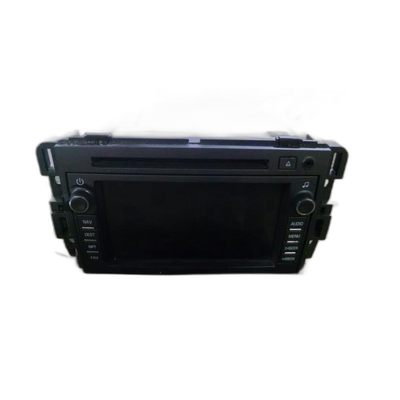
Shop the Parts Behind B2462
Below are the parts most often responsible for code B2462, ranked by how frequently each one is the actual culprit (per the diagnosis above). Tap any to see what we have for your vehicle.



The information in this article is provided for general reference and educational purposes only. Vehicle specifications, procedures, and part compatibility can vary by production date, trim level, and region. Always consult your vehicle's factory service manual and verify part numbers before purchasing or performing repairs. Safety-critical components such as airbags, seat belts, and braking systems should be installed by a qualified professional.
- 🧭 Diagnostic Flowchart
- 🎬 Helpful Videos
- 🛍️ Shop This Part
- What Does B2462 Mean?
- Can I Drive With B2462?
- Common Causes
- Symptoms
- Common Fixes & Costs
- Used vs. New Parts: Buying Guide
- What Happens If You Wait — Timeline
- Cost of Not Fixing It
- Diagnosis Steps
- When This Code Triggers (Freeze-Frame Conditions)
- Related Codes
- Climate & Environmental Factors
- How to Talk to a Mechanic About This Code
- Where to Take It: Dealer vs Independent vs Chain
- When to Walk Away From the Repair
- What Scan Tool You Need for This Code
- How to Clear the Code After You Fix It
- Will This Fail Emissions / State Inspection?
- Most Commonly Affected Vehicles
- Manufacturer-Specific Notes
- Real Owner Stories
- 2015 GMC Yukon Denali - The Classic Water Leak
- 2016 Ford F-150 - The Misdiagnosis Story
- 2019 Subaru Outback - A Software Gremlin, Not Hardware
- How to Prevent This Code From Triggering
- Frequently Asked Questions
- Can I fix code B2462 myself?
- What are common misdiagnosis mistakes for this code?
- Why did my battery die from a GPS antenna problem?
- I used an aftermarket antenna and the code is still there. Why?
- Will my OnStar Automatic Crash Response still work with code B2462?
- Why did my GPS, OnStar, and XM radio all stop working at once?
- Can I just seal my old antenna with silicone instead of replacing it?
- The dealer quoted me over $700. Can I get it fixed for less?
- Key Takeaways
- 🎟️ Get 5% Off