

OBD-II Code B2470: Cellular Antenna Circuit Failure
What B2470 means, why it triggers, and how to fix it
- Code B2470 on 2014-2018 GM trucks and SUVs indicates a 95% probability of a failed 'shark fin' roof antenna.
- A faulty factory gasket allows rainwater to destroy the antenna's internal circuit board, a design flaw officially documented in GM TSB 17-NA-214.
- Look for 3 immediate symptoms: a solid red OnStar light, 'No GPS' on the navigation screen, and visible water stains on the front headliner.
- Fixing this requires replacing the $80-$200 antenna assembly and applying a 4-5mm bead of automotive seam sealer to prevent repeat leaks.
- Verify your vehicle make before diagnosing; B2470 means 'Interlock Circuit Open' on Hyundais and 'Interior Courtesy Lamp Short' on Fords.
What Does B2470 Mean?
B2470 means the Vehicle Communication Interface Module (VCIM) lost communication with the cellular roof antenna. The VCIM pings the antenna once per second; if it gets no reply, it triggers this code. This failure disables OnStar, GPS, and satellite radio.
Technical definition: The SAE/OBD-II definition for B2470 is 'Cellular Phone Antenna Circuit Malfunction'. This indicates the Vehicle Communication Interface Module (VCIM) detects an open circuit (B2470-04), short to ground (B2470-02), or general failure in the cellular antenna's electrical circuit.
Can I Drive With B2470?
Yes. The vehicle is mechanically safe to drive. However, OnStar services (including Automatic Crash Response), GPS navigation, and satellite radio are inoperative. Ignoring the root cause—a water leak—causes expensive secondary damage to the headliner and fuse block over time.
Common Causes
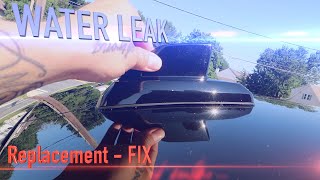
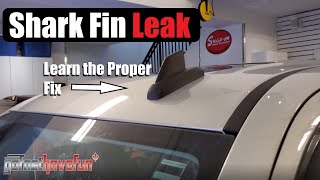
- Failed Roof 'Shark Fin' Antenna (Water Leak) (Very Common) — The gasket at the base of the antenna fails, allowing water to corrode the internal circuit board. This is a documented design flaw on 2014-2018 GM vehicles, officially acknowledged in TSB #17-NA-214. 🎬 Watch: How to properly seal the antenna to prevent leaks
- Damaged Antenna Coaxial Cable (Less Common) — The wire connecting the antenna to the communications module is pinched, chafed, or shorted. This occurs if the headliner was recently removed or if water traveled down the cable.
- Improper Previous Repair (No Sealant) (Less Common) — If the antenna was replaced previously without using a specific seam sealer, it fails prematurely. Early GM TSBs advised against sealant, leading to repeat failures.
- Physical Damage to the Antenna (Rare) — Impact from a car wash, low-hanging garage door, or debris cracks the antenna housing, allowing water to bypass the gasket.
- Failed Vehicle Communication Interface Module (VCIM) (Rare) — The control module that communicates with the antenna fails internally. Always rule out the antenna and wiring before replacing this expensive module.
Symptoms
- Red OnStar Light — The indicator light on the rearview mirror turns solid red, indicating a hardware fault.
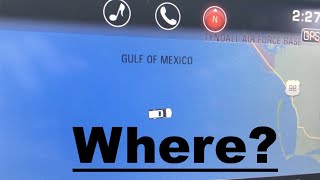
- GPS and Satellite Radio Inoperative — Navigation shows 'No GPS' or 'CAL', and SiriusXM displays a 'Check Antenna' message. 🎬 See a demonstration of these common OnStar and GPS symptoms
- Water Stains on Headliner — Visible water marks appear on the fabric ceiling near the center front or A-pillars.
- Weak or Dead Battery — Severe leaks allow moisture to reach the instrument panel fuse block, causing a parasitic electrical drain.
Diagnostic Flowchart
Tap your situation to follow the diagnostic path that matches what you're seeing on this code.
Common Fixes & Costs
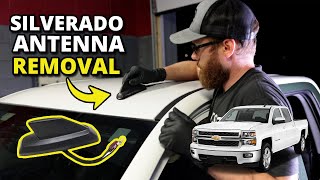
- Replace Roof 'Shark Fin' Antenna and Apply Seam Sealer — Parts: $80-$200, Labor: $200-$400, ~1.5 hr book time 🎬 Watch: Step-by-step guide to removing the shark fin antenna (DIY)
- Replace Antenna Coaxial Cable — Parts: $50-$100, Labor: $200-$400, ~2.0 hr book time (Intermediate)
- Replace Vehicle Communication Interface Module (VCIM) — Parts: $300-$600, Labor: $200-$350, ~1.5 hr book time (Professional)
Used vs. New Parts: Buying Guide
When a used part is worth it: A used OEM antenna makes sense if your budget is tight and the part is confirmed to be from a vehicle without front-end or roof damage.
Donor-vehicle mileage cap: roughly under 100000 miles for the part to have meaningful remaining life.
Donor quality checklist:
- Verify the part number matches exactly, as there are many color variations.
- Inspect photos for intact connectors and no signs of corrosion.
- Buy from sellers offering a short-term warranty (30-90 days).
Decision logic:
- If The cost of a new OEM antenna is less than $150 → buy new to get a fresh gasket and the latest superseded design.
- If Budget is the primary concern and a used part is under $50 → a used part is a reasonable gamble, but always apply new seam sealer during installation.
- If The antenna has a known water leak failure mode → favor new, as even a good-looking used part has a compromised gasket that will fail soon.
Warranty tradeoff: Used parts typically have a 30-90 day warranty. New OEM parts carry a 1-2 year warranty. The primary risk of a used part is that its gasket is aged and prone to leaking.
Worst-case if a used part fails: $200-$400 if the used antenna fails and you must pay for labor a second time.
What Happens If You Wait — Timeline
- 0-1 month: Code B2470 sets. The OnStar light turns red, and GPS/XM radio services become inoperative. Initial water intrusion corrodes the internal circuit board. (MPG impact: 0%% · Added cost: $0)
- 1-6 months: Water saturates the area under the antenna. Faint stains appear on the headliner. The headliner board absorbs moisture. (MPG impact: 0%% · Added cost: $250-$900)
- 6-12 months: The leak becomes established. Water wicks along the headliner and travels down the A-pillar trim. The headliner begins to sag. (MPG impact: 0%% · Added cost: $350-$1200)
- 12+ months: Severe water intrusion reaches the instrument panel fuse block. This causes corrosion, random electrical faults, and parasitic battery drain. (MPG impact: 0%% · Added cost: $500-$1500+)
Cost of Not Fixing It
- Immediate: Loss of OnStar services (including Automatic Crash Response), GPS navigation, and satellite radio. (Added cost: 0)
- 1-6 months: Water soaks the headliner, causing stains, sagging, and mold growth. Requires professional cleaning or replacement. (Added cost: $250-$900)
- 6+ months: Severe water intrusion travels down the A-pillar to the instrument panel fuse block, causing corrosion, random electrical faults, and parasitic battery drain. (Added cost: $500-$1500+)
Diagnosis Steps
- Confirm Symptoms and Scan for Codes
Verify the OnStar light is red and GPS/satellite radio are offline. Use an OBD-II scanner to confirm B2470 is present. Note related codes like B2462 (GPS) or B125C (XM), which confirm a single antenna assembly failure.
Tools: OBD-II Scanner (Body code capable) (Beginner) - Inspect for Water Damage
Examine the headliner directly below the roof antenna. Check for water stains, discoloration, or dampness. This confirms the antenna seal has failed.
Tools: Flashlight (Beginner) - Access the Antenna Connections
Partially lower the headliner to reach the antenna's mounting nut and electrical connectors. This requires removing sun visors, pillar trim panels, and grab handles.
Tools: Trim removal tools, socket set, Torx driver (T15) (Intermediate) - Inspect the Antenna and Connectors
Unbolt the antenna and inspect the base and connectors for green/white corrosion or moisture. Corrosion confirms the antenna has failed and requires replacement.
Tools: Flashlight (Intermediate) - Read Symptom Bytes (Pro Tip)
Read the two-digit symptom byte with a professional scanner. B2470-04 (Open Circuit) points to a broken wire or corroded board. B2470-02 (Short to Ground) indicates water creating an improper electrical path.
Tools: Professional Scan Tool (e.g., GM GDS2) (Advanced) - Coaxial Cable Resistance Check
Disconnect the coaxial cable. Test continuity on the center pin and outer shield end-to-end (must be < 5.0 Ohms). Test for a short between the center pin and shield (must read OL - Open Line).
Tools: Multimeter (Advanced) - Isolate Fault with a Test Antenna
Connect a known-good test antenna directly to the VCIM module. If the code clears, the vehicle's original antenna or cable is faulty. If the code remains, the VCIM is the culprit.
Tools: EL-49903 GM OnStar Antenna Diagnostic Tool Kit (Professional) - Test or Replace the VCIM
If a new antenna and tested cable do not fix the problem, the VCIM is faulty. Replacement requires programming by a dealer using GM's Service Programming System (SPS).
Tools: Professional scan tool, GM SPS subscription (Professional)
When This Code Triggers (Freeze-Frame Conditions)
- System Voltage: 9.5-15.5V (The VCIM must have adequate voltage to run its self-tests.)
- Ignition Status: RUN or ACC (The module is powered on and actively polling the antenna.)
- Time Since Ignition On: > 1 second (The fault condition must be present for more than one second for the code to set.)
- Communication Status: No Response (The VCIM polls the antenna once per second; the code sets when no valid signal returns.)
Related Codes
- B2462 — GPS Antenna Circuit. Seeing this alongside B2470 confirms the entire multi-function roof antenna assembly has failed.
- B125C — XM Satellite Radio Antenna. Frequently appears with B2470 and B2462 due to water intrusion in the shared roof assembly.
- B2470-04 — Cellular Phone Antenna Circuit Open. Strongly points to a disconnected or internally broken antenna due to corrosion.
- B2470-02 — Cellular Phone Antenna Circuit Short to Ground. Caused by water creating an improper electrical path inside the antenna.
Climate & Environmental Factors
- High Rainfall / Humidity: The antenna gasket failure allows rainwater to enter the housing. Regions with frequent rainfall experience a higher rate of this failure.
- Extreme Temperature Cycles: Repeated expansion and contraction of the plastic housing and rubber gasket accelerates degradation, making the seal brittle.
How to Talk to a Mechanic About This Code
Say this: "I have a B2470 code on my GM vehicle, with a red OnStar light and no GPS. I suspect it's the common shark fin antenna leak. I'd like an estimate to diagnose and replace the roof antenna assembly, specifically including the application of seam sealer per TSB 17-NA-214."
This signals you are an informed customer, directs the technician to the most probable cause, and references the official GM repair procedure. It avoids wasted diagnostic time on less likely causes.
Avoid saying:
- 'My OnStar isn't working.'
- 'Just fix whatever is wrong.'
- 'I think it's a computer problem.'
Questions to ask before authorizing the repair:
- Does your estimate include replacing the entire antenna assembly or just cleaning parts?
- Will you apply automotive seam sealer to the new antenna gasket as specified in TSB 17-NA-214?
- Is the part you're using a new, updated OEM part number?
- What is the warranty on both the part and your labor against future leaks?
Where to Take It: Dealer vs Independent vs Chain
- Dealer:
A safe, but expensive, bet. They are intimately familiar with TSB 17-NA-214 and perform this exact repair frequently.
Best for: Vehicles still under warranty., Owners who want the repair done exactly 'by the book' with guaranteed correct parts.
Downsides: Highest labor cost., Less flexible on repair options. (Typical cost: +50% vs. baseline) - Independent Shop:
Best fit for most owners. This is a straightforward mechanical and electrical repair that any competent independent shop handles easily.
Best for: Out-of-warranty vehicles where cost is a factor., Building a relationship with a local mechanic.
Downsides: You must specifically mention TSB 17-NA-214 and the requirement for seam sealer. (Typical cost: +0% vs. baseline) - Chain Shop:
AVOID. This repair requires careful work on interior trim panels, which is outside the core competency of most chain shops.
Best for: Simple jobs like oil changes and tires.
Downsides: High risk of damage to interior trim (headliner, A-pillars)., Technicians are rarely familiar with the specific TSB for this issue. (Typical cost: -10% vs. baseline)
When to Walk Away From the Repair
If estimated repair cost exceeds 40-50% of the car's private-party value, pause and evaluate. However, for this specific code, the repair is almost always worth it.
- Car worth $20000, fix is $400: Fix it. The repair cost is a tiny fraction of the vehicle's value and prevents much more expensive water damage later.
- Car worth $18000, fix is $2500: Walk away is possible. This cost suggests the leak was ignored and caused major secondary electrical damage to modules and wiring.
What Scan Tool You Need for This Code
Minimum: A scanner that reads GM-specific Body (B) codes. Cheap scanners only read generic Powertrain (P) codes and will NOT see B2470.
A basic code reader only shows 'Check Engine' lights. You need a tool that communicates with the Vehicle Communication Interface Module (VCIM) to see B2470.
Budget: BlueDriver Pro (~$100) — Confirms the presence of B2470 and related codes (B2462, B125C) on GM vehicles via a smartphone app.
Mid-range: Foxwell NT510 Elite for GM (~$180) — Provides deeper access to GM-specific systems. It reads the B2470 symptom byte (-04 for open circuit, -02 for short to ground).
Professional: Autel MaxiCOM MK808S (~$350) — Offers full bidirectional control. Necessary if the problem is suspected to be the VCIM, as it performs active tests.
Rent vs buy: Auto parts stores offer free loaner tools. Verify the specific loaner tool reads Body (B) codes. Renting is a great way to confirm the code for free.
How to Clear the Code After You Fix It
- Use an OBD-II scan tool to clear Diagnostic Trouble Codes (DTCs) from the Vehicle Communication Interface Module (VCIM).
- Cycle the ignition off and then on, and verify the red OnStar light turns green or off.
- Test OnStar, GPS, and Satellite Radio functions to confirm the repair.
Drive cycle (~5 minutes): A specific drive cycle is not required. After clearing the code, the system immediately re-evaluates the antenna circuit. If the repair was successful, the code will not return.
Readiness monitors affected: None
Watch out for:
- Disconnecting the battery will not clear this body code from the VCIM's memory.
- If the code immediately returns after being cleared, the root cause has not been fixed.
Will This Fail Emissions / State Inspection?
No — by itself this code doesn't fail OBD inspection (but it can keep readiness monitors from setting, which causes a separate fail).
- California: This code will NOT cause a smog check failure. California's test focuses on powertrain (P-codes), not body (B-codes).
- New York: A B2470 code will not cause a failure of the New York State vehicle inspection.
- Texas: In counties requiring emissions testing, a B2470 code will not cause a failure.
Most Commonly Affected Vehicles
- Chevrolet Tahoe / Suburban (2015-2018) — Extremely common failure of the roof antenna due to a faulty gasket design (TSB #17-NA-214).
- GMC Yukon / Yukon XL (2015-2018) — Shares the same platform and faulty antenna design as the Tahoe/Suburban.
- Chevrolet Silverado 1500 (2014-2018) — The roof antenna gasket leaks, destroying internal electronics and triggering code B2470.
- GMC Sierra 1500 (2014-2018) — Suffers from a high rate of antenna failures due to water intrusion.
- Cadillac Escalade / Escalade ESV (2015-2018) — Uses the same problematic antenna assembly, which frequently fails from water damage.
- Chevrolet Express (2014-2018) — These vans suffer from the same faulty roof antenna gasket design as the GM trucks.
- Pontiac G6 (2005-2010) — Indicates a 'Cellular Phone Antenna Circuit Malfunction', pointing to a fault in the OnStar antenna system.
- Chevrolet Bolt EV (2017-2023) — Indicates an antenna connection issue, though less widespread than the truck water leak.
Manufacturer-Specific Notes
- General Motors: On 2014-2018 trucks and SUVs, this almost always means the 'shark fin' roof antenna failed due to a water leak. GM issued TSB #17-NA-214 recommending antenna replacement with seam sealer.
- Hyundai: On hybrid/electric models, B2470 means 'Interlock Circuit Open' and points to a fault in the A/C compressor's high-voltage safety circuit.
- Infiniti: On models like the QX56, B2470 means 'SYS HEAT PROTC DR', relating to the seat belt retractor temporarily deactivating to prevent overheating.
- Ford: B2470 is defined as 'Interior Courtesy Lamp Circuit Short To Ground', pointing to a problem with the interior lighting system.
Real Owner Stories
2015.5 GMC Yukon with B2470
Owner noticed a solid red light on the OnStar rearview mirror. An OnStar diagnostic report confirmed code B2470.
What they tried:
- Researched the issue online and considered a DIY repair but decided against it.
Outcome: Took the vehicle to a GM dealership. The dealer replaced the roof antenna assembly, resolving all symptoms. The final cost was $367.
Lesson: For owners not comfortable removing interior trim, a dealership repair is a viable option. The cost provides a good benchmark for a professional fix.
2015 GMC Yukon Denali with multiple symptoms
The navigation system was inaccurate, XM radio had no reception, and the OnStar light was red.
What they tried:
- Took the vehicle directly to the dealership for diagnosis.
Outcome: The dealer identified a failed GPS antenna and replaced the entire roof antenna assembly under warranty.
Lesson: When multiple systems housed in the shark fin fail simultaneously, it strongly confirms the antenna assembly itself is the single point of failure.
2010 Cadillac SRX with intermittent B2470
The OnStar light intermittently turned red. An OnStar diagnostic check revealed code B2470.
What they tried:
- Cleaned the antenna's electrical connectors as a temporary fix, which worked briefly before the problem returned.
Outcome: Determined the root cause was the roof antenna going bad. Replacing the entire roof antenna assembly permanently solved the problem.
Lesson: Cleaning connectors is a temporary troubleshooting step; the internal electronic failure caused by moisture requires replacing the part.
How to Prevent This Code From Triggering
- Proactively apply seam sealer to a known-good antenna. (Once, especially for vehicles in high-rainfall areas.) — Applying a bead of Kent High-Tech Clear Seam Sealer around the existing antenna base reinforces the weak factory gasket and prevents initial water intrusion.
- Periodically inspect the headliner. (Every 6 months or after heavy rain/car wash.) — Catching the water leak early allows you to replace the antenna before water migrates down the A-pillar and damages the fuse block.
- Inspect the antenna housing for physical damage. (After every automatic car wash or if the roof is impacted.) — A cracked housing allows water to directly enter the electronics, bypassing the gasket.
- Ensure the new antenna gasket is seated correctly during installation. (During replacement.) — An improperly seated gasket creates a channel for water to enter. Ensure the nut is snug but not over-tightened.
Frequently Asked Questions
Can I just ignore code B2470?
Yes, as it doesn't affect driving safety. However, OnStar, GPS, and satellite radio will remain disabled. Ignoring the underlying water leak causes expensive secondary damage to your headliner and fuse panel.
What is the most common misdiagnosis for B2470?
The most common mistake is replacing the expensive Vehicle Communication Interface Module (VCIM) before confirming the antenna has failed. On affected GM vehicles, the antenna is the culprit over 95% of the time. Always diagnose the antenna first, especially if you see water stains.
I took my antenna apart and it looks fine. Is it still bad?
Yes. Water damage causes microscopic corrosion on the internal circuit board that is easily missed. If you have a red OnStar light, no GPS, and code B2470, the antenna is almost certainly bad regardless of its visual appearance.
Should I add sealant to the new antenna?
Yes, this is a critical step for a permanent repair. GM service bulletin 17-NA-214 requires applying a 4-5mm bead of automotive seam sealer to the new antenna's gasket. Skipping this step guarantees the leak will return.
A mechanic quoted me $400 to fix this. Is that fair?
Yes, $350 to $600 is the standard range for a professional repair. This includes $80-$200 for the OEM antenna and seam sealer, plus 1.5 to 2 hours of labor. Ensure the quote includes applying the required seam sealer.
Key Takeaways
- Code B2470 on 2014-2018 GM trucks and SUVs indicates a 95% probability of a failed 'shark fin' roof antenna.
- A faulty factory gasket allows rainwater to destroy the antenna's internal circuit board, a design flaw officially documented in GM TSB 17-NA-214.
- Look for 3 immediate symptoms: a solid red OnStar light, 'No GPS' on the navigation screen, and visible water stains on the front headliner.
- Fixing this requires replacing the $80-$200 antenna assembly and applying a 4-5mm bead of automotive seam sealer to prevent repeat leaks.
- Verify your vehicle make before diagnosing; B2470 means 'Interlock Circuit Open' on Hyundais and 'Interior Courtesy Lamp Short' on Fords.
Helpful Videos
Shop the Parts Behind B2470
Below are the parts most often responsible for code B2470, ranked by how frequently each one is the actual culprit (per the diagnosis above). Tap any to see what we have for your vehicle.



The information in this article is provided for general reference and educational purposes only. Vehicle specifications, procedures, and part compatibility can vary by production date, trim level, and region. Always consult your vehicle's factory service manual and verify part numbers before purchasing or performing repairs. Safety-critical components such as airbags, seat belts, and braking systems should be installed by a qualified professional.
- 🧭 Diagnostic Flowchart
- 🎬 Helpful Videos
- 🛍️ Shop This Part
- What Does B2470 Mean?
- Can I Drive With B2470?
- Common Causes
- Symptoms
- Common Fixes & Costs
- Used vs. New Parts: Buying Guide
- What Happens If You Wait — Timeline
- Cost of Not Fixing It
- Diagnosis Steps
- When This Code Triggers (Freeze-Frame Conditions)
- Related Codes
- Climate & Environmental Factors
- How to Talk to a Mechanic About This Code
- Where to Take It: Dealer vs Independent vs Chain
- When to Walk Away From the Repair
- What Scan Tool You Need for This Code
- How to Clear the Code After You Fix It
- Will This Fail Emissions / State Inspection?
- Most Commonly Affected Vehicles
- Manufacturer-Specific Notes
- Real Owner Stories
- 2015.5 GMC Yukon with B2470
- 2015 GMC Yukon Denali with multiple symptoms
- 2010 Cadillac SRX with intermittent B2470
- How to Prevent This Code From Triggering
- Frequently Asked Questions
- Can I just ignore code B2470?
- What is the most common misdiagnosis for B2470?
- I took my antenna apart and it looks fine. Is it still bad?
- Should I add sealant to the new antenna?
- A mechanic quoted me $400 to fix this. Is that fair?
- Key Takeaways
- 🎟️ Get 5% Off