

OBD-II Code B2477: Module Configuration Failure
What B2477 means, why it triggers, and how to fix it
- Code B2477 triggers when a newly installed control module lacks the specific 'as-built' programming data required for your vehicle's VIN.
- Manufacturer definitions vary wildly; B2477 indicates an ABS or airbag programming fault on Fords, but points to a $15 reverse light relay short on GM trucks.
- Clearing the code with a standard $20 scanner will not work; resolving B2477 requires an advanced bidirectional scan tool (like FORScan) to rewrite the module's configuration.
- Always diagnose and repair 'U-prefix' network communication codes first, as a faulty CAN bus prevents successful module programming 100% of the time.
What Does B2477 Mean?

B2477 means a specific electronic control module in your car lacks the correct programming. Think of it like buying a new computer that doesn't have the operating system installed yet. The module has either lost its memory, contains the wrong software, or was never programmed after being installed.
Technical definition: The official definition for B2477 is 'Module Configuration Failure'. This indicates that a specific module's 'as-built' data—the unique programming required for that specific vehicle's options and VIN—is missing, incorrect, or corrupted. The exact meaning varies by manufacturer: it is a generic programming error on Fords, a power seat module issue on BMWs, and a reverse light circuit short on Chevrolets.
Can I Drive With B2477?
Yes, But With Caution. Yes, but a critical safety or convenience system is disabled. If the code is for the ABS module, you lose anti-lock brakes and stability control, increasing stopping distances by over 30% on slippery surfaces. If it is for the airbag (RCM) module, the airbags will not deploy in a collision. Address it promptly to restore full vehicle safety.
Common Causes

- Unprogrammed Replacement Module (Very Common) — This is the most frequent cause. When a module (ABS, airbags, body control) is replaced, it must be programmed with vehicle-specific data. If this step is skipped, code B2477 triggers immediately.
- Faulty Control Module (Common) — The module itself fails internally, corrupting its own memory and configuration data due to age, vibration, or electrical surges.
- CAN Bus Communication Failure (Common) — Modules communicate over a network called the CAN bus. Wiring problems or 'noise' from another failing module prevents a module from retaining or receiving its configuration.
- Low Battery Voltage (Less Common) — A weak battery causes severe voltage drops during engine startup, leading to unpredictable memory loss or data corruption in control modules.
- Damaged Wiring or Water Intrusion (Less Common) — Water leaking into the cabin (often from clogged sunroof drains) or physically damaged wiring harnesses prevent the module from communicating with the diagnostic tool or the rest of the vehicle.
- Faulty Seat Position Sensors (German Vehicles) (Uncommon) — On BMW, Mercedes, Audi, and VW vehicles where this code points to the seat module, the issue is often a faulty position sensor or memory switch preventing the module from calibrating, rather than a programming loss.
- Software Incompatibility (Uncommon) — Attempting to program a module with an outdated diagnostic tool or the wrong software version causes a configuration failure.
Symptoms

- Warning Light on Dash — A specific warning light illuminates, such as the ABS light, airbag light, or a general wrench/service indicator.
- Malfunction of a Specific System — The system controlled by the faulty module stops working entirely. Power seats won't adjust, climate control is inoperative, or the radio display goes blank.
- Intermittent System Operation — The affected feature works sporadically, pointing to a loose connection or failing CAN bus communication.
- No Noticeable Symptoms (scan-tool only — no driver-felt sign) — The code stores silently without warning lights if it relates to a non-critical module, like a display interface.
Diagnostic Flowchart
Tap your situation to follow the diagnostic path that matches what you're seeing on this code.
Common Fixes & Costs
- Reprogramming the Existing or New Module — Parts: $0, Labor: $100 - $250, ~1.5 hr book time (Professional)
- Replacing and Programming the Faulty Module
— Parts: $200 - $1200, Labor: $150 - $400, ~2.5 hr book time
(Professional)
Ford F-150 (2006-2015): OEM
BMW 3-Series (E90): OEM - Repairing Damaged Wiring or Connectors — Parts: $10 - $50, Labor: $100 - $300, ~2.0 hr book time (Intermediate)
- Replacing a Blown Fuse or Relay — Parts: $1 - $25, Labor: $50 - $100, ~0.5 hr book time (DIY)
DIY vs Professional
- Reprogramming the Existing or New Module 🟢 Beginner
Tools: Manufacturer-specific scan tool (Ford IDS, GM Tech2) or advanced DIY tool (FORScan), stable power supply/battery charger. - Replacing and Programming the Faulty Module 🟢 Beginner
Tools: Basic hand tools, manufacturer-specific scan tool, stable power supply. - Repairing Damaged Wiring or Connectors 🟢 Beginner
Tools: Multimeter, wire cutters/strippers, soldering iron, heat shrink tubing, wiring diagram. - Replacing a Blown Fuse 🟢 Beginner
Tools: Owner's manual, fuse puller.
Used vs. New Parts: Buying Guide
When a used part is worth it: Used control modules are cost-effective for older vehicles where a new part is discontinued or prohibitively expensive, provided you have access to a shop that can program used modules.
Donor-vehicle mileage cap: roughly under 100000 miles for the part to have meaningful remaining life.
Donor quality checklist:
- Verify the part number is an exact match for your original module.
- Source the part from a reputable seller offering a 30-90 day warranty.
- Ensure the donor vehicle was not involved in a flood or fire.
- Confirm your mechanic has the capability to program a used module, as many dealerships refuse to install them.
Decision logic:
- If The part is a critical safety module (Airbag Control Module) and a new part is affordable → Buy a new OEM part for maximum reliability.
- If The vehicle is over 10 years old and a new OEM part is unavailable → A used part is a reasonable alternative, provided it can be correctly programmed.
- If The original module can be repaired or rebuilt by a specialized service → This is the best option, as it avoids programming issues entirely since the module is original to the car.
Warranty tradeoff: Used parts carry a 30-90 day warranty covering the part only. New OEM parts installed by a dealer carry a 1-2 year warranty on parts and labor.
Worst-case if a used part fails: $300-600 lost on the part and labor if the used module is faulty or 'locked' and cannot be programmed.
What Happens If You Wait — Timeline
- Immediate: A warning light illuminates on the dashboard. The system controlled by the unconfigured module (ABS, airbags) is disabled. (MPG impact: 0%% · Added cost: $0)
- 0-3 months: Continued driving without the safety feature. For an ABS fault, this means loss of vehicle control during hard braking. For an airbag fault, it means no deployment in a crash. (MPG impact: 0%% · Added cost: High potential for accident-related costs and severe injury.)
- 3-6 months: The vehicle fails state safety inspections in states that check for illuminated ABS or airbag warning lights, preventing legal registration. (MPG impact: 0%% · Added cost: $50 - $200 in inspection fees and potential fines.)
Cost of Not Fixing It
- Immediate: The associated system (ABS, airbags, power seats) will not function, disabling a critical safety or convenience feature. (Added cost: $0)
- 0-6 months: Driving without anti-lock brakes or stability control leads to a loss of control in adverse weather. Airbags will not deploy in a collision. (Added cost: Potential for severe vehicle damage or personal injury costs from an accident.)
- 6+ months: Continued operation with a disabled safety system increases liability and risk. The vehicle will fail state safety inspections. (Added cost: Significant costs related to an at-fault accident, plus inspection failure fees.)
Diagnosis Steps
- Identify the Affected Module
Use a high-quality OBD-II scanner capable of reading manufacturer-specific Body (B) codes. The scanner must identify exactly which module is reporting the B2477 code (e.g., 'ABS Module' or 'Driver Seat Module'). Guessing the module is the #1 cause of misdiagnosis.
Tools: Advanced OBD-II Scanner (e.g., FORScan, Autel) (Beginner) - Check for Network (U-Prefix) Codes
Scan all modules for U-codes (e.g., U1900, U0100). You must diagnose and repair network communication codes before addressing B2477. A faulty network prevents successful module programming 100% of the time.
Tools: Advanced OBD-II Scanner (Beginner) - Check the Battery and Charging System
Ensure battery voltage is stable and above 12.4 volts with the engine off. A weak battery causes random module communication errors and data corruption.
Tools: Multimeter, Battery Tester (Beginner) - Inspect Fuses
Locate and inspect the fuse for the affected module. On German vehicles with seat module faults, or GM vehicles with the 'Reverse Lamp' definition, a blown fuse is the most common root cause.
Tools: Owner's Manual, Fuse Puller (Beginner) - Visually Inspect Wiring and Connectors
Check the wiring harness and connectors going to the affected module for corrosion, pinched wires, or water damage. Pay special attention to under-seat connectors for seat module faults.
Tools: Flashlight (Intermediate) - Pro Tip: Check Module Power and Ground
Using a vehicle-specific wiring diagram, back-probe the module's connector to verify proper power and ground. A voltage drop of more than 0.5 volts on a power or ground wire indicates excessive resistance that must be repaired before programming.
Tools: Multimeter, Vehicle-specific Wiring Diagram (Advanced) - Pro Tip: Check CAN Bus Network Integrity
With the battery disconnected, measure the resistance between Pin 6 (CAN-High) and Pin 14 (CAN-Low) of the OBD-II port. A healthy network reads 60 Ω. A reading of 120 Ω indicates an open circuit or a missing terminating resistor.
Tools: Multimeter (Advanced)
When This Code Triggers (Freeze-Frame Conditions)
- Module Voltage: 11.5-12.5V (During key-on, engine-off self-test)
- CAN Bus Status: Active/OK (Code sets if communication is lost or corrupted)
- Ignition Status: ON (The code sets during the initial power-up and module handshake sequence.)
Related Codes
- U1900 — Indicates a CAN bus communication failure. A U1900 code must be diagnosed first; you cannot fix a B2477 if the module cannot communicate on the network.
- B2900 — Means 'VIN Mismatch.' If you see B2900, the module's stored VIN does not match the vehicle's actual VIN, which is guaranteed to happen when installing a used part without reprogramming.
- U0100 — Indicates 'Lost Communication with ECM/PCM'. Any U-code must be resolved before attempting to program a module to clear a B2477.
How to Talk to a Mechanic About This Code
Say this: "I have a B2477 Module Configuration Failure code. I need a diagnostic to identify which module is affected and confirm if it's a programming issue or a wiring fault. Can you tell me your diagnostic fee and if you have the OEM-level tools to program a replacement module for my [Your Car's Make and Model]?"
This shows you understand the code is about programming, not just a bad part. It verifies the shop has the required, expensive equipment before you commit to a diagnostic fee.
Avoid saying:
- 'My ABS light is on, can you fix it?'
- 'I think I need a new computer.'
- 'Just do whatever it takes to clear the code.'
Questions to ask before authorizing the repair:
- Which specific module is setting the B2477 code?
- Are there any other communication (U-prefix) codes present? If so, how will you address those first?
- Is the proposed fix to reprogram the existing module or to replace and program a new one?
- Can you confirm the part number of the replacement module is correct for my vehicle's VIN?
Where to Take It: Dealer vs Independent vs Chain
- Dealer:
A safe, but expensive, option. The dealer absolutely has the correct tools and data to perform the programming. Recommended if the vehicle is newer or under warranty.
Best for: Vehicles under warranty, Complex programming issues requiring the latest factory software, When you want a guaranteed fix with an OEM part
Downsides: Highest labor rates, often 40-50% more than independent shops., May default to replacing a module that a specialist could simply reprogram. (Typical cost: +40% vs. baseline) - Independent Shop:
Best fit, provided you confirm they have advanced diagnostic tools and experience with module programming for your specific car brand.
Best for: Out-of-warranty vehicles where cost is a major factor., Shops that specialize in your vehicle's brand.
Downsides: Not all shops have the expensive, manufacturer-specific tools for module programming. (Typical cost: +0% vs. baseline) - Chain Shop:
AVOID. This repair is far outside their scope of work. They are unlikely to have the necessary software and will likely misdiagnose the problem.
Best for: Simple jobs like tires, brakes, and oil changes.
Downsides: Almost never have the high-level tools or technician training required for module programming., High potential for misdiagnosis. (Typical cost: -10% vs. baseline)
When to Walk Away From the Repair
If the estimated repair cost for the B2477 code exceeds 50% of your car's current private-party market value, seriously consider alternatives to repair.
- Car worth $5000, fix is $2200: Borderline. The repair is a significant percentage of the car's value. Get a second opinion to confirm the diagnosis and cost before proceeding.
- Car worth $15000, fix is $1200: Fix it. The repair cost is well within a reasonable limit and restores a critical safety system.
- Car worth $3000, fix is $1800: Walk away. The repair cost is over half the car's value. It is not economically sensible to invest this much.
What Scan Tool You Need for This Code
Minimum: A tool that can read manufacturer-specific Body (B) and Network (U) codes to identify the specific module setting the fault.
A basic $20 code reader will not see Body (B) codes at all, leading to a complete misdiagnosis. For B2477, you absolutely must know WHICH module is failing to configure.
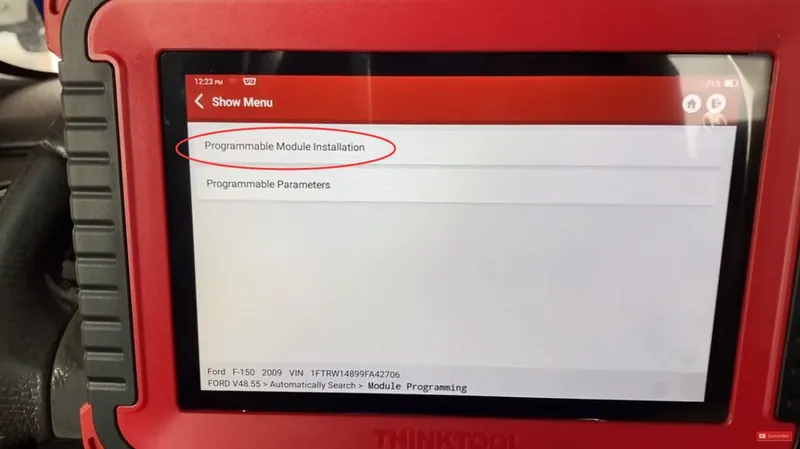
Budget: FORScan with OBDLink EX Adapter (for Ford/Mazda) (~$60) — This powerful DIY combination offers dealer-level diagnostics. It identifies the specific module with the B2477 code and, with a free extended license, performs the necessary 'Programmable Module Installation' (PMI) to fix the code.
Mid-range: FOXWELL NT710 (~$250) — Provides full-system diagnostics to read B-codes from all modules. It offers bidirectional control and some special functions, which may include module setup procedures for specific makes.
Professional: Autel MaxiCOM MK808S / MK900BT (~$450-800) — These professional-level tools feature extensive bidirectional capabilities. They perform advanced functions like module coding, adaptations, and initializations required to resolve a B2477 code on a wide variety of vehicle makes.
Rent vs buy: Renting a scanner is not viable as free rental tools at auto parts stores cannot perform programming. If you have a Ford, Mazda, or GM, buying the FORScan adapter is the most cost-effective solution. For other brands, take the vehicle to a professional shop.
How to Clear the Code After You Fix It
- Perform module programming/configuration with a compatible scan tool.
- Use the scan tool to clear the B2477 code from the specific module.
- Turn the ignition off for 30 seconds, then start the vehicle to verify the warning light goes out.
- Operate the functions of the repaired system to confirm proper operation.
Drive cycle (~15 minutes): A specific drive cycle is not required. The fault is recognized during the module's power-on self-test. Cycling the ignition and operating the vehicle for 15 minutes confirms the fix.
Readiness monitors affected: Not applicable for most B-codes
Watch out for:
- Clearing the code with a basic scanner fails; the code returns instantly because the root configuration error still exists.
- Attempting to program a module without a stable battery charger causes the programming to fail and 'bricks' the module.
- Failing to address underlying network communication (U-codes) before programming results in repeated failures.
Will This Fail Emissions / State Inspection?
No — by itself this code doesn't fail OBD inspection (but it can keep readiness monitors from setting, which causes a separate fail).
- California: This is a Body (B) code and does not affect the emissions test. However, if an illuminated warning light is present, the vehicle fails the visual inspection.
- New York: New York's safety inspection checks for illuminated ABS and airbag warning lights. If B2477 causes either light to be on, the vehicle fails the safety inspection.
- Texas: The annual safety inspection requires that ABS and airbag warning lights function correctly. If B2477 causes a light to remain illuminated, the vehicle fails.
Most Commonly Affected Vehicles
- Ford F-150 / F-250 / F-350 (2006-2015) — Extremely common in the ABS or SRS (airbag) module after replacement.
- Ford Mustang (2005-2014) — Frequently appears in the climate control (EATC) or radio display (FDIM) modules due to water leaks near the passenger-side kick panel.
- BMW 3, 5, 7 Series, X3, X5 (2005-2015) — Typically points to a failure in the driver's seat memory module (SME). The E90 3-series is notorious for loose or corroded wiring connectors under the seat.
- Mercedes-Benz C, E, S, ML-Class (2004-2014) — Commonly associated with a fault in the power seat adjustment or memory module.
- Honda Odyssey (2011-2017) — Specifically relates to a malfunction in the rear suspension stroke sensor circuit, affecting the automatic headlight leveling system.
- Audi A4, A6, A8, Q5, Q7 (2006-2016) — Frequently points to the power seat memory module and its related wiring components.
- Volkswagen Passat, Touareg (2005-2013) — Indicates a fault within the driver's seat memory system or related wiring.
- Chevrolet / GMC Silverado / Sierra (2005-2014) — On GM vehicles, B2477 means 'Reverse Lamp Relay Shorted to Ground'. Diagnosis must focus on the backup light circuit, relay, and fuse in the underhood fuse box.
Manufacturer-Specific Notes
- Ford: This is a 'catch-all' code for any unprogrammed module. A suffix like '-60' points to a specific module (e.g., B2477-60 often means the EATC or FDIM).
- Honda: B2477 specifically means 'Rear Suspension Stroke Sensor Circuit Malfunction', which is part of the automatic headlight leveling system.
- BMW, Mercedes, Audi, VW: This code points directly to a problem with the power seat memory system, such as a bad seat module, switch, or under-seat wiring.
- GM (Chevrolet, GMC, Cadillac): B2477 is defined as 'Reverse Lamp Relay Shorted to Ground', which is an electrical circuit fault, not a module configuration failure.
Real Owner Stories
2008 Ford F-150 with ABS light on
Owner bought a truck with a replaced PCM. The ABS light remained on with code B2477, and anti-lock brakes were disabled.
What they tried:
- Replaced the ABS module with a used one from a junkyard.
- Attempted to reprogram the replacement ABS module.
- Performed pin tests and CAN bus checks.
Outcome: The B2477 code persisted even after swapping the ABS module and reprogramming, suggesting a deeper compatibility problem or a hidden wiring fault.
Lesson: Used modules are not always a simple plug-and-play solution. Underlying network or wiring issues can be very difficult to trace and prevent successful programming.
2014 Ford Mustang GT with a hidden B2477-60 code
The owner discovered a B2477-60 code in the Front Display Interface Module (FDIM) during a routine scan. There were no warning lights. The display module had been replaced under warranty years earlier.
What they tried:
- Attempted to clear the code, but it returned immediately.
- Used a Thinktool Pros scan tool to access the module programming function.
Outcome: The owner successfully reprogrammed the FDIM using their advanced scan tool, clearing the code permanently.
Lesson: A configuration failure code can exist without causing noticeable symptoms. With the right advanced DIY scan tool, owners can perform the necessary reprogramming themselves.
Chevrolet Silverado with B2477 for 'Reverse Lamp Relay Shorted'
A GM truck owner encountered a B2477 code, and their reverse lights were not working. They had no other symptoms.
What they tried:
- Checked the 'B/U LP' (Backup Lamp) fuse.
- Inspected the reverse lamp relay in the underhood fuse box.
Outcome: The problem was a faulty backup lamp relay. Replacing the $15 relay resolved the code and restored reverse light function.
Lesson: Always verify the specific definition of a code for your vehicle's manufacturer. For GM, B2477 is an electrical circuit fault, not a programming issue.
How to Prevent This Code From Triggering
- Use a surge protector when jump-starting or charging (Whenever connecting an external power source) — Improper jump-starting damages sensitive electronic modules. A surge protector absorbs excess voltage, protecting the ECU and BCM.
- Maintain a healthy battery and clean terminals (Every 6 months) — A weak battery provides unstable voltage, causing data corruption in modules during startup.
- Address water leaks promptly (As needed) — Water intrusion from clogged sunroof drains seeps into passenger kick panels, causing corrosion and short circuits that lead to module failure.
- Ensure proper grounding (During any major electrical work) — Poor ground connections create unstable electrical paths, leading to unpredictable module behavior and data corruption.
Frequently Asked Questions
I just replaced my ABS module and now I have this code. What happened?
The new ABS module was not programmed to your vehicle. It needs to be configured with special software so it knows the specifics of your car, like its VIN and other options. This is not a plug-and-play part.
Can I fix a B2477 code myself?
Fixing the root cause requires advanced, manufacturer-specific diagnostic tools to program the module. While you can check fuses, battery, and wiring, the final programming step requires a professional shop or an advanced DIY tool like FORScan.
How much does it cost to fix a B2477 code?
Repair costs range from $50 for a simple fuse diagnosis to $250 for module reprogramming. If the module itself failed, a replacement costs $450 to $1,300 including parts and labor depending on the vehicle.
Will clearing the code make it go away?
No. Because this is a configuration error, the code returns immediately after clearing it until the module is correctly programmed or the underlying electrical fault is repaired.
My mechanic installed a used module and now I have this code. Is the part bad?
Not necessarily. A used module must be wiped and reprogrammed with your car's VIN and configuration data. If this step is skipped, or if the module is 'locked' to its original VIN, it triggers this code.
What are the most common mistakes when diagnosing a B2477 code?
The biggest mistake is guessing which module failed without using a proper scanner to identify it. Another common error is trying to reprogram a module before fixing active network communication (U-codes). Programming always fails if the CAN bus network is down.
Can a weak battery really cause this B2477 code?
Yes. A weak or failing battery causes low voltage during startup, leading to data corruption or memory loss in control modules. Testing the battery is a critical and free first step before attempting complex repairs.
What does the suffix on a Ford code like B2477-60 mean?
The suffix on Ford codes provides exact module identification. For example, B2477-60 on a Ford Mustang points directly to a configuration fault in the Front Display Interface Module (FDIM) or climate control module.
Key Takeaways
- Code B2477 triggers when a newly installed control module lacks the specific 'as-built' programming data required for your vehicle's VIN.
- Manufacturer definitions vary wildly; B2477 indicates an ABS or airbag programming fault on Fords, but points to a $15 reverse light relay short on GM trucks.
- Clearing the code with a standard $20 scanner will not work; resolving B2477 requires an advanced bidirectional scan tool (like FORScan) to rewrite the module's configuration.
- Always diagnose and repair 'U-prefix' network communication codes first, as a faulty CAN bus prevents successful module programming 100% of the time.
Helpful Videos


![Ford Lost Communication Problems [The U-Codes]](https://img.youtube.com/vi/h04Cyo78bBU/mqdefault.jpg)
Shop the Parts Behind B2477
Below are the parts most often responsible for code B2477, ranked by how frequently each one is the actual culprit (per the diagnosis above). Tap any to see what we have for your vehicle.



The information in this article is provided for general reference and educational purposes only. Vehicle specifications, procedures, and part compatibility can vary by production date, trim level, and region. Always consult your vehicle's factory service manual and verify part numbers before purchasing or performing repairs. Safety-critical components such as airbags, seat belts, and braking systems should be installed by a qualified professional.
- 🧭 Diagnostic Flowchart
- 🎬 Helpful Videos
- 🛍️ Shop This Part
- What Does B2477 Mean?
- Can I Drive With B2477?
- Common Causes
- Symptoms
- Common Fixes & Costs
- DIY vs Professional
- Used vs. New Parts: Buying Guide
- What Happens If You Wait — Timeline
- Cost of Not Fixing It
- Diagnosis Steps
- When This Code Triggers (Freeze-Frame Conditions)
- Related Codes
- How to Talk to a Mechanic About This Code
- Where to Take It: Dealer vs Independent vs Chain
- When to Walk Away From the Repair
- What Scan Tool You Need for This Code
- How to Clear the Code After You Fix It
- Will This Fail Emissions / State Inspection?
- Most Commonly Affected Vehicles
- Manufacturer-Specific Notes
- Real Owner Stories
- 2008 Ford F-150 with ABS light on
- 2014 Ford Mustang GT with a hidden B2477-60 code
- Chevrolet Silverado with B2477 for 'Reverse Lamp Relay Shorted'
- How to Prevent This Code From Triggering
- Frequently Asked Questions
- I just replaced my ABS module and now I have this code. What happened?
- Can I fix a B2477 code myself?
- How much does it cost to fix a B2477 code?
- Will clearing the code make it go away?
- My mechanic installed a used module and now I have this code. Is the part bad?
- What are the most common mistakes when diagnosing a B2477 code?
- Can a weak battery really cause this B2477 code?
- What does the suffix on a Ford code like B2477-60 mean?
- Key Takeaways
- 🎟️ Get 5% Off