

OBD-II Code B2501: A Comprehensive Guide to Body Control Module Faults
The Ultimate Resource for Diagnosing and Fixing B2501: What it means, why it triggers, and how to solve it for good.
- Code B2501 lacks a universal definition; you must use an advanced scanner to pull the manufacturer-specific meaning (e.g., Ford headlight, Mitsubishi camera) before replacing any parts.
- Over 80% of B2501 faults stem from simple electrical failures like a $10 blown fuse or a melted $30 wiring pigtail, rather than a failed $800 Body Control Module.
- Always test the circuit's power and ground with a multimeter before condemning the component; a dead headlight with zero voltage at the connector indicates a wiring break, not a bad bulb.
- While the vehicle remains drivable, B2501 disables critical safety or security features, increasing your risk of theft or visibility-related accidents until the specific circuit is repaired.
What Does B2501 Mean?
B2501 is a manufacturer-specific Body Control Module (BCM) code, meaning its definition changes depending on your vehicle. Unlike 'P' (Powertrain) codes, 'B' (Body) codes point to faults in the vehicle's electronic comfort, safety, and security systems. It signals that the BCM—the central computer for these systems—has detected an electrical fault in a specific circuit, such as a headlight, door lock, or rearview camera.
Technical definition: The SAE/ISO J2012 and ISO 15031-6 standards do not provide a universal definition for B2501, leaving it open for manufacturer use. Common definitions include 'LF LAMP LOW BEAM CIRCUIT Failure' (Ford, GM), 'Rear view camera fault' (Mitsubishi), 'Lost Communication with Driving Support ECU' (Dodge), and 'Warning Lamp Open' (Hyundai).
Can I Drive With B2501?
Yes, But With Caution. Driving is generally possible, but this code indicates a critical safety or security feature is compromised. If it is a headlight, your visibility is dangerously reduced, increasing accident risk and inviting traffic fines. If it is a door lock, your vehicle is vulnerable to theft, and exiting in an emergency is hindered. Prompt inspection is essential to avoid compromising your safety and vehicle security.
Common Causes
- Damaged or Corroded Wiring/Connectors (Very Common) — Wiring harnesses are exposed to moisture, heat, and vibration, leading to corrosion, breaks, or intermittent shorts. A melted connector or bad connection is the leading cause of this code, far more common than a failed component.
- Blown Fuse or Faulty Relay (Common) — A blown fuse or a malfunctioning relay interrupts power to the circuit and triggers the code instantly. This is the easiest and cheapest fix, and requires checking first.
- Failed Component (Common) — The component itself has failed mechanically or electronically. Examples include a burnt-out headlight bulb, a seized door lock actuator motor, or a dead rearview camera.
- Broken or Poor Ground Connection (Less Common) — A corroded or broken ground wire creates high resistance or an open circuit, preventing the component from functioning and triggering a fault code.
- Faulty Body Control Module (BCM) (Rare) — The BCM itself fails and sends erroneous trouble codes. This is usually accompanied by multiple unrelated electrical issues and requires professional diagnosis and programming.
- Failed Control Switch (Rare) — The driver-operated switch (e.g., headlight stalk, door lock button) wears out and fails to send the correct signal to the BCM.
- Malfunctioning Related Components (Rare) — On specific vehicles, a fault in a seemingly unrelated component triggers a B2501 code. For example, a failing digital clock on some Chevrolet Aveo models causes B2501 airbag system codes.
Symptoms
- Left Front Low-Beam Headlight Inoperative — For the common 'LF LAMP LOW BEAM CIRCUIT Failure' variation, the driver's side low-beam headlight fails to illuminate.
- Power Door Locks Malfunctioning — Doors fail to lock or unlock with the remote or interior switch. You often hear a buzzing or clicking sound from the door as the actuator struggles.
- Rearview Camera Inoperative or Blue Screen — On affected Mitsubishi vehicles, the backup camera feed fails to appear, or the screen turns blue when reversing, indicating signal loss.
- Airbag Warning Light Illuminated — On specific Hyundai models, this code points to a fault in the airbag warning light circuit, causing the dashboard light to stay on even if the airbags are functional.
- Alarm System Randomly Triggering — A faulty door latch or actuator sends an incorrect 'door ajar' signal to the BCM, triggering the anti-theft system unexpectedly.
Diagnostic Flowchart
Tap your situation to follow the diagnostic path that matches what you're seeing on this code.
Common Fixes & Costs
- Replace Blown Fuse — Parts: $1-$10, Labor: $0-$50, ~0.1 hr book time (Beginner)
- Repair or Replace Wiring Harness/Connector
— Parts: $15-$50, Labor: $150-$350, ~1.5 hr book time
(Intermediate)
: OEM BU2Z-14S411-LA / WPT-1357 (Alt: ACDelco PT2298, Standard Motor Products S-553) - Replace Door Lock Actuator
— Parts: $120-$300, Labor: $150-$350, ~1.5 hr book time
(Intermediate)
: OEM F1EZ-58264A26-B (Alt: Dorman 937-732, Standard Motor Products DLA865)
: OEM 5019050AE (Alt: Autopart Premium APDLA1250) - Replace Rearview Camera
— Parts: $100-$400, Labor: $100-$250, ~1.2 hr book time
(DIY)
: OEM 8781A043 (2014-2015), 8781A163 (2016-2022) (Alt: Master Tailgaters) - Replace Body Control Module (BCM) — Parts: $300-$1000+, Labor: $150-$400, ~2.5 hr book time (Professional)
Used vs. New Parts: Buying Guide
When a used part is worth it: For high-cost, mechanically simple items like door lock actuators on an older vehicle (>10 years), a used part from a reputable salvage yard is a cost-effective solution. Verify the donor vehicle's mileage and ensure an exact part number match.
Donor-vehicle mileage cap: roughly under 100000 miles for the part to have meaningful remaining life.
Donor quality checklist:
- Match the part number exactly; 'will fit' is not a guarantee.
- For electronic parts like cameras, source from a vehicle newer than your own.
- Avoid parts from flood-damaged or high-impact collision vehicles.
- Request a part with a 90-day warranty.
Decision logic:
- If The part is a wiring pigtail or connector → Always buy new. The cost is low, and you guarantee a clean, corrosion-free connection.
- If The part is a door lock actuator and the vehicle is < 10 years old → Buy a new aftermarket part. They offer a good balance of cost and reliability, often with a 1-year or longer warranty.
- If The part is a rearview camera and an aftermarket new unit costs < $150 → Buy new. The labor to install is the same, and a new part eliminates the risk of a used camera having a cloudy lens or failing electronics.
Warranty tradeoff: Used parts typically have a 30-90 day warranty. New aftermarket parts usually offer a 1-year to limited lifetime warranty. New OEM parts carry a 1-2 year warranty but are the most expensive.
Worst-case if a used part fails: $200-$500 (for repeat labor if a used part fails shortly after installation)
What Happens If You Wait — Timeline
- 0-2 Weeks: Code sets and a specific function fails (e.g., a headlight is out). No other symptoms are present. The car operates normally otherwise. (MPG impact: 0%% · Added cost: $0 (but potential for a traffic ticket, ~$150+))
- 2 Weeks - 3 Months: For a high-resistance fault (like a bad headlight connector), the connection begins to generate excess heat. The plastic connector housing starts to discolor or become brittle. The light flickers intermittently. (MPG impact: 0%% · Added cost: $0-$20 (cost of a new bulb that burns out prematurely))
- 3-6 Months: The connector melts from sustained heat, destroying the terminal contacts within. The heat damages the pins on the component itself (e.g., the headlight assembly). The repair escalates from replacing a $15 pigtail to needing a new headlight assembly. (MPG impact: 0%% · Added cost: $200-$600 (cost of a new headlight assembly + labor vs. just a pigtail))
- 6+ Months: Worst-case scenario: the heat travels up the wiring, melting the insulation of adjacent wires in the harness and causing a short circuit. This damages the driver circuit inside the Body Control Module, requiring a full BCM replacement and programming. (MPG impact: 0%% · Added cost: $800-$1500+ (cost of BCM replacement and programming))
Cost of Not Fixing It
- Immediate: For headlight failures, this results in a safety hazard, reduced visibility, and traffic citations. For door lock failures, the vehicle is vulnerable to theft or presents an egress hazard in an emergency. (Added cost: $150+ (for a traffic ticket))
- 1-3 Months: Ignoring a high-resistance fault (like a melted headlight connector) causes further damage. The excessive heat destroys the wiring harness, requiring a more extensive and expensive repair than just the connector pigtail. (Added cost: $400-$1000+ (for harness repair vs. pigtail))
- 3+ Months: A continuously failing component (like a door lock actuator that keeps trying to work) causes a parasitic drain on the battery, leading to a no-start condition. A persistent electrical short damages the Body Control Module's driver circuit, requiring BCM replacement. (Added cost: $200 (new battery) to $1200+ (BCM replacement))
Diagnosis Steps
- Retrieve Manufacturer-Specific Code Definition
Use a high-quality OBD-II scanner capable of reading manufacturer-specific 'B' codes. A generic reader will not show the correct definition. The exact definition dictates which system (e.g., headlights, door locks, camera) to investigate.
Tools: Advanced OBD-II Scanner (Beginner) - Inspect Fuses and Relays
Consult the owner's manual to locate the fuse box and identify the fuse and relay for the affected system. Visually inspect the fuse and test for continuity. Swap the corresponding relay with a known good one from a non-critical circuit to test for failure.
Tools: Owner's Manual, Fuse Puller, Multimeter (Beginner) - Visually Inspect Wiring and Component
Thoroughly inspect the component in question. Check the electrical connector for corrosion, pushed-out pins, or moisture. Trace the wiring harness as far as possible, looking for chafing, breaks, pinch points, or melted plastic.
Tools: Flashlight, Inspection Mirror (Beginner) - Test for Power and Ground at the Component
Using a multimeter, test for correct voltage and a solid ground at the component's electrical connector with the circuit activated. Good power and ground suggest the component has failed; no power or ground points to a wiring or BCM issue.
Tools: Multimeter (Intermediate) - Test the Component Directly
If you confirm good power and ground, test the component itself. Use a power probe or jumper wires to apply the correct voltage and ground directly to the component's terminals. If a door lock actuator or headlight does not respond, it is confirmed faulty.
Tools: Jumper Wires, Power Probe (Advanced) - Perform a Voltage Drop Test
To find high resistance in a circuit, perform a voltage drop test. Connect the positive multimeter lead to the battery positive and the negative lead to the power wire at the component connector. With the circuit active, the reading must be under 0.5V. A higher reading indicates excessive resistance.
Tools: Multimeter with long leads (Advanced) - Test the Control Switch
Test the switch that operates the component (e.g., headlight stalk, door lock switch) for proper continuity and resistance using a multimeter. Compare your readings to the manufacturer's specifications to determine if the switch is faulty.
Tools: Multimeter, Vehicle-Specific Repair Manual (Advanced) - Check for Specific Circuit Resistance (Chrysler)
For a Chrysler power sliding door issue, measure the resistance of circuits between the door module and the latch connector. A reading above 5.0 Ohms indicates an open or high-resistance circuit requiring repair.
Tools: Multimeter, Vehicle-Specific Repair Manual/Wiring Diagram (Advanced) - Test Camera Signals (Mitsubishi)
On a Mitsubishi Outlander, use the head unit's hidden service menu to check signals. This menu confirms if the camera image is reaching the head unit and if the 'Shift Position R' signal changes from OFF to ON when selecting reverse.
Tools: Vehicle Head Unit (for service menu), Multimeter (Advanced)
When This Code Triggers (Freeze-Frame Conditions)
- Fault Trigger: Command vs. Feedback Mismatch (The BCM sets code B2501 when it commands a component to activate (e.g., lock doors, turn on headlight) but does not receive the expected electrical feedback.)
- Example 1: Headlight Circuit: Open Circuit / High Resistance (The code triggers instantly when the headlight switch is turned ON, and the BCM detects less than expected current draw on the left low-beam circuit.)
- Example 2: Door Lock Actuator: Motor Jammed / Open Circuit (The code is set when the remote or door switch is pressed, and the BCM's internal sensor does not detect the lock actuator's movement or sees an abnormal current draw.)
- Example 3: Sliding Door (Chrysler): Operation Time > 4 seconds (For a 2010 Town & Country, the code is specifically set if the power sliding door's cinch-to-latch operation takes longer than 4 seconds, indicating a mechanical or motor-related issue.)
- Example 4: Rearview Camera (Mitsubishi): No Signal > 5 seconds (The system triggers the code and displays a blue screen if the video signal from the rearview camera is lost for more than 5 consecutive seconds after shifting into reverse.)
Related Codes
- B2502 — This code often appears with B2501 and specifies the nature of the electrical fault. For example, if B2501 is 'LF lamp low beam circuit failure', B2502 might be 'LF lamp low beam circuit short to battery'. B2501 tells you *what* circuit is failing, while B2502 tells you *how* it is failing (e.g., short to power, short to ground). Diagnosing them together requires a wiring diagram.
- U-prefix codes (e.g., U0121, U0140) — If B2501 is defined as a communication error (like on a Dodge), you will likely see other 'U' (Network) codes like U0121 (Lost Communication with ABS Module) or U0140 (Lost Communication with BCM). These codes indicate a broader CAN bus network problem. If 'U' codes are present, diagnose the network integrity first; fixing the communication breakdown clears the B2501 code.
- B1000 — This is a generic ECU-related code that means 'ECU Malfunction'. If the Body Control Module (BCM) itself is failing, you see B1000 alongside B2501. If B1000 is present, diagnosis begins with the BCM's power, ground, and communication network before chasing the B2501 fault.
- B1342 — A code like B1342 ('ECU is defective') is a direct pointer to an internal failure of a control unit. If you see this along with B2501 and other seemingly random body codes, the likelihood of a failed BCM is much higher. This confirms that the module itself is reporting an internal error.
Climate & Environmental Factors
- High Humidity / Salt Belt Regions: Accelerates corrosion of wiring and connectors, especially for externally mounted components like headlights and cameras. Moisture intrusion into connectors is a primary cause of high resistance and intermittent faults.
- Extreme Heat: Causes plastic connectors, especially for high-current components like headlights, to become brittle and fail. High ambient temperatures increase the operating temperature of bulbs, contributing to melted connectors.
- Extreme Cold: Wiring insulation becomes stiff and brittle in extreme cold, making it more susceptible to cracking and breaking from vibration. This leads to shorts or open circuits.
How to Talk to a Mechanic About This Code
Say this: "I have a B2501 code and a specific symptom, like my driver's side headlight is out. I need a diagnostic appointment. Can you please confirm that your scanners can read manufacturer-specific body codes for a [Your Car's Make/Model/Year] and get the exact definition before starting work?"
This signals you know B2501 is vehicle-specific and that a generic diagnosis is insufficient. It focuses the technician on electrical testing rather than just replacing the obvious part (like a bulb) and prevents wasted diagnostic time.
Avoid saying:
- 'My car has an electrical problem.' (too vague)
- 'Just fix the headlight.' (invites a simple part swap without diagnosing the root cause, like a bad connector)
- 'My check engine light is on.' (The B2501 code does not typically illuminate the check engine light; this shows a lack of basic knowledge.)
Questions to ask before authorizing the repair:
- Can you show me the test results, like the voltage and ground readings at the component connector?
- If it's a wiring issue, is the plan to repair the wire or replace the harness section? Can I see the damage?
- What is the warranty on this specific repair, including both parts and labor?
- If you're replacing a part, will you use an OEM or aftermarket part, and why?
Where to Take It: Dealer vs Independent vs Chain
- Dealer:
Recommended for warranty work or if an independent shop confirms the BCM requires replacement and proprietary programming.
Best for: Vehicles under warranty or with a related recall/TSB., Complex, manufacturer-specific quirks (e.g., Chevy Aveo clock issue, Mitsubishi camera software)., If the final diagnosis is a BCM replacement that requires proprietary software for programming.
Downsides: Higher labor rates., More likely to replace a whole assembly (e.g., entire headlight) instead of repairing a connector. (Typical cost: +50% vs. baseline) - Independent Shop:
Best fit for most B2501 scenarios. A good independent shop with strong electrical skills diagnoses and repairs the most common causes (wiring, components) more cost-effectively than a dealer.
Best for: Out-of-warranty vehicles., Diagnosing and repairing common B2501 causes like wiring, connectors, and component failures (actuators, cameras)., Getting a second opinion on a costly dealer quote.
Downsides: Shop quality and electrical diagnostic skill vary greatly; look for ASE certifications and good reviews on electrical work., May lack the specific software to program a new BCM if required. (Typical cost: +0% vs. baseline) - Chain Shop:
Avoid for B2501 diagnosis. Only use if you have already diagnosed the problem yourself as a simple part swap (e.g., you need a new camera and just want it installed).
Best for: Simple, unambiguous fixes like replacing a headlight bulb or a fuse if you don't want to do it yourself.
Downsides: Generally not equipped for in-depth electrical diagnosis of intermittent or complex wiring faults., High pressure to upsell services; may recommend unnecessary part replacements. (Typical cost: -10% vs. baseline)
When to Walk Away From the Repair
If the estimated repair cost exceeds 50% of your car's current private-party value, seriously consider replacing the vehicle instead of repairing it.
- Car worth $4000, fix is $2200: Walk away. The repair cost is 55% of the car's value. It is not a sound financial decision to proceed.
- Car worth $15000, fix is $1200: Fix it. The repair cost is only 8% of the car's value and well below the threshold.
- Car worth $3000, fix is $1600: Borderline, but likely walk away. The cost is over 50%. Unless the car is otherwise in perfect mechanical condition with very low miles, this is likely not a worthwhile investment.
What Scan Tool You Need for This Code
Minimum: A scanner that can read manufacturer-specific Body ('B') codes and display live data. A basic $20 engine-only code reader will NOT see the B2501 code.
Because B2501 is a body code, a generic OBD-II engine scanner is insufficient. You need a tool that accesses the Body Control Module (BCM) to get the correct code definition and diagnose the specific circuit.
Budget: BlueDriver Pro Scan Tool (~$100) — Connects to a smartphone app and reads codes from all modules, including the BCM. It provides manufacturer-specific definitions and allows you to view live data to aid in diagnosis.
Mid-range: Foxwell NT510 Elite / NT530 (~$180) — A powerful handheld tool that offers full system diagnostics, including reading BCM codes. Crucially, it provides bidirectional control, allowing you to command components like door locks or lights to turn on/off, which is essential for testing.
Professional: Autel MaxiCOM MK808 / XTOOL D7 (~$450-600) — These are professional-grade tablets that offer full bidirectional control, comprehensive live data graphing, and advanced service functions. They provide dealer-level diagnostic capabilities, including the ability to perform module programming if a BCM replacement is needed.
Rent vs buy: AutoZone and O'Reilly Auto Parts offer a loaner tool program. You pay a deposit (equal to the tool's cost), use the tool, and get a full refund upon return. This is a great option for a one-time diagnosis, but be sure to ask if their loaner scanner reads Body/Chassis codes, as some are engine-only.
How to Clear the Code After You Fix It
- Fix the underlying electrical or mechanical fault.
- Use an OBD-II scan tool to connect to the Body Control Module.
- Select the function to clear DTCs (Diagnostic Trouble Codes).
- Cycle the ignition off and on, then operate the repaired component to verify the fix.
Drive cycle: A specific 'drive cycle' is not required for most B2501 faults. The code is a real-time electrical check. Once the physical fault is repaired and the code is cleared with a scanner, it will not return.
Readiness monitors affected: Not applicable
Watch out for:
- Simply clearing the code with a scanner will not fix the problem; the code returns immediately upon the next attempt to use the faulty component.
- Disconnecting the battery resolves temporary glitches but fails to fix a hard fault like a broken wire or failed motor.
- Forgetting to address the root cause (e.g., moisture intrusion) guarantees a repeat failure.
Will This Fail Emissions / State Inspection?
No — by itself this code doesn't fail OBD inspection (but it can keep readiness monitors from setting, which causes a separate fail).
- General Rule: A 'B' code like B2501 will NOT cause a failure of an OBD-II emissions test, as it does not illuminate the Check Engine Light (MIL). However, the underlying symptom (e.g., a non-functional headlight, an illuminated airbag light) WILL cause a failure of the separate safety inspection in most states.
- California: The OBD test focuses on powertrain codes ('P' codes) and readiness monitors. B2501 is not a factor. However, a non-operative required lamp (like a headlight) fails a visual/functional part of the inspection, preventing a certificate.
- New York: NYS vehicle safety inspections check all required lights. A B2501 code related to a headlight failure results in an immediate safety inspection failure. An illuminated airbag light also constitutes a failure.
- Texas: As of 2025, safety inspections are eliminated for non-commercial vehicles in Texas. However, emissions testing is still required in 17 counties. B2501 will not fail this emissions test. Police still issue citations for non-functional safety equipment.
Most Commonly Affected Vehicles
- Ford Focus, Fiesta, Mondeo, Kuga (2005-2018) — Very commonly relates to 'LF LAMP LOW BEAM CIRCUIT Failure' or faults within the central door locking system.
- Mitsubishi Outlander (2013-2023) — Frequently associated with a 'Rear view camera fault'. The diagnostic procedure involves checking the ACCR, GNDR, VRV, and SVRV lines between the camera and ECU.
- Hyundai HD Coupe (GK), Accent (RB) (2008-2011) — Often triggers as 'Warning Lamp Open,' indicating an open circuit for the airbag indicator light in the instrument cluster, not a fault with an airbag component itself.
- Dodge / Chrysler Grand Caravan, Town & Country (2008-2020) — Appears as 'Lost Communication with Driving Support ECU' or a power sliding door fault. For the 2010 Town & Country, it sets if the door latch cinch operation exceeds 4 seconds. An extended warranty covers sliding door lock actuators on specific models.
- Chevrolet / GM Aveo, various (2008-2011) — Relates to the passenger occupant sensor system. On the Aveo, it is infamously traced to a faulty digital clock module causing airbag-related B2501/B2502 codes.
- Volkswagen Golf, Passat, Polo, Tiguan (2006-2019) — This code is frequently linked to faults in the central locking system or specific door locking mechanisms on VW models.
- BMW 3 Series, 5 Series, X3, X5 (2008-2020) — On many BMWs, B2501 points to general body electronic issues, most commonly related to the door locking system and sensors.
- Opel / Vauxhall Astra, Corsa, Insignia (2004-2017) — Similar to Ford and GM, this code often indicates problems with door locking modules and the central locking system.
- Audi A3, A4, A6, Q5 (2007-2018) — Commonly associated with door locking modules and central locking system failures.
Manufacturer-Specific Notes
- Ford / GM: The most common definition across these brands is 'LF LAMP LOW BEAM CIRCUIT Failure', pointing to a problem with the driver's side low-beam headlight circuit. The cause is frequently a melted or corroded headlight connector pigtail due to high resistance from a poor connection or undersized wires.
- Mitsubishi: On Mitsubishi vehicles like the Outlander, B2501 specifically means 'Rear view camera fault'. The system displays a blue screen when it loses the camera signal for more than 5 seconds. For 2022-2023 models, a black screen on reverse is likely a software issue covered by recall 23V369 and requires a dealer firmware update.
- Hyundai / Kia: For Hyundai and Kia, B2501 is often 'Warning Lamp Open'. This refers to an open circuit for the airbag warning light on the instrument cluster, not a fault with an airbag itself. The SRSCM (airbag module) monitors this circuit and sets the code if it detects an open.
- Dodge / Chrysler / Jeep: On these vehicles, B2501 indicates 'Lost Communication with Driving Support ECU', which is a CAN bus network communication problem. It also relates to the power sliding door latch failing to cinch within a 4-second window. Chrysler issued an extended warranty (15 years / 150,000 miles) for sliding door lock actuators on certain 2015-2017 Grand Caravan and 2015-2016 Town & Country models due to high failure rates.
Real Owner Stories
2014 Ford Fiesta - Headlight Failure
The driver's side low-beam headlight stopped working. After replacing the bulb, it worked for three days and then failed again. The owner noticed the old bulb's electrical socket was burnt and the harness connector was covered in a crusty, acid-like substance.
What they tried:
- Replaced the H7 headlight bulb - the new bulb failed quickly.
- Cleaned the corroded harness connector and installed another new bulb.
Outcome: The repeated failure indicated the harness connector itself was the problem. The high resistance from corrosion was overheating and burning out the bulbs. The final fix was to cut off the old, melted connector and splice in a new pigtail connector, which cost about $15-$20 for the part.
Lesson: If a new bulb burns out quickly, inspect the connector for melting or corrosion. Simply replacing the bulb again won't solve the underlying high-resistance issue. Replacing the pigtail connector is the necessary fix.
2008 Chevy Aveo - Airbag Light On
The airbag warning light was on, and the diagnostic codes were B2501 and B2502. A mechanic initially quoted $800 to replace the passenger seat occupant sensor. Separately, the car's digital clock had been malfunctioning for months.
What they tried:
- A mechanic suggested replacing the passenger seat sensor, but the owner hesitated due to the cost.
- After reading a forum post connecting the two issues, the owner decided to replace the digital clock module first.
Outcome: Replacing the digital clock module, which cost about $70, fixed the problem. The airbag light turned off and did not return. This is a known, unusual quirk where a fault in the clock assembly's circuit board causes airbag-related codes.
Lesson: On certain vehicles like the Chevy Aveo, seemingly unrelated electrical problems are connected. If you have B2501/B2502 airbag codes and a faulty digital clock, the clock is the most likely and cheapest root cause to fix first.
2009 Chrysler Town & Country - Sliding Door Failure
The power sliding door would move to the closed position but would then make several 'clunking' sounds and fail to pull itself fully shut. The door could be fully closed by bumping it with a hip.
What they tried:
- The owner first asked for advice online, suspecting the lock actuator.
- A common suggestion was to lubricate the door rollers and hinges, which had never been done.
- Another common cause identified was broken wires in the flexible track at the bottom of the door.
Outcome: For many owners, the problem is a failing lock actuator that can't complete the final 'cinch' motion. However, the most common failure point on these vans is broken wires inside the plastic wire carrier that flexes every time the door opens and closes. The fix is to open the carrier, find the broken wire(s), and repair them with solder and heat shrink.
Lesson: Before replacing the expensive lock actuator on a Chrysler/Dodge minivan, always inspect the wiring harness in the lower door track first. Broken wires from repeated flexing are an extremely common and much cheaper problem to fix.
How to Prevent This Code From Triggering
- Apply Dielectric Grease to Connectors (During any electrical repair or when a connector is disconnected) — Dielectric grease is non-conductive and seals electrical connectors from moisture, oxygen, and salt. This prevents the corrosion that creates high resistance, which is a root cause of melted connectors and intermittent faults.
- Perform Regular Electrical Inspections (Every 15,000 miles or annually) — Periodically inspect visible wiring for chafing, check that major ground connections are tight and free of corrosion, and look for signs of water entry near important modules like the BCM. Early detection prevents minor issues from becoming expensive failures.
- Address Water Leaks Immediately (As needed) — A leaking windshield, sunroof, or door seal allows water to drip directly onto the BCM or other interior electronics, causing shorts and catastrophic failure. Fixing the seal is cheap; replacing the module is not.
- Ensure Battery Health and Stable Voltage (Annually test battery and charging system) — A failing battery or alternator causes voltage fluctuations that stress sensitive electronics, including the BCM. Maintaining a stable power supply is crucial for the longevity of all vehicle modules.
Frequently Asked Questions
Can I fix a B2501 code myself?
Simple fixes like replacing a fuse or a headlight bulb are very DIY-friendly. Diagnosing and repairing wiring or replacing a door lock actuator can be done by an intermediate DIYer with a multimeter. However, any diagnosis involving the airbag system or replacing a BCM requires a professional due to safety concerns and programming needs.
How much does it cost to fix code B2501?
The cost varies widely based on the root cause. A fuse is under $10, while a door lock actuator replacement typically costs between $270 and $650. Headlight wiring repair ranges from $150 to $400, and a BCM replacement exceeds $1000 with parts, labor, and programming.
What does 'LF LAMP LOW BEAM CIRCUIT Failure' mean?
This is a common definition for B2501, especially on Ford and GM vehicles. It means the Body Control Module has detected an electrical problem in the circuit for the Left Front (driver's side) low-beam headlight. The issue is usually the bulb, the connector, the wiring, or a fuse.
What are common misdiagnosis pitfalls for B2501?
The biggest pitfall is replacing the component named in the code without testing. For instance, replacing a headlight bulb when the actual cause is a corroded ground wire. Always test for power and ground at the component before buying replacement parts.
Why does my B2501 code only appear sometimes?
Intermittent faults occur when a frayed wire loses connection during vibration or a component overheats. Moisture from rain or car washes also causes temporary shorts that trigger the code, which disappear when the area dries. These require wiggle tests or water leak inspections to diagnose.
Will clearing the code make it go away?
You can clear the code with a scanner, but it returns almost immediately if the underlying electrical fault has not been repaired. Clearing the code only erases the message from the module's memory; it does not fix the physical problem.
Can a bad BCM cause weird electrical problems?
Yes. A failing BCM causes a host of strange, unrelated issues, such as lights flickering, gauges acting erratically, security system faults, and false diagnostic codes. If you have multiple 'B' or 'U' codes along with B2501, the BCM itself is likely the culprit.
How do you test a door lock actuator?
After confirming the actuator is receiving power and ground with a multimeter, you test it directly. Disconnect the actuator and use a power probe or jumper wires to apply 12V and ground to its motor terminals. If the lock does not move, the actuator motor is dead and requires replacement.
Key Takeaways
- Code B2501 lacks a universal definition; you must use an advanced scanner to pull the manufacturer-specific meaning (e.g., Ford headlight, Mitsubishi camera) before replacing any parts.
- Over 80% of B2501 faults stem from simple electrical failures like a $10 blown fuse or a melted $30 wiring pigtail, rather than a failed $800 Body Control Module.
- Always test the circuit's power and ground with a multimeter before condemning the component; a dead headlight with zero voltage at the connector indicates a wiring break, not a bad bulb.
- While the vehicle remains drivable, B2501 disables critical safety or security features, increasing your risk of theft or visibility-related accidents until the specific circuit is repaired.
Shop the Parts Behind B2501
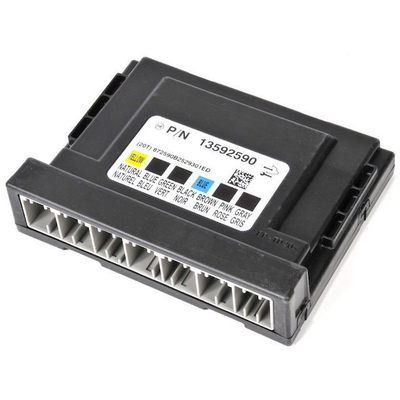
Below are the parts most often responsible for code B2501, ranked by how frequently each one is the actual culprit (per the diagnosis above). Tap any to see what we have for your vehicle.



The information in this article is provided for general reference and educational purposes only. Vehicle specifications, procedures, and part compatibility can vary by production date, trim level, and region. Always consult your vehicle's factory service manual and verify part numbers before purchasing or performing repairs. Safety-critical components such as airbags, seat belts, and braking systems should be installed by a qualified professional.
- 🧭 Diagnostic Flowchart
- 🛍️ Shop This Part
- What Does B2501 Mean?
- Can I Drive With B2501?
- Common Causes
- Symptoms
- Common Fixes & Costs
- Used vs. New Parts: Buying Guide
- What Happens If You Wait — Timeline
- Cost of Not Fixing It
- Diagnosis Steps
- When This Code Triggers (Freeze-Frame Conditions)
- Related Codes
- Climate & Environmental Factors
- How to Talk to a Mechanic About This Code
- Where to Take It: Dealer vs Independent vs Chain
- When to Walk Away From the Repair
- What Scan Tool You Need for This Code
- How to Clear the Code After You Fix It
- Will This Fail Emissions / State Inspection?
- Most Commonly Affected Vehicles
- Manufacturer-Specific Notes
- Real Owner Stories
- 2014 Ford Fiesta - Headlight Failure
- 2008 Chevy Aveo - Airbag Light On
- 2009 Chrysler Town & Country - Sliding Door Failure
- How to Prevent This Code From Triggering
- Frequently Asked Questions
- Can I fix a B2501 code myself?
- How much does it cost to fix code B2501?
- What does 'LF LAMP LOW BEAM CIRCUIT Failure' mean?
- What are common misdiagnosis pitfalls for B2501?
- Why does my B2501 code only appear sometimes?
- Will clearing the code make it go away?
- Can a bad BCM cause weird electrical problems?
- How do you test a door lock actuator?
- Key Takeaways
- 🎟️ Get 5% Off