

OBD-II Code B2502: Telltale Lamp Circuit Fault
What B2502 means, why it triggers, and how to fix it
- Code B2502 flags a failure in the passenger airbag indicator light circuit, disabling the entire airbag system until repaired.
- Check behind the dashboard first; the most frequent cause is an unplugged indicator connector left behind after an aftermarket stereo installation.
- Do not accept an $800+ quote for a new passenger seat sensor without a second opinion, as B2502 points to the $50-$150 indicator lamp.
- Always disconnect the negative battery terminal and wait 15 minutes before inspecting yellow SRS connectors to prevent accidental airbag deployment.
What Does B2502 Mean?
Code B2502 means the Supplemental Restraint System (SRS) control module detects an electrical fault in the passenger airbag status indicator light circuit. This lamp (often labeled 'PASS AIRBAG OFF') tells occupants if the passenger airbag is active. The SRS module is not receiving the expected voltage, indicating a burnt-out bulb, an unplugged connector, or damaged wiring.
Technical definition: SAE/OBD-II defines B2502 as a malfunction in the telltale indicator lamp system. While most common on Hyundai, Kia, and Chevrolet vehicles as a passenger airbag light failure, Ford uses it for 'LF LAMP LOW BEAM CIRCUIT Short to Battery'. This guide focuses on the primary airbag-related definition.
Can I Drive With B2502?
Yes, But With Caution. The vehicle operates normally, but the Supplemental Restraint System (SRS) is disabled as a fail-safe. In a collision, the airbags will not deploy, dramatically increasing the risk of serious injury or death. Repair this immediately.
Common Causes
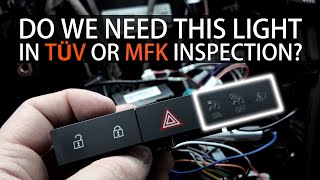
- Disconnected indicator lamp connector (Very Common) — Installing an aftermarket stereo or performing dash work often leaves the indicator light unplugged 🎬 Watch: How an aftermarket radio install can trigger this code., creating an immediate open circuit.
- Burnt-out passenger airbag indicator bulb (Very Common) — The incandescent bulb or LED illuminating the indicator has reached the end of its lifespan and failed.
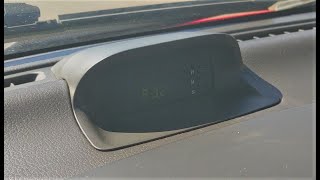
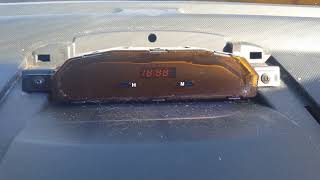
- Faulty integrated clock/display assembly (Common) — On vehicles like the 2008-2011 Chevrolet Aveo, the indicator is built into the digital clock. Internal circuit board failures in this clock trigger the B2502 code.
- Poor connection or corroded terminals (Common) — Connectors under the passenger seat or behind the dash loosen or corrode from spilled liquids and high humidity, interrupting the voltage signal.
- Damaged wiring harness (Less Common) — Wires leading to the indicator lamp fray, pinch, or short against metal brackets due to vibration or items shoved under the passenger seat.
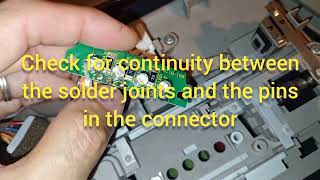
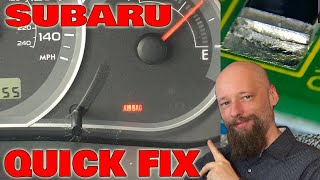
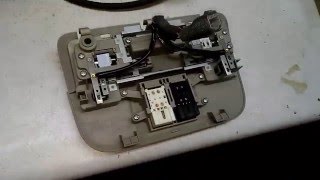
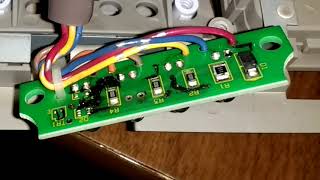
- Cracked solder joints (Less Common) — Subaru models with overhead indicators develop microscopic cracks in the circuit board's solder joints from extreme cabin temperature cycles.
- Blown SRS fuse (Rare) — A power surge or short circuit blows the dedicated airbag system fuse, cutting power to the indicator circuit.
- Faulty SRS Control Module (Rare) — The main airbag computer fails internally. This is the most expensive and least likely cause.
Symptoms
- Airbag warning light is on — The primary red airbag icon on the instrument cluster illuminates permanently, indicating the system is disabled.
- Passenger airbag status indicator is dead — The 'PASS AIRBAG OFF' light fails to illuminate during the initial startup self-check.
- Incorrect passenger airbag status — The indicator shows the airbag is 'OFF' even when an adult occupies the passenger seat.
- Random warning light flashing — Wiring shorts related to this code disrupt the CAN bus, causing the ABS or traction control lights to flash intermittently.
Diagnostic Flowchart
Tap your situation to follow the diagnostic path that matches what you're seeing on this code.
Common Fixes & Costs
- Reconnect or Clean Electrical Connector — Parts: $0-$10, Labor: $0-$150, ~1.0 hr book time (DIY)
- Replace Indicator Bulb/Assembly — Parts: $20-$150, Labor: $100-$200, ~1.0 hr book time (Intermediate)
- Replace Clock/Indicator Assembly
— Parts: $70-$150, Labor: $100-$200, ~1.0 hr book time
(Intermediate)
: OEM - Replace Blown Fuse — Parts: $1-$5, Labor: $0-$50, ~0.2 hr book time (DIY)
- Resolder Circuit Board Joints — Parts: $0, Labor: $150-$300, ~2.0 hr book time (Professional)
- Repair Damaged Wiring Harness — Parts: $10-$50, Labor: $250-$500, ~2.5 hr book time (Professional)
- Replace SRS Control Module — Parts: $500-$1200, Labor: $150-$300, ~1.5 hr book time (Professional)
Used vs. New Parts: Buying Guide
When a used part is worth it: For a B2502 fix involving an integrated clock/indicator assembly, a used part from a reputable salvage yard is highly cost-effective, especially for older vehicles where new OEM parts are prohibitive.
Donor-vehicle mileage cap: roughly under 100000 miles for the part to have meaningful remaining life.
Donor quality checklist:
- Verify the donor vehicle was not scrapped due to front-end collision or flood damage.
- Match the part number exactly. Minor variations lead to incompatibility with the SRS module.
- Inspect the part for water intrusion, corrosion on connectors, or physical damage.
Decision logic:
- If The vehicle is newer or has low mileage. → Buy new OEM to ensure maximum reliability and warranty coverage.
- If The vehicle is older (>10 years) and budget is the primary concern. → A used part is a reasonable choice, provided you verify the exact part number match.
- If The fault is a simple burnt-out bulb. → Buy a new bulb, not a whole used assembly.
Warranty tradeoff: Used parts offer a 30-90 day warranty covering only the part. New aftermarket parts have a 1-year warranty. New OEM parts carry the manufacturer's 1-year warranty.
Worst-case if a used part fails: $200-$400 if a used electronic module fails after the warranty period, requiring repeat labor costs.
What Happens If You Wait — Timeline
- Immediate (0 days): The SRS control module detects the fault, illuminates the main airbag warning light, and disables the entire airbag system as a fail-safe. (MPG impact: 0%% · Added cost: $0 (Immediate critical safety risk))
- 0-12 months: The vehicle operates normally but with no airbag protection. The primary risk is failing a state safety inspection. (MPG impact: 0%% · Added cost: $50-$150 (Cost of failed inspection, re-inspection, and potential fines))
- 12+ months: The root cause, if a wiring short or water damage, causes other intermittent electrical issues. The main consequence remains the ongoing safety risk. (MPG impact: 0%% · Added cost: $0 (Direct damage), Incalculable (Safety risk))
- At the time of an accident: Airbags will not deploy. An insurance company argues liability or coverage issues because a known safety defect was ignored. (MPG impact: 0%% · Added cost: Potential for denied insurance claims or increased liability.)
Cost of Not Fixing It
- Immediate: The entire Supplemental Restraint System (SRS) is disabled as a fail-safe. Airbags will not deploy in a collision, dramatically increasing the risk of serious injury or death. (Added cost: N/A (Safety Risk))
- At Next State Inspection: The vehicle fails the safety inspection portion in states that check for an illuminated airbag light, preventing legal registration renewal. (Added cost: Cost of re-inspection and potential fines for expired registration.)
- Long-Term: There is no direct mechanical damage to other components. The primary cost remains the persistent safety risk. (Added cost: Potential for increased insurance liability in an accident where airbags failed to deploy due to a known fault.)
Diagnosis Steps
- Confirm the Symptom
Turn the ignition to 'ON' without starting the engine. All dash lights, including the passenger airbag status indicator, must illuminate for a few seconds. Note if the passenger indicator fails to light up.
Tools: None (Beginner) - Scan for Codes and Note History
Connect an SRS-compatible OBD-II scanner. Confirm B2502 is active. Check for related codes (e.g., B1493). Clear the code. If it returns immediately, it is a hard fault. If not, it is a loose connection.
Tools: OBD-II Scanner (with SRS capability) (Beginner) - Visually Inspect Dash Connectors
Check behind the radio or clock for an unplugged indicator connector, especially if recent dash work occurred. Inspect the yellow connectors under the passenger seat for dislodgement.
Tools: Flashlight, trim removal tools (Beginner) - Inspect the SRS Fuse
Locate the SRS fuse in the interior fuse box. Pull it and visually inspect the metal strip inside for a break.
Tools: Fuse puller (Beginner) - Test the Indicator Bulb/LED
Disconnect the battery and wait 15 minutes. Remove the indicator assembly. Test removable bulbs for continuity with a multimeter. Integrated LEDs require testing the assembly via connector pins.
Tools: Trim removal tools, multimeter (Intermediate) - Check Source Voltage at Connector
Disconnect the battery, wait 15 minutes, and unplug the lamp connector. Reconnect the battery and turn ignition ON. Measure DC Volts between the power pin and chassis ground.
Tools: Multimeter, vehicle-specific wiring diagram (Advanced) - Test the Ground Circuit
Turn ignition OFF and disconnect the battery. Measure resistance (Ohms) between the ground pin on the harness connector and a known good chassis ground.
Tools: Multimeter, vehicle-specific wiring diagram (Advanced) - Check for Shorts in Signal Circuit
Keep battery disconnected. Unplug connectors at the SRS module and indicator lamp. Measure resistance between the signal wire pin and chassis ground, then between the signal wire and power wire.
Tools: Multimeter, vehicle-specific wiring diagram (Advanced) - Check for Open in Signal Circuit
Measure the resistance of the signal wire between the SRS module connector pin and the corresponding pin at the lamp connector.
Tools: Multimeter, vehicle-specific wiring diagram (Advanced) - Isolate Faulty Component
If voltage and ground are good, and wiring shows no opens or shorts, replace the indicator lamp assembly. If voltage/ground fail, repair the wiring harness or replace the SRS module.
Tools: None (Advanced)
When This Code Triggers (Freeze-Frame Conditions)
- Fault Status: Active/Confirmed (The fault was present during the last ignition cycle self-test.)
- Ignition Status: ON (Fault is detected within seconds of turning the key to the 'ON' position.)
- System Voltage: 11.5-14.5V (Vehicle electrical system voltage at the time the fault was logged.)
- Odometer: XXXXX miles (Mileage at which the fault first occurred, providing a history of the issue.)
Related Codes
- B2501 — Means 'Passenger Airbag Telltale Lamp Short to Ground'. It appears alongside B2502 in Chevrolet Aveos, confirming a failed clock assembly.
- B2500 — Indicates a 'General Airbag Warning Lamp Failure'. If paired with B2502, it points to a faulty SRS module rather than a simple bulb issue.
- B1493 — An 'Occupant Classification System (OCS) Communication Error'. If present, the seat sensor is the root cause, and B2502 is merely a symptom.
- B1795 — An 'Occupant Classification ECU Malfunction'. This ECU commands the B2502 indicator lamp; a fault here prevents the lamp from receiving signals.
Climate & Environmental Factors
- High Humidity / Water Intrusion: Moisture from leaking sunroofs or spilled drinks penetrates connectors and circuit boards, causing corrosion that triggers B2502.
- Extreme Temperature Cycles: Repeated expansion and contraction inside the cabin cracks microscopic solder joints on the indicator lamp's circuit board, specifically in Subaru overhead consoles.
How to Talk to a Mechanic About This Code
Say this: "I have an airbag light on and my scanner shows a B2502 code, pointing to the passenger airbag indicator lamp circuit. I'd like to schedule a diagnostic to confirm the fault. Please focus on testing the lamp, its wiring, and connectors before recommending a new SRS module or seat sensor."
This signals you understand the code's specific meaning. It directs the technician to the cheapest causes first, preventing them from quoting an expensive, unnecessary repair like a new seat sensor.
Avoid saying:
- 'My airbag light is on, can you fix it?' (Too vague; invites replacing expensive parts.)
- 'I think I need a new airbag sensor.' (Don't suggest a specific, expensive repair.)
- 'Just do whatever it takes to turn the light off.' (Leads to improper repairs or dangerous scams.)
Questions to ask before authorizing the repair:
- Did you test the indicator bulb and check for voltage and ground at the lamp's connector?
- If you are recommending a wiring repair, can you show me the damaged section?
- If you are recommending a module replacement, what specific tests ruled out the wiring and the lamp assembly?
- Will you provide me with the old parts?
- What is the warranty on this specific repair, including both parts and labor?
Where to Take It: Dealer vs Independent vs Chain
- Dealer:
A safe but expensive choice. Best if you suspect the problem is more than just the lamp circuit.
Best for: Vehicles still under warranty., Complex cases where other SRS codes are present (like B1493), suggesting a deeper module issue., If you prefer guaranteed OEM parts and process.
Downsides: Highest labor rates, often 1.5-2x an independent shop., Quicker to replace an entire assembly rather than attempting a component-level repair. (Typical cost: +50% vs. baseline) - Independent Shop:
Best fit for most B2502 scenarios. An experienced independent technician efficiently diagnoses and fixes the common, inexpensive causes.
Best for: Out-of-warranty vehicles where cost is a major factor., Diagnosing the most common causes of B2502: burnt-out bulbs, loose connectors, and faulty clock assemblies., Shops with good reviews and ASE certifications in electrical systems.
Downsides: Quality and expertise vary greatly., May lack the latest manufacturer-specific software for complex module programming. (Typical cost: +0% vs. baseline) - Chain Shop:
AVOID. The risk of misdiagnosis and being sold an expensive, incorrect repair is very high for SRS-related codes.
Best for: Simple, unrelated maintenance like oil changes or tires.
Downsides: Technicians lack specialized training for SRS diagnostics., High pressure to meet sales targets leads to misdiagnosis and upselling of unnecessary parts., Not equipped for complex electrical diagnosis or wiring repairs. (Typical cost: -10% vs. baseline)
When to Walk Away From the Repair
If the estimated repair cost for this non-drivetrain safety issue exceeds 40-50% of the car's private-party value, and the car is over 10 years old, seriously consider selling the car as-is.
- Car worth $2500, fix is $450: Fix it. This cost is well below the threshold and restores a critical safety feature.
- Car worth $3000, fix is $1500: Walk away. The repair cost is 50% of the car's value. Do not sink this much money into an older, low-value car for this repair.
What Scan Tool You Need for This Code
Minimum: An OBD-II scanner that reads and clears Supplemental Restraint System (SRS) / Airbag codes. Basic engine-only code readers will NOT work.
A standard $20-$50 code reader only accesses the Powertrain Control Module. It cannot communicate with the SRS module where the B2502 fault is stored. You will see 'No Codes Found' while the airbag light is still on.
Budget: BlueDriver Pro Scan Tool (~$119) — Connects to your smartphone via Bluetooth. It reads and clears SRS/airbag codes for most major brands, views freeze frame data, and generates repair reports.
Mid-range: Autel ML619 / Foxwell NT630 Plus (~$120-180) — Dedicated handheld units that read/clear Engine, ABS, and SRS codes. Faster to connect than Bluetooth scanners and provide DTC definitions on screen.
Professional: Autel MaxiCOM MK808 / Launch X431 Series (~$450-600) — Offers full-system, bi-directional diagnostics. Allows a technician to view live data from the SRS module and activate the indicator lamp directly through the scanner.
Rent vs buy: Most auto parts stores do NOT rent out SRS-capable scanners due to liability. Buying a budget or mid-range SRS-capable scanner is a worthwhile investment that pays for itself after one use.
How to Clear the Code After You Fix It
- Ensure the underlying fault is properly repaired.
- Reconnect the battery if it was disconnected for the repair.
- Use an SRS-compatible OBD-II scan tool to navigate to the SRS/Airbag module.
- Select the option to 'Clear Faults' or 'Erase Codes'.
- Cycle the ignition off, then on, and confirm the airbag warning light performs its self-check (on for ~6 seconds, then off) and stays off.
Drive cycle: No specific drive cycle is required for the SRS system itself. The system self-tests upon every startup. However, if the battery was disconnected, the engine control module's emissions readiness monitors reset. A 15-30 minute drive cycle is needed to run those monitors before a state emissions test.
Readiness monitors affected: Evaporative System Monitor, Catalyst Monitor, O2 Sensor Monitor
Before emissions retest: drive at least 50 miles to fully set monitors.
Watch out for:
- Using a basic OBD-II code reader that cannot access the SRS module.
- Forgetting that disconnecting the battery resets engine readiness monitors, leading to a failed emissions test.
- Clearing the code without fixing the root cause, resulting in the code returning immediately.
Will This Fail Emissions / State Inspection?
No — by itself this code doesn't fail OBD inspection (but it can keep readiness monitors from setting, which causes a separate fail).
- California: An airbag light will NOT cause a smog check failure. California's inspection is for emissions only.
- New York: An illuminated airbag warning light is noted as an 'advisory' but is NOT a cause for safety inspection failure.
- Texas: The airbag system is not a required inspection item. A vehicle passes the Texas state safety inspection with the airbag light on.
Most Commonly Affected Vehicles
- Hyundai Elantra (2007-2013) — The indicator lamp is integrated into the digital clock assembly on the center dash, which fails internally.
- Hyundai Veracruz (2007-2012) — Prone to telltale lamp circuit faults; 2007-2008 models also suffer from clock spring recalls.
- Hyundai Entourage (2007-2009) — Shares the SRS design and telltale lamp vulnerabilities of other Hyundais from this era.
- Chevrolet Aveo (2008-2011) — B2502 is almost always caused by an internal failure of the digital clock assembly (Part No. 96945861).
- Kia Rio (2012-2017) — Frequently triggered by owners forgetting to plug the indicator back in after aftermarket stereo installations.
- Subaru Outback, Legacy, Forester (2007-2009) — The passenger airbag indicator is in the overhead console. Solder joints on the internal circuit board crack over time.
- Nissan Altima, Sentra, Rogue (2013-2024) — Widespread Occupant Classification System (OCS) sensor issues cause the passenger airbag indicator to malfunction, mimicking B2502.
- Audi S5 Cabriolet (2010-2017) — B2502 relates to a position sensor fault in the convertible top mechanism, completely unrelated to airbags.
Manufacturer-Specific Notes
- Hyundai/Kia: Integrates the passenger airbag indicator into the digital clock or radio display, requiring replacement of the entire display unit when the bulb fails.
- Ford: Uses B2502 to indicate 'LF LAMP LOW BEAM CIRCUIT Short to Battery', a driver's side headlight circuit issue, not an airbag fault.
- Chevrolet/Pontiac: On the Aveo and Wave, this code guarantees a failed digital clock assembly housing the indicator light.
- Dodge/Chrysler: Defines B2502 as 'Excessive Lateral G Sensor Signal', relating to the stability control system, not airbags.
Real Owner Stories
2008 Chevrolet Aveo with B2501 & B2502
Airbag light was on for months. The digital clock worked intermittently. A mechanic quoted $800 to replace the passenger seat occupant sensor.
What they tried:
- The owner was initially told the passenger seat sensor was the problem.
Outcome: After reading forum posts connecting the clock and airbag light issues, the owner replaced the digital clock assembly for $70. This fixed the problem, and the airbag light turned off.
Lesson: On a Chevy Aveo, if you have a B2502 code and the digital clock malfunctions, the clock assembly is the culprit, not the expensive seat sensor.
2015 Nissan Altima with SRS Light
The SRS light came on without any accident. The dealership quoted $3,000 to fix the issue.
What they tried:
- Took the car to the dealer, who gave a $3k quote.
- Took the car to an independent shop for a second opinion.
Outcome: The second shop found a dirty connector under the passenger seat. The final bill was for two hours of labor, saving the owner thousands.
Lesson: Always get a second opinion for expensive SRS repairs. A high quote often involves replacing major components, but the actual fault is frequently a cheap connection issue.
2013 Hyundai Elantra with multiple SRS codes (B2502, B2500, B1493)
The dashboard randomly flashed various lights, including ABS and passenger airbag indicators. The scanner showed three related SRS codes.
What they tried:
- The owner posted on a forum seeking advice on how to diagnose the wiring fault.
Outcome: An expert technician advised that with multiple codes, especially B1493 (OCS Communication Error), the root cause is a broader wiring harness or module communication problem, not just the B2502 lamp circuit.
Lesson: If B2502 appears with communication-related codes like B1493, do not focus on the lamp itself. The problem is deeper in the SRS communication network.
How to Prevent This Code From Triggering
- Be careful during interior repairs (During any dash/console work) — The most common cause of this code is forgetting to reconnect the passenger airbag indicator light after installing a stereo. Double-check all connectors before reassembling trim.
- Protect against water intrusion (Ongoing) — Promptly fix leaking sunroof drains or windshield seals. Water dripping into the dash corrodes the indicator lamp's circuit board.
- Clean interior spills immediately (As needed) — Spilled drinks seep into the indicator light assembly or connectors below. Quickly blotting the spill prevents moisture from reaching the electronics.
- Inspect and secure wiring (During other maintenance) — When working under seats, visually inspect yellow SRS wiring harnesses for chafing or pinching. Securing loose wires prevents future shorts.
Frequently Asked Questions
Can I just ignore the B2502 code if the car drives fine?
No. The vehicle drives fine, but the entire airbag system is disabled as a safety precaution. In a collision, airbags will not deploy, risking severe injury.
My airbag light came on after I installed a new stereo. What happened?
This is the most common cause of a B2502 code. You likely forgot to plug the passenger airbag indicator connector back in when reassembling the dashboard. Pull the trim panel and reconnect it.
A shop quoted me $800 for a new seat sensor, but the code is B2502. Is that right?
This is a classic misdiagnosis. Code B2502 points to the indicator light circuit on the dashboard, not the expensive weight sensor in the seat. Get a second opinion and ask them to test the $70 indicator lamp assembly first.
What's the difference between a B2502 code and an OCS code?
B2502 flags a physical electrical problem with the indicator light bulb or its wiring. OCS codes (like B1493) indicate a failure in the seat's weight-sensing system. If both are present, the OCS failure is the root cause.
Will disconnecting the battery clear the B2502 code?
No. SRS codes are stored in non-volatile memory and remain even without power. You must fix the underlying issue and clear the code using an SRS-compatible OBD-II scanner.
Can a bad clock spring cause a B2502 code?
Highly unlikely. A bad clock spring triggers codes for the driver's side steering wheel airbag (like B0001). B2502 specifically targets the passenger-side indicator light circuit.
Is it safe to work on the airbag system myself?
Yes, if you take strict precautions. Always disconnect the negative battery terminal and wait 15 minutes before touching any yellow SRS wiring to prevent accidental airbag deployment. Never test resistance directly on an airbag module.
Key Takeaways
- Code B2502 flags a failure in the passenger airbag indicator light circuit, disabling the entire airbag system until repaired.
- Check behind the dashboard first; the most frequent cause is an unplugged indicator connector left behind after an aftermarket stereo installation.
- Do not accept an $800+ quote for a new passenger seat sensor without a second opinion, as B2502 points to the $50-$150 indicator lamp.
- Always disconnect the negative battery terminal and wait 15 minutes before inspecting yellow SRS connectors to prevent accidental airbag deployment.
Helpful Videos
Shop the Parts Behind B2502
Below are the parts most often responsible for code B2502, ranked by how frequently each one is the actual culprit (per the diagnosis above). Tap any to see what we have for your vehicle.


The information in this article is provided for general reference and educational purposes only. Vehicle specifications, procedures, and part compatibility can vary by production date, trim level, and region. Always consult your vehicle's factory service manual and verify part numbers before purchasing or performing repairs. Safety-critical components such as airbags, seat belts, and braking systems should be installed by a qualified professional.
- 🧭 Diagnostic Flowchart
- 🎬 Helpful Videos
- 🛍️ Shop This Part
- What Does B2502 Mean?
- Can I Drive With B2502?
- Common Causes
- Symptoms
- Common Fixes & Costs
- Used vs. New Parts: Buying Guide
- What Happens If You Wait — Timeline
- Cost of Not Fixing It
- Diagnosis Steps
- When This Code Triggers (Freeze-Frame Conditions)
- Related Codes
- Climate & Environmental Factors
- How to Talk to a Mechanic About This Code
- Where to Take It: Dealer vs Independent vs Chain
- When to Walk Away From the Repair
- What Scan Tool You Need for This Code
- How to Clear the Code After You Fix It
- Will This Fail Emissions / State Inspection?
- Most Commonly Affected Vehicles
- Manufacturer-Specific Notes
- Real Owner Stories
- 2008 Chevrolet Aveo with B2501 & B2502
- 2015 Nissan Altima with SRS Light
- 2013 Hyundai Elantra with multiple SRS codes (B2502, B2500, B1493)
- How to Prevent This Code From Triggering
- Frequently Asked Questions
- Can I just ignore the B2502 code if the car drives fine?
- My airbag light came on after I installed a new stereo. What happened?
- A shop quoted me $800 for a new seat sensor, but the code is B2502. Is that right?
- What's the difference between a B2502 code and an OCS code?
- Will disconnecting the battery clear the B2502 code?
- Can a bad clock spring cause a B2502 code?
- Is it safe to work on the airbag system myself?
- Key Takeaways
- 🎟️ Get 5% Off