

OBD-II Code B2506: Left Front High Beam Circuit Short to Battery
What B2506 means, why it triggers, and how to fix it
- Code B2506 indicates a short-to-battery in the left front high beam circuit, keeping the light energized even when switched off.
- A stuck-on high beam draws 4-5 amps and will completely drain a healthy car battery in under 12 hours.
- On 2008-2020 Dodge and Chrysler minivans, B2506 almost exclusively points to a broken wire in the driver's side power sliding door harness, not the headlights.
- Always test the headlight connector for a constant 12V signal before replacing expensive modules like the $600+ Body Control Module (BCM).
What Does B2506 Mean?
The Body Control Module (BCM) detects constant voltage on the left front high beam circuit when the switch is off. The power wire is touching a 12-volt source, creating a short circuit.
Technical definition: SAE/OBD-II definition: "LF Lamp High Beam Circuit Short to Battery". This 'B' (Body) code indicates a fault in non-powertrain systems like lighting.
Can I Drive With B2506?
Yes, But With Caution. Driving is possible, but your left high beam is stuck on, which is illegal and blinds other drivers. This fault causes a parasitic battery draw of 4-5 amps, draining a healthy battery in 10-12 hours. Fix this immediately to avoid being stranded.
Common Causes
- Damaged or Frayed Wiring (Very Common) — Wire insulation has worn away, allowing the copper to touch a power source. This frequently happens near the headlight housing, inside flexible conduits, or due to rodent damage.
- Corroded or Damaged Headlight Connector (Common) — Heat from high-wattage bulbs melts the plastic connector, or moisture corrodes the pins, crossing wires and creating a short.
- Aftermarket Accessory Interference (Common) — Improperly installed HID/LED kits or alarms tap into the wrong circuit, feeding unintended voltage to the high beam.
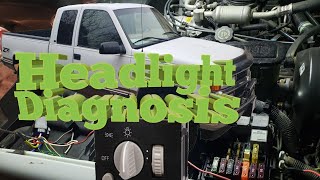
- Faulty Headlight Bulb or Assembly 🎬 See this walkthrough on diagnosing a common headlight circuit failure. (Common) — Internal failure within the halogen bulb or sealed LED assembly creates a short circuit.
- Faulty Body Control Module (BCM) (Less Common) — The internal Field-Effect Transistor (FET) controlling the left high beam fails in a 'closed' state, constantly sending power. Suspect this only after ruling out wiring.
- Faulty Totally Integrated Power Module (TIPM) (Less Common) — On Chrysler/Dodge/Jeep vehicles, the TIPM (combined fuse box/BCM) fails internally, powering circuits that should be off.
- Faulty Clock Spring (Less Common) — Internal ribbon cables in the steering column short out, sending a constant 'high beam on' signal to the BCM.
- Incorrect Bulb Installed (Rare) — Installing a non-specified bulb with a different pin configuration bridges power circuits.
Symptoms
- Left high beam is stuck on — The left high beam remains illuminated when the vehicle and headlight switch are off.
- Dead battery — The 4-5 amp parasitic draw drains the battery overnight.
- Blown headlight fuse — The short circuit repeatedly blows the high beam fuse, disabling the light entirely.
- Burning plastic smell — Excess heat from the short melts wire insulation or the connector, producing a distinct odor.
- Warning message on the dashboard — A 'Check Headlights' warning illuminates on the instrument cluster.
- Rapidly flashing turn signal ('Hyper-Flash') — The left turn signal blinks rapidly due to shared ground or generic lighting system faults.
Common Fixes & Costs
- Repairing Damaged Wiring — Parts: $10 - $30, Labor: $150 - $500, ~1.5 hr book time (Intermediate)
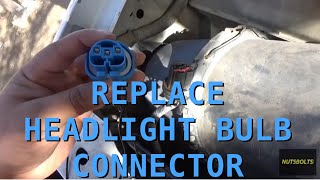
- Replacing Headlight Connector Pigtail 🎬 Watch: How to solder and crimp a new headlight connector. — Parts: $15 - $50, Labor: $100 - $220, ~1.2 hr book time (Intermediate)
- Replacing Headlight Bulb / Assembly — Parts: $20 - $1200, Labor: $25 - $250, ~0.8 hr book time (DIY)
- Replacing Clock Spring — Parts: $75 - $350, Labor: $150 - $400, ~2.1 hr book time (Intermediate)
- Replacing the Body Control Module (BCM) — Parts: $300 - $800, Labor: $250 - $600, ~2.5 hr book time (Professional)
- Replacing the Totally Integrated Power Module (TIPM) — Parts: $400 - $1200, Labor: $150 - $300, ~1.0 hr book time (Professional)
Used vs. New Parts: Buying Guide
When a used part is worth it: Used parts are best for expensive electronic modules like a BCM or TIPM when the vehicle is over 10 years old and budget is a primary concern.
Donor-vehicle mileage cap: roughly under 100000 miles for the part to have meaningful remaining life.
Donor quality checklist:
- Match the part number exactly. BCMs are highly specific to year, model, and options.
- Verify the donor vehicle was not involved in a flood or fire.
- Ensure the recycler has a good return policy in case the module requires programming that cannot be completed.
Decision logic:
- If The part is a simple wiring connector or pigtail → buy new; the cost is low and ensures a quality connection.
- If The part is a BCM or TIPM for a vehicle less than 8 years old → favor a new or professionally remanufactured unit for better reliability and warranty.
- If The vehicle is older and the budget is tight → a used BCM/TIPM is a reasonable choice, but requires professional programming to work with your vehicle's VIN.
Warranty tradeoff: Used parts typically offer a 30-90 day warranty. Remanufactured modules offer a 1-year warranty. New OEM parts carry a 1-2 year warranty.
Worst-case if a used part fails: $300 - $700 if a used module is dead on arrival, requiring repeat labor and programming costs.
Cost of Not Fixing It
- Immediate (0-24 Hours): Stranded with a dead battery. The 4-5 amp draw drains the battery overnight. (Added cost: $75 - $250)
- 1-4 Weeks: Melted wiring and connectors. Continuous current creates heat, destroying the harness and increasing fire risk. (Added cost: $200 - $700)
- 1-6+ Months: BCM or TIPM failure. Sustained shorts overload the internal driver circuit, destroying the control module. (Added cost: $600 - $1800)
Diagnosis Steps
- Visual Inspection
Inspect the headlight assembly, connector, and wiring for melting, corrosion, or poor aftermarket splices.
Tools: Flashlight (Beginner) - Check the Fuse
Pull the left high beam fuse. If blown, replace it with the exact same amperage. Immediate failure confirms a persistent short.
Tools: Fuse puller, Owner's manual (Beginner) - Inspect the Headlight Connector
Unplug the headlight. Look for melted plastic, green corrosion, or displaced pins.
Tools: None (Beginner) - Test for Voltage at the Connector 🎬 Watch: A pro's guide to finding electrical shorts in vehicles.
With the headlight switch OFF, probe the high beam power pin on the harness connector. A 12V reading confirms a short to power.
Tools: Multimeter (Intermediate) - Swap Components
Swap the left and right high beam bulbs. If the problem moves to the right (triggering B2508), the bulb is faulty.
Tools: Gloves (Beginner) - Parasitic Draw Test
Disconnect the negative battery cable and connect a multimeter in series (10A setting). Wait 10 minutes. If draw exceeds 0.085A, pull the high beam fuse. A significant drop confirms the circuit is draining the battery.
Tools: Multimeter (Intermediate) - Scan Tool Live Data Analysis
View BCM live data for 'High Beam Request'. If it reads 'ON' while the physical switch is off, the fault is in the switch or clock spring.
Tools: Bi-directional scan tool (Advanced) - Isolate the Circuit
Disconnect intermediate connectors between the headlight and BCM. Re-test for voltage at the headlight. If voltage disappears, the short is in the disconnected harness section.
Tools: Multimeter, Vehicle-specific wiring diagram (Advanced) - Test the Clock Spring
Disconnect the clock spring. If the short-to-voltage at the headlight disappears, the clock spring is faulty.
Tools: Multimeter, Basic hand tools (Advanced) - BCM Driver Load Test
Disconnect the BCM connector for the left high beam. Connect a test light between the BCM pin and ground. Command the beam ON/OFF via scan tool. If the light stays ON, the BCM driver has failed.
Tools: Bi-directional scan tool, Test light, Vehicle-specific wiring diagram (Professional)
When This Code Triggers (Freeze-Frame Conditions)
- Battery Voltage: 11.5V - 14.5V (During normal operation when the fault was detected.)
- Ignition Status: RUN or OFF (The BCM detects this fault even with the key off, as the module remains powered to monitor circuits.)
- Headlight Switch Status: OFF or LOW BEAM (The fault is logged when voltage is detected on the high beam circuit while the switch is not in the high beam position.)
- Time Since Start: 0 - 3600+ seconds (The fault logs at any time, from key-on to long after the vehicle has been parked.)
Related Codes
- B2505 — LF Lamp High Beam Circuit Failure (Open Circuit). B2506 shows 12V with the switch OFF; B2505 shows 0V with the switch ON.
- B2508 — Right Front High Beam Short to Battery. If both appear, suspect the headlight switch, clock spring, or BCM.
- B2507 — Right Front High Beam Circuit Failure (Open Circuit).
- U0140 — Lost Communication With BCM. Indicates a severe module failure; diagnose this before addressing B2506.
Climate & Environmental Factors
- High Humidity / Salt: Coastal air and winter road salt accelerate connector corrosion, creating alternative electrical paths.
- Extreme Cold: Freezing temperatures make wire insulation brittle, causing it to crack under vibration and expose copper.
- Rodent Infestation: Rodents chew soy-based wire insulation, causing direct shorts to the chassis.
How to Clear the Code After You Fix It
- Fix the underlying electrical short.
- Reconnect the battery if it was disconnected for the repair.
- Use an OBD-II scan tool to erase the Diagnostic Trouble Code (DTC) from the Body Control Module (BCM).
Drive cycle (~15 minutes): Start the vehicle. Cycle the headlights from OFF to ON (Low Beams) to HIGH BEAMS and back to OFF several times, holding each position for 5-10 seconds. Turn the vehicle off.
Readiness monitors affected: None
Watch out for:
- Disconnecting the battery does not clear the code from the BCM's non-volatile memory.
- Permanent DTCs (PDTC) cannot be cleared with a scan tool and require the vehicle to pass its own internal self-test.
- The code returns immediately if the root cause of the short circuit is not repaired.
Will This Fail Emissions / State Inspection?
No — by itself this code doesn't fail OBD inspection (but it can keep readiness monitors from setting, which causes a separate fail).
- California: A B-code will not cause an OBD-II emissions failure, but a stuck-on high beam fails the visual/functional safety inspection.
- New York: NYS requires an annual safety inspection. A high beam that is inoperative or stuck on is an automatic failure.
- Texas: Texas safety inspections check headlamp operation. The vehicle fails if the high beams cannot be switched on and off.
Most Commonly Affected Vehicles
- Dodge Grand Caravan (2008-2020) — B2506 almost exclusively indicates a broken wire in the driver-side power sliding door harness, not the headlights.
- Chrysler Town & Country (2008-2016) — Shares the Grand Caravan platform and identical sliding door harness failures.
- Ford F-250 / F-350 Super Duty (2005-2022) — 2005-2007 models suffer melted connectors. 2017+ models experience internal LED assembly faults.
- Chevrolet Silverado (2007-2018) — 2007-2013 models are prone to internal BCM driver failures causing lighting faults.
- GMC Sierra (2007-2018) — Shares the Silverado's BCM architecture and identical failure rates.
- Jeep Grand Cherokee (2007-2013) — The TIPM frequently fails internally, locking circuits in the 'ON' position.
- Kia Soul (2014-2016) — The ABS module part number is 58920-B2506, causing frequent misdiagnosis when read incorrectly.
- Nissan Titan / Navara (2004-2015) — High failure rate of clock springs, triggering lighting codes alongside lost steering wheel controls.
Manufacturer-Specific Notes
- Dodge / Chrysler / Ram: On minivans, B2506 points to the driver-side power sliding door harness. See TSB 23-017-20.
- Ford: Replacing a 2017+ LED headlight assembly requires a dealer-level BCM relearn procedure.
- Kia / Hyundai: ABS module part number 58920-B2506 mimics the DTC. Verify the source of the code.
- Jeep / Chrysler / Dodge: TIPM internal relay failures are notorious. Remanufactured units save hundreds over dealer replacements.
Frequently Asked Questions
Can I fix a B2506 code by just replacing the fuse?
No. A blown fuse is a symptom of the short circuit, not the cause. Replacing the fuse without fixing the underlying short will only result in the new fuse blowing immediately.
I installed aftermarket LED headlights and now I have a B2506 code. Are they related?
Yes. Aftermarket LED or HID kits cause this code if wired incorrectly or if their electronics draw power in a way the BCM interprets as a fault. Re-install your original halogen bulbs to confirm if the kit is the culprit.
My car is a Dodge Caravan and the sliding door isn't working. Is that related to code B2506?
Yes. On many Dodge and Chrysler minivans, code B2506 specifically points to a broken wire in the driver's side power sliding door harness, not the headlights. Inspect the wiring that flexes with the door.
What's the difference between a DTC and a part number?
A Diagnostic Trouble Code (DTC) is generated by your vehicle's computer to indicate a specific problem. A part number is a manufacturer identifier for a physical component. Some part numbers, like Kia's 58920-B2506 ABS module, look identical to DTCs and cause misdiagnosis.
Could a bad clock spring cause the B2506 code?
Yes. The clock spring contains delicate internal ribbon cables for the steering column switches. If these cables short out, they send a constant 'high beam on' signal to the BCM.
How do I clear a B2506 code?
Fix the underlying short circuit, then use an OBD-II scan tool to erase the code from the BCM. Permanent codes (PDTC) cannot be erased manually and require the vehicle to pass a self-test drive cycle to clear.
Can a bad ground cause a B2506 code?
No. A bad ground causes an open circuit, which sets a different code like B2505. Code B2506 specifically indicates a short to power, meaning the circuit is receiving unintended voltage.
Key Takeaways
- Code B2506 indicates a short-to-battery in the left front high beam circuit, keeping the light energized even when switched off.
- A stuck-on high beam draws 4-5 amps and will completely drain a healthy car battery in under 12 hours.
- On 2008-2020 Dodge and Chrysler minivans, B2506 almost exclusively points to a broken wire in the driver's side power sliding door harness, not the headlights.
- Always test the headlight connector for a constant 12V signal before replacing expensive modules like the $600+ Body Control Module (BCM).
Helpful Videos

Shop the Parts Behind B2506
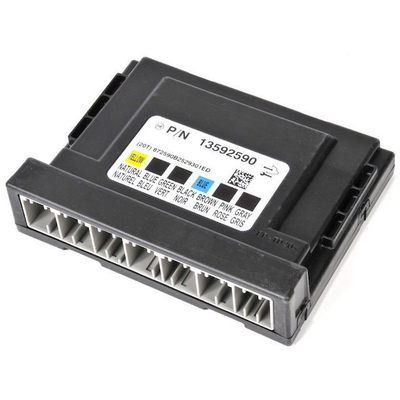
Below are the parts most often responsible for code B2506, ranked by how frequently each one is the actual culprit (per the diagnosis above). Tap any to see what we have for your vehicle.




The information in this article is provided for general reference and educational purposes only. Vehicle specifications, procedures, and part compatibility can vary by production date, trim level, and region. Always consult your vehicle's factory service manual and verify part numbers before purchasing or performing repairs. Safety-critical components such as airbags, seat belts, and braking systems should be installed by a qualified professional.
- 🎬 Helpful Videos
- 🛍️ Shop This Part
- What Does B2506 Mean?
- Can I Drive With B2506?
- Common Causes
- Symptoms
- Common Fixes & Costs
- Used vs. New Parts: Buying Guide
- Cost of Not Fixing It
- Diagnosis Steps
- When This Code Triggers (Freeze-Frame Conditions)
- Related Codes
- Climate & Environmental Factors
- How to Clear the Code After You Fix It
- Will This Fail Emissions / State Inspection?
- Most Commonly Affected Vehicles
- Manufacturer-Specific Notes
- Frequently Asked Questions
- Can I fix a B2506 code by just replacing the fuse?
- I installed aftermarket LED headlights and now I have a B2506 code. Are they related?
- My car is a Dodge Caravan and the sliding door isn't working. Is that related to code B2506?
- What's the difference between a DTC and a part number?
- Could a bad clock spring cause the B2506 code?
- How do I clear a B2506 code?
- Can a bad ground cause a B2506 code?
- Key Takeaways
- 🎟️ Get 5% Off