

OBD-II Code B2509: Power Door Memory Lock Relay Circuit Failure
What B2509 means, why it triggers, and how to fix it
- Verify the B2509 definition for your specific vehicle, as it means 'Power Door Memory Lock Relay Circuit Failure' on Fords but indicates a 'Rear Fog Lamp' issue on some GM models.
- Inspect the driver's door jamb wiring boot first; broken wires here account for over 50% of B2509 codes on older SUVs like the Ford Explorer.
- Drive safely with a B2509 code, but manually lock all 4 doors by hand to secure the vehicle until the electrical fault is repaired.
- Distinguish B2509 (a minor body code) from P2509 (a critical powertrain code); P2509 indicates engine computer power loss and requires immediate attention.
- Swap the $15 door lock relay with an identical relay in the fuse box (like the horn relay) to instantly confirm or rule out a relay failure before buying parts.
What Does B2509 Mean?
The B2509 code means your car's Body Control Module (BCM) detects a problem in the power door lock memory relay circuit. This memory feature automatically locks or unlocks doors when you start driving or shift into park. The code signals the relay responsible for this function has failed or lost its electrical connection.
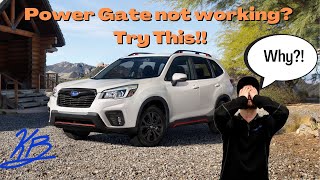
Technical definition: The SAE/ISO definition for B2509 is 'Power Door Memory Lock Relay Circuit Failure'. This indicates the Body Control Module (BCM) detects an open or short in the circuit controlling automatic door locks. Verify the code for your specific vehicle, as it denotes completely different issues on certain models, such as a 'Rear Fog Lamp Switch Circuit Failure' on GM vehicles or a 'Power Rear Gate Clutch Open' on Subarus.
Can I Drive With B2509?
Yes. This code affects the convenience of your power door locks but does not impact driving safety or engine operation. You can continue to drive safely, but you must lock and unlock your doors manually to secure the vehicle. There is no risk of mechanical damage by continuing to drive.
Common Causes
- Faulty Door Lock Relay (Very Common) — The relay is a small electromagnetic switch that wears out from repeated use. This is the most frequent cause of the B2509 code.
- Damaged or Corroded Wiring (Very Common) — Wires inside the flexible rubber boot between the door and the body constantly flex. They break, fray, or corrode over time, interrupting the electrical signal to the relay.
- Blown Fuse (Common) — A blown fuse in the power door lock circuit cuts power to the relay and triggers this code. This is the easiest and cheapest fix to check first.
- Weak or Failing Car Battery (Common) — A battery with low voltage causes the BCM to function erratically and generate false or intermittent codes.
- Faulty Body Control Module (BCM) (Less Common) — The BCM controls the door locks. The module itself fails due to internal faults or water damage, sending an erroneous B2509 code. Consider this only after ruling out wiring and relays.
- Aftermarket Accessories (Less Common) — Improperly installed aftermarket remote starters or alarms interfere with the door lock circuitry. Poor wiring splices introduce electrical faults.
- Malfunctioning Door Lock Switch (Rare) — The physical lock/unlock switch fails, sending an incorrect signal to the BCM and relay.
- Parasitic Electrical Draw (Rare) — A fault in an unrelated component causes a continuous power drain, lowering system voltage and triggering intermittent electrical codes.
Symptoms
- Power door locks do not work — None of the power door locks respond when using the interior switch or the key fob.
- Automatic lock/unlock feature fails — The doors fail to automatically lock when you start driving or unlock when you shift into park.
- A clicking sound from the dashboard or fuse box — You hear a rapid clicking sound from under the dashboard when using the power locks. This is the faulty relay trying but failing to engage.
- Power door locks work intermittently — The locks work sometimes and fail at other times, pointing to a failing relay or a loose wire connection.
- Key fob works but interior switch does not — The locks respond to the remote key fob but not the interior door lock switch, 🎬 See this tutorial for a deep dive into electrical diagnosis indicating a problem with the switch itself or its specific wiring circuit.
Diagnostic Flowchart
Tap your situation to follow the diagnostic path that matches what you're seeing on this code.
Common Fixes & Costs
- Replace a Blown Fuse — Parts: $1-$5, Labor: $0, ~0.1 hr book time (DIY)
- Replace the Power Door Lock Relay
— Parts: $10-$50, Labor: $95-$150, ~0.5 hr book time
(DIY)
Ford Explorer (2002-2005): OEM F5TZ-14N089-A (Alt: {"brand": "Duralast", "part_number": "19911", "price": "$36.99"}, {"brand": "Standard Motor Products", "part_number": "RY-790", "price": "$15.99"})
Chrysler 300 (2005-2010): OEM 04727370AA (Alt: {"brand": "Duralast", "part_number": "20840", "price": "$14.99"}, {"brand": "Bosch", "part_number": "0986AH0113", "price": "$3.97"}) - Repair Damaged Wiring — Parts: $10-$50, Labor: $150-$500, ~2.5 hr book time (Intermediate)
- Replace the Power Door Lock Switch — Parts: $40-$120, Labor: $60-$100, ~0.8 hr book time (DIY)
- Replace/Reprogram Body Control Module (BCM) — Parts: $300-$800, Labor: $150-$300, ~2.0 hr book time (Professional)
Used vs. New Parts: Buying Guide
When a used part is worth it: For a simple plug-in relay, always buy new. For an expensive Body Control Module (BCM), a used unit from a reputable recycler makes sense if the budget is tight and you have access to a mechanic capable of reprogramming it.
Donor-vehicle mileage cap: roughly under 100000 miles for the part to have meaningful remaining life.
Donor quality checklist:
- Match the part number on the BCM exactly; a single digit difference means incompatibility.
- Ensure the donor vehicle was not scrapped due to flood or fire damage.
- Ask the seller if the part comes with a warranty.
Decision logic:
- If The faulty part is a plug-in relay → Always buy new; the cost is low and it eliminates uncertainty.
- If The faulty part is the BCM and a new OEM unit is over $500 → A used BCM is a reasonable option, but confirm your shop will install and attempt to program it first.
- If The vehicle is less than 5 years old or has low mileage → Favor a new or remanufactured BCM to ensure longevity and compatibility.
Warranty tradeoff: Used BCMs typically have a 30-90 day part-only warranty. A new aftermarket or remanufactured BCM carries a 1-year to lifetime warranty.
Worst-case if a used part fails: $300-$600 if a used BCM cannot be programmed or fails after installation, requiring you to pay for diagnostic/programming labor again.
What Happens If You Wait — Timeline
- 0-1 month: Code is set. Power locks become intermittent or fail completely. The primary impact is inconvenience and a vehicle security risk, requiring manual locking. (MPG impact: 0%% · Added cost: $0)
- 1-4 months: If the fault is a short circuit or a stuck relay, a parasitic electrical draw develops. This slowly drains the battery when the car is off, leading to occasional no-start conditions. (MPG impact: 0%% · Added cost: $20-$50 (for jump-start services or a portable jumper pack))
- 4-12 months: The constant cycle of draining and jump-starting significantly shortens the battery's lifespan. The battery no longer holds a sufficient charge and requires premature replacement. (MPG impact: 0%% · Added cost: $150-$350 (for a new battery and installation))
- 12+ months: A persistent and unaddressed short circuit generates enough heat to damage the connector, wiring harness, or the driver circuit within the Body Control Module (BCM). (MPG impact: 0%% · Added cost: $500-$1100+ (for BCM replacement and programming))
Cost of Not Fixing It
- Immediate: Inconvenience and vehicle security risk. Power locks are inoperative, requiring manual locking of all doors. (Added cost: 0)
- 1-3 months: A short circuit or faulty relay creates a parasitic draw, draining the battery when the car is off. This leads to no-start conditions. (Added cost: $20-$50 (for a jump-start service))
- 3+ months: Repeatedly draining the battery permanently damages it, requiring premature replacement. (Added cost: $150-$350 (for a new battery and installation))
Diagnosis Steps
- Check the Fuses
Locate the fuse box and find the fuse for the power door locks ('D/L' or similar). Visually inspect it to see if the metal strip inside is broken. Replace it with a new fuse of the exact same amperage if blown.
Tools: Fuse puller or needle-nose pliers (Beginner) - Listen for the Relay Click
Have a helper press the lock and unlock button repeatedly while you listen for a distinct clicking sound from the relay under the dash. No click means the relay lacks power or has failed. A click with no lock action means the relay works but the circuit is broken further down.
Tools: A helper (Beginner) - Swap the Relay
Find an identical relay in the fuse box (like the horn or fog light relay) and swap it with the door lock relay. If the locks start working, you have confirmed the original relay is bad.
Tools: Relay puller or pliers (Intermediate) - Inspect the Door Jamb Wiring
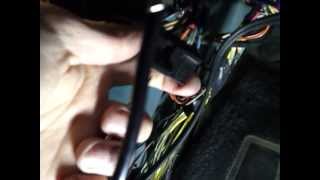
Peel back the flexible rubber boot running between the driver's door and the car body. Look for broken, frayed, cracked, or corroded wires. This is a highly common failure point due to repeated door flexing.
Tools: Flashlight, trim removal tool (Intermediate) - Test the Door Lock Switch
Remove the door panel to access the back of the door lock switch. Use a multimeter set to continuity to test if the switch completes the circuit when pressed. Lack of continuity indicates a failed switch.
Tools: Multimeter, trim removal tools, screwdrivers (Advanced) - Test the Relay Circuit
Using a multimeter and a wiring diagram, check for power and ground at the relay socket. With the key on, one terminal requires constant battery voltage, and another requires a trigger signal when the lock switch is pressed.
Tools: Multimeter, vehicle-specific wiring diagram (Advanced) - Test Door Lock Actuator Resistance
Disconnect the actuator's electrical connector inside the door. Measure the resistance between the actuator's two power terminals using a multimeter. A healthy actuator reads between 5 and 10 ohms. Infinity (OL) means an open circuit; near zero means a short.
Tools: Multimeter, vehicle-specific wiring diagram (Advanced) - Check for BCM Signal
Identify the wire sending the lock/unlock signal from the BCM to the door lock relay. Check for a voltage or ground signal on this wire when the lock button is pressed. No signal points to a faulty BCM or a wiring issue between the switch and the BCM.
Tools: Multimeter or oscilloscope, vehicle-specific wiring diagram (Advanced) - Pro Tip: Perform a Voltage Drop Test
Connect the positive multimeter lead to the positive battery post and the negative lead to the power wire at the door lock actuator. Activate the lock. A reading greater than 0.5 volts indicates excessive resistance in the power side of the circuit. Repeat for the ground side.
Tools: Multimeter with long leads, wiring diagram (Professional) - Pro Tip: Perform a Parasitic Draw Test
Disconnect the negative battery terminal. Connect a multimeter in series set to 10A DC amps. Wait 30-60 minutes for modules to sleep. A normal draw is under 50 milliamps (0.05A). If higher, pull fuses one by one until the reading drops to identify the faulty circuit.
Tools: Multimeter with amp setting (Professional)
When This Code Triggers (Freeze-Frame Conditions)
- System Voltage: 11.5V - 14.5V (Low voltage (<11.5V) causes erratic BCM behavior and sets false codes.)
- Command Source: Driver Door Switch (The code sets at the exact moment a command is given, such as pressing the lock/unlock button on the door panel.)
- Circuit Status: Open or Short Detected (The BCM sets the code when it commands the relay to activate but does not see the expected voltage change.)
- Module State: Active/Awake (The fault is detected when the Body Control Module is awake and monitoring the door lock circuits.)
Related Codes
- P2509 — A 'Powertrain' code for 'ECM/PCM Power Input Signal Intermittent'. This is a critical code indicating the engine computer is losing power, causing stalling. It is entirely unrelated to B2509.
- B1559 — Indicates a failure in the 'Door Lock Cylinder Circuit'. If present with B2509, the problem is likely in the shared wiring inside the door.
- B1393 — Indicates an 'Open Circuit' in the power door memory lock system. Directs diagnostics toward finding a complete break in a wire or a disconnected plug.
- B1394 — Points to a 'Short to Battery' in the same circuit. Diagnostics should focus on finding a chafed wire rubbing against a power source.
Climate & Environmental Factors
- High Humidity / Coastal Areas: High humidity and salt in the air accelerate corrosion on wiring, connectors, and relay terminals. This increases resistance and causes open circuits. Using dielectric grease on connectors prevents this.
- Cold Weather: In extreme cold, wire insulation becomes brittle and cracks, especially in high-flex areas like the door jamb. This exposes the copper wire to the elements, leading to corrosion and shorts.
How to Talk to a Mechanic About This Code
Say this: "I have a B2509 code and my power locks are not working. I'd like to schedule a diagnostic. Based on the symptoms, I suspect it's either the door lock relay or a broken wire in the door jamb. Can you please start by testing those two things before looking at more expensive components like the BCM?"
This signals to the shop that you are an informed consumer. It directs them to the most common and cheapest repairs first, preventing them from immediately quoting a high-cost, unnecessary repair like a Body Control Module replacement.
Avoid saying:
- My locks are broken, can you fix it?
- My car has an electrical problem, just figure it out.
- Just do whatever it takes to fix it, I need it back.
Questions to ask before authorizing the repair:
- If you are recommending a BCM replacement, what specific tests did you perform to rule out the relay, switch, and wiring harness first?
- If the problem is a broken wire, can you show me the damaged wire before you repair it?
- Are you using an OEM, aftermarket, or used part for the replacement?
- What is the warranty on the parts and labor for this specific repair?
Where to Take It: Dealer vs Independent vs Chain
- Dealer:
A safe but expensive option. Best reserved for if the issue is a known manufacturer quirk or requires BCM replacement and programming.
Best for: Vehicles under warranty., Complex, manufacturer-specific electrical issues where a Technical Service Bulletin (TSB) exists., Repairs that require proprietary software for programming a new Body Control Module (BCM).
Downsides: Highest labor rates, often 1.5-2x more than independent shops., Defaults to replacing an entire assembly (like a full wiring harness) instead of performing a targeted, cheaper repair (like fixing one wire). (Typical cost: +50% vs. baseline) - Independent Shop:
Best fit. An experienced independent technician is perfectly equipped to diagnose and repair the common causes of B2509 at a reasonable cost.
Best for: Out-of-warranty vehicles where cost is a factor., Common electrical problems like broken wires, faulty relays, or bad switches., Shops that specialize in automotive electrical diagnostics.
Downsides: Quality and expertise vary widely; vetting the shop's reputation and certifications (like ASE) is crucial., Lacks the latest manufacturer-specific programming tools for brand-new models. (Typical cost: +0% vs. baseline) - Chain Shop:
Avoid for this repair. The risk of misdiagnosis and being sold unnecessary, expensive parts is high. B2509 requires diagnostic skill, not just part swapping.
Best for: Simple, high-volume services like oil changes, tires, and battery replacement.
Downsides: Technician skill varies dramatically., Not equipped or trained for in-depth electrical diagnostics beyond reading a code and replacing a part., High pressure to upsell leads to misdiagnosis. (Typical cost: -10% vs. baseline)
When to Walk Away From the Repair
If the estimated repair cost exceeds 50% of the car's private-party value, you should seriously consider not fixing it, especially since this code does not affect the vehicle's drivability.
- Car worth $4000, fix is $300: Fix it. A $300 wiring or relay repair is well below the threshold and restores a key feature.
- Car worth $4000, fix is $1200: Borderline. A $1200 BCM replacement is a significant portion of the car's value. Get a second opinion before authorizing.
- Car worth $2500, fix is $1200: Walk away. The repair cost is nearly 50% of the car's value for a non-essential feature. It is not a sound financial decision.
What Scan Tool You Need for This Code
Minimum: An OBD-II scanner that reads 'B' (Body) codes. The cheapest sub-$20 scanners only read 'P' (Powertrain) codes and will not see B2509.
A basic code reader only tells you the code number. For B2509, this is useless because the definition changes between manufacturers. You need a scanner that reads manufacturer-specific definitions and live data from the Body Control Module.
Budget: BlueDriver Pro or Foxwell NT301 (~$90-120) — Reads and clears Body codes, provides manufacturer-specific code definitions, and displays live data from the BCM. This confirms the code and shows if the BCM receives switch commands.
Mid-range: Autel MaxiCOM MK808S or Foxwell NT510 Elite (~$150-350) — Includes bidirectional controls. This allows you to command the lock relay to open and close directly from the scanner. If you command the relay to click and it does, but the locks don't work, you isolate the problem to the circuit after the relay.
Professional: Autel MaxiSys MS906 Pro or Launch X431 Series (~$500-1500) — Offers full, dealer-level bidirectional controls, advanced coding for BCM replacement, and detailed topology maps to visualize how modules are interconnected.
Rent vs buy: Buy. The free rental scanners at auto parts stores are typically basic models that cannot read Body codes like B2509.
How to Clear the Code After You Fix It
- Fix the underlying electrical fault (e.g., replace relay, repair wire).
- Reconnect the battery if it was disconnected for the repair.
- Use any standard OBD-II scan tool to erase the 'B' code from the Body Control Module.
- Cycle the key and test all power lock functions to confirm the repair.
Drive cycle (~5 minutes): A specific drive cycle is not required. After clearing the code, operate the power locks multiple times using all available methods to ensure the code does not immediately return.
Watch out for:
- Clearing the code without fixing the root cause results in the code returning instantly upon the next lock/unlock attempt.
- Disconnecting the battery clears the code from active memory, but it remains stored as a history code and does not fix the physical problem.
Will This Fail Emissions / State Inspection?
No — by itself this code doesn't fail OBD inspection (but it can keep readiness monitors from setting, which causes a separate fail).
- California: A B2509 code does NOT cause a smog check failure. Emissions tests focus on 'P' (Powertrain) codes and the Check Engine Light.
- New York: This code does not cause a failure of the NYS emissions or safety inspection. Inoperative power locks are not a specified failure item.
- Texas: A B2509 code does not cause a failure in counties requiring an emissions test.
Most Commonly Affected Vehicles
- Ford Explorer (2002-2005) — Notorious for broken wires in the driver's door jamb harness. Repeated flexing causes fatigue and breakage, leading to power lock, window, and mirror failures.
- Mercury Mountaineer (2002-2005) — As a mechanical twin to the Ford Explorer, this model suffers from the exact same wire fatigue and breakage in the door harness.
- Chrysler 300 (2005-2010) — Door lock relays frequently fail. These relays are soldered directly onto an electronic board under the dashboard, requiring de-soldering to fix cheaply.
- Dodge Grand Caravan (2008-2016) — Shares electrical architecture with other Chrysler products and suffers from failures of the door lock relays within the main control module.
- Subaru Forester (2014-2018) — Per TSB 07-76-13R, code B2509 refers to 'Clutch Open' in the Power Rear Gate (PRG) system, not the passenger door locks.
- Chevrolet Traverse (2009-2012) — B2509 is defined as 'Heated Seat Module Supply Voltage Circuit Short to Ground'. This is a manufacturer-specific variation completely unrelated to door locks.
- Kia Soul (2010-2013) — Door lock relays fail, causing symptoms where the key fob works but the interior switches do not. The relay is a plug-in type in the interior fuse panel.
- Dodge Ram (Cummins) (2010-2018) — Frequently confused with the serious P2509 code (ECM/PCM Power Input Signal Intermittent). P2509 points to failing batteries or a weak alternator.
Manufacturer-Specific Notes
- General Motors (GM): For some GM vehicles, B2509 is defined as 'Rear Fog Lamp Switch Circuit Failure', which is completely unrelated to door locks.
- Subaru: According to TSB 07-76-13R, B2509 on the Forester indicates an open or short circuit in the Power Rear Gate (PRG) clutch, not the passenger door locks.
- Chevrolet: On the Traverse, B2509 specifically points to a short to ground in the heated seat element supply voltage circuit.
- Chrysler/Dodge/Jeep: On some minivans, B2509 relates to the 'Left Power Sliding Door Latch Release Pawl Switch Performance'.
Real Owner Stories
2004 Ford Explorer with 155,000 miles
Power door locks, windows, and power mirrors all stopped working at once. The driver's door lock switch did nothing.
What they tried:
- Checked all related fuses, none were blown.
- Replaced the master window/lock switch assembly in the driver's door.
Outcome: The problem was multiple broken wires inside the rubber boot in the driver's door jamb. Splicing the broken wires with butt connectors and heat shrink tubing restored all functions.
Lesson: If multiple electrical components in one door fail simultaneously, the door jamb wiring harness is the most likely culprit. Always inspect this high-flex area before buying parts.
2006 Chrysler 300 with 120,000 miles
Intermittent power lock failure. Eventually, they failed completely, accompanied by a clicking sound from under the dash.
What they tried:
- A shop quoted $600+ to replace the entire fuse box/control module assembly.
Outcome: Owner found the door lock relays were a common failure point and soldered to the board. They purchased two new relays online for under $10, de-soldered the old ones, and soldered the new ones onto the circuit board, fixing the problem completely.
Lesson: For Chrysler/Dodge vehicles of this era, a clicking relay with no lock action strongly points to a failed, soldered-in relay. A DIY solder repair saves hundreds of dollars.
2014 Subaru Forester with 75,000 miles
The power rear liftgate beeped three times but refused to open or close using the fob or interior button. Code B2509 was present.
What they tried:
- Tried manually forcing the gate, which didn't work.
- Considered taking it to the dealer for a potentially expensive actuator replacement.
Outcome: The issue was resolved by performing a system reset. Pressing and holding the exterior gate button for 5-10 seconds until the latch cycled re-initialized the system.
Lesson: On Subarus where B2509 relates to the Power Rear Gate, always attempt the simple re-initialization procedure before assuming a hardware failure.
2012 Kia Soul with 88,000 miles
The key fob unlocked the doors, but the interior power lock switch on the driver's door did not work.
What they tried:
- Replaced the battery in the key fob, with no change.
- Checked fuses for the door locks.
Outcome: The problem was a faulty plug-in relay in the interior fuse panel. Swapping the door lock relay with the identical horn relay confirmed the diagnosis. A new $15 relay fixed the issue.
Lesson: When one method of locking works but another doesn't, the relay-swap trick is a fast, no-cost way to diagnose a bad relay.
How to Prevent This Code From Triggering
- Lubricate the Door Jamb Boot (Every 2-3 years) — Applying a silicone-based spray or grease to the rubber door jamb boot keeps it flexible. This prevents the rubber from getting stiff and grabbing the wiring harness inside, reducing strain and preventing wire breakage.
- Apply Dielectric Grease to Connectors (During any door-related repair) — Applying dielectric grease around the seal of the main door harness connector creates a moisture-proof barrier, preventing water intrusion and corrosion on the pins.
- Ensure Proper Battery Health (Annually) — A weak battery providing low or unstable voltage causes the Body Control Module (BCM) to behave erratically and set false codes. Clean, tight terminals ensure a steady power supply.
- Stagger Wiring Repairs (When repairing broken wires) — If repairing multiple broken wires in a door jamb, cut and splice them at slightly different lengths. This prevents creating a single large, bulky area of splices that causes the harness to bind.
Frequently Asked Questions
What's the difference between code B2509 and P2509?
They are completely different. B2509 is a 'Body' code for a non-critical convenience feature like power locks. P2509 is a serious 'Powertrain' code indicating the main engine computer is losing power, which causes stalling and requires immediate attention.
Can I fix the B2509 code myself?
Yes, you can fix the most common causes yourself. Replacing a blown fuse or a bad plug-in relay is simple and inexpensive. Repairing a broken wire in the door jamb is also a common DIY fix for those comfortable with basic wiring.
What are the most common misdiagnosis mistakes for B2509?
The biggest mistake is replacing the Body Control Module (BCM) without ruling out simpler causes. The BCM is expensive and rarely the culprit. Always check for broken wires in the door jamb first, as this is a highly frequent point of failure.
My key fob has a new battery, but the locks still don't work. What's next?
A new key fob battery only ensures the fob is sending a signal. The problem lies within the car's receiving system. Next, check the door lock fuse, listen for the relay click, and inspect the main car battery voltage.
Why do my locks work with the key fob but not the inside switch?
This indicates the core components like the relay and actuator are working, but the interior switch circuit has failed. The issue is the switch itself, the wiring leading from the switch to the BCM, or a bad connection at the switch plug.
Could a new stereo or alarm cause a B2509 code?
Yes. Improperly wired aftermarket accessories interfere with the vehicle's electrical system and modules like the BCM. Tapping into the wrong power or data wire introduces electrical noise that triggers fault codes.
Is it safe to drive with the B2509 code?
Yes, it is completely safe to drive. This code affects a convenience feature and does not interfere with your engine, brakes, or steering. You must manually lock all doors to ensure vehicle security.
Key Takeaways
- Verify the B2509 definition for your specific vehicle, as it means 'Power Door Memory Lock Relay Circuit Failure' on Fords but indicates a 'Rear Fog Lamp' issue on some GM models.
- Inspect the driver's door jamb wiring boot first; broken wires here account for over 50% of B2509 codes on older SUVs like the Ford Explorer.
- Drive safely with a B2509 code, but manually lock all 4 doors by hand to secure the vehicle until the electrical fault is repaired.
- Distinguish B2509 (a minor body code) from P2509 (a critical powertrain code); P2509 indicates engine computer power loss and requires immediate attention.
- Swap the $15 door lock relay with an identical relay in the fuse box (like the horn relay) to instantly confirm or rule out a relay failure before buying parts.
Helpful Videos

Shop the Parts Behind B2509
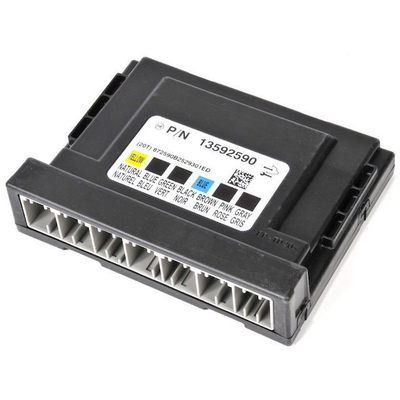
Below are the parts most often responsible for code B2509, ranked by how frequently each one is the actual culprit (per the diagnosis above). Tap any to see what we have for your vehicle.


The information in this article is provided for general reference and educational purposes only. Vehicle specifications, procedures, and part compatibility can vary by production date, trim level, and region. Always consult your vehicle's factory service manual and verify part numbers before purchasing or performing repairs. Safety-critical components such as airbags, seat belts, and braking systems should be installed by a qualified professional.
- 🧭 Diagnostic Flowchart
- 🎬 Helpful Videos
- 🛍️ Shop This Part
- What Does B2509 Mean?
- Can I Drive With B2509?
- Common Causes
- Symptoms
- Common Fixes & Costs
- Used vs. New Parts: Buying Guide
- What Happens If You Wait — Timeline
- Cost of Not Fixing It
- Diagnosis Steps
- When This Code Triggers (Freeze-Frame Conditions)
- Related Codes
- Climate & Environmental Factors
- How to Talk to a Mechanic About This Code
- Where to Take It: Dealer vs Independent vs Chain
- When to Walk Away From the Repair
- What Scan Tool You Need for This Code
- How to Clear the Code After You Fix It
- Will This Fail Emissions / State Inspection?
- Most Commonly Affected Vehicles
- Manufacturer-Specific Notes
- Real Owner Stories
- 2004 Ford Explorer with 155,000 miles
- 2006 Chrysler 300 with 120,000 miles
- 2014 Subaru Forester with 75,000 miles
- 2012 Kia Soul with 88,000 miles
- How to Prevent This Code From Triggering
- Frequently Asked Questions
- What's the difference between code B2509 and P2509?
- Can I fix the B2509 code myself?
- What are the most common misdiagnosis mistakes for B2509?
- My key fob has a new battery, but the locks still don't work. What's next?
- Why do my locks work with the key fob but not the inside switch?
- Could a new stereo or alarm cause a B2509 code?
- Is it safe to drive with the B2509 code?
- Key Takeaways
- 🎟️ Get 5% Off