

OBD-II Code B2513: A Comprehensive Diagnostic Guide
What B2513 means, its multiple definitions by manufacturer, and how to fix it for good
- Code B2513 has drastically different meanings across brands, indicating a blower motor failure on Fords but a power liftgate fault on Subarus.
- A failed blower motor resistor is the most common cause of a B2513 code, typically causing the HVAC fan to only function on its highest speed setting.
- Worn blower motors drawing over 20 amps instantly burn out replacement resistors, making an amperage draw test mandatory during diagnosis.
- Melted blower motor resistor connectors cause a high percentage of repeat failures and require splicing in a new wiring pigtail rather than just replacing the resistor.
What Does B2513 Mean?
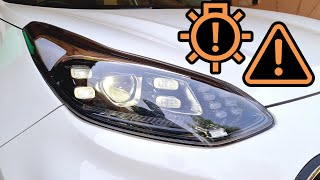
B2513 is a body control module (BCM) diagnostic trouble code with drastically different meanings depending on the manufacturer. For domestic brands like Ford, GM, Dodge, and Fiat, it indicates an electrical fault in the cabin blower fan motor circuit. For Subaru, it points to a power liftgate fault, while Kia and Hyundai use it for headlamp system errors. Verifying the exact definition for your specific make, model, and year is the mandatory first step before attempting any diagnosis.
Technical definition: In its most common definition, the Heating, Ventilation, and Air Conditioning (HVAC) control module detects a Blower Control Circuit Failure when the actual state of the blower motor control circuit does not match the commanded state. This indicates an open circuit, short to ground, or short to voltage. On other platforms, the BCM logs this code when it detects unexpected resistance in lighting, stability control, or power liftgate circuits.
Can I Drive With B2513?
Yes, But With Caution. Driving is mechanically safe, but poses a severe safety risk in rain or snow due to the inability to defrost the windshield. If the fault causes the blower motor to run continuously with the key off, it drains the battery and leaves you stranded. The fault does not cause secondary damage to the engine or transmission.
Common Causes
- Failed Blower Motor Resistor or Control Module (Very Common) — The resistor (manual HVAC) or control module (automatic HVAC) regulates fan speed. It is a high-load component that fails from thermal stress, causing the fan to work only on high speed or not at all.
- Worn-Out or Seized Blower Motor (Common) — As the fan motor ages, internal bearings wear out and develop excessive resistance, causing it to draw too much electrical current. This high amp draw is the primary cause of repeat resistor and connector failures.
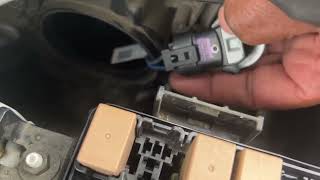
- Melted or Corroded Wiring/Connectors (Common) — A worn-out blower motor drawing excess current generates extreme heat, melting the plastic connector at the resistor and damaging the wire terminals.
- Failed Totally Integrated Power Module (TIPM) (Common) — On Dodge, Jeep, and Chrysler vehicles, the TIPM (smart fuse box) contains internal relays controlling the blower motor circuit. These relays fail, causing intermittent or total loss of blower function.
- Blown Fuse or Faulty Relay (Less Common) — A blown fuse disables the entire circuit. This is a symptom of a failing blower motor drawing too much power; the fuse blows again if the root cause remains unaddressed.
- Damaged Wiring in a Flexible Harness (Less Common) — On vehicles where this code relates to moving parts, like a Subaru power liftgate, the wiring passing between the body and the moving panel fatigues and breaks from repeated flexing.
- Failed Body Control Module (BCM) (Rare) — The fault sometimes lies within the BCM itself, which acts as a central hub for electronic functions. This triggers B2513 alongside other unrelated electrical codes.
Symptoms
- HVAC fan only works on the highest speed setting — The fan does not blow on lower settings but suddenly works when you turn the dial to max speed. This is the classic sign of a failed blower motor resistor.
- No air blowing from the vents at any speed — The fan is completely inoperative regardless of the speed setting, pointing to a failed motor, blown fuse, or faulty TIPM.
- Burning plastic smell from the vents — An electrical burning smell inside the cabin indicates an overheating resistor or melting wiring connector.
- Blower motor runs even when the car is off — A shorted blower control module or faulty TIPM relay forces the fan to stay on, rapidly draining the battery.
- Power liftgate is inoperative or beeps (Subaru) — On affected Subaru models, the power rear gate refuses to open or close and emits three warning beeps.
- One or both low beam headlights do not work (Kia/Hyundai) — On certain Kia and Hyundai vehicles, this code points to a short circuit in the headlamp system, resulting in a dead headlight.
Common Fixes & Costs
- Replace Blower Motor Resistor and Connector Pigtail
— Parts: $40-$120, Labor: $100-$175, ~1.0 hr book time
(Intermediate)
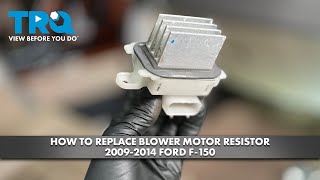
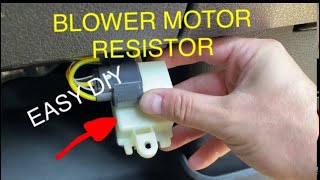
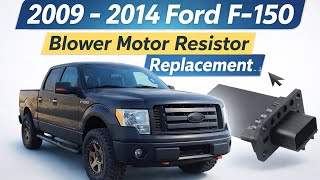
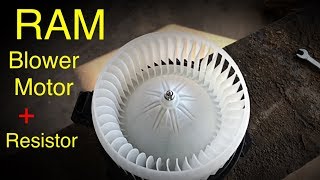
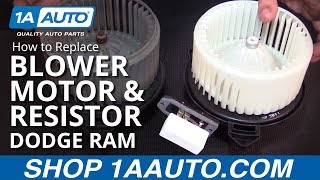
Ford F-150 (2009-2014): OEM 3F2Z-18591-AA 🎬 Watch: Step-by-step blower motor resistor replacement for Ford F-150. (Alt: Dorman 973-444 (Kit with pigtail), Standard Motor Products RU1133) - Replace Blower Motor
— Parts: $50-$200, Labor: $75-$125, ~1.2 hr book time
(Intermediate)
Ford F-150 (2009-2014): OEM CL3Z-19805-A (Alt: TYC 700236, Four Seasons 75873)
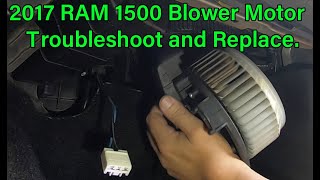
Dodge/Ram 1500 (2009-2018): OEM 68048905AB (Alt: TYC 700203, VDO PM9313) - Replace Blower Motor Resistor/Module
— Parts: $20-$100, Labor: $60-$90, ~0.7 hr book time
(DIY)
Dodge/Ram 1500 (2009-2018): OEM 68048900AA (Alt: Dorman 973-029, Standard Motor Products RU-725) - Replace Power Rear Gate Latch Assembly (Subaru)
— Parts: $150-$250, Labor: $100-$200, ~1.5 hr book time
(Intermediate)
Subaru Forester (2014-2018): OEM 63032SG002 - Reset Power Rear Gate Control Module (Subaru) — Parts: $0, Labor: $0-$50, ~0.2 hr book time (DIY)
- Replace Headlight Assembly or Connector (Kia/Hyundai) — Parts: $20-$400, Labor: $50-$200, ~1.0 hr book time (Intermediate)
DIY vs Professional
- Replace Blower Motor Resistor/Module — Beginner: True
- Replace Blower Motor — Beginner: True
- Replace Blower Motor Resistor and Connector Pigtail — Beginner: False
- Reset Power Rear Gate Control Module (Subaru) — Beginner: True
Used vs. New Parts: Buying Guide
When a used part is worth it: For common fixes (blower motor, resistor), new aftermarket parts are inexpensive, making used parts unattractive. Consider used parts for a complete headlight assembly or power liftgate motor if the new OEM part is prohibitively expensive.
Donor-vehicle mileage cap: roughly under 60000 miles for the part to have meaningful remaining life.
Donor quality checklist:
- Verify the donor vehicle's mileage for electrical parts like motors.
- Match part numbers exactly; modules from different trim levels are often incompatible.
- Avoid buying used wear items like resistors or control modules.
Decision logic:
- If The part is a blower motor resistor or its connector. → Always buy new. The cost saving is negligible and the risk of premature failure is high.
- If The part is a blower motor and a new aftermarket part costs < $100. → Buy the new aftermarket part for its warranty and guaranteed condition.
- If The part is an expensive assembly (headlight, liftgate motor) and the vehicle is older. → A used part from a reputable salvage yard with a warranty is a cost-effective option.
Warranty tradeoff: New aftermarket parts typically include a 1-year to limited lifetime warranty. Used parts from a salvage yard usually have a 30-90 day warranty. A failed used part requires paying for labor twice.
Worst-case if a used part fails: $200-500 if a used motor or assembly fails after installation, requiring repeat labor and another part.
Cost of Not Fixing It
- Immediate: Loss of windshield defrost/defog capability poses a significant safety hazard in inclement weather. Headlight or liftgate faults result in loss of function and potential traffic citations. (Added cost: 0)
- 1-3 months: A failing blower motor drawing high current overheats and melts its electrical connector, requiring a more expensive repair that includes a new wiring pigtail. A continuously running blower drains the battery. (Added cost: $50 - $300)
- 6+ months: Extreme heat from a shorted, high-resistance circuit melts wire insulation and poses a severe fire risk behind the dashboard. (Added cost: $1000+)
Diagnosis Steps
- Confirm the Code's Meaning for Your Vehicle
Use a model-specific repair database to confirm what B2513 means for your exact make, model, and year. It means blower motor on a Ford, power liftgate on a Subaru, or headlight on a Kia. Proceeding with a blower motor diagnosis for a headlight fault wastes time and money.
Tools: Vehicle-specific repair database or service manual (Beginner) - Check the Fuses
Locate the fuse box and find the fuse labeled for the HVAC, Blower, Fan, PRG (Power Rear Gate), or HLP (Headlamp). Visually inspect it or test for continuity with a multimeter.
Tools: Owner's manual, fuse puller, multimeter (Beginner) - Inspect the Blower Motor Resistor Connector
If diagnosing a blower fault, visually inspect the resistor under the passenger-side dashboard. Unplug its electrical connector and look for melting, black/brown discoloration, or corrosion on the plastic and metal terminals.
Tools: Flashlight (Beginner) - Test the Blower Motor Resistor (Manual HVAC)
Disconnect the resistor and set a multimeter to a low Ohms (Ω) scale. Check for resistance between the common power output terminal and each speed input terminal. Readings should be between 0.3 and 2.0 Ohms. An infinite reading (OL) indicates a failed, open resistor.
Tools: Multimeter, vehicle-specific wiring diagram (Intermediate) - Check the Blower Motor Amperage Draw
A failing blower motor draws too much current, destroying new resistors. Use a multimeter with an amp clamp around the motor's main power wire. With the fan on high, a healthy motor draws 10-20 amps. A reading over 20A confirms the motor is failing and requires replacement.
Tools: Multimeter with amp clamp (Advanced) - Test for Power at the Blower Motor
Access the blower motor's electrical connector. With the key on and the fan switch set to high, use a multimeter to check for battery voltage (12.6V to 14V) at the power wire. If you have voltage and a good ground but the motor isn't spinning, the motor is dead.
Tools: Multimeter, wiring diagram (Intermediate) - Perform a Voltage Drop Test on the Ground Circuit
Place the positive multimeter lead on the blower motor's ground wire terminal and the negative lead on a known good chassis ground. With the fan running on high, the reading must be below 0.5 volts. Higher readings indicate a bad ground connection requiring repair.
Tools: Multimeter (Advanced) - Scan Tool Live Data Analysis
Use a bidirectional scan tool to view HVAC PIDs like 'Blower Motor Speed Command' and 'Blower Motor Feedback'. Command the blower motor on and off directly from the scan tool to isolate the problem between the control switch and the motor circuit.
Tools: Bidirectional Scan Tool (Advanced)
When This Code Triggers (Freeze-Frame Conditions)
- Ignition Status: ON (The fault is checked whenever the ignition is on and the BCM/HVAC module is powered.)
- Fan Speed Command: Any setting other than OFF (The code sets when the module commands the blower motor to a certain speed and the circuit feedback does not match the command.)
- Battery Voltage: 11-15V (The system requires normal operating voltage to run self-tests; abnormal voltage causes other codes to set.)
Related Codes
- B105E — Functionally identical to B2513's blower definition. Indicates a Blower Motor Control Circuit fault with the exact same diagnostic process.
- B1032 — A general code for a Blower Motor Circuit Failure, pointing to the same set of components (motor, resistor/module, wiring).
- B1484 — Indicates a 'Blower Motor Circuit Short to Ground'. While B2513 is a general circuit failure, this points specifically to a short.
- U0140 — Indicates 'Lost Communication With Body Control Module'. Seeing this alongside B2513 suggests the root cause is a failing BCM or network wiring issue, not a simple component failure.
Climate & Environmental Factors
- High Humidity / Water Intrusion: Moisture entering the HVAC case corrodes the terminals of the blower motor resistor and connector. This corrosion increases resistance, generates heat, and leads to premature failure. On Ford trucks, water leaks from the third brake light cause these electrical issues.
- Extreme Heat: Blower motor resistors are cooled by the airflow they create. In extremely hot climates, ambient air temperature reduces cooling efficiency. Combined with a clogged cabin air filter, the resistor overheats and fails rapidly.
- Extreme Cold: In very cold weather, lubricants in an aging blower motor thicken, increasing the effort required to spin the fan. This leads to a higher current draw, stressing the entire circuit.
How to Talk to a Mechanic About This Code
Say this: "I have an OBD-II code B2513 and my symptoms are [describe symptoms, e.g., 'the fan only works on high']. I know this code means different things depending on the brand, so please confirm the definition for my [Make, Model, Year]. I want a diagnosis that starts with checking the fuses and inspecting the component's wiring and connector before replacing parts."
This signals you understand the code's ambiguity and want a logical diagnostic process rather than throwing parts at the problem. It focuses the technician on the most likely failure points first.
Avoid saying:
- 'My fan is broken, fix it.'
- 'My check engine light is on, can you look at it?' (This is a Body code, not a Check Engine Light code)
- 'Just do whatever you think is best.'
Questions to ask before authorizing the repair:
- Did you confirm the code's definition for my specific vehicle?
- If replacing the blower resistor, did you test the blower motor's amperage draw to ensure it isn't the root cause?
- Did you inspect the wiring connector for melting or damage? Does it need replacement?
- If the issue is my Subaru liftgate, did you try the battery disconnect/re-initialization procedure first?
- What is the warranty on the parts and labor for this repair?
Where to Take It: Dealer vs Independent vs Chain
- Dealer:
Recommended for warranty work or complex, model-specific electrical issues (TIPM/BCM/Subaru Liftgate) that independent shops lack experience with.
Best for: Vehicles under warranty., Complex, manufacturer-specific issues like a faulty TIPM on a Jeep or a Subaru power liftgate problem., Suspected Body Control Module (BCM) failures.
Downsides: Highest labor rates., More inclined to replace an entire assembly rather than repair a wire or connector. (Typical cost: +50% vs. baseline) - Independent Shop:
Best fit for the most common version of this code (blower motor circuit failure) on out-of-warranty vehicles. Provides the best balance of cost and expertise.
Best for: Out-of-warranty vehicles with the common blower motor definition of B2513., Diagnosing and replacing common failure parts like blower motors, resistors, and connectors., Getting a second opinion on a dealership quote.
Downsides: Quality varies; ensure the shop is experienced with electrical diagnostics., Lacks access to the latest manufacturer-specific TSBs for very new models. (Typical cost: +0% vs. baseline) - Chain Shop:
Not recommended. Electrical diagnosis for a code with multiple meanings requires expertise not consistently found at chain shops.
Best for: Simple, unrelated maintenance like oil changes or tires.
Downsides: Technician skill in electrical diagnostics is highly variable., Lacks specific diagnostic tools for Body (B) codes or manufacturer-specific problems., Higher pressure for upselling leads to unnecessary repairs. (Typical cost: -10% vs. baseline)
When to Walk Away From the Repair
If the estimated repair cost exceeds 40-50% of the car's private-party value, pause and carefully consider if the investment is worthwhile.
- Car worth $4000, fix is $1800: Walk away. The repair cost approaches half the car's value, and other age-related issues are likely.
- Car worth $15000, fix is $500: Fix it. This is a minor cost compared to the vehicle's value and much cheaper than a new car payment.
- Car worth $2500, fix is $400: Borderline. If the car is otherwise reliable, the repair is worth it. If it has other pending issues, consider selling.
What Scan Tool You Need for This Code
Minimum: An OBD-II reader capable of reading Body (B) codes. Basic $20 readers only show Powertrain (P) codes and will not see B2513.
A generic code reader pulling only 'P' codes shows 'No Codes Found,' hiding the issue. You need a scanner that accesses the Body Control Module (BCM).
Budget: BlueDriver Pro (~$100) — Connects to your phone via Bluetooth. Reads BCM codes, views live data from the HVAC system, and provides repair reports based on a database of fixes.
Mid-range: Innova 5610 or Foxwell NT510 Elite (~$180-350) — Offers bidirectional control. Commands the blower motor on/off or to different speeds directly from the scanner, isolating the problem between the switch, module, and motor.
Professional: Autel MaxiCOM MK808S or Launch X431 CRP919XBT (~$450-600) — Provides full bidirectional control and all-system diagnostics. Offers dealer-level diagnostic depth for complex issues involving a TIPM or BCM.
Rent vs buy: AutoZone's 'Loan-A-Tool' program allows borrowing a scanner for free with a refundable deposit. Verify the rental scanner reads Body (B) codes. If doing regular DIY repairs, buying a mid-range scanner is a worthwhile investment.
How to Clear the Code After You Fix It
- Use an OBD-II scan tool to clear the Diagnostic Trouble Code (DTC) from the Body Control Module or HVAC module.
- Operate the repaired system (cycle the blower fan through all speeds, operate the power liftgate, turn headlights on/off) to confirm the code does not immediately return.
- Perform a short drive to ensure all related systems function correctly.
Drive cycle (~15 minutes): For body codes, a specific drive cycle is less critical than for emissions monitors. After clearing the code, operate the affected component through its full range of functions. For a blower motor, run the fan at all speeds for at least 30 seconds each. A 15-minute drive with varied conditions allows the BCM to re-evaluate the circuit.
Readiness monitors affected: This is a Body (B) code and does not directly affect the primary emissions-related readiness monitors required for smog checks.
Watch out for:
- Disconnecting the battery fails to clear the code from the BCM's memory on modern vehicles.
- The code returns immediately if the underlying electrical fault (high amp draw, poor connection) remains unfixed.
Will This Fail Emissions / State Inspection?
No — by itself this code doesn't fail OBD inspection (but it can keep readiness monitors from setting, which causes a separate fail).
- California: A B-code like B2513 does not cause a smog check failure as the test looks for Powertrain (P) codes. However, if the code is for a headlight fault, it fails the visual safety inspection.
- New York: The NYS inspection includes a safety portion. A non-functional headlight (a possible cause of B2513) is an immediate safety failure. The B-code itself is not a reason for emissions failure.
- Texas: Safety inspections are no longer required for most personal vehicles as of 2025, but emissions testing remains in 17 counties. A B-code does not cause an emissions failure, but a dead headlight results in a traffic citation.
Most Commonly Affected Vehicles
- Ford F-150 (2009-2014) — Prone to blower motor resistor and connector failure. Water leaks from the third brake light cause various electrical issues if water reaches the dash area.
- Dodge / Ram 1500/2500 (2009-2018) — Blower motor resistors are a very common failure. These years are known for Totally Integrated Power Module (TIPM) failures, causing this code and other electrical problems.
- Jeep Grand Cherokee (2011-2021) — Failures of the blower motor resistor are common. Susceptible to TIPM failure, which manifests as a blower issue.
- Chevrolet / GMC Silverado / Sierra (2007-2013) — Known for issues with the blower motor resistor and control module, leading to fan speed problems.
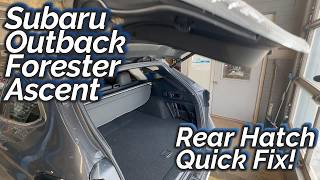
- Subaru Forester (2014-2018) — B2513 specifically means 'LATCH CONDITION FAILURE' and points to a problem with the Power Rear Gate latch mechanism, not the HVAC system. See TSB 07-154-19. 🎬 See this walkthrough to fix a Subaru power rear gate.
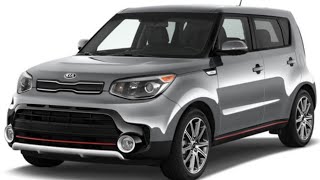
- Kia Optima, Soul (2011-2019) — B2513 indicates a 'short to ground in the left low beam headlamp circuit'. Caused by a faulty bulb, melted connector, or wiring issue.
- Hyundai Elantra, Sonata (2011-2019) — Indicates an 'INSTR Module Error' or a headlamp circuit short to ground, pointing to a fault in the Smart Junction Box.
- Mitsubishi Outlander (2014-2020) — B2513 is defined as 'Levelling actuator output error' and points to a fault in the automatic headlamp leveling system.
Manufacturer-Specific Notes
- Subaru: For 2014-2018 Foresters, B2513 means 'LATCH CONDITION FAILURE' related to the Power Rear Gate. Subaru issued TSB 07-154-19 to simplify the diagnostic procedure. Attempt the initialization procedure before replacing parts.
- Dodge / Chrysler / Jeep: The Totally Integrated Power Module (TIPM) is a common failure point. Internal relays, including the one for the blower motor, fail frequently. If you have B2513 along with intermittent electrical issues, the TIPM is the likely suspect.
- Kia / Hyundai: B2513 indicates a 'short to ground in the left low beam headlamp circuit'. The headlight bulb connector itself is a common failure point, melting and causing the short.
- Ford: Water intrusion from a leaking third brake light or windshield seal drips onto wiring behind the dash, causing corrosion and HVAC circuit faults.
Frequently Asked Questions
I'm getting B2513 but my blower fan works fine. What is wrong?
Many manufacturers use B2513 for systems completely unrelated to the HVAC blower motor. On a Subaru Forester it indicates a power liftgate fault, while on a Kia it points to a headlight failure. Always check the manufacturer-specific definition before starting repairs.
Why does my fan only work on the highest speed?
This is the classic symptom of a failed blower motor resistor. The resistor uses different electrical pathways to slow the current for lower fan speeds. The highest speed setting bypasses the resistor entirely, sending full battery voltage directly to the fan.
My Subaru liftgate is beeping and won't open, is this related to B2513?
Yes, on a 2014-2018 Forester, B2513 is the specific code for a 'Latch Condition Failure' of the power rear gate. Before replacing the expensive latch assembly, try the re-initialization procedure. Manually close the gate slowly until it latches, then operate it with the button to reset the module.
I replaced the resistor and it failed again. What did I do wrong?
Repeat resistor failure is almost always caused by a worn-out blower motor drawing too much amperage (over 20A), which overheats the new part. Additionally, failing to replace a heat-damaged wiring connector creates high resistance that destroys the new resistor. Always test motor amp draw and replace melted pigtails.
Could a bad TIPM cause code B2513 on my Dodge or Jeep?
Absolutely. The Totally Integrated Power Module (TIPM) contains the relays that control the blower motor, and a faulty internal relay is a well-documented cause for B2513.
What is the difference between a blower motor resistor and a control module?
A resistor is used in cars with manual fan speed controls and uses simple electrical resistance to slow the motor. A control module is used in cars with automatic climate control and uses a complex electronic circuit to precisely control continuously variable fan speeds.
Can I just replace the fuse if it's blown?
You can, but a blown fuse is a symptom, not the cause. The blower motor is likely drawing too much electrical current, causing the fuse to blow to protect the circuit. If you replace the fuse without fixing the high-current draw, it will blow again.
Key Takeaways
- Code B2513 has drastically different meanings across brands, indicating a blower motor failure on Fords but a power liftgate fault on Subarus.
- A failed blower motor resistor is the most common cause of a B2513 code, typically causing the HVAC fan to only function on its highest speed setting.
- Worn blower motors drawing over 20 amps instantly burn out replacement resistors, making an amperage draw test mandatory during diagnosis.
- Melted blower motor resistor connectors cause a high percentage of repeat failures and require splicing in a new wiring pigtail rather than just replacing the resistor.
Helpful Videos
Shop the Parts Behind B2513
Below are the parts most often responsible for code B2513, ranked by how frequently each one is the actual culprit (per the diagnosis above). Tap any to see what we have for your vehicle.



The information in this article is provided for general reference and educational purposes only. Vehicle specifications, procedures, and part compatibility can vary by production date, trim level, and region. Always consult your vehicle's factory service manual and verify part numbers before purchasing or performing repairs. Safety-critical components such as airbags, seat belts, and braking systems should be installed by a qualified professional.
- 🎬 Helpful Videos
- 🛍️ Shop This Part
- What Does B2513 Mean?
- Can I Drive With B2513?
- Common Causes
- Symptoms
- Common Fixes & Costs
- DIY vs Professional
- Used vs. New Parts: Buying Guide
- Cost of Not Fixing It
- Diagnosis Steps
- When This Code Triggers (Freeze-Frame Conditions)
- Related Codes
- Climate & Environmental Factors
- How to Talk to a Mechanic About This Code
- Where to Take It: Dealer vs Independent vs Chain
- When to Walk Away From the Repair
- What Scan Tool You Need for This Code
- How to Clear the Code After You Fix It
- Will This Fail Emissions / State Inspection?
- Most Commonly Affected Vehicles
- Manufacturer-Specific Notes
- Frequently Asked Questions
- I'm getting B2513 but my blower fan works fine. What is wrong?
- Why does my fan only work on the highest speed?
- My Subaru liftgate is beeping and won't open, is this related to B2513?
- I replaced the resistor and it failed again. What did I do wrong?
- Could a bad TIPM cause code B2513 on my Dodge or Jeep?
- What is the difference between a blower motor resistor and a control module?
- Can I just replace the fuse if it's blown?
- Key Takeaways
- 🎟️ Get 5% Off