

OBD-II Code B2521: The Ultimate Guide to a Manufacturer-Specific Body Fault
What B2521 means, why it triggers, and how to fix it for good
- Look up your vehicle's exact manufacturer definition for B2521 before touching any tools, as it means 'Turn Signal Fault' on a Hyundai but 'Fuel Pressure Fault' on a Kia.
- Inspect the wiring harness and connector pins for green corrosion before replacing parts, as a $5 wiring repair fixes over 50% of B2521 lighting faults.
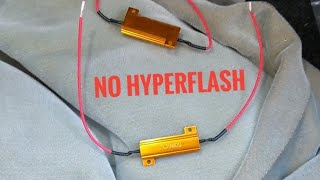
- Install 6-ohm, 50-watt load resistors if your B2521 code appeared immediately after upgrading to aftermarket LED bulbs.
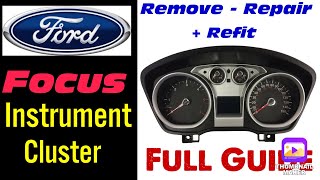
- Send a failing 2005-2011 Ford Focus instrument cluster to a specialist for a $150 repair rather than buying a new one to avoid expensive anti-theft reprogramming.
What Does B2521 Mean?
B2521 is a manufacturer-specific Body Control Module (BCM) code. Unlike standardized OBD-II codes, its definition changes completely depending on your vehicle's make. It indicates a failure in turn signals (Hyundai), fuel systems (Kia), instrument clusters (Ford), or adaptive headlights (Infiniti). Identifying your car's exact definition is the mandatory first step.
Technical definition: The SAE/ISO definition for B2521 is not standardized. Manufacturers assign its meaning. Known definitions include: * **Hyundai:** 'Turn Signal RH Rear Open Circuit/Short to Ground', 'High Speed CAN Communication Bus', or 'Power Steering Pressure Switch Circuit Intermittent'. * **Kia:** 'Fuel Rail Pressure (FRP) Sensor Circuit Voltage Below Threshold' or 'Knock Sensor Circuit High Input (Bank 1)'. * **Ford:** 'Tach Circuit Failure', indicating a lost tachometer signal from the PCM to the instrument cluster. * **Infiniti:** 'ECU CIRCUIT' fault within the Adaptive Front Lighting System (AFS) Control Unit. * **Chevrolet/GMC:** 'Front Fog Lamp Switch Circuit' fault.
Can I Drive With B2521?
Yes, But With Caution. Driving safety depends entirely on your vehicle's make. A Hyundai with a dead turn signal risks a traffic ticket. A Kia with a fuel pressure fault stalls unpredictably, creating a severe hazard. A Ford with a failed tachometer is distracting but drivable. However, if you experience a CAN bus communication fault (multiple warning lights), stop driving immediately—critical systems like power steering or ABS will fail without warning.
Common Causes
- Faulty Wiring or Connectors (Very Common) — Frayed wires, corroded connector pins, or a short to ground cause most B2521 variants. This is the primary culprit for lighting and sensor circuits.
- Failed Component (Varies by Manufacturer) (Common) — The specific part has failed. Examples include a burnt-out turn signal bulb (Hyundai), a faulty fuel rail pressure sensor (Kia), or an instrument cluster with cracked solder joints (Ford).
- Aftermarket LED Bulb Installation (Common) — Installing LED bulbs in place of incandescent bulbs triggers this code. LEDs draw less power, causing the BCM to falsely detect an open or shorted circuit.
- Water Intrusion and Corrosion (Less Common) — Water leaking into fuse boxes or control modules corrodes pins and circuit boards, causing the shorts or high resistance that trigger B2521.
- CAN Bus Communication Failure (Hyundai) (Less Common) — On some Hyundai models, this indicates a broken primary communication network wire or a faulty module disrupting the entire bus.
- Faulty Control Module (Less Common) — The main Body Control Module (BCM), Smart Junction Box (SJB), or a sub-module (like the Infiniti AFS unit) has failed internally.
- Incorrect Replacement Parts (Rare) — Installing physically similar but electrically incompatible parts causes shorts. For example, installing incorrect side-view mirrors on a Hyundai Sonata brings down the entire turn signal circuit.
Symptoms
- Right Rear Turn Signal Dead or Hyperflashing (Hyundai) — The right rear turn signal does not light up, or the dashboard indicator blinks twice as fast as normal.
- Intermittent No-Start or Stalling (Ford/Kia) — A failing Ford instrument cluster triggers the immobilizer, preventing starting. A Kia fuel pressure fault causes stalling and severe hesitation.
- Tachometer Inoperative or Erratic (Ford) — The tachometer needle stays at zero, sticks at a specific RPM, or jumps erratically while driving.
- Multiple Unrelated Warning Lights (Hyundai) — A CAN Bus failure causes various warning lights to illuminate simultaneously as modules lose communication.
- Adaptive Headlights Inoperative / 'AFS OFF' Light (Infiniti) — Headlights stop swiveling during turns, and a flashing 'AFS OFF' warning light appears on the dash.
- Check Engine Light or Warning Indicator On (also visible on scanner) — The vehicle's computer illuminates a warning light to alert the driver of the detected fault.
Diagnostic Flowchart
Tap your situation to follow the diagnostic path that matches what you're seeing on this code.
Common Fixes & Costs
- Replacing a Turn Signal Bulb or Socket (Hyundai)
— Parts: $5-$15, Labor: $0-$50, ~0.5 hr book time
(DIY)
Hyundai Elantra (2011-2016): OEM - Repairing Damaged Wiring or Connectors — Parts: $5-$25, Labor: $125-$300, ~1.5 hr book time (Intermediate)
- Repairing the Instrument Cluster (Ford)
— Parts: $150 (repair service), Labor: $0-$150 (R&R), ~1.0 hr book time
(Intermediate)
Ford Focus (2005-2011): OEM - Replacing the Fuel Rail Pressure Sensor (Kia)
— Parts: $40-$150, Labor: $100-$200, ~1.0 hr book time
(Intermediate)
Kia Sorento (2011-2015): OEM - Replacing the Adaptive Headlight (AFS) Control Module (Infiniti)
— Parts: $200-$500, Labor: $150-$300, ~1.5 hr book time
(Professional)
Infiniti EX35 (2008-2012): OEM
DIY vs Professional
- Replacing a Turn Signal Bulb (Hyundai) 🟢 Beginner
Tools: Screwdriver or trim tool. - Removing/Reinstalling Instrument Cluster (Ford) 🟢 Beginner
Tools: T20 Torx screwdriver, plastic trim removal tools. - Replacing the Fuel Rail Pressure Sensor (Kia) 🟢 Beginner
Tools: Socket set, wrenches, fuel line disconnect tool. - Replacing AFS Control Module (Infiniti) 🟢 Beginner
Tools: Trim removal tools, socket set.
Used vs. New Parts: Buying Guide
When a used part is worth it: For expensive electronic modules like a Ford instrument cluster or an Infiniti AFS module, a used part offers 50-80% savings. Used units perform identically to new ones if the part number is an exact match.
Donor-vehicle mileage cap: roughly under 100000 miles for the part to have meaningful remaining life.
Donor quality checklist:
- Match the part number exactly. A single letter difference indicates incompatibility.
- Visually inspect connector pins for corrosion or burning.
- Buy from a professional recycler offering at least a 90-day warranty.
- For Ford clusters, repair your original unit to avoid immobilizer reprogramming.
Decision logic:
- If The part is a simple bulb or sensor under $100 → buy new — the savings are minimal and not worth the risk.
- If The part is an expensive electronic module (>$500 new) and the vehicle is over 8 years old → a used part from a warrantied source is a reasonable choice.
- If The part requires complex programming (PATS, immobilizer) → favor repairing your original unit to avoid high dealership programming costs.
Warranty tradeoff: Used parts typically come with a 30-90 day warranty covering the part only. New aftermarket parts offer 1-3 year warranties.
Worst-case if a used part fails: $300-$800 if a used electronic module fails, requiring a second diagnostic and replacement labor charge.
What Happens If You Wait — Timeline
- 0-2 weeks: For a Kia fuel pressure fault, the Check Engine Light illuminates with slight hesitation. For a Ford cluster fault, gauges flicker occasionally. (MPG impact: 1-3%% · Added cost: $0-25 in wasted fuel)
- 2 weeks - 3 months: The Kia becomes hard to start and stalls at idle. The Ford cluster fails intermittently, causing occasional no-starts. (MPG impact: 5-10%% · Added cost: $50-150 (wasted fuel, potential tow))
- 3-6 months: The Kia stalls unpredictably while driving. The incorrect fuel mixture damages the catalytic converter. The Ford cluster fails daily, causing network instability. (MPG impact: 10-15%% · Added cost: $300-900 (catalytic converter damage, BCM damage))
- 6+ months: Catastrophic failure. The Kia's high-pressure fuel pump is destroyed. The Ford cluster is permanently dead. A persistent lighting short burns out the BCM. (MPG impact: 15-25%+% · Added cost: $1000-2500+ (damaged modules, fuel pump))
Cost of Not Fixing It
- Immediate: Hyundai turn signal faults risk traffic tickets. Kia fuel pressure faults cause dangerous stalling. Ford cluster faults prevent the car from starting. (Added cost: $150-$500 (Ticket, towing))
- 1-6 months: Ignoring a Kia fuel pressure fault damages the high-pressure fuel pump or catalytic converter. Ignoring a Ford cluster fault causes network instability. (Added cost: $800-$2500)
- 6+ months: Continued operation with a CAN bus fault leads to unpredictable failure of critical systems like ABS. A persistent wiring short destroys the Body Control Module (BCM). (Added cost: $500-$2000+)
Diagnosis Steps
- Identify the Correct Code Definition
Use a professional scan tool or reliable online resource with your vehicle's exact make, model, and year to find the specific definition for B2521. The entire diagnostic process depends on this.
Tools: OBD-II scanner, internet access (Beginner) - Perform a Visual Inspection
Inspect the area identified in Step 1. Check bulbs and connectors for green corrosion. Inspect sensor wiring for chafing. Look for obvious water stains near fuse boxes.
Tools: Flashlight (Beginner) - Test the Component / Swap Parts
For lighting faults, swap the suspect bulb with a known good one from the opposite side. If the problem moves, the bulb is bad. If it stays, the issue is in the socket or wiring.
Tools: Basic hand tools (Beginner) - Check Fuses
Locate the fuse box and test the fuses related to the affected system (e.g., exterior lighting, Instrument Cluster, AFS). Replace any blown fuses and retest.
Tools: Fuse puller, multimeter (Beginner) - Diagnose Ford Cluster with 'Percussive Maintenance'
For a 2005-2011 Ford Focus with a no-start and erratic gauges, firmly tap the top of the dashboard above the instrument cluster. If the gauges temporarily wake up and the car starts, the cluster has failed internally.
Tools: Your hand (Beginner) - Analyze Live Fuel Pressure Data (Kia)
Use a scan tool to view live data from the Fuel Rail Pressure (FRP) sensor. A reading that is stuck at 0, maxed out, or does not change with engine RPM confirms a sensor or wiring fault.
Tools: Advanced OBD-II scanner with live data (Advanced) - Test the Circuit with a Multimeter
Check for power, ground, and signal continuity at the component's connector using a wiring diagram. For Hyundai turn signals, verify the ground wire has less than 0.5 ohms of resistance to the chassis.
Tools: Digital multimeter, wiring diagram (Advanced) - Check CAN Bus Termination Resistance
Disconnect the battery. Measure resistance between Pin 6 (CAN-H) and Pin 14 (CAN-L) on the OBD-II port. A healthy network reads ~60 ohms. A reading of ~120 ohms means a terminating resistor is offline.
Tools: Digital multimeter (Advanced) - Advanced CAN Bus Voltage Check
Turn the key on. Measure voltage at the OBD-II port. CAN High should read ~2.6V and CAN Low ~2.4V. Readings near 0V indicate a short to ground.
Tools: Digital multimeter (Professional) - CAN Bus Network Integrity Test
Connect an oscilloscope to CAN High and CAN Low. Look for rounded square waves or high-frequency interference to pinpoint physical layer issues a multimeter misses.
Tools: Automotive oscilloscope (Professional)
When This Code Triggers (Freeze-Frame Conditions)
- Ignition Status: Key On (The code sets as soon as the ignition is turned on and the BCM powers up to check circuits.)
- System Voltage: 11.5-14.5V (The fault is logged during normal operating voltage; it is rarely caused by a low battery.)
- Component Status: Active (The code triggers when the specific system is activated, such as turning on the right turn signal (Hyundai).)
- Time: >150ms (For circuit faults, the condition must be present for a specific duration. A short to ground must be detected for over 150 milliseconds.)
Related Codes
- U-prefix codes (e.g., U0100, U0140, U1900) — If B2521 relates to a CAN Bus error, U-prefix codes will appear, indicating a loss of communication. On Fords, U1900 is commonly seen with the failing instrument cluster.
- P0190, P0191, P0192, P0193 — On Kia vehicles, these P-codes are stored alongside B2521 to indicate specific faults within the Fuel Rail Pressure sensor circuit.
- B-prefix lighting codes (e.g., B2518, B2523) — If the fault is with a lighting system, other body codes related to lighting circuits may be stored.
- PATS Codes (e.g., P1260) — On Ford vehicles, a failing instrument cluster triggers B2521 and causes communication errors with the Passive Anti-Theft System (PATS), resulting in a no-start.
Climate & Environmental Factors
- High Humidity / Water Intrusion: High humidity in coastal or 'salt-belt' regions accelerates corrosion on wiring connectors and module pins, causing the shorts that trigger B2521.
- Temperature Cycles (Hot to Cold): Repeated expansion and contraction from seasonal temperature changes cracks the brittle, lead-free solder on Ford Focus instrument clusters, leading to failure.
How to Talk to a Mechanic About This Code
Say this: "I have a [Your Year, Make, Model] with a B2521 code. I know this is a manufacturer-specific body code with several different meanings. Do you have the scan tools and experience to diagnose manufacturer-specific 'B' codes and electrical systems for a [Your Make]?"
This signals you've done your research, filters out shops with only generic tools, and sets the expectation for an accurate electrical diagnosis rather than guesswork.
Avoid saying:
- 'Just fix whatever's wrong'
- 'My check engine light is on, can you look at it?'
- 'Whatever you recommend'
Questions to ask before authorizing the repair:
- Can you confirm the specific definition of B2521 for my exact vehicle?
- What was the result of the circuit/wiring test? Was it an open, a short to ground, or high resistance?
- For a Ford cluster: Do you recommend repairing my original unit to avoid PATS immobilizer issues?
- For a Kia fuel pressure fault: Can you show me the live data from the fuel pressure sensor that led to your diagnosis?
- Will you provide a written, itemized estimate, and will you call for authorization if you find anything else?
- What is the warranty on the parts and labor for this specific repair?
Where to Take It: Dealer vs Independent vs Chain
- Dealer:
Necessary for complex network-related versions of B2521 or if software reflashing is required. For most other variants, it's an expensive choice.
Best for: Vehicles under warranty, Complex CAN bus network faults, Repairs requiring manufacturer-specific tools or software updates
Downsides: Highest labor rates, often 1.5-2x an independent shop., Defaults to expensive module replacement over targeted wiring repair. (Typical cost: +50% vs. baseline) - Independent Shop:
The best fit for most common B2521 issues, provided you choose a shop specializing in electrical systems or your vehicle's make.
Best for: Out-of-warranty vehicles, Well-known B2521 variants (Hyundai turn signal, Kia fuel sensor), General electrical diagnostics and wiring repair
Downsides: Quality and expertise vary widely., A general shop lacks the specific tools for rare B-codes. (Typical cost: +0% vs. baseline) - Chain Shop:
AVOID for B2521 diagnosis. They cannot correctly diagnose the root cause of any B2521 variant beyond replacing a bulb.
Best for: Simple, unrelated maintenance like oil changes or tires.
Downsides: Technicians lack training for complex electrical diagnosis., High pressure to sell parts leads to misdiagnosis. (Typical cost: -10% vs. baseline)
When to Walk Away From the Repair
If the estimated repair cost exceeds 40-50% of the car's private-party value, you have reached a financial tipping point. It's time to seriously consider selling or trading in the vehicle.
- Car worth $4000, fix is $150: Fix it. This is a 2008 Ford Focus with a cluster fault. A $150 repair is well below the threshold and solves a major known issue.
- Car worth $7000, fix is $1800: Borderline. This is a 2009 Infiniti EX35 needing an AFS module. Consider the no-cost workaround (pulling the fuse) or getting a second opinion.
- Car worth $2500, fix is $1500: Walk away. The repair cost is 60% of the car's value. It is not financially sensible to invest this much into a low-value vehicle.
What Scan Tool You Need for This Code
Minimum: A scanner that reads manufacturer-specific Body Control Module (BCM) codes. A basic $20 reader that only pulls generic 'P' codes is NOT sufficient and will fail to identify B2521.
A generic code reader leaves you blind. It fails to see the B2521 code or provides a dangerously incorrect definition. You must access the specific module (BCM, AFS) and view live data.
Budget: BlueDriver Pro (~$100) — Connects to your smartphone and reads enhanced codes (ABS, Airbag, BCM) for most major brands. It views live data and generates repair reports.
Mid-range: Foxwell NT510 Elite / Innova 5610 (~$180) — Offers deep manufacturer-specific diagnostics and limited bidirectional controls, allowing you to command a component (like a light) to turn on for circuit testing.
Professional: Autel MaxiCOM MK808 / Launch X431 Series (~$450-600) — Provides full bidirectional control to activate any component connected to the BCM. Accesses all modules, views extensive live data, and performs advanced coding.
Rent vs buy: AutoZone's Loan-A-Tool program offers basic code readers that cannot read specific 'B' codes. For a one-time complex issue like B2521, paying a professional shop's diagnostic fee ($100-$200) is more efficient than buying an advanced tool.
How to Clear the Code After You Fix It
- Use an OBD-II scan tool to clear the code.
- Perform a complete drive cycle to ensure the fault does not return.
Drive cycle (~25 minutes): A generic drive cycle includes a cold start, 2-3 minutes of idling, 10 minutes of steady highway driving (55 mph), followed by 10-15 minutes of stop-and-go city driving.
Readiness monitors affected: B2521 does not directly affect emissions readiness monitors. However, if the fault causes a no-start or stalling, it prevents the drive cycle from completing, keeping monitors 'Not Ready'.
Before emissions retest: drive at least 50 miles to fully set monitors.
Watch out for:
- Clearing the code without fixing the underlying electrical fault guarantees it will return immediately.
- Taking the vehicle for an emissions test immediately after clearing codes causes an automatic failure due to 'Not Ready' monitors.
Will This Fail Emissions / State Inspection?
Yes — this code typically fails an OBD-II emissions inspection.
- California: If the B-code illuminates the Check Engine light, it is an automatic failure. If the fault prevents the drive cycle from completing, readiness monitors will not set, causing a failure.
- New York: Any fault that turns on the check engine light causes an automatic failure of the NYVIP3 OBD-II inspection.
- Texas: An illuminated check engine light is an automatic failure. Drive 50-100 miles after repairs to ensure readiness monitors are set before re-inspection.
Most Commonly Affected Vehicles
- Hyundai Elantra (2011-2016) — Prone to the 'Turn Signal RH Rear Open Circuit' fault. Bulb part number is typically 2357.
- Hyundai Sonata (2015-2017) — Subject to a recall (NHTSA 21V759000) for a software update to the Smart Junction Box to fix turn signal logic.
- Ford Focus (2005-2011) — B2521 indicates a 'Tach Circuit Failure' caused by cracked solder joints in the instrument cluster. Repair services are widely available.
- Ford Freestar (2004-2007) — Logs B2521 for 'Tach Circuit Failure' due to cluster issues.
- Infiniti EX35 (2008-2012) — Logs B2521 for a fault in the Adaptive Front Lighting System (AFS) control unit.
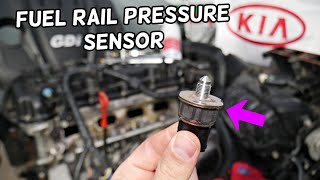
- Kia Sorento (2011-2015) — Shows B2521 for 'Fuel Rail Pressure Sensor' faults on GDI engines.
- Chevrolet / GMC Silverado / Sierra (2007-2013) — Uses B2521 to indicate a 'Front Fog Lamp Switch Circuit' fault.
- Nissan Altima / Maxima (2007-2012) — Body electrical faults are frequently traced to a failing Intelligent Power Distribution Module (IPDM).
Manufacturer-Specific Notes
- Hyundai: Hyundai uses B2521 for at least three unrelated systems: rear turn signals, power steering pressure switches, and the CAN Bus network. Correct diagnosis requires identifying the specific system affected.
- Kia: Kia uses B2521 for fuel rail pressure and knock sensor faults. This is unusual for a 'B' (Body) code, indicating the BCM is flagging a fault message received from the PCM.
- Ford: B2521 specifically means 'Tach Circuit Failure'. This fault is logged by the instrument cluster due to internal bad solder joints. The cluster is a key network node, and its failure disables the vehicle.
- Infiniti: B2521 points to an internal circuit problem in the Adaptive Front Lighting System (AFS) control unit. Many owners disable the 'AFS OFF' warning light by removing the AFS fuse to avoid expensive repairs.
- Generic Scan Tools: Generic OBD-II readers often fail to define B2521 or confuse it with powertrain code P2521 (A/C system). Always verify the definition with a manufacturer-specific tool.
Real Owner Stories
2008 Ford Focus at 130K miles with B2521 and U-codes
The car went into limp mode with the engine management light on. A scan revealed multiple CAN bus communication faults pointing to a faulty instrument cluster.
Outcome: The owner sent the original cluster to a specialist for repair. The $150 repair took 3 days and fixed all codes and symptoms.
Lesson: Repairing the original Ford Focus cluster is far more cost-effective than replacement and avoids complex PATS immobilizer reprogramming.
2012 Hyundai Elantra with hyperflashing turn signal
The right rear turn signal stopped working, and the dashboard indicator hyperflashed. Code B2521 was stored.
Outcome: Inspection of the wiring harness connector revealed a corroded green pin. Cleaning the pin with contact cleaner and applying dielectric grease restored normal function.
Lesson: Always inspect the socket and connector for corrosion before assuming the bulb is the only cause of a lighting circuit fault.
2009 Infiniti EX35 with 'AFS OFF' light
The 'AFS OFF' light flashed, and headlights stopped swiveling. Code B2521 indicated an 'ECU CIRCUIT' fault in the AFS control unit.
Outcome: The owner removed the 10A AFS fuse from the passenger compartment fuse box. This disabled the system and turned off the warning light permanently.
Lesson: Disabling non-critical systems by pulling the correct fuse is a no-cost workaround to eliminate distracting warning lights.
Kia Sorento stalling with B2521 and P0192
The vehicle experienced poor acceleration and stalling. Codes B2521 and P0192 pointed to the Fuel Rail Pressure (FRP) sensor circuit.
Outcome: Replacing the Fuel Rail Pressure sensor resolved both codes and restored engine performance.
Lesson: When a 'B' code and a 'P' code point to the same component, the fault is almost certainly with that specific component or its dedicated circuit.
How to Prevent This Code From Triggering
- Apply Dielectric Grease to Electrical Connectors (Whenever a connector is disconnected for service) — Dielectric grease prevents moisture and oxygen from reaching metal contacts, stopping corrosion before it starts. This is critical for exterior lighting and under-hood modules.
- Regularly Inspect and Clear Drains (Annually, before rainy season) — Clogged sunroof and cowl drains cause water to overflow into the cabin, destroying control modules like the BCM with catastrophic short circuits.
- Use High-Quality, OEM or OE-Equivalent Replacement Parts (During any repair) — Using parts guaranteed to meet manufacturer specifications for electrical resistance reduces the risk of incompatibility that triggers codes like B2521.
- Avoid High-Pressure Washing in the Engine Bay (During vehicle cleaning) — High-pressure water compromises seals on electrical connectors, leading to immediate shorts or long-term corrosion.
Frequently Asked Questions
Can I fix a B2521 code myself?
It depends on the manufacturer's definition. Replacing a Hyundai turn signal bulb is a simple DIY job. However, fixing a Ford instrument cluster or a CAN Bus failure requires professional soldering or advanced diagnostic tools.
My turn signal blinks fast. Is this related to code B2521?
Yes, a rapidly blinking turn signal (hyperflash) means the Body Control Module detects a burnt-out bulb or open circuit. On a Hyundai Elantra, this is the primary trigger for code B2521.
I installed aftermarket LED lights and now have a B2521 code. Why?
LED bulbs draw significantly less power than standard halogen bulbs. The BCM misinterprets this low power draw as a burnt-out bulb or open circuit. Install 6-ohm, 50-watt load resistors in parallel with the LEDs to fix this.
How can I disable the 'AFS OFF' light on my Infiniti?
You can disable the warning light by removing the dedicated AFS fuse from the interior fuse panel. This disables the adaptive headlight feature entirely but saves you from a $1,500+ repair bill.
What are the most common misdiagnosis mistakes for a B2521 code?
The biggest mistake is failing to look up the manufacturer-specific definition and guessing the cause. Another common error is confusing B2521 with P2521 (an A/C code). Finally, mechanics often chase engine issues on Fords without realizing the instrument cluster is the root cause.
How much will it cost to diagnose the B2521 code?
Most repair shops charge a standard diagnostic fee ranging from $100 to $200. This covers the initial testing to pinpoint the exact electrical fault. This fee is usually applied toward the final repair cost if you have the shop do the work.
Will clearing the code make it go away?
No. You can clear the code with a scanner, but it returns immediately if the underlying electrical fault remains. You must repair the physical issue first.
Can a bad ground wire cause a B2521 code?
Absolutely. A poor or corroded ground is a primary cause for many electrical codes, including B2521. The BCM detects abnormal voltage when the ground is insufficient, triggering the fault.
Key Takeaways
- Look up your vehicle's exact manufacturer definition for B2521 before touching any tools, as it means 'Turn Signal Fault' on a Hyundai but 'Fuel Pressure Fault' on a Kia.
- Inspect the wiring harness and connector pins for green corrosion before replacing parts, as a $5 wiring repair fixes over 50% of B2521 lighting faults.
- Install 6-ohm, 50-watt load resistors if your B2521 code appeared immediately after upgrading to aftermarket LED bulbs.
- Send a failing 2005-2011 Ford Focus instrument cluster to a specialist for a $150 repair rather than buying a new one to avoid expensive anti-theft reprogramming.
Helpful Videos
Shop the Parts Behind B2521
Below are the parts most often responsible for code B2521, ranked by how frequently each one is the actual culprit (per the diagnosis above). Tap any to see what we have for your vehicle.



The information in this article is provided for general reference and educational purposes only. Vehicle specifications, procedures, and part compatibility can vary by production date, trim level, and region. Always consult your vehicle's factory service manual and verify part numbers before purchasing or performing repairs. Safety-critical components such as airbags, seat belts, and braking systems should be installed by a qualified professional.
- 🧭 Diagnostic Flowchart
- 🎬 Helpful Videos
- 🛍️ Shop This Part
- What Does B2521 Mean?
- Can I Drive With B2521?
- Common Causes
- Symptoms
- Common Fixes & Costs
- DIY vs Professional
- Used vs. New Parts: Buying Guide
- What Happens If You Wait — Timeline
- Cost of Not Fixing It
- Diagnosis Steps
- When This Code Triggers (Freeze-Frame Conditions)
- Related Codes
- Climate & Environmental Factors
- How to Talk to a Mechanic About This Code
- Where to Take It: Dealer vs Independent vs Chain
- When to Walk Away From the Repair
- What Scan Tool You Need for This Code
- How to Clear the Code After You Fix It
- Will This Fail Emissions / State Inspection?
- Most Commonly Affected Vehicles
- Manufacturer-Specific Notes
- Real Owner Stories
- 2008 Ford Focus at 130K miles with B2521 and U-codes
- 2012 Hyundai Elantra with hyperflashing turn signal
- 2009 Infiniti EX35 with 'AFS OFF' light
- Kia Sorento stalling with B2521 and P0192
- How to Prevent This Code From Triggering
- Frequently Asked Questions
- Can I fix a B2521 code myself?
- My turn signal blinks fast. Is this related to code B2521?
- I installed aftermarket LED lights and now have a B2521 code. Why?
- How can I disable the 'AFS OFF' light on my Infiniti?
- What are the most common misdiagnosis mistakes for a B2521 code?
- How much will it cost to diagnose the B2521 code?
- Will clearing the code make it go away?
- Can a bad ground wire cause a B2521 code?
- Key Takeaways
- 🎟️ Get 5% Off