

OBD-II Code B2555: Interior Lamp Circuit Fault
What B2555 means, why it triggers, and how to fix it
- On 2007-2014 GM trucks and SUVs without door courtesy lights, B2555 is a harmless software glitch (TSB PIT5201A) that requires zero repairs.
- This is a Body ('B') code that never triggers the Check Engine Light or affects vehicle drivability.
- If an interior light fails to illuminate, inspect the rubber door jamb boot first; broken wires here cause 80% of legitimate B2555 faults.
- Never replace a $300 door control module without first using a multimeter to rule out a $5 burnt-out bulb or a broken ground wire.
What Does B2555 Mean?
B2555 indicates the vehicle's computer—typically a Body Control Module (BCM) or Door Module (DDM/PDM)—detects an electrical fault in the interior lighting circuit. The computer sees voltage that is too high, too low, or detects an open circuit where a bulb should be.
Technical definition: The SAE/ISO definition for DTC B2555 is "Passenger Compartment Lamp Control Circuit Fault". It frequently includes a suffix, such as '-01' for a short to battery (excess voltage) or '-02' for a short to ground (insufficient voltage). Note: On Nissan and Hyundai vehicles, this specific alphanumeric code is assigned to completely different systems, such as CAN bus communication or headlight faults.
Can I Drive With B2555?
Yes. This code relates to interior convenience lighting and does not affect vehicle safety, engine performance, or drivability. The only risk is battery drain if a short-to-power fault causes an interior light to stay on permanently. The common 'ghost code' variant on GM vehicles poses zero risk.
Common Causes
- Software Anomaly ('Ghost Code') on GM Vehicles (Very Common) — On 2007-2014 General Motors trucks and SUVs, door control modules use universal software that searches for door courtesy lights even on base models lacking them. This triggers a false B2555 code. GM Technical Service Bulletin (TSB) #PIT5201A instructs technicians to ignore this code.
- Broken Wires in Door Jamb Harness (Common) — Wires inside the flexible rubber boot between the door and the vehicle body bend constantly. Over time, these wires fatigue, crack, and break, causing a short or open circuit. This is the most frequent cause of a legitimate B2555 fault.
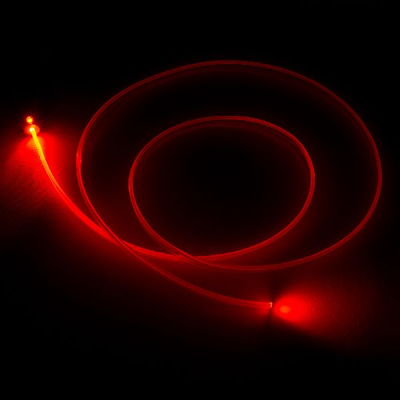
- Burnt-Out Courtesy Light Bulb (Common) — A burnt-out bulb severs the electrical path, creating an open circuit that the control module registers as a fault. This is the easiest physical cause to verify and fix.
- Incorrect LED Bulb Installation (Less Common) — Replacing standard incandescent bulbs with aftermarket LEDs triggers this code. Control modules are sensitive to the lower electrical resistance of LEDs and interpret the altered signature as a circuit failure.
- Corroded Wiring or Poor Ground Connection (Less Common) — Water intrusion or age causes corrosion on connectors or chassis ground points. A degraded ground prevents the circuit from completing, which the module flags as a fault.
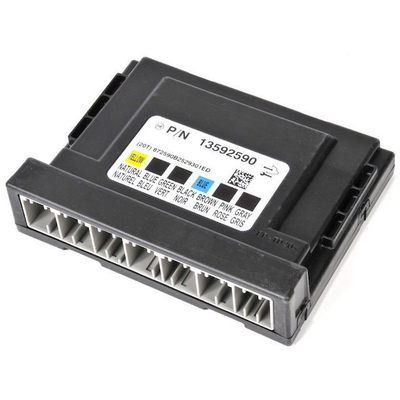
- Faulty Control Module (DDM, PDM, or BCM) (Very Rare) — The module controlling the lights fails internally. This is highly uncommon and must only be considered after thoroughly verifying all wiring, bulbs, and grounds.
Symptoms
- Interior light does not work — A short to ground (B2555-02) or an open circuit prevents the affected door courtesy light or dome light from illuminating.
- Interior light stays on (Battery Drain) — A short to power (B2555-01) forces the light to remain illuminated even with doors closed, which drains the vehicle's battery overnight.
- Check Engine Light remains OFF — Because B2555 is a body code ('B' code) rather than a powertrain code, it never triggers the dashboard Check Engine Light.
- No symptoms at all (scan-tool only — no driver-felt sign) — In the GM 'ghost code' scenario, the vehicle exhibits zero issues. The code only appears when scanning the computers with an advanced OBD-II tool.
Diagnostic Flowchart
Tap your situation to follow the diagnostic path that matches what you're seeing on this code.
Common Fixes & Costs
- Ignore and Clear Code (GM Ghost Code) — Parts: $0, Labor: $0 (DIY)
- Replace Burnt-Out Bulb
— Parts: $5 - $15, Labor: $0, ~0.2 hr book time
(DIY)
: OEM - Repair Wires in Door Jamb
— Parts: $10 - $25, Labor: $150 - $300, ~1.5 hr book time
(Intermediate)
: OEM - Install Load Resistor for LED Bulb
— Parts: $10 - $25, Labor: $0 - $50, ~0.5 hr book time
(DIY)
: OEM - Replace Door Module (DDM/PDM)
— Parts: $150 - $350, Labor: $100 - $250, ~1.2 hr book time
(Professional)
: OEM
Used vs. New Parts: Buying Guide
When a used part is worth it: A used Door Control Module (DDM/PDM) saves money only if you match the part number exactly and confirm the donor vehicle had identical features (e.g., memory seats). This avoids expensive dealer reprogramming. Only buy a module after proving the wiring is flawless.
Donor-vehicle mileage cap: roughly under 100000 miles for the part to have meaningful remaining life.
Donor quality checklist:
- Match the OEM part number exactly. Close matches will fail to operate specific door functions.
- Avoid modules from flood-damaged vehicles; electronics corrode quickly.
Decision logic:
- If The fault is the GM 'ghost code' (TSB PIT5201A) → buy nothing.
- If The fault is broken wires in the door jamb → buy butt connectors and heat shrink tubing.
- If The module is definitively proven faulty → purchase a used, exact-match module to bypass programming costs.
Warranty tradeoff: Salvage yard modules offer 30-90 day warranties. New aftermarket modules (like Dorman) offer limited lifetime warranties but require programming.
Worst-case if a used part fails: $300 - $600 if a module is purchased and programmed, only to discover a broken wire was the actual problem.
What Happens If You Wait — Timeline
- Immediate (GM 'Ghost Code'): Code stores silently. No symptoms occur. Vehicle operates normally. (MPG impact: 0%% · Added cost: $0)
- Immediate (Real Fault - B2555-02): A courtesy light fails to illuminate. Minor convenience is lost, but no further damage occurs. (MPG impact: 0%% · Added cost: $0)
- 1-3 Days (Real Fault - B2555-01): A short-to-power forces the light to stay on, creating a constant parasitic draw that completely drains the battery. (MPG impact: 0%% · Added cost: $150 - $300 for a replacement battery and towing fees.)
Cost of Not Fixing It
- Immediate (GM 'Ghost Code'): None. The code is a software anomaly with zero impact on vehicle function. (Added cost: $0)
- Immediate (Real Fault - Inoperative Light): Loss of interior lighting convenience. No further damage occurs. (Added cost: $0)
- 1-7 Days (Real Fault - Light Stays On): The light creates a constant parasitic draw, completely draining the battery and causing a no-start condition. (Added cost: $150 - $300 for a replacement battery and potential towing fees.)
Diagnosis Steps
- Verify Vehicle Options (GM Owners)
Physically inspect your interior door panels. If you own a 2007-2014 GM truck or SUV without small courtesy lights on the lower door trim, your B2555 code is a known 'ghost code'. Stop diagnosis here and ignore the code per TSB PIT5201A.
Tools: Visual inspection (Beginner) - Read the Full Code and Suffix
Use a scanner capable of reading 'B' (Body) codes. Note the specific module (DDM, PDM, BCM) and the suffix (-01 for short to battery, -02 for short to ground). Basic engine readers cannot see this data.
Tools: OBD-II Scanner (Body code capable) (Beginner) - Inspect the Bulb and Fuse
Remove the lens of the inoperative light and check the bulb for a broken filament. Next, consult your owner's manual to locate and visually inspect the interior lighting fuse. Replace either if blown.
Tools: Trim removal tool, owner's manual, needle-nose pliers (Beginner) - Inspect the Door Jamb Wiring
Peel back the flexible rubber boot between the affected door and the vehicle body. Inspect the wires for breakage, cracked insulation, or chafing. Gently tug individual wires to check for internal breaks. This is the primary failure point for legitimate B2555 faults.
Tools: Flashlight (Intermediate) - Test Circuit Voltage and Ground
Disconnect the light socket. With the door open, use a multimeter set to DC Volts to test the power pin against a chassis ground; it must show 12.0-12.6V. Switch to Ohms (Ω) to test the ground wire terminal against the chassis; resistance must be under 5.0 ohms.
Tools: Multimeter, vehicle wiring diagram (Advanced) - [PRO TIP] Perform Bidirectional Control Test
Use a professional scan tool to command the courtesy lamp ON and OFF directly from the module menu. If the light responds, the circuit is intact and the issue lies with an input signal (like a door latch switch). If it fails, the fault is in the wiring, bulb, or module.
Tools: Professional Bi-Directional Scan Tool (Professional) - [PRO TIP] Test at the Module Connector
Disconnect the door module and probe the specific courtesy lamp output pin. Check for a short to ground (should read OL) and short to voltage (should read 0V with key off). Command the light on via scan tool; the pin must output battery voltage. This isolates the fault to either the harness or the module.
Tools: Multimeter, Wiring Diagram, Pinout Chart (Professional)
When This Code Triggers (Freeze-Frame Conditions)
- Battery Voltage: 9-16V (The module runs a self-test; voltage must be in this range for the test to execute.)
- Module State: Active (The Body Control Module (BCM) commands the door module to activate the courtesy light.)
- Circuit Status: Shorted or Open (The module detects a short to ground, short to voltage, or an open circuit instead of standard bulb resistance.)
Related Codes
- B2555 01 — Indicates a 'Short to Battery' (excess voltage). The interior light usually stays on permanently, risking battery drain.
- B2555 02 — Indicates a 'Short to Ground' (insufficient voltage). The light fails to turn on, typically due to a broken wire touching the chassis.
- B2550 — Defined as 'Lamp Dome Output Circuit Short to Ground'. While B2555 often flags door modules, B2550 specifically targets the overhead dome light circuit controlled by the BCM.
Climate & Environmental Factors
- Cold Weather: Freezing temperatures harden plastic wire insulation. Repeatedly opening and closing the door causes this brittle insulation to crack, exposing copper wire to shorts.
- Vibration and Mechanical Stress: The door harness bends every time the door cycles. Over thousands of uses, metal fatigue breaks the internal copper strands even if the outer insulation looks intact.
- Humidity and Moisture: Water intrusion from rain or car washes seeps into cracked insulation or connectors, accelerating corrosion and creating high-resistance faults.
How to Talk to a Mechanic About This Code
Say this: "I have a B2555 code on my [Vehicle Year, Make, Model]. If it's a GM truck, please verify if my vehicle has door courtesy lights and reference TSB PIT5201A before starting diagnostics. If it's a real fault, test the wiring in the door jamb boot before quoting a module replacement."
This proves you understand the common 'ghost code' and primary failure points, preventing the shop from immediately quoting an unnecessary $500 module replacement.
Avoid saying:
- 'My interior lights are acting weird.'
- 'Just replace the door module.'
- 'I have a B2555 code, just fix it.'
Questions to ask before authorizing the repair:
- Are you aware of GM Technical Service Bulletin PIT5201A regarding this code?
- Did you physically inspect the wires inside the rubber door boot for breaks?
- Did you test the circuit with a multimeter to confirm a short or open?
- If quoting a module, what specific tests ruled out the wiring harness?
Where to Take It: Dealer vs Independent vs Chain
- Dealer:
Good for official TSB confirmation, but unnecessarily expensive for basic wire splicing.
Best for: Vehicles under warranty, Confirming the 'ghost code' TSB on GM vehicles, Module programming
Downsides: Highest labor rates, Often default to replacing modules rather than repairing wires (Typical cost: +50% vs. baseline) - Independent Shop:
The best choice for a legitimate fault. Experienced independents will splice a broken wire for $150 rather than replacing a $400 module.
Best for: Out-of-warranty vehicles, Diagnosing and repairing door jamb wiring faults
Downsides: Electrical expertise varies; must find a shop strong in diagnostics (Typical cost: +0% vs. baseline) - Chain Shop:
Avoid. They lack the circuit-level diagnostic skills required for B2555 faults.
Best for: Simple bulb replacements
Downsides: Lack advanced diagnostic tools for circuit testing, High risk of misdiagnosing the GM ghost code and upselling parts (Typical cost: -10% vs. baseline)
When to Walk Away From the Repair
If estimated repair cost exceeds 40-50% of the car's private-party value, consider selling as-is. However, for code B2555, this is almost never a factor.
- Car worth $8000, fix is $0: Fix it. This is the GM 'ghost code'. The fix is to ignore it.
- Car worth $8000, fix is $200: Fix it. This covers a typical door jamb wire repair.
- Car worth $3000, fix is $600: Borderline. This represents a worst-case module replacement. Get a second opinion focusing on wiring before proceeding.
What Scan Tool You Need for This Code
Minimum: A scanner capable of reading manufacturer-specific Body ('B') codes. Basic engine readers cannot see B2555.
Generic OBD-II scanners only read Powertrain ('P') codes. B2555 is stored in body modules (DDM/BCM), rendering it invisible to cheap tools.
Budget: BlueDriver Pro (~$100) — Reads and clears Body codes, allowing you to confirm the code's presence and clear the GM ghost code.
Mid-range: XTool D7 / Foxwell NT510 Elite (~$250-400) — Adds bidirectional control. You can command the courtesy light ON/OFF directly from the scanner, instantly proving if the module, wiring, and bulb function.
Professional: Autel MaxiCOM MK808 (~$450-600) — Provides OE-level diagnostics, full bidirectional control, and detailed live data PIDs for professional circuit testing.
Rent vs buy: Auto parts stores do NOT rent scanners capable of reading body codes. Buying a budget scanner is required to self-diagnose this issue.
How to Clear the Code After You Fix It
- Perform the necessary repair (e.g., splice broken wire, replace bulb).
- Use an OBD-II scan tool capable of reading body codes to issue the 'Clear DTCs' command for the specific module (DDM, PDM, or BCM).
- Cycle the ignition off, then on, and operate the door to verify the light functions and the code remains clear.
Drive cycle (~5 minutes): No specific drive cycle is required. The module tests the circuit immediately upon commanding the light on. For the GM 'ghost code', the code returns immediately but is ignored.
Readiness monitors affected: None
Watch out for:
- Using a basic engine code reader that cannot access or clear 'B' codes.
- Clearing a legitimate fault code without repairing the wiring, causing it to return instantly.
- Worrying when the GM 'ghost code' returns after clearing; this is normal and expected.
Will This Fail Emissions / State Inspection?
No — by itself this code doesn't fail OBD inspection (but it can keep readiness monitors from setting, which causes a separate fail).
- California: Smog inspections check Powertrain ('P') codes and readiness monitors. This Body ('B') code is ignored.
- New York: NYS safety inspections check exterior lighting, not interior courtesy lights. Emissions testing ignores body codes.
- Texas: Emissions testing checks for codes that illuminate the Check Engine Light. B2555 does not and will pass.
Most Commonly Affected Vehicles
- Chevrolet Silverado / Tahoe / Suburban / Avalanche (2007-2014) — Highly prone to the 'ghost code' software anomaly on trims without door courtesy lights per TSB #PIT5201A.
- GMC Sierra / Yukon / Yukon XL (2007-2014) — Shares identical electronics with Chevrolet counterparts and is equally affected by the phantom B2555 code.
- Cadillac Escalade (2007-2014) — Part of the GMT900 family. While most trims have standard door lights, real faults typically present as B2555-02 (short to ground) from broken door jamb wires.
- Ford Transit / F-Series (2015-2024) — Ford defines B2555 as a fault in the dome lamp circuit, specifically 'Dome Lamp Output Circuit Short to Battery'.
- Nissan Altima / Rogue / Sentra (2013-2020) — Nissan uses B2555 to indicate 'High Speed CAN Communication Bus Performance'—a network issue entirely unrelated to lighting.
- Hyundai Sonata / Elantra (2011-2019) — Hyundai defines B2555 as 'Left Headlamp (Low Beam) Short to Ground', requiring headlight circuit diagnosis.
Manufacturer-Specific Notes
- General Motors: On 2007-2014 GMT900 vehicles, B2555 is a documented 'ghost code' triggered by door modules searching for non-existent courtesy lights. TSB #PIT5201A advises ignoring it. No software update exists to patch it.
- Nissan: B2555 means 'High Speed CAN Communication Bus Performance'. Diagnosis requires testing network communication lines between modules, not interior bulbs.
- Hyundai: B2555 means 'Left Headlamp (Low Beam) Short to Ground'. Diagnosis focuses strictly on the exterior headlight assembly and wiring.
Real Owner Stories
2013 Chevrolet Silverado - The 'Ghost Code' Experience
An owner scanned their truck with a new bidirectional scanner and found B2555-02 in the DDM and B2555-01 in the PDM. The truck had no symptoms and no warning lights.
Outcome: Discovering GM TSB PIT5201A, the owner realized their base-model truck lacked door lights, making the codes harmless software glitches. They cleared the codes and ignored them.
Lesson: On 2007-2014 GM trucks without door lights, B2555 requires zero action. Researching TSBs prevents expensive misdiagnosis.
2008 GMC Sierra - Real Fault, Broken Wires
The passenger door courtesy light failed. A scan showed B2555-02 (Short to Ground) in the PDM. The truck was an SLT trim equipped with factory door lights.
Outcome: Inside the boot, two wires were completely severed. The owner spliced them using butt connectors and heat shrink tubing for $10. The light functioned immediately, and the code cleared permanently.
Lesson: If a light fails, the door jamb wiring is the primary suspect. Always inspect this flex point before buying parts.
Ford Transit - Aftermarket LED Upgrade Problem
An owner upgraded interior lights to LEDs. A B2555 code (Dome Lamp Output Circuit Short to Battery) appeared immediately, though the lights functioned.
Outcome: Realizing the BCM was sensitive to the LEDs' low resistance, the owner spliced a 6-ohm, 50-watt load resistor in parallel with the circuit. This mimicked standard bulb resistance and permanently cleared the code.
Lesson: LED upgrades frequently trigger B2555. Install load resistors to satisfy the control module's resistance parameters.
How to Prevent This Code From Triggering
- Lubricate the door jamb harness boot. (Every 2-3 years) — Applying silicone spray to the rubber boot keeps it flexible, reducing stress and chafing on internal wires as the door cycles.
- Apply dielectric grease to bulb sockets. (When replacing a bulb.) — Dielectric grease seals out moisture, preventing the corrosion that causes high-resistance faults and open circuits.
- Ensure proper strain relief on wiring repairs. (During any wiring repair.) — Leaving slack in repaired wires prevents mechanical stress from pulling on splices, avoiding premature fatigue and failure.
Frequently Asked Questions
Why did my mechanic say to ignore code B2555?
If you drive a 2007-2014 GM truck or SUV without door courtesy lights, GM Technical Service Bulletin PIT5201A identifies this as a harmless 'ghost code'. Ignoring it is the official manufacturer-recommended procedure. Attempting to fix it wastes time and money.
Can code B2555 drain my battery?
Yes, but only if a real short-to-power fault (B2555-01) causes an interior light to stay on permanently. The common GM 'ghost code' variant never drains your battery because no physical light circuit exists to draw power.
I installed LED interior lights and now I have a B2555 code. Why?
Control modules expect the specific electrical resistance of a standard incandescent bulb. Aftermarket LED bulbs have much lower resistance, which the module misinterprets as a circuit fault. Splicing a 6-ohm load resistor into the wiring mimics a standard bulb and clears the code.
What's the difference between B2555 in the DDM/PDM versus the BCM?
A code in the Driver or Passenger Door Module (DDM/PDM) refers to the door panel courtesy lights and is usually the GM ghost code. A code in the Body Control Module (BCM) refers to the main overhead dome lights and indicates a real fault requiring diagnosis.
Can I fix B2555 myself?
Yes. If it is the GM ghost code, simply clear it and do nothing. For real faults, replacing a burnt-out bulb or splicing a broken wire in the door jamb are straightforward DIY repairs.
My mechanic wants to replace the door module for $500. Should I let them?
Do not authorize a module replacement unless the mechanic has physically proven the bulb and door jamb wiring are flawless. Door modules are frequently misdiagnosed when the actual culprit is a broken wire. Ask if they are aware of TSB PIT5201A before proceeding.
Will code B2555 cause my car to fail an emissions or safety inspection?
No. This body code does not illuminate the Check Engine Light or affect emissions monitors. It also does not impact primary safety systems required for state inspections.
Key Takeaways
- On 2007-2014 GM trucks and SUVs without door courtesy lights, B2555 is a harmless software glitch (TSB PIT5201A) that requires zero repairs.
- This is a Body ('B') code that never triggers the Check Engine Light or affects vehicle drivability.
- If an interior light fails to illuminate, inspect the rubber door jamb boot first; broken wires here cause 80% of legitimate B2555 faults.
- Never replace a $300 door control module without first using a multimeter to rule out a $5 burnt-out bulb or a broken ground wire.
Shop the Parts Behind B2555
Below are the parts most often responsible for code B2555, ranked by how frequently each one is the actual culprit (per the diagnosis above). Tap any to see what we have for your vehicle.


The information in this article is provided for general reference and educational purposes only. Vehicle specifications, procedures, and part compatibility can vary by production date, trim level, and region. Always consult your vehicle's factory service manual and verify part numbers before purchasing or performing repairs. Safety-critical components such as airbags, seat belts, and braking systems should be installed by a qualified professional.
- 🧭 Diagnostic Flowchart
- 🛍️ Shop This Part
- What Does B2555 Mean?
- Can I Drive With B2555?
- Common Causes
- Symptoms
- Common Fixes & Costs
- Used vs. New Parts: Buying Guide
- What Happens If You Wait — Timeline
- Cost of Not Fixing It
- Diagnosis Steps
- When This Code Triggers (Freeze-Frame Conditions)
- Related Codes
- Climate & Environmental Factors
- How to Talk to a Mechanic About This Code
- Where to Take It: Dealer vs Independent vs Chain
- When to Walk Away From the Repair
- What Scan Tool You Need for This Code
- How to Clear the Code After You Fix It
- Will This Fail Emissions / State Inspection?
- Most Commonly Affected Vehicles
- Manufacturer-Specific Notes
- Real Owner Stories
- 2013 Chevrolet Silverado - The 'Ghost Code' Experience
- 2008 GMC Sierra - Real Fault, Broken Wires
- Ford Transit - Aftermarket LED Upgrade Problem
- How to Prevent This Code From Triggering
- Frequently Asked Questions
- Why did my mechanic say to ignore code B2555?
- Can code B2555 drain my battery?
- I installed LED interior lights and now I have a B2555 code. Why?
- What's the difference between B2555 in the DDM/PDM versus the BCM?
- Can I fix B2555 myself?
- My mechanic wants to replace the door module for $500. Should I let them?
- Will code B2555 cause my car to fail an emissions or safety inspection?
- Key Takeaways
- 🎟️ Get 5% Off