

OBD-II Code B2562: Auxiliary Circuit Malfunction
What B2562 means, why it triggers, and how to fix it
- Always verify your manufacturer's specific definition for B2562, as it means 'Low Voltage' on a Nissan but 'Cargo Lamp Short' on a Chevy.
- Test your battery and alternator immediately if driving a Nissan or Infiniti; a voltage drop below 12.4V frequently triggers this code before any other symptoms appear.
- On GM trucks and SUVs, inspect the blower motor resistor or the cargo lamp wiring harness behind the driver-side tail light for a direct short to ground.
- Perform a 50-milliamp parasitic draw test to locate the exact circuit draining your battery if the B2562 code is accompanied by overnight starting failures.
- Do not confuse the body code B2562 with the powertrain code P2562 on turbocharged Hyundai and Kia models, which requires adjusting the electronic wastegate actuator to exactly 4.0V-4.2V.
What Does B2562 Mean?

B2562 is a body diagnostic trouble code (DTC) indicating a problem with an electrical circuit managed by the Body Control Module (BCM). It typically signals a short-to-ground or low voltage condition in a specific accessory circuit, such as cargo area lights or the HVAC blower fan. The exact definition changes entirely depending on your vehicle's manufacturer.
Technical definition: The SAE/ISO definition for B2562 varies by manufacturer. Common definitions include 'Auxiliary A/C Blower Speed 1 Circuit Short to Ground' (General Motors), 'Cargo Lamp Control Circuit Low' (Chevrolet/GMC), and 'Low Voltage to Body Control Module' (Nissan/Infiniti).
Can I Drive With B2562?
Yes, But With Caution. You can drive with code B2562, but do not ignore it. A faulty Body Control Module (BCM) circuit disrupts safety systems like headlights and wipers. On Nissan or Infiniti vehicles, the underlying low voltage condition will eventually strand you with a dead battery.
Common Causes

- Weak Battery or Failing Alternator (Very Common) — On Nissan and Infiniti vehicles, a system voltage drop below 12.4V from a dying battery or faulty alternator triggers the BCM to set this code before any other symptoms appear. It also sets temporarily after disconnecting a battery.
- Damaged Wiring Harness or Water Intrusion (Very Common) — Wires chafe against metal body panels, get pinched, or suffer water intrusion at the connectors. This creates a direct short circuit to the vehicle's ground, instantly blowing the circuit's fuse and triggering the code.
- Faulty Blower Motor Resistor (Common) — On GM vehicles where B2562 relates to the HVAC system, the resistor pack regulating fan speed fails with an internal short, disabling lower fan speeds.
- Improperly Installed Aftermarket Accessories (Common) — Poorly wired aftermarket bed lighting, remote starters, or alarms tap into BCM-controlled circuits incorrectly. This creates an unexpected voltage draw that the BCM interprets as a dead short.
- Faulty Bulb or Light Assembly (Less Common) — A burned-out bulb, damaged cargo light assembly, or internal component short creates an abnormal circuit reading that registers as a fault.
- Failing Body Control Module (BCM) (Rare) — The BCM itself fails internally. Rule out all wiring, battery, and component issues before condemning the BCM, as replacement requires expensive dealer programming.
Symptoms

- Dead Battery and Parasitic Draw — A short circuit or faulty module creates a continuous parasitic draw, draining the vehicle's battery completely overnight or after sitting for a few days.
- HVAC Fan Only Works on High Speed — The blower fan for the heat or A/C fails to work on lower settings (e.g., speed 1 or 2) but functions normally on the highest setting.
- Cargo or Interior Light Fails to Turn On — The light in the truck bed, trunk, or cabin does not illuminate when commanded.
- Erratic Electrical Issues — Flickering headlights, random dashboard warning indicators, or key fob recognition failures occur due to a BCM low voltage condition.
Diagnostic Flowchart

Tap your situation to follow the diagnostic path that matches what you're seeing on this code.
Common Fixes & Costs
- Replacing a faulty battery — Parts: $150-$350, Labor: $0-$50, ~0.4 hr book time (DIY)
- Repairing a shorted wire — Parts: $5-$20, Labor: $150-$300, ~1.5 hr book time (Intermediate)
- Replacing the blower motor resistor
— Parts: $20-$100, Labor: $70-$150, ~0.8 hr book time
(DIY)
GM Trucks/SUVs (2001-2007): OEM 89019089 (Alt: Dorman 973-409) - Replacing a faulty cargo lamp assembly
— Parts: $50-$350, Labor: $100-$200, ~1.0 hr book time
(Intermediate)
Chevy Colorado / GMC Canyon (2015-2023): OEM GM 23199879 (Alt: Dorman 923-109) - Adjusting Electronic Wastegate Actuator (for P2562 on Hyundai/Kia)
— Parts: $0-$500, Labor: $150-$400, ~2.0 hr book time
(Advanced)
Hyundai Sonata 2.0T (2011-2014): OEM 39400-2G700 (Alt: Turbochargers Direct TUR-103081-TDR) - Replacing the Body Control Module (BCM)
— Parts: $200-$800, Labor: $250-$600, ~2.5 hr book time
(Professional)
Nissan Altima (2017-2018): OEM 284B2-9HU0A (Alt: N/A - Requires OEM for programming)
DIY vs Professional
- Replacing a faulty battery — Beginner:
- Replacing the blower motor resistor — Beginner:
- Repairing a shorted wire — Beginner:
- Adjusting Electronic Wastegate Actuator (P2562) — Beginner:
- Replacing the Body Control Module (BCM) — Beginner:
Used vs. New Parts: Buying Guide
When a used part is worth it: Buy used for simple components like a cargo lamp assembly. Buy new aftermarket for inexpensive, high-failure items like blower motor resistors. Avoid used BCMs unless new parts are discontinued and you have a specialist for reprogramming.
Donor-vehicle mileage cap: roughly under 100000 miles for the part to have meaningful remaining life.
Donor quality checklist:
- Match the BCM part number exactly; a single digit difference causes incompatibility.
- Verify a used BCM is not permanently VIN-locked to the donor vehicle.
- Source wiring harnesses from dry, salt-free climates to avoid pre-existing corrosion.
Decision logic:
- If Part is a Blower Motor Resistor → Buy new aftermarket. It is inexpensive and a common failure item.
- If Part is a Body Control Module (BCM) → Buy new OEM. Programming requirements make used modules a high-risk purchase.
- If Part is a light assembly or wiring pigtail → Buy used if the part is in good condition and the numbers match.
Warranty tradeoff: New aftermarket parts offer 1-year warranties. New OEM parts carry 1-year/12,000-mile warranties. Used parts offer 30-day warranties and do not cover repeat labor if the part fails.
Worst-case if a used part fails: $1000
What Happens If You Wait — Timeline
- 0-2 weeks: Code sets. An accessory stops working. If due to low voltage, it remains asymptomatic. (MPG impact: 0%% · Added cost: $0)
- 2 weeks - 3 months: A short circuit creates a parasitic draw. The battery requires frequent jump-starting. (MPG impact: 0%% · Added cost: $50)
- 3-6 months: Repeated deep cycling permanently destroys the battery and shortens the alternator's lifespan. (MPG impact: 0%% · Added cost: $150-$600)
- 6+ months: A failing BCM causes widespread electrical failures, resulting in a no-start condition. (MPG impact: 0-5%% · Added cost: $500-$1400)
Cost of Not Fixing It
- Immediate: Loss of function for the affected accessory, such as a dead cargo light or missing HVAC fan speeds. (Added cost: 0)
- 0-3 months: A short circuit creates a parasitic draw, leading to a dead battery. Repeated jump-starts strain the alternator and permanently damage the battery. (Added cost: $150-$600)
- 3+ months: Ignoring a failing BCM leads to widespread electrical failures, including no-start conditions and security system lockouts. (Added cost: $500-$1400)
Diagnosis Steps
- Identify the Specific Definition for Your Vehicle
Use a professional scan tool to read the manufacturer-specific definition for B2562. This dictates whether you are diagnosing a low voltage issue (Nissan), a cargo lamp short (Chevy), or an HVAC fault (GM).
Tools: OBD-II Scanner with Body Code capability (Beginner) - Test Battery and Charging System
Measure battery voltage with a multimeter. A fully charged battery reads 12.4-12.6V with the engine off. With the engine running, the alternator must output 13.7-14.7V. A running voltage below 13.7V confirms a faulty alternator.
Tools: Multimeter (Beginner) - Check Fuses for the Affected Circuit
Locate the fuse box and inspect the fuse related to the affected system (e.g., 'Cargo Lamp', 'HVAC Blower'). A blown fuse confirms a dead short to ground. Do not replace the fuse until you locate and repair the short.
Tools: Fuse puller, flashlight (Beginner) - Perform a Visual Inspection of Wiring
Inspect the wiring harness leading to the affected component. Look for chafed insulation, pinched wires, or green corrosion inside connectors. On Chevy/GMC trucks, inspect the harness behind the driver-side tail light assembly.
Tools: Flashlight (Intermediate) - Test for Short-to-Ground with a Multimeter
Disconnect the component's electrical connector. Set the multimeter to Ohms. Place one probe on a clean chassis ground and the other on the signal wire pin. A reading below 5 Ohms confirms a direct short to ground in the wiring.
Tools: Multimeter, vehicle-specific wiring diagram (Advanced) - Perform a Parasitic Draw Test
Disconnect the negative battery terminal. Set the multimeter to measure Amps (10A setting) and connect it in series between the negative post and the cable. Wait 45 minutes for modules to sleep. A draw above 50 milliamps (0.05A) confirms a short. Pull fuses one by one until the draw drops to isolate the circuit.
Tools: Multimeter with Amp setting (Advanced) - Test the Component
If the wiring shows no short to ground, the component has an internal short. Check resistance across the blower motor resistor terminals or apply direct 12V power and ground to the cargo lamp to verify functionality.
Tools: Multimeter, fused jumper wires (Advanced) - Perform a Voltage Drop Test
With the circuit turned on, set the multimeter to DC Volts. Place the positive probe on the component's ground pin and the negative probe on a known chassis ground. A reading above 0.2V confirms high resistance in the ground circuit.
Tools: Multimeter (Advanced) - Check Hyundai/Kia EWGA Sensor Voltage (P2562 Clarification)
If diagnosing a turbocharged Hyundai/Kia, confirm you do not actually have code P2562. If it is P2562, back-probe the Electronic Wastegate Actuator signal wire with the ignition on, engine off. The voltage must read exactly 4.0V to 4.2V. Adjust the actuator rod if it falls outside this range.
Tools: Multimeter, T-pins, OBD-II Scanner (Advanced)
When This Code Triggers (Freeze-Frame Conditions)
- Battery Voltage: 9.5-11.8V (During engine crank, or key-on with a weak battery (Nissan/Infiniti).)
- System Voltage: <12.0V (Key-on, engine-off, indicating a discharged battery.)
- Commanded State: ON (The BCM commanded the circuit (e.g., cargo lamp, blower fan) to turn on.)
- Circuit Feedback: 0V / Grounded (The BCM detected no voltage on a powered circuit, confirming a short to ground.)
Related Codes
- B2563 / B2564 — Indicates faults in Speed 2 or Speed 3 of the auxiliary blower motor circuit. Seeing these alongside B2562 confirms a failed blower motor resistor.
- U1000 / U0415 — On Nissan/Infiniti, B2562 indicates low voltage at the BCM, while U-codes indicate a CAN communication failure. A severe voltage drop causes both simultaneously.
- B2617 — An Infiniti 'Starter Relay Circuit' code that appears alongside B2562 after a battery swap. If the car starts normally, both are historical codes from the power interruption.
- P2563 / P2565 — Hyundai/Kia turbo codes indicating the wastegate actuator sensor is out of range. Frequently seen with P2562 (not B2562).
Climate & Environmental Factors
- Cold Weather: Low temperatures reduce battery cranking power. This makes the 'Low Voltage to BCM' fault on Nissan and Infiniti vehicles significantly more likely during winter cold starts.
- Road Salt and High Humidity: Salt and moisture penetrate wire insulation and connectors, accelerating corrosion and causing shorts to ground. This is the primary cause of cargo lamp circuit failures on Chevy/GMC trucks.
How to Talk to a Mechanic About This Code
Say this: "I have a B2562 code. For my Nissan, please test the battery and alternator first for a low voltage condition. For my Chevy truck, please inspect the cargo lamp harness behind the driver's tail light for a short."
Directs the technician to the most common, manufacturer-specific fixes, preventing expensive exploratory electrical diagnostics.
Avoid saying:
- 'My car has an electrical problem, can you fix it?'
- 'The internet says I need a new BCM.'
- 'Just fix whatever you find.'
Questions to ask before authorizing the repair:
- Can you show me the damaged section of the wiring harness?
- What specific tests ruled out the battery and alternator before recommending a BCM replacement?
- Does the BCM estimate include the cost of dealer programming?
Where to Take It: Dealer vs Independent vs Chain
- Dealer:
Mandatory for BCM replacement. Avoid for simple wiring or battery issues.
Best for: Vehicles under warranty., Confirmed Body Control Module (BCM) replacement requiring proprietary programming.
Downsides: Highest labor rates., Defaults to expensive module replacement over wiring repairs. (Typical cost: +50% vs. baseline) - Independent Shop:
Best fit for 90% of B2562 scenarios, offering significant savings on wiring and component repairs.
Best for: Diagnosing wiring shorts, battery issues, or replacing blower motor resistors., Out-of-warranty vehicles.
Downsides: Electrical diagnostic expertise varies by shop., Lacks tools for BCM programming. (Typical cost: +0% vs. baseline) - Chain Shop:
Use strictly for free battery testing on Nissan/Infiniti vehicles. Avoid for wiring diagnostics.
Best for: Free battery and alternator testing.
Downsides: Technicians lack complex electrical diagnostic skills., Cannot perform module programming. (Typical cost: -10% vs. baseline)
When to Walk Away From the Repair
If the estimated repair cost exceeds 50% of your car's private-party value, sell or trade the vehicle.
- Car worth $6000, fix is $1200: Fix it. A $1200 BCM replacement is 20% of the car's value.
- Car worth $4000, fix is $2100: Walk away. A $1400 BCM replacement plus $700 in deferred maintenance exceeds 50% of the vehicle's value.
What Scan Tool You Need for This Code
Minimum: A scanner capable of reading manufacturer-specific Body ('B') codes. Generic $20 readers only read Powertrain ('P') codes.
B2562 definitions are manufacturer-specific. A basic reader provides the code number without the crucial context (e.g., 'Low Voltage' vs. 'Cargo Lamp').
Budget: BlueDriver Pro (~$100) — Reads Body codes, provides manufacturer-specific definitions, and displays live BCM voltage data.
Mid-range: Innova 5610 (~$150) — Offers bidirectional control to command the cargo light or HVAC fan on directly, isolating wiring faults from BCM failures.
Professional: Autel MaxiCOM MK906BT (~$600-1200) — Provides dealer-level diagnostics and performs mandatory BCM programming and configuration.
Rent vs buy: Rent a capable scanner from an auto parts store for a one-time diagnosis, ensuring it reads Body codes before leaving the store.
How to Clear the Code After You Fix It
- Use an OBD-II scan tool to clear the code.
- If the code set due to low voltage after a battery change, clearing the code is the only required step.
- For short circuits, operate the repaired component (e.g., cycle all HVAC fan speeds) to verify the fix.
- Perform a 20-minute drive cycle to ensure no other codes appear.
Drive cycle (~20 minutes): Start the vehicle, idle for 3 minutes, then drive for 15-20 minutes at mixed city and highway speeds. Activate the repaired accessory during the drive to allow the BCM to run its self-tests.
Readiness monitors affected: None directly. However, if the code was caused by a battery disconnect, all emissions readiness monitors will reset and require a full drive cycle to complete.
Before emissions retest: drive at least 50 miles to fully set monitors.
Watch out for:
- Disconnecting the battery clears the active code but leaves it as a 'permanent' code in the BCM memory.
- Failing to repair a chafed wire guarantees the code returns the moment the circuit is activated.
- Clearing a Nissan/Infiniti code without replacing a weak battery ensures it returns on the next cold start.
Will This Fail Emissions / State Inspection?
No — by itself this code doesn't fail OBD inspection (but it can keep readiness monitors from setting, which causes a separate fail).
- General: B2562 is a Body code. It does not illuminate the Check Engine Light and will not cause an emissions inspection failure.
- California: The test focuses on powertrain codes. However, if the underlying cause was a dead battery that reset your readiness monitors, you will fail for not being 'ready'.
Most Commonly Affected Vehicles
- Nissan Altima, Rogue, Pathfinder, Titan (2011-2024) — Sets B2562 for 'Low Voltage to BCM' due to a failing battery or alternator. Frequently appears as a ghost code after a routine battery replacement.
- Infiniti G37, Q50 (2008-2020) — Logs B2562 for 'Low Voltage to Body Control Module' immediately following a battery disconnect or during cold weather starts with a weak battery.
- Chevrolet Colorado (2015-2024) — Experiences 'Cargo Lamp Control Circuit Low'. The fault is almost always a chafed wiring harness behind the driver-side tail light or improperly wired aftermarket bed lights.
- GMC Canyon (2015-2024) — Shares the Colorado platform and suffers the exact same cargo lamp wiring harness failure behind the driver-side tail light.
- General Motors Tahoe, Yukon, Suburban (2001-2014) — Defines the code as 'Aux A/C Blower Speed 1 Circuit Short to Ground', indicating a failed rear blower motor resistor.
- Hyundai Sonata, Santa Fe (2.0T) (2011-2018) — Scanners frequently misread the powertrain code P2562 (Turbo Wastegate Actuator) as the body code B2562. Verify the code prefix before diagnosing.
- Kia Optima, Sportage (2.0T) (2011-2019) — Shares the Hyundai 2.0T engine and the exact same P2562 vs B2562 scanner confusion regarding the electronic wastegate actuator.
Manufacturer-Specific Notes
- Nissan / Infiniti: B2562 strictly means 'Low Voltage to Body Control Module.' Always test the battery and alternator first. The BCM sets this code before the battery is completely dead.
- Chevrolet / GMC: Points directly to the 'Cargo Lamp Control Circuit.' Inspect the wiring harness behind the driver-side tail light. On 2018+ models, improperly wired aftermarket lights plugged into the factory blank connector cause this short.
- Hyundai / Kia: Scanners routinely confuse B2562 with P2562. P2562 is a powertrain code for a binding electronic wastegate actuator (EWGA) rod requiring voltage adjustment per TSB 21-EM-009H.
Real Owner Stories
2014 Nissan Altima - The Ghost Code
An owner found an inactive B2562 code during a routine scan with no electrical symptoms present.
Outcome: Forum experts identified it as 'Low Voltage to BCM', likely triggered during a past battery replacement. The owner cleared the code, and it never returned.
Lesson: On Nissan/Infiniti, an asymptomatic B2562 code is usually a historical record of a battery swap. Clear it before attempting any diagnosis.
2018 Chevy Colorado - The Cargo Light Short
The cargo light failed, setting code B2562.
Outcome: They found the factory wiring chafed against the metal body, causing a short. Repairing the wire with heat shrink tubing resolved the code for $10 in supplies.
Lesson: For Chevy/GMC trucks, immediately inspect the wiring harness behind the driver's tail light. It is a guaranteed failure point.
2005 GMC Yukon - HVAC Fan Only Works on High
The rear HVAC blower fan only functioned on the highest speed setting.
Outcome: Replacing the $25 resistor located behind the glove box restored all fan speeds in under 30 minutes.
Lesson: If a GM blower fan only works on high, the blower motor resistor has failed. Replace it immediately.
How to Prevent This Code From Triggering
- Test Battery Health Annually (Once per year, before winter) — A weak battery is the leading cause of B2562 on Nissan and Infiniti vehicles. Annual testing prevents low-voltage BCM faults.
- Apply Dielectric Grease to Connectors (During any electrical service) — Dielectric grease waterproofs connectors, preventing the salt and moisture corrosion that causes shorts in truck bed lighting.
- Secure Wiring Harnesses (Every 30,000 miles) — Using zip ties or anti-abrasion tape prevents harnesses from chafing against sharp metal frame edges.
Frequently Asked Questions
Why does the meaning of B2562 change between car brands?
Powertrain ('P') codes are standardized by law. Body ('B') codes are not strictly regulated, allowing manufacturers to assign different meanings to the same code number.
My scanner says B2562 is a turbocharger code on my Hyundai. Is that right?
Your scanner is likely showing an incorrect definition or you actually have code P2562. On Hyundai and Kia turbo models, P2562 is a common powertrain code indicating a misadjusted electronic wastegate actuator. B2562 is a Body code and is completely unrelated to the turbo system.
I just replaced my battery and now my Nissan has a B2562 code. Is the new battery faulty?
The Body Control Module (BCM) on Nissan/Infiniti vehicles is highly sensitive to voltage drops during a battery swap. Clear the code first; if it does not return, it was just a remnant of the power loss. If it returns, test your new battery and alternator to ensure proper charging.
Can I just replace the fuse and clear the code?
No. If the code was caused by a short circuit, the new fuse will blow immediately. You must locate and repair the shorted wire before replacing the fuse.
How much does it cost for a shop to diagnose the problem?
Shops charge a diagnostic fee ranging from $100 to $200. This covers the first hour of labor to trace the circuit and identify the root cause.
If I replace the BCM, will it work right away?
No. A new Body Control Module requires dealer-level programming to recognize your vehicle's VIN and security keys. The car will not start without this programming.
Where is the BCM located?
The Body Control Module is typically located inside the cabin, underneath the driver's side of the dashboard near the interior fuse panel.
Can a bad BCM cause transmission problems?
Indirectly, yes. A failing BCM causes communication errors on the CAN bus, preventing the Transmission Control Module (TCM) from receiving necessary data. While B2562 itself is not a transmission fault, the underlying voltage issue disrupts shifting.
Key Takeaways
- Always verify your manufacturer's specific definition for B2562, as it means 'Low Voltage' on a Nissan but 'Cargo Lamp Short' on a Chevy.
- Test your battery and alternator immediately if driving a Nissan or Infiniti; a voltage drop below 12.4V frequently triggers this code before any other symptoms appear.
- On GM trucks and SUVs, inspect the blower motor resistor or the cargo lamp wiring harness behind the driver-side tail light for a direct short to ground.
- Perform a 50-milliamp parasitic draw test to locate the exact circuit draining your battery if the B2562 code is accompanied by overnight starting failures.
- Do not confuse the body code B2562 with the powertrain code P2562 on turbocharged Hyundai and Kia models, which requires adjusting the electronic wastegate actuator to exactly 4.0V-4.2V.
Shop the Parts Behind B2562
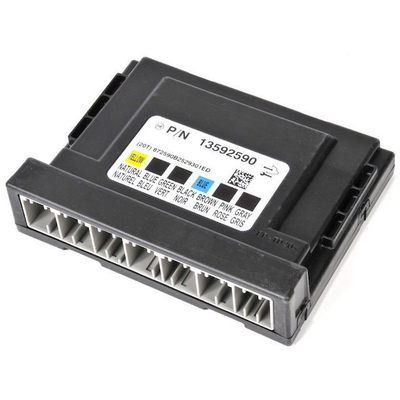
Below are the parts most often responsible for code B2562, ranked by how frequently each one is the actual culprit (per the diagnosis above). Tap any to see what we have for your vehicle.




The information in this article is provided for general reference and educational purposes only. Vehicle specifications, procedures, and part compatibility can vary by production date, trim level, and region. Always consult your vehicle's factory service manual and verify part numbers before purchasing or performing repairs. Safety-critical components such as airbags, seat belts, and braking systems should be installed by a qualified professional.
- 🧭 Diagnostic Flowchart
- 🛍️ Shop This Part
- What Does B2562 Mean?
- Can I Drive With B2562?
- Common Causes
- Symptoms
- Common Fixes & Costs
- DIY vs Professional
- Used vs. New Parts: Buying Guide
- What Happens If You Wait — Timeline
- Cost of Not Fixing It
- Diagnosis Steps
- When This Code Triggers (Freeze-Frame Conditions)
- Related Codes
- Climate & Environmental Factors
- How to Talk to a Mechanic About This Code
- Where to Take It: Dealer vs Independent vs Chain
- When to Walk Away From the Repair
- What Scan Tool You Need for This Code
- How to Clear the Code After You Fix It
- Will This Fail Emissions / State Inspection?
- Most Commonly Affected Vehicles
- Manufacturer-Specific Notes
- Real Owner Stories
- 2014 Nissan Altima - The Ghost Code
- 2018 Chevy Colorado - The Cargo Light Short
- 2005 GMC Yukon - HVAC Fan Only Works on High
- How to Prevent This Code From Triggering
- Frequently Asked Questions
- Why does the meaning of B2562 change between car brands?
- My scanner says B2562 is a turbocharger code on my Hyundai. Is that right?
- I just replaced my battery and now my Nissan has a B2562 code. Is the new battery faulty?
- Can I just replace the fuse and clear the code?
- How much does it cost for a shop to diagnose the problem?
- If I replace the BCM, will it work right away?
- Where is the BCM located?
- Can a bad BCM cause transmission problems?
- Key Takeaways
- 🎟️ Get 5% Off