

OBD-II Code B2589: Power Sliding Door Unexpected Reversal or Backup Lamp Open Circuit
The ultimate guide to B2589. This code has two common, unrelated meanings. We cover every cause, symptom, and fix for both variations to outrank every other page.
- Code B2589 signals one of two completely unrelated failures: a power sliding door auto-reverse fault (common in Honda/Chrysler) or an open backup light circuit (common in Hyundai/Kia).
- Shift into reverse and check your backup lights immediately; if they illuminate, your diagnostic path focuses entirely on the sliding door mechanism.
- Fix backup light variations of B2589 by checking the $5 reverse bulbs and the 10-amp interior fuses before replacing the $150 transmission inhibitor switch.
- Resolve sliding door variations by clearing track debris and lubricating weather seals before assuming motor failure, as dry seals create friction that triggers the auto-reverse safety sensor.
What Does B2589 Mean?
B2589 signals one of two distinct problems. On minivans, it means the power sliding door unexpectedly reversed direction while closing due to a perceived obstruction or mechanical fault. On other vehicles, particularly Hyundai and Kia models, it indicates an open circuit in the backup lamp system, disabling the reverse lights.
Technical definition: The SAE/OBD-II definition for B2589 is either "Unexpected Door Reversal During Close" or "Back Up Lamp Open", depending on the manufacturer. The door variant sets when the power sliding door module (PSDM) detects an uncommanded reversal, usually from a motor torque spike. The lamp variant sets when the body control module (BCM) detects an open electrical circuit in the backup lamps for more than 150 milliseconds.
Can I Drive With B2589?
Yes, But With Caution. Yes, but immediate attention is required. If your backup lights are out, it is a significant safety hazard, illegal in most jurisdictions, and results in traffic fines up to $200. If the power sliding door is faulty, it poses a serious risk of opening while driving, which prompted major recalls for Honda, Toyota, and Kia minivans. Continued operation risks passenger injury or severe damage to the door motor.
Common Causes
- Burnt Out Backup Light Bulb(s) (Very Common) — This is the most frequent cause for the 'Back Up Lamp Open' variation. The filament inside the incandescent bulb breaks, creating an open circuit that the body control module detects immediately.
- Debris or Obstruction in Door Track (Very Common) — Small objects like pebbles, dirt, ice, or toys get stuck in the sliding door's tracks. This physically stops the door, causing the system to interpret it as an obstruction and trigger an emergency reversal.
- Blown Fuse for Backup Lights (Common) — The fuse protecting the backup light circuit blows, cutting off power and causing the code. This often points to a short circuit in the wiring or a failing bulb socket.
- Faulty Backup Light Switch / Inhibitor Switch (Common) — This switch on the transmission tells the car it is in reverse. If internal contacts fail, it cannot complete the circuit to turn on the backup lights. On modern automatics, this is integrated into the Transmission Range Sensor.
- Binding or Worn Door Rollers/Hinges (Common) — The rollers guiding the door along its tracks wear out, rust, or bind. This mechanical resistance forces the motor to work harder, tricking the control module into sensing an obstruction and reversing the door.
- Worn or High-Friction Weather Stripping (Common) — Rubber weather seals around the door dry out and become sticky over time. This increases friction as the door closes, causing a torque spike that the module misinterprets as a physical blockage.
- Faulty Power Sliding Door Pinch Sensor (Common) — The rubber sensor strip on the leading edge of the door fails, gets dirty, or loses calibration. This sends a false obstruction signal to the module, causing the door to reverse instantly.
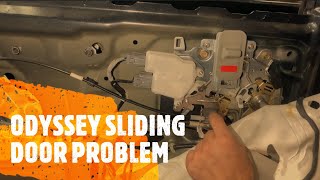
- Failing Power Sliding Door Latch (Less Common) — A sticking latch assembly prevents the door from closing securely, triggering the auto-reverse function right as the door meets the B-pillar. This caused a major recall on 2018-2019 Honda Odysseys.
- Damaged Wiring or Connectors (Less Common) — The flexible wiring harness in the sliding door track frays or breaks from constant movement. For backup lights, wiring near the trunk is damaged by corrosion or impact, creating an open circuit.
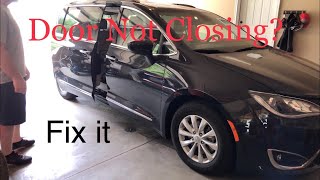
- Power Sliding Door Module (PSDM) Software Issue (Rare) — The control module's software is too sensitive, falsely detecting obstructions or losing its position counts. This requires a software update from the dealer, common on Chrysler Pacificas 🎬 Watch: Troubleshooting power sliding door issues on a Chrysler Pacifica. and Kia Carnivals.
- Bad Body Control Module (BCM) (Very Rare) — The BCM itself fails internally. This is a last resort diagnosis after all bulbs, fuses, switches, and wiring test perfectly.
Symptoms
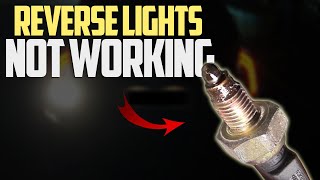
- Backup (reverse) lights do not turn on — The primary symptom for the 'Back Up Lamp Open' variation. The white lights at the rear fail to illuminate when the transmission is shifted into reverse. 🎬 Watch: 5 common reasons your reverse lights aren't working.
- Power sliding door reverses on its own while closing — The door starts to close, stops abruptly, and immediately opens back up, often accompanied by a warning chime.
- Power sliding door beeps and fails to operate automatically — The door ignores button presses, beeps three or four times, and only works manually. A 'Power Unavailable' message displays on the dash.
- Grinding, clicking, or buzzing noise from the sliding door — A failing motor, binding rollers, or a module that lost its position causes unusual noises. A buzzing from the latch area indicates a failing actuator.
- Warning light or message on the dashboard — A 'Check Engine' light, a specific door warning light, or a driver information center message illuminates to alert the driver.
Diagnostic Flowchart
Tap your situation to follow the diagnostic path that matches what you're seeing on this code.
Common Fixes & Costs
- Replace Burnt Out Backup Light Bulb(s) — Parts: $5-$20, Labor: $0-$50, ~0.2 hr book time (DIY)
- Clean and Lubricate Sliding Door Tracks and Hinges — Parts: $10-$25, Labor: $0, ~0.5 hr book time (DIY)
- Replace Backup Light Switch / Inhibitor Switch
— Parts: $40-$150, Labor: $60-$150, ~1 hr book time
(Intermediate)
: OEM (Alt: {"brand": "Standard Motor Products", "part_number": "NS-635"}, {"brand": "Dorman", "part_number": "926-085"}) - Dealer Software Update for Power Sliding Door Module — Parts: $0, Labor: $100-$200, ~0.8 hr book time (Professional)
- Replace Power Sliding Door Latch Assembly
— Parts: $210-$425, Labor: $150-$250, ~1.8 hr book time
(Advanced)
: OEM (Alt: {"brand": "Dorman", "part_number": "937-294"})
: OEM (Alt: {"brand": "Autopart Premium", "part_number": "APDLA1835"}) - Repair Damaged Wiring Harness — Parts: $10-$50, Labor: $150-$500, ~3 hr book time (Advanced)
- Replace Power Sliding Door Motor
— Parts: $800-$1,800, Labor: $200-$300, ~2.5 hr book time
(Professional)
: OEM
Used vs. New Parts: Buying Guide
When a used part is worth it: For a backup light switch, a used OEM part from a low-mileage vehicle is a cost-effective alternative. For cosmetic items like tail light assemblies, used is the best value.
Donor-vehicle mileage cap: roughly under 60000 miles for the part to have meaningful remaining life.
Donor quality checklist:
- Verify the donor vehicle's mileage and ensure it wasn't scrapped due to a related failure.
- Avoid donors from flood-damaged or salt-belt vehicles due to corrosion risk.
- Match the OEM part number exactly, as variations exist within the same model year.
Decision logic:
- If The part is a high-wear mechanical item like a power sliding door motor or latch assembly. → Buy new. The labor cost is too high to risk an early failure of a used part.
- If The part is a simple switch and the vehicle is older with a tight budget. → A tested, used OEM part is a reasonable choice with moderate risk.
- If The part is available as a redesigned version under a recall or TSB. → Buy the new, updated OEM part ONLY. Do not use old stock or used parts.
Warranty tradeoff: Used parts typically offer a 30-90 day warranty. Aftermarket new parts usually come with a 1-year to limited lifetime warranty. New OEM parts carry a 1-year warranty.
Worst-case if a used part fails: $300-$600 if a used door motor or latch fails, requiring repeat labor.
What Happens If You Wait — Timeline
- 0-1 month: Sliding door reverses intermittently but works on the second try. Backup lights fail intermittently due to a loose connection. (MPG impact: 0%% · Added cost: $0)
- 1-3 months: Sliding door failure becomes daily. Increased friction strains the door motor. Backup lights fail completely, posing a constant safety risk. (MPG impact: 0%% · Added cost: $50-$200)
- 3-6 months: Ignoring a binding sliding door accelerates wear on the motor and drive cable. Constant strain frays the flexible wiring harness. (MPG impact: 0%% · Added cost: $300-$500)
- 6+ months: The power sliding door motor burns out from sustained overload. The door is completely inoperable manually and electrically. (MPG impact: 0%% · Added cost: $850-$2500)
Cost of Not Fixing It
- Immediate: Backup Light Failure: Increased risk of a reversing accident and traffic citations. Sliding Door Failure: Inability to use the door automatically and risk of passenger injury. (Added cost: $50-$200)
- 1-6 months: A binding sliding door mechanism puts extreme strain on the motor and wiring harness, escalating a simple roller issue into a motor replacement. (Added cost: $800-$2500)
- 6+ months: A persistently failing sliding door leads to complete failure of the latching mechanism, creating a severe safety risk where the door slides open while driving. (Added cost: N/A (Safety Risk))
Diagnosis Steps
- Identify the Problem Variant
Determine which version of B2589 your car has. Turn the ignition on (engine off), engage the parking brake, and shift into reverse. Check the backup lights. If they are out, you have the 'Back Up Lamp Open' issue. If they work, and you have power sliding doors, you have the 'Unexpected Door Reversal' issue.
Tools: None (Beginner) - Visual Inspection & Basic Reset
For backup lights, inspect the bulbs for broken filaments and check the backup light fuse. For sliding doors, clean the door tracks and rollers of all debris. Perform a system reset by turning the main power sliding door switch off, manually closing the door completely, and turning the switch back on.
Tools: Flashlight, cleaning brush, fuse puller (Beginner) - Test Backup Light Circuit at the Bulb
If bulbs and fuses are good, use a multimeter to test the bulb socket. With the key on and car in reverse, check for 12V power at the socket's power terminal. If voltage is present but the bulb stays dark, the bulb is bad. If no voltage is present, switch to resistance (Ohms) and verify the ground terminal has continuity to a clean chassis ground.
Tools: Multimeter, basic hand tools (Intermediate) - Lubricate Door Mechanism & Weather Stripping
Apply silicone spray lubricant to a clean cloth and wipe down all rubber weather stripping to reduce friction. Apply white lithium grease to the center hinge and roller assemblies to eliminate mechanical binding.
Tools: Silicone spray lubricant, white lithium grease, microfiber cloths (Beginner) - Test the Backup Light/Inhibitor Switch
Locate the switch on the transmission. Disconnect it and test for continuity using a multimeter. The switch should show no continuity (OL) normally, and near 0 Ω when the plunger is depressed or the transmission is in reverse. Replace it if it fails this test.
Tools: Multimeter, jack and jack stands, wiring diagram (Advanced) - Inspect Power Sliding Door Wiring Harness
Carefully inspect the flexible wiring harness running in the lower door track or between the door and the B-pillar. Look for chafed, pinched, or broken wires. A broken wire here causes intermittent operation or complete failure.
Tools: Trim removal tools, flashlight (Intermediate) - Test Sliding Door Pinch Sensors
Set a multimeter to resistance (Ohms) and probe the two wires for the pinch sensor at the PSDM connector. An uncompressed sensor shows specific resistance (e.g., 2.2k Ω). When compressed, resistance drops near 0 Ω. An unchanging or infinite (OL) reading indicates a faulty sensor.
Tools: Multimeter, vehicle-specific wiring diagram, trim removal tools (Advanced) - Check Scan Tool Data for Switch Status
Use a bi-directional scan tool to view live data for the sliding door system. Actuate the 'PSD Main Switch', 'Handle Switch', and 'Latch Switch' manually. Confirm the scan tool shows the state change from 'Off' to 'On'. A switch that fails to change state is the culprit.
Tools: Bi-directional scan tool (Professional) - Analyze Motor Current Draw
Use a scan tool or oscilloscope with a low-amp clamp to monitor the sliding door motor's current draw. Normal operation is 3-5 amps. A sharp spike (e.g., 10 amps) during closing indicates severe mechanical binding, differentiating a physical problem from a sensor issue.
Tools: Professional Scan Tool, Oscilloscope, low-amp current clamp (Professional)
When This Code Triggers (Freeze-Frame Conditions)
- Vehicle Speed: 0 mph (Vehicle is stationary when the fault is logged for both door and light issues.)
- Ignition Status: ON / RUN (The ignition must be on for the BCM or PSDM to be active and detect a fault.)
- Gear Selector Position: Reverse (For the 'Back Up Lamp Open' variant, the code sets when the BCM detects an open circuit while in reverse.)
- PSD Command Status: Close (For the 'Unexpected Reversal' variant, the code sets when a close command is active, but the door reverses direction.)
- Battery Voltage: 11.5-14.5V (Normal operating voltage is expected; low voltage causes erratic module behavior but isn't the direct trigger.)
Related Codes
- B2601 — Indicates 'No Latch Signal Sensed on Close'. This is a more specific version of B2589. If the door reverses exactly at the moment of latching, suspect the latch switch and look for B2601.
- P0705 — Stands for 'Transmission Range Sensor Circuit Malfunction'. Often seen alongside the 'Back Up Lamp Open' version of B2589. It indicates a broader problem with the transmission sensor that affects gear position signals, not just the lights.
- B1856 — A Chrysler-specific code for 'Driver/Passenger Power Sliding Door Pinch Sensor Circuit Open'. This is a direct cause for the B2589 'Unexpected Reversal' code, pointing definitively to the pinch sensor or its wiring.
- B2554 — A GM-specific code for 'Backup Lamps Control Circuit Open.' It is functionally identical to the 'Back Up Lamp Open' definition of B2589 used by Hyundai/Kia.
Climate & Environmental Factors
- Cold Weather / Ice: Ice builds up in the tracks, physically obstructing the door and triggering an auto-reverse. Cold causes rubber weather stripping to harden and increase friction, tricking the system into sensing an obstruction.
- High Humidity / Salt Belt Regions: Accelerates corrosion for the backup light issue. Ground wires attached to the chassis rust, creating high resistance or an open circuit. Bulb sockets and connector pins corrode, preventing electrical connection.
How to Talk to a Mechanic About This Code
Say this: "If it's a backup light issue: 'My backup lights are out; I verified the bulbs and fuses are good, so please diagnose the switch and wiring.' If it's a sliding door issue: 'My sliding door reverses on its own; I cleaned and lubricated the tracks, so please check for mechanical binding, latch issues, and software TSBs.'"
This proves you performed basic steps, saving diagnostic time and preventing a shop from charging you for simple checks. It directs them to complex causes immediately.
Avoid saying:
- 'My van door is acting weird'
- 'My reverse lights are out, can you look at it?'
- 'Just fix whatever's wrong'
Questions to ask before authorizing the repair:
- Did you find a mechanical problem like a bad roller, or an electrical one like a broken wire?
- Is there a software update or recall for this problem on my vehicle?
- Did the backup light switch fail its continuity test, or did you find an open in the wiring harness?
- Can you show me the failed part before you replace it?
- What is the warranty on this specific repair, for both parts and labor?
Where to Take It: Dealer vs Independent vs Chain
- Dealer:
Recommended for recall/TSB work or if a software update is the confirmed fix.
Best for: Vehicles under warranty, or with an active recall/TSB., Complex diagnostics involving module programming or flashing.
Downsides: Highest labor rates and parts costs., May recommend replacing a whole assembly when only a small part failed. (Typical cost: +50% vs. baseline) - Independent Shop:
Best overall fit for most B2589 repairs, providing the best value for mechanical and electrical faults.
Best for: Out-of-warranty vehicles., The 'Backup Lamp Open' variation, which is a standard electrical repair., Mechanical sliding door repairs like replacing rollers, cables, or motors.
Downsides: Quality varies greatly; choose a shop with good reviews for electrical work., May lack the latest software tools for module flashing. (Typical cost: +0% vs. baseline) - Chain Shop:
AVOID for power sliding door issues. Acceptable only for replacing a burnt-out backup bulb.
Best for: Simple, high-volume jobs like oil changes or tires.
Downsides: Technicians lack specialized experience for complex electrical or power door diagnostics., High pressure to upsell. (Typical cost: -10% vs. baseline)
When to Walk Away From the Repair
If the estimated repair cost for the power sliding door exceeds 50% of your minivan's current private-party value, seriously consider selling or trading it in.
- Car worth $5000, fix is $2500: Walk away. A $2,500 repair for a door motor on a $5,000 older minivan is a poor investment.
- Car worth $18000, fix is $550: Fix it. A $550 latch replacement on an $18,000 minivan restores key functionality and value.
- Car worth $8000, fix is $300: Fix it. A $300 backup light switch repair is never a reason to abandon an otherwise functional vehicle.
What Scan Tool You Need for This Code
Minimum: A scanner that reads manufacturer-specific Body (B) codes. Basic $20 readers only show Powertrain (P) codes and will not see B2589.
You need live data from the Body Control Module (BCM) or Power Sliding Door Module (PSDM) to view door switch status or the reverse signal.
Budget: BlueDriver Pro or Autel AP200 (~$60) — Reads B-codes and displays live data streams on your smartphone to check door sensors or the reverse switch signal.
Mid-range: Foxwell NT510 Elite (~$160) — Offers OE-level diagnosis and bi-directional control, allowing you to manually actuate components to test their function.
Professional: Autel MaxiCOM MK808S (~$400) — Provides full bi-directional control to command door motors, latches, and lights directly, isolating failed parts from wiring issues instantly.
Rent vs buy: Buy. Rent-a-tool scanners from auto parts stores often fail to read B-codes. A budget scanner costs less than one hour of shop diagnostic time.
How to Clear the Code After You Fix It
- Use an OBD-II scan tool to clear the B-prefix trouble code from the Body Control Module.
- For sliding door repairs, perform the manual door initialization procedure: turn the main PSD switch off, manually close the door, and turn the switch back on.
- For backup light repairs, cycle the ignition and shift into reverse to confirm the lights work.
Drive cycle (~5 minutes): A complex drive cycle is not required. After clearing the code, a simple test of the repaired function (operating the door or shifting into reverse) confirms the fix.
Readiness monitors affected: None
Watch out for:
- Forgetting to perform the manual power sliding door reset procedure after the repair, causing the door to remain inoperative.
- Simply disconnecting the battery fails to clear the code from the BCM's memory.
- The code returns immediately if the underlying electrical open or mechanical binding issue is not fully resolved.
Will This Fail Emissions / State Inspection?
No — by itself this code doesn't fail OBD inspection (but it can keep readiness monitors from setting, which causes a separate fail).
- California: This B-code will not cause a failure of the OBD-II smog check. However, inoperative backup lights fail a visual/functional safety check.
- New York: The NYS inspection includes a mandatory safety inspection of all required lighting. Inoperative backup lights cause an automatic failure.
- Texas: The annual safety inspection requires functional backup lights. A vehicle with inoperative reverse lights fails the inspection.
Most Commonly Affected Vehicles
- Kia Carnival (2022-2023) — Prone to the 'Unexpected Door Reversal' issue. NHTSA campaign 23V236000 (Kia recall SC266) was issued to update the PSDM software after nine injuries were reported. The update adds warning chimes and slows the door speed before latching.
- Honda Odyssey (2018-2019) — Prone to the 'Unexpected Door Reversal' issue due to sticking rear latch assemblies. NHTSA campaign 18V-795 (Honda recalls Z33, O36) was issued to replace both rear power sliding door latch assemblies on 107,774 vehicles.
- Chrysler / Dodge Pacifica, Grand Caravan (2016-2020) — Commonly experiences the 'Unexpected Door Reversal' issue. Causes trace back to high-friction weather stripping, failing latch actuators, or software glitches. TSB 08-008-20 was issued for the Pacifica to reprogram the door module with a higher torque limit.
- Toyota Sienna (2011-2016) — A recall (NHTSA 16V-858, Toyota G04) was issued because if the sliding door opening was impeded by ice, the motor circuit fuse could blow, potentially allowing the door to slide open while driving.
- Volkswagen Routan (2011-2012) — Known for power sliding door issues where the door gets stuck open with a clicking motor noise. TSB 58 12 04 corrects this by re-flashing the Power Sliding Door Module (PSDM).
- Hyundai Elantra (2011-2019) — Commonly associated with the 'Back Up Lamp Open' definition of B2589. On 2017-2019 automatic models, the function is integrated into the transmission inhibitor switch, which fails frequently. TSB 17-AT-005 addresses related DTCs.
- Kia Optima (2011-2020) — Often logs the 'Back Up Lamp Open' version of B2589. Common causes are a blown fuse (check both 'SL B/LP' and 'TCU 2' fuses), a bad bulb, or a faulty reverse light switch.
- Ford Freestar (2004-2007) — Sets B2589 for the power sliding door with a unique definition: 'No PSD Detent Switch Detected on Closing'. The module expects two momentary ground signals from the latch, and reverses the door if they are missing.
Manufacturer-Specific Notes
- Kia/Hyundai: These brands most commonly use B2589 to indicate 'Back Up Lamp Open'. However, the 2022-2023 Kia Carnival is a major exception, where it relates to a dangerous failure of the power sliding door auto-reverse feature (NHTSA 23V236000).
- Chrysler/Dodge/VW: On Pacifica, Grand Caravan, and VW Routan, B2589 is often caused by software issues. Chrysler issued TSB 08-008-20 to update the door module software. VW issued TSB 58 12 04 to re-flash the module when it loses position counts and clicks.
- Honda: On 2018-2019 Odyssey models, this code is almost always linked to faulty rear door latch assemblies that stick. Recall 18V-795 replaces these latches with an updated part.
- Ford: On the Freestar, B2589 has a unique definition: 'No PSD Detent Switch Detected on Closing'. This points specifically to a failure in the power sliding door's detent switch inside the latch.
- Toyota: On 2011-2016 Siennas, a frozen door could blow a fuse and trigger a B2589-type fault, prompting recall G04. If the door was unlatched at that moment, it could slide open while driving.
Real Owner Stories
2018 Chrysler Pacifica - Door Reverses When Closing
The passenger sliding door closed almost completely, then reversed and opened again. The issue became frequent over a few weeks.
What they tried:
- Checked tracks for obstructions and found none.
- Attempted manual door reset procedures with no success.
- Lubricated the rollers and hinges, which did not solve the problem.
Outcome: The dealer performed a software update based on TSB 08-008-20, re-flashing the door module. The problem was fixed for around $70.
Lesson: For Chrysler/Dodge vans, a software glitch is a common cause. Check for relevant TSBs before attempting expensive mechanical repairs, as a dealer re-flash often solves the problem.
2018 Hyundai Elantra SE - No Backup Lights
Neither backup light illuminated when shifting the manual transmission into reverse.
What they tried:
- Tested the bulbs and confirmed they were working.
- Checked the fuse for the backup light circuit and found it was good.
- Verified power was reaching the fuse box.
Outcome: The owner deduced the fault was the backup light switch on the transmission and replaced it, restoring function.
Lesson: Follow a logical electrical path: start with the easiest failures (bulbs, fuses) before moving to complex components like the switch or wiring.
2014 Honda Odyssey - Door Won't Open/Close, Just Beeps
The driver's side sliding door would not open. It moved slightly, stopped, and beeped consistently.
What they tried:
- The dealer recommended replacing the latch, motor, and control unit for over $1,200.
- Owner tested the door lock motor with a 12V source and confirmed it worked.
- Owner tested continuity on the fuel door sensor wiring and found no signal.
Outcome: The owner identified and repaired a broken wire within the flexible door wiring harness, fixing the issue for pennies.
Lesson: A broken wire in the flexible harness between the door and the body mimics a failed motor or module. Always inspect this harness carefully before replacing expensive parts.
2008 Honda Odyssey - Door Reverses Mid-Travel
The sliding door started to open or close, got halfway, and reversed direction as if it hit an obstruction.
What they tried:
- Holding the button down forced the door to move, but it was jerky.
- Cleaned the tracks.
Outcome: The owner replaced a failed center roller assembly. The mechanical wear increased drag, triggering the auto-reverse.
Lesson: On older minivans, mechanical wear is a primary cause. Increased friction from worn rollers tricks the safety system. If cleaning fails, suspect a worn roller assembly.
How to Prevent This Code From Triggering
- Clean sliding door tracks and rollers (Every 3-6 months) — Removes dirt and debris that increase friction and physically block the door rollers, preventing false obstruction readings.
- Lubricate sliding door rollers and hinges (Every 6-12 months) — Keeps metal rollers moving freely, reducing mechanical drag and current draw on the door motor. Use white lithium grease.
- Condition sliding door weather stripping (Every 6-12 months) — Silicone spray keeps rubber seals pliable and reduces friction as the door closes, preventing false obstruction readings.
- Apply dielectric grease to exterior bulb sockets (When replacing bulbs) — Prevents moisture and salt from causing corrosion, which is a primary cause of open circuits and bad ground connections.
- Clean safety pinch sensors (Every 6 months) — Wiping the pinch sensor on the door edge ensures it doesn't give false readings and trigger unexpected reversals.
Frequently Asked Questions
Can I fix code B2589 myself?
Yes, depending on the cause. Replacing a backup light bulb or cleaning sliding door tracks are easy DIY tasks. Replacing a backup light switch or door latch requires intermediate skills, while replacing a door motor is best left to professionals.
Why does my minivan door beep and open back up when I try to close it?
This is the classic symptom of code B2589. The beeping indicates the safety system detected a problem and reversed the door. Common causes are track obstructions, a dirty pinch sensor, or excessive friction from dried-out weather stripping.
How do I reset my power sliding door after disconnecting the battery?
Turn the main power sliding door switch on the dashboard to 'OFF'. Manually slide the door fully closed until it latches completely. Turn the main switch back 'ON' to allow the control module to relearn the closed position.
My sliding door is stuck open and just clicks or beeps. What does that mean?
This indicates the Power Sliding Door Module (PSDM) lost its position memory or detected a critical fault. The clicking is the motor attempting to engage without knowing the direction. This known issue on vehicles like the VW Routan often requires a dealer software re-flash.
Is it safe to drive with code B2589?
You can drive, but it carries risks. Inoperative backup lights are illegal and increase collision risks. A malfunctioning sliding door is a serious safety concern, as it could fail to latch properly and open while driving.
How much does it cost to fix a B2589 code?
A backup light fix costs $5 for a bulb or up to $300 for a transmission switch. Power sliding door repairs are much more expensive, ranging from $500 for a Honda Odyssey latch to over $2,500 for a Kia Carnival motor replacement.
My backup camera works, but the lights don't. Could it still be the reverse switch?
Yes. On modern vehicles, the backup camera and backup lights use separate circuits from the same Transmission Range Sensor. One internal contact can fail while the other continues to function.
Can a bad ground wire cause B2589?
Absolutely. For the backup light variation, a corroded ground wire near the tail light assembly is a common cause. For the sliding door, a bad ground for the control module causes erratic behavior and unexpected reversals.
Key Takeaways
- Code B2589 signals one of two completely unrelated failures: a power sliding door auto-reverse fault (common in Honda/Chrysler) or an open backup light circuit (common in Hyundai/Kia).
- Shift into reverse and check your backup lights immediately; if they illuminate, your diagnostic path focuses entirely on the sliding door mechanism.
- Fix backup light variations of B2589 by checking the $5 reverse bulbs and the 10-amp interior fuses before replacing the $150 transmission inhibitor switch.
- Resolve sliding door variations by clearing track debris and lubricating weather seals before assuming motor failure, as dry seals create friction that triggers the auto-reverse safety sensor.
Helpful Videos
Shop the Parts Behind B2589
Below are the parts most often responsible for code B2589, ranked by how frequently each one is the actual culprit (per the diagnosis above). Tap any to see what we have for your vehicle.



The information in this article is provided for general reference and educational purposes only. Vehicle specifications, procedures, and part compatibility can vary by production date, trim level, and region. Always consult your vehicle's factory service manual and verify part numbers before purchasing or performing repairs. Safety-critical components such as airbags, seat belts, and braking systems should be installed by a qualified professional.
- 🧭 Diagnostic Flowchart
- 🎬 Helpful Videos
- 🛍️ Shop This Part
- What Does B2589 Mean?
- Can I Drive With B2589?
- Common Causes
- Symptoms
- Common Fixes & Costs
- Used vs. New Parts: Buying Guide
- What Happens If You Wait — Timeline
- Cost of Not Fixing It
- Diagnosis Steps
- When This Code Triggers (Freeze-Frame Conditions)
- Related Codes
- Climate & Environmental Factors
- How to Talk to a Mechanic About This Code
- Where to Take It: Dealer vs Independent vs Chain
- When to Walk Away From the Repair
- What Scan Tool You Need for This Code
- How to Clear the Code After You Fix It
- Will This Fail Emissions / State Inspection?
- Most Commonly Affected Vehicles
- Manufacturer-Specific Notes
- Real Owner Stories
- 2018 Chrysler Pacifica - Door Reverses When Closing
- 2018 Hyundai Elantra SE - No Backup Lights
- 2014 Honda Odyssey - Door Won't Open/Close, Just Beeps
- 2008 Honda Odyssey - Door Reverses Mid-Travel
- How to Prevent This Code From Triggering
- Frequently Asked Questions
- Can I fix code B2589 myself?
- Why does my minivan door beep and open back up when I try to close it?
- How do I reset my power sliding door after disconnecting the battery?
- My sliding door is stuck open and just clicks or beeps. What does that mean?
- Is it safe to drive with code B2589?
- How much does it cost to fix a B2589 code?
- My backup camera works, but the lights don't. Could it still be the reverse switch?
- Can a bad ground wire cause B2589?
- Key Takeaways
- 🎟️ Get 5% Off