

OBD-II Code B2594: Power Door/Liftgate Did Not Move
What B2594 means, why it triggers, and how to fix it
- Code B2594 triggers when the Body Control Module unlatches a power sliding door or liftgate but detects zero physical movement.
- Broken wiring harnesses on Dodge/Chrysler minivans and snapped drive cables on Toyota Siennas cause over 70% of B2594 faults.
- Test the vehicle battery to ensure it reads above 12.4V and replace weak $50 liftgate struts before authorizing a $1,500 motor replacement.
- Disable the power door switch to safely drive the vehicle in manual mode, but physically verify the heavy door latches 100% completely before driving.
- Repair costs range from $50 for DIY liftgate struts to $1,800 for a dealer-installed power motor assembly.
What Does B2594 Mean?
Code B2594 triggers when the Body Control Module (BCM) commands a power door or liftgate to open, successfully unlatches it, but detects zero physical movement. The BCM sees the 'unlatched' confirmation but receives no changing data from the door's position sensors, prompting it to abort the operation and log the fault.
Technical definition: No Movement Detected After an Unlatch During Power Open.
Can I Drive With B2594?
Yes, But With Caution. Yes, but the power function is disabled, forcing manual operation. If the heavy door or liftgate fails to latch securely when closed by hand, it poses a severe safety risk and can fly open while driving. Always physically verify the latch is locked before putting the vehicle in gear.
Common Causes
- Broken Wires in Door/Hatch Harness (Very Common) — The wiring harness powering the door's motor bends constantly inside a flexible track. Over time, these wires fatigue and break, cutting power. This is the leading cause of B2594 on Dodge Grand Caravan and Chrysler Town & Country minivans.
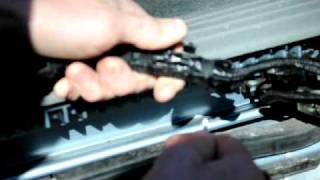
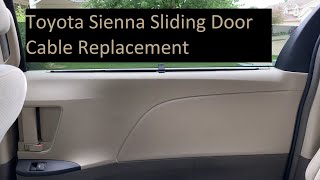
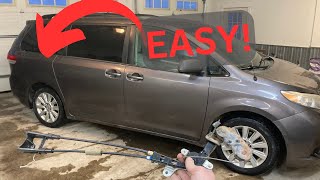
- Snapped or Jammed Drive Cable (Very Common) — Power sliding doors use a motor to pull steel cables. These cables fray, snap, or tangle in the spool, preventing movement after unlatching. This is the most frequent failure point on the Toyota Sienna.
- Weak or Failed Gas Liftgate Struts (Common) — Power liftgate motors rely on gas-charged struts to support the gate's weight. When struts lose pressure, the motor lacks the force to lift the heavy door alone, triggering a fault. This is the most common misdiagnosis on SUVs.
- Blown Fuse or Weak Vehicle Battery (Common) — Power doors draw 90-150 amps. A weak battery (under 12.4V resting) or a blown module fuse starves the motor of power, causing the operation to fail immediately.
- Failed Power Sliding Door or Liftgate Motor (Common) — The primary electric motor burns out or strips its internal gears. You hear the latch click, followed by silence or a whirring sound with zero door movement.
- Faulty Door/Liftgate Latch Assembly (Common) — If the latch mechanically opens but its internal microswitch fails to report the 'unlatched' state to the BCM, the main motor is never commanded to move.
- Binding from Worn/Dirty Door Rollers or Hinges (Less Common) — Worn rollers, seized hinges, or debris-filled tracks create excessive physical resistance. The motor detects this resistance as a jam and aborts the opening sequence.
- Failed Hall Effect Position Sensor (Less Common) — Sensors inside the motor track the door's speed and position. If they fail, the BCM flies blind, assumes the door is stuck, and sets the code.
- Faulty Body Control Module (BCM) (Rare) — The main computer fails to process door commands. This is rare and typically accompanied by multiple unrelated electrical failures across the vehicle.
Symptoms
- Door Won't Open Automatically — You hear a click from the latch, but the door or liftgate does not move.
- Forced Manual Operation — The BCM disables the power function, requiring heavy manual effort to open and close the door.
- Audible Beeping — The system produces a series of warning beeps indicating a fault abort.
- Partial Movement — The door unlatches and moves a fraction of an inch before halting, indicating immediate drive system failure or weak struts.
- Unexpected Reversal — The door begins to open, then suddenly stops and reverses due to excessive track resistance or sensor failure.
- Dashboard Warning — A 'SLIDE DOOR' or similar message illuminates on the instrument cluster.
Diagnostic Flowchart
Tap your situation to follow the diagnostic path that matches what you're seeing on this code.
Common Fixes & Costs
- Replacing Weak Power Liftgate Gas Struts — Parts: $50-$150, Labor: $25-$60, ~0.5 hr book time (Beginner)
- Repairing Broken Wires in Harness — Parts: $10-$30, Labor: $250-$700, ~2.5 hr book time (Intermediate)
- Replacing Snapped Sliding Door Cables Only — Parts: $50-$150, Labor: $250-$550, ~3.5 hr book time (Advanced)
- Replacing the Power Sliding Door Latch Actuator — Parts: $150-$425, Labor: $150-$300, ~1.8 hr book time (Intermediate)
- Replacing the Power Sliding Door Motor/Cable Assembly — Parts: $700-$1,300, Labor: $200-$600, ~2.5 hr book time (Professional)
Used vs. New Parts: Buying Guide
When a used part is worth it: Buy used only for simple latch assemblies or wiring harness pigtails. Never buy a used main motor/cable assembly; the cables and motor brushes are wear items that will fail shortly after installation.
Donor-vehicle mileage cap: roughly under 70000 miles for the part to have meaningful remaining life.
Donor quality checklist:
- Verify the exact OEM part number match.
- Inspect wiring for brittleness, previous splices, or damaged insulation.
- Avoid motor assemblies from salt-belt regions due to internal corrosion.
Decision logic:
- If The failure is weak liftgate struts → Buy new aftermarket struts; they are inexpensive wear items.
- If The failure is a snapped cable on a Toyota Sienna → Buy a new aftermarket cable-only kit (e.g., Dorman). It is robust and saves over $1,000 compared to a full assembly.
- If The failure is the entire motor/drive assembly → Buy a new OEM or premium aftermarket part. The labor is too intensive to risk a used part failing.
Warranty tradeoff: Used salvage parts offer 30-90 day warranties that exclude labor. New aftermarket parts offer 1-year to lifetime warranties. New OEM parts offer 1-year warranties, extended if dealer-installed.
Worst-case if a used part fails: $300-$600 in repeated labor costs if a used motor assembly fails after installation.
What Happens If You Wait — Timeline
- 0-1 month: Fault is intermittent. The door fails to open occasionally, often in cold weather. A system reset temporarily restores function. (MPG impact: 0% · Added cost: 0)
- 1-3 months: The fault becomes permanent. The power function is completely disabled, requiring heavy manual operation at all times. (MPG impact: 0% · Added cost: 0)
- 3-6 months: Increased safety risk. The user becomes accustomed to manual operation, increasing the risk of not closing the door securely. Weak liftgate struts pose a risk of the gate falling. (MPG impact: 0% · Added cost: 0)
- 6+ months: Secondary mechanical wear. Continuously forcing a binding door causes further damage to rollers and hinges, making manual operation even more difficult. (MPG impact: 0% · Added cost: 0)
Cost of Not Fixing It
- Immediate: Loss of convenience. The power function is disabled, requiring heavy manual operation. (Added cost: 0)
- Ongoing: Severe safety hazard. If the heavy door is not securely latched manually, it flies open while the vehicle is in motion. (Added cost: 0)
- Long-term: No risk of cascading electronic damage. The primary costs are persistent inconvenience and safety risks. (Added cost: 0)
Diagnosis Steps
- Check Basics: Battery, Fuses, and Power Switch
Ensure the master power switch for the doors is ON. Check the 'Power Sliding Door' or 'Power Liftgate' fuses. Test the main battery with a multimeter; a resting voltage below 12.4V causes voltage-sensitive door modules to malfunction.
Tools: Owner's Manual, Fuse Puller, Multimeter (Beginner) - Listen for Clicks and Hums
Press the open button while standing next to the door. A 'click' means the latch is releasing. A subsequent 'hum' means the motor is running but disconnected (snapped cable). A click followed by silence points to a dead motor, broken wiring, or a severe jam.
Tools: A helper (Beginner) - Inspect for Mechanical Binding and Weak Struts
Turn the power system OFF. Operate the door manually. Clean dirt from sliding door tracks and lubricate rollers. For liftgates, manually open the gate fully; if the gas struts cannot hold the gate up on their own, they are weak and causing the motor to fault.
Tools: Flashlight, Cleaning supplies, Silicone spray lubricant (Intermediate) - Perform System Reset and Re-initialization
Disconnect the negative battery terminal for 15 minutes. Reconnect power, then manually open and close the door completely twice. This forces the control module to relearn its end-stop positions and clears software glitches.
Tools: 10mm Wrench (Beginner) - Inspect the Wiring Harness
Examine the flexible wiring harness running between the body and the door. Peel back the rubber boot or open the plastic track. Look for broken, frayed, or pinched wires. Gently tug individual wires to find breaks hidden inside the insulation. This is critical on Dodge/Chrysler minivans.
Tools: Trim removal tools, Flashlight (Intermediate) - Scan for Manufacturer-Specific Codes and Live Data
Use an advanced scan tool to read the Body Control Module (BCM). Look for specific sub-codes pointing to a latch sensor or motor circuit. View live data PIDs like 'Door Position Sensor Status' to see if the module registers movement.
Tools: Advanced OBD-II Scan Tool (Advanced) - Test for Power at the Motor
Access the main drive motor connector. Set a multimeter to DC volts and probe the power and ground wires. Press the open button. You must see a brief spike of 12V immediately after the latch clicks. If voltage is present but the motor doesn't run, the motor is dead. If no voltage, the wiring is broken.
Tools: Trim removal tools, Multimeter, Wiring diagram (Advanced) - Perform a Voltage Drop Test
Connect the multimeter positive lead to the battery positive post and the negative lead to the motor's power wire. Activate the motor; voltage must be under 0.4V. Repeat for the ground side (motor ground to battery negative); voltage must be under 0.2V. Higher readings indicate severe wire corrosion.
Tools: Multimeter, Back-probe kit, Wiring diagram, A helper (Advanced) - Measure Motor Current Draw
Clamp an inductive amp meter around the motor's main power wire. A healthy liftgate motor draws 90-150 amps. Zero amps confirms an open circuit (broken wire/dead motor). Over 200 amps indicates a stalled motor due to a mechanical jam.
Tools: Inductive DC Amp Clamp, A helper (Professional) - Test the Motor's Hall Effect Sensors
Back-probe the Hall effect sensor signal wire at the motor connector. Manually move the door. The voltage must toggle between <1V and 5V/12V. If the voltage remains static, the sensor is dead, forcing the BCM to abort operation.
Tools: Multimeter or Oscilloscope, Back-probe kit, Wiring diagram (Professional)
When This Code Triggers (Freeze-Frame Conditions)
- Control Module Voltage: 11.8V - 14.5V (The fault logs when voltage drops below 12V during motor activation, starving the system of required amperage.)
- Ignition Status: RUN or ACC (Logged when a user commands the door to open via any switch.)
- Vehicle Speed: 0 mph (Power doors are disabled in motion, so this fault sets exclusively when the vehicle is stationary.)
- Command Source: Key Fob, Dash Switch, or Handle Switch (Identifies the specific input that triggered the failed opening attempt.)
Related Codes
- B2591 — B2591 means 'Detent Signal Missing During Unlatch.' The BCM never gets the signal that the latch is open, so it never commands the motor to move. With B2594, the BCM sees the latch open, but detects no subsequent movement.
- B2592 — B2592 means 'PSD Not Fully Closed.' This is the opposite of B2594. B2594 is a failure to start opening; B2592 is a failure to finish closing.
- B1300 — General 'Power Door Lock Circuit Failure.' If B1300 appears alongside B2594, it strongly indicates a broken wiring harness, as both systems share the same flexible wire track.
Climate & Environmental Factors
- Cold Weather: Cold temperatures reduce battery amperage, starving high-draw motors. Lubricants thicken, increasing mechanical resistance, and water inside cable housings freezes, physically blocking movement.
- High Humidity / Rain: Moisture accelerates corrosion on electrical connectors and ground points, causing voltage drops. Water washes out essential grease in latch mechanisms.
- Salt Belt Regions: Road salt severely corrodes door rollers, tracks, and hinges. This increases physical resistance, forcing the motor to strain and fault out.
How to Talk to a Mechanic About This Code
Say this: "I have a B2594 code on my [Year, Make, Model] and the power [sliding door/liftgate] isn't working. I hear a click but no movement. Please start by inspecting the wiring harness in the flexible track and checking for power at the motor before recommending a full motor replacement."
This directs the technician to the most likely and cost-effective starting points, preventing them from immediately quoting a $1,500 motor assembly. It shows you understand the difference between a component failure and a wiring issue.
Avoid saying:
- 'My power door is broken, can you fix it?' (invites a wide-ranging and expensive diagnostic process)
- 'Just replace whatever is broken.' (gives the shop a blank check to replace the most expensive part)
- 'I think it's the motor.' (causes them to focus only on the motor and miss a simpler broken wire)
Questions to ask before authorizing the repair:
- Did you find the specific point of failure? Was it a broken wire, a snapped cable, or a seized motor?
- If it's a wiring issue, will you be repairing the specific broken wires or replacing the entire harness?
- If you are recommending a motor replacement, did you confirm 12V power reaches the motor connector when the open button is pressed?
- What is the warranty on the parts and the labor for this specific repair?
Where to Take It: Dealer vs Independent vs Chain
- Dealer:
Best for: Vehicles still under warranty or covered by a specific recall/service campaign., Complex electrical issues requiring manufacturer-specific module programming., When you want the repair done with only OEM parts and are less sensitive to cost.
Downsides: Highest labor rates and parts costs., Highly inclined to replace an entire $1,500 assembly rather than performing a $400 wire repair. (Typical cost: +50% vs. baseline) - Independent Shop:
Best fit for most out-of-warranty vehicles. An experienced independent shop is familiar with common B2594 failure points (wiring, cables, struts) and offers targeted, cost-effective repairs instead of full assembly replacements.
Best for: Out-of-warranty vehicles where cost is a major factor., Diagnosing common failures like broken wires on Chrysler minivans or snapped cables on Toyota Siennas., Shops specializing in electrical diagnostics offer creative, cost-effective repairs.
Downsides: Quality varies widely; look for ASE-certified technicians., May lack immediate access to the latest manufacturer service bulletins. (Typical cost: +0% vs. baseline) - Chain Shop:
AVOID. This repair is outside the core competency of chain shops. The risk of misdiagnosis is very high.
Best for: Simple, unrelated maintenance like oil changes or tires.
Downsides: Technicians lack specialized experience for complex electrical diagnostics., High pressure to meet sales targets leads to misdiagnosis and upselling., Not equipped for detailed harness repair or cable replacement. (Typical cost: -10% vs. baseline)
When to Walk Away From the Repair
Decline the repair if the estimate exceeds 40% of the car's private-party value and you are comfortable operating the door manually.
- Car worth $4000, fix is $1800: Walk away. The repair costs 45% of the car's value. Turn off the power switch, use the door manually, and save the $1,800.
- Car worth $15000, fix is $700: Fix it. The repair is less than 5% of the vehicle's value and restores a major convenience and safety feature.
- Car worth $2500, fix is $1500: Definitely walk away. The repair is 60% of the car's value. It makes no financial sense to proceed.
What Scan Tool You Need for This Code
Minimum: A scanner that reads manufacturer-specific Body Control Module (BCM) codes. A basic engine-only code reader will not see B2594.
A cheap $20 scanner only reads 'P' (Powertrain) codes. It cannot communicate with the BCM responsible for power doors, showing 'No Codes Found' even when B2594 is active.
Budget: BlueDriver Pro (~$100) — Connects to your smartphone via Bluetooth to read and clear BCM codes. It confirms the B2594 code and provides freeze-frame data, but lacks bidirectional control.
Mid-range: Foxwell NT510 Elite (~$160) — Provides full system diagnostics and bidirectional controls. You can command the latch to open or the motor to run directly from the tool to confirm component operation.
Professional: Autel MaxiCOM MK808S (~$450) — Offers extensive bidirectional controls and live data graphing. You can command each part of the system independently and watch the live data response to pinpoint the exact failure.
Rent vs buy: Auto parts stores offer free scanning, but their tools often cannot read BCM codes. Buying a midrange tool with bidirectional control like the Foxwell NT510 Elite offers the best value for diagnosing this specific issue.
How to Clear the Code After You Fix It
- Use an OBD-II scan tool to clear the B2594 fault code from the Body Control Module.
- Perform the vehicle-specific 'Power Door/Liftgate Initialization' procedure.
- Test the power door/liftgate function multiple times using all available switches to confirm the repair.
Drive cycle (~5 minutes): A traditional drive cycle is not required. Disconnect the battery for 15 minutes, reconnect power, and manually open and close the door/liftgate fully twice. This forces the control module to relearn the end-stop positions.
Readiness monitors affected: Not applicable. Body control module faults do not affect emissions readiness monitors.
Watch out for:
- Clearing the code without performing the manual re-initialization procedure causes the code to return immediately.
- Failing to fully open and close the door manually during the relearn process causes erratic operation.
- Ignoring the root mechanical issue guarantees the code returns on the next power open attempt.
Will This Fail Emissions / State Inspection?
No — by itself this code doesn't fail OBD inspection (but it can keep readiness monitors from setting, which causes a separate fail).
- California: A B2594 code does not cause a smog check failure. Emissions tests focus exclusively on Powertrain (P-prefix) codes.
- New York: Passes OBD-II emissions, but fails the mandatory safety inspection if the door cannot be securely latched manually.
- Texas: Passes emissions testing, but fails the annual safety inspection if the door latch mechanism is compromised.
Most Commonly Affected Vehicles
- Honda Odyssey (2005-2020) — Prone to failures in the sliding door latch assembly, broken wires in the door harness, and worn center rollers.
- Toyota Sienna (2004-2020) — Infamous for snapped power sliding door cables. Aftermarket cable-only kits are the most cost-effective repair. Covered by TSB MC-10152554-9999.
- Dodge/Chrysler Grand Caravan / Town & Country / Pacifica (2008-2020) — Notorious for broken wires inside the flexible track (caterpillar chain). This is the absolute most common cause of B2594 on these vans.
- Chevrolet/GMC/Buick Traverse / Acadia / Enclave (2009-2023) — Known for power liftgate issues related to weak liftgate struts, faulty latch assemblies, or failed liftgate control modules.
- Hyundai/Kia Santa Fe / Palisade / Sedona (2015-2025) — Experiences issues with power liftgate spindle drives and wiring. Service campaign T4X addresses tailgate wiring harness faults.
- Ford Explorer / Flex (2013-2019) — Prone to liftgate latch actuator failures. Requires a strict 'Power Liftgate Initialization' procedure after any battery disconnect.
Manufacturer-Specific Notes
- General Motors (Chevrolet/GMC): GM TSB #07-08-64-007D advises checking for binding and performing a relearn procedure by removing the 'PSD' fuse for 5 minutes, reinstalling it, and cycling the doors twice.
- Hyundai/Kia: Perform a tool-free system reset by pressing and holding both the open/close button and the lock button on the tailgate simultaneously for 5 seconds until it chimes, then manually cycle the gate.
- Honda: Pulling the #7 'backup' fuse in the interior fuse panel for 30 seconds resets the sliding door control unit. If this temporarily restores function, the fault is intermittent.
- Ford/Lincoln: A 'Power Liftgate Initialization' is mandatory after any repair. Disconnect the battery for 10 minutes, reconnect, and manually close the liftgate completely to set the home position.
- Chrysler/Dodge: Clear a 'Sliding door power unavailable' message by ensuring the fuel door is fully closed, manually opening the sliding door completely, waiting 10 seconds, and manually closing it completely.
- Toyota: Sienna power sliding door cables are a known weak point. Do not replace the entire motor assembly; use aftermarket cable and spool repair kits to save over $1,000.
Real Owner Stories
2008 Dodge Grand Caravan at 119K miles
Both power sliding doors would not open or close automatically; windows on those doors also stopped working.
What they tried:
- Owner suspected broken wires in the flexible harness and told the dealer.
- Dealer insisted on a 2-hour diagnostic ($110/hr) before confirming the owner's suspicion.
Outcome: Dealer replaced the wiring harness on both sides for over $600. The owner was frustrated by the forced diagnostic cost but the repair was successful.
Lesson: On Dodge/Chrysler minivans, intermittent or total loss of power to the sliding door is almost always the wiring harness in the flexible track. A DIY repair saves hundreds, but if going to a shop, be firm about your suspected diagnosis.
2012 Chevrolet Traverse with liftgate issue
Power liftgate would unlatch, open about 10-15 inches, then stop and beep.
What they tried:
- Initially suspected a failing liftgate motor.
- Tested the gas support struts by manually opening the liftgate fully to see if it would hold itself up.
- The liftgate slowly drifted down, indicating the struts were weak.
Outcome: Replaced both gas support struts for less than $100 in parts. After replacement, the power liftgate motor opened the gate fully without issue. The code did not return.
Lesson: Always test weak liftgate struts before assuming the expensive motor has failed. If the struts cannot support the gate's weight, the motor struggles and triggers a fault.
2007 Toyota Sienna at ~150K miles
Power sliding door unlatched with a 'click', but made a grinding noise and didn't move.
What they tried:
- Owner researched forums and found snapped cables are a common Sienna issue.
- Dealer quoted over $1,500 to replace the entire motor and cable assembly.
- Owner opted to buy an aftermarket cable-only repair kit (Dorman 924-550) online for around $160.
Outcome: Following an online tutorial, the owner spent an afternoon replacing just the snapped cables. The repair was successful and saved over $1,300 compared to the dealer quote.
Lesson: For Toyota Siennas, a snapped cable is the most likely cause. Do not replace the entire motor assembly. Cost-effective aftermarket cable-only kits make this a manageable DIY repair.
How to Prevent This Code From Triggering
- Clean Door/Liftgate Tracks and Rollers (Every 6 months) — Dirt and debris accumulate in the tracks, increasing friction and forcing the motor to work harder. Regular cleaning reduces strain on the motor and prevents rollers from seizing.
- Lubricate Moving Parts (Every 6-12 months) — Lubricating hinges, rollers, and latch mechanisms reduces friction. Use a silicone-based spray on the roller assemblies, as it does not attract dirt like oil-based lubricants.
- Inspect and Protect Wiring Harnesses (Annually) — Inspect the visible portions of flexible wiring harnesses for cracking or chafing. Keeping the plastic 'caterpillar' track clean prolongs its life and protects the wires inside.
- Test and Maintain Battery Health (Annually (especially before winter)) — Power motors require high amperage. A weak battery fails to provide sufficient power, leading to voltage drops and fault codes. Ensure terminals are clean and tight.
- Manually Cycle the Door/Liftgate Periodically (Monthly) — If power functions are rarely used, manually operating them ensures lubricants stay distributed and helps you feel for developing stiffness before it causes a fault.
Frequently Asked Questions
What is the most common misdiagnosis for code B2594?
The most common mistake is replacing the expensive power liftgate motor assembly when the actual problem is weak gas support struts. The motor relies on the struts for assistance; if they can't support the gate's weight, the motor strains and faults out. Always test the struts first.
Does B2594 always mean I need a new motor?
No. The code simply means 'no movement was detected,' which is frequently caused by a snapped cable, a severe mechanical jam, or broken wires cutting power. Rule out these cheaper mechanical and wiring issues before replacing the expensive motor.
Can a weak car battery cause the B2594 code?
Yes. Power door and liftgate motors draw 90-150 amps, so a weak battery (<12.4V) fails to supply enough current, causing the module to halt operation. Test your battery and charging system before replacing any door components.
I hear a click but the door doesn't move. What does that mean?
A 'click' confirms the control module is sending the signal and the latch is releasing. The lack of movement after the click points directly to the drive system. The culprits are typically a failed main drive motor, broken motor wiring, a snapped drive cable, or a mechanical jam.
Why did my power door stop working right after the battery died or was replaced?
When battery power is lost, the power door control module loses its memory of the door's end-stop positions. It enters a fail-safe state and requires re-initialization. Check your owner's manual for the specific relearn procedure, which usually involves manually cycling the door fully open and closed.
How much does it cost to fix code B2594?
Costs vary dramatically based on the root cause. A DIY liftgate strut replacement costs under $150, while a wiring harness repair at a shop runs $300-$700. The most expensive repair is a full motor replacement, costing $1,400 to $1,800 at a dealership.
Is fixing B2594 a DIY job?
Replacing fuses or liftgate struts is a simple beginner DIY job. Repairing broken wires or replacing a latch assembly suits intermediate DIYers with trim removal experience. Replacing the entire motor and cable assembly is complex, requires precise cable tensioning, and is best left to professionals.
Can I just turn off the power door and use it manually forever?
Yes. Nearly all vehicles feature a master switch on the dashboard or overhead console to disable the power sliding doors or liftgate. You can operate the door manually indefinitely to avoid a costly repair, provided it latches securely.
Key Takeaways
- Code B2594 triggers when the Body Control Module unlatches a power sliding door or liftgate but detects zero physical movement.
- Broken wiring harnesses on Dodge/Chrysler minivans and snapped drive cables on Toyota Siennas cause over 70% of B2594 faults.
- Test the vehicle battery to ensure it reads above 12.4V and replace weak $50 liftgate struts before authorizing a $1,500 motor replacement.
- Disable the power door switch to safely drive the vehicle in manual mode, but physically verify the heavy door latches 100% completely before driving.
- Repair costs range from $50 for DIY liftgate struts to $1,800 for a dealer-installed power motor assembly.
Helpful Videos

The information in this article is provided for general reference and educational purposes only. Vehicle specifications, procedures, and part compatibility can vary by production date, trim level, and region. Always consult your vehicle's factory service manual and verify part numbers before purchasing or performing repairs. Safety-critical components such as airbags, seat belts, and braking systems should be installed by a qualified professional.
- 🧭 Diagnostic Flowchart
- 🎬 Helpful Videos
- What Does B2594 Mean?
- Can I Drive With B2594?
- Common Causes
- Symptoms
- Common Fixes & Costs
- Used vs. New Parts: Buying Guide
- What Happens If You Wait — Timeline
- Cost of Not Fixing It
- Diagnosis Steps
- When This Code Triggers (Freeze-Frame Conditions)
- Related Codes
- Climate & Environmental Factors
- How to Talk to a Mechanic About This Code
- Where to Take It: Dealer vs Independent vs Chain
- When to Walk Away From the Repair
- What Scan Tool You Need for This Code
- How to Clear the Code After You Fix It
- Will This Fail Emissions / State Inspection?
- Most Commonly Affected Vehicles
- Manufacturer-Specific Notes
- Real Owner Stories
- 2008 Dodge Grand Caravan at 119K miles
- 2012 Chevrolet Traverse with liftgate issue
- 2007 Toyota Sienna at ~150K miles
- How to Prevent This Code From Triggering
- Frequently Asked Questions
- What is the most common misdiagnosis for code B2594?
- Does B2594 always mean I need a new motor?
- Can a weak car battery cause the B2594 code?
- I hear a click but the door doesn't move. What does that mean?
- Why did my power door stop working right after the battery died or was replaced?
- How much does it cost to fix code B2594?
- Is fixing B2594 a DIY job?
- Can I just turn off the power door and use it manually forever?
- Key Takeaways
- 🎟️ Get 5% Off