

OBD-II Code B2600: Manufacturer-Specific Body Control Fault
What B2600 means, why it triggers, and how to fix it
- Code B2600 has over 5 completely different definitions depending on your vehicle's make, making manufacturer identification the mandatory first step.
- For 2002-2014 General Motors vehicles, B2600 almost always indicates a failed Daytime Running Lamp (DRL) resistor, an easy DIY fix costing under $40 in parts.
- On Hyundai models, B2600 flags a critical Supplemental Restraint System (SRS) ground fault that disables the airbags, requiring immediate professional repair.
- If B2600 appears on a 2015-2020 GM SUV alongside code B2605, inspect the front bumper wiring harness for chafing against the support bar before replacing any modules.
What Does B2600 Mean?
OBD-II code B2600 is a body control code relating to vehicle electronics, not the powertrain. Its definition changes completely based on the car manufacturer. It indicates anything from a $25 faulty light resistor to a total communication network failure, making manufacturer identification the mandatory first step.
Technical definition: The SAE/ISO does not assign a universal definition to B2600. As a 'B' code, it designates a manufacturer-specific Body system fault. Common definitions include Daytime Running Lamp (DRL) Control Circuit Malfunction (General Motors), Double Locking Door Motor Frozen (Jaguar), SRSCM Ground Fault (Hyundai), Parking Sensor Not Initialized (Honda), or a Communication Network Fault (Ford/VW).
Can I Drive With B2600?
Yes, But With Caution. You can drive, but functionality is compromised. For a GM DRL fault, the vehicle is mechanically safe but less visible to others. For a Hyundai airbag fault, stop driving and inspect the vehicle immediately; the airbags will not deploy in a crash. In Ford/VW network failures, unpredictable stalling or power loss makes driving dangerous.
Common Causes
- Faulty Daytime Running Lamp (DRL) Resistor or Relay (GM) (Very Common) — The ceramic DRL resistor on GM vehicles frequently cracks from heat cycling, causing an open circuit. The DRL relay is also a common failure point.
- Failed ECU from Leaking Capacitors (1990-1993 Mazda B2600i) (Very Common) — Original electrolytic capacitors inside early 1990s Mazda ECUs leak corrosive fluid over time. This destroys the circuit board, causing stalling and erratic behavior.
- Defective Wiring or Damaged Connectors (Common) — Body component wiring frequently frays, shorts, or corrodes. A prime example is the front bumper harness on 2015-2020 GM SUVs chafing against a support bar, triggering B2600 and B2605.
- Corroded or Loose Ground Connections (Common) — A poor ground connection interrupts the circuit. On Hyundai vehicles, a corroded ground at the Supplemental Restraint System (SRS) module triggers this code and disables the airbags.
- Unplugged Sensor Connectors (Common) — Body shops frequently leave parking sensor harnesses unplugged after bumper repairs, immediately triggering a B2600-54 fault on modern Hondas.
- Faulty Door Lock Actuator (Jaguar) (Less Common) — The internal motor responsible for Jaguar's 'double locking' security feature seizes, preventing the door from locking and logging the code.
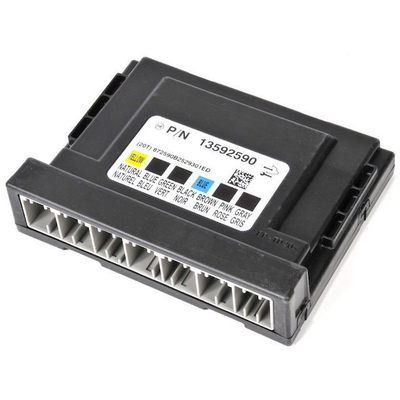
- Failed Body Control Module (BCM) (Less Common) — The BCM controls body electronics. An internal failure here causes widespread electrical faults and requires a programmed replacement.
- Damaged CAN Bus Terminating Resistors (Uncommon) — A damaged 120-ohm CAN bus terminating resistor disrupts all network communication, triggering generic B2600 codes on Ford and VW.
Symptoms
- Daytime Running Lights Not Working or Always On (GM) — DRLs fail to turn on or remain illuminated permanently.
- Airbag Warning Light On (Hyundai) — The SRS/airbag warning light illuminates 🎬 Watch: Step-by-step DIY fix for Hyundai airbag lights., indicating the airbag system is disabled.
- Power Door Locks Malfunctioning (Jaguar) — Doors fail to lock or unlock. Jaguars often emit a double-beep when attempting to lock, indicating a mechanical failure.
- Vehicle Fails to Start or Stalls — The vehicle fails to start because the immobilizer cannot verify the key, or stalls while driving due to a CAN bus network collapse.
- Multiple Warning Lights on Dash — Multiple unrelated warning lights (ABS, traction control, check engine) illuminate simultaneously during a network failure.
- Parking Assist Warning Message (Honda) — A dash message indicates the parking sensor system is disabled and requires initialization.
Diagnostic Flowchart
Tap your situation to follow the diagnostic path that matches what you're seeing on this code.
Common Fixes & Costs
- Replace Daytime Running Lamp (DRL) Resistor (GM) — Parts: $15-$40, Labor: $50-$150, ~0.8 hr book time (DIY)
- Repair and Re-solder ECU (1990-1993 Mazda B2600i) — Parts: $10-$30, Labor: $200-$300, ~1.2 hr book time (Professional)
- Repair or Replace Wiring/Connectors — Parts: $5-$50, Labor: $150-$500, ~2.5 hr book time (Intermediate)
- Replace Door Lock Actuator (Jaguar) — Parts: $80-$320, Labor: $150-$250, ~1.8 hr book time (Intermediate)
- Re-initialize Parking Sensor System (Honda) — Parts: $0, Labor: $0-$120, ~0.5 hr book time (DIY)
- Replace Body Control Module (BCM) — Parts: $200-$700, Labor: $150-$300, ~1.5 hr book time (Professional)
Used vs. New Parts: Buying Guide
When a used part is worth it: Buy used DRL resistors or door lock actuators to save money. Never buy a used Body Control Module (BCM).
Donor-vehicle mileage cap: roughly under 100000 miles for the part to have meaningful remaining life.
Donor quality checklist:
- Many BCMs are VIN-locked to the original vehicle and cannot be reprogrammed.
- Verify the salvage yard's return policy for electronic modules.
- Choose door lock actuators from lower-mileage donors to ensure mechanical longevity.
Decision logic:
- If The part is a DRL resistor or door lock actuator → Buy used if the price is significantly lower than new aftermarket.
- If The part is a Body Control Module (BCM) → Buy new or professionally remanufactured. A used BCM is a paperweight.
- If The vehicle is a classic (e.g., Mazda B2600i) → Have your original ECU professionally repaired to avoid compatibility issues.
Warranty tradeoff: Used parts carry a 30-90 day warranty. New aftermarket parts offer 1-year to limited lifetime warranties. New OEM parts offer the best warranty at the highest cost.
Worst-case if a used part fails: $300-$700 if a used BCM is purchased and cannot be programmed, wasting parts and labor.
What Happens If You Wait — Timeline
- Immediate: Fault is detected. Hyundai airbags disable. GM DRLs fail. Jaguar doors fail to lock. Ford/VW experience electronic glitches. (MPG impact: 0%% · Added cost: $0 (but major safety risk with Hyundai, potential $50-$200 ticket for GM DRL).)
- 1-3 months: Initial symptoms persist. A faulty BCM begins causing a slow parasitic battery drain. (MPG impact: 0%% · Added cost: $0-$50 (inconvenience, continued risk).)
- 3-6 months: Persistent parasitic draw from a faulty BCM destroys the battery. Ignored wiring shorts generate heat. (MPG impact: 0%% · Added cost: $150-$350 (new battery and potential tow).)
- 6+ months: Critical CAN bus failures cause stalling. Unaddressed short circuits overheat and destroy the BCM. (MPG impact: 0%% · Added cost: $500-$1000+ (BCM replacement and programming).)
Cost of Not Fixing It
- Immediate: Hyundai airbag system remains disabled, creating a fatal safety risk. GM DRL failure reduces visibility and invites a $50-$200 traffic citation. Jaguar doors remain unsecured. (Added cost: $50-$200 (traffic citation).)
- 1-6 months: A faulty BCM creates a parasitic draw that destroys the battery. Ignored CAN bus faults cause unpredictable stalling. (Added cost: $150-$350 (new battery and towing).)
- 6+ months: Persistent short circuits overheat and destroy the BCM, turning a $150 wiring repair into a $1,000 module replacement. (Added cost: $500-$1000+ (BCM replacement and programming).)
Diagnosis Steps
- Identify Vehicle Manufacturer and Code Definition
Look up the specific definition of B2600 for your car's manufacturer (e.g., 'GM B2600', 'Hyundai B2600'). The entire diagnostic process depends on this definition.
Tools: OBD-II Scanner (Beginner) - Visual Inspection of Relevant Components
Inspect the component named in your manufacturer's definition. For GM, check the DRL resistor for cracks. For 2015+ GM SUVs, inspect the front bumper harness for chafing. For Honda, verify parking sensors are plugged in.
Tools: Flashlight, Mirror (Beginner) - Test Fuses and Relays
Check fuses related to the BCM, DRLs, and power locks. Swap suspect relays (like the GM DRL relay) with an identical relay from a non-essential circuit to see if the problem moves.
Tools: Fuse Puller, Multimeter (Beginner) - Test Circuit Voltage and Ground
Check for 12V power and a solid ground at the connector of the suspect component (e.g., door lock actuator). No voltage points to a wiring or BCM issue; correct voltage but no action points to a failed component.
Tools: Multimeter, Service Manual (Intermediate) - [PRO TIP] Test GM DRL Resistor and Relay Circuit Voltages
With the ignition ON, check for battery voltage at the DRL relay power terminals (usually 30 or 87). Measure the DRL resistor's resistance when disconnected; it should read 1.5-3.0 Ohms. Infinite resistance confirms a blown resistor.
Tools: Multimeter (Advanced) - [PRO TIP] Test GM DRL Relay Control Circuit
Connect a test lamp between the relay control circuit terminal and battery positive. Use a bi-directional scan tool to command the DRLs ON and OFF. The test lamp must toggle with the commands. If it stays off, check for an open wire. If wiring is intact, the BCM has failed.
Tools: Bi-Directional Scan Tool, Test Lamp (Advanced) - [PRO TIP] Test Hyundai SRSCM Ground Integrity
Disconnect the battery and the SRSCM connector. Measure resistance between the ground pin on the harness and a clean chassis ground. A reading above 1.0 Ohm confirms a poor ground connection causing the airbag fault.
Tools: Multimeter, Service Manual, Trim Removal Tools (Advanced) - [PRO TIP] Test CAN Bus Network Integrity
For Ford/VW communication faults, disconnect the battery and measure resistance between OBD-II pins 6 and 14. A healthy network reads 60 ohms. 120 ohms indicates an open circuit; 0 ohms indicates a short.
Tools: Multimeter, OBD-II Port Pinout Diagram (Advanced) - Test Module Communication Status
Use an advanced scanner to poll the network. A module that fails to respond pinpoints the location of the network disruption.
Tools: Advanced Bi-Directional OBD-II Scanner (Advanced)
When This Code Triggers (Freeze-Frame Conditions)
- Ignition Status: ON (The fault is checked whenever the ignition is on and the BCM is powered.)
- Battery Voltage: 11-14.5V (The BCM requires normal operating voltage; abnormal voltage triggers unrelated codes.)
- Component Status (GM DRL): Commanded ON (The code sets when the BCM commands the DRLs on but detects an open circuit.)
- Component Status (Jaguar Door Lock): Commanded LOCK/UNLOCK (The code sets when the BCM sends a lock command and does not receive confirmation that the actuator moved.)
Related Codes
- B2605 — If B2600 (Left DRL) and B2605 (Right DRL) appear together on a 2015+ GM SUV, it guarantees the front bumper harness is chafing against the support bar.
- U0140 — B2600 indicates a generic network problem, while U0140 ('Lost Communication With Body Control Module') pinpoints the exact module failing to communicate.
- B10E5 — On GMC vehicles, B10E5 ('BCM Wakeup Circuit Low Voltage') identifies the specific electrical cause triggering the broader B2600 fault.
- B1108 — On Jaguars, B2600 suggests a mechanical jam in the door lock motor, while B1108 points to an electrical short or open in the motor's wiring.
Climate & Environmental Factors
- High Humidity: Accelerates corrosion on electrical connectors and ground points. On early '90s Mazda ECUs, humidity worsens damage by spreading corrosive capacitor fluid across the circuit board.
- Freezing Temperatures: Causes moisture inside Jaguar door lock actuators to freeze, physically jamming the mechanism and triggering the 'Double Locking Door Motor Frozen' fault.
- Heat: The GM DRL resistor generates significant heat. Repeated heating and cooling cycles crack the ceramic body, causing an open circuit.
How to Talk to a Mechanic About This Code
Say this: "State your vehicle's make and the specific symptom. Example: 'My Chevy Silverado has a B2600 code and the DRLs aren't working.' Request a specific diagnostic approach: 'Please test the DRL resistor and circuit before quoting a BCM.'"
Directs the technician to the most probable cause, preventing them from starting with the most expensive module replacement.
Avoid saying:
- 'Just fix whatever's wrong.'
- 'My car is acting weird, can you look at it?'
- 'I read online it's the BCM, so just replace that.'
Questions to ask before authorizing the repair:
- Can you provide a detailed estimate with a breakdown of parts and labor costs?
- What specific tests did you perform to determine this part failed?
- If you recommend a BCM replacement, can you prove the module's power, ground, and communication lines are intact?
- What is the warranty on the parts and labor for this specific repair?
- If the repair fails to fix the problem, will I be charged for additional diagnostic time?
Where to Take It: Dealer vs Independent vs Chain
- Dealer:
Best for: Vehicles under warranty., Complex CAN bus network faults (Ford/VW) or Hyundai airbag system problems requiring proprietary software., BCM replacement and programming.
Downsides: Highest labor rates and part costs., Inclined to replace entire modules rather than performing component-level repairs. (Typical cost: +40% vs. baseline) - Independent Shop:
A trusted independent shop is the best choice for GM and Jaguar faults. Use a dealer for complex network faults or Hyundai airbag issues.
Best for: Common GM DRL fixes., Jaguar door lock actuator replacements., Standard wiring repairs.
Downsides: Diagnostic skill varies widely., May lack specialized tools for BCM programming. (Typical cost: +0% vs. baseline) - Chain Shop:
AVOID for a B2600 diagnosis. High risk of misdiagnosis.
Best for: Simple maintenance like oil changes or tires.
Downsides: Technicians lack experience with complex electrical diagnostics., High pressure to sell unnecessary parts like BCMs., Incapable of BCM programming. (Typical cost: -10% vs. baseline)
When to Walk Away From the Repair
If the estimated repair cost exceeds 40% of your car's current private-party market value, pause and consider your options.
- Car worth $3000, fix is $1200: Walk away. A $1,200 BCM replacement on a $3,000 car is a poor investment.
- Car worth $15000, fix is $600: Fix it. A $600 door lock actuator repair on a $15,000 Jaguar restores functionality for 4% of the car's value.
- Car worth $5000, fix is $200: Fix it. A $200 DRL resistor fix on a $5,000 GM truck keeps the vehicle safe and legal.
What Scan Tool You Need for This Code
Minimum: A scanner that reads manufacturer-specific Body ('B') trouble codes. Basic engine code readers cannot see B2600.
Cheap OBD-II readers only scan the powertrain. They report 'no codes found' even when the BCM flags a B2600 fault.
Rent vs buy: Free scan services at auto parts stores use basic readers that cannot see B-codes. Renting a capable scanner through a 'loan-a-tool' program is cost-effective for a one-time diagnosis. Buy a mid-range bidirectional tool if you perform regular maintenance.
How to Clear the Code After You Fix It
- Use an OBD-II scan tool to clear the code from the BCM.
- Disconnecting the battery for 15 minutes clears the code, but erases other vehicle settings.
- For GM vehicles, a history DTC clears automatically after 100 consecutive ignition cycles without the fault recurring.
Drive cycle (~15 minutes): Perform several key cycles (OFF to ON). Operate the affected component multiple times (e.g., lock/unlock doors, activate DRLs) to confirm the fix.
Readiness monitors affected: None
Watch out for:
- Clearing the code with a scanner fails if the underlying electrical fault remains.
- For network faults, all modules must communicate properly before the code stays cleared.
- A newly installed BCM must be programmed before codes clear successfully.
Will This Fail Emissions / State Inspection?
No — by itself this code doesn't fail OBD inspection (but it can keep readiness monitors from setting, which causes a separate fail).
- California: A B-code like B2600 does not cause a smog check failure. Inspections focus on 'P' (powertrain) codes.
- New York: New York's annual safety inspection checks lighting and the SRS light. A GM DRL failure or a Hyundai airbag fault causes a safety inspection failure.
- Texas: The emissions test only fails for powertrain-related codes that illuminate the Check Engine Light. B2600 passes.
Most Commonly Affected Vehicles
- Chevrolet Silverado, Equinox, Suburban, Tahoe (2002-2020) — 2002-2014 models suffer from DRL resistor failures. 2015-2020 Tahoe/Suburban models suffer from chafed front bumper wiring harnesses (TSB #PIT5487F).
- GMC Sierra, Yukon (2001-2020) — Shares the DRL control circuit and bumper harness routing with Chevrolet, making it susceptible to the exact same B2600 faults.
- Saturn VUE (2002-2007) — TSB #07-08-42-002A addresses cracked DRL resistors setting code B2600 on these models.
- Jaguar XF, XJ (2010-2015) — Experiences frequent door lock actuator failures, leading to the 'Double Locking Door Motor Frozen' fault.
- Hyundai Getz, Elantra, Sonata (2004-2019) — B2600 points specifically to an open or short on the SRS (airbag) control module ground connector, disabling the airbag system.
- Ford Focus, Fiesta, Mondeo, Transit (2010-2020) — B2600 indicates a general communication problem on the CAN bus network, requiring advanced diagnostics.
- Volkswagen Golf, Passat, Tiguan (2008-2018) — B2600 acts as a generic code for a fault in the body electronics communication network (CAN bus).
- Honda CR-V, Pilot, Civic (2022-2025) — B2600-54 means 'Parking Sensor Not Initialized'. TSB 22-007 addresses a software update causing this code.
Manufacturer-Specific Notes
- General Motors: The most common definition is a DRL Control Circuit fault. Older models blow the DRL resistor; 2015+ SUVs chafe the front bumper harness (TSB #PIT5487F).
- Hyundai: The code points specifically to a grounding issue with the SRS Control Module. This illuminates the airbag warning light and disables the safety system.
- Jaguar: Relates to a 'Double Locking Door Motor Frozen' fault. A double-beep sound when locking the doors confirms the actuator has failed.
- Ford / Volkswagen: The code acts as a generic indicator of a communication problem on the CAN bus network, requiring advanced diagnostics to trace the source.
- Honda: Newer models use B2600-54 to indicate 'Parking Sensor Not Initialized'. This requires a software re-initialization procedure, not parts replacement.
- Mazda: The early 90s Mazda B2600i truck suffers from ECU failure due to leaking capacitors, causing drivability issues completely unrelated to the OBD-II code B2600.
Real Owner Stories
2007 Chevy Trailblazer at 155K miles - Easy DRL Fix
The driver-side DRL burned out, followed by a B2600 code.
What they tried:
- Ignored the burnt-out light.
- Searched online forums for 'Chevy B2600'.
- Identified the DRL resistor as the cause.
Outcome: Purchased a Dorman 902-706 resistor for $25. Replaced it behind the driver-side headlight in 15 minutes. The code cleared permanently.
Lesson: The GM ceramic resistor is a cheap, common failure point. Replace this inexpensive part before paying for a diagnostic.
2012 Jaguar XF at 80K miles - Misdiagnosis Story
The car emitted a 'double beep' when locking, and the driver's door failed to lock. Code B2600 was present.
What they tried:
- Paid an independent shop $250 to inspect the door harness for wiring damage.
- Lubricated the lock mechanism with WD-40.
Outcome: A Jaguar specialist identified the internal actuator motor failure immediately. They replaced the actuator assembly (Part #C2D5639) for $550. The problem was solved.
Lesson: The Jaguar 'double beep' confirms a lock failure. Lubricating a failed motor does not work; replacement is mandatory.
1993 Mazda B2600i at 190K miles - Unusual Root Cause
The truck experienced intermittent stalling and hesitation for a year with occasional generic BCM faults.
What they tried:
- Replaced spark plugs, wires, and fuel filter.
- Cleaned the throttle body and MAF sensor.
- Searched for vacuum leaks.
Outcome: The owner opened the ECU and found three capacitors leaking corrosive fluid. A mail-in repair service replaced the capacitors and repaired the board for $250, curing all drivability issues.
Lesson: Early '90s Mazda running issues are frequently caused by leaking ECU capacitors. Visually inspect the ECU board on these specific models.
How to Prevent This Code From Triggering
- Apply dielectric grease to electrical connectors (Whenever a connector is disconnected for service) — Dielectric grease seals out moisture, preventing water intrusion and corrosion on pins.
- Clean and protect main ground connections (Every 2-3 years or during battery replacement) — Cleaning contact points with a wire brush ensures low resistance. Anti-corrosion spray prevents future rust.
- Secure and protect wiring harnesses in high-vibration areas (During any under-hood or under-body service) — Using zip ties and split-loom tubing prevents harnesses from chafing against sharp metal edges.
- Lubricate door lock mechanisms (not actuators) (Annually, before winter) — Spraying white lithium grease on the mechanical latch reduces the physical effort required by the actuator motor, extending its life.
Frequently Asked Questions
Can I fix a B2600 code myself?
Yes, if it is a GM DRL resistor or a Honda parking sensor re-initialization. However, complex wiring shorts or a failed Body Control Module require professional diagnosis and programming. Always match the fix to your specific vehicle make.
Why does my airbag light come on with a B2600 code?
On Hyundai vehicles, B2600 specifically indicates a ground fault in the airbag control module. This disables the SRS system, meaning airbags will not deploy in an accident. Treat this as an immediate safety hazard and seek professional repair.
How much does it cost to fix a B2600 code?
Costs range from $40 for a DIY GM DRL resistor replacement to over $1,000 for a new, programmed Body Control Module. Wiring repairs typically cost between $150 and $500 depending on labor time. A specialist Mazda ECU repair averages $250.
Will clearing the code make it go away?
No. The code returns immediately if the underlying electrical fault remains. You must repair the physical issue before the BCM will permanently clear the code.
Is it safe to drive with a B2600 code?
It depends entirely on your vehicle make. A GM with broken DRLs is mechanically safe, but a Hyundai with an airbag fault is extremely dangerous. If you experience stalling or multiple warning lights, tow the vehicle to a shop.
What are common misdiagnosis mistakes for a B2600 code?
The biggest mistake is applying one manufacturer's definition to a different brand. Another common error is replacing a GM DRL relay when the cheaper ceramic resistor is the actual failure point. Finally, shops often replace Honda parking sensors when they only need a software re-initialization.
My Honda has a B2600-54 code. What does this mean?
This code means the control module lost its calibration for the parking sensors, usually after a battery disconnect or bodywork. It rarely indicates a failed sensor. You must perform a specific relearn procedure to restore functionality.
Can I disable my DRLs to get rid of code B2600?
No. Improperly disabling the DRLs, such as bending a relay pin, actually triggers the B2600 code. The Body Control Module expects a complete circuit and flags an open circuit as a fault.
Key Takeaways
- Code B2600 has over 5 completely different definitions depending on your vehicle's make, making manufacturer identification the mandatory first step.
- For 2002-2014 General Motors vehicles, B2600 almost always indicates a failed Daytime Running Lamp (DRL) resistor, an easy DIY fix costing under $40 in parts.
- On Hyundai models, B2600 flags a critical Supplemental Restraint System (SRS) ground fault that disables the airbags, requiring immediate professional repair.
- If B2600 appears on a 2015-2020 GM SUV alongside code B2605, inspect the front bumper wiring harness for chafing against the support bar before replacing any modules.
Helpful Videos
![How To Test CAN BUS With A Multimeter [CAN Bus Resistance Check] Mechanic Mindset](https://img.youtube.com/vi/JPE42HSJxAk/mqdefault.jpg)
Shop the Parts Behind B2600
Below are the parts most often responsible for code B2600, ranked by how frequently each one is the actual culprit (per the diagnosis above). Tap any to see what we have for your vehicle.



The information in this article is provided for general reference and educational purposes only. Vehicle specifications, procedures, and part compatibility can vary by production date, trim level, and region. Always consult your vehicle's factory service manual and verify part numbers before purchasing or performing repairs. Safety-critical components such as airbags, seat belts, and braking systems should be installed by a qualified professional.
- 🧭 Diagnostic Flowchart
- 🎬 Helpful Videos
- 🛍️ Shop This Part
- What Does B2600 Mean?
- Can I Drive With B2600?
- Common Causes
- Symptoms
- Common Fixes & Costs
- Used vs. New Parts: Buying Guide
- What Happens If You Wait — Timeline
- Cost of Not Fixing It
- Diagnosis Steps
- When This Code Triggers (Freeze-Frame Conditions)
- Related Codes
- Climate & Environmental Factors
- How to Talk to a Mechanic About This Code
- Where to Take It: Dealer vs Independent vs Chain
- When to Walk Away From the Repair
- What Scan Tool You Need for This Code
- How to Clear the Code After You Fix It
- Will This Fail Emissions / State Inspection?
- Most Commonly Affected Vehicles
- Manufacturer-Specific Notes
- Real Owner Stories
- 2007 Chevy Trailblazer at 155K miles - Easy DRL Fix
- 2012 Jaguar XF at 80K miles - Misdiagnosis Story
- 1993 Mazda B2600i at 190K miles - Unusual Root Cause
- How to Prevent This Code From Triggering
- Frequently Asked Questions
- Can I fix a B2600 code myself?
- Why does my airbag light come on with a B2600 code?
- How much does it cost to fix a B2600 code?
- Will clearing the code make it go away?
- Is it safe to drive with a B2600 code?
- What are common misdiagnosis mistakes for a B2600 code?
- My Honda has a B2600-54 code. What does this mean?
- Can I disable my DRLs to get rid of code B2600?
- Key Takeaways
- 🎟️ Get 5% Off