

OBD-II Code B2602: Body Control Circuit Malfunction
What B2602 means, why it triggers, and how to fix it
- Verify your specific vehicle's B2602 definition before buying parts, as the meaning changes entirely between manufacturers.
- Swap the affected relay with an identical one (like the horn relay) to diagnose a failed relay for $0.
- Perform a voltage drop test on the circuit ground; a reading above 0.2V indicates high resistance causing the fault.
- Check for Technical Service Bulletins (TSBs) like Nissan NTB20-031a, which requires replacing the Intelligent Key unit for 2019-2020 models.
- Use a scanner capable of reading Body Control Module (BCM) codes, as a basic $20 code reader cannot see B2602.
What Does B2602 Mean?
B2602 is a Body Control Module (BCM) code indicating a fault in a specific electrical circuit. Its definition depends entirely on the vehicle manufacturer. On General Motors vehicles, it signals a Daytime Running Lamp (DRL) circuit failure, while on Toyota models, it points to a faulty key unlock warning switch.
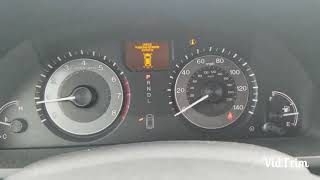
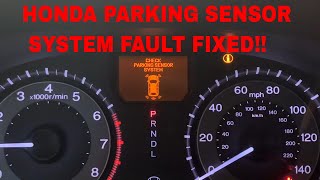
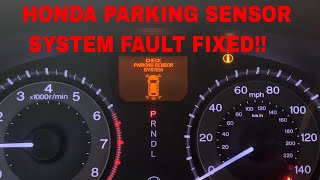
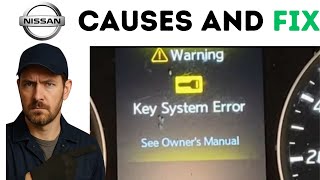
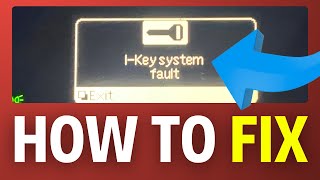
Technical definition: The formal SAE/OBD-II definition for code B2602 varies by manufacturer. Common definitions include: * **General Motors (Chevrolet, Saturn):** Daytime Running Lamp Control Circuit Low or Open * **Toyota / Lexus:** Key Unlock Warning Switch Circuit Malfunction * **Nissan:** Class 2 Data Link High or Intelligent Key System Fault 🎬 See this guide on fixing Nissan I-Key system errors. * **Ford:** Missing Latch Signal During Power Sliding Door Unlatch * **Honda:** Parking Sensor EEPROM Error 🎬 Watch: How to check for common parking sensor faults. * **Generic:** Latching Relay Circuit Fault
Can I Drive With B2602?
Yes. This code relates to non-essential body electrical systems like daytime running lights, power steering column memory, or keyless entry. The vehicle remains safe to drive because the fault does not affect the engine, transmission, or braking systems. However, the specific feature tied to 🎬 Watch this easy walkthrough to fix Honda parking sensor faults. the code will not function.
Common Causes
- Failed Relay (Very Common) — Relays are electronic switches that control higher-power circuits. The relay for the affected component (like the DRL relay on a GM vehicle) frequently fails, gets stuck, or shorts out internally.
- Damaged or Corroded Wiring/Connectors (Common) — The wiring harness or connectors leading to the component corrode, loosen, or suffer damage from heat and vibration. This causes a short to ground or an open circuit, interrupting the signal.
- Poor Ground Connection (Common) — A loose, corroded, or broken ground strap causes unstable voltage and erratic module behavior, triggering false B2602 codes.
- Faulty or Burned-Out Bulb (Common) — In systems like daytime running lights, a burned-out bulb alters the circuit's expected resistance, creating an open circuit condition that triggers the code.
- Faulty Switch (Less Common) — In systems like Toyota's power steering column, the switch that detects the key in the ignition wears out and fails to send the correct signal to the ECU.
- Internal Module Failure (BCM or Key Unit) (Rare) — The Body Control Module (BCM) or a specific sub-module (like Nissan's Intelligent Key Unit) suffers an internal hardware or EEPROM memory failure, requiring replacement and reprogramming.
Symptoms
- Daytime Running Lights (DRLs) Not Working — On GM vehicles, the DRLs fail to illuminate when shifted into drive.
- Power Steering Column Memory Inoperative — On Toyota/Lexus vehicles, the power tilt/telescopic steering wheel fails to automatically move to the driver's set position or retract when exiting.
- 'Intelligent Key System Error' Message — On Nissan vehicles, this message appears on the instrument cluster, often accompanied by push-to-start ignition issues.
- Affected Feature Works Intermittently — A loose connection or failing relay causes the associated feature to work randomly.
- Warning Light On — A service or warning light illuminates on the dashboard to alert the driver of a stored BCM code.
Diagnostic Flowchart
Tap your situation to follow the diagnostic path that matches what you're seeing on this code.
Common Fixes & Costs
- Replace Faulty Relay — Parts: $15-$50, Labor: $0-$50, ~0.2 hr book time (DIY)
- Clean or Repair Ground Connections — Parts: $1-$20, Labor: $50-$150, ~0.8 hr book time (DIY)
- Repair Damaged Wiring Harness — Parts: $10-$100, Labor: $150-$500, ~2.5 hr book time (Intermediate)
- Replace Key Unlock Warning Switch — Parts: $70-$195, Labor: $150-$250, ~1.5 hr book time (Intermediate)
- Replace DRL Resistor — Parts: $40-$80, Labor: $25-$75, ~0.5 hr book time (DIY)
- Replace Intelligent Key Unit — Parts: $250-$500, Labor: $150-$300, ~1.5 hr book time (Professional)
- Replace Body Control Module (BCM) — Parts: $400-$1000, Labor: $150-$250, ~2.0 hr book time (Professional)
DIY vs Professional
- Replace Faulty Relay 🟢 Beginner
Tools: Pliers or relay puller tool - Clean or Repair Ground Connections 🟢 Beginner
Tools: Socket set, wire brush, sandpaper, dielectric grease - Repair Damaged Wiring Harness 🟢 Beginner
Tools: Multimeter, wire strippers, soldering iron, heat shrink tubing - Replace Key Unlock Warning Switch 🟢 Beginner
Tools: Trim removal tools, socket set, screwdrivers - Replace Intelligent Key Unit / BCM 🟢 Beginner
Tools: Socket set, OEM diagnostic scan tool for programming
Used vs. New Parts: Buying Guide
When a used part is worth it: Buy used relays and switches to save money. Always buy new programmable modules (BCM, Intelligent Key Unit) to avoid VIN-lock issues and expensive reprogramming failures.
Donor-vehicle mileage cap: roughly under 100000 miles for the part to have meaningful remaining life.
Donor quality checklist:
- Match the part number exactly for relays and switches.
- Avoid parts from flood-damaged or rust-belt vehicles due to high corrosion risk.
Decision logic:
- If The part is a simple, non-programmed component like a relay or switch → A used part from a salvage yard is a cost-effective option.
- If The part is a BCM or Intelligent Key Unit → Buy new. A used module is often impossible to reprogram for your specific VIN.
Warranty tradeoff: Used parts typically include a 30-day warranty. New OEM parts carry a 1-year manufacturer warranty.
Worst-case if a used part fails: $300-$800 if a used programmable module fails or cannot be programmed, requiring repeat labor and a new part.
What Happens If You Wait — Timeline
- 0-1 month: Code sets and a specific feature (e.g., DRLs, power steering memory) stops working. This is primarily an inconvenience. (MPG impact: 0%% · Added cost: $0)
- 1-6 months: If the fault is a short or stuck relay, a parasitic drain develops. The engine cranks slowly after sitting for a few days. (MPG impact: 0%% · Added cost: $0)
- 6-12 months: The persistent draw weakens the battery, reducing its lifespan. The car fails to start after sitting overnight, requiring jump-starts. (MPG impact: 0%% · Added cost: $150-$300)
- 12+ months: A persistent short circuit overheats the wiring harness, melting wire insulation and potentially destroying the BCM. (MPG impact: 0%% · Added cost: $500-$2000)
Cost of Not Fixing It
- Short-Term (0-3 months): Loss of a specific feature like daytime running lights or keyless entry. This reduces vehicle visibility or convenience. (Added cost: $0)
- Medium-Term (3-12 months): A shorted wire or stuck relay creates a parasitic battery drain. This kills the battery and requires a replacement. (Added cost: $150-$300)
- Long-Term (1+ years): A persistent short circuit overheats the wiring harness, creating a fire hazard or destroying the Body Control Module. (Added cost: $500-$2000)
Diagnosis Steps
- Verify the Code's Specific Meaning
Use a service manual or reliable online resource to confirm the exact definition of B2602 for your vehicle's make, model, and year. Do not assume its meaning.
Tools: Internet access, service manual (Beginner) - Check Fuses and Swap Relays
Locate the fuse box and check the fuse for the affected circuit. If a relay is involved (e.g., DRL relay), swap it with an identical relay from a non-critical circuit (like the horn) to see if the problem moves.
Tools: Owner's manual, fuse puller or pliers (Beginner) - Perform a Thorough Visual Inspection
Visually inspect the related components. Check for burned-out bulbs, loose connectors, and obvious damage to the wiring harness. Inspect the main chassis ground straps for tightness and corrosion.
Tools: Flashlight (Beginner) - Test the Component Directly
Disconnect the component (bulb, switch, or resistor) and use a multimeter to check for continuity or specified resistance values found in the service manual.
Tools: Multimeter, service manual (Intermediate) - Check for Power and Ground at the Connector
With the component disconnected, use a multimeter to verify correct voltage on the power wire (usually ~12V) and good continuity to ground (less than 1 ohm) on the ground wire.
Tools: Multimeter, vehicle-specific wiring diagram (Intermediate) - Perform a Voltage Drop Test
Connect the red multimeter lead to the negative battery terminal and the black lead to the ground pin on the component's connector. Activate the circuit. A reading above 0.2 volts indicates excessive resistance that needs cleaning.
Tools: Multimeter (Advanced) - Test the BCM Driver Signal
For circuits controlled by the BCM grounding a relay, connect a test light between the BCM control pin at the relay socket and a known-good 12V source. Command the circuit on. If the light fails to illuminate, the BCM or its wiring is faulty.
Tools: 12V test light, scan tool (optional) (Advanced) - Analyze Scan Tool Live Data
Use a professional scan tool to monitor the BCM's inputs. For a Toyota, monitor the 'Key SW (CAN)' PID. The status must change from OFF to ON when the key is inserted. If it doesn't, the switch or wiring is bad.
Tools: Bi-directional scan tool (Advanced) - Inspect for Harness Damage
Carefully unwrap and inspect the harness in areas prone to stress or abrasion. Wiggle the harness while monitoring the component's operation to pinpoint intermittent breaks.
Tools: Trim removal tools, electrical tape (Advanced)
When This Code Triggers (Freeze-Frame Conditions)
- Ignition Status: RUN (The code sets when the ignition is turned to the 'RUN' position and the BCM performs its initial circuit checks.)
- Battery Voltage: 11.5-14.5V (The fault logs during normal operating voltage; however, a weak battery dropping below 10V during crank triggers spurious BCM codes.)
- Component Activation: Varies (The code triggers when the BCM attempts to activate a specific circuit (e.g., commanding DRLs ON) and detects an open or short.)
- User Input: Varies (For Toyota systems, the code sets when the ignition turns to ACC or ON, but the BCM fails to receive the 'key in' signal from the unlock warning switch.)
Related Codes
- B2603 — On GM vehicles, this is 'Daytime Running Lamp Control Circuit High'. B2602 points to a short to ground, while B2603 points to a short to power.
- B2621 — On Toyota vehicles, this is a communication error for the power steering system. Diagnose and fix B2621 first, as general communication errors trigger false circuit faults.
- U0140 — Generic 'Lost Communication With Body Control Module' code. Diagnose U0140 first, as it indicates the entire BCM is offline due to a major power or ground failure.
- P2602 — A powertrain code for 'Coolant Pump Control Circuit Low'. It is completely unrelated to B2602 and involves the engine's cooling system.
Climate & Environmental Factors
- High Humidity & Road Salt: Saltwater accelerates corrosion on wiring and chassis grounds, increasing resistance and triggering B2602.
- Extreme Cold: Cold weather shrinks metal, loosening marginal connections and dropping battery voltage during startup, which causes false codes.
- Extreme Heat: High engine and ambient heat degrades plastic wire insulation and warps relays, causing short circuits.
How to Talk to a Mechanic About This Code
Say this: "I have a B2602 code and a specific symptom (e.g., 'my daytime running lights are out' or 'my Nissan has a Key System Error'). I'd like to schedule one hour of electrical diagnostic time to trace the circuit."
This signals you know the code is manufacturer-specific and focuses the technician on efficient electrical testing rather than guessing or replacing parts.
Avoid saying:
- 'Just fix whatever's wrong'
- 'My check engine light is on, can you look at it?'
- 'Whatever you recommend'
Questions to ask before authorizing the repair:
- What were the results of the power and ground tests at the component's connector?
- If you are recommending a module, how did you verify the wiring between the module and the component is good?
- Will the recommended part require programming, and is that cost included in the estimate?
- Can you show me the failed part and explain why it's bad?
- What is the warranty on the parts and labor for this repair?
Where to Take It: Dealer vs Independent vs Chain
- Dealer:
Best for: Vehicles under warranty., Repairs requiring module programming (BCM, Intelligent Key Unit)., Known issues covered by a Technical Service Bulletin (TSB).
Downsides: Higher labor rates and parts costs., Inclined to replace an entire assembly rather than repair a specific wire. (Typical cost: +40% vs. baseline) - Independent Shop:
Best fit for most B2602 scenarios, especially on domestic and older Asian vehicles where the cause is a common relay or wiring issue.
Best for: Out-of-warranty vehicles., Common fixes like a bad relay, a faulty switch, or a wiring repair., Diagnosing poor ground connections or parasitic draws.
Downsides: Quality varies; requires ASE-certified technicians with strong electrical skills., Lacks access to manufacturer-specific programming tools. (Typical cost: +0% vs. baseline) - Chain Shop:
AVOID for B2602 diagnosis. This code requires specialized electrical troubleshooting, not just reading a code and replacing a part.
Best for: Simple, routine maintenance like oil changes, tires, and batteries.
Downsides: Technicians are rarely equipped for complex electrical diagnosis., High pressure to upsell unnecessary services. (Typical cost: -10% vs. baseline)
When to Walk Away From the Repair
If the estimated repair cost exceeds 40-50% of the car's private-party value, seriously consider selling or trading in the vehicle instead of repairing it.
- Car worth $8000, fix is $250: Fix it. A $250 repair for a faulty relay or switch on an $8,000 car is well below the threshold.
- Car worth $4000, fix is $1500: Borderline. A $1,500 BCM replacement is a significant percentage of the car's value. Get a second opinion to confirm the diagnosis.
- Car worth $2500, fix is $1500: Walk away. Spending 60% of the car's value on an electrical repair is a poor investment.
What Scan Tool You Need for This Code
Minimum: A scanner that reads and clears codes from the Body Control Module (BCM). Basic $20 readers only access powertrain ('P') codes and cannot see B2602.
Without BCM access, you cannot see the specific B2602 definition or monitor live data like switch inputs, making diagnosis impossible.
Budget: ThinkScan Plus S4/S7 (~$90) — Reads and clears codes from the BCM, allowing you to see the specific B2602 definition for your car.
Mid-range: Foxwell NT510 Elite / BlueDriver Pro (~$120-180) — Offers BCM code reading plus live data streaming to watch switch inputs or monitor circuit voltage.
Professional: Autel MaxiCOM MK808 (~$450-700) — Provides bi-directional control to actively command a component (like the DRL relay) on and off, isolating the fault instantly.
Rent vs buy: Auto parts store loaner tools are basic code readers that will NOT read BCM codes. Buy a scanner with BCM capabilities for this repair.
How to Clear the Code After You Fix It
- Fix the underlying electrical fault.
- Use an OBD-II scan tool to clear the DTC from the BCM's memory.
- Perform a normal drive cycle to ensure the code does not return.
Drive cycle (~20 minutes): A specific emissions drive cycle is not required. A normal 20-minute drive is sufficient for the BCM to re-run its self-tests. For GM DRL faults, you must shift out of Park with the parking brake released.
Readiness monitors affected: None
Watch out for:
- Clearing the code without fixing the electrical fault causes it to reappear immediately.
- Disconnecting the battery clears the BCM code but resets all powertrain readiness monitors, requiring a lengthy drive cycle before passing an emissions test.
Will This Fail Emissions / State Inspection?
No — by itself this code doesn't fail OBD inspection (but it can keep readiness monitors from setting, which causes a separate fail).
- California: A 'B' (Body) code like B2602 does not cause a smog check failure unless it illuminates the main Check Engine light.
- New York: NYS inspections check for Check Engine light illumination. A B-code passes unless it triggers the MIL.
- Texas: An illuminated Check Engine light is an automatic failure. B2602 only causes a failure if it triggers this main light.
Most Commonly Affected Vehicles
- Chevrolet Colorado (2004-2012) — Prone to B2602 as a DRL circuit fault. The DRL relay in the under-hood fuse box is the primary failure point.
- Toyota Tundra (2007-2021) — Logs B2602 for a Key Unlock Warning Switch failure related to the power steering column. The switch (Part No. 84052-71010) requires replacement.
- Nissan Kicks / Versa (2019-2020) — An 'Intelligent Key System Error' is addressed by TSB NTB20-031a, requiring replacement of the Intelligent Key unit.
- Nissan Titan (2022-2023) — The 'Key System Error' is commonly caused by the shifter assembly wiring harness bending at a sharp 90-degree angle, breaking internal wires.
- Honda Accord / Odyssey (2008-2017) — B2602 indicates a 'Parking Sensor EEPROM Error.' The root cause is often a burned-out indicator light bulb inside the parking sensor dashboard switch.
- Toyota Land Cruiser (2008-2021) — Logs B2602 related to the power tilt/telescopic ECU and the key unlock warning switch, identical to the Tundra.
- Ford Transit Connect (2014-2023) — Indicates the Body Control Module did not receive the expected latch signal during a power sliding door unlatch cycle.
Manufacturer-Specific Notes
- General Motors: The BCM controls the DRLs by providing a ground path to the relay coil. B2602 sets when the BCM commands the relay ON but detects low voltage on the control line.
- Toyota: The code ties directly to the power steering column's auto-away function. The system expects a signal from the unlock warning switch when the key is inserted; a missing signal triggers B2602.
- Nissan: On 2019-2020 models, TSB NTB20-031a requires replacing the Intelligent Key unit. On 2022+ Titans, the cause is almost always a physically stressed wiring harness at the column shifter.
- Honda: For 'Parking Sensor EEPROM Error' definitions, check the small indicator bulb inside the parking sensor activation button first. A failed bulb changes circuit resistance and triggers this code.
Real Owner Stories
2008 Chevrolet Colorado with DRL failure
The Daytime Running Lights (DRLs) stopped working. The B2602 code was stored in the Body Control Module.
Outcome: Swapping the relays caused the DRLs to work and the horn to stop working. A new relay (ACDelco 13500114) fixed the issue for under $20.
Lesson: For GM DRL issues, the relay swap is a fast, no-cost diagnostic step that definitively isolates a failed part.
2012 Toyota Tundra with random alarm and battery drain
The factory alarm went off randomly at night, forcing the owner to disconnect the battery. A scan revealed code B2602 for the Key Unlock Warning Switch.
Outcome: The root cause was a faulty key unlock warning switch (Part No. 84052-71010). Replacing the switch resolved both the B2602 code and the phantom alarm activations.
Lesson: Seemingly unrelated issues, like a random alarm, link directly to B-codes. The fault description is the key to understanding the true problem.
2022 Nissan Titan with 'Key System Error'
A 'Key System Error' message appeared on the dash, accompanied by code B2602.
Outcome: The technician found the wiring harness for the column shifter bent at a sharp 90-degree angle, breaking an internal wire. Repairing the harness resolved the code.
Lesson: Before replacing expensive modules, inspect the related wiring harness for physical stress. A simple visual check saves hundreds of dollars.
How to Prevent This Code From Triggering
- Clean Battery Terminals and Chassis Grounds (Once per year) — Corrosion creates high resistance, causing voltage drops and erratic module behavior. Cleaning connections to bare metal ensures a stable voltage supply for the BCM.
- Apply Dielectric Grease to Connectors (When replacing a component) — Dielectric grease seals electrical connectors from moisture, preventing the pin corrosion that triggers open circuits and B2602 codes.
- Inspect and Secure Wiring Harnesses (During routine maintenance) — Securing harnesses away from hot exhaust and sharp metal prevents the abrasion and heat damage that leads to short circuits.
- Test Battery Health Before Winter (Annually, in the fall) — A weak battery provides low voltage during cold starts, causing the BCM to set false codes. A load test identifies a failing battery early.
Frequently Asked Questions
Can I fix a B2602 code myself?
Yes, if the cause is a burned-out bulb, bad relay, or dirty ground wire. Complex harness tracing or module programming requires a professional.
What are common misdiagnosis pitfalls for B2602?
The biggest pitfall is replacing the BCM when the root cause is a poor ground connection. Always diagnose broader communication codes like U0140 first. Never confuse the body code B2602 with the powertrain code P2602.
My Nissan shows a 'Key System Error.' Is B2602 the cause?
Yes. On models like the Titan, Kicks, and Versa, this dashboard message frequently links to code B2602. The cause is often a faulty shifter wiring harness or a failed Intelligent Key unit.
What is a 'Latching Relay Circuit Fault'?
A latching relay stays in its last position without needing constant power. This fault means the BCM detects a wiring or relay problem preventing it from setting or holding its state.
Why does the meaning of B2602 change between car brands?
The SAE does not strictly standardize 'B' (Body) codes like they do 'P' (Powertrain) codes. Manufacturers assign them to specific electronic systems, leading to different definitions for the same number.
How much does it cost to diagnose a B2602 code?
Repair shops charge a standard diagnostic fee ranging from $120 to $215. This covers one hour of labor to identify the root cause. Shops often apply this fee toward the total repair cost.
Will clearing the code fix the problem?
No. Clearing the code with a scan tool is a temporary measure. The code returns on the next drive cycle if you do not repair the underlying electrical fault.
Can a bad battery cause a B2602 code?
Yes. A weak 12V battery causes low voltage conditions, leading to unpredictable behavior from the BCM. This triggers false codes like B2602, especially during cold starts.
Key Takeaways
- Verify your specific vehicle's B2602 definition before buying parts, as the meaning changes entirely between manufacturers.
- Swap the affected relay with an identical one (like the horn relay) to diagnose a failed relay for $0.
- Perform a voltage drop test on the circuit ground; a reading above 0.2V indicates high resistance causing the fault.
- Check for Technical Service Bulletins (TSBs) like Nissan NTB20-031a, which requires replacing the Intelligent Key unit for 2019-2020 models.
- Use a scanner capable of reading Body Control Module (BCM) codes, as a basic $20 code reader cannot see B2602.
Helpful Videos

Shop the Parts Behind B2602
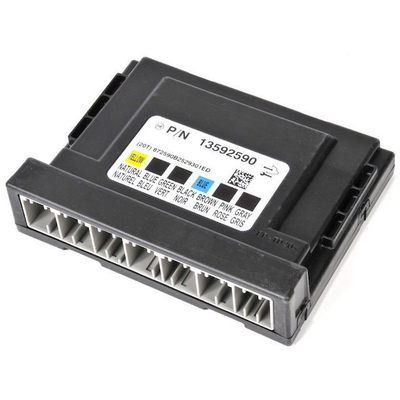
Below are the parts most often responsible for code B2602, ranked by how frequently each one is the actual culprit (per the diagnosis above). Tap any to see what we have for your vehicle.


The information in this article is provided for general reference and educational purposes only. Vehicle specifications, procedures, and part compatibility can vary by production date, trim level, and region. Always consult your vehicle's factory service manual and verify part numbers before purchasing or performing repairs. Safety-critical components such as airbags, seat belts, and braking systems should be installed by a qualified professional.
- 🧭 Diagnostic Flowchart
- 🎬 Helpful Videos
- 🛍️ Shop This Part
- What Does B2602 Mean?
- Can I Drive With B2602?
- Common Causes
- Symptoms
- Common Fixes & Costs
- DIY vs Professional
- Used vs. New Parts: Buying Guide
- What Happens If You Wait — Timeline
- Cost of Not Fixing It
- Diagnosis Steps
- When This Code Triggers (Freeze-Frame Conditions)
- Related Codes
- Climate & Environmental Factors
- How to Talk to a Mechanic About This Code
- Where to Take It: Dealer vs Independent vs Chain
- When to Walk Away From the Repair
- What Scan Tool You Need for This Code
- How to Clear the Code After You Fix It
- Will This Fail Emissions / State Inspection?
- Most Commonly Affected Vehicles
- Manufacturer-Specific Notes
- Real Owner Stories
- 2008 Chevrolet Colorado with DRL failure
- 2012 Toyota Tundra with random alarm and battery drain
- 2022 Nissan Titan with 'Key System Error'
- How to Prevent This Code From Triggering
- Frequently Asked Questions
- Can I fix a B2602 code myself?
- What are common misdiagnosis pitfalls for B2602?
- My Nissan shows a 'Key System Error.' Is B2602 the cause?
- What is a 'Latching Relay Circuit Fault'?
- Why does the meaning of B2602 change between car brands?
- How much does it cost to diagnose a B2602 code?
- Will clearing the code fix the problem?
- Can a bad battery cause a B2602 code?
- Key Takeaways
- 🎟️ Get 5% Off