

OBD-II Code B2605: Body Module Communication Fault
What B2605 means, why it triggers, and how to fix it
- On 2014-2020 GM trucks and SUVs, code B2605 indicates a failing Body Control Module (BCM) ground connection (G218) under the driver's side dash, not a bad light bulb.
- Do not drive the vehicle; the G218 ground failure causes sudden engine stalling and complete loss of power steering at low speeds.
- Before replacing a $500 BCM, perform a loaded voltage drop test on the negative battery cable to rule out high internal resistance exceeding 200mV.
- Repairing the G218 ground costs $0 in parts and takes about 1.5 hours of labor, requiring only a 10mm socket, utility knife, and sandpaper to remove trapped dash insulation.
What Does B2605 Mean?
B2605 indicates the Body Control Module (BCM)—the central computer for comfort and security electronics—has detected an electrical fault in a circuit it controls. While the generic OBD-II definition points to the passenger side Daytime Running Light (DRL), on 2014-2020 GM vehicles, it is a symptom of the BCM losing power due to a bad ground connection. This power loss causes widespread, random electrical failures. On other makes, this code points to isolated systems like a Nissan seat sensor or a Ford security immobilizer.
Technical definition: The formal definition for B2605 varies by manufacturer. For General Motors, it is 'Right Daytime Running Lamp Control Circuit'. For Ford, it means 'Disable Signal Open Circuit' (security system). For Nissan, it indicates a 'PNP/Clutch Switch' failure preventing engine start. In real-world diagnostics, especially on GM K2XX platform trucks and SUVs, B2605 is the primary indicator of a systemic electrical ground failure at location G218.
Can I Drive With B2605?
No — Do Not Drive. Do not drive. The most common cause on millions of GM vehicles causes sudden engine stalling or a complete loss of power steering, creating a severe accident risk. Continuing to drive places extreme stress on other electronic modules, guaranteeing more costly repairs.
Common Causes
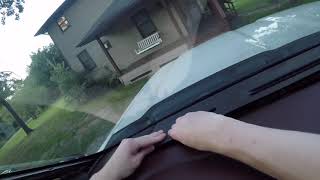
- Poor BCM Ground Connection (G218) (Very Common) — The number one cause on 2014-2020 GM trucks and SUVs. A sound-deadening insulation mat gets trapped under the BCM's main ground wire behind the dashboard, causing a poor connection 🎬 Watch: How to find and fix the G218 ground issue. that degrades over time (GM TSB 18-NA-161).
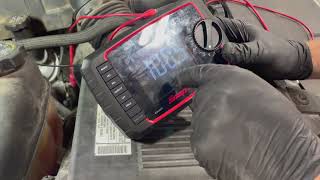
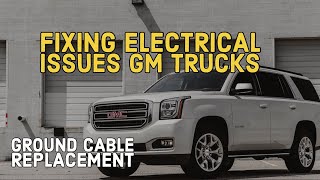
- Faulty Negative Battery Cable (Common) — The main negative battery cable corrodes internally 🎬 Watch: Step-by-step guide to replacing the GM negative battery cable. where invisible. It fails to handle the electrical load, causing severe voltage drops during cranking. A loaded voltage drop test confirms this failure. 🎬 See how to perform a loaded voltage drop test.
- Loose or Corroded Battery Terminals (Common) — Loose or dirty battery clamps cause voltage instability mimicking a bad ground, triggering B2605 and communication codes. Clamp nuts require 7 Nm (62 lb-in) of torque.
- Shorted B+ Battery Cable at Starter Solenoid (Less Common) — The main positive battery cable shorts against the starter's heat shield if loose or mis-installed, creating a massive voltage drain (GM TSB PIT5405C).
- Shorted Front Fascia Wiring Harness (Less Common) — On GM SUVs like the Cadillac Escalade, the front fascia wiring harness chafes and shorts to ground, blowing lighting fuses and triggering B2605 (TSB PIT5487F).
- Faulty Park/Neutral Position (PNP) Switch (Less Common) — On Nissan models (e.g., Versa), B2605 indicates a fault with the PNP or clutch switch. A failure here prevents the engine from cranking.
- BCM Software Glitch (Rare) — On 2014 GM models, a software bug falsely triggers codes B2605 and B2600 when fog lamps and DRLs operate together. The fix requires dealer reprogramming (TSB PIT5219A).
- Faulty Seat Position Sensor (Rare) — On C5 Chevrolet Corvettes, B2605 points to a 'Seat Front Vertical Position Sensor Failure' used by the memory system, causing no drivability issues.
Symptoms
- Engine Stalling — The engine shuts off unexpectedly, often while turning or braking at low speeds.
- Sudden Loss of Power Steering — The electric power steering stops working instantly, making the steering wheel extremely difficult to turn.
- Instrument Cluster and Displays Go Blank — The entire dashboard, infotainment screen, and climate control panel shut off and reboot randomly while driving.
- Multiple Warning Lights — The dashboard illuminates with 'Service Stabilitrak,' 'Service Power Steering,' ABS, and airbag warnings simultaneously.
- Erratic Electrical Behavior — Wipers park in the wrong position, door locks cycle independently, headlights flicker, or the car alarm sounds randomly.
- Engine Will Not Start — On Nissan vehicles, turning the key results in a no-crank, no-start condition.
Diagnostic Flowchart
Tap your situation to follow the diagnostic path that matches what you're seeing on this code.
Common Fixes & Costs
- Repair BCM Ground G218 — Parts: $0-$15, Labor: $100-$250, ~1.5 hr book time (DIY)
- Replace Negative Battery Cable — Parts: $40-$150, Labor: $100-$200, ~1 hr book time (Intermediate)
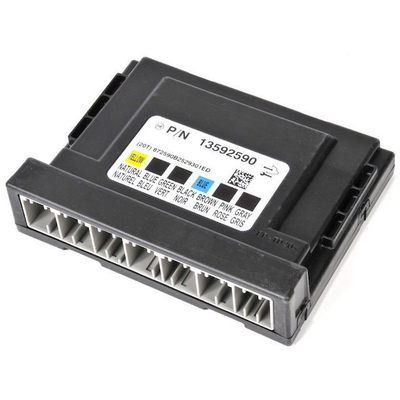
- Replace Body Control Module (BCM) — Parts: $250-$550, Labor: $150-$300, ~2 hr book time (Professional)
- Replace Park/Neutral Position (PNP) Switch — Parts: $50-$150, Labor: $100-$250, ~1.5 hr book time (Intermediate)
- BCM Reprogramming (for 2014 GM models) — Parts: $0, Labor: $125-$250, ~1 hr book time (Professional)
DIY vs Professional
- Repair BCM Ground G218 — Beginner:
- Replace Negative Battery Cable — Beginner:
- Replace Body Control Module (BCM) — Beginner:
- Replace Park/Neutral Position (PNP) Switch — Beginner:
- BCM Reprogramming — Beginner:
Used vs. New Parts: Buying Guide
When a used part is worth it: A used Body Control Module (BCM) is a high-risk, budget-only option for older vehicles where a new part is unavailable or cost-prohibitive. Success is not guaranteed due to programming challenges.
Donor-vehicle mileage cap: roughly under 100000 miles for the part to have meaningful remaining life.
Donor quality checklist:
- Match the part number on the module exactly.
- Avoid modules from flood-damaged or collision vehicles.
- Be aware that many dealerships refuse to program a used BCM supplied by a customer.
Decision logic:
- If The vehicle is critical for daily use and reliability is key → Buy a new OEM or high-quality remanufactured BCM. The higher cost is justified by the higher success rate.
- If You have access to an independent shop with advanced programming tools or a mail-in cloning service → A used BCM is viable, as these services clone the original module's data to the used one.
- If The only option is a dealership and the budget is tight → Be prepared for the dealer to require you to purchase a new BCM from them for programming.
Warranty tradeoff: Used BCMs from salvage yards typically have a 30-90 day part-only warranty. New or remanufactured units come with a 1-year to limited lifetime warranty. Labor is never covered on a failed used part.
Worst-case if a used part fails: $300-$600. This includes the cost of the used part, a non-refundable programming attempt fee, and the labor to install and remove the failed part before starting over.
What Happens If You Wait — Timeline
- 0-1 month: Intermittent, minor electrical glitches. Headlights flicker slightly when using power windows, or the radio resets on startup. A B2605 code stores with no other symptoms. (MPG impact: 0%% · Added cost: $0)
- 1-3 months: Symptoms become frequent. The instrument cluster goes blank for a second, and multiple warning lights flash on and disappear. A parasitic draw begins weakening the battery. (MPG impact: 0-1%% · Added cost: $0-$250)
- 3-6 months: Severe, dangerous symptoms appear. The engine stalls while braking or turning at low speeds. The electric power steering suddenly fails. The vehicle is a significant safety risk. (MPG impact: 1-3%% · Added cost: $250-$800)
- 6+ months: Catastrophic failure. Constant electrical instability permanently damages the Body Control Module, requiring replacement. Multiple other electronic modules fail in a cascade. (MPG impact: N/A% · Added cost: $800-$2500+)
Cost of Not Fixing It
- Immediate: Extreme safety risk from sudden engine stalling or loss of power steering. High probability of being stranded. A parasitic draw drains the battery. (Added cost: $200-$300)
- 1-6 Months: Continued voltage spikes and electrical instability cause premature failure of expensive electronic modules, such as the power steering control module (PSCM) or instrument panel cluster (IPC). (Added cost: $500-$1500)
- 6+ Months: Catastrophic electrical failure. The BCM permanently fails from the unstable power supply, requiring replacement. Multiple modules fail in a cascading effect. (Added cost: $800-$2500+)
Diagnosis Steps
- Scan for All Trouble Codes
Use a professional OBD-II scanner to read all codes from all vehicle modules. If B2605 appears with a large number of communication codes (starting with 'U'), it confirms a system-wide ground or power issue.
Tools: OBD-II Scanner (All-Module Capable) (Beginner) - Inspect Battery Terminals and Cables
Disconnect the negative battery terminal first. Verify both battery terminals and cable clamps are clean and free of corrosion. Reconnect and torque the clamp nuts to 7 Nm (62 lb-in).
Tools: Wrench set, torque wrench, wire brush, battery terminal cleaner (Beginner) - Locate the BCM Ground (G218 on GM Vehicles)
On 2014+ GM trucks/SUVs, this ground sits under the driver's side dashboard, near the base of the A-pillar. Remove the side dash cover and lower knee bolster panel to access the metal stud with black wires attached by a 10mm nut.
Tools: Trim removal tools, socket set (Intermediate) - Inspect and Repair the G218 Ground Connection
Look for black, fibrous dash insulation pinched between the wire's ring terminal and the metal chassis. Disconnect the battery, remove the 10mm nut, and pull the terminal off. Cut away the insulation mat around the stud. Sand the chassis surface and wire terminal to bare metal. Reinstall and torque the nut to 9 Nm (80 lb-in).
Tools: Socket set, utility knife, sandpaper, torque wrench (Intermediate) - [PRO TIP] Perform a Loaded Voltage Drop Test on Battery Cables
Disable the fuel system and crank the engine. Measure the voltage between the negative battery post and the engine block. A reading greater than 200 mV (0.2V) confirms a bad negative cable. Measure between the positive battery post and the main starter lug. A reading greater than 100 mV (0.1V) confirms a bad positive cable.
Tools: Multimeter, basic hand tools (Advanced) - [PRO TIP] Perform a Voltage Drop Test on the BCM Ground Circuit
With the ignition on (engine off), connect the positive multimeter lead to the positive battery post and the negative lead to the BCM ground pin. A reading greater than 100 mV (0.1V) confirms excessive resistance in the ground path.
Tools: Multimeter with back-probe pins, vehicle-specific wiring diagram (Advanced) - [PRO TIP] Verify BCM Power and Ground Integrity
With the key off, check the BCM's main power (B+) pin; it must read battery voltage (12.4V+). Turn the key to 'RUN' and check the ignition-fed power pin; it must also read battery voltage. A reading of 0V or fluctuating voltage confirms a wiring or fuse issue, not a faulty BCM.
Tools: Multimeter, vehicle-specific wiring diagram (Advanced) - [PRO TIP] Perform a Parasitic Draw Test
A healthy GM BCM allows a total vehicle current draw of 20-50 milliamps (mA) after all modules sleep (10-20 minutes). If you measure a draw of 300-500mA+ tracing back to the BCM fuse, the module is internally faulty.
Tools: Multimeter with 10A ammeter function, fuse puller (Advanced) - Test the Park/Neutral Position (PNP) Switch (Nissan)
For a Nissan with a no-start condition, disconnect the PNP switch harness. Test for continuity (near 0 ohms) when the shifter is in Park or Neutral, and no continuity ('OL') in other gears. Replace if readings fail.
Tools: Multimeter, service manual (Intermediate) - Use a Scan Tool for Bidirectional Control
If grounds and cables pass, use a high-end scan tool to command the Right DRL ON and OFF. If the light works perfectly, it proves the BCM, wiring, and bulb are functional, isolating the fault to an intermittent power/ground issue.
Tools: Professional Scan Tool (Professional)
When This Code Triggers (Freeze-Frame Conditions)
- Vehicle Speed: 0-15 mph (Low-speed maneuver (e.g., parking, turning into a driveway))
- Steering Input: Active (While turning the steering wheel)
- Braking Status: Applied (While braking at low speeds)
- Electrical Load: High/Changing (Multiple accessories active (A/C, lights, radio), causing voltage fluctuation)
Related Codes
- U0140 — Lost Communication With Body Control Module. B2605 is set by the BCM about its own circuit; U0140 is set by other modules when they lose signal from the BCM. Seeing them together confirms the BCM lost power or ground.
- U0073 — Control Module Communication Bus 'A' Off. Because the BCM is a central hub, its failure brings down the whole network, setting U0073. U0073 points to a systemic failure, while B2605 is a specific symptom.
- C0544 — Steering Assist Control Actuator Circuit. This code originates from the Power Steering Control Module. It appears with B2605 because the BCM's bad ground destabilizes the electrical system, starving the PSCM of stable power.
- B2600 — Left Daytime Running Lamp Control Circuit. This is the companion code to B2605 for the driver's side DRL. If both appear together on a 2014 GM vehicle with no other symptoms, it points to a software glitch.
Climate & Environmental Factors
- Cold Weather: Cold temperatures increase the internal resistance of the battery and wiring. This exacerbates a pre-existing high-resistance fault, like the poor G218 ground, causing symptoms to appear or worsen on cold days.
- Road Salt & Humidity: In 'Salt Belt' regions, saltwater accelerates the corrosion of ground points, battery terminals, and internal wiring. This corrosion increases electrical resistance, leading to the voltage drops that trigger B2605.
How to Talk to a Mechanic About This Code
Say this: "I have a GM vehicle with a B2605 code, and it's showing symptoms like the dash flickering and losing power steering. I'd like a diagnostic, but based on TSB 18-NA-161, please specifically inspect the BCM ground G218 and perform a loaded voltage drop test on the battery cables before recommending a BCM replacement."
This signals you are informed about the common, low-cost manufacturing flaw. It directs the technician to perform the specific, correct diagnostic steps first, preventing them from immediately quoting an expensive and likely unnecessary BCM replacement.
Avoid saying:
- 'Just fix whatever's wrong'
- 'My dashboard is acting crazy, can you look at it?'
- 'Whatever you recommend'
Questions to ask before authorizing the repair:
- Did you find the dash insulation mat under the G218 ground terminal as described in the TSB?
- What was the millivolt reading from the loaded voltage drop test on the negative battery cable?
- If you are recommending a BCM replacement, can you provide the voltage and ground readings directly at the BCM's connectors that prove the module itself has failed?
- What is the warranty on this specific repair, and does it cover both parts and labor?
Where to Take It: Dealer vs Independent vs Chain
- Dealer:
Best for: Vehicles still under the original bumper-to-bumper warranty (repair is free)., Confirmed BCM failure requiring replacement and programming with proprietary software (GM GDS2).
Downsides: Highest labor rate, typically 1.5-2x more than an independent shop., May be quick to replace the BCM without thoroughly diagnosing the cheaper ground/cable issues first. (Typical cost: +50% vs. baseline) - Independent Shop:
Best fit. The G218 ground issue is a well-documented problem, and a competent independent mechanic performs the TSB-outlined repair much more affordably than a dealer.
Best for: Out-of-warranty vehicles where the likely cause is the G218 ground or a bad battery cable., Cost-conscious owners, as the most common fix is labor-intensive, not parts-intensive.
Downsides: Ensure the shop has access to TSBs and is comfortable with electrical diagnosis; not all shops are created equal. (Typical cost: +0% vs. baseline) - Chain Shop:
AVOID. The complex, system-wide electrical symptoms of B2605 are easily misdiagnosed in a high-volume, commission-driven environment.
Best for: Simple, unrelated maintenance like oil changes or tire rotations.
Downsides: Technicians lack the specific electrical diagnostic experience for this issue., High potential for misdiagnosis, leading to unnecessary replacement of batteries, alternators, or other parts. (Typical cost: -10% vs. baseline)
When to Walk Away From the Repair
If the total estimated repair cost exceeds 50% of the vehicle's current private-party market value, it's time to seriously consider selling or trading it in.
- Car worth $18000, fix is $250: Fix it. This is a low-cost repair for the common ground issue on a valuable vehicle.
- Car worth $15000, fix is $1200: Fix it. Even if the worst-case scenario requires a new BCM, the repair cost is well below the 50% threshold.
- Car worth $4000, fix is $1800: Borderline. The repair cost is approaching the 50% threshold. Get a second opinion to confirm a BCM is truly needed before proceeding.
What Scan Tool You Need for This Code
Minimum: A scanner that reads codes from ALL vehicle modules, including the Body Control Module (BCM), not just the engine (ECM).
A basic $20 code reader only checks for engine codes ('P' codes) and will not see the B2605 'B' (Body) code or the critical 'U' (Communication) codes that accompany it. You need to see the full network fault picture to diagnose this correctly.
Budget: Autel MaxiAP AP200 or Mucar BT200 Max (~$60) — These Bluetooth dongles pair with your smartphone and perform a full system scan, allowing you to see the B2605 code and all related communication codes from other modules, which is essential for confirming a systemic ground fault.
Mid-range: Foxwell NT510 Elite or Innova 5610 (~$160) — Adds bidirectional control. This allows you to actively command components like the DRLs on and off directly from the scanner, helping to prove if the BCM, wiring, and bulb are functional, further isolating the problem to a power/ground issue.
Professional: Autel MaxiCOM MK808S or MK900BT (~$450-700) — Provides full bidirectional controls, comprehensive live data graphing, and advanced service functions. If the fix requires BCM replacement, these tools perform the necessary programming and relearn procedures on many vehicle models.
Rent vs buy: For a one-time diagnosis, use the AutoZone Loan-A-Tool program. You pay a deposit for a scanner which is fully refunded upon return. Ensure the borrowed model reads 'B' (Body) and 'C' (Chassis) codes, not just engine codes. Buy a scanner only if you plan to perform your own diagnostics regularly.
How to Clear the Code After You Fix It
- Reconnect battery (positive first, then negative)
- Use an OBD-II scan tool to clear all diagnostic trouble codes.
- If codes persist, perform a BCM hard reset by disconnecting the negative battery cable for at least 30 seconds, then reconnecting.
- For security system issues after BCM replacement, perform the 30-minute Passlock relearn procedure.
Drive cycle (~30 minutes): To reset emissions readiness monitors after a battery disconnect: Cold start the vehicle and let it idle for 2-3 minutes. Drive for 5-10 minutes at city speeds (25-45 mph). Drive for 5-10 minutes at steady highway speeds (55-65 mph). Let the vehicle cool down completely to ambient temperature and repeat if necessary.
Readiness monitors affected: Comprehensive Component Monitor, Misfire Monitor, Catalyst Monitor, Evaporative System Monitor, Oxygen Sensor Monitor
Before emissions retest: drive at least 50 miles to fully set monitors.
Watch out for:
- Simply clearing the code with a scanner fails if the BCM is in a protective 'latched' state from a short; a hard reset is necessary.
- Disconnecting the battery clears all emissions readiness monitors, blocking a smog test until a full drive cycle is completed.
Will This Fail Emissions / State Inspection?
No — by itself this code doesn't fail OBD inspection (but it can keep readiness monitors from setting, which causes a separate fail).
- California: A 'B' code like B2605 does not illuminate the Check Engine Light and will not directly fail the smog check. However, the repair (disconnecting the battery) resets readiness monitors. The vehicle cannot be tested until the monitors are set, requiring 50-100 miles of driving.
- New York: The NYS inspection checks for illuminated warning lights and OBD-II system readiness. B2605 will not cause a failure on its own, but the associated repair clears readiness monitors, blocking the test until a drive cycle is completed.
- Texas: The OBD-II test primarily looks for codes that command the Malfunction Indicator Lamp (MIL) on. B2605 does not command the MIL on and will not cause a failure. However, the test rejects the vehicle if readiness monitors are not set after a battery disconnect.
Most Commonly Affected Vehicles
- Chevrolet Silverado 1500 (2014-2018) — Highly susceptible to the G218 BCM ground design flaw. The 2014 model is also affected by a software glitch (TSB PIT5219A).
- GMC Sierra 1500 (2014-2018) — Platform-mate to the Silverado, suffers from the identical G218 ground issue.
- Chevrolet Tahoe (2015-2020) — This SUV platform has the same G218 BCM ground point flaw under the driver's side dash.
- Chevrolet Suburban (2015-2020) — Shares the K2XX platform and the G218 ground fault. Symptoms and repair procedure are identical to the Silverado.
- GMC Yukon / Yukon XL (2015-2020) — Built on the K2XX platform, highly prone to the BCM ground issue at G218 triggering this code.
- Cadillac Escalade (2015-2020) — Shares the K2XX platform and G218 ground fault. Also prone to a shorted front fascia harness per TSB PIT5487F.
- Nissan Versa (2012-2019) — On this model, B2605 specifically points to a faulty Park/Neutral Position (PNP) or Clutch Switch, resulting in a no-crank, no-start condition.
- Chevrolet Corvette (1997-2004) — On the C5 platform, B2605 is a 'Seat Front Vertical Position Sensor Failure' code stored in the Seat Control Module (SCM).
- Subaru Outback / Forester (2021-2024) — On modern Subarus, B2605 indicates 'Battery Control Low' related to a specific module, often appearing with a host of other low-voltage codes.
Manufacturer-Specific Notes
- General Motors: On 2014-2020 K2XX platform trucks and SUVs, code B2605 is a primary indicator of a poor Body Control Module ground at location G218. The code itself is a red herring; the true fault is the ground connection compromised by an interfering dash insulation mat.
- Ford: On Ford vehicles, B2605 is not related to lighting. It means 'Disable Signal Open Circuit' and points to a fault in a security or safety system, like the vehicle immobilizer or alarm.
- Nissan: On models like the Versa, B2605 indicates a fault in the Park/Neutral Position (PNP) or clutch switch circuit, manifesting as a no-crank/no-start symptom.
Real Owner Stories
2016 Chevrolet Silverado - The 'Next Step' After the Ground Fix Fails
Dash went black, steering locked up, and a 'Stabilitrak' message appeared randomly while driving.
What they tried:
- The owner took the truck to the dealership after cleaning the G218 ground failed to resolve the issue.
Outcome: A voltage drop test on the negative battery cable while cranking showed a reading over 200mV, indicating high internal resistance. Replacing the negative battery cable resolved all symptoms permanently.
Lesson: If cleaning the G218 ground doesn't solve the problem, do not assume the BCM is bad. The negative battery cable is the next most common failure point and must be tested under load.
2015 Chevrolet Suburban - The Misleading 'Fix' of a New Battery
Vehicle experienced multiple error codes, including B2605, and stalled when braking or driving slowly.
What they tried:
- The owner replaced the battery, which temporarily fixed the problem for six months before symptoms returned.
Outcome: A dealership diagnosed high resistance along the main positive battery cable. Replacing this cable permanently resolved the stalling and error codes.
Lesson: A new battery temporarily masks the symptoms of a high-resistance cable or bad ground by providing a stronger power source, but it never fixes the underlying issue.
2014 Nissan Versa - When the Code Means Exactly What It Says
The vehicle would not crank or start. Turning the key illuminated the dash, but the engine did not turn over.
What they tried:
- Initial diagnosis pointed to the starter, but the B2605 code directed attention to the starting sequence interlocks.
Outcome: The B2605 code on a 2014 Versa indicates a fault with the PNP switch. Replacing the faulty switch allowed the vehicle to start and cleared the code.
Lesson: Always verify the specific meaning of a code for your vehicle's make and model. On a Nissan Versa, B2605 points directly to a faulty starter interlock switch, not a ground issue.
How to Prevent This Code From Triggering
- Clean Battery Terminals and Main Ground Connections (Every 12 months) — Removes corrosion that increases electrical resistance and causes voltage drops. Cleaning ensures a solid, low-resistance path for current.
- Apply Dielectric Grease to Electrical Connectors (After cleaning or during any electrical work) — Dielectric grease blocks moisture and salt from reaching metal contacts, preventing the formation of corrosion that causes high resistance.
- Wash Vehicle Undercarriage in 'Salt Belt' Regions (Frequently during winter months) — Road salt accelerates corrosion on chassis ground points and wiring. Washing it off removes the corrosive agent and prolongs electrical system life.
Frequently Asked Questions
Why does the code say 'Daytime Running Lamp' if the light isn't the problem?
The BCM fails due to a bad ground and cannot monitor its circuits. It sets B2605 as a symptom of its own failure, even though the bulb is fine. Think of it as the computer complaining about a headache right before it passes out.
Why are there so many different warning lights and trouble codes appearing with B2605?
The BCM acts as a central communication hub for dozens of modules. When its ground fails, it stops communicating, causing engine, transmission, and ABS modules to trigger 'U' (communication) codes. Fixing the single BCM ground resolves all codes simultaneously.
What is the most common misdiagnosis for B2605 on a GM truck?
The most expensive mistake is replacing the BCM without verifying its G218 ground connection and the main battery cables. Symptoms mimic a failed module, but the root cause is almost always the power supply. Always test the ground path first.
Can I just replace the battery to fix this?
No. A new battery temporarily masks symptoms by providing a stronger power source, but it does not fix the underlying high-resistance cable or bad ground. The electrical failures will return once the new battery weakens slightly.
I cleaned the G218 ground but the problem came back. What's next?
The next most likely cause is a faulty negative battery cable with high internal resistance (TSB 18-NA-161). Test the cable with a multimeter using a loaded voltage drop test. A reading over 200mV while cranking confirms the cable requires replacement.
Is this problem covered by a recall?
No, the G218 ground issue is not covered by a safety recall. General Motors issued Technical Service Bulletins (like 18-NA-161) documenting the exact repair procedure for technicians. You must pay out-of-pocket unless the vehicle remains under its original factory warranty.
How do I clear the B2605 code after a repair?
On GM vehicles, the BCM enters a protective mode after a short circuit and resists standard scan tool clearing. Perform a hard reset by disconnecting the negative battery cable for 30 seconds to restore normal function. Reconnect the battery and clear the codes again.
Key Takeaways
- On 2014-2020 GM trucks and SUVs, code B2605 indicates a failing Body Control Module (BCM) ground connection (G218) under the driver's side dash, not a bad light bulb.
- Do not drive the vehicle; the G218 ground failure causes sudden engine stalling and complete loss of power steering at low speeds.
- Before replacing a $500 BCM, perform a loaded voltage drop test on the negative battery cable to rule out high internal resistance exceeding 200mV.
- Repairing the G218 ground costs $0 in parts and takes about 1.5 hours of labor, requiring only a 10mm socket, utility knife, and sandpaper to remove trapped dash insulation.
Helpful Videos

Shop the Parts Behind B2605
Below are the parts most often responsible for code B2605, ranked by how frequently each one is the actual culprit (per the diagnosis above). Tap any to see what we have for your vehicle.







The information in this article is provided for general reference and educational purposes only. Vehicle specifications, procedures, and part compatibility can vary by production date, trim level, and region. Always consult your vehicle's factory service manual and verify part numbers before purchasing or performing repairs. Safety-critical components such as airbags, seat belts, and braking systems should be installed by a qualified professional.
- 🧭 Diagnostic Flowchart
- 🎬 Helpful Videos
- 🛍️ Shop This Part
- What Does B2605 Mean?
- Can I Drive With B2605?
- Common Causes
- Symptoms
- Common Fixes & Costs
- DIY vs Professional
- Used vs. New Parts: Buying Guide
- What Happens If You Wait — Timeline
- Cost of Not Fixing It
- Diagnosis Steps
- When This Code Triggers (Freeze-Frame Conditions)
- Related Codes
- Climate & Environmental Factors
- How to Talk to a Mechanic About This Code
- Where to Take It: Dealer vs Independent vs Chain
- When to Walk Away From the Repair
- What Scan Tool You Need for This Code
- How to Clear the Code After You Fix It
- Will This Fail Emissions / State Inspection?
- Most Commonly Affected Vehicles
- Manufacturer-Specific Notes
- Real Owner Stories
- 2016 Chevrolet Silverado - The 'Next Step' After the Ground Fix Fails
- 2015 Chevrolet Suburban - The Misleading 'Fix' of a New Battery
- 2014 Nissan Versa - When the Code Means Exactly What It Says
- How to Prevent This Code From Triggering
- Frequently Asked Questions
- Why does the code say 'Daytime Running Lamp' if the light isn't the problem?
- Why are there so many different warning lights and trouble codes appearing with B2605?
- What is the most common misdiagnosis for B2605 on a GM truck?
- Can I just replace the battery to fix this?
- I cleaned the G218 ground but the problem came back. What's next?
- Is this problem covered by a recall?
- How do I clear the B2605 code after a repair?
- Key Takeaways
- 🎟️ Get 5% Off