

OBD-II Code B2612: Engine Off Timer Performance
What B2612 means, why it triggers, and how to fix it
- A parasitic electrical drain that kills the 12V battery overnight is the most frequent symptom of a B2612 code.
- On 2009-2013 Nissan, Infiniti, and VW models, B2612 indicates a failed Electronic Steering Column Lock (ESCL) that instantly immobilizes the vehicle.
- Disconnect all aftermarket alarms, stereos, or remote starters before spending $800+ replacing factory control modules.
- Isolating the fault requires a parasitic draw test to find any circuit pulling more than 50 milliamps (0.050A) while the car is off.
- Replacing a dead battery only treats the symptom; you must locate the module failing to enter sleep mode to prevent the new battery from dying.
What Does B2612 Mean?
This code indicates the Powertrain Control Module (PCM) or Body Control Module (BCM) detects a failure in its internal shutdown timer. This timer orchestrates the power-down sequence of electronic modules after the engine turns off. When a module refuses to go to sleep, it creates a parasitic drain that depletes the battery overnight.
Technical definition: The SAE/ISO definition varies by manufacturer. For most vehicles, it is 'PCM/ECM Internal Engine Off Timer Performance,' indicating the shutdown sequence timer failed. On Nissan and Infiniti, it is defined as 'Steering Status,' pointing directly to a failed Electronic Steering Column Lock (ESCL) module.
Can I Drive With B2612?
Yes, But With Caution. Yes, the vehicle drives normally if it starts, as the fault relates to the shutdown sequence rather than active driving systems. However, the underlying issue drains the battery, potentially leaving you stranded. For 2009-2013 Nissan, Infiniti, and Volkswagen models, this code indicates a critical steering lock failure, meaning the car will not start at all.
Common Causes
- Failed Electronic Steering Column Lock (ESCL) (Very Common) — On 2009-2013 Nissan, Infiniti, and VW models, the ESCL module fails mechanically or electronically, preventing the immobilizer from authorizing startup. 🎬 See how to start a Nissan or Infiniti with this fault.
- Failing or Weak 12V Battery (Very Common) — An old or weak battery disrupts module operation, causing erroneous timer faults during the shutdown sequence.
- Improperly Installed Aftermarket Accessories (Common) — Aftermarket alarms or stereos wired directly to constant power prevent modules from sleeping, triggering a timer fault and draining the battery.
- Faulty Body Control Module (BCM) or Other Modules (Common) — A module fails to enter sleep mode, causing a parasitic drain. Common culprits include the infotainment system, interior light switches, or the electronic parking brake module.
- Corroded Battery Terminals or Poor Ground Connection (Less Common) — Corrosion at the battery or main chassis ground creates resistance, causing voltage drops that confuse vehicle electronics during shutdown.
- Failing Alternator Diodes (Less Common) — A failed alternator diode acts as a leaky valve, allowing current to drain backward out of the battery when the car is off.
- Faulty Powertrain Control Module (PCM) (Rare) — The internal timer circuit within the PCM hardware fails, requiring module replacement and reprogramming.
- Short or Open in a Wiring Harness (Rare) — Chafed wires or rodent damage to the PCM/BCM harness disrupts communication and power-down commands.
Symptoms
- Dead Battery — The battery dies after the car sits for a few hours or overnight due to a parasitic drain from modules failing to shut down.
- No-Start Condition with Key Warning Light — On Nissan, Infiniti, and VW models, a failed steering lock module prevents the car from recognizing the key, displaying a solid red key or steering wheel icon.
- Electrical Components Stay On — The radio display, dashboard lights, or accessories remain powered long after exiting the vehicle.
- Check Engine Light On (also visible on scanner) — The PCM or BCM illuminates the Malfunction Indicator Lamp (MIL) upon detecting the timer fault.
Diagnostic Flowchart
Tap your situation to follow the diagnostic path that matches what you're seeing on this code.
Common Fixes & Costs
- Replace Electronic Steering Column Lock (Nissan/Infiniti/VW) — Parts: $400-$800, Labor: $400-$600, ~2.5 hr book time (Professional)
- Replace 12V Car Battery — Parts: $150-$250, Labor: $50-$100, ~0.8 hr book time (DIY)
- Remove or Properly Rewire Aftermarket Accessory — Parts: $0-$50, Labor: $100-$300, ~2.0 hr book time (Intermediate)
- Clean Battery Terminals and Ground Connections — Parts: $5-$15, Labor: $0-$50, ~0.5 hr book time (DIY)
- Replace/Reprogram Body Control Module (BCM) — Parts: $400-$900, Labor: $150-$300, ~2.0 hr book time (Professional)
Used vs. New Parts: Buying Guide
When a used part is worth it: A used Body Control Module (BCM) from a non-flood vehicle is viable if significantly cheaper. For the failure-prone Nissan/VW ESCL, a used part is highly risky; a new aftermarket emulator is the best solution.
Donor-vehicle mileage cap: roughly under 60000 miles for the part to have meaningful remaining life.
Donor quality checklist:
- Verify the donor vehicle lacks electrical, flood, or fire damage.
- Match the part number EXACTLY.
- Ensure the seller guarantees the BCM is a programmable unit.
Decision logic:
- If The part is an ESCL module for a Nissan or VW → Buy a new aftermarket emulator; it is cheaper and permanently bypasses the mechanical failure.
- If The part is a BCM and a remanufactured unit is available → Favor the remanufactured unit with a warranty over a salvage yard pull.
Warranty tradeoff: Salvage yards offer 30-90 day warranties. Remanufactured parts carry 1-year to lifetime warranties. New OEM parts have a 1-year warranty.
Worst-case if a used part fails: $500-$1000 if a used module fails, requiring repeat labor for diagnosis and programming.
What Happens If You Wait — Timeline
- 0-1 month: A small parasitic drain begins. The battery dies if the car sits for several days. The B2612 code stores but may not trigger a warning light. (MPG impact: 0%% · Added cost: $0)
- 1-4 months: The drain becomes consistent, killing the battery overnight. Frequent jump-starts cause sulfation, permanently reducing battery capacity. (MPG impact: 0%% · Added cost: $50-$100 (Roadside assistance))
- 4-12 months: The battery is permanently damaged and requires replacement. The alternator is overworked trying to charge a dead battery. (MPG impact: 0-1%% · Added cost: $150-$250 (New battery))
- 12+ months: The alternator fails from chronic overheating. Repeated voltage spikes from jump-starts damage sensitive electronics like the BCM. (MPG impact: 0-1%% · Added cost: $600-$1200 (New alternator and battery))
Cost of Not Fixing It
- Immediate (Nissan/VW ESCL Failure): Vehicle will not start, leaving you stranded and requiring a tow. (Added cost: $100-$200 (Towing))
- 0-3 Months (Parasitic Drain): Repeated dead battery requires jump-starts, causing internal battery sulfation and straining the alternator. (Added cost: $50-$100 (Roadside assistance))
- 3-12 Months (Parasitic Drain): Permanent battery failure requiring replacement. Continued strain shortens the alternator's lifespan. (Added cost: $150-$250 (New battery))
- 12+ Months (Parasitic Drain): Alternator failure due to chronic overwork. Potential damage to sensitive electronics from repeated jump-starting. (Added cost: $600-$1200 (New alternator and battery))
Diagnosis Steps
- Test Battery and Charging System Voltage
A weak battery causes erratic electrical codes. Use a multimeter to verify a resting voltage of 12.6V with the engine off. A reading below 12.4V indicates a discharged state. With the engine running, the alternator must produce 13.7V to 14.7V.
Tools: Digital Multimeter (Beginner) - Inspect Battery Terminals and Main Grounds
Check battery terminals for white or blue/green corrosion. Clean them with a wire brush. Follow the negative cable to the chassis and ensure the ground connection is tight and rust-free.
Tools: Wrench set, wire brush (Beginner) - Identify and Disconnect Aftermarket Accessories
Locate non-factory wiring for remote starters, alarms, or audio systems. Disconnect their main power source to see if the parasitic drain disappears.
Tools: Basic hand tools (Intermediate) - Perform a Parasitic Draw Test
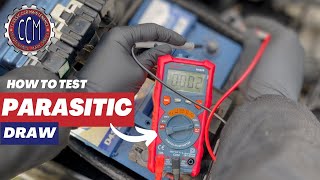
Set a multimeter to 10A. Disconnect the negative battery terminal and connect the meter in series. Wait up to an hour for modules to sleep. A normal draw is below 50mA (0.050A). If higher, pull fuses one by one until the reading drops to isolate the faulty circuit.
Tools: Multimeter with 10A setting, fuse puller (Advanced) - [ADVANCED] Visual Inspection with a Thermal Camera
After the vehicle sits off for an hour, scan the fuse boxes and BCM with a thermal camera. A module failing to sleep draws current and generates heat, appearing as a bright spot.
Tools: Thermal Imaging Camera (Professional) - [ADVANCED] Advanced Parasitic Draw Test (Low-Amp Probe)
Clamp a low-amp current probe around the negative battery cable connected to an oscilloscope. Monitor the sleep process in real-time to catch intermittent current spikes from modules waking up unexpectedly.
Tools: Oscilloscope, Low-Amp Current Probe (Professional) - Inspect the PCM/BCM Wiring Harness
Examine the wiring connected to the primary control modules for melted insulation, chafed wires, or connector corrosion.
Tools: Flashlight, inspection mirror (Intermediate) - Test the Specific Module
If a specific module is implicated (like the Nissan ESCL), use a bidirectional scan tool to check data streams and perform self-tests before ordering a replacement.
Tools: Advanced bidirectional scan tool (Professional)
When This Code Triggers (Freeze-Frame Conditions)
- Battery Voltage: 11.8V - 12.5V (The fault logs on the next key-on event. The freeze frame shows lower-than-normal voltage due to the overnight parasitic drain.)
- Ignition Switch Status: ON (The code sets when the BCM/PCM wakes up and recognizes a module failed to sleep during the previous OFF cycle.)
- Engine RPM: 0 (The check is performed before startup or after shutdown, so RPM is always zero.)
- Module Status: Awake (Manufacturer-specific data indicates which network failed to enter sleep mode.)
Related Codes
- U0100 — Lost Communication With ECM/PCM. Diagnose U0100 first. B2612 is often a consequence of the PCM losing power or failing.
- U1010 — Lost Communication with Control Module. Points to a CAN network problem that must be diagnosed first, as the ESCL communicates over this network.
- P0562 — System Voltage Low. This is the effect of the B2612 parasitic drain. Charge the battery, then find the drain causing B2612.
- B1318 — Battery Voltage Low. Confirms the battery drained. Confirm battery health, then locate the parasitic drain.
Climate & Environmental Factors
- High Heat / Hot Climates: Extreme heat accelerates battery aging, evaporates fluid, and increases internal grid corrosion, setting the stage for failure.
- Cold Weather / Cold Climates: Cold temperatures slow chemical reactions, reducing available battery power. This reveals heat damage from the summer, triggering a no-start condition.
- High Humidity: Humidity accelerates corrosion on battery terminals and grounds, increasing electrical resistance and confusing electronics during shutdown.
How to Talk to a Mechanic About This Code
Say this: "I have a B2612 code and my battery dies overnight. I've had the battery and alternator tested, and they are good. I need to schedule a diagnostic for a parasitic draw to isolate the faulty circuit."
This signals you've done basic homework, prevents the shop from wasting time re-testing the battery, and directs them to the correct diagnostic procedure.
Avoid saying:
- 'My car won't start, I think it's the battery.'
- 'My check engine light is on, can you just fix it?'
- 'Just do whatever you think is needed.'
Questions to ask before authorizing the repair:
- What was the final parasitic draw reading in milliamps after the modules went to sleep?
- Which specific fuse or circuit did you isolate the draw to?
- For the recommended repair, is the part new OEM, aftermarket, or remanufactured?
- Does this repair require any module programming, and is that included in the quote?
- What is the warranty on both the part and your labor?
Where to Take It: Dealer vs Independent vs Chain
- Dealer:
Recommended for the specific Nissan/VW no-start issue requiring programming. For general parasitic drains, they are capable but expensive.
Best for: Vehicles under warranty., Known manufacturer-specific issues like the Nissan/VW steering column lock (ESCL) failure., Complex electrical issues requiring a BCM/PCM software update.
Downsides: Highest labor rates., May recommend replacing an expensive module when a smaller component is the issue. (Typical cost: +50% vs. baseline) - Independent Shop:
Best fit for the most common cause (parasitic drain). An independent shop with good reviews for electrical work is the most cost-effective choice.
Best for: Out-of-warranty vehicles., Diagnosing common parasitic drains from aftermarket accessories or standard modules., General electrical troubleshooting.
Downsides: Quality in electrical diagnosis varies. Look for ASE-certified technicians., May lack specific programming tools for ESCL or BCM replacement. (Typical cost: +0% vs. baseline) - Chain Shop:
Use for a free battery test to rule it out. AVOID for diagnosing the B2612 code itself.
Best for: Free battery and alternator testing., Installing a new battery if confirmed faulty.
Downsides: Technicians are not equipped for time-consuming parasitic draw diagnostics., High pressure to sell parts like batteries and alternators. (Typical cost: -10% vs. baseline)
When to Walk Away From the Repair
If the estimated repair cost exceeds 50% of the car's current private-party value, consider selling or scrapping the vehicle.
- Car worth $4000, fix is $2200: Walk away. The repair cost is over 50% of the car's value.
- Car worth $12000, fix is $1500: Fix it. The cost is well below the threshold and restores the vehicle's function.
- Car worth $3000, fix is $900: Borderline. The cost is 30% of the value. Get a second opinion before proceeding.
What Scan Tool You Need for This Code
Minimum: A digital multimeter with a 10A fused amp setting is the absolute minimum tool required to perform a parasitic draw test.
A basic code reader only shows the B2612 code. It cannot measure electrical current draw, which is essential for diagnosing the root cause of a parasitic drain.
Budget: Innova 3320 Digital Multimeter (~$35) — Allows you to perform the essential parasitic draw test by measuring current flow from the battery with the car off.
Mid-range: Foxwell NT510 Elite (~$150) — Reads manufacturer-specific Body Control Module (BCM) codes and views live data from body modules to pinpoint drains without pulling fuses.
Professional: Autel MaxiCOM MK808BT (~$450) — Provides full bidirectional control to command individual modules on or off, quickly confirming which one is failing to sleep.
How to Clear the Code After You Fix It
- Reconnect the battery negative terminal.
- Use an OBD-II scan tool to erase the B2612 fault code from the BCM/PCM memory.
- Perform a complete drive cycle to allow readiness monitors to run self-tests.
Drive cycle (~30 minutes): Cold start and idle for 3 minutes. Drive in stop-and-go traffic for 15 minutes. Drive at a steady highway speed (55-60 mph) for 15 minutes. Let the vehicle sit off for one hour to confirm the parasitic drain is resolved.
Readiness monitors affected: Disconnecting the battery resets ALL emissions readiness monitors (Catalyst, O2 Sensor, EVAP).
Before emissions retest: drive at least 100 miles to fully set monitors.
Watch out for:
- Clearing the code without fixing the parasitic drain causes the code to return overnight.
- Resetting the battery clears emissions monitors, causing an automatic inspection failure until a drive cycle completes.
Will This Fail Emissions / State Inspection?
Yes — this code typically fails an OBD-II emissions inspection.
- California: An illuminated MIL is an automatic failure. Clearing the code resets OBD monitors, causing a failure until a drive cycle completes.
- New York: An active B2612 code that illuminates the MIL results in an automatic failure during the OBD-II scan.
- Virginia: Any failure code commanding the MIL 'on' causes inspection rejection. Disconnecting the battery results in rejection for 'not ready' monitors.
Most Commonly Affected Vehicles
- Nissan Altima, Maxima, 370Z, Cube (2009-2012) — B2612 points directly to a failed Electronic Steering Column Lock (ESCL) module, causing a complete no-start condition.
- Infiniti G37, G25 (2009-2013) — Indicates a failure of the Electronic Steering Column Lock (ESCL) module, preventing the vehicle from starting.
- Ford Focus, Edge, F-150 (2011-2018) — Associated with parasitic drain issues or a Battery Management System (BMS) that requires resetting after a battery replacement.
- Volkswagen Passat, Golf, Tiguan, CC (2005-2016) — Triggers a 'Steering column lock defective' warning and a no-start condition due to a failed electronic steering lock module.
- Chevrolet / GMC Silverado, Sierra, Tahoe (2007-2014) — Appears due to Body Control Module (BCM) faults or aftermarket accessories causing a parasitic draw.
- Chrysler / Dodge / Jeep Grand Cherokee, Ram 1500, Charger (2008-2015) — Triggered by a faulty ignition switch failing to signal the 'off' position, preventing modules from sleeping.
- Honda CR-V, Pilot, Odyssey (2012-2018) — Relates to body systems like parking sensors. A single sensor failure disables the system and logs a fault.
- Subaru Outback, Legacy (2015-2019) — Caused by parasitic drains or module failures, notably faulty electronic parking brake module connectors.
Manufacturer-Specific Notes
- Nissan / Infiniti: On 2009-2013 models, B2612 means 'Steering Status' and points to a failed ESCL module. The symptom is a complete NO-START condition with a solid red key light. A temporary workaround is sharply tapping the ESCL module under the steering column with a screwdriver handle while pressing the start button to unjam the mechanism.
- Volkswagen: On 2005-2016 models, a steering lock failure triggers an orange/red steering wheel light, a 'Steering column lock defective!' message, and a no-start condition. The ESCL module requires replacement and programming.
- Ford: A parasitic drain issue is often a Battery Management System (BMS) requiring a reset. After replacing the battery, the BMS must learn the new installation via a specific sequence (e.g., flashing high beams and pressing the brake pedal) to prevent charging issues.
- GM / Chrysler: B2612 traces back to a faulty ignition switch or BCM. A worn ignition switch fails to send an 'off' signal, keeping modules awake. Check for dealer-installed BCM software updates before replacing the module.
Real Owner Stories
2009 Nissan Altima at 115K miles
Car suddenly wouldn't start. Key light was on solid. The car had power, but pressing the start button did nothing.
What they tried:
- Replaced the key fob battery.
- Tried to jump-start the car.
- Read forums and found the temporary 'hammer trick'.
Outcome: Owner tapped the ESCL module under the steering column with a screwdriver handle and the car started. They bypassed a $1,200 dealer quote by buying a $50 ESCL emulator online and paying an independent shop $200 to install and program it.
Lesson: For a no-start issue on Nissans with code B2612, the ESCL is the prime suspect. The temporary 'hammer trick' gets you moving, and an aftermarket emulator is a cheaper permanent fix than an OEM replacement.
2013 Ford F-150 at 80K miles
Battery kept dying overnight, even after replacing it with a brand new one. Code B2612 was present.
What they tried:
- Replaced the battery, but the new one died within two days.
- Performed a parasitic draw test and found a 2-amp draw.
- Pulled fuses and isolated the draw to the infotainment system.
Outcome: The owner had recently installed an aftermarket subwoofer. The installer wired the amplifier's remote turn-on wire to constant power instead of switched ignition. Rewiring the remote wire completely fixed the drain.
Lesson: If a parasitic drain appears after installing aftermarket electronics, that accessory is the number one suspect. Improper wiring is a frequent cause of B2612.
2008 VW Passat at 130K miles
Intermittent no-start condition displaying a 'Steering Column Lock Defective!' message.
What they tried:
- Paid a general mechanic $600 to replace the starter; the problem returned.
- Took it to a VW specialist.
Outcome: The specialist diagnosed a failing ESCL module. The owner opted for a DIY repair, disassembling the steering column and replacing two tiny internal microswitches on the circuit board for $5, saving over $1,500.
Lesson: Misdiagnosis is common. With a 'Steering Column Lock Defective' message, do not replace the starter. The fault is the lock module itself.
2011 Chevy Silverado at 150K miles
The battery was dead every morning. The owner charged it daily to get to work.
What they tried:
- Replaced the battery and alternator.
- A shop performed a parasitic draw test but couldn't isolate the drain.
Outcome: Using a thermal camera, a technician noticed the Body Control Module (BCM) was warm an hour after shutdown. The BCM failed to sleep. A dealer replacement and programming cost $900.
Lesson: When a parasitic draw is hard to trace by pulling fuses, the primary control module itself may be failing. A thermal camera quickly identifies modules that refuse to sleep.
How to Prevent This Code From Triggering
- Test your battery seasonally. (Twice a year (before summer and winter)) — Heat damages batteries and cold reveals the damage. A load test identifies a weakening battery before it causes electronic glitches.
- Use a battery tender for long-term storage. (Any time the vehicle sits for more than 2 weeks.) — A battery tender provides a slow charge that prevents discharging and internal sulfation, preventing low-voltage faults.
- Ensure aftermarket accessories are professionally installed. (During installation.) — Professional installers use relays and connect to ignition-switched circuits, ensuring accessories power down with the vehicle.
- Keep battery terminals and ground connections clean. (Once a year.) — Corrosion creates resistance, causing voltage drops that confuse sensitive electronics during the shutdown sequence.
- Drive the vehicle regularly for at least 20 minutes. (At least once a week.) — Short trips prevent the alternator from fully recharging the battery. Longer drives maintain a healthy state of charge.
Frequently Asked Questions
I replaced my battery but it died again. What's wrong?
This is a classic symptom of a parasitic drain, the root cause of most B2612 codes. You replaced the symptom (dead battery) rather than the problem. A component is staying powered on, so you must perform a parasitic draw test to find the faulty circuit.
My Nissan won't start and has a B2612 code. Is it the battery?
Unlikely. On Nissan and Infiniti vehicles, B2612 almost always points to a failed Electronic Steering Column Lock (ESCL). The main symptom is a no-crank, no-start condition with a key warning light, requiring replacement of the lock module.
I heard you can hit the steering column on a Nissan to fix the B2612 no-start. Is this true?
Yes, this is a well-known temporary fix. Sharply tapping the ESCL module under the steering column with a screwdriver handle un-jams the internal locking pin, allowing the car to start. This is not a permanent solution, but it prevents an expensive tow.
How much does it cost for a shop to diagnose a parasitic drain?
Most shops charge a diagnostic fee starting at one hour of labor ($120-$220). A full parasitic draw test requires waiting for modules to sleep and methodically testing circuits, so expect to pay $200 to $500 for the diagnosis alone.
Can a bad alternator cause code B2612?
Yes, indirectly. A failed internal diode in the alternator creates a parasitic drain. This allows current to leak backward out of the battery, directly causing the B2612 fault.
What's the difference between a mechanical and an electronic steering column lock?
A mechanical lock is physically turned by the ignition key. An Electronic Steering Column Lock (ESCL) receives a wireless signal from your smart key to electronically engage or disengage. ESCLs offer convenience but add a layer of electronic complexity prone to failure.
What are common mistakes when diagnosing B2612?
The most common mistake is replacing the battery without checking for a parasitic drain. Another is failing to perform a Battery Management System (BMS) reset on Ford vehicles after a battery replacement. For Nissan/VW, owners mistakenly suspect a bad starter when the true cause is the steering lock module.
Key Takeaways
- A parasitic electrical drain that kills the 12V battery overnight is the most frequent symptom of a B2612 code.
- On 2009-2013 Nissan, Infiniti, and VW models, B2612 indicates a failed Electronic Steering Column Lock (ESCL) that instantly immobilizes the vehicle.
- Disconnect all aftermarket alarms, stereos, or remote starters before spending $800+ replacing factory control modules.
- Isolating the fault requires a parasitic draw test to find any circuit pulling more than 50 milliamps (0.050A) while the car is off.
- Replacing a dead battery only treats the symptom; you must locate the module failing to enter sleep mode to prevent the new battery from dying.
Helpful Videos

![Avoid Expensive Shop Repairs: DIY Reset the Ford Vehicle Battery Monitoring System [BMS]](https://img.youtube.com/vi/QTtb7rKaZTE/mqdefault.jpg)
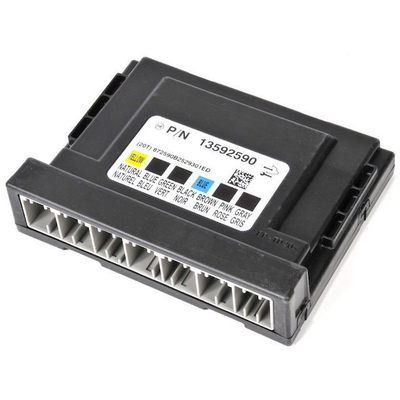
Shop the Parts Behind B2612
Below are the parts most often responsible for code B2612, ranked by how frequently each one is the actual culprit (per the diagnosis above). Tap any to see what we have for your vehicle.



The information in this article is provided for general reference and educational purposes only. Vehicle specifications, procedures, and part compatibility can vary by production date, trim level, and region. Always consult your vehicle's factory service manual and verify part numbers before purchasing or performing repairs. Safety-critical components such as airbags, seat belts, and braking systems should be installed by a qualified professional.
- 🧭 Diagnostic Flowchart
- 🎬 Helpful Videos
- 🛍️ Shop This Part
- What Does B2612 Mean?
- Can I Drive With B2612?
- Common Causes
- Symptoms
- Common Fixes & Costs
- Used vs. New Parts: Buying Guide
- What Happens If You Wait — Timeline
- Cost of Not Fixing It
- Diagnosis Steps
- When This Code Triggers (Freeze-Frame Conditions)
- Related Codes
- Climate & Environmental Factors
- How to Talk to a Mechanic About This Code
- Where to Take It: Dealer vs Independent vs Chain
- When to Walk Away From the Repair
- What Scan Tool You Need for This Code
- How to Clear the Code After You Fix It
- Will This Fail Emissions / State Inspection?
- Most Commonly Affected Vehicles
- Manufacturer-Specific Notes
- Real Owner Stories
- 2009 Nissan Altima at 115K miles
- 2013 Ford F-150 at 80K miles
- 2008 VW Passat at 130K miles
- 2011 Chevy Silverado at 150K miles
- How to Prevent This Code From Triggering
- Frequently Asked Questions
- I replaced my battery but it died again. What's wrong?
- My Nissan won't start and has a B2612 code. Is it the battery?
- I heard you can hit the steering column on a Nissan to fix the B2612 no-start. Is this true?
- How much does it cost for a shop to diagnose a parasitic drain?
- Can a bad alternator cause code B2612?
- What's the difference between a mechanical and an electronic steering column lock?
- What are common mistakes when diagnosing B2612?
- Key Takeaways
- 🎟️ Get 5% Off