

OBD-II Code B2615: Interior Lights Circuit Malfunction
What B2615 means, why it triggers, and how to fix it
- General Motors vehicles trigger code B2615 when the Body Control Module (BCM) detects a short or open circuit in the interior courtesy lighting system.
- A parasitic drain from interior lights stuck in the 'on' position will kill a healthy 12-volt battery in under 24 hours.
- Inspect the 7.5A F7DR fuse and sun visor wiring first on 2011-2015 Chevy Volts, as chafed hinge wires cause 90% of B2615 codes on this model.
- Never replace a $600 BCM without first performing a voltage drop test on the lighting ground circuit to rule out a simple $0 loose connection.
What Does B2615 Mean?

B2615 is a General Motors-specific Body Diagnostic Trouble Code (DTC). It signifies the Body Control Module (BCM) detected a fault in the 'Passenger Compartment Dimming 2 Circuit'. This indicates the interior lighting circuit is experiencing a short to voltage (too much power), a short to ground (power wire touching bare metal), or an open circuit (a broken wire).
Technical definition: The BCM sets OBD-II code B2615 when internal diagnostics detect a short to ground, short to voltage, or open circuit on the voltage supply line for the interior courtesy lamps. The BCM requires a stable 9-16 volts to run these diagnostics. On modern GM vehicles using a GMLAN serial data bus, a communication failure from a door module also triggers this fault.
Can I Drive With B2615?

Yes, But With Caution. You can drive the vehicle, but there are significant risks. While interior lights do not affect engine performance, lights stuck in the 'on' position will deplete a healthy battery overnight, leaving you stranded. On models like the 2011-2015 Chevy Volt, this fault also disables the reverse lights and backup camera, increasing collision risk while backing up.
Common Causes

- Shorted or Damaged Wiring (Very Common) — Wiring for interior lights chafes, pinches, or becomes brittle over time. This frequently occurs in moving parts like sun visor hinges, door harnesses, or along the A-pillar, creating a direct short to ground.
- Blown Protective Fuse (Common) — A short circuit instantly blows the protective fuse. While a blown fuse directly causes the lights to fail, it is a symptom of a deeper wiring problem. On GM trucks, this is often the TBC 2B fuse; on the Chevy Volt, it is the F7DR 7.5A fuse.
- Faulty Door Latch/Jamb Switch (Common) — The BCM relies on the door jamb switch to know when to activate the lights. A stuck or corroded switch sends a constant 'door open' signal, forcing the lights to stay on and eventually triggering the code.
- Water Intrusion into BCM or Fuse Block (Less Common) — Water leaking from a degraded windshield seal or clogged sunroof drains drips directly onto the BCM or interior fuse block. This causes rapid corrosion and unpredictable electrical shorts.
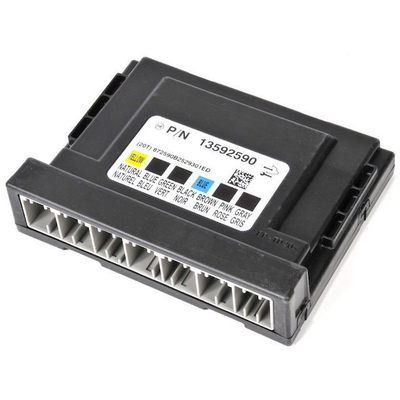
- Faulty Body Control Module (BCM) (Less Common) — The BCM's internal driver circuit fails, sending incorrect or zero voltage to the lights. This is a costly repair and is frequently misdiagnosed; always rule out wiring shorts and bad grounds first.
- Poor or Corroded Ground Connection (Less Common) — The lighting circuit requires a solid connection to the vehicle's chassis to complete the circuit. A loose or rusty ground point causes high resistance, triggering the code.
- Incompatible Aftermarket LED Bulbs (Less Common) — Installing cheap aftermarket LED bulbs alters the circuit's resistance. The BCM's circuit monitoring interprets this unexpected resistance value as a fault.
Symptoms

- Interior lights do not work at all — The dome light, map lights, and courtesy lights fail to turn on manually or automatically when a door opens.
- Interior lights stay on and won't turn off — The courtesy lights remain illuminated indefinitely with all doors closed and the vehicle off, leading to a dead battery.
- Repeatedly blown fuse — The fuse for the interior lights (labeled TBC, BCM, or CTSY) blows immediately upon replacement, confirming a dead short.
- Reverse lights and backup camera inoperative — On the 2011-2015 Chevrolet Volt, the B2615 circuit also powers the reverse lights and backup camera. A failure disables all three systems simultaneously.
- Bizarre electrical problems — A failing BCM triggers erratic power locks, window failures, radio glitches, or a no-crank condition accompanied by a loss of scan tool communication.
Diagnostic Flowchart
Tap your situation to follow the diagnostic path that matches what you're seeing on this code.
Common Fixes & Costs
- Replacing a blown fuse — Parts: $1-$5, Labor: $0, ~0.1 hr book time (DIY)
- Repairing shorted wiring — Parts: $5-$25, Labor: $125-$300, ~1.5 hr book time (Intermediate)
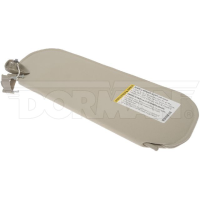
- Replacing a faulty sun visor assembly — Parts: $80-$250, Labor: $50-$125, ~0.5 hr book time (DIY)
- Replacing a faulty door jamb/latch switch — Parts: $25-$75, Labor: $75-$150, ~1.2 hr book time (DIY)
- Replacing the Body Control Module (BCM) — Parts: $400-$600, Labor: $150-$250 (includes programming), ~1.5 hr book time (Professional)
DIY vs Professional
- Repairing shorted wiring — Beginner: False
- Replacing a faulty sun visor assembly — Beginner: True
- Replacing a blown fuse — Beginner: True
- Replacing the Body Control Module (BCM) — Beginner: False
- Replacing a faulty door jamb/latch switch — Beginner: True
Used vs. New Parts: Buying Guide
When a used part is worth it: A used Body Control Module (BCM) should only be considered for older, high-mileage vehicles where the budget is extremely tight. It is a high-risk, low-reward option.
Donor-vehicle mileage cap: roughly under 100000 miles for the part to have meaningful remaining life.
Donor quality checklist:
- Verify the part number is an exact match to the original BCM.
- Source from a reputable salvage yard with a return policy.
- Avoid parts from vehicles with flood, fire, or severe collision damage.
Decision logic:
- If Vehicle is less than 10 years old or under 120K miles → Buy a new or professionally remanufactured BCM. The warranty and reliability are worth the cost.
- If The cost of a new BCM exceeds 25% of the vehicle's value → A used BCM is a viable option, but factor in the cost of programming and the risk of failure.
- If You cannot find a shop willing to install and program a customer-supplied used BCM → You must buy a new or remanufactured part through the repair shop.
Warranty tradeoff: Used BCMs typically offer a 30-day warranty at best, which does not cover labor costs. New OEM or quality remanufactured BCMs come with a 1-year or longer warranty.
Worst-case if a used part fails: $400-$700 if used part fails after install — you pay for repeat labor for diagnosis, removal, and programming of a second module.
What Happens If You Wait — Timeline
- 0-7 days: If lights are stuck on, a parasitic drain of 1-2 amps depletes a healthy battery overnight, causing a no-start condition. (MPG impact: 0%% · Added cost: $0-$20 (Jump start service or time lost))
- 1-2 months: Repeated deep discharges from the parasitic drain cause lead sulfate crystals to build up in the battery, permanently damaging its ability to hold a charge. The constant current flow heat-stresses the BCM. (MPG impact: 0%% · Added cost: $150-$350 (New battery required due to sulfation))
- 2-6 months: The BCM's internal driver circuit, stressed by the continuous short, fails completely. The lights remain permanently off, or bizarre electrical issues appear as the BCM degrades. (MPG impact: 0%% · Added cost: $600-$850 (Cost of a new BCM and programming))
- 6+ months: If the root cause was an ignored water leak, severe corrosion takes hold of the BCM, fuse block, and harness connectors. Multiple electrical systems fail. (MPG impact: 0%% · Added cost: $1000-$2500+ (Extensive diagnostic labor and replacement of multiple corroded components))
Cost of Not Fixing It
- Immediate (1-7 days): Lights stuck on cause a parasitic drain, resulting in a dead battery and leaving you stranded. Repeated deep discharges permanently damage the battery. (Added cost: $150-$350)
- 1-6 months: Persistent electrical shorts put stress on the Body Control Module (BCM), causing the driver circuit to fail completely and requiring BCM replacement. (Added cost: $600-$850)
- 6+ months: If the root cause is a water leak, ignoring it leads to severe corrosion of the BCM, fuse block, and wiring harnesses, causing multiple electrical failures. (Added cost: $1000-$2500+)
Diagnosis Steps
- Check the Interior Lighting Fuse
Locate the fuse box using your owner's manual. Inspect fuses related to the BCM and interior lighting (e.g., TBC 2B, CTSY, or F7DR). If the filament is broken, replace it with a fuse of the exact same amperage. If it blows again instantly, proceed to step 2.
Tools: Fuse puller or needle-nose pliers (Beginner) - Isolate the Short Circuit
An instantly blowing fuse means a power wire is touching bare metal. Remove the blown fuse. Disconnect the driver's sun visor. Install a new fuse. If it survives, the visor is the culprit. If it blows, reconnect the visor, disconnect the passenger visor, and repeat. Continue disconnecting light fixtures and door switches one by one until the fuse stops blowing.
Tools: Spare fuses, trim removal tools (Intermediate) - Perform a Visual Wiring Inspection
Inspect all accessible wiring related to the interior lights. Focus on pivot points and areas where wires pass through metal. Check the sun visor hinges, the harness entering the headliner along the A-pillars, and the rubber boots between the doors and the body. Look for chafed, pinched, or bare wires.
Tools: Flashlight, trim removal tools (Intermediate) - Inspect for Incompatible LED Bulbs
If you recently installed aftermarket LED bulbs, remove them and reinstall standard incandescent bulbs. Clear the B2615 code with a scanner. If the code does not return, the LED bulbs had incorrect resistance.
Tools: Trim removal tool, screwdriver, OBD-II scanner (Beginner) - Test Bulb Socket for Voltage and Ground
Remove a non-working bulb. Set a multimeter to DC Volts. With the lights commanded ON (door open), touch the red probe to the power contact in the socket and the black probe to a clean chassis ground. A 12V reading means the socket's ground connection is bad. A 0V reading means the problem is upstream in the wiring, fuse, or BCM.
Tools: Multimeter (Intermediate) - Verify Ground Circuit Voltage Drop
Set your multimeter to a low DC Volts scale (e.g., 2V). Connect the black probe to the negative battery terminal. With the lights commanded ON, probe the ground wire at the bulb socket with the red lead. A reading above 0.1V indicates excessive resistance. Trace the ground wire to the chassis, unbolt it, clean the terminal to bare metal, and re-secure.
Tools: Multimeter, wire brush (Advanced) - Scan Tool Data Analysis
Connect a professional scan tool and navigate to the BCM live data. Command the interior lights ON and OFF using bidirectional controls. Observe the 'Courtesy Lamp Output Control' status. If the tool shows 'Active' but the lights remain off, the BCM is receiving the command but failing to execute it.
Tools: Professional bidirectional scan tool (Advanced) - Test BCM Output at the Module
Identify the output pin on the BCM connector for the 'Passenger Compartment Dimming 2' circuit using a wiring diagram. Back-probe this pin with a multimeter. Command the lights ON with a scan tool. If you read 12V at the pin but 0V at the lights, the wire is broken. If you read 0V at the pin (and the BCM has verified 12V power and solid ground), the BCM has failed internally.
Tools: Professional scan tool, multimeter, T-pins, wiring diagram (Advanced)
When This Code Triggers (Freeze-Frame Conditions)
- System Voltage: 9-16 Volts (The BCM must have stable voltage to run diagnostics.)
- Ignition Status: ON (The diagnostic tests for this circuit run when the ignition is on.)
- Courtesy Lamp Command: Active (Code sets when the BCM attempts to turn the lights on and detects a fault.)
- Circuit Status: Short to Ground, Short to Voltage, or Open (The BCM has detected a specific electrical failure on the circuit.)
Related Codes
- B2610 — Indicates a fault in the 'Passenger Compartment Dimming 1 Circuit.' Functionally identical to B2615 but refers to a different group of interior lights. Seeing both codes together points to a common power/ground issue or a widespread BCM failure.
- B2625 — Indicates a fault in the 'Display Dimming PWM Output Circuit,' affecting dashboard backlighting. Seeing B2615 and B2625 together strongly suggests an internal BCM failure.
- U0140 — Signifies 'Lost Communication With Body Control Module'. If present alongside B2615, diagnose the U-code first. The communication failure is the root cause of the lighting malfunction.
Climate & Environmental Factors
- High Humidity / Water Intrusion: Rainwater from leaking windshield seals, clogged sunroof drains, or damaged door seals drips onto the BCM or interior fuse block. High ambient humidity accelerates corrosion, leading to short circuits and module failure.
- Extreme Cold: In very cold climates, plastic wire insulation becomes brittle. This increases the likelihood of insulation cracking and flaking off at points of movement (sun visor hinges, door harnesses), creating a short circuit.
How to Talk to a Mechanic About This Code
Say this: "I have a B2615 code on my GM vehicle and the interior lights are malfunctioning. I'd like to schedule a diagnostic appointment. Please start by inspecting the wiring for shorts, especially at common failure points like sun visors or for signs of water intrusion, before testing the BCM itself."
This language signals that you are an informed customer. It directs the technician to the most common and cheapest-to-fix causes first (wiring, water leaks) and prevents them from immediately jumping to a costly BCM replacement diagnosis.
Avoid saying:
- 'My interior lights are acting weird, can you fix it?'
- 'My car has a B2615 code, just replace whatever part is broken.'
- 'The internet said to replace the BCM.'
Questions to ask before authorizing the repair:
- Did you find a specific short, open, or high resistance in the wiring? Where was it?
- If you are recommending a BCM replacement, can you show me the test results that prove the module's output driver has failed?
- Did you check for any signs of water leaks or clogged sunroof drains that could have caused this issue?
- What is the warranty on this electrical repair, and does it cover both parts and labor?
Where to Take It: Dealer vs Independent vs Chain
- Dealer:
A good option if a BCM replacement and programming are definitely required, but likely the most expensive for diagnostics.
Best for: Vehicles under warranty, When a BCM replacement is confirmed and requires brand-specific programming, Complex electrical issues where TSBs are critical
Downsides: Highest labor rates and part costs, May be quicker to replace the entire BCM rather than perform a more time-consuming wiring repair (Typical cost: +50% vs. baseline) - Independent Shop:
Best fit for most B2615 situations. A good independent auto electric specialist is ideal, as they are motivated to find the wiring fault rather than just replace the module.
Best for: Out-of-warranty vehicles where cost is a factor, Diagnosing and repairing wiring faults, which is the most common cause, Getting a second opinion on a dealership's BCM condemnation
Downsides: Shop quality and electrical expertise vary greatly; look for ASE certification., May not have the latest GM-specific programming tools for a new BCM. (Typical cost: +0% vs. baseline) - Chain Shop:
AVOID for diagnosing B2615. Their business model is not suited for complex electrical troubleshooting.
Best for: Simple, unrelated maintenance like oil changes or tires.
Downsides: Generally not equipped for in-depth electrical diagnostics beyond reading a code., High risk of misdiagnosis, leading to recommendations for unnecessary part replacements., Technician skill level is highly variable. (Typical cost: -10% vs. baseline)
When to Walk Away From the Repair
If the estimated repair cost exceeds 40-50% of the car's private-party value, you should pause and carefully consider your options.
- Car worth $8000, fix is $350: Fix it. A wiring repair is well below the threshold and a common maintenance item on an aging vehicle.
- Car worth $4000, fix is $850: Borderline. The repair is ~21% of the car's value. If the rest of the car is in good shape, it's likely worth fixing. Get a second opinion before authorizing a BCM replacement.
- Car worth $2500, fix is $1200: Walk away. The repair cost is nearly 50% of the vehicle's value. It is very likely not a sound financial decision.
What Scan Tool You Need for This Code
Minimum: A scan tool that can read GM-specific Body Control Module (BCM) codes. A basic engine-only code reader will NOT see 'B' codes like B2615.
A standard $20 engine code reader cannot communicate with the BCM. It will tell you there are no codes, which is misleading. To see code B2615, you need a tool that accesses the body control module.
Budget: BlueDriver Pro (~$119) — Confirms the B2615 code is present in the BCM. Reads enhanced codes for GM and provides live data from the BCM to see door switch status. It does NOT have bidirectional control.
Mid-range: Foxwell NT510 Elite for GM / CGSULIT SC530 for GM (~$150) — This is the ideal DIY level. It offers full BCM code reading, live data, AND bidirectional control. This allows you to command the interior lights on and off directly from the scanner to test the BCM.
Professional: Autel MaxiCOM MK808 / XTOOL D7 (~$450-600) — Provides full, professional-level diagnostics. Includes robust bidirectional controls for all systems, comprehensive live data graphing, and special service functions.
Rent vs buy: For this code, you need to buy. The free rental scanners from auto parts stores are almost always basic engine code readers that cannot access the BCM.
How to Clear the Code After You Fix It
- Use an OBD-II scan tool to clear the code.
- Cycle the ignition off and on.
- Test the interior light functions manually and by opening/closing doors.
Drive cycle (~5 minutes): A complex drive cycle is not required. Clear the code with a scan tool. The 'current' code clears immediately if the fault is gone. A 'history' code clears on its own after 100 consecutive ignition cycles without the fault reoccurring.
Watch out for:
- Clearing the code with a scanner does not fix the problem; the code returns instantly if the underlying electrical fault remains.
- Disconnecting the battery clears the code temporarily but is not a proper fix and resets other vehicle modules.
Will This Fail Emissions / State Inspection?
No — by itself this code doesn't fail OBD inspection (but it can keep readiness monitors from setting, which causes a separate fail).
- California: This code will NOT fail a California Smog Check. The inspection focuses on the Check Engine Light and powertrain ('P') codes, not body ('B') codes.
- New York: This code will not fail the emissions portion. However, NY performs a rigorous safety inspection checking all required lighting. If the fault disables the reverse lights (as on a Chevy Volt), the vehicle FAILS the safety inspection.
- Texas: The emissions inspection will not fail due to a B-code. However, the accompanying safety inspection requires functional lights. Inoperative reverse lights cause a safety inspection failure.
Most Commonly Affected Vehicles
- Chevrolet Volt (2011-2015) — This code is almost always caused by chafed wiring in the driver's or passenger's sun visor hinge. This shorts out and blows the 7.5A F7DR fuse, disabling the interior lights, reverse lights, and backup camera (TSB PIC5602C).
- Chevrolet Silverado, Suburban, Tahoe (2003-2014) — Extremely common. On 2003-2007 models, this points to a failing BCM or issues with the TBC 2B fuse circuit. On 2007-2014 models, the cause is often a faulty door module sending an incorrect GMLAN message to the BCM.
- GMC Sierra, Yukon, Yukon XL (2003-2014) — Mechanically identical to their Chevrolet counterparts, exhibiting the exact same failure patterns related to the BCM, wiring, and door module communication.
- Cadillac Escalade, SRX, CTS (2004-2015) — Shares the same core electrical architecture as Chevy/GMC. The BCM fails, or GMLAN messages controlling exterior courtesy lamps become corrupted.
- Buick Enclave (2008-2017) — Highly susceptible to clogged sunroof drains, causing water to leak onto the BCM or interior fuse panel, leading to B2615 and other electrical faults.
- Pontiac G8 (2008-2009) — The BCM sets this code when it detects a short or open in the courtesy lamp control circuit.
- Chevrolet Caprice PPV (2011-2017) — Triggered by disconnected wiring harnesses within the A-pillar or a faulty BCM on the Zeta platform.
- Saturn Aura, Vue (2007-2010) — Prone to code B2615 due to wiring shorts or BCM failure within the shared GM electrical system.
Manufacturer-Specific Notes
- General Motors (Trucks/SUVs): Clogged sunroof drains, a leaking third brake light gasket, or a poorly sealed windshield allow water to travel down the A-pillar and saturate the BCM or fuse block, causing corrosion and faults like B2615.
- Chevrolet: The 2011-2015 Volt has a specific design flaw where the sun visor wiring chafes and shorts to ground at the hinge. This blows the 7.5A F7DR fuse, killing all interior lights, reverse lights, and the backup camera.
- General Motors: Generic scan tools frequently misinterpret the B2615 code and display a definition like 'LIN Communication Failure'. The primary definition across GM's service information is consistently 'Passenger Compartment Dimming 2 Circuit Malfunction'.
Real Owner Stories
2013 Chevy Volt at 110K miles - The Textbook Sun Visor Failure
Owner noticed the interior dome lights, reverse lights, and backup camera all stopped working simultaneously. A B2615 code was stored.
Outcome: The owner disconnected the driver's side sun visor, replaced the 7.5A fuse, and the lights and camera started working again. They ordered a new sun visor assembly for $120 and replaced it in 15 minutes.
Lesson: On a 2011-2015 Volt, if B2615 is present and the reverse lights are out, the sun visor wiring is the cause 99% of the time. Always check the specific F7DR fuse first.
2008 GMC Yukon Denali at 155K miles - The Costly Misdiagnosis
Interior lights acted erratically, draining the battery. The B2615 code was present. The vehicle had a damp smell after heavy rain.
Outcome: A different technician investigated the damp smell and found the front sunroof drains completely clogged. Water overflowed, dripping directly onto the BCM. The root cause was the water leak. The final repair involved clearing the drains ($100) and another BCM replacement.
Lesson: If electrical problems appear after rain, always suspect a water leak. On GM SUVs, clogged sunroof drains are a notorious cause of BCM failure. Check for damp carpets before authorizing module replacement.
2005 Chevrolet Silverado at 180K miles - The Intermittent Gremlin
The dome light flickered intermittently. Code B2615 was stored as a history code. The fuse and bulb were fine. The problem was impossible to replicate at the shop.
Outcome: The owner performed a voltage drop test on the ground circuit. He found high resistance (over 1.0V drop) only when pushing on the headliner near the A-pillar. He found the main ground point for the headliner harness was loose and corroded. Cleaning and tightening the bolt permanently fixed the issue.
Lesson: Intermittent electrical issues are often caused by bad grounds. A voltage drop test is the correct way to test a ground circuit under load and reveals hidden resistance.
How to Prevent This Code From Triggering
- Periodically clean sunroof drains. (Once per year, or twice if parked under trees.) — Debris clogs the drain tubes, causing rainwater to overflow from the sunroof tray, leaking down the A-pillars directly onto the BCM and fuse block, causing catastrophic corrosion.
- Inspect and protect wiring at known chafe points. (During any interior or headliner work.) — Wiring that moves or passes through metal is prone to chafing. Adding a protective layer like Tesa cloth tape at pivot points prevents the wire's insulation from wearing through.
- Address body water leaks immediately. (As needed.) — A damp carpet or wet headliner indicates a water leak. Leaking windshield seals or third brake light gaskets allow water to destroy sensitive electronics over time.
- Maintain a healthy battery and charging system. (Check annually.) — A failing battery or alternator produces unstable voltage that stresses all vehicle electronics, including the BCM. Ensuring stable voltage between 9-16V is crucial for module longevity.
Frequently Asked Questions
Can I fix code B2615 myself?
Yes, in many cases. If the cause is a simple fuse, bulb, or visibly damaged wire, it is a manageable DIY repair. However, replacing a failed Body Control Module (BCM) requires dealer-level software to program the new unit to your specific VIN.
Why do my interior lights stay on and drain my battery?
This classic B2615 symptom is typically caused by a 'short to ground' on the lighting control circuit or an internal BCM failure. A faulty, stuck door jamb switch also tricks the BCM into thinking a door is always open.
I replaced the fuse and it blew again instantly. What now?
Stop replacing fuses immediately, as an instantly blowing fuse indicates a 'dead short' where a power wire touches bare metal. Follow the 'Isolate the Short Circuit' diagnostic step by disconnecting components one by one until the fuse survives.
Why did my reverse lights and backup camera stop working with code B2615?
On the 2011-2015 Chevrolet Volt, the F7DR fuse powers the interior lights, reverse lights, and backup camera simultaneously. A shorted wire in the sun visor hinge blows this shared fuse, disabling all three systems at once.
How much does it cost to fix code B2615?
Costs range from $5 for a simple fuse to $300 for professional wiring repair. The most expensive scenario is replacing the Body Control Module (BCM), which typically costs between $600 and $850 including parts, labor, and mandatory programming.
What is a common misdiagnosis for B2615?
The most costly misdiagnosis is replacing the Body Control Module (BCM) when the true fault is a simple shorted wire. Technicians sometimes rush to condemn the BCM due to strange electrical symptoms without thoroughly inspecting known wiring failure points.
Can aftermarket accessories cause code B2615?
Absolutely. Improperly installed aftermarket alarms, remote starters, dash cams, or custom LED lighting tapped into the interior circuit frequently cause shorts or unexpected power draws. Inspect any recently installed accessory wiring first.
Can a bad door switch cause B2615?
Yes. The BCM relies on the door switch to know when to turn the lights on and off. A faulty switch sending a constant 'door open' signal forces the lights on, eventually triggering the code.
Key Takeaways
- General Motors vehicles trigger code B2615 when the Body Control Module (BCM) detects a short or open circuit in the interior courtesy lighting system.
- A parasitic drain from interior lights stuck in the 'on' position will kill a healthy 12-volt battery in under 24 hours.
- Inspect the 7.5A F7DR fuse and sun visor wiring first on 2011-2015 Chevy Volts, as chafed hinge wires cause 90% of B2615 codes on this model.
- Never replace a $600 BCM without first performing a voltage drop test on the lighting ground circuit to rule out a simple $0 loose connection.
Shop the Parts Behind B2615
Below are the parts most often responsible for code B2615, ranked by how frequently each one is the actual culprit (per the diagnosis above). Tap any to see what we have for your vehicle.



The information in this article is provided for general reference and educational purposes only. Vehicle specifications, procedures, and part compatibility can vary by production date, trim level, and region. Always consult your vehicle's factory service manual and verify part numbers before purchasing or performing repairs. Safety-critical components such as airbags, seat belts, and braking systems should be installed by a qualified professional.
- 🧭 Diagnostic Flowchart
- 🛍️ Shop This Part
- What Does B2615 Mean?
- Can I Drive With B2615?
- Common Causes
- Symptoms
- Common Fixes & Costs
- DIY vs Professional
- Used vs. New Parts: Buying Guide
- What Happens If You Wait — Timeline
- Cost of Not Fixing It
- Diagnosis Steps
- When This Code Triggers (Freeze-Frame Conditions)
- Related Codes
- Climate & Environmental Factors
- How to Talk to a Mechanic About This Code
- Where to Take It: Dealer vs Independent vs Chain
- When to Walk Away From the Repair
- What Scan Tool You Need for This Code
- How to Clear the Code After You Fix It
- Will This Fail Emissions / State Inspection?
- Most Commonly Affected Vehicles
- Manufacturer-Specific Notes
- Real Owner Stories
- 2013 Chevy Volt at 110K miles - The Textbook Sun Visor Failure
- 2008 GMC Yukon Denali at 155K miles - The Costly Misdiagnosis
- 2005 Chevrolet Silverado at 180K miles - The Intermittent Gremlin
- How to Prevent This Code From Triggering
- Frequently Asked Questions
- Can I fix code B2615 myself?
- Why do my interior lights stay on and drain my battery?
- I replaced the fuse and it blew again instantly. What now?
- Why did my reverse lights and backup camera stop working with code B2615?
- How much does it cost to fix code B2615?
- What is a common misdiagnosis for B2615?
- Can aftermarket accessories cause code B2615?
- Can a bad door switch cause B2615?
- Key Takeaways
- 🎟️ Get 5% Off