

OBD-II Code B2618: The Ultimate Diagnostic & Repair Guide (All Makes)
What B2618 means for GM, Honda, Acura, and Nissan, why it triggers, and how to fix it for good.
- Code B2618 definitions vary by brand: it signals a front parking sensor failure on Honda/Acura, an interior lighting circuit short on GM, and an internal Body Control Module (BCM) fault on Nissan.
- On Honda and Acura vehicles, check the $10 parking sensor dashboard switch bulb first, as a burnt-out indicator bulb disables the entire system and triggers this code.
- For GM and Nissan models, a failing BCM causing code B2618 often creates a parasitic battery draw exceeding 50mA, which will kill your battery overnight.
- Never replace a Honda parking sensor or GM BCM without performing the mandatory system reset or 30-minute security relearn, otherwise the B2618 code will return immediately.
- Verify your battery voltage rests above 12.4V before replacing expensive modules, as low voltage causes sensitive BCMs to log false B2618 codes.
What Does B2618 Mean?
B2618 is a manufacturer-specific code with entirely different meanings based on your car brand. On Honda and Acura, it signals a failure in the front parking sensor system. On General Motors (Chevrolet, Pontiac), it points to a short in the interior courtesy lighting circuit. On Nissan, it indicates an internal power supply fault within the Body Control Module (BCM).
Technical definition: Because B2618 is not standardized, its formal definition varies. GM defines it as "Courtesy Lamp Relay Coil Control Circuit Short to Voltage," meaning the BCM detects unexpected power on the interior light circuit. Honda/Acura defines it as "Front 1st Sensor Data Failure." Nissan defines it as an internal BCM power supply self-check failure.
Can I Drive With B2618?
Yes, But With Caution. Yes, but fix it soon. For Honda/Acura, disabled parking sensors increase the risk of low-speed collisions. For GM and Nissan, the underlying Body Control Module (BCM) fault causes unpredictable failures, ranging from a dead battery overnight to a sudden no-start condition that leaves you stranded.
Common Causes
- Faulty Parking Sensor (Honda/Acura) (Very Common) — On Honda and Acura vehicles, the most frequent cause is a single ultrasonic parking sensor failing due to moisture intrusion, corrosion, or minor impact from road debris.
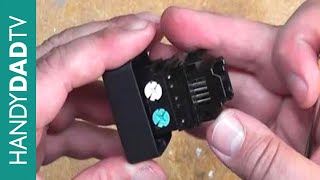
- Burnt-out Parking Switch Bulb (Honda) (Very Common) — On Honda models like the Pilot and Odyssey, a burnt-out indicator bulb inside the dashboard parking sensor button interrupts the circuit, causing the entire system to report a B2618 error.
- Faulty Body Control Module (BCM) (GM, Nissan) (Common) — On GM and Nissan vehicles, a failing BCM sends incorrect signals or fails internal self-checks, triggering this code. On Nissans, this is frequently caused by water leaking onto the module from clogged sunroof drains.
- Low Battery Voltage / Weak Ground Connection (Common) — A weak battery or corroded ground strap causes low voltage conditions. BCMs are highly sensitive to voltage drops and log spurious B2618 codes when they lack stable power.
- Wiring Harness Damage (Common) — Damaged, corroded, or shorted wiring triggers this code across all makes. On Hondas, the bumper sensor harness is vulnerable. On GMs, the interior light wiring or BCM grounds are typical failure points.
- Faulty Courtesy Lamp Relay (GM) (Less Common) — A bad relay controlling the interior lights creates a short or open circuit, leading the GM BCM to set this code. Swapping it with a known-good relay is a fast diagnostic test.
- Blown Fuse (Uncommon) — A blown fuse related to the BCM, courtesy lights (CTSY/DOME), or parking assist system causes a loss of function and triggers a fault.
Symptoms
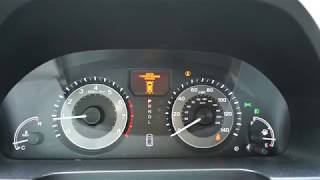
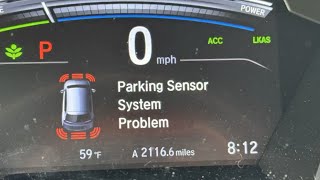
- Parking Assist System Disabled (Honda/Acura) — The 'Check Parking Sensor System' message 🎬 Watch: How to fix the Honda parking sensor dashboard error appears on the dashboard, and the system fails to detect objects or beep when in reverse.
- Parasitic Battery Drain (GM, Nissan) — A failing BCM prevents the vehicle from entering 'sleep' mode, causing a continuous power draw (300-500mA) that kills the battery overnight.
- Engine Won't Start or Stalls (GM, Nissan) — A BCM fault interferes with the anti-theft immobilizer system, leading to intermittent no-start conditions or stalling.
- Interior Courtesy Lights Malfunctioning (GM) — Dome and map lights fail to turn on when a door opens, or they stay illuminated permanently and refuse to turn off.
- Flashing Parking Assist Light (Honda/Acura) — The LED on the parking assist button blinks instead of staying solid, indicating the control unit detects a hard fault.
Diagnostic Flowchart
Tap your situation to follow the diagnostic path that matches what you're seeing on this code.
Common Fixes & Costs
- Replace Parking Switch Bulb (Honda) — Parts: $5-$15, Labor: $0-$50, ~0.3 hr book time (DIY)
- Replace Faulty Parking Sensor (Honda/Acura) — Parts: $30-$150, Labor: $100-$250, ~1.5 hr book time (Intermediate)
- Repair Original BCM (Mail-in Service) (Nissan, GM) — Parts: $150-$300, Labor: $100-$200, ~1.5 hr book time (Intermediate)
- Replace Body Control Module (BCM) (GM, Nissan) — Parts: $250-$800, Labor: $250-$500, ~2.5 hr book time (Professional)
- Repair Wiring Harness — Parts: $20-$100, Labor: $150-$500, ~3.0 hr book time (Professional)
Used vs. New Parts: Buying Guide
When a used part is worth it: A used parking sensor is a good value. A used BCM is only viable if you have access to a professional with tools to 'virginize' and reprogram it; otherwise, it immobilizes the car.
Donor-vehicle mileage cap: roughly under 80000 miles for the part to have meaningful remaining life.
Donor quality checklist:
- Verify the BCM part number matches exactly.
- Avoid modules from flood-damaged vehicles.
- Ensure parking sensors have no cracks on the face.
Decision logic:
- If The part is a Body Control Module (BCM) → Buy a new OEM part or send your original module for professional mail-in repair.
- If The part is a parking sensor → A used OEM or new aftermarket sensor is an acceptable alternative to new OEM.
Warranty tradeoff: Used parts typically have a 30-90 day warranty. Aftermarket new parts offer 1-year to limited lifetime warranties. New OEM parts carry a 1-year warranty.
Worst-case if a used part fails: $400-$800 if a used BCM fails after installation, requiring repeat labor and programming fees.
What Happens If You Wait — Timeline
- 0-1 month: Initial fault occurs. Honda displays 'Check Parking Sensor'. GM/Nissan exhibits intermittent electrical gremlins (flickering dome light). (MPG impact: 0%% · Added cost: $0)
- 1-4 months: Symptoms increase. GM/Nissan develops a parasitic battery drain as the BCM fails to sleep, causing slow cranking. (MPG impact: 0%% · Added cost: $150-$300 (for a new battery))
- 4-8 months: Severe BCM malfunction. The car intermittently fails to start due to immobilizer issues. Communication codes (U-codes) appear. (MPG impact: 0%% · Added cost: $100-$250 (for towing))
- 8+ months: Total BCM failure. The vehicle will not start and the BCM is unresponsive to a scan tool. (MPG impact: 0%% · Added cost: $800-$1500 (for BCM replacement and programming))
Cost of Not Fixing It
- Immediate: Loss of function for the specific system: disabled parking sensors on a Honda or malfunctioning interior lights on a GM. (Added cost: 0)
- 1-3 months: On GM/Nissan, a failing BCM causes a parasitic drain that destroys the battery, requiring replacement. (Added cost: $150-$300)
- 3+ months: Complete BCM failure occurs unpredictably, leading to a no-start condition that requires towing and emergency repair. (Added cost: $500-$1200)
Diagnosis Steps
- Identify Vehicle System & TSBs
Confirm your car's brand to know if you are diagnosing a lighting (GM), parking sensor (Honda/Acura), or BCM power issue (Nissan). Search for Technical Service Bulletins (TSBs) for your specific year and model.
Tools: Owner's Manual, Internet Access (Beginner) - Check Battery Voltage & Fuses
Ensure battery voltage rests above 12.4V with the engine off. Low voltage causes random electronic faults. Visually inspect all fuses related to the BCM, interior lighting (CTSY/DOME), or parking assist.
Tools: Multimeter, Fuse Puller (Beginner) - Check the Parking Switch Bulb (Honda)
Press the parking sensor activation button. If the small indicator light does not illuminate, the internal bulb is likely burnt out, disabling the system. Test the bulb with a multimeter.
Tools: Multimeter, Trim Removal Tool (Beginner) - Listen to the Sensors (Honda/Acura)
Turn the ignition to 'ON' (engine off) and activate the parking sensors. Place your ear close to each bumper sensor. A healthy sensor makes a faint, repetitive clicking sound. A silent sensor is the failed unit.
Tools: None (Beginner) - Inspect for Water Intrusion & Wiring Damage
For Honda/Acura: Inspect bumper sensors and wiring for physical damage or torn wires. For GM/Nissan: Check the passenger floorboard and kick panel for water leaks, which destroy the BCM.
Tools: Flashlight (Beginner) - Test the Courtesy Lamp Relay (GM)
Locate the courtesy lamp relay in the fuse box. Swap it with an identical relay from a non-critical circuit (like the horn). If the interior lights start working, replace the relay.
Tools: Fuse Box Diagram (Intermediate) - [PRO TIP] Scan Tool Live Data Analysis
Use a bi-directional scanner to view live data. For Honda, identify exactly which sensor is offline. For GM/Nissan, monitor BCM inputs (door switches) versus outputs (relay commands). If inputs register but outputs fail, the BCM is internally faulty.
Tools: Bi-directional OBD-II Scan Tool (Advanced) - [PRO TIP] Test Parking Sensor Circuit (Honda/Acura)
Disconnect the suspected bad sensor. Measure resistance across the pins. An open circuit (infinite resistance) or a dead short (near zero resistance) between the power and ground pins confirms a dead sensor.
Tools: Multimeter, Wiring Diagram (Advanced) - [PRO TIP] Test Courtesy Lamp Circuit (GM)
Probe the courtesy lamp relay control wire at the BCM connector. It should show battery voltage when lights are off, and drop near zero when the BCM commands lights on. If voltage remains high, the BCM is failing to provide ground.
Tools: Multimeter, Wiring Diagram (Advanced)
When This Code Triggers (Freeze-Frame Conditions)
- Ignition Status: ON (The code sets during the module's power-on self-test.)
- System Command State (GM): OFF (Triggers when the BCM commands the courtesy light relay OFF, but voltage is still detected on the control circuit.)
- System Command State (Honda): ON (Logs when the parking sensor system activates and a sensor fails to report back to the control unit.)
- Battery Voltage: 11.5V - 14.5V (Typically occurs within normal operating range, though voltage below 12.0V triggers spurious BCM faults.)
Related Codes
- B2619, B261A, B261B — On Honda/Acura, these codes correspond to the 2nd, 3rd, and 4th parking sensors. Multiple codes indicate a shared wiring harness failure.
- U0140 — Indicates 'Lost Communication with Body Control Module'. If present with B2618 on GM/Nissan, diagnose the U-code first, as the BCM is offline.
- B172E, B172F — GM-specific codes for parking assist sensor circuits. GM uses these instead of B2618 for parking faults.
Climate & Environmental Factors
- Humidity and Heavy Rain: Water penetrates failing seals on Honda/Acura parking sensors, causing short circuits. On Nissans, clogged sunroof drains leak water directly onto the BCM, causing internal corrosion.
- Cold Weather / Snow and Ice: Snow and ice physically block parking sensors, triggering temporary system errors until the obstruction melts.
- Road Salt: Corrosion from road salt destroys under-vehicle wiring harnesses and ground connections, leading to voltage drops that trigger BCM faults.
How to Talk to a Mechanic About This Code
Say this: "State your vehicle's year, make, and model. For Honda/Acura: 'I have a B2618 code, and the parking sensors aren't working. Please diagnose if it's a failed sensor, wiring, or the switch bulb.' For GM/Nissan: 'I have a B2618 code and a parasitic battery drain/no-start condition. Please perform a parasitic draw test and check BCM communication before recommending a replacement.'"
Directs the technician to the most probable causes, saving diagnostic time and preventing unnecessary repairs.
Avoid saying:
- 'Just fix whatever's wrong'
- 'My check engine light is on, can you look at it?'
- 'I think it's the BCM, just replace it.' (Describe symptoms, don't diagnose)
Questions to ask before authorizing the repair:
- For Honda: Did you identify a specific failed sensor with the 'click test' or a scan tool?
- For Honda: Does your procedure include the mandatory system reset?
- For GM/Nissan: What was the measured parasitic draw in milliamps after the vehicle went to sleep?
- For GM/Nissan: Does the estimate include the cost of programming and the security relearn procedure?
Where to Take It: Dealer vs Independent vs Chain
- Dealer:
Necessary for BCM replacement/programming if you lack a specialized independent shop. Overkill for a simple Honda sensor issue.
Best for: Vehicles under warranty, Complex BCM replacement and programming on newer GM and Nissan models
Downsides: Highest labor rates, Defaults to expensive module replacement over repair (Typical cost: +50% vs. baseline) - Independent Shop:
Best overall fit. Choose a top-tier shop with J2534 programming capabilities for GM/Nissan BCM replacements.
Best for: Honda/Acura sensor and wiring repairs, Diagnosing parasitic draws and electrical faults
Downsides: May lack OEM-level scan tools required to program a new BCM. (Typical cost: +0% vs. baseline) - Chain Shop:
AVOID. The diagnostic complexity of B2618 is beyond the scope of a typical chain repair shop.
Best for: Tires, brakes, and oil changes.
Downsides: Technicians lack training for complex electrical diagnosis involving B-codes or BCMs. (Typical cost: -10% vs. baseline)
When to Walk Away From the Repair
If the total estimated repair cost exceeds 50% of your car's current private-party market value, consider your options.
- Car worth $3000, fix is $1500: Walk away. The repair cost is half the car's value. Put this money toward a more reliable vehicle.
- Car worth $15000, fix is $1200: Fix it. The repair cost is less than 10% of the vehicle's value and restores critical security functions.
What Scan Tool You Need for This Code
Minimum: A scanner that reads manufacturer-specific Body Control Module (BCM) codes. Basic $20 engine code readers cannot see B-codes.
B2618 is stored in the BCM, not the engine computer. Without BCM capability, you won't know the fault exists or be able to view live data to find the root cause.
Budget: BlueDriver Pro or Autel AP200 (~$100) — Reads and clears BCM codes and displays live data to verify door switches or identify offline parking sensors.
Mid-range: Foxwell NT510/NT530 or Autel MK808 (~$180) — Adds bi-directional control. Commands the courtesy lamp relay on/off directly from the tool to test the GM circuit.
Professional: Autel MaxiCOM MK900 or LAUNCH X431 Series (~$500-1200) — Provides OEM-level diagnostic functions, including BCM programming and security relearn procedures required for GM/Nissan.
Rent vs buy: Auto parts store loaner tools are basic engine readers and will not work. You must buy a scanner with BCM capability to DIY this diagnosis.
How to Clear the Code After You Fix It
- For GM BCM replacement: Perform the 30-minute security relearn procedure.
- For Honda sensor replacement: Perform the manual parking sensor system reset.
- Use an OBD-II scan tool to clear the fault code from the BCM.
- Operate the affected system (courtesy lights, parking sensors) to verify the repair.
Drive cycle (~30 minutes): Cold start, idle for 2-3 minutes. Drive in mixed city/highway traffic for 15-20 minutes. Allow the vehicle to cool down completely. This resets engine readiness monitors if the battery was disconnected.
Readiness monitors affected: Not applicable for the B2618 code itself., If the battery was disconnected, all emissions readiness monitors reset.
Before emissions retest: drive at least 50 miles to fully set monitors.
Watch out for:
- Forgetting to perform the mandatory GM 30-minute relearn or Honda manual reset after component replacement.
- Clearing the code with a scanner without fixing the underlying electrical fault.
- Attempting the GM relearn procedure with a weak battery, causing the programming to fail.
Will This Fail Emissions / State Inspection?
No — by itself this code doesn't fail OBD inspection (but it can keep readiness monitors from setting, which causes a separate fail).
- California: This B-code does not cause a smog check failure. However, if the battery was disconnected, OBD-II readiness monitors reset and must be driven to completion.
- New York: NYS inspection does not check B-codes. The vehicle passes if the Check Engine Light is off and readiness monitors are set.
- Texas: Inspection only fails for emissions-related P-codes that illuminate the Check Engine Light. B2618 will not cause a failure.
Most Commonly Affected Vehicles
- Acura RDX (2016-2018) — Prone to parking sensor failures. TSB A16-044 requires a manual system reset after sensor replacement to prevent the code from returning.
- Honda Odyssey (2011-2022) — The 2011-2017 models frequently suffer from burnt-out parking switch indicator bulbs. 2018-2022 models experience bumper wiring damage.
- Chevrolet Impala (2000-2005) — Logs B2618 due to BCM or interior lighting circuit faults. A failing BCM causes intermittent no-start conditions.
- Chevrolet Monte Carlo (2000-2005) — Shares the Impala platform and suffers identical BCM and lighting circuit failures.
- Chevrolet S10 / Suburban (2002-2004) — Sets B2618 when the courtesy lamp relay control circuit shorts to voltage, typically pointing to a faulty BCM.
- Nissan Maxima (2009-2014) — B2618 indicates an internal BCM power supply fault, frequently caused by water intrusion from a clogged cowl drain.
- Nissan Altima (2007-2012) — The factory service manual diagnostic tree for B2618 leads directly to BCM replacement due to internal module failure.
- Pontiac Grand Prix (2004-2008) — Known for BCM failures that cause lighting, security, and starting issues logging B2618.
Manufacturer-Specific Notes
- Honda: A burnt-out incandescent bulb in the parking sensor dashboard switch breaks the circuit, disabling the entire system and setting B2618.
- Acura/Honda: After replacing a parking sensor, the system requires a manual reset: Turn ignition ON, press the parking button 10 times in 10 seconds, turn ignition OFF, then press and hold the button while turning ignition ON until it beeps.
- General Motors: Disconnecting a BCM ground while the battery is connected instantly destroys the module. Always disconnect the negative battery cable first.
- Nissan: Unlike other makes where B-codes point to external wiring, B2618 on Nissans specifically indicates an internal self-check failure of the BCM's power supply.
Real Owner Stories
2012 Honda Pilot with 'Check Parking Sensor System' message
The error message appeared on the dash, parking sensors stopped working, and the indicator light on the switch would not illuminate.
What they tried:
- The owner searched online forums and discovered this is a common Honda quirk.
Outcome: The cause was a burnt-out indicator bulb inside the parking sensor switch. Replacing the $7 bulb (Part No. 35474-SZA-A11) restored the entire system.
Lesson: Always check the parking sensor switch indicator bulb first on Hondas. A simple bulb failure disables the entire system.
2013 Infiniti G37 with multiple random electrical issues
Owner experienced intermittent failure of turn signals, wipers, and a parasitic battery drain.
What they tried:
- Owner found a wet passenger floorboard and rerouted the clogged sunroof drain tubes. Despite fixing the leak, electrical problems persisted.
Outcome: The water-damaged BCM required replacement. Internal corrosion caused lasting, erratic behavior even after drying out.
Lesson: Clogged sunroof drains are the #1 cause of BCM failure on Nissan/Infiniti models. If you have random electrical faults, check for water near the BCM immediately.
2000 Chevrolet Monte Carlo with hard starting, stalling, and B2618
The car ran poorly and stalled. A scan tool lost communication with the PCM but communicated with the BCM, which showed a current B2618 code.
What they tried:
- The technician noted the communication loss with critical modules while the BCM remained online, pointing to a network issue.
Outcome: The combination of B2618, stalling, and communication loss indicated a failing BCM dragging the network down. Replacing the BCM fixed the stalling.
Lesson: Don't dismiss B2618 as just a 'lighting problem' on older GM vehicles. A failing BCM disrupts the entire vehicle network, causing critical engine problems.
How to Prevent This Code From Triggering
- Clear Sunroof and Cowl Drains (Annually) — Prevents water from overflowing directly onto the BCM on Nissan, Infiniti, and GM models, avoiding catastrophic corrosion.
- Regularly Clean Parking Sensors (During every car wash) — Removes dirt and grime that block ultrasonic waves. Avoid using high-pressure washers directly on the sensors to prevent water intrusion.
- Maintain Battery Health and Ground Connections (Annually) — BCMs require stable voltage. Clean terminals and tight grounds prevent erratic behavior and spurious fault codes.
Frequently Asked Questions
Can I fix code B2618 myself?
Yes, for Honda/Acura sensor or bulb replacements. For GM/Nissan, replacing a BCM requires professional programming, making it a shop-only job. However, sending your original BCM to a mail-in repair service offers a plug-and-play DIY alternative.
What is the most common misdiagnosis for B2618 on a Honda/Acura?
Replacing a Honda parking sensor and assuming the code will clear itself. You must perform a manual system reset procedure to make the control unit recognize the new sensor. Without this reset, the B2618 code returns immediately.
Can a bad BCM cause my car not to start?
Yes. The BCM manages the vehicle's anti-theft immobilizer system. If it fails to recognize your key's transponder or loses communication with the engine computer, it disables the starter and fuel system.
Why did my parking sensors stop working after a car wash?
High-pressure water penetrates weak seals on aging sensors or wiring connectors, causing a short circuit. This frequently happens if a sensor has a hairline crack from a previous minor bumper impact. Avoid spraying high-pressure water directly at the sensors.
Do I have to reprogram a new Body Control Module (BCM)?
Yes. A new BCM must be programmed with your vehicle's specific VIN and options package using an OEM-level scan tool. Without programming, the vehicle will remain immobilized and will not start.
What does 'Short to Voltage' mean in the GM definition?
It means a wire is touching a power source when it should be grounded or open. The GM BCM expects near zero volts when it commands the interior lights on. If it detects voltage instead, it sets code B2618.
Will clearing the code fix the problem?
No. B2618 is a hard fault indicating a persistent electrical failure. The code returns immediately upon the next system self-test until the underlying component is repaired and the system is reset.
Key Takeaways
- Code B2618 definitions vary by brand: it signals a front parking sensor failure on Honda/Acura, an interior lighting circuit short on GM, and an internal Body Control Module (BCM) fault on Nissan.
- On Honda and Acura vehicles, check the $10 parking sensor dashboard switch bulb first, as a burnt-out indicator bulb disables the entire system and triggers this code.
- For GM and Nissan models, a failing BCM causing code B2618 often creates a parasitic battery draw exceeding 50mA, which will kill your battery overnight.
- Never replace a Honda parking sensor or GM BCM without performing the mandatory system reset or 30-minute security relearn, otherwise the B2618 code will return immediately.
- Verify your battery voltage rests above 12.4V before replacing expensive modules, as low voltage causes sensitive BCMs to log false B2618 codes.
Helpful Videos

Shop the Parts Behind B2618
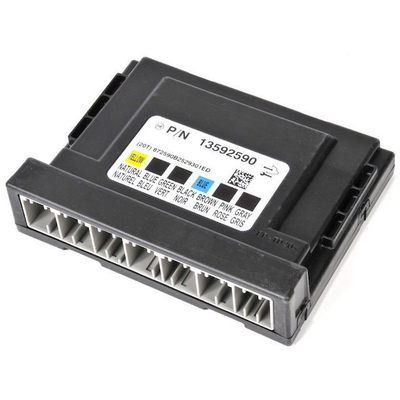
Below are the parts most often responsible for code B2618, ranked by how frequently each one is the actual culprit (per the diagnosis above). Tap any to see what we have for your vehicle.


The information in this article is provided for general reference and educational purposes only. Vehicle specifications, procedures, and part compatibility can vary by production date, trim level, and region. Always consult your vehicle's factory service manual and verify part numbers before purchasing or performing repairs. Safety-critical components such as airbags, seat belts, and braking systems should be installed by a qualified professional.
- 🧭 Diagnostic Flowchart
- 🎬 Helpful Videos
- 🛍️ Shop This Part
- What Does B2618 Mean?
- Can I Drive With B2618?
- Common Causes
- Symptoms
- Common Fixes & Costs
- Used vs. New Parts: Buying Guide
- What Happens If You Wait — Timeline
- Cost of Not Fixing It
- Diagnosis Steps
- When This Code Triggers (Freeze-Frame Conditions)
- Related Codes
- Climate & Environmental Factors
- How to Talk to a Mechanic About This Code
- Where to Take It: Dealer vs Independent vs Chain
- When to Walk Away From the Repair
- What Scan Tool You Need for This Code
- How to Clear the Code After You Fix It
- Will This Fail Emissions / State Inspection?
- Most Commonly Affected Vehicles
- Manufacturer-Specific Notes
- Real Owner Stories
- 2012 Honda Pilot with 'Check Parking Sensor System' message
- 2013 Infiniti G37 with multiple random electrical issues
- 2000 Chevrolet Monte Carlo with hard starting, stalling, and B2618
- How to Prevent This Code From Triggering
- Frequently Asked Questions
- Can I fix code B2618 myself?
- What is the most common misdiagnosis for B2618 on a Honda/Acura?
- Can a bad BCM cause my car not to start?
- Why did my parking sensors stop working after a car wash?
- Do I have to reprogram a new Body Control Module (BCM)?
- What does 'Short to Voltage' mean in the GM definition?
- Will clearing the code fix the problem?
- Key Takeaways
- 🎟️ Get 5% Off