

OBD-II Code B2724: Sonar Control Unit Internal Failure
The Ultimate 2026 Guide to Meaning, Diagnosis, and Repair
- Code B2724 on 2019-2023 Nissan and Infiniti models almost always points to a known software glitch or a warped $40 sensor bracket covered by TSB NTB22-038C.
- The vehicle remains safe to drive, but the Rear Automatic Braking (RAB) system is 100% disabled, increasing the risk of low-speed backing collisions.
- Stop DIY diagnosis immediately after checking the 12V battery; fixing this requires a dealer-level CONSULT-III plus scanner to reprogram the Sonar Control Unit.
- Never authorize a $1,000+ module replacement without verifying the shop first physically inspected the rear sonar brackets and attempted a software update.
What Does B2724 Mean?
Code B2724 indicates the Sonar Control Unit—the computer managing your rear parking sensors and Rear Automatic Braking (RAB) system—detected an internal error and shut down as a safety measure. On affected Nissan and Infiniti vehicles, this appears as a specific B2724-23 code, pointing to an internal under-voltage fault self-detected by the sonar ECU.
Technical definition: The official SAE/ISO definition for B2724 is manufacturer-specific. For its most common application (Nissan/Infiniti), it is defined as 'SONAR CONTROL UNIT - SONAR ECU INTERNAL FAILURE [UNDER VOLTAGE]' (DTC B2724-23). The module's diagnostic check failed due to a perceived voltage irregularity within its circuits.
Can I Drive With B2724?
Yes, But With Caution. Yes, the vehicle is safe to drive because your standard braking system remains unaffected. However, the Rear Automatic Braking (RAB) and parking sensor systems are completely disabled. This significantly increases the risk of a low-speed collision when backing up. Repair this promptly to restore full safety system functionality.
Common Causes
- Sonar Control Unit Software Requires Update (Very Common) — On affected Nissan and Infiniti models, the original control unit software is overly sensitive and falsely detects an internal under-voltage error. Multiple Technical Service Bulletins (TSBs) resolve this with a software update (reprogram).
- Deformed Rear Sonar Sensor Bracket (Very Common) — Nissan TSB NTB22-038C identifies that plastic brackets holding the rear sonar sensors warp from temperature changes or minor impacts. This misaligns the sensor, generating a fault and triggering the B2724 code. This must be checked before attempting a reprogram.
- Weak or Failing 12V Battery (Common) — Because the code specifically flags an 'under-voltage' condition, a weak 12V battery is a primary suspect. A battery testing below 12.4V at rest causes unpredictable errors in sensitive electronic modules.
- Damaged Wiring or Connectors (Rare) — The rear sonar wiring harness is susceptible to moisture intrusion from car washes, corrosion, or physical damage from minor impacts. This causes shorts or open circuits, leading to the fault.
- Aftermarket Modifications or Improper Collision Repair (Rare) — Improperly installed aftermarket accessories (e.g., trailer hitches) that block a sensor's view, or poor-quality collision repairs on the rear bumper cause sensor misalignment or wiring damage that leads to this fault code.
- Intermittent Power/Ground Issue to Sonar ECU (Rare) — A loose ground connection or a corroded power wire at the Sonar Control Unit's main connector causes intermittent voltage drops, directly triggering the B2724-23 under-voltage fault.
- Faulty Sonar System Buzzer (Older Models) (Less Common) — On older Nissan platforms, the sonar system's audible warning buzzer is a critical part of the circuit. A failure of the buzzer itself prevents the control unit from communicating with a scan tool, mimicking a total control unit failure. 🎬 See these expert tips for testing the Nissan sonar system.
- Failed Sonar Control Unit (Very Rare) — While the code explicitly points to an 'internal failure', the unit itself rarely fails. This is the absolute last resort after all TSBs are followed, software updates fail, and the module shows obvious physical damage.
Symptoms
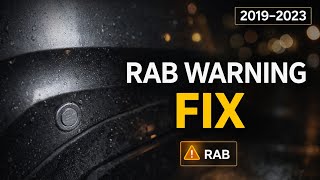
- Dashboard RAB Warning Light and Error Message — A warning light illuminates, accompanied by a specific message like 'Check Sonar System,' 'RAB Error,' or 'System fault See Owner's Manual' on the instrument cluster screen. 🎬 Watch: How to fix the RAB warning light on your Nissan.
- Total Deactivation of Rear Automatic Braking — The vehicle will not automatically brake for obstacles when in reverse. The system cannot be turned on or off via the vehicle's settings menu.
- Parking Assist Sensors Inoperative — The audible beeping from your rear parking sensors stops working entirely when you get close to an object while backing up.
- False/Erratic Parking Sensor Alerts — Before the system fails completely, the parking sensors beep erratically or indicate an obstacle is present when nothing is there.
Diagnostic Flowchart
Tap your situation to follow the diagnostic path that matches what you're seeing on this code.
Common Fixes & Costs
- Reprogram Sonar Control Unit — Parts: $0, Labor: $150-$300, ~1.5 hr book time (Professional)
- Replace Deformed Sonar Sensor Bracket(s) — Parts: $20-$60, Labor: $150-$300, ~2 hr book time (Intermediate)
- Replace Vehicle Battery — Parts: $150-$250, Labor: $50-$100, ~0.5 hr book time (DIY)
- Repair Wiring Harness or Connector — Parts: $10-$50, Labor: $150-$450, ~2.5 hr book time (Professional)
- Replace Sonar Control Unit — Parts: $400-$998, Labor: $150-$300, ~1.5 hr book time (Professional)
DIY vs Professional
- Reprogram Sonar Control Unit 🟢 Beginner
Tools: Nissan CONSULT-III plus diagnostic tool, stable battery maintainer (12.0V-15.5V), stable internet connection. - Replace Deformed Sonar Sensor Bracket(s) 🟢 Beginner
Tools: Basic hand tools, trim removal tools, possibly a torque wrench. - Replace Vehicle Battery 🟢 Beginner
Tools: Basic hand tools (wrenches/sockets). A memory saver is recommended to preserve vehicle settings. - Repair Wiring Harness or Connector 🟢 Beginner
Tools: Digital Multimeter, wiring diagrams, wire stripping/crimping tools, soldering iron, heat shrink. - Replace Sonar Control Unit 🟢 Beginner
Tools: Tools for access, plus Nissan CONSULT-III plus for mandatory programming and configuration after installation.
Used vs. New Parts: Buying Guide
When a used part is worth it: A used Sonar Control Unit is a last resort if a brand new part is unavailable, AND after confirming the issue is not solvable by the common TSB software update or bracket replacement. It is a high-risk purchase.
Donor-vehicle mileage cap: roughly under 60000 miles for the part to have meaningful remaining life.
Donor quality checklist:
- Verify the part number matches EXACTLY, including any suffix letters.
- Purchase from a reputable seller that offers a warranty and a clear return policy.
- Visually inspect the module's connectors for any signs of corrosion, bent pins, or physical damage.
Decision logic:
- If The TSB for reprogramming has not been attempted by a dealer yet → Do NOT buy any part. The issue is most likely software.
- If A new OEM part is available and the cost difference is less than $300 → Buy new OEM. The risk of a used part failing or being non-programmable is too high.
- If The vehicle is older and budget is the primary concern → A used part is a gamble, but viable. Be aware that it still requires dealer programming, adding to the total cost.
Warranty tradeoff: Used parts typically come with a 30-90 day warranty, if any. New OEM parts purchased and installed by a dealer usually carry a 12-month/12,000-mile warranty.
Worst-case if a used part fails: $300-$600 if the used module is faulty or cannot be programmed. This includes the sunk cost of the part plus the labor for the attempted installation and programming.
What Happens If You Wait — Timeline
- Immediate: Code B2724 is set. The RAB warning light illuminates, and a message appears on the dash. The Rear Automatic Braking and audible parking sensor systems are completely disabled. (MPG impact: 0%% · Added cost: $0)
- 0-6 months: The primary risk is the increased likelihood of a low-speed backing collision. The cost of not fixing is the potential cost of repairing your bumper or another vehicle. (MPG impact: 0%% · Added cost: $500-$2500 (Potential collision repair))
- 6-12 months: If the root cause is moisture intrusion, an intermittent fault becomes permanent. Corrosion damages the wiring harness pins or connectors, making a simple fix impossible. (MPG impact: 0%% · Added cost: $450-$1500 (Cost to diagnose and repair a corroded wiring harness))
- 12+ months: Continued operation without the safety system normalizes the risk. If corrosion from a wiring issue spreads through the CAN bus, it leads to complex electronic failures affecting other modules. (MPG impact: 0%% · Added cost: $1500+ (Worst-case scenario involving complex CAN bus diagnostics))
Cost of Not Fixing It
- Immediate: The Rear Automatic Braking (RAB) and parking sensor system are disabled. This leads to a significantly increased risk of a low-speed backing collision with pedestrians, vehicles, or stationary objects. (Added cost: Variable. Cost of bumper repair ($500-$2000) or liability for property damage/injury in a collision.)
- Ongoing: No direct damage to other vehicle components. The primary cost is the persistent lack of a key safety feature, which reduces driver confidence and increases the likelihood of an at-fault accident. (Added cost: Potential increase in insurance premiums after a backing accident or potential denial of a claim.)
- Long-term (6+ months): If the root cause is moisture intrusion in the wiring, ongoing corrosion eventually leads to complex and expensive electrical failures in the CAN bus system. (Added cost: $500-$1500+ for complex wiring harness diagnosis and repair.)
Diagnosis Steps
- Verify the Code with an Advanced Scanner
Use a professional scanner to confirm the presence of B2724 and the manufacturer-specific suffix (e.g., B2724-23). Note any other codes, especially C1B56-04, which is expected to appear with this fault and must be ignored per TSBs.
Tools: Advanced OBD-II Scanner (Nissan CONSULT or equivalent) (Intermediate) - Check for Technical Service Bulletins (TSBs)
Search for Nissan TSB NTB22-038C or Infiniti TSB ITB20-025C. These documents provide the exact, updated diagnostic path from the manufacturer and must be followed precisely to avoid misdiagnosis.
Tools: Google Search, NHTSA website (Beginner) - Inspect Rear Sonar Sensor Brackets
As mandated by Nissan TSB NTB22-038C, visually inspect the plastic brackets holding the rear sonar sensors in the bumper. Look for any signs of warping, cracking, or deformation that misaligns the sensor. Do this before attempting a software update.
Tools: Flashlight, Trim Removal Tools (optional) (Beginner) - Test the Vehicle's 12V Battery and Charging System
A weak battery causes under-voltage codes. Use a multimeter to check the resting voltage (must be >12.4V). Perform a load test to check the battery's health. Verify the alternator charges correctly (13.2V-14.8V with the engine running).
Tools: Digital Multimeter, Electronic Battery Tester (Beginner) - Inspect Rear Bumper Wiring Harness
Thoroughly inspect the wiring harness connected to the sonar sensors and control unit. Unplug connectors to check for bent pins, corrosion, or signs of water intrusion. Look for chafed wires or damage from previous impacts.
Tools: Flashlight, Trim Removal Tools, Magnifying Glass (Intermediate) - Check the Sonar Control Unit Software Version
Connect a dealer-level tool like the Nissan CONSULT-III plus. Navigate to the Sonar system and use the 'ECU Identification' function to view the current software part number. Compare this to the TSB to determine if an update is required.
Tools: Nissan CONSULT-III plus or equivalent (Advanced) - Advanced: Verify Voltage During Reprogramming
When performing the TSB software update, a battery maintainer is mandatory. Maintain system voltage strictly between 12.0V and 15.5V. If voltage drops below 12.0V or exceeds 15.5V during the reflash, the procedure fails and permanently damages the Sonar Control Unit.
Tools: Nissan CONSULT-III plus, Battery Maintainer (reflash mode) (Professional) - Advanced: Power and Ground Circuit Integrity Check
If software and brackets are good, check the Sonar Control Unit's main connector. With the key on, verify battery voltage (approx. 12.0V) at the power supply pin. Check the voltage drop on the ground pin; the reading must be less than 0.1V. A significant voltage drop points to a wiring issue, not a faulty module.
Tools: Digital Multimeter, Vehicle-Specific Wiring Diagram (Professional) - Advanced: Test Sonar Sensor Waveform with Oscilloscope
For intermittent issues not solved by TSBs, use an oscilloscope to back-probe the signal wire of each sonar sensor. A healthy sensor produces a distinct square wave pattern. A missing or noisy pattern pinpoints a single failing sensor or wiring issue.
Tools: Automotive Oscilloscope, Wiring Diagram (Professional)
When This Code Triggers (Freeze-Frame Conditions)
- System State: Ignition ON or In Reverse (The Sonar Control Unit performs a self-test upon ignition ON and is active when the vehicle is in reverse. The fault is logged during one of these states.)
- Vehicle Speed: < 9 mph (15 km/h) (The Rear Automatic Braking system is only active at low speeds while backing up. The fault is logged when the system attempts to activate but fails its self-check.)
- Battery Voltage: 11.8V - 15.0V (The fault is an 'under-voltage' detection triggered by sensitive software, not an actual system-wide low voltage. The TSB repair requires voltage to be strictly maintained between 12.0V and 15.5V.)
- Ambient Condition: N/A (The fault is triggered by moisture from a car wash or temperature extremes causing bracket warping, rather than by specific engine operating parameters.)
Related Codes
- C1B56-04 — This code for 'SONAR CIRCUIT - SYSTEM INTERNAL MALFUNCTION' is set by the ADAS module when it detects the B2724 fault. TSBs explicitly state these codes appear together. The fix for B2724 resolves this code.
- B272A, B272B, etc. — These codes point to a specific sonar sensor circuit (e.g., B272A for front left inner). If you have one of these codes instead of B2724, the problem is a single failed sensor or its wiring.
- U-codes (e.g., U0100, U0415) — U-codes indicate a communication failure between modules (CAN bus fault). If you see these along with B2724, it points to a complex wiring issue or a failing gateway module. Diagnosis for U-codes must take priority.
- C1A03, C1A04, C1A06 — These are codes for the front radar sensor. If they appear alongside B2724, it suggests a systemic issue affecting multiple ADAS components, such as a problem with the shared power supply or ground.
Climate & Environmental Factors
- Temperature Extremes (Hot and Cold): Causes the plastic sonar sensor brackets to warp or become brittle and crack, leading to sensor misalignment which triggers the B2724 fault.
- Humidity and Moisture: Heavy rain or car washes force water into damaged wiring or poorly sealed connectors in the bumper area, leading to shorts or communication errors that trigger the code.
- Ice and Snow Buildup: Ice, snow, or heavy dirt physically obstructing the face of a sonar sensor causes the system to register a fault or behave erratically.
- Ultrasonic Noise: External ultrasonic sources, such as air brakes on a large truck or equipment at an automatic car wash, interfere with sensor operation and cause temporary false alerts.
How to Talk to a Mechanic About This Code
Say this: "I have a [Your Year/Model] with a RAB warning light and a B2724-23 code. I'm aware of Nissan Technical Service Bulletin NTB22-038C. I'd like to schedule a diagnostic appointment to have that TSB procedure followed, specifically ensuring the sonar sensor brackets are inspected for warping before any software reprogramming is attempted."
This specific language signals to the service advisor that you are an informed customer. It directs them to the exact fix, prevents them from starting with a costly module replacement quote, and holds them accountable to the manufacturer's updated repair procedure.
Avoid saying:
- 'My backup sensor light is on, can you check it?' (Too vague, invites a wide-ranging and expensive diagnostic process).
- 'Just fix whatever is wrong.' (Gives the shop a blank check to replace parts).
- 'My friend said it's probably a bad sensor.' (Incorrectly points them away from the known TSB fixes).
Questions to ask before authorizing the repair:
- Can you confirm on the work order that you will follow TSB NTB22-038C?
- Before you quote a module replacement, can you please confirm that you visually inspected the sonar brackets and that the software reprogram failed?
- If a reprogram is needed, what is the written estimate for that specific labor?
- What warranty do you offer on this software repair and any related parts?
Where to Take It: Dealer vs Independent vs Chain
- Dealer:
Highly Recommended. The dealer is the best and safest choice for this specific code. They have direct access to the TSBs, the required CONSULT diagnostic tool, and the correct software. The repair may also be covered under warranty.
Best for: Vehicles under warranty., Repairs involving Technical Service Bulletins (TSBs)., Module reprogramming that requires proprietary manufacturer software (Nissan CONSULT).
Downsides: Typically higher labor rates than independent shops., Less flexible on pricing. (Typical cost: +40% vs. baseline) - Independent Shop:
Use with Caution. Only a top-tier independent shop that specializes in Nissan and has invested in OEM-level tools (like a J2534 pass-through device and a software subscription) can perform this repair. For most independent shops, this is a dealer-only fix.
Best for: Out-of-warranty vehicles with common, non-software related issues., Basic maintenance and mechanical repairs.
Downsides: Unlikely to have the proprietary Nissan CONSULT software required for the reprogram., Unaware of the latest TSBs, leading to misdiagnosis (e.g., quoting a module replacement). (Typical cost: +0% vs. baseline) - Chain Shop:
AVOID. A chain shop is not equipped to handle this repair. They cannot perform the TSB and are highly likely to misdiagnose the problem, costing you time and money.
Best for: Simple, high-volume services like oil changes, tires, and battery replacements.
Downsides: Lack the specialized tools and training for module diagnostics and reprogramming., High pressure to upsell unnecessary services and parts. (Typical cost: -10% vs. baseline)
When to Walk Away From the Repair
If the estimated repair cost exceeds 50% of the car's private-party value, seriously consider selling it as-is or trading it in.
- Car worth $15000, fix is $300: Fix it. The repair cost is 2% of the vehicle's value. This is a minor cost to restore a critical safety feature on a valuable car.
- Car worth $9000, fix is $1200: Walk Away. In this rare scenario where the module actually failed and is not under warranty, the $1200 repair cost is a significant portion (13%) of the car's value. If the car has other pending issues, it is time to sell.
- Car worth $20000, fix is $250: Fix it (check warranty first). This is a clear-cut case for repair. Given the vehicle's value, it may still be under the new car warranty, potentially making the repair free.
What Scan Tool You Need for This Code
Minimum: A scanner that reads Body Control Module (BCM) codes. Basic $20 OBD-II readers that only show engine (P) codes are NOT sufficient and will not see the B2724 code.
A basic code reader reports 'No Codes Found' because it cannot communicate with the Sonar Control Unit. You need a tool that performs an 'all-system scan' or specifically accesses the BCM.
Budget: BlueDriver Pro Scan Tool (~$99) — Confirms the presence of B2724 and other body/chassis codes (like the related C1B56). Allows you to read and clear the code, and view some live data. This is enough to confirm the TSB is your likely issue before going to the dealer.
Mid-range: Innova 5610 / Foxwell NT Series (~$250) — Provides detailed manufacturer-specific code descriptions and live data from the sonar module. Some models offer limited bidirectional tests to check sensor functionality, helping to rule out other rare causes before a dealer visit.
Professional: Autel MaxiCOM MK808 / Launch CRP129X (~$450-800) — Offers full bidirectional control and OEM-level diagnostics. While it cannot perform the proprietary Nissan software update itself, it runs advanced self-tests and configurations. This is overkill for a DIYer but is what a professional independent shop uses.
Rent vs buy: Most free rental scanners from auto parts stores are basic engine code readers and will NOT work for this code. You must either buy a capable scanner or pay for a professional diagnosis. Buying a budget pick like the BlueDriver is a worthwhile investment.
How to Clear the Code After You Fix It
- Perform the TSB-specified repair (e.g., reprogram, bracket replacement).
- Use an advanced scan tool (like Nissan CONSULT) to 'Erase All DTCs'.
- Turn the ignition OFF, then turn it back ON.
- Perform a system self-diagnosis with the scan tool to confirm B2724 does not return.
- Test the RAB system by accessing it through the vehicle's settings menu and by backing up towards an object to confirm sensor operation.
Drive cycle (~5 minutes): A specific drive cycle is not required. The system's status is verified by clearing the code and performing a key cycle (OFF to ON). The fault reappears immediately upon the next self-test if the root cause is not fixed.
Readiness monitors affected: Not applicable. This is a body control module fault and does not affect emissions readiness monitors.
Watch out for:
- Using a basic OBD-II scanner fails to clear codes from the Sonar Control Unit.
- The code returns instantly on the next key cycle if the underlying software or hardware issue (like a warped bracket) is not corrected.
- Failing to perform the 'Sonar Control Unit Recovery' procedure with a CONSULT tool if the initial reprogram fails leads to unnecessary module replacement.
Will This Fail Emissions / State Inspection?
No — by itself this code doesn't fail OBD inspection (but it can keep readiness monitors from setting, which causes a separate fail).
- General: Code B2724 is a Body (B) code and does not illuminate the Malfunction Indicator Lamp (Check Engine Light). It is not scanned for during OBD-II emissions inspections and will not cause a vehicle to fail a smog test.
- California: The California Smog Check program focuses on powertrain (P) codes that affect emissions. A B-code related to a driver assistance system will not cause a failure.
- New York: The NYS inspection checks for the illumination of the MIL (Check Engine Light). Since B2724 does not trigger the MIL, it will not cause an emissions failure. Some safety inspections flag malfunctioning safety systems, though this is separate from the emissions test.
- Texas: The Texas vehicle inspection program's OBD test fails vehicles based on the status of the MIL. A B-code will not cause a failure in the counties where emissions testing is required.
Most Commonly Affected Vehicles
- Nissan Murano (2019-2023) — Specifically named in Nissan TSB NTB22-038C. This TSB requires technicians to inspect for deformed sonar sensor brackets before attempting a software reprogram.
- Nissan Altima (2019-2022) — Covered under Nissan TSB NTB22-038C, which identifies the B2724-23 code as a primary known issue resolvable with a software update.
- Nissan Rogue Sport (2019-2021) — Listed in TSB NTB22-038C. For this model, the fix is almost always a dealer-performed software update to the Sonar Control Unit.
- Nissan Versa (2019-2021) — Known to have overly sensitive software in the Sonar Control Unit, addressed directly by TSB NTB22-038C.
- Nissan Kicks (2019-2022) — Shares the same platform and sonar system architecture as the Versa and is affected by the software logic issue addressed by TSB NTB22-038C.
- Nissan Sentra (2020-2022) — Shares a similar ADAS architecture to other affected models and is affected by the software issue described in Nissan TSBs for the B2724 code.
- Infiniti QX50 (2020-2021) — Infiniti released TSB ITB20-025C for this exact issue on models built on or before October 08, 2021. The fix is a Sonar Control Unit reprogram.
- Nissan Leaf (2019-2022) — Its sonar system architecture is highly similar to other affected Nissans. It experiences related faults requiring the same diagnostic approach.
Manufacturer-Specific Notes
- Nissan / Infiniti: B2724-23 is a well-documented issue where the fix is almost always software (reprogram) or a deformed bracket, not a failed module. Nissan TSB NTB22-038C requires technicians to inspect the rear sonar sensor brackets before reprogramming.
- Nissan / Infiniti (Warranty): There is no specific recall for code B2724. However, the repair is covered under the vehicle's New Vehicle Limited Warranty (typically 4 years/60,000 miles) if the TSB applies and the vehicle is within the warranty period.
- Mitsubishi: On some Mitsubishi models, a B2724-55 variant appears. This indicates the Sonar Control Unit has not been configured correctly ('ECU not coded'). The fix involves using a dealer tool to perform a variant coding procedure.
- Toyota / Lexus: Toyota/Lexus systems are extremely sensitive to sensor alignment. After any rear bumper repair or removal, a mandatory 'Intuitive Parking Assist' system check, including a 'beam axis inspection', is required to prevent false alarms.
- Older Nissan (e.g., 2008-2009 Maxima, Quest): The sonar system's audible warning buzzer is wired in series with the diagnostic circuit. If the buzzer fails, it prevents the sonar control unit from communicating with the scan tool, making it seem like the entire control unit is dead.
Real Owner Stories
2020 Infiniti QX50 with RAB light on.
The 'RAB System Error' message appeared on the dash of a 2020 QX50 with 30,000 miles. The rear parking sensors and automatic reverse braking stopped working. The owner feared a costly control unit replacement.
What they tried:
- The owner cleaned the sensors and cleared the code, but the error returned immediately.
- An independent shop suggested replacing the Sonar Control Unit for over $1,000.
Outcome: Before approving the repair, the owner found Infiniti TSB ITB20-025C online. They took the car to an Infiniti dealer, referenced the TSB, and the dealer reprogrammed the Sonar Control Unit in under two hours for a standard $250 labor fee. The problem was solved.
Lesson: Always check for a TSB first for this specific code on Nissan/Infiniti models. The issue is almost always a software glitch that dealers fix with a reprogram, saving you from an expensive module replacement.
2019 Nissan Murano with B2724 after a minor parking lot bump.
A 2019 Murano owner got the B2724 code and RAB warning light a week after their rear bumper was lightly bumped in a parking lot. There was no visible damage to the bumper cover.
What they tried:
- The dealer attempted to reprogram the Sonar Control Unit per the TSB, but the code returned.
- The technician then quoted a full Sonar Control Unit replacement.
Outcome: Following the updated TSB NTB22-038C, the technician removed the bumper cover and found one plastic sonar sensor bracket was slightly warped. Replacing the $40 bracket and reinstalling the original sensor and module fixed the issue completely.
Lesson: A minor impact deforms sensor mounting brackets without visible bumper damage. The latest Nissan TSB requires inspecting these brackets before any other repair to prevent costly misdiagnoses.
2021 Nissan Versa with intermittent B2724-23 code.
A 2021 Versa owner noticed the RAB light illuminated intermittently during cold, damp mornings. The vehicle exhibited slow cranking, attributed to the cold weather.
What they tried:
- The owner cleared the code, which stayed off for days before returning.
- A dealer quoted the TSB software update but noted the battery tested weak.
Outcome: The owner replaced the aging 3-year-old battery first. After installing a new 12V battery, the slow cranking disappeared, and the B2724 code never returned. The 'under-voltage' fault was triggered by the weak battery, not the control unit's software.
Lesson: Code B2724-23 specifically flags an 'under-voltage' condition. Always test the 12V battery before paying for a software update. A weak battery causes transient voltage drops that trigger errors in sensitive modules.
How to Prevent This Code From Triggering
- Keep Bumper Sensors Clean (During every car wash) — Heavy buildup of dirt, snow, or ice obstructs the sensor's ultrasonic waves, causing erratic alerts or system faults. A clean sensor surface is required for proper operation.
- Be Mindful of Minor Bumper Impacts (Ongoing) — A light tap deforms the plastic sonar sensor brackets. This misaligns the sensor, causing the system to generate a B2724 fault. TSB NTB22-038C was created specifically for this issue.
- Maintain a Healthy 12V Battery (Test annually after 3 years) — The B2724-23 code is an 'under-voltage' fault. A weak battery causes voltage drops during self-tests, falsely triggering the code in sensitive modules like the Sonar ECU.
- Use Dielectric Grease on Connectors (During any bumper service) — Applying dielectric grease to the sonar wiring harness connectors seals out moisture, preventing the corrosion and short circuits that trigger faults.
- Inspect for Unofficial Bumper Modifications (After purchasing a used vehicle) — Poorly installed aftermarket trailer hitches or oversized license plate frames block or damage the sonar sensors and wiring during installation.
Frequently Asked Questions
Is it safe to drive my car with code B2724?
Yes, it is safe to drive because the standard brakes are not affected. However, the Rear Automatic Braking (RAB) safety feature will not work, so you must be extra careful when backing up.
Can I fix code B2724 myself?
No, this is not a DIY repair. The most common fix requires reprogramming a control module using proprietary dealer software (Nissan CONSULT-III plus). Attempting this without the right equipment permanently damages the module.
What are the most common misdiagnosis mistakes for B2724?
The top mistake is replacing the Sonar Control Unit when it only needs a software update. The second is performing the software update before inspecting the rear sonar sensor brackets for deformation. The third is replacing rear parking sensors unnecessarily.
Will replacing my rear parking sensors fix B2724?
No, replacing the sensors will not fix code B2724-23. The code specifically indicates an internal fault within the control unit itself, not a problem with the external sensor inputs. This wastes money on unnecessary parts.
Why did the code appear after a car wash or in heavy rain?
Moisture easily seeps into compromised wiring harnesses or poorly sealed connectors in the rear bumper. This water creates a temporary short circuit or communication error that triggers the fault. The system often restores itself once the components dry completely.
How much does it cost to fix code B2724?
A software update requires 1-2 hours of dealer labor, costing $150-$300. Replacing a deformed sensor bracket costs $20-$60 for the part and $150-$300 for labor. If the control unit fails completely, expect a bill exceeding $1,000 for parts and mandatory programming.
Why did the dealer just update the software instead of replacing a part?
Nissan identified the root cause as a software glitch where the programming is too sensitive, not a hardware failure. The software update corrects this faulty logic, which is a faster and less expensive repair than replacing a functional module.
What is the difference between B2724 and B2724-23?
B2724 is the general fault code. The '-23' is a manufacturer-specific suffix that means 'under voltage'. Seeing the '-23' suffix strongly points towards the known TSB issues on Nissan/Infiniti vehicles.
Can clearing the code with a basic scanner fix the problem?
No. Clearing the code only makes the warning light disappear temporarily. The control unit detects the fault again the next time it runs its diagnostic check, and the light returns immediately.
Key Takeaways
- Code B2724 on 2019-2023 Nissan and Infiniti models almost always points to a known software glitch or a warped $40 sensor bracket covered by TSB NTB22-038C.
- The vehicle remains safe to drive, but the Rear Automatic Braking (RAB) system is 100% disabled, increasing the risk of low-speed backing collisions.
- Stop DIY diagnosis immediately after checking the 12V battery; fixing this requires a dealer-level CONSULT-III plus scanner to reprogram the Sonar Control Unit.
- Never authorize a $1,000+ module replacement without verifying the shop first physically inspected the rear sonar brackets and attempted a software update.
Helpful Videos


Shop the Parts Behind B2724
Below are the parts most often responsible for code B2724, ranked by how frequently each one is the actual culprit (per the diagnosis above). Tap any to see what we have for your vehicle.



The information in this article is provided for general reference and educational purposes only. Vehicle specifications, procedures, and part compatibility can vary by production date, trim level, and region. Always consult your vehicle's factory service manual and verify part numbers before purchasing or performing repairs. Safety-critical components such as airbags, seat belts, and braking systems should be installed by a qualified professional.
- 🧭 Diagnostic Flowchart
- 🎬 Helpful Videos
- 🛍️ Shop This Part
- What Does B2724 Mean?
- Can I Drive With B2724?
- Common Causes
- Symptoms
- Common Fixes & Costs
- DIY vs Professional
- Used vs. New Parts: Buying Guide
- What Happens If You Wait — Timeline
- Cost of Not Fixing It
- Diagnosis Steps
- When This Code Triggers (Freeze-Frame Conditions)
- Related Codes
- Climate & Environmental Factors
- How to Talk to a Mechanic About This Code
- Where to Take It: Dealer vs Independent vs Chain
- When to Walk Away From the Repair
- What Scan Tool You Need for This Code
- How to Clear the Code After You Fix It
- Will This Fail Emissions / State Inspection?
- Most Commonly Affected Vehicles
- Manufacturer-Specific Notes
- Real Owner Stories
- 2020 Infiniti QX50 with RAB light on.
- 2019 Nissan Murano with B2724 after a minor parking lot bump.
- 2021 Nissan Versa with intermittent B2724-23 code.
- How to Prevent This Code From Triggering
- Frequently Asked Questions
- Is it safe to drive my car with code B2724?
- Can I fix code B2724 myself?
- What are the most common misdiagnosis mistakes for B2724?
- Will replacing my rear parking sensors fix B2724?
- Why did the code appear after a car wash or in heavy rain?
- How much does it cost to fix code B2724?
- Why did the dealer just update the software instead of replacing a part?
- What is the difference between B2724 and B2724-23?
- Can clearing the code with a basic scanner fix the problem?
- Key Takeaways
- 🎟️ Get 5% Off