

OBD-II Code B2734: The Ultimate Guide to Body Control and Safety System Faults
What B2734 means, why it triggers, and how to fix it for good
- B2734 is a manufacturer-specific code that almost always points to a failed passenger airbag sensor on Chrysler/Dodge/Ram vehicles or a failed anti-theft module on GM vehicles.
- Check the wiring under the passenger seat and verify battery voltage is above 12.4V before replacing any expensive control modules.
- Replacing an Occupant Detection Sensor (ODS) costs between $400 and $900 and requires a professional scan tool to recalibrate the new weight sensor.
- Driving with an active B2734 airbag fault disables the passenger airbag entirely, creating a severe safety risk in the event of a collision.
What Does B2734 Mean?
OBD-II code B2734 is a manufacturer-specific code. On Chrysler, Dodge, and Ram vehicles, it indicates a circuit fault with the passenger seat weight sensor (Occupant Detection Sensor). On General Motors vehicles, it points to an internal memory or checksum failure in the anti-theft system module.
Technical definition: There is no universal SAE definition for B2734. Chrysler/Dodge/Ram vehicles use suffixes to pinpoint the electrical fault, such as 'Passenger Occupant Detection Sensor Circuit Short to Battery' (B2734-12). General Motors defines it as 'Coded Key Controlled Memory Failure' or 'Theft Deterrent Control Module Check Sum Error'. Jeep models define it as 'Electronic Control Unit (ECU) Performance General Checksum Failure'.
Can I Drive With B2734?
Yes, But With Caution. You can drive with this code, but a critical safety system is compromised. If it is an airbag fault, the passenger airbag will fail to deploy in an accident, increasing injury risk. If it is an anti-theft fault, the primary risk is being stranded by a no-start condition, though some GM models can stall while driving.
Common Causes
- Faulty Passenger Occupant Detection Sensor (ODS) (Very Common) — This sensor mat, embedded in the passenger seat cushion, fails from wear, liquid spills, or physical damage from heavy objects.
- Damaged Wiring or Connectors Under the Passenger Seat (Common) — Wiring and connectors under the seat are frequently damaged by stored items, repeated seat movement, or moisture corrosion, causing an open or short circuit.
- Low Battery Voltage (Below 12.4V) (Common) — A weak battery causes memory-related fault codes in GM anti-theft systems because the module cannot retain data during a low-voltage event. It also prevents the airbag controller from running self-checks.
- Blown Airbag System Fuses (Less Common) — On vehicles like 2013-2018 Ram trucks, blown fuses for the Occupant Restraint Controller (ORC) cut power to the module, 🎬 See this easy fix for Ram service airbag system lights. causing communication and fault codes.
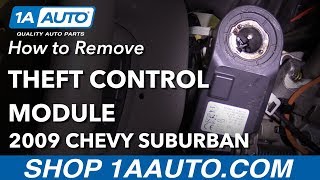
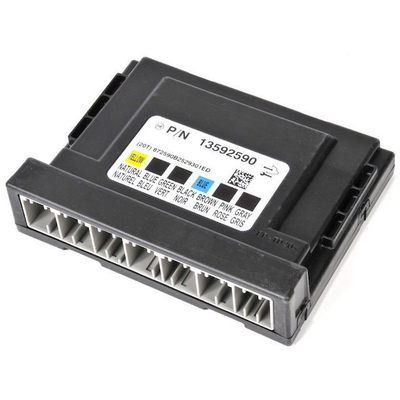
- Faulty Theft Deterrent Module or Body Control Module (BCM) (Less Common) — On GM vehicles, this indicates an internal memory or checksum error within the anti-theft module, meaning the module failed its internal self-test.
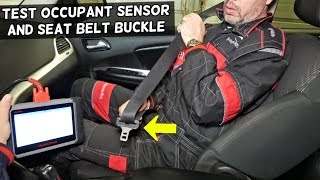
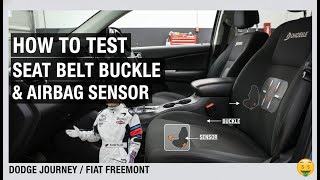
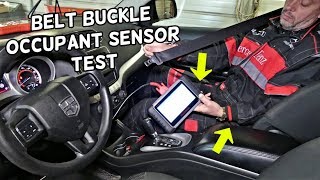
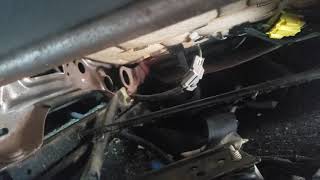
- Faulty Occupant Restraint Controller (ORC) (Rare) — If the central airbag computer fails internally, it cannot process signals from the occupant sensor, triggering the code even if the sensor is functional. 🎬 Watch: How to test the occupant sensor and seat belt buckle.
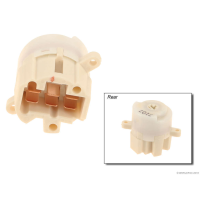
- Faulty Ignition Lock Cylinder (GM Passlock) (Rare) — On older GM vehicles, worn contacts in the ignition lock cylinder interrupt the security signal, causing a no-start condition and logging a memory fault.
Symptoms
- Airbag Warning Light is On — The dashboard airbag light illuminates constantly, indicating a fault in the supplemental restraint system (SRS).
- Passenger Airbag 'OFF' Light is Illuminated — The status light stays 'OFF' even when an adult is in the passenger seat, indicating the system disabled the passenger airbag as a failsafe.
- Engine Will Not Start or Stalls — The anti-theft system disables the fuel injectors or starter, preventing the engine from cranking or causing it to shut down immediately.
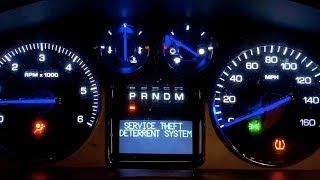
- Security Light is On or Flashing — On GM vehicles, a steady or flashing 'SECURITY' light on the dashboard indicates an anti-theft system fault.
- Passenger Seatbelt Warning Activates Incorrectly — The seatbelt chime sounds when the passenger seat is empty because the faulty sensor incorrectly detects an unbuckled occupant.
- Occupant Sensor Live Data Reads 'Empty' (scan-tool only — no driver-felt sign) — On a scan tool, the live data for the passenger occupant sensor does not change from 'Empty' to 'Occupied' when an adult sits in the seat.
Diagnostic Flowchart
Tap your situation to follow the diagnostic path that matches what you're seeing on this code.
Common Fixes & Costs
- Replace Passenger Occupant Detection Sensor (ODS) — Parts: $250-$600, Labor: $150-$300, ~1.5 hr book time (Professional)
- Repair Wiring/Connectors Under Passenger Seat — Parts: $10-$50, Labor: $100-$200, ~1.2 hr book time (Intermediate)
- Replace Anti-Theft Control Module — Parts: $250-$400, Labor: $100-$250, ~1.0 hr book time (Professional)
- Replace Occupant Restraint Controller (ORC) — Parts: $400-$700, Labor: $150-$225, ~1.0 hr book time (Professional)
- Replace Ignition Lock Cylinder — Parts: $150-$300, Labor: $100-$200, ~1.5 hr book time (Intermediate)
Used vs. New Parts: Buying Guide
When a used part is worth it: For Occupant Detection Sensors (ODS), a used part from a low-mileage vehicle is a cost-effective option. Buying used control modules is highly risky and requires professional unlocking and programming.
Donor-vehicle mileage cap: roughly under 60000 miles for the part to have meaningful remaining life.
Donor quality checklist:
- Verify the part number is an exact match.
- Ensure the donor module is guaranteed free of crash data and is unlocked.
- Avoid parts from flood-damaged vehicles.
Decision logic:
- If The part is a control module (ORC, BCM, Anti-Theft) → Buy new OEM. A used module will not work without VIN programming and is often permanently locked to the donor car.
- If The part is an ODS sensor mat and the vehicle is over 10 years old → A used part from a low-mileage donor is a reasonable risk to save money.
Warranty tradeoff: Used parts have a 30-90 day warranty. New aftermarket parts offer 1-year warranties. New OEM parts carry a 1-2 year warranty.
Worst-case if a used part fails: $300-600 if a used module is non-programmable, requiring repeat labor and a new part.
What Happens If You Wait — Timeline
- 0-1 month: Airbag light comes on, passenger airbag is disabled. For GM: Intermittent no-start occurs. (MPG impact: 0%% · Added cost: $0)
- 1-4 months: Vehicle fails state safety inspection. No-start condition becomes more frequent, risking stranding. (MPG impact: 0%% · Added cost: $50-$200 (Towing fees, failed inspection))
- 4-12 months: The underlying electrical short stresses the Occupant Restraint Controller (ORC), leading to module failure. (MPG impact: 0%% · Added cost: $200-$500 (Module replacement required))
Cost of Not Fixing It
- Immediate: The passenger airbag system is disabled. In an accident, the airbag will not deploy, significantly increasing the risk of serious injury or death. (Added cost: N/A)
- 0-3 months: For anti-theft variants, you face intermittent no-start conditions. For airbag variants, the vehicle fails state safety inspections. (Added cost: $50-$200 (Towing, failed inspection fee))
- 3+ months: A minor wiring issue eventually leads to the failure of an expensive control module due to electrical stress. (Added cost: $400-$800 (Cost of replacing a control module))
Diagnosis Steps
- Read Full Code Definition and Status
Use an advanced OBD-II scanner to read Body (B) codes. Note the manufacturer-specific definition and suffixes (e.g., -12, -13). For GM vehicles, check if the code is 'Current' or 'History'. A history code does not require immediate repair.
Tools: Advanced OBD-II Scanner (Beginner) - Inspect Under the Passenger Seat
Visually check the wiring and connectors under the front passenger seat. Look for disconnected plugs, pinched wires, and corrosion. Ensure all connectors are securely plugged in.
Tools: Flashlight (Beginner) - Test Battery and Charging System
Use a multimeter to check battery voltage with the car off (must be 12.4-12.6V) and running (13.7-14.7V). A failed test points to a bad battery or alternator, which must be fixed before diagnosing module memory errors.
Tools: Digital Multimeter (Intermediate) - Inspect Airbag System Fuses
Check the main fuse box under the hood for the ORC module fuses (e.g., positions F85 and F86 on Ram trucks). Verify they are not blown.
Tools: Fuse Puller or Pliers (Beginner) - Check Live Data from Occupant Sensor
Using a scanner's live data stream for the airbag module, monitor the passenger occupant sensor status. The reading must change from 'Empty' to 'Occupied' when an adult sits in the seat. If it does not, the sensor or wiring is faulty.
Tools: Advanced OBD-II Scanner (Intermediate) - Test Sensor Circuit Wiring
Disconnect the battery and unplug the connectors at the ORC and occupant sensor. Check for continuity on each wire from end to end (must be less than 1.0 ohm). Check for shorts by testing resistance from each wire to ground; the reading must be OL (Open Line).
Tools: Digital Multimeter, Vehicle-specific wiring diagram (Advanced) - Test the Anti-Theft System (GM)
Try starting the vehicle with a spare key. If it starts normally, the transponder chip in the primary key is faulty. If the security light remains and the car does not start, the problem is in the module or wiring.
Tools: Spare Key (Intermediate) - Check for a Faulty Control Module
If all wiring, fuses, and sensors test good, the control module (ORC or BCM) has failed. On GM vehicles, if B2734 is 'Current' alongside code B1009, it guarantees a failed module requiring replacement and programming.
Tools: Professional Scan Tool (Advanced)
When This Code Triggers (Freeze-Frame Conditions)
- System Voltage: 11.5-14.5V (The fault is set during the initial key-on self-test; low voltage triggers memory errors.)
- Ignition Status: ON (The Airbag and Anti-Theft modules perform a self-check every time the ignition is turned on.)
- Module Internal State: Self-Test Active (The code sets when the control module fails its internal memory or circuit integrity check.)
Related Codes
- B0052 — On Chrysler/Dodge vehicles, this code for 'Passenger Seatbelt Sensor Circuit' often appears with B2734. Diagnosing the root cause of B2734 resolves the B0052 fault.
- B1327 — On GM vehicles, this indicates 'Vehicle System Voltage Below 9.0 Volts'. Diagnose the low voltage problem first, as it is the direct cause of the B2734 memory failure.
- U0151 — Indicates 'Lost Communication with the Occupant Restraint Controller'. You cannot diagnose B2734 until communication with the module is restored by checking power and grounds.
- B1009 — On GM vehicles, this 'EEPROM Checksum Mismatch' code accompanies B2734. If both are 'Current', the control module has failed and requires replacement.
Climate & Environmental Factors
- High Humidity and Moisture: Liquid spills or high ambient humidity penetrate the passenger seat cushion and short out the electronic grid of the Occupant Detection Sensor mat.
- Extreme Temperatures: Extreme cold causes metal contacts in wiring connectors to contract, leading to loose connections and intermittent open circuits under the seat.
How to Talk to a Mechanic About This Code
Say this: "I have a B2734 code. If it's a Chrysler/Dodge, please inspect the occupant sensor wiring under the passenger seat and check live data before quoting a sensor replacement. If it's a GM, please confirm if the code is 'Current' or 'History' and test the battery before diagnosing the anti-theft module."
This steers the mechanic towards the most common and simple fixes first, preventing a rush to replace expensive parts without proper diagnosis.
Avoid saying:
- 'My airbag light is on, just fix it.'
- 'I think I need a new airbag computer.'
- 'Do whatever you think is best.'
Questions to ask before authorizing the repair:
- Did you find a broken wire or just a loose connector?
- Did you watch the sensor's live data on a scan tool to confirm it failed?
- Was the GM code 'Current' or 'History'?
- Does your quoted price include the cost of programming and calibration?
Where to Take It: Dealer vs Independent vs Chain
- Dealer:
Best for: Vehicles under warranty., Complex module replacement requiring manufacturer-specific programming (ORC, BCM).
Downsides: Highest labor rates., Defaults to replacing entire assemblies instead of repairing wiring. (Typical cost: +50% vs. baseline) - Independent Shop:
Best fit for wiring and sensor-level diagnosis. For a confirmed bad control module, the dealer is necessary.
Best for: Diagnosing and repairing wiring issues under the seat., Replacing a faulty occupant sensor (if they have calibration tools).
Downsides: May lack the tools to program a new control module. (Typical cost: +0% vs. baseline) - Chain Shop:
AVOID. The risk of misdiagnosis and being sold unnecessary parts is very high.
Best for: Selling you a new battery if a battery test fails.
Downsides: Technicians lack training for complex SRS or anti-theft diagnostics., Scan tools are too basic to read B-codes. (Typical cost: -10% vs. baseline)
When to Walk Away From the Repair
If the estimated repair cost exceeds 40-50% of your car's private-party value, consider your options.
- Car worth $5000, fix is $900: Fix it. This repair cost is reasonable to maintain a critical safety feature.
- Car worth $3000, fix is $1400: Walk away. The repair cost is nearly half the car's value.
What Scan Tool You Need for This Code
Minimum: A scanner that reads and clears manufacturer-specific Body (B) codes from the SRS and BCM modules, and displays live data.
A generic OBD-II reader only accesses Powertrain (P) codes. It shows 'No Codes' even when your airbag light is on.
Budget: BlueDriver Pro Scan Tool (~$99) — Reads and clears B-codes on GM and Chrysler vehicles and displays live data to check sensor function.
Mid-range: Foxwell NT530 (~$180) — Provides full system access and performs the calibration needed after replacing an occupant sensor.
Professional: Autel MaxiCOM MK808S (~$450) — Offers OEM-level diagnostics and performs module programming for replacement ORC or anti-theft modules.
Rent vs buy: Parts store loaner tools cannot diagnose this fault. Buying a budget scanner is a worthwhile investment.
How to Clear the Code After You Fix It
- Reconnect the battery.
- Use an advanced OBD-II scan tool to clear the code from the SRS or BCM module.
- Turn the ignition off, then on, and observe the warning light. It must turn off after the 7-second self-test.
- For GM anti-theft repairs, perform the 30-minute key relearn procedure.
Drive cycle (~10 minutes): A traditional drive cycle is not required. The fix is confirmed by the system's power-on self-test. Cycle the ignition off and on; if the warning light stays off, the repair is successful.
Readiness monitors affected: Not Applicable
Watch out for:
- Using a basic code reader that cannot access or clear Body (B) codes.
- Failing to perform the security relearn procedure on GM vehicles after replacing an anti-theft component.
- Not realizing a new control module requires professional VIN programming to function.
Will This Fail Emissions / State Inspection?
No — by itself this code doesn't fail OBD inspection (but it can keep readiness monitors from setting, which causes a separate fail).
- California: An airbag light does not cause a failure of the smog check, which only tests emissions components.
- New York: An illuminated airbag warning light is grounds for failure of the annual safety inspection.
- Texas: An airbag light is not a specified failure item for the annual safety inspection.
- General: In states with comprehensive safety inspections, an illuminated airbag light is an automatic failure.
Most Commonly Affected Vehicles
- Dodge Journey (2009-2020) — Highly prone to ODS circuit faults due to wiring damage under the passenger seat.
- Ram 1500/2500/3500 (2013-2018) — Frequently logs B2734 for an open or shorted passenger occupant sensor. Check fuses F85 and F86 first.
- Dodge Charger (2011-2014) — Commonly experiences faults in the ODS sensor mat.
- Chevrolet Suburban / Tahoe (2007-2014) — Sets B2734 for a theft deterrent module memory failure, often triggered by low battery voltage.
- Cadillac DeVille (2000-2005) — Sets B2734 for a theft deterrent module memory failure related to the Passlock ignition system.
- Nissan Rogue (2014-2020) — Subject to recalls for occupant classification system (OCS) faults presenting identical symptoms.
Manufacturer-Specific Notes
- Chrysler/Dodge/Ram: The code points to the Passenger Occupant Detection Sensor (ODS) circuit. It typically features a suffix like -12 (short to battery) or -13 (circuit open) to pinpoint the electrical fault.
- General Motors: Indicates an internal memory failure in the theft deterrent module. If the code is 'History', it is a past fault from low voltage and can be cleared without replacing parts.
- Nissan: Millions of 2013-2017 Nissans were recalled for faulty Occupant Classification Systems (OCS) that present identical symptoms. Always check for open recalls before replacing parts.
Real Owner Stories
2016 Ram 1500 with Airbag Light
The 'Service Airbag System' light stayed on permanently. A dealership diagnosed a bad Occupant Detection Sensor and quoted $800.
What they tried:
- Checked under-seat connectors.
- Checked the airbag module fuses in the under-hood fuse box.
Outcome: The owner found the airbag module fuse (F86) was blown. Replacing the 10-amp fuse immediately turned off the airbag light.
Lesson: Always check simple solutions like fuses before committing to expensive part replacements.
2004 Buick LeSabre with Intermittent No-Start
Vehicle randomly failed to start, with the 'Security' light illuminated. A scan revealed a history code B2734.
What they tried:
- Replaced the battery.
- Performed a parasitic draw test.
Outcome: A faulty aftermarket remote start system was draining the battery. Disconnecting it resolved the low voltage issue and the B2734 code.
Lesson: On GM vehicles, a 'History' B2734 code is caused by low voltage events. Perform a parasitic draw test before replacing the module.
2018 Dodge Journey with B2734-13
Airbag light was on constantly. Code B2734-13 indicated 'Passenger Occupant Detection Sensor Circuit Open'.
What they tried:
- Visually inspected wiring under the passenger seat.
- Took the vehicle to an independent electrical shop.
Outcome: A technician found a wire broken inside its insulation at the under-seat connector. Repairing the wire with a new pigtail for $150 resolved the code.
Lesson: An 'Open Circuit' code points to a wiring problem. Professional diagnosis with a multimeter pinpoints internal wire breaks, saving hundreds on sensor replacement.
How to Prevent This Code From Triggering
- Avoid storing items under the passenger seat. (Daily habit) — Objects shoved under the seat damage Occupant Detection Sensor wiring and disconnect connectors.
- Use caution when cleaning seats. (During cleaning) — Avoid saturating the passenger seat cushion with liquid cleaners. Moisture permanently damages the electronic sensor mat.
- Maintain battery health. (Every 6 months) — On GM vehicles, low voltage triggers a B2734 memory fault in the anti-theft module. Test your battery to prevent electronic faults.
Frequently Asked Questions
Can I bypass the occupant sensor with a resistor?
No. Bypassing the sensor tricks the system into thinking the seat is always occupied by an adult. This permanently disables the system's ability to adjust airbag deployment force, leading to severe injury in a crash.
Will clearing the code fix the problem?
No. The control module runs a self-test every time you start the vehicle. If the underlying fault is still present, the code and warning light return immediately.
Why did the airbag light come on after I shampooed my seats?
Liquid seeping into the seat cushion shorts out the sensitive electronic grid within the occupant detection sensor mat. This causes it to send incorrect signals and trigger a fault code.
Can a weak battery cause a B2734 code?
Yes. On GM vehicles, low system voltage causes a memory error in the anti-theft module. Always test the battery before replacing expensive modules.
What is the difference between a 'current' and 'history' B2734 code?
A 'Current' code means the fault is active right now and requires diagnosis. A 'History' code indicates the fault occurred in the past, often from a temporary low battery event, and can usually be cleared.
What does the code suffix B2734-13 or B2734-12 mean?
Chrysler, Dodge, and Ram use suffixes for detail. B2734-13 indicates a 'Circuit Open' (broken wire), while B2734-12 indicates a 'Circuit Short to Battery' (wire touching power).
My car won't start and shows a security light. Is this related to B2734?
Yes. On General Motors vehicles, B2734 indicates a fault in the anti-theft system that disables the engine and illuminates the security light.
Key Takeaways
- B2734 is a manufacturer-specific code that almost always points to a failed passenger airbag sensor on Chrysler/Dodge/Ram vehicles or a failed anti-theft module on GM vehicles.
- Check the wiring under the passenger seat and verify battery voltage is above 12.4V before replacing any expensive control modules.
- Replacing an Occupant Detection Sensor (ODS) costs between $400 and $900 and requires a professional scan tool to recalibrate the new weight sensor.
- Driving with an active B2734 airbag fault disables the passenger airbag entirely, creating a severe safety risk in the event of a collision.
Helpful Videos
Shop the Parts Behind B2734
Below are the parts most often responsible for code B2734, ranked by how frequently each one is the actual culprit (per the diagnosis above). Tap any to see what we have for your vehicle.


The information in this article is provided for general reference and educational purposes only. Vehicle specifications, procedures, and part compatibility can vary by production date, trim level, and region. Always consult your vehicle's factory service manual and verify part numbers before purchasing or performing repairs. Safety-critical components such as airbags, seat belts, and braking systems should be installed by a qualified professional.
- 🧭 Diagnostic Flowchart
- 🎬 Helpful Videos
- 🛍️ Shop This Part
- What Does B2734 Mean?
- Can I Drive With B2734?
- Common Causes
- Symptoms
- Common Fixes & Costs
- Used vs. New Parts: Buying Guide
- What Happens If You Wait — Timeline
- Cost of Not Fixing It
- Diagnosis Steps
- When This Code Triggers (Freeze-Frame Conditions)
- Related Codes
- Climate & Environmental Factors
- How to Talk to a Mechanic About This Code
- Where to Take It: Dealer vs Independent vs Chain
- When to Walk Away From the Repair
- What Scan Tool You Need for This Code
- How to Clear the Code After You Fix It
- Will This Fail Emissions / State Inspection?
- Most Commonly Affected Vehicles
- Manufacturer-Specific Notes
- Real Owner Stories
- 2016 Ram 1500 with Airbag Light
- 2004 Buick LeSabre with Intermittent No-Start
- 2018 Dodge Journey with B2734-13
- How to Prevent This Code From Triggering
- Frequently Asked Questions
- Can I bypass the occupant sensor with a resistor?
- Will clearing the code fix the problem?
- Why did the airbag light come on after I shampooed my seats?
- Can a weak battery cause a B2734 code?
- What is the difference between a 'current' and 'history' B2734 code?
- What does the code suffix B2734-13 or B2734-12 mean?
- My car won't start and shows a security light. Is this related to B2734?
- Key Takeaways
- 🎟️ Get 5% Off