

OBD-II Code B2740: Manufacturer-Specific (Examples: Sonar Unit Fault, Fog Light Switch Circuit)
Why B2740 is not a universal code, what it means for different brands, and how to approach it with professional accuracy.
- OBD-II code B2740 is manufacturer-specific; on a 2021 Nissan Rogue, it indicates a Sonar Control Unit software fault requiring a dealer reprogram per TSB NTB21-040B.
- On Chevrolet vehicles, B2740 points to a Fog Lamp Switch Circuit Malfunction, typically fixed by replacing a $30-$60 dash switch or relay.
- Always test battery health first; a resting voltage below 12.4V causes modern Battery Monitoring Systems to shut down modules and trigger false B-class codes.
- Do not replace the Body Control Module (BCM) for this code; the BCM is merely reporting a fault in a peripheral circuit like the parking sonar or fog lights.
What Does B2740 Mean?
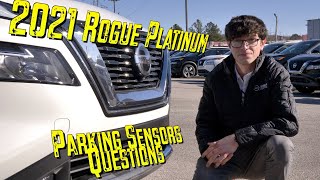
B2740 is a manufacturer-specific Body Control Module (BCM) code, meaning its definition changes between automakers. On a 2021 Nissan Rogue, it indicates a Sonar Control Unit fault requiring reprogramming. 🎬 Watch: Expert answers to common Nissan Rogue parking sensor questions. On Chevrolet vehicles, it points to a fog light switch circuit failure. The vehicle's computer has detected an issue in a body-related system that it cannot resolve.
Technical definition: The SAE/ISO definition for B2740 is not standardized. Nissan and Mitsubishi define it as 'B2740-87 (TCU)', pointing to a Sonar Control Unit software issue. Chevrolet defines it as 'Fog Lamp Switch Circuit Malfunction', indicating the BCM detects an anomaly in the switch signal.
Can I Drive With B2740?
Yes, But With Caution. This code does not affect core driveability. You can safely drive, but be aware of specific risks. A non-functional parking sonar increases the risk of low-speed collisions, leading to cosmetic damage costing $500-$1500 to repair. Inoperative fog lights pose a safety risk in heavy fog or snow by reducing visibility.
Common Causes
- Control Unit Requires Reprogramming (Very Common) — On affected Nissan and Mitsubishi vehicles, a software glitch in the sonar control module requires a dealer update per a Technical Service Bulletin (TSB).
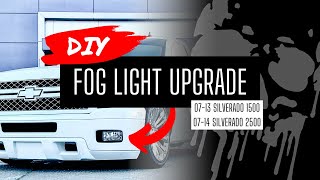
- Faulty Switch or Relay (Common) — For Chevrolet vehicles, the code points to a physical failure in the fog light circuit, most commonly a faulty dash switch or under-hood relay. 🎬 See this walkthrough for accessing Silverado fog light components.
- Low Battery Voltage or Faulty BMS (Common) — A weak battery or an uncalibrated Battery Monitoring System (BMS) causes the vehicle to shut down non-essential modules to save power, generating spurious communication codes like B2740.
- Wiring or Connector Damage (Less Common) — Chafed wiring harnesses or corroded connectors at the sonar module or fog light switch interrupt communication, triggering a fault code.
- Aftermarket Accessory Interference (Less Common) — Improperly installed aftermarket accessories (remote starters, LED lighting) that tap into the CAN bus interfere with module communication, generating false B-class codes.
- Faulty Control Unit (Rare) — If reprogramming fails, the physical control unit (e.g., Sonar Control Unit) has an internal hardware failure and requires replacement.
- Faulty Body Control Module (BCM) (Very Rare) — A fault within the BCM itself triggers this code, but this is rare and always accompanied by other U-class network codes pointing to a wider failure.
Symptoms
- Parking assist system inoperative — Bumper parking sensors fail to beep when approaching an object, accompanied by a warning message on the dashboard (Nissan/Mitsubishi).
- Fog lights inoperative — Front fog lights fail to turn on or off using the switch, or a stuck relay causes them to stay on and drain the battery (Chevrolet).
- System warning message on dash — A text message or warning light on the instrument cluster indicates a specific body system is unavailable.
- No noticeable symptoms (scan-tool only — no driver-felt sign) — The code stores in the module's memory without triggering warning lights, discoverable only during a routine scan.
Diagnostic Flowchart
Tap your situation to follow the diagnostic path that matches what you're seeing on this code.
Common Fixes & Costs
- Reprogram Sonar Control Unit (Nissan/Mitsubishi) — Parts: $0, Labor: $150-$250, ~1.0 hr book time (Professional)
- Replace Fog Light Switch (Chevrolet) — Parts: $30-$60, Labor: $80-$150, ~0.8 hr book time (Intermediate)
- Replace Battery and Reset BMS — Parts: $180-$250, Labor: $0-$100, ~0.5 hr book time (Beginner)
- Repair Wiring or Connector — Parts: $10-$30, Labor: $150-$300, ~1.5 hr book time (Advanced)
Used vs. New Parts: Buying Guide
When a used part is worth it: For a simple mechanical part like a Chevrolet fog light switch, a used part from a reputable salvage yard is a low-risk way to save money. Avoid used electronic modules (like the Sonar Control Unit) as they require dealer programming that negates cost savings.
Donor-vehicle mileage cap: roughly under 100000 miles for the part to have meaningful remaining life.
Donor quality checklist:
- Match electronic module part numbers exactly; a one-digit difference means incompatibility.
- Check switches for physical wear and ensure connector pins are unbent and free of corrosion.
Decision logic:
- If The part is a simple switch and the new aftermarket price is under $50 → Buy new aftermarket. The small savings on a used part isn't worth the lack of warranty.
- If The part is a complex electronic module that requires programming → Buy a new OEM part or reprogram the original unit. Used modules often cannot be programmed to a new VIN.
Warranty tradeoff: Used parts typically have a 30-day warranty. Aftermarket new parts offer 1-year to lifetime warranties. OEM new parts carry a 1-year/12,000-mile warranty.
Worst-case if a used part fails: $200-$400 if a used electronic module fails after installation, requiring repeat labor and programming costs.
What Happens If You Wait — Timeline
- Immediate: Nissan parking sonar becomes inoperative; Chevrolet fog lights fail to turn on. (MPG impact: 0%% · Added cost: $0)
- 1-6 months: Increased risk of low-speed parking collisions (Nissan). A stuck fog light relay drains the battery completely. (MPG impact: 0%% · Added cost: $150-$600 for minor bumper repair or a replacement battery.)
- 6-12 months: Potential failure of a state safety inspection in jurisdictions that inspect all lighting equipment. (MPG impact: 0%% · Added cost: $500-$1500 for moderate bumper damage repair, plus re-inspection fees.)
Cost of Not Fixing It
- Immediate: Nissan parking sonar becomes inoperative; Chevrolet fog lights fail to turn on. (Added cost: $0)
- 0-6 months: Increased risk of low-speed parking collisions (Nissan) or reduced visibility in bad weather (Chevy). A stuck fog light relay drains the battery. (Added cost: $150-$600 for minor bumper repair or a replacement battery.)
- 6+ months: Potential failure of state safety inspections in jurisdictions that mandate functional factory lighting. (Added cost: $500-$1500 for moderate bumper damage repair, plus re-inspection fees.)
Diagnosis Steps
- Identify Vehicle Manufacturer & Research TSBs
Search online for Technical Service Bulletins (TSBs) for your specific vehicle and code B2740. For a 2021 Nissan Rogue, this leads directly to TSB NTB21-040B.
Tools: Smartphone or Computer, Vehicle VIN (Beginner) - Perform Full System Scan & Check Battery Health
Use an advanced scanner to read codes from all modules. Test the battery to confirm at least 12.4V static voltage. A weak battery causes numerous unrelated body codes.
Tools: Advanced OBD-II Scanner, Digital Multimeter or Battery Tester (Intermediate) - Verify Software Version (Nissan/Mitsubishi)
Connect an OEM diagnostic tool to check the current software part number on the Sonar Control Unit. Compare it to the list of outdated versions in the TSB.
Tools: OEM Scan Tool (CONSULT or M.U.T.-III SE) (Professional) - Test Fog Light Switch Circuit (Chevrolet)
Disconnect the fog light switch. Check for 12V on the power supply pin and less than 1 ohm of resistance on the ground pin. If voltage doesn't drop to near 0V when activated, the switch is faulty.
Tools: Digital Multimeter, Wiring Diagram (Advanced) - Analyze Scan Tool Live Data
Access the Park Assist Module data stream. Look for PIDs like 'Parking Sensor 1 Distance'. A faulty sensor sticks at a maximum value (e.g., 255 cm) even when an object is present.
Tools: Advanced OBD-II Scanner with Live Data (Advanced) - Inspect Wiring and Connectors
Visually inspect the wiring harness going to the affected component. Look for chafing, rodent damage, or pin corrosion. Perform continuity tests on suspect wires.
Tools: Flashlight, Digital Multimeter (Advanced) - Reprogram the Control Module
If outdated software is confirmed, reprogram the Sonar Control Unit using OEM software and a stable 12.0V-13.5V power supply.
Tools: OEM Scan Tool, J2534 Pass-Thru, Battery Maintainer (Professional) - Diagnose the BCM
If all external wiring, components, and software are verified good, verify the BCM's power and ground connections before condemning the module.
Tools: Advanced OBD-II Scanner, Oscilloscope (Professional)
When This Code Triggers (Freeze-Frame Conditions)
- Battery Voltage: 11.5V - 14.8V (Logged to distinguish between a true component fault and a system-wide low voltage condition.)
- Ignition Status: ON/RUN (The fault is detected when the ignition is on and the BCM actively monitors its circuits.)
- Component-Specific Data: Varies (Logs 'Switch Status: Pressed' for a Chevy fog light fault, or 'System State: Active' for a Nissan sonar fault.)
Related Codes
- B2744 — Appears alongside B2740 on 2021 Nissan Rogues, confirming the Sonar Control Unit software issue described in TSB NTB21-040B.
- B274D — A companion code set in the Combination Meter on Nissan vehicles, resolved simultaneously by reprogramming the Sonar Control Unit.
- U0140 — Indicates 'Lost Communication with Body Control Module'. If present with B2740, diagnose U0140 first, as a network failure is the root cause.
- B2741 — A Chevrolet 'Foglamp circuit range' code. Seeing multiple lighting codes points toward a shared power/ground issue rather than a single switch failure.
Climate & Environmental Factors
- Cold Weather: Low temperatures reduce battery efficiency, dropping system voltage. At 32°F (0°C), a weak battery triggers spurious communication faults like B2740 as modules shut down to save power.
- Humidity and Moisture: High humidity or water ingress causes corrosion on external connector pins for sonar sensors or fog lights. This increases circuit resistance, triggering the fault.
How to Talk to a Mechanic About This Code
Say this: "For a Nissan: 'I have a B2740 code and believe TSB NTB21-040B applies. I need a quote to reprogram the Sonar Control Unit.' For a Chevrolet: 'I have a B2740 code for the fog light circuit. I need a diagnostic to test the relay, switch, and wiring.'"
This signals you have done your research, directs the technician to the most likely cause, and prevents unnecessary diagnostic time or parts replacement.
Avoid saying:
- 'Just fix whatever's wrong'
- 'My car has an electrical problem'
- 'I read on the internet that I need a new BCM'
Questions to ask before authorizing the repair:
- For Nissan: Can you confirm the software part number on my Sonar unit is on the TSB's list of outdated versions?
- For Chevrolet: What specific test did you perform to conclude the switch or relay has failed?
- What is the tested voltage and health of my battery?
Where to Take It: Dealer vs Independent vs Chain
- Dealer:
Required for the Nissan/Mitsubishi software fix due to exclusive access to OEM firmware and tools.
Best for: Nissan/Mitsubishi vehicles where a software reprogram via TSB is the required fix., Vehicles still under warranty.
Downsides: Higher labor rates, typically $150-$250/hour., May try to upsell unnecessary diagnostics. (Typical cost: +50% vs. baseline) - Independent Shop:
Best fit for Chevrolet circuit faults and general battery issues.
Best for: Chevrolet hardware faults (fog light switch, relay, wiring)., Battery health testing and BMS resets.
Downsides: Most cannot perform the manufacturer-specific module reprogramming required for the Nissan TSB. (Typical cost: +0% vs. baseline) - Chain Shop:
Avoid for diagnosing B2740 due to high risk of misdiagnosis. Suitable only for a straightforward battery swap.
Best for: Simple battery replacement.
Downsides: Technicians lack advanced electrical diagnostic skills., Unlikely to have tools for module reprogramming. (Typical cost: -10% vs. baseline)
When to Walk Away From the Repair
If the estimated repair cost exceeds 40% of the car's Kelley Blue Book value, evaluate if the investment is worthwhile. Since B2740 repairs rarely exceed $400, it will not trigger a walk-away scenario on its own.
- Car worth $4000, fix is $300: Fix it. This repair cost is low compared to the vehicle's value and resolves a safety issue.
- Car worth $2500, fix is $1500: Walk away only if the B2740 fix is part of a much larger list of needed repairs (e.g., transmission failure).
What Scan Tool You Need for This Code
Minimum: A scanner that reads manufacturer-specific Body Control Module (BCM) codes. Basic sub-$30 readers that only show generic 'P' codes are insufficient.
A basic code reader cannot see 'B' codes. You need access to the BCM to confirm the code, view live data, and perform service functions like a BMS reset.
Budget: Autel MaxiAP AP200 / BlueDriver Pro (~$60-100) — Reads and clears BCM codes, views live data, and performs BMS resets. Sufficient for diagnosing Chevrolet and battery-related causes.
Mid-range: Autel MaxiCheck MX808S / FOXWELL NT510 Elite (~$250-400) — Offers full system access and bidirectional controls to command components like relays and lights directly, helpful for pinpointing Chevrolet circuit faults.
Professional: Autel MaxiCOM MK906BT / LAUNCH X431 Series (~$800-1500) — Adds ECU programming capabilities. This is the only tool outside the dealership that could perform the Sonar Control Unit reprogram.
Rent vs buy: Buy a budget pick for Chevrolet or battery issues. If you have the Nissan software issue, do not buy a scanner; go directly to the dealer.
How to Clear the Code After You Fix It
- Use an advanced OBD-II scan tool to clear the code from the Body Control Module (BCM).
- Cycle the ignition off and on.
- Operate the repaired component (press the fog light switch or engage reverse for sonar) to verify the fix.
Drive cycle (~5 minutes): A specific drive cycle is not required. The BCM re-evaluates the circuit on the next key cycle or when the component is used. If the underlying issue persists, the code reappears immediately.
Readiness monitors affected: None. This is a Body code and does not affect emissions readiness monitors.
Watch out for:
- Using a basic code reader that only clears 'P' (Powertrain) codes fails to clear a 'B' code.
- Disconnecting the battery does not reliably clear BCM codes and causes BMS calibration issues.
Will This Fail Emissions / State Inspection?
No — by itself this code doesn't fail OBD inspection (but it can keep readiness monitors from setting, which causes a separate fail).
- California: This code does not cause a failure of the OBD-II smog check, as it is not emissions-related.
- New York: Factory-installed fog lights are not a required item for NYS inspection. An inoperative fog light will not cause a safety inspection failure.
- Texas: Fog lamps are not required to be inspected and do not have to work during a Texas state safety inspection.
Most Commonly Affected Vehicles
- Nissan Rogue (2021-2022) — TSB NTB21-040B identifies code B2740-87 as a software fault in the Sonar Control Unit, fixed exclusively by reprogramming.
- Chevrolet Silverado, Tahoe, Suburban (2003-2024) — B2740 is defined as 'Fog Lamp Switch Circuit Malfunction', pointing to a failed dash switch, relay, or wiring.
- Mitsubishi Outlander (2022-2024) — B2740-87 indicates a communication issue with the Sonar control unit (TCU), requiring diagnosis with a M.U.T.-III SE tool.
- Infiniti QX50, QX60 (2019-2024) — Shares diagnostic logic with Nissan. B2740 relates to sonar systems and requires a Nissan CONSULT scan tool for diagnosis.
- Ford F-150, Explorer (2015-2024) — Spurious body codes are triggered by an uncalibrated Battery Management System (BMS). A BMS reset is required after battery replacement.
Manufacturer-Specific Notes
- Nissan: The official fix for B2740-87 on the 2021 Rogue is a module reprogram per TSB NTB21-040B, not a parts replacement. This service is often covered under warranty.
- Chevrolet: B2740 targets the 'Fog Lamp Switch Circuit', requiring a traditional diagnostic path involving testing a physical switch, relay, and wiring.
- Hyundai/Kia: The string 'B2740' is often part of a physical bumper component part number (e.g., 86613-B2740) and not a Diagnostic Trouble Code. Always confirm with a scanner.
Real Owner Stories
2021 Nissan Rogue with 31K miles
Owner received an 'ABS action required' notification with no warning lights. A scan revealed stored code B2740-87.
Outcome: Reprogramming cleared B2740. A week later, a new ABS warning appeared. A second dealer trip resulted in a battery replacement, resolving all electrical issues.
Lesson: B2740 is a known software bug fixed by a TSB, but a weak battery causes additional electronic faults. Always test the battery, as reprogramming a module with low voltage causes failures.
Chevrolet Silverado, fog lights inoperative
Fog lights stopped working. Pressing the switch did nothing, and the switch indicator light remained off.
Outcome: Using a test light, the owner discovered the under-hood fog light relay was faulty. Replacing the $20 relay restored full function.
Lesson: Don't just replace the switch. Test the relay with a multimeter or swap it with a known-good relay (like the horn relay) as a cost-effective diagnostic step.
2018 Ford F-150 with multiple electrical gremlins
After installing a new AGM battery, the auto start/stop stopped working and a 'Vehicle Shutting Down to Preserve Battery' message appeared.
Outcome: The owner performed a manual Battery Monitoring System (BMS) reset by flashing the high beams and pressing the brake pedal. This immediately recalibrated the system, clearing the warnings.
Lesson: Replacing the battery is not enough on modern vehicles. A BMS reset is mandatory to prevent the charging system from undercharging the new battery and triggering false codes.
How to Prevent This Code From Triggering
- Maintain Battery Health (Every 6 months) — A weak battery is a primary cause of spurious electronic codes. Clean terminals and use a battery tender on infrequently driven cars to prevent voltage drops.
- Apply Dielectric Grease to Connectors (When servicing related components) — Applying non-conductive dielectric grease to external connectors (fog lights, parking sensors) blocks moisture and prevents pin corrosion.
- Perform BMS Reset After Battery Installation (Once per battery replacement) — Failing to reset the BMS causes the system to undercharge the new battery, shortening its life and triggering electrical fault codes.
Frequently Asked Questions
Can I fix code B2740 myself?
It depends entirely on the vehicle. For a Chevrolet with a faulty fog light switch, it is a feasible beginner DIY repair. However, Nissan and Mitsubishi require dealer-level tools to reprogram a module, which is not a DIY job.
A mechanic wants to replace the BCM for a B2740 code. Should I be skeptical?
Yes, ask for specific diagnostic proof. B2740 is a fault reported by the BCM, not a failure of the BCM itself. Replacing the BCM will not fix a faulty fog light switch or outdated sonar software.
What is the most common misdiagnosis for B2740?
The most common misdiagnosis is assuming the code means the same thing across different car brands. Another mistake is replacing a physical module when the actual problem is a software glitch, a weak battery, or a simple wiring fault.
Why can't I find a clear definition for B2740 for my car?
Because it is a manufacturer-specific body code. Unlike generic powertrain codes, 'B2' codes are not standardized and change meaning based on the automaker. You must look up the definition specific to your vehicle's make, model, and year.
My scanner shows P2740, is that the same thing?
No, they are completely different. P2740 is a generic powertrain code for a Transmission Fluid Temperature Sensor circuit issue. B2740 is a body code indicating a problem in systems like parking sonar or lighting.
How do I find out what B2740 means for my specific car?
Consult a professional diagnostic database like ALLDATA or Mitchell 1. You can also search online for your specific car's make, model, year, and 'B2740' to find relevant Technical Service Bulletins (TSBs).
Can a weak battery cause code B2740?
Yes. On modern vehicles with a Battery Monitoring System (BMS), a weak battery causes the system to shut down non-essential modules to conserve power. This generates false communication fault codes, including B2740.
Key Takeaways
- OBD-II code B2740 is manufacturer-specific; on a 2021 Nissan Rogue, it indicates a Sonar Control Unit software fault requiring a dealer reprogram per TSB NTB21-040B.
- On Chevrolet vehicles, B2740 points to a Fog Lamp Switch Circuit Malfunction, typically fixed by replacing a $30-$60 dash switch or relay.
- Always test battery health first; a resting voltage below 12.4V causes modern Battery Monitoring Systems to shut down modules and trigger false B-class codes.
- Do not replace the Body Control Module (BCM) for this code; the BCM is merely reporting a fault in a peripheral circuit like the parking sonar or fog lights.
Helpful Videos
Shop the Parts Behind B2740
Below are the parts most often responsible for code B2740, ranked by how frequently each one is the actual culprit (per the diagnosis above). Tap any to see what we have for your vehicle.



The information in this article is provided for general reference and educational purposes only. Vehicle specifications, procedures, and part compatibility can vary by production date, trim level, and region. Always consult your vehicle's factory service manual and verify part numbers before purchasing or performing repairs. Safety-critical components such as airbags, seat belts, and braking systems should be installed by a qualified professional.
- 🧭 Diagnostic Flowchart
- 🎬 Helpful Videos
- 🛍️ Shop This Part
- What Does B2740 Mean?
- Can I Drive With B2740?
- Common Causes
- Symptoms
- Common Fixes & Costs
- Used vs. New Parts: Buying Guide
- What Happens If You Wait — Timeline
- Cost of Not Fixing It
- Diagnosis Steps
- When This Code Triggers (Freeze-Frame Conditions)
- Related Codes
- Climate & Environmental Factors
- How to Talk to a Mechanic About This Code
- Where to Take It: Dealer vs Independent vs Chain
- When to Walk Away From the Repair
- What Scan Tool You Need for This Code
- How to Clear the Code After You Fix It
- Will This Fail Emissions / State Inspection?
- Most Commonly Affected Vehicles
- Manufacturer-Specific Notes
- Real Owner Stories
- 2021 Nissan Rogue with 31K miles
- Chevrolet Silverado, fog lights inoperative
- 2018 Ford F-150 with multiple electrical gremlins
- How to Prevent This Code From Triggering
- Frequently Asked Questions
- Can I fix code B2740 myself?
- A mechanic wants to replace the BCM for a B2740 code. Should I be skeptical?
- What is the most common misdiagnosis for B2740?
- Why can't I find a clear definition for B2740 for my car?
- My scanner shows P2740, is that the same thing?
- How do I find out what B2740 means for my specific car?
- Can a weak battery cause code B2740?
- Key Takeaways
- 🎟️ Get 5% Off