

OBD-II Code B2761: Manufacturer-Specific Fault Guide
What B2761 means, why it triggers, and how to fix it like a pro
- Code B2761 is manufacturer-specific; on 2007-2014 GM trucks, it almost always indicates a broken driver's seat position sensor wire requiring a $30 pigtail repair.
- An illuminated airbag light disables the entire Supplemental Restraint System, meaning 0 airbags will deploy in a crash.
- For FCA vehicles (Ram, Dodge, Jeep), you must read the 2-digit suffix code (like -11 or -87) to distinguish between a shorted wire and a dead module.
- Subaru ODS repairs require a mandatory 'rezeroing' calibration using a dealer-level scan tool; skipping this leaves the passenger airbag permanently disabled.
- On Toyota and Lexus models, B2761 points directly to a failed overhead anti-theft intrusion sensor, which takes less than 30 minutes to replace.
What Does B2761 Mean?
B2761 is a manufacturer-specific body code. For Toyota and Lexus, it indicates a failed anti-theft intrusion sensor. For Dodge, Jeep, and Chrysler, it flags faults in the airbag, ABS, or tire pressure systems. For Chevrolet or Subaru, it points to airbag system failures like broken seat position sensors or faulty occupant detection mats.
Technical definition: SAE/ISO J2012 does not standardize B2761. Toyota/Lexus defines it as 'Intrusion Sensor Internal Circuit Malfunction'. FCA (Stellantis) uses it for sub-faults like 'B Pillar Side Impact Sensor Circuit Short'. The 2-digit suffix is mandatory for FCA diagnosis: B2761-11 means 'Circuit Short to Ground', while B2761-87 means 'Missing Message'.
Can I Drive With B2761?
No — Do Not Drive. Driving is not recommended. If this code illuminates the airbag warning light, the entire Supplemental Restraint System (SRS) shuts down as a fail-safe. Zero airbags will deploy in a crash. The risk is a critical failure of a life-saving safety system.
Common Causes
- Broken Seat Position Sensor Wiring (GM) (Very Common) — On 2007-2014 Chevrolet Tahoe, Suburban, and GMC Yukon models, the wires leading to the driver's side seat position sensor (Part #25951880) frequently snap. The connector pigtail under the seat suffers fatigue from repeated seat movement.
- Faulty Intrusion Sensor (Toyota/Lexus) (Very Common) — On Toyota and Lexus models, the internal ultrasonic intrusion sensor fails. This sensor is part of the anti-theft alarm system and sits inside the overhead console.
- Faulty Side Impact or B-Pillar Airbag Sensor (FCA) (Common) — On Dodge, Jeep, and Chrysler vehicles, B2761 (often with a suffix like -11) points directly to a short or internal fault in a side impact sensor required for airbag deployment.
- Faulty Occupant Detection System (Subaru/Nissan) (Common) — On Subaru and Nissan models, the Occupant Detection System (ODS) sensor mat or seat belt tension sensor fails. Replacing these components requires a mandatory dealer-level recalibration to clear the code.
- Damaged Wiring or Poor Connection (Common) — Chafed, pinched, or corroded wiring triggers this code across all makes. A known issue on 2013-2018 Ram trucks involves the B-pillar sensor wiring getting pinched under the door sill trim (STAR Case S2108000269).
- Low Battery Voltage (Less Common) — SRS control modules are highly sensitive to voltage drops. A weak battery causes communication errors between modules, triggering B2761 and other codes that disappear once the battery is fully charged.
- Faulty Body Control Module (BCM) (Less Common) — The main computer controlling the vehicle's body electronics fails and incorrectly reports a sensor fault. This is a rare cause diagnosed only after ruling out the sensor and wiring.
Symptoms
- Airbag Warning Light On — On FCA, GM, and Subaru vehicles, this indicates a serious safety system fault that disables all airbags.
- Security System Light On or Flashing — On Toyota and Lexus models, the security indicator stays on or the alarm triggers unexpectedly due to a failed intrusion sensor.
- Passenger Airbag 'OFF' Light Illuminated Incorrectly — On Nissan and Subaru models, an ODS fault forces the passenger airbag 'OFF' light to stay on even with an adult in the seat.
- Intermittent Warning Lights — Warning lights that toggle on and off with seat movement or bumps indicate a loose connector or chafed wire.
- ABS or TPMS Warning Light On — On specific Dodge models, this code ties to ABS or tire pressure systems, illuminating their respective dashboard lights.
Diagnostic Flowchart
Tap your situation to follow the diagnostic path that matches what you're seeing on this code.
Common Fixes & Costs
- Repair Damaged Wiring Harness (GM/FCA) — Parts: $25-$40, Labor: $150-$200, ~1.0 hr book time (Intermediate)
- Replace Intrusion Sensor (Toyota/Lexus) — Parts: $150-$200, Labor: $75-$100, ~0.5 hr book time (DIY)
- Replace Side Impact / B-Pillar Airbag Sensor (FCA) — Parts: $40-$80, Labor: $150-$250, ~1.5 hr book time (Professional)
- Replace Seat Bottom / ODS Sensor (Subaru) — Parts: $150-$300, Labor: $400-$1000, ~3.5 hr book time (Professional)
- Replace and Reprogram Body Control Module (BCM) — Parts: $300-$700, Labor: $150-$300, ~2.0 hr book time (Professional)
Used vs. New Parts: Buying Guide
When a used part is worth it: Used parts are acceptable for non-critical components like wiring pigtails. For safety-critical SRS components like airbag modules or impact sensors, major automakers explicitly warn against used parts due to severe safety risks.
Donor-vehicle mileage cap: roughly under 50000 miles for the part to have meaningful remaining life.
Donor quality checklist:
- Purchase only from certified automotive recyclers guaranteeing non-deployed OEM parts.
- Avoid parts from flood or fire-damaged vehicles.
- Match the part number exactly.
- Avoid counterfeit parts from online marketplaces.
Decision logic:
- If The part is an airbag, inflator, or impact sensor. → Buy new OEM parts exclusively due to extreme safety risks.
- If The part is a simple wiring connector or pigtail. → A used part from a reputable source is acceptable.
- If The part is a Body Control Module (BCM). → A used BCM is an option, provided it can be reprogrammed for your VIN.
Warranty tradeoff: Used parts offer 30-90 day warranties. New aftermarket parts offer 1-year warranties. New OEM parts provide the best warranty and guaranteed safety compliance.
Worst-case if a used part fails: $500-$1500 in repeat labor, plus the catastrophic risk of airbag failure in a collision.
What Happens If You Wait — Timeline
- Immediate (Ignition On): The SRS module detects the fault, illuminates the airbag light, and disables the entire Supplemental Restraint System. (MPG impact: 0%% · Added cost: $0)
- 0-6 Months: The airbag system remains disabled. The vehicle fails state safety inspections. (MPG impact: 0%% · Added cost: $50-$200 in inspection failure fees.)
- 6-12 Months: Corrosion worsens. The risk of an insurance claim being denied in an accident increases significantly. (MPG impact: 0%% · Added cost: Thousands in denied insurance claims.)
- 12+ Months: The safety risk is permanent. Occupants face prolonged exposure to injury or death in a crash. (MPG impact: 0%% · Added cost: The incalculable cost of a preventable injury.)
Cost of Not Fixing It
- Immediate: The entire Supplemental Restraint System is disabled and will NOT deploy in a crash. (Added cost: N/A)
- 1-6 Months: Failure of mandatory state safety inspections. Potential for insurance claim denial in an accident. (Added cost: Thousands in denied insurance claims.)
- 6+ Months: Prolonged exposure to extreme safety risks. The initial electrical fault may worsen, but the primary cost remains the disabled airbags. (Added cost: The incalculable cost of a preventable injury.)
Diagnosis Steps
- Read Manufacturer-Specific Codes and Suffixes
Use an advanced OBD-II scanner to read codes from the BCM and SRS modules. For FCA vehicles, record the 2-digit suffix (e.g., -11, -87). Search 'B2761 [Your Car Make and Suffix]' to identify the exact system. Note any accompanying codes like U0121 (communication loss), which take diagnostic priority.
Tools: Advanced OBD-II Scanner (reads BCM/SRS codes) (Beginner) - Perform a Targeted Visual Inspection
Inspect the wiring harness for the identified component. For a Ram truck with B2761-11, check wiring under the B-pillar door sill trim. For a 2007-2014 GM truck, inspect the driver's seat position sensor connector under the seat. For Toyota, check the overhead console.
Tools: Flashlight, trim removal tools (Intermediate) - Check Power and Ground at the Component
Disconnect the suspect sensor. Use a multimeter to verify it receives proper power and ground. The Toyota intrusion sensor requires 11-14V at the +B2 pin and less than 1 Ohm of resistance on the ground pin.
Tools: Digital Multimeter, vehicle-specific wiring diagram (Intermediate) - Perform Advanced Electrical Tests
For FCA code B2761-11 (Short to Ground): Measure resistance between the sensor's signal pin and chassis ground. A reading below 100k Ohms confirms a short. For B2761-87 (Missing Message): Measure resistance on the signal wire between the sensor and ORC module. Readings above 1 Ohm indicate an open wire. WARNING: Never probe airbag components directly.
Tools: Digital Multimeter, vehicle-specific wiring diagram (Advanced) - Verify Sensor Signals and Live Data
Use a scan tool to view live data PIDs. For Subaru ODS faults, the 'Belt tension sensor' and 'Occupant detection sensor' should show 0.5V to 4.5V, fluctuating with weight/tension. Fixed or out-of-range values confirm a bad sensor.
Tools: Professional-grade scan tool (Advanced) - Swap with a Known Good Part
Temporarily connect a new or known-good sensor (e.g., Toyota intrusion sensor or FCA impact sensor). If the code clears and stays off, the original sensor is confirmed defective.
Tools: New sensor, basic hand tools (Intermediate) - Clear Codes and Test Drive
Clear the codes from the SRS/BCM module using an advanced scanner. Cycle the ignition. If the airbag light completes its 5-second self-test and turns off, the repair is successful.
Tools: Advanced OBD-II Scanner (Beginner)
When This Code Triggers (Freeze-Frame Conditions)
- System Self-Test: Active (The SRS/BCM module runs a self-test every time the ignition turns 'ON'. Faults log during this phase.)
- Ignition Status: ON (The fault sets within seconds of starting the vehicle, not while driving.)
- System Voltage: 9-16V (The module monitors its own voltage; a fault sets if voltage drops too low (weak battery).)
- Component Resistance: 2-3 Ohms (Varies) (The module sends a low-voltage pulse to components. Resistance outside the expected range logs a fault.)
Related Codes
- B2761-11 — FCA-specific code indicating a 'Circuit Short to Ground'. Diagnosis requires testing the sensor circuit for continuity to ground to locate the short.
- B2761-87 — FCA-specific code indicating a 'Missing Message'. Diagnosis focuses on checking power, ground, and data line continuity between the sensor and the ORC module.
- U0121 — Indicates 'Lost Communication With ABS Module'. If present alongside B2761 on a Jeep, U0121 is the primary fault and B2761 is merely a symptom of the network failure.
- B1650 — Subaru code for 'ODS Failure'. Often accompanies an airbag light and confirms the root cause is the passenger seat weight/tension sensor system.
Climate & Environmental Factors
- Cold Weather: Extreme cold makes wire insulation and plastic connectors brittle, causing them to crack under mechanical stress (like under-seat wiring). It also shrinks metal contacts, leading to poor connections.
- High Humidity / Moisture: Moisture accelerates corrosion on wiring connectors and sensor terminals. This increases electrical resistance, disrupts sensor signals, and triggers fault codes.
How to Talk to a Mechanic About This Code
Say this: "I have an airbag warning light on and my scanner shows code B2761 for my [Make/Model]. I need a diagnostic of the SRS system. If it's an FCA vehicle, please note the suffix code. If it's a GM truck, please inspect the wiring under the driver's seat before replacing sensors."
This directs the technician to perform a targeted diagnosis of the correct system (SRS/BCM) and check for known issues, saving diagnostic time and preventing unnecessary parts replacement.
Avoid saying:
- 'My airbag light is on, can you just turn it off?'
- 'Just fix whatever is wrong with the airbag.'
- 'I have a B2761 code, just replace the sensor.'
Questions to ask before authorizing the repair:
- What specific component or circuit is causing the B2761 code?
- Did you find a broken wire, a bad connection, or a failed sensor?
- What is the part number and total cost including labor?
- Does this repair require a system recalibration, and is that included in the quote?
Where to Take It: Dealer vs Independent vs Chain
- Dealer:
Recommended for complex cases like Subaru ODS faults or warranty work. They guarantee correct diagnosis of critical safety systems.
Best for: Vehicles under warranty or with an open safety recall., Complex repairs requiring manufacturer-specific tools, such as Subaru ODS recalibration.
Downsides: Highest labor rates., May replace an entire assembly when a wiring repair would suffice. (Typical cost: +50% vs. baseline) - Independent Shop:
Best fit for most B2761 issues, provided the shop is equipped to diagnose and clear SRS codes.
Best for: Out-of-warranty vehicles with well-documented fixes (e.g., GM under-seat wiring).
Downsides: Must verify they have an advanced scanner for SRS/BCM codes and calibration. (Typical cost: +0% vs. baseline) - Chain Shop:
AVOID. Airbag system repairs are safety-critical and beyond the scope of chain shops.
Best for: Simple maintenance like oil changes and tires.
Downsides: Technicians lack specialized training and tools for complex SRS diagnostics. (Typical cost: -10% vs. baseline)
When to Walk Away From the Repair
If the repair cost exceeds 50% of the car's value, consider selling it. However, a disabled airbag system makes the car unsafe to drive, making this repair critical if you intend to keep it.
- Car worth $4000, fix is $1600: Walk away. The repair is 40% of the car's value. Sell as-is to a mechanic special buyer.
- Car worth $12000, fix is $350: Fix it. The repair cost is minimal and critical for safety.
- Car worth $2500, fix is $1300: Walk away. The repair cost exceeds 50% of the car's value.
What Scan Tool You Need for This Code
Minimum: A scanner that reads and clears diagnostic trouble codes from the Supplemental Restraint System (SRS) and Body Control Module (BCM).
A standard $20 engine code reader cannot interact with SRS/BCM modules. It will show 'No Codes Found' and cannot clear the airbag light or read FCA suffix codes.
Budget: Autel AutoLink AL619 (~$85) — Reads and clears engine, ABS, and SRS codes. Retrieves B2761 and turns off the airbag light after a successful repair.
Mid-range: Foxwell NT630 Plus (~$150) — Provides robust ABS and SRS diagnostics, views live sensor data, and performs active tests for DIY diagnosis.
Professional: Autel MaxiCheck MX808 / MK808 (~$450-550) — Offers full-system diagnostics and performs system calibrations like the ODS 'rezeroing' required for Subaru repairs.
Rent vs buy: Auto parts store loaner scanners are usually basic engine readers that cannot diagnose SRS faults. You must buy a capable scanner or pay for professional diagnosis.
How to Clear the Code After You Fix It
- Ensure the underlying fault is repaired.
- Reconnect the vehicle's battery.
- Use an advanced OBD-II scanner to clear the stored fault codes from the SRS/BCM module.
- Cycle the ignition 'OFF' and then 'ON'. The airbag warning light should illuminate for a 5-second self-test and then turn off.
Drive cycle (~5 minutes): A complex drive cycle is not required. The primary test is the ignition cycle self-test. A short 5-minute drive confirms the fix is stable.
Readiness monitors affected: None
Watch out for:
- Using a basic engine code reader, which cannot access or clear SRS/BCM codes.
- Disconnecting the battery, which fails to clear 'hard codes' from the SRS module.
- Skipping the mandatory recalibration procedure after replacing Subaru or Nissan ODS components.
Will This Fail Emissions / State Inspection?
No — by itself this code doesn't fail OBD inspection (but it can keep readiness monitors from setting, which causes a separate fail).
- California: An airbag light passes a standard biennial smog check but fails the safety inspection for revived salvage vehicles.
- New York: An illuminated airbag warning light is an ADVISORY only during the annual safety inspection. It is not a failure.
- Texas: An airbag warning light is not an inspected item and passes the annual safety inspection.
- Virginia: An active airbag warning light fails the state's annual safety inspection.
Most Commonly Affected Vehicles
- Ram 1500 Truck (2013-2018) — Sets B2761-11 for a shorted B-pillar side impact sensor, usually caused by a pinched wiring harness under the door sill trim (STAR Case S2108000269).
- Chevrolet / GMC Tahoe, Yukon, Suburban, Silverado (2007-2014) — Experiences an airbag light due to broken wires at the driver's seat position sensor connector under the seat. Splicing a new pigtail is the standard fix.
- Subaru Outback, Forester, Legacy (2010-2022) — Displays airbag warning lights due to Occupant Detection System (ODS) faults. Subject to recalls WUM-98 and WRA-24. Requires seat bottom replacement and recalibration.
- Toyota Land Cruiser, LS430, Corolla (2004-2010) — Prone to B2761 due to internal failure of the overhead theft deterrent intrusion sensor.
- Dodge Charger, Grand Caravan (2011-2020) — Exhibits B2761 for various faults, most commonly airbag impact sensors or ABS module communication. Suffix code is mandatory.
- Jeep Grand Cherokee (2011-2020) — Sets B2761 with various suffixes, pointing to issues ranging from ABS communication to invalid instrument panel data.
- Nissan Rogue, Altima, Sentra (2013-2024) — Prone to Occupant Classification System (OCS) faults that illuminate the airbag light, requiring dealer-level recalibration after repair.
- Lexus Most models with factory alarm (2004-2010) — Points exclusively to an internal circuit malfunction of the anti-theft intrusion sensor.
Manufacturer-Specific Notes
- FCA (Dodge, Jeep, Chrysler, Ram): FCA uses B2761 as a generic code for unrelated faults. You must use a scanner that reads the 2-digit suffix (e.g., -11, -87) to identify the actual problem.
- General Motors (GM): On 2007-2014 trucks and SUVs, the fault is almost always the pigtail connector under the driver's seat, not the seat position sensor itself. Splicing in a $30 connector is the standard repair.
- Toyota / Lexus: B2761 consistently defines as 'Intrusion Sensor Internal Circuit Malfunction'. Diagnosis is straightforward and leads directly to replacing the sensor in the overhead console.
- Subaru: After any repair involving the passenger seat ODS, a 'rezeroing' calibration must be performed with a dealer-level scan tool. Failure to do this keeps the airbag light permanently on.
Real Owner Stories
2011 Chevy Tahoe with airbag light
The airbag light toggled on and off when moving the driver's seat.
What they tried:
- Replaced the Seat Position Sensor (SPS), but the light remained on.
- Removed the driver's seat to inspect the wiring harness.
- Used a multimeter and found a yellow wire broken inside its insulation.
Outcome: Soldered the broken wire and re-taped the harness. The airbag light turned off permanently. The fix was a free wire repair, not the $50 sensor.
Lesson: On GM trucks, an intermittent airbag light tied to seat movement is almost certainly a broken wire. Test continuity before replacing sensors.
2016 Subaru Forester with intermittent airbag light
The airbag light illuminated intermittently, and the passenger seatbelt alarm triggered with an empty seat.
What they tried:
- Dealership performed the WUM-98 recall service, but the problem returned.
- Dealer quoted $1,200 to replace the entire seat bottom.
Outcome: The owner filed a complaint with the NHTSA. Subaru of America corporate eventually covered the cost of a full seat replacement.
Lesson: Subaru ODS faults are well-documented design flaws. If a dealer quotes a massive repair bill after a failed recall fix, escalate to corporate.
2005 Toyota with B2761 and alarm issues
The factory alarm triggered randomly, and code B2761 was stored in the BCM.
What they tried:
- Checked the key fob battery and door latch sensors.
- Used a scan tool to confirm code B2761.
Outcome: Replaced the intrusion sensor in the overhead console. The alarm stopped malfunctioning and the code cleared permanently.
Lesson: For Toyota and Lexus, B2761 points directly to the overhead intrusion sensor. Skip complex diagnostics and replace the sensor.
How to Prevent This Code From Triggering
- Secure Under-Seat Wiring (Once, or after any seat work) — Prevents wiring fatigue caused by seat movement. Secure harnesses with zip ties to avoid snagging in seat tracks.
- Apply Dielectric Grease to Connectors (During any related repair) — Seals electrical connectors from moisture, preventing corrosion and high resistance faults in moisture-prone areas.
- Use Protective Wire Loom (During any wiring repair) — Adds a sacrificial layer of protection against abrasion where wires pass near sharp metal edges.
- Avoid Storing Items Under Seats (Daily habit) — Prevents objects from snagging or unplugging sensitive wiring for seat position sensors and side-impact airbags.
- Maintain Battery Health (Annually) — Prevents weak batteries from causing voltage drops that trigger spurious SRS communication errors.
Frequently Asked Questions
Is an airbag light caused by B2761 a serious problem?
Yes. If the airbag warning light is on, the entire Supplemental Restraint System (SRS) is disabled. Zero airbags will deploy in a crash. Treat this repair as urgent.
Can I fix B2761 myself?
Replacing a Toyota intrusion sensor or splicing a GM under-seat wire is DIY-friendly. However, airbag impact sensors or Subaru ODS recalibrations require a professional shop.
I fixed the part, but the airbag light is still on. Why?
SRS codes are 'hard codes' requiring an advanced scanner to clear. If the light returns immediately, the root cause remains or the system requires dealer-level recalibration.
My airbag light is intermittent. What does that mean?
An intermittent light indicates a wiring problem, not a failed solid-state sensor. Look for a loose connector, chafed wire, or stressed under-seat harness.
What is the most common misdiagnosis for B2761?
On FCA vehicles, ignoring the suffix leads to testing the wrong circuit. On GM trucks, mechanics often replace the $50+ seat position sensor when only the $30 wiring pigtail is broken.
My scanner just says B2761 with no other info. What do I do?
Basic code readers only pull generic powertrain codes. You need an advanced scanner capable of reading Body Control Module (BCM) and SRS codes to see manufacturer-specific definitions and suffixes.
Will clearing the code make it go away?
No. Clearing the code temporarily turns off the light, but it returns immediately upon the next ignition cycle if the electrical fault persists.
Why are there so many different meanings for B2761?
The SAE strictly regulates Powertrain ('P') codes, but leaves Body ('B') codes open for automakers to define. This allows one code to mean completely different things across brands.
Key Takeaways
- Code B2761 is manufacturer-specific; on 2007-2014 GM trucks, it almost always indicates a broken driver's seat position sensor wire requiring a $30 pigtail repair.
- An illuminated airbag light disables the entire Supplemental Restraint System, meaning 0 airbags will deploy in a crash.
- For FCA vehicles (Ram, Dodge, Jeep), you must read the 2-digit suffix code (like -11 or -87) to distinguish between a shorted wire and a dead module.
- Subaru ODS repairs require a mandatory 'rezeroing' calibration using a dealer-level scan tool; skipping this leaves the passenger airbag permanently disabled.
- On Toyota and Lexus models, B2761 points directly to a failed overhead anti-theft intrusion sensor, which takes less than 30 minutes to replace.
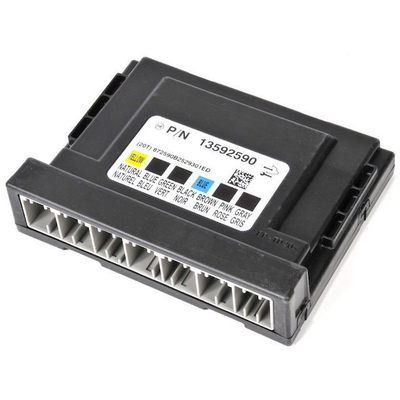
Shop the Parts Behind B2761
Below are the parts most often responsible for code B2761, ranked by how frequently each one is the actual culprit (per the diagnosis above). Tap any to see what we have for your vehicle.



The information in this article is provided for general reference and educational purposes only. Vehicle specifications, procedures, and part compatibility can vary by production date, trim level, and region. Always consult your vehicle's factory service manual and verify part numbers before purchasing or performing repairs. Safety-critical components such as airbags, seat belts, and braking systems should be installed by a qualified professional.
- 🧭 Diagnostic Flowchart
- 🛍️ Shop This Part
- What Does B2761 Mean?
- Can I Drive With B2761?
- Common Causes
- Symptoms
- Common Fixes & Costs
- Used vs. New Parts: Buying Guide
- What Happens If You Wait — Timeline
- Cost of Not Fixing It
- Diagnosis Steps
- When This Code Triggers (Freeze-Frame Conditions)
- Related Codes
- Climate & Environmental Factors
- How to Talk to a Mechanic About This Code
- Where to Take It: Dealer vs Independent vs Chain
- When to Walk Away From the Repair
- What Scan Tool You Need for This Code
- How to Clear the Code After You Fix It
- Will This Fail Emissions / State Inspection?
- Most Commonly Affected Vehicles
- Manufacturer-Specific Notes
- Real Owner Stories
- 2011 Chevy Tahoe with airbag light
- 2016 Subaru Forester with intermittent airbag light
- 2005 Toyota with B2761 and alarm issues
- How to Prevent This Code From Triggering
- Frequently Asked Questions
- Is an airbag light caused by B2761 a serious problem?
- Can I fix B2761 myself?
- I fixed the part, but the airbag light is still on. Why?
- My airbag light is intermittent. What does that mean?
- What is the most common misdiagnosis for B2761?
- My scanner just says B2761 with no other info. What do I do?
- Will clearing the code make it go away?
- Why are there so many different meanings for B2761?
- Key Takeaways
- 🎟️ Get 5% Off