

OBD-II Code B2768: Handle Switch Circuit Malfunction / SRS Fault
What B2768 means, why it triggers, and how to fix it for any make
- B2768 means a failed keyless entry handle on GM vehicles, but indicates a disabled airbag system on Dodge, Jeep, and Nissan models.
- Use a professional-grade scan tool to read the 2-digit suffix (like -11 or -49) to pinpoint the exact failing sensor or circuit.
- Fixing a GM handle fault requires disconnecting the negative battery terminal for 30 seconds to perform a mandatory BCM hard reset.
- Before replacing expensive Nissan or BMW airbag sensors, remove any water bottles or debris wedged under the passenger seat and clear the codes.
What Does B2768 Mean?
DTC B2768 is a manufacturer-specific code with two primary, and very different, meanings. For General Motors vehicles, it signifies the Body Control Module (BCM) detects a fault in the electrical circuit of a passive keyless entry door handle switch. For Dodge, Chrysler, Jeep, and Nissan, this code points to a fault within the Supplemental Restraint System (SRS), such as a side impact pressure sensor or occupant classification sensor. You must use a scan tool with manufacturer-specific definitions to understand the code's true meaning in your vehicle.
Technical definition: The SAE/ISO definition for B2768 is "Handle Switch Circuit Malfunction," but manufacturer-specific definitions supersede this. For GM, the BCM sets this code when the signal from a handle switch is missing, intermittent, or irrational. For Dodge/Jeep, the Occupant Restraint Controller (ORC) defines it as "Right Side Pressure Sensor - Internal Electronic Failure" or similar. On Nissans, a similar symptom ties to the Occupant Classification System (OCS) and presents the exact same diagnostic challenge.
Can I Drive With B2768?
Yes, But With Caution. If the code relates to a GM keyless entry handle, your car will start and drive normally, but the faulty handle creates a parasitic battery drain, leaving you stranded. This costs $150-$400 for a new battery and diagnostic time. If the code triggers an airbag/SRS light (common on Dodge, Jeep, Nissan, BMW), the airbag system is disabled. Driving without functional airbags increases the risk of serious injury in a collision. Diagnose and repair SRS-related faults immediately.
Common Causes
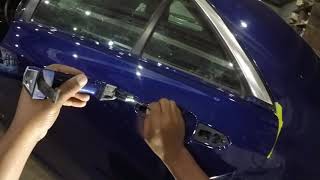
- Failed Door Handle Switch (GM) (Very Common) — On GM vehicles, the microswitch inside the handle is the number one cause. 🎬 See this walkthrough on how to remove and install door handles. It is constantly exposed to weather and fails from water intrusion, leading to corrosion, short circuits, and severe parasitic battery drain.
- Failed Airbag System Sensor (Dodge/Jeep/Nissan) (Very Common) — On many Dodge, Jeep, Chrysler, and Nissan vehicles, this code points directly to a faulty airbag system sensor, such as a side impact pressure sensor in a door or a passenger seat Occupant Classification System (OCS) sensor.
- Debris or Obstruction Under Seat (Common) — For airbag-related faults on brands like Nissan, a water bottle, floor mat, or other object wedged under the passenger seat interferes with the Occupant Classification System (OCS) sensor or its wiring, causing an immediate fault.
- Damaged Wiring or Connector (Common) — Wires break inside the flexible rubber boot between the door and the car's body from repeated opening and closing. Connectors for handles or airbag sensors also suffer from corrosion, moisture, or backed-out pins.
- Weak or Failing Car Battery (Less Common) — Low system voltage from an old or dying battery causes numerous, unpredictable electronic module glitches, which incorrectly trigger a B2768 code in either the BCM or SRS module.
- Blown Fuse (Less Common) — A blown fuse for the BCM, Keyless Entry system, or SRS/ORC module cuts power to the circuit. This is a secondary symptom caused by a shorted component or wire.
- Failed Body Control Module (BCM) or SRS Module (Rare) — The control module itself (BCM for handles, SRS/ORC for airbags) is a possible but rare point of failure. Consider this only after exhausting all wiring and component checks.
Symptoms
- Airbag / SRS warning light is on — This is the most common symptom for Dodge, Jeep, Nissan, and BMW vehicles. It indicates a fault in the safety system that requires immediate attention.
- Keyless entry button on one door handle does not work — On GM vehicles, touching the handle or pressing its button fails to lock or unlock the car, while other doors function correctly.
- Dead battery — A faulty door handle switch on a GM vehicle causes a parasitic draw that drains the battery, often in 1-2 days.
- Doors lock or unlock erratically — A short-circuit in the handle sends false signals to the BCM, causing the doors to lock or unlock randomly, even while driving.
- Service message on dashboard — A "Service Keyless Entry System" or "Service Airbag System" message appears in the driver information center. This code rarely illuminates the main Check Engine Light.
Diagnostic Flowchart
Tap your situation to follow the diagnostic path that matches what you're seeing on this code.
Common Fixes & Costs
- Remove Obstruction from Under Seat and Clear Codes — Parts: $0, Labor: $50-$150 (for diagnosis), ~0.5 hr book time (Beginner)
- Replace Exterior Door Handle Assembly — Parts: $75-$250, Labor: $100-$200, ~1.5 hr book time (Intermediate)
- Replace Airbag Side Impact or Occupancy Sensor — Parts: $120-$500, Labor: $150-$300, ~1.8 hr book time (Professional)
- Repair Damaged Wiring or Clean Connectors — Parts: $10-$30, Labor: $100-$300, ~2 hr book time (Intermediate)
- Replace and Program Body Control Module (BCM) — Parts: $300-$800, Labor: $150-$300, ~2.5 hr book time (Professional)
- Replace and Program Airbag Module (SRS/ORC) — Parts: $500-$900, Labor: $180-$270, ~1.5 hr book time (Professional)
Used vs. New Parts: Buying Guide
When a used part is worth it: For a GM door handle, a used part from a low-mileage vehicle is a cost-effective option, saving 50-70% off OEM. It is strongly advised NOT to buy used airbag system components (sensors, modules) due to safety, liability, and unknown history.
Donor-vehicle mileage cap: roughly under 60000 miles for the part to have meaningful remaining life.
Donor quality checklist:
- For handles, match the part number and paint code exactly.
- Avoid buying used airbag sensors or control modules under any circumstances.
- Verify the return policy and warranty period (typically 30-90 days for used parts).
Decision logic:
- If The fault is in the SRS / Airbag system → Always buy new OEM or OEM-quality aftermarket parts. Do not use used parts.
- If The fault is a GM door handle and budget is the top priority → A used handle is acceptable, but be aware it has a limited lifespan due to the same water intrusion issue.
- If The fault is a GM door handle and reliability is the top priority → Buy a new OEM or reputable aftermarket (e.g., Dorman) handle. The cost is higher but it comes with a longer warranty.
Warranty tradeoff: Used parts typically have a 30-90 day warranty. New aftermarket parts often carry a 1-year to limited lifetime warranty. New OEM parts carry a 12-month/12,000-mile warranty.
Worst-case if a used part fails: $150-$300 if a used handle fails after the warranty period, as you pay for the part and labor a second time.
What Happens If You Wait — Timeline
- Immediate (SRS Fault): Airbag/SRS light illuminates. The entire supplemental restraint system is disabled as a safety precaution. Airbags will not deploy in a collision. (MPG impact: 0%% · Added cost: $0, but the safety risk is immediate and significant.)
- 0-4 weeks (GM Handle Fault): Keyless entry button works intermittently. The internal switch is beginning to fail, but does not have a constant short yet. No significant battery drain is likely. (MPG impact: 0%% · Added cost: $0)
- 1-3 months (GM Handle Fault): Handle fails completely. A constant short circuit develops, preventing the BCM from sleeping. A parasitic draw of 0.5A - 2.0A begins. The battery dies if the car sits for 2-4 days. (MPG impact: 0%% · Added cost: $50-$150 (for a service call/jump start).)
- 3+ months (GM Handle Fault): Chronic parasitic drain kills the battery overnight consistently. Repeated deep-discharging and jump-starting causes permanent sulfation inside the battery, ruining it. Chronic low voltage puts extra strain on the alternator. (MPG impact: 0%% · Added cost: $200-$450 (for a new battery and diagnostic time, plus the original handle repair cost).)
Cost of Not Fixing It
- Immediate (SRS Fault): The airbag system is disabled. In a collision, airbags will not deploy, dramatically increasing the risk of serious or fatal injury. (Added cost: Impossible to quantify.)
- 1-7 Days (GM Handle Fault): A shorted handle creates a parasitic drain, leading to a dead battery. This leaves you stranded and requires a jump start or tow. (Added cost: $75-$250 (for tow/service call).)
- 1-3 Months (GM Handle Fault): Repeatedly draining and jump-starting the battery causes permanent damage (sulfation), requiring battery replacement. Chronic low voltage strains the alternator. (Added cost: $200-$500 (for new battery and potential alternator testing).)
Diagnosis Steps
- Scan for Codes and Manufacturer-Specific Definitions
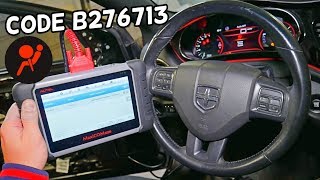
Use an OBD-II scanner that reads Body ('B') codes and provides detailed, manufacturer-specific definitions. The scanner tells you if B2768 means 'Left Front Handle Switch Circuit' (GM) or 'Right Side Pressure Sensor - Internal Electronic Failure' (Dodge). Note any suffix codes like -11 or -49, as they pinpoint the exact fault type.
Tools: OBD-II Scanner (with BCM/SRS capability) (Beginner) - Perform a Visual Inspection
If the code points to an airbag fault, thoroughly inspect the area under the passenger seat for obstructions like water bottles, umbrellas, or bunched-up floor mats pressing on sensors or wiring. For a handle fault, check the handle for obvious signs of damage.
Tools: Flashlight (Beginner) - Check Fuses
Using the owner's manual, locate and inspect all related fuses, including those for the Body Control Module (BCM), Keyless Entry, and the Supplemental Restraint System (SRS/ORC).
Tools: Owner's Manual, Fuse Puller (Beginner) - Inspect Wiring Harness and Connectors
For a handle code, open the affected door and pull back the rubber boot in the door jamb to check for broken or chafed wires. For an airbag code (e.g., side impact sensor), remove the interior door panel. For an OCS fault, check the yellow connectors under the passenger seat. Look for corrosion, moisture, or damage.
Tools: Flashlight, Trim Removal Tools (Intermediate) - Pro Tip: Test for Parasitic Draw (GM Handle Fault)
If a dead battery is a symptom, perform a parasitic draw test. Wait for all modules to go to sleep (up to 30 mins). Set a multimeter to the 10A DC setting and connect it in series with the negative battery cable. A normal draw is under 50mA (0.05A). If the draw is high (e.g., 1-2A), start pulling fuses related to the BCM/keyless entry. If pulling the fuse eliminates the draw, a faulty handle is the likely cause.
Tools: Digital Multimeter with 10A capability (Advanced) - Test Component with Live Data
For a BMW or Nissan occupancy sensor, use a capable scanner to view live data PIDs for the SRS/OCS system. The data changes from 'Not Occupied' to 'Occupied' when someone sits in the passenger seat. For a GM handle, scan tools show the switch status change from 'Idle' to 'Active' when the handle is touched, confirming if the switch sends a signal.
Tools: Advanced OBD-II Scanner with Live Data (Intermediate) - Pro Tip: Test GM Handle Switch Voltage
With the door handle connector disconnected and the ignition on, use a multimeter to check for a reference voltage from the BCM, typically around 5V. If voltage is present, the issue is the handle switch itself. If no voltage is present, the problem lies in the wiring or the BCM. The switch inside the handle is a simple momentary contact switch; when pressed, it shows continuity (near 0 Ohms) across its terminals.
Tools: Digital Multimeter, Connector Pinout Diagram (Advanced) - Pro Tip: Check Circuit Resistance (Dodge/Ram Airbag Sensor)
For a code like B2768-11 (Short to Ground) on a Ram 1500, test the wiring to the ORC module. Disconnect the battery, the sensor in the door, and the ORC module connector. Using a multimeter, measure the resistance between the signal circuit terminal at the sensor's harness connector and a known good ground. A reading below 20 Ohms indicates the wire is shorted to ground.
Tools: Digital Multimeter, Vehicle Service Manual, Connector Pinout Diagrams (Advanced) - Reset Control Modules
After any repair, clear the codes. For GM handle replacements, disconnect the negative battery terminal for at least 30 seconds to reset the BCM, which disables the circuit when a fault is present. For SRS repairs, always disconnect the battery before starting and reconnect it as the last step, then use a scan tool to clear the stored codes.
Tools: Wrench, OBD-II Scanner (Beginner)
When This Code Triggers (Freeze-Frame Conditions)
- Ignition Status: ON / RUN (Fault often logged during the SRS module's power-on self-test.)
- Battery Voltage: 11.5V - 14.5V (Code sets during normal operation; however, low voltage (<11V) triggers spurious module faults.)
- Vehicle Speed: 0 mph (SRS faults are typically detected during the initial self-check before driving. GM handle faults log at any speed when the handle is touched or shorts.)
- System Self-Test: Active / Failed (The SRS module continuously monitors component circuits. The code sets the moment an out-of-spec resistance or voltage is detected.)
Related Codes
- B2773, B2778, B2783 (GM) — These are identical 'Handle Switch Circuit' codes for the other door handles (e.g., Right Front, Left Rear, Right Rear). Seeing multiple codes at once suggests a systemic issue like a BCM fuse or a central wiring problem rather than multiple simultaneous handle failures.
- B00A0-00 (Nissan) — This is a common code for 'Occupant Detection Sensor Unit Fault' on Nissans. If your airbag light is on and you have a B2768 from a generic scanner, a more advanced tool shows B00A0-00. They point to the same problem: the passenger seat sensor system.
- 93C3 (BMW) — This is a frequent BMW-specific code for the 'Seat Occupancy Detector Mat'. It is the root cause of the passenger restraint system warning that mirrors the B2768 airbag issue on other brands.
- U0140 — Lost Communication With Body Control Module. If this code is present with a GM B2768, it indicates a deeper problem. Diagnose the U0140 first by checking the BCM's main power, grounds, and data network connections, as the BCM itself is offline.
- B101D — BCM Hardware Internal Malfunction. This code confirms the Body Control Module failed its own internal self-test. If you see this with B2768, the BCM is almost certainly the cause and requires replacement and programming.
Climate & Environmental Factors
- Rain and Humidity: This is the primary environmental cause of B2768 on GM vehicles. Water penetrates the unsealed microswitch in the exterior door handle, causing corrosion and short circuits that lead to keyless entry failure and parasitic battery drain.
- Cold Weather: Water that seeps into the door handle switch freezes and expands, damaging the switch's internal components or causing it to become stuck, leading to intermittent or permanent faults.
- HVAC Condensation Leak (GM): Per GM TSB 21-NA-183, a leaking HVAC drain hose inside the vehicle drips water directly onto the Body Control Module (BCM). This causes widespread electrical issues, including communication codes and potentially B2768, due to corrosion on the BCM's connectors.
How to Talk to a Mechanic About This Code
Say this: "I have a B2768 code. For my GM vehicle, I suspect a parasitic draw from a door handle and need the keyless entry circuit tested. For my Dodge/Nissan, my airbag light is on, and I need the manufacturer-specific SRS code definition, including any two-digit suffix, to identify the faulty sensor or circuit."
This immediately tells the shop you know B2768 has two very different meanings, preventing misdiagnosis. It directs them to the correct diagnostic path (parasitic draw test vs. SRS scan) and shows you expect a detailed, specific finding, not just a guess.
Avoid saying:
- 'My airbag light is on, can you just turn it off?'
- 'My keyless entry isn't working, just fix it.' (too vague)
- 'I have a B2768, just replace the part.'
Questions to ask before authorizing the repair:
- For an SRS fault: What is the full, manufacturer-specific code definition and suffix? Did you test the sensor's wiring and connector before condemning the sensor itself?
- For a GM handle fault: Did you perform a parasitic draw test? What was the amperage reading, and did it drop when you pulled the keyless entry fuse?
- Does the estimate include any necessary programming or calibration after the part is replaced (e.g., Nissan OCS reset)?
- What is the warranty on the recommended parts and labor?
Where to Take It: Dealer vs Independent vs Chain
- Dealer:
Necessary for module programming or brand-specific calibrations. A good second opinion if an independent shop is stuck.
Best for: Vehicles under warranty., Complex SRS/OCS faults requiring manufacturer-specific tools and calibration (e.g., Nissan OCS Zero Point Reset)., Any repair that requires programming a new control module (BCM, SRS/ORC).
Downsides: Highest labor rates, typically 1.5-2x an independent shop., Defaults to replacing an entire assembly (like a seat bottom) for a sensor fault, leading to very high costs. (Typical cost: +50% vs. baseline) - Independent Shop:
Best choice for most B2768 scenarios, offering the best balance of expertise and value, provided they have advanced diagnostic tools.
Best for: Out-of-warranty vehicles., Diagnosing and replacing a GM door handle., Diagnosing and replacing common SRS sensors (e.g., Dodge door pressure sensor) where no special calibration is needed.
Downsides: Shop must have a professional-grade scanner that reads manufacturer-specific BCM and SRS codes; a basic engine code reader is not enough., Quality varies; look for ASE certifications and good reviews on electrical/diagnostic work. (Typical cost: +0% vs. baseline) - Chain Shop:
AVOID for diagnosing a B2768 fault. The risk of misdiagnosis (especially with the SRS system) is high. They may replace a GM door handle if you provide the diagnosis, but it is not their specialty.
Best for: Simple jobs like battery replacement.
Downsides: Technicians lack the specialized tools or training for in-depth SRS or BCM diagnostics., High pressure to sell parts leads to replacing components without a proper diagnosis. (Typical cost: -10% vs. baseline)
When to Walk Away From the Repair
If the estimated repair cost exceeds 50% of the car's private-party value, you should seriously consider selling or trading it in. For safety-related SRS faults, this decision is more critical as driving the car unfixed is not a safe option.
- Car worth $10000, fix is $450: Fix it. A $450 repair for a GM door handle on a $10,000 Cadillac is well below the threshold.
- Car worth $12000, fix is $2200: Borderline. A $2,200 quote to replace a Nissan seat bottom assembly is a significant percentage of the car's value. Get a second opinion and ensure simpler fixes (connectors, wiring) have been ruled out before proceeding.
- Car worth $3500, fix is $1200: Walk away. Spending $1,200 to replace an airbag control module on a $3,500 Dodge Dart is not a sound investment. The repair cost is a large portion of the vehicle's total worth.
What Scan Tool You Need for This Code
Minimum: A scanner that reads and clears codes from the SRS (Airbag) and BCM (Body) modules. A basic engine-only (powertrain) code reader is useless for B2768 as it cannot access these systems.
A basic $20 scanner will not see B2768 at all. You plug it in and it reports 'No Codes Found' while your airbag light is on. You need a tool that specifically accesses the body and restraint control modules to get the manufacturer-specific definition and any suffix codes.
Budget: Autel AutoLink AL619 / Foxwell NT604 Elite (~$90) — Reads and clears codes from Engine, ABS, and SRS modules. It correctly identifies the B2768 fault in the SRS or BCM, giving you the specific definition needed for diagnosis.
Mid-range: Innova 5610 / BlueDriver Pro (~$100) — Offers SRS/BCM code reading plus live data streaming. This is crucial for watching the GM handle switch status ('Active'/'Idle') or the Nissan OCS sensor data ('Occupied'/'Not Occupied') in real-time to confirm if a component works correctly.
Professional: Autel MaxiCOM MK808S / XTOOL D7 (~$400-600) — Provides full bidirectional control and special functions. This level of tool is required for advanced diagnostics like commanding a module self-test or performing the OCS 'Zero Point Reset' calibration on a Nissan after a sensor or seat repair.
How to Clear the Code After You Fix It
- For SRS faults: Disconnect battery, perform repair, reconnect battery, then clear codes with a capable scan tool.
- For GM handle faults: Replace handle, then disconnect negative battery terminal for at least 30 seconds to perform a hard reset.
- Verify the SRS/Airbag light turns off after the initial 6-second bulb check at startup.
Drive cycle: A specific drive cycle is not required to clear a B-code. The code clears and the light goes out immediately after a successful repair and reset. However, if the battery was disconnected, a full drive cycle (30+ minutes of mixed driving) is needed to run the emissions readiness monitors.
Readiness monitors affected: Evaporative System, Catalyst Monitor, O2 Sensor Monitor
Before emissions retest: drive at least 50 miles to fully set monitors.
Watch out for:
- Forgetting the mandatory battery disconnect/reset for a new GM door handle, causing the new part not to work.
- Using a basic scanner that cannot clear SRS/BCM codes.
- Not fixing the root cause, which causes the code to return immediately after the next self-test.
Will This Fail Emissions / State Inspection?
No — by itself this code doesn't fail OBD inspection (but it can keep readiness monitors from setting, which causes a separate fail).
- California: An airbag light will NOT fail a California smog check, which is only concerned with emissions-related systems. The Check Engine Light must be off.
- New York: Per the NY DMV, an illuminated airbag warning light is checked and noted during the safety inspection, but it is an ADVISORY only and is NOT cause for rejection.
- Texas: The annual safety inspection in Texas does NOT include the airbag system. A vehicle with an active airbag light passes the inspection.
Most Commonly Affected Vehicles
- Cadillac ATS, CTS, XTS, Escalade (2013-2019) — Extremely common for the 'Handle Switch Circuit' definition. The door handle microswitches are notorious for failing due to water intrusion, causing keyless entry failure and parasitic battery drain. Repair costs for a single handle replacement typically range from $250-$450 at a shop.
- Chevrolet Corvette, Volt, Yukon, Tahoe (2011-2020) — Uses the same passive entry handle technology as Cadillac, leading to identical switch failure issues. The Corvette's touchpad is also susceptible.
- Dodge / Ram Dart, Ram 1500 (2013-2016) — On these vehicles, B2768 is an airbag system code, often for a side impact pressure sensor in the door. Look for specific sub-codes like B2768-11 (Short to Ground) or B2768-49 (Internal Electronic Failure) to guide diagnosis. Repair costs for the sensor are $200-$400.
- Jeep Cherokee, Grand Cherokee (2014-2022) — Similar to Dodge/Ram, this code points to the SRS system. It has varied definitions like B2768-13 (Circuit Open) relating to an infotainment switch, or B2768-11 (Circuit Short To Ground) for a TPMS issue misidentified by a generic scanner. Manufacturer-specific scanning is essential.
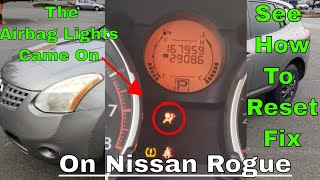
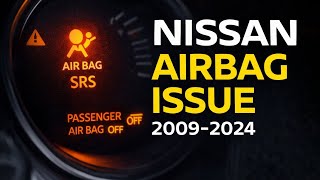
- Nissan Altima, Sentra, Rogue, Versa, Murano (2013-2024) — An airbag light on these models is frequently caused by a fault in the Occupant Classification System (OCS) under the passenger seat. Nissan TSB NTB19-071D addresses this known issue. A simple connector check or removing debris fixes it, but sensor replacement costs $400-$1100.
- BMW 3-Series (E90), 5-Series (E60), X5 (E70) (2004-2013) — A very common BMW issue is the failure of the passenger seat occupancy mat, triggering the airbag light with codes like 93C3. While not a B2768 code, it is the brand's equivalent common restraint system fault. The official repair requires expensive seat disassembly.
- Lexus ES, RX (2007-2015) — This code appears on Lexus models due to age-related failure of the handle's internal switch, similar to the GM issue but less frequent. Replacement handles are sourced easily, but ensure it matches the correct model year.
- Chrysler 200, 300 (2011-2023) — Shares the SRS-related code definitions with Dodge and Jeep. For example, B2768-87 means 'Wakeup Control' fault, pointing to a communication issue. Diagnosis starts by checking for other BCM communication codes.
Manufacturer-Specific Notes
- General Motors (Cadillac, Chevrolet, GMC): The BCM intentionally disables power to a faulty handle circuit. After replacing the handle, you MUST perform a hard reset by disconnecting the negative battery cable for at least 30 seconds. If you only clear the code with a scanner, the new handle will not work. Also, check TSB 18-NA-279: if the turn signals flash 4 times when you press the handle button, the feature is disabled. Press and hold Lock and Unlock on the key fob for 3 seconds to re-enable it.
- Dodge / Chrysler / Jeep: This code is almost always for the SRS/airbag system. It often includes a 2-digit suffix (-11, -13, -49, -87) that specifies the failure type (Short to ground, Open circuit, Internal failure, Missing message). Capturing this suffix with a capable scanner is vital for accurate diagnosis and avoiding unnecessary parts replacement.
- Nissan: The Occupant Classification System (OCS) is very sensitive. Before replacing parts, check under the seat for obstructions and secure connectors. TSB NTB19-071D was issued for OCS control unit faults on many models from 2013-2020. A repair requires a dealer-level tool for OCS zero point calibration.
- BMW: The passenger seat occupancy mat is a well-documented, widespread failure point. The official repair is very expensive as it requires removing the seat cover. Because of this, a common but unofficial fix is to install an emulator that plugs into the sensor connector and mimics an 'occupied' seat, allowing the airbag light to be turned off.
Real Owner Stories
2015 Cadillac ATS with 69k miles - The Easy Fix
Owner found the car battery dead two mornings in a row. After the second jump start, the 'Service Keyless Entry System' message appeared. The driver's door handle button also stopped working.
What they tried:
- Initially suspected a bad battery, but it tested good at an auto parts store.
- Performed a parasitic draw test and found a 1.5A draw that dropped to 40mA when the BCM fuse was pulled.
- Replaced the driver's side exterior door handle.
Outcome: Replacing the handle and performing a battery disconnect reset fixed both the parasitic draw and the keyless entry function. Total cost was $180 for an OEM handle and 1 hour of DIY labor.
Lesson: On a GM vehicle, a dead battery plus a keyless entry fault almost always points to a bad door handle. Performing a parasitic draw test confirms the diagnosis before buying parts.
2014 Ram 1500 with 110k miles - Misdiagnosis Story
The airbag light came on intermittently and chimed randomly while driving. The owner had recently replaced the heater core, which involved removing the dashboard.
What they tried:
- Assuming a loose connection from the recent dash work, the owner checked the main airbag module connector under the dash, which seemed secure.
- He checked the clockspring connectors in the steering column, but they were fine.
- A shop scanned the truck and found code B2768-11, 'Right Side Restraints Sensor 4 - Short to Ground'.
- The actual cause was pinched wiring for the right frontal acceleration sensor under an airbox mounting bolt in the engine bay, which chafed and shorted the wires.
Outcome: The dealer repaired the damaged wiring. The diagnostic fee and labor for the wire repair cost approximately $350. The airbag light remained off.
Lesson: Don't assume the fault is related to recent work in the same area. A specific code from a manufacturer-level scanner (like B2768 with a suffix) is crucial to pinpointing the correct sensor and circuit to test.
2017 Nissan Rogue with 85k miles - The Under-Seat Gremlin
Airbag light came on after the car was professionally detailed. The passenger airbag 'OFF' light was also illuminated even when an adult was in the seat.
What they tried:
- Checked under the passenger seat and found no obvious obstructions.
- Took it to a mechanic who quoted $2,000 to replace the entire passenger seat bottom, stating the Occupant Classification System (OCS) sensor failed and was integrated into the cushion.
- Frustrated, the owner disconnected the battery, then unplugged and firmly reconnected the main yellow SRS connector under the passenger seat.
Outcome: After reconnecting the battery and clearing the codes with a capable scanner, the airbag light went out and the OCS began working correctly. The detailing crew bumped the connector just enough to cause a fault. Total cost: $0.
Lesson: For any airbag fault, especially after the interior is cleaned or detailed, the first and cheapest step is to disconnect the battery and reseat the under-seat connectors. This saves you from a very expensive and unnecessary repair.
How to Prevent This Code From Triggering
- Apply Dielectric Grease to GM Handle Connectors (Once, or whenever a door panel is removed) — Applying a small amount of dielectric grease to the electrical connector for the door handle helps seal it from moisture, preventing the corrosion that leads to short circuits and failure.
- Keep Under-Seat Areas Clear (Daily habit) — Never store items like water bottles, umbrellas, or fire extinguishers under the front seats. These shift and damage the sensitive OCS sensor mat or its wiring harness, triggering an expensive airbag fault.
- Clean Door Jambs and Handle Cavities (Every car wash) — Regularly cleaning out dirt, leaves, and grime from around the door handles and inside the door jambs helps prevent debris from trapping water near the handle's internal switch, reducing the risk of water intrusion on GM vehicles.
- Be Careful During Interior Cleaning (Whenever cleaning the interior) — When vacuuming, do not aggressively shove the nozzle under the seats. This snags or dislodges the yellow SRS/OCS connectors, causing an immediate airbag fault light.
- Periodically Check Door Seals (Every 6 months) — Ensure the rubber weather seals on the doors are intact and not torn. Damaged seals allow excess water to run down inside the door, increasing the chance of moisture reaching the handle's electronics (GM) or the side impact sensor connector (Dodge/Jeep).
Frequently Asked Questions
What is the most common misdiagnosis for code B2768?
The biggest mistake is assuming B2768 always means a bad door handle. This is only true for GM vehicles. On a Dodge, Jeep, or Nissan, buying a door handle will not fix the airbag light; you must get the manufacturer-specific definition from a quality scanner first.
Can a faulty door handle drain my car's battery?
Yes, absolutely. A short-circuiting handle switch on a GM vehicle prevents the BCM from entering its low-power sleep mode. This creates a parasitic electrical draw that drains a healthy battery in one to two days.
Why is my airbag light on after someone put something under the seat?
The passenger seat contains a sensitive Occupant Classification System (OCS) mat and sensor. An object like a water bottle or misplaced floor mat presses on the sensor or strains its wiring, causing the system to register a fault. Always check for and remove obstructions before seeking costly repairs.
Can I fix code B2768 myself?
Replacing a bad door handle on a GM vehicle is a manageable DIY repair for someone comfortable removing an interior door panel. However, if the code points to an airbag system component, stop DIY and take the vehicle to a certified shop. Improper handling of SRS components risks accidental airbag deployment or future failure.
Is it safe to ignore an airbag light from a B2768 code?
No. An illuminated airbag or SRS warning light means a fault is detected and the entire airbag system is disabled as a precaution. In the event of a crash, the airbags will not deploy, making this a critical safety issue that requires immediate repair.
Do I need to program a new door handle?
No, a new GM door handle does not require programming. However, you must perform a hard reset by disconnecting the battery for 30 seconds to force the BCM to recognize and power the new handle.
Why is the dealer quoting thousands to fix my Nissan airbag light?
Sometimes, a simple reset or cleaning a connector fixes the issue. However, if the OCS sensor mat inside the seat cushion fails, the official repair requires replacing the entire seat bottom assembly. Dealerships routinely quote $2,000 to $2,500 for this repair on models like the Nissan Murano.
Key Takeaways
- B2768 means a failed keyless entry handle on GM vehicles, but indicates a disabled airbag system on Dodge, Jeep, and Nissan models.
- Use a professional-grade scan tool to read the 2-digit suffix (like -11 or -49) to pinpoint the exact failing sensor or circuit.
- Fixing a GM handle fault requires disconnecting the negative battery terminal for 30 seconds to perform a mandatory BCM hard reset.
- Before replacing expensive Nissan or BMW airbag sensors, remove any water bottles or debris wedged under the passenger seat and clear the codes.
Helpful Videos

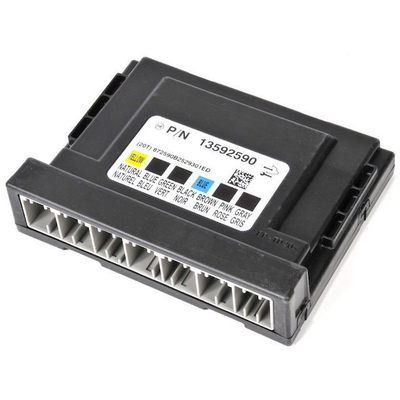
Shop the Parts Behind B2768
Below are the parts most often responsible for code B2768, ranked by how frequently each one is the actual culprit (per the diagnosis above). Tap any to see what we have for your vehicle.

The information in this article is provided for general reference and educational purposes only. Vehicle specifications, procedures, and part compatibility can vary by production date, trim level, and region. Always consult your vehicle's factory service manual and verify part numbers before purchasing or performing repairs. Safety-critical components such as airbags, seat belts, and braking systems should be installed by a qualified professional.
- 🧭 Diagnostic Flowchart
- 🎬 Helpful Videos
- 🛍️ Shop This Part
- What Does B2768 Mean?
- Can I Drive With B2768?
- Common Causes
- Symptoms
- Common Fixes & Costs
- Used vs. New Parts: Buying Guide
- What Happens If You Wait — Timeline
- Cost of Not Fixing It
- Diagnosis Steps
- When This Code Triggers (Freeze-Frame Conditions)
- Related Codes
- Climate & Environmental Factors
- How to Talk to a Mechanic About This Code
- Where to Take It: Dealer vs Independent vs Chain
- When to Walk Away From the Repair
- What Scan Tool You Need for This Code
- How to Clear the Code After You Fix It
- Will This Fail Emissions / State Inspection?
- Most Commonly Affected Vehicles
- Manufacturer-Specific Notes
- Real Owner Stories
- 2015 Cadillac ATS with 69k miles - The Easy Fix
- 2014 Ram 1500 with 110k miles - Misdiagnosis Story
- 2017 Nissan Rogue with 85k miles - The Under-Seat Gremlin
- How to Prevent This Code From Triggering
- Frequently Asked Questions
- What is the most common misdiagnosis for code B2768?
- Can a faulty door handle drain my car's battery?
- Why is my airbag light on after someone put something under the seat?
- Can I fix code B2768 myself?
- Is it safe to ignore an airbag light from a B2768 code?
- Do I need to program a new door handle?
- Why is the dealer quoting thousands to fix my Nissan airbag light?
- Key Takeaways
- 🎟️ Get 5% Off