

OBD-II Code B2773: Comprehensive Guide for Nissan, GM, Mazda & More
What B2773 means, why it triggers, and how to fix it like a pro
What Does B2773 Mean?
B2773 is a manufacturer-specific Body Control Module (BCM) code with completely different meanings depending on your vehicle. On Nissan electric vehicles, it points to a failed electric PTC (Positive Temperature Coefficient) cabin heater. On General Motors (GM) trucks and SUVs, it indicates a fault in the four-wheel-drive (4WD) system, specifically the selector switch indicator lights. For Mazda vehicles, it flags a critical fault in an airbag circuit. On Subaru models, it acts as a secondary code related to a failing lock-up solenoid in the CVT transmission.
Technical definition: The official SAE/ISO definition for B2773 varies by manufacturer. Common definitions include: 'PTC Heater Circuit 1' (Nissan), 'Four-Wheel Drive Low Range Lamp Control Circuit' (General Motors), 'Driver-side curtain air bag module circuit resistance low' (Mazda), or a manufacturer-specific code indicating a fault communicated from the Transmission Control Module (Subaru).
Can I Drive With B2773?
Yes, but with caution Driving is possible but carries specific risks depending on the manufacturer. On Nissan EVs, you will have no cabin heat, which causes window frosting and severely impairs visibility in cold climates—a major safety risk. On GM trucks, if the 4WD system is stuck in 4HI or 4LO, driving on dry pavement causes drivetrain binding, leading to expensive transfer case or differential damage ($1500+). If stuck in 2WD, it is safe to drive. On Mazda vehicles, this code indicates a critical airbag system fault; driving is NOT recommended as the airbags will fail to deploy in a crash. On affected Subaru models, it indicates an impending transmission issue that causes stalling or unpredictable shifting.
Common Causes
- (GM/Chevy Trucks) Corroded Frame Ground Connection (Very Common) — A poor ground connection for the 4WD system is the most notorious issue. The ground point, typically G103 or G104 located on the vehicle's frame below the driver's door, corrodes heavily, causing high resistance and triggering 4WD electronic faults.
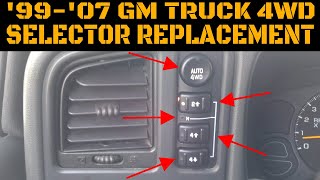
- (GM/Chevy Trucks) Faulty 4WD Selector Switch (Very Common) — The dashboard switch used to select 2WD, 4HI, and 4LO fails internally. This extremely common part failure leads to a 'Service 4WD' message and sets B2773 alongside other 4WD codes.
- (Nissan EV) Faulty PTC Heater Unit (Very Common) — The electric Positive Temperature Coefficient (PTC) heater unit fails internally. Factory soldering on the circuit board fails under thermal stress and high current draw in cold weather, requiring a full unit replacement.
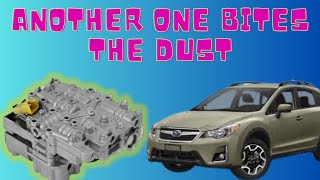
- (Subaru) Faulty Lock-Up Duty Solenoid / CVT Valve Body (Common) — On Subaru models with the TR580 CVT, a failing lock-up duty solenoid within the transmission valve body triggers primary transmission codes (P2764). The Transmission Control Module then sends a fault signal to the BCM, logging B2773.
- (GM/Chevy Trucks) Faulty Transfer Case Encoder Motor (Common) — The encoder motor physically shifts the transfer case between modes, and its integrated position sensor reports the gear position. Failure of either component triggers the 'Service 4WD' light.
- (Mazda) Damaged Clock Spring or Airbag Wiring (Common) — The clock spring or wiring harness connecting the curtain airbag module develops an open or high-resistance circuit, immediately triggering an airbag fault code and disabling the system.
- (All Vehicles) Weak or Failing 12V Battery (Less Common) — A weak 12V accessory battery causes spurious electronic error codes across all modules. Always test the 12V battery before condemning expensive components, as low voltage disrupts module communication.
- (GM/Chevy Trucks) Failed Transfer Case Control Module (TCCM) (Rare) — The control module managing the 4WD system fails internally. Consider this a last resort only after ruling out the switch, ground connection, and encoder motor.
Symptoms
- (GM/Chevy Trucks) 'Service 4WD' Light is On — The dashboard displays a 'Service 4WD' warning message, and the vehicle refuses to shift into or out of 4WD.
- (GM/Chevy Trucks) 4WD Indicator Lights are Off or Flashing — The lights on the 4WD selector switch fail to illuminate or flash continuously without successfully engaging a gear.
- (Nissan EV) No Cabin Heat — A complete lack of hot air from the vents, even on the highest setting. In cold climates, this causes dangerous window frosting.
- (Subaru) Flashing 'AT OIL TEMP' Light and Check Engine Light — The dashboard displays a flashing 'AT OIL TEMP' light alongside a Check Engine Light, often accompanied by harsh shifting or hesitation.
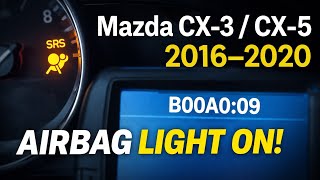
- (Mazda) Airbag Warning Light is On — The airbag warning light illuminates permanently, indicating a serious safety system fault that disables crash deployment.
Common Fixes & Costs
- (GM/Chevy Trucks) Clean or Repair Frame Ground Connection — Parts: $0-$5, Labor: $75-$150, ~0.5 hr book time (DIY)
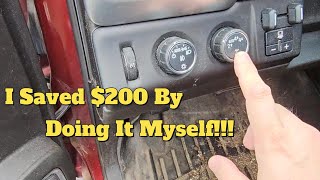
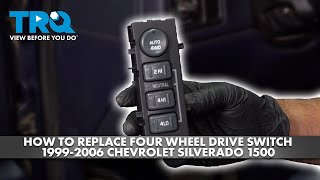
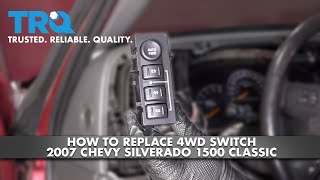
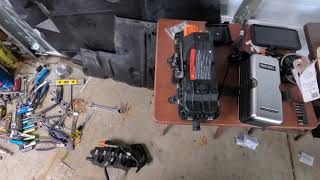
- (GM/Chevy Trucks) Replace 4WD Selector Switch 🎬 Watch this step-by-step guide to replacing the GM selector switch. — Parts: $40-$80, Labor: $50-$150, ~0.5 hr book time (DIY)
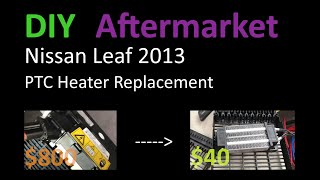
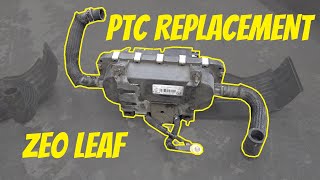
- (Nissan EV) Replace PTC Heater Unit 🎬 See how to access and replace the Nissan Leaf heater. — Parts: $700-$1300, Labor: $800-$1600, ~7.0 hr book time (Professional)
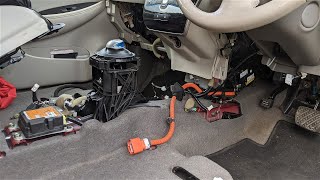
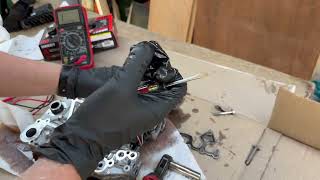
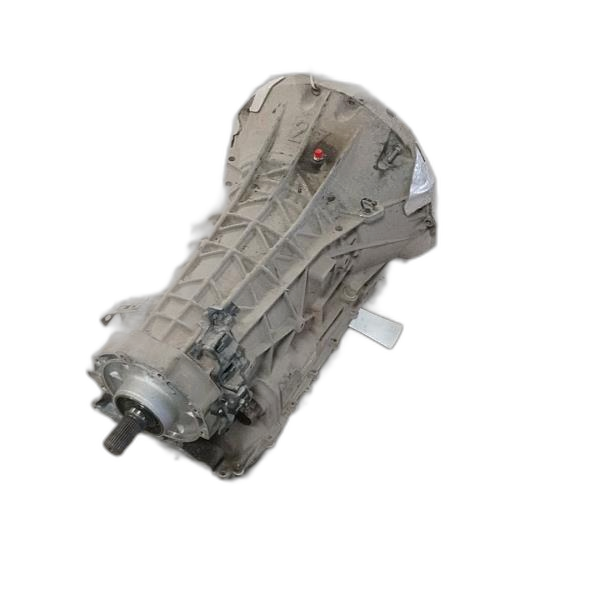
- (Subaru) Replace CVT Valve Body Assembly 🎬 Watch a mechanic replace the Subaru valve body and solenoid. — Parts: $700-$1000, Labor: $400-$700, ~3.5 hr book time (Advanced)
- (GM/Chevy Trucks) Replace Transfer Case Encoder Motor — Parts: $150-$350, Labor: $200-$400, ~2.0 hr book time (Intermediate)
- (Mazda) Replace Clock Spring / Repair Airbag Wiring — Parts: $100-$400, Labor: $200-$500, ~1.5 hr book time (Professional)
Used vs. New Parts: Buying Guide
When a used part is worth it: Only for purely mechanical or simple electronic parts on an older vehicle where budget is the primary concern. A used GM 4WD switch or encoder motor from a low-mileage wreck is acceptable. Never buy a used Nissan PTC heater due to the part's known factory design flaw.
Donor-vehicle mileage cap: roughly under 80000 miles for the part to have meaningful remaining life.
Donor quality checklist:
- Match part numbers exactly, including any superseding or updated numbers.
- For electronic modules or remanufactured valve bodies, ensure the seller offers a warranty and a return policy.
- Avoid parts from vehicles scrapped due to flood or fire damage.
Decision logic:
- If The part is safety-related (Mazda airbag components) → Always buy new OEM parts. The risk is not worth the savings.
- If The part is inexpensive and has a high failure rate (GM 4WD Switch) → Buy new. The small savings on a used part isn't worth the risk of it failing again soon.
- If The part is very expensive and labor-intensive to replace (Nissan PTC Heater, Subaru Valve Body) → Buy a new OEM or high-quality remanufactured part with a warranty. The cost of repeat labor negates any savings from a cheap used part.
Warranty tradeoff: Used parts from salvage yards typically have a 30-90 day warranty for the part only. New aftermarket parts offer 1-year to limited lifetime warranties. New OEM parts carry a 1-year/12,000-mile warranty.
Worst-case if a used part fails: 1000-2000
Cost of Not Fixing It
- Immediate: (Nissan) No cabin heat causes dangerous window frosting. (Mazda) Airbag system is disabled and will not deploy in a crash. (GM) 4WD system is inoperable. (Subaru) Poor fuel economy and harsh shifting. (Added cost: 0)
- 1-6 months: (GM) If stuck in 4WD on dry pavement, continued driving causes severe drivetrain binding, destroying the transfer case or differentials. (Subaru) Continued driving with a failing lock-up solenoid destroys the torque converter and contaminates the CVT fluid. (Added cost: $1500-5000+)
- 6+ months: The primary risk is the ongoing safety hazard. (Mazda) The risk of serious injury or death in an accident due to a non-functional airbag system is severe. (Nissan) The safety risk of impaired visibility from frost remains. (Added cost: Incalculable (Safety Risk))
Diagnosis Steps
- Verify the Code's Meaning for Your Specific Vehicle
Use a professional scan tool to find the exact definition of B2773 for your year, make, and model. The diagnostic path for a Nissan Leaf (heater) is completely different from a Chevy Silverado (4WD) or a Subaru Crosstrek (transmission).
Tools: Internet access, OBD-II Scanner (Beginner) - Scan for All Related Codes
Check for stored trouble codes in all modules (BCM, TCM, ECM). On a Nissan Leaf, B2773 appears with B2772 and B2774. On a GM truck, look for B2725 or C0306. On a Subaru, B2773 is secondary to transmission codes like P0700 and P2764.
Tools: OBD-II Scanner (with multi-system capability) (Beginner) - Diagnosis Path 1: (GM 4WD System) - Inspect Grounds and Fuses
Check fuses labeled 'ATC', 'TCCM', or '4WD'. Next, locate the main body-to-frame ground under the driver's side door (G103/G104). Disassemble, clean all corrosion from the frame and connector with a wire brush, apply dielectric grease, and re-tighten. This free step solves the majority of GM B2773 codes.
Tools: Owner's manual, fuse puller, wire brush, socket set, dielectric grease (DIY) - Diagnosis Path 1: (GM 4WD System) - Test Selector Switch Resistance
Unplug the 4WD selector switch. Using a multimeter, measure resistance across the specified pins while pressing the buttons. Expected values are approximately: 2HI = 1.1kΩ, Auto = 2.2kΩ, 4HI = 3.9kΩ, 4LO = 6.2kΩ. An open circuit or significantly skewed value confirms a faulty switch.
Tools: Multimeter, trim removal tool, service manual/wiring diagram (Intermediate) - Diagnosis Path 2: (Nissan PTC Heater) - Live Data PID Analysis
Using a scan tool like Leaf Spy, monitor the HVAC PIDs. When the heater is commanded on, 'Heater Power Draw' must increase to over 3,500 watts. If power draw remains at 0 or a very low number (e.g., 1500 watts), the PTC heater has failed internally.
Tools: OBD-II Scanner with Nissan-specific PIDs (Leaf Spy) (Advanced) - Diagnosis Path 2: (Nissan PTC Heater) - Check High Voltage
After confirming the 12V battery is healthy and following all high-voltage safety procedures, check for 380-400V DC at the heater's main power connector when heat is commanded on. If voltage is present but the unit does not heat, replace the PTC heater.
Tools: High-voltage multimeter, Class 0 EV safety gloves, Infrared Thermometer (Professional) - Diagnosis Path 3: (Subaru CVT) - Test Solenoid Resistance
On a Subaru with codes P0700/P2764 alongside B2773, measure the resistance of the lock-up duty solenoid circuit at the TCM connector. A good solenoid reads between 10 and 13.5 ohms. A reading below 5 ohms or an open circuit confirms the solenoid has failed, requiring a new valve body.
Tools: Multimeter, service manual, wiring diagram (Advanced) - Diagnosis Path 4: (Mazda Airbag) - Professional Resistance Check
A B2773 on a Mazda indicates a dangerous 'resistance low' fault in the airbag circuit (typically 2.0-3.5 ohms expected). Due to the extreme risk of accidental airbag deployment, stop DIY diagnosis immediately and tow the vehicle to a certified SRS technician.
Tools: Professional diagnostic scanner, airbag-safe test equipment (Professional)
When This Code Triggers (Freeze-Frame Conditions)
- Ambient Air Temperature: < 32°F (0°C) (For Nissan Leaf, the code sets when the PTC heater is commanded on during freezing weather.)
- Vehicle Speed: 0 mph (For GM trucks, the fault is detected during startup self-tests or when attempting to shift 4WD modes while stationary.)
- System Voltage: 9-11.5V (Low system voltage during engine cranking causes spurious communication faults across all makes, triggering B-codes.)
- RPM / Vehicle Speed: 1500-2500 RPM / 45-65 mph (For Subaru, the underlying transmission fault (P2764) occurs during steady-state cruise when torque converter lock-up is commanded.)
How to Clear the Code After You Fix It
- Perform the physical repair and reconnect the 12V battery.
- Use a capable OBD-II scan tool to clear the B2773 code from the Body Control Module and any related codes in the TCM or ECM.
- For Subaru CVT valve body replacement, perform the mandatory 'AT Learning' or 'CVT Relearn' procedure with a compatible scan tool.
Drive cycle (~20 minutes): To ensure all system readiness monitors are set: 1. Cold start (coolant temp below 122°F). 2. Idle for 3 minutes with electrical loads on. 3. Drive for 5 minutes at a steady 55 mph. 4. Drive for 10 minutes in stop-and-go city traffic. 5. Let the vehicle sit with the engine off for several hours.
Readiness monitors affected: B-codes do not directly affect emissions readiness monitors. However, if the root cause sets a P-code (e.g., Subaru P0700/P2764), Catalyst, O2 Sensor, and EVAP monitors will be affected., Disconnecting the 12V battery resets all readiness monitors to 'incomplete'.
Before emissions retest: drive at least 50 miles to fully set monitors.
Watch out for:
- Clearing the code without fixing the root cause results in the code returning immediately.
- Forgetting to perform the CVT relearn procedure on a Subaru leads to poor driveability and immediate transmission damage.
- Taking the vehicle for an emissions test immediately after disconnecting the battery results in an automatic 'Not Ready' failure.
Will This Fail Emissions / State Inspection?
Yes — this code typically fails an OBD-II emissions inspection.
- California: A 'B' code itself won't fail the smog check, but if the underlying issue triggers the Check Engine Light (MIL), as it does on Subaru models, it is an automatic failure.
- New York: The NYS inspection includes a check for any illuminated malfunction indicator lamps. An airbag light is an automatic safety failure. Even if only the 'Service 4WD' light is on, an inspector may fail the vehicle on safety grounds.
- Texas: An illuminated Check Engine Light results in an automatic emissions failure. If only a body-system light (Airbag, Service 4WD) is on, it passes the emissions portion, but you will fail the mandatory safety inspection if the airbag light is illuminated.
Helpful Videos


Shop the Parts Behind B2773
Below are the parts most often responsible for code B2773, ranked by how frequently each one is the actual culprit (per the diagnosis above). Tap any to see what we have for your vehicle.



The information in this article is provided for general reference and educational purposes only. Vehicle specifications, procedures, and part compatibility can vary by production date, trim level, and region. Always consult your vehicle's factory service manual and verify part numbers before purchasing or performing repairs. Safety-critical components such as airbags, seat belts, and braking systems should be installed by a qualified professional.
- 🎬 Helpful Videos
- 🛍️ Shop This Part
- What Does B2773 Mean?
- Can I Drive With B2773?
- Common Causes
- Symptoms
- Common Fixes & Costs
- Used vs. New Parts: Buying Guide
- Cost of Not Fixing It
- Diagnosis Steps
- When This Code Triggers (Freeze-Frame Conditions)
- How to Clear the Code After You Fix It
- Will This Fail Emissions / State Inspection?
- 🎟️ Get 5% Off