

OBD-II Code B2784: Immobilizer Antenna Coil Failure
What B2784 means, why it triggers, and how to fix it
- Code B2784 triggers a 'crank, no start' condition and a rapidly flashing security light because the vehicle cannot read the key's security chip.
- Replacing the push-to-start button assembly fixes this code in over 80% of affected 2010-2015 Toyota Prius models for under $100 using a used part.
- Test a spare key before buying parts; if the spare starts the engine, the primary key's transponder chip is dead, not the vehicle's antenna.
- A dead key fob battery will not cause code B2784, as the immobilizer chip is a passive transponder that requires zero battery power to function.
What Does B2784 Mean?

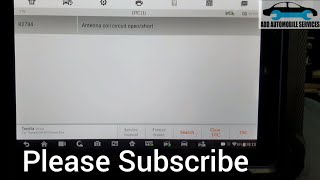
B2784 indicates the vehicle's main computer detected an open or short circuit in the immobilizer antenna coil. Located around the ignition switch 🎬 Watch: Diagnosing an antenna coil circuit fault on a Camry or push-to-start button, this coil reads the security chip in your car key. If the antenna fails to read the key, the system assumes a theft attempt and disables the engine.
Technical definition: The SAE/OBD-II definition for B2784 is "Antenna Coil Open / Short". The immobilizer control module (Certification ECU or Transponder Key ECU) has detected a break or short circuit in the transponder key antenna wiring or coil.
Can I Drive With B2784?
No — Do Not Drive. The vehicle will crank but the engine will not start. The immobilizer system prevents the engine from running without proper key authentication. Attempting to bypass the system causes further electronic damage.
Common Causes

- Faulty Antenna Coil Assembly (Very Common) — The antenna coil itself fails, often due to a microscopic break in the internal wire winding. This component is integrated into the push-to-start button or the plastic ring around the ignition lock cylinder.
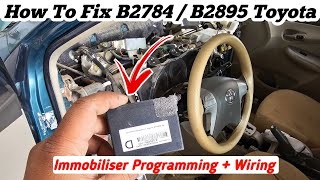
- Damaged Wiring or Poor Connection (Common) — Wires connecting the antenna coil to the immobilizer ECU fray, break, or disconnect. This creates an open or short circuit verifiable with a digital multimeter. 🎬 See this guide on Corolla wiring diagrams and immobilizer programming
- Faulty Immobilizer ECU (Transponder Key ECU) (Less Common) — The control module receiving the antenna signal fails. This requires replacing and programming a new module to recognize the vehicle's existing keys.
- Liquid Intrusion and Corrosion (Uncommon) — Water from windshield leaks or spilled drinks enters the immobilizer ECU, corroding the circuit board. This occurs frequently when the ECU sits near the A-pillar or under the dashboard.
- Failed Ignition Switch (Mechanical) (Uncommon) — In vehicles with a traditional key, a worn-out ignition switch fails to make proper electrical contact, which the immobilizer system misinterprets as a security fault.
- Damaged Key Transponder Chip (Rare) — The internal chip inside the key breaks or shifts out of position due to a dropped or damaged key casing. This is confirmed if a spare key successfully starts the vehicle.
- Interference from Aftermarket Electronics (Rare) — Poorly installed remote starters or alarms splice into and damage the sensitive immobilizer wiring, blocking the antenna signal.
Symptoms

- Engine Cranks But Will Not Start — The starter motor turns the engine, but the immobilizer disables fuel and ignition. Mechanics frequently misdiagnose this as a failed fuel pump.
- Flashing Security Light — The dashboard security indicator flashes rapidly during a start attempt, confirming an active immobilizer lockout.
- Key Not Detected Message — Digital dashboard displays show 'Key Not Detected' even when the key sits inside the cabin.
- Intermittent Starting Issues — The car starts only after multiple attempts or when the key is held at a specific angle, indicating a weakening coil or loose connection.
- Unable to Program New Keys (also visible on scanner) — Locksmiths cannot add new keys because the faulty antenna blocks communication between the vehicle and the key transponder.
Diagnostic Flowchart

Tap your situation to follow the diagnostic path that matches what you're seeing on this code.
Common Fixes & Costs
- Replace Push-Start Button / Ignition Switch Assembly — Parts: $40-$250, Labor: $75-$150, ~0.5 hr book time (DIY)
- Repair Damaged Wiring or Connector — Parts: $5-$25, Labor: $150-$300, ~2.0 hr book time (Intermediate)
- Replace Immobilizer ECU — Parts: $150-$800, Labor: $200-$500, ~2.5 hr book time (Professional)
- Remove Faulty Aftermarket Alarm/Remote Starter — Parts: $0, Labor: $200-$600, ~3.0 hr book time (Professional)
Used vs. New Parts: Buying Guide
When a used part is worth it: For the most common fix (replacing the push-start button/antenna assembly), a used part is an excellent, cost-effective option. The part is not programmed and is a simple electronic switch.
Donor-vehicle mileage cap: roughly under 120000 miles for the part to have meaningful remaining life.
Donor quality checklist:
- Match the part number exactly. While some look identical, internal connectors differ.
- Purchase from a reputable seller with a return policy.
- Visually inspect the part for physical damage, cracks, or corrosion on the connector pins.
Decision logic:
- If The part is for a high-failure model like a 2010-2015 Prius and budget is a primary concern. → Buy a used OEM part. The savings are significant compared to a new OEM part.
- If The vehicle is newer or the price difference between used and new aftermarket is minimal. → Buy a new aftermarket or OEM part for a longer warranty and guaranteed function.
- If The faulty part is the Immobilizer ECU. → Favor a new part or a refurbished one from a specialist that includes programming services.
Warranty tradeoff: Used parts typically come with a 30-90 day warranty. New aftermarket parts often have a 1-year to limited lifetime warranty. New OEM parts carry a 12-month warranty.
Worst-case if a used part fails: $100-200 if a used part fails after the warranty period, requiring repeat labor and the cost of another part.
What Happens If You Wait — Timeline
- First Occurrence to 2 Months (Intermittent Stage): The car occasionally fails to start, often working after a few tries. The security light flashes during the failure. (MPG impact: 0%% · Added cost: $0)
- Immediate (Hard Failure Stage): The vehicle cranks but will not start under any circumstances. The security light flashes every time a start is attempted. The vehicle is completely stranded. (MPG impact: N/A (Vehicle is inoperable)% · Added cost: $75 - $300 (Cost of towing to a home or repair shop).)
- 1 week - 1 month of being inoperable: The vehicle remains disabled. No further mechanical or electronic damage occurs to other systems. The primary cost is the lack of transportation. (MPG impact: N/A% · Added cost: $200 - $1000+ (Cost of alternative transportation).)
- 1+ month of being inoperable: The vehicle continues to be inoperable. The 12V battery discharges completely from sitting, requiring a replacement. (MPG impact: N/A% · Added cost: $150 - $350 (Cost of a new 12V battery).)
Cost of Not Fixing It
- Immediate: The vehicle will not start, leaving the driver stranded. (Added cost: $75 - $300 for towing to a repair shop.)
- Days to Weeks: No additional damage to other components occurs. The issue is isolated to the anti-theft system. (Added cost: $0)
- Long-Term: The vehicle remains inoperable. The 12V battery will discharge completely from sitting, requiring replacement. (Added cost: $150 - $350 for a new 12V battery.)
Diagnosis Steps
- Verify Code and Check Security Light
Confirm B2784 using a scanner capable of reading Body (B) codes. A rapidly flashing dashboard security light during crank confirms the immobilizer is active.
Tools: OBD-II Scanner (Beginner) - Test with a Spare Key
Attempt to start the vehicle with a spare key. If the spare works, the primary key is broken. If neither works, the vehicle's reader system is faulty.
Tools: Spare car key (Beginner) - Inspect the Antenna Coil Wiring
Remove the trim around the push-start button or ignition switch. Inspect the connector and wiring for pinched wires, backed-out pins, or visible damage.
Tools: Trim removal tools, flashlight (Intermediate) - Check Live Data (Pro Tip)
Access the immobilizer module's live data and locate 'Antenna Coil Status'. A 'FAIL' reading confirms the ECU detects a faulty coil circuit.
Tools: Advanced Bi-Directional Scan Tool (Advanced) - Test with a Known-Good Part
Plug in a replacement antenna coil assembly. If the code clears and the engine starts, the original part is defective.
Tools: New antenna coil/switch assembly, basic hand tools (Intermediate) - Test for Continuity and Shorts to Ground
Disconnect the battery, antenna coil, and immobilizer ECU. Measure continuity between the two components (expect <1 Ω) and check for shorts to ground (expect >10 kΩ).
Tools: Digital multimeter, vehicle-specific wiring diagram (Advanced) - Check for Voltage at the Amplifier/ECU
With the ignition ON, measure voltage at the VC5 terminal on the ECU. It must read <1V with the key out, and 4.6V-5.4V with the key inserted.
Tools: Digital multimeter (Advanced) - Rule Out Fuel System Issues
Connect a gauge to the fuel rail. A reading of 40-60 PSI confirms the fuel pump works, proving the 'crank, no start' is an immobilizer or ignition issue.
Tools: Fuel pressure gauge (Intermediate) - Oscilloscope Waveform Analysis
Back-probe the signal wire (TXCT) at the antenna coil. A burst of digital communication when the start button is pressed confirms the ECU is functioning, pointing to a failed coil.
Tools: Oscilloscope, back-probe pins (Expert)
When This Code Triggers (Freeze-Frame Conditions)
- Vehicle Speed: 0 mph (Vehicle is stationary during start attempt.)
- Engine RPM: 0 RPM (pre-crank) or 200-300 RPM (during crank) (Code sets when the ignition is turned ON or during the initial crank.)
- Ignition Status: ON / START (The fault is detected when the system attempts to authenticate the key.)
- Battery Voltage: 11.5V - 12.5V (System voltage must be sufficient for the ECU to operate and run diagnostics.)
Related Codes
- B2799 — This general 'Engine Immobiliser System Malfunction' code frequently appears alongside B2784. Diagnose and resolve B2784 first, as the specific antenna circuit failure causes the general communication loss.
- B279A — This 'Immobilizer Power Charger Fault' triggers if the wiring issue causing B2784 also affects the power or communication bus to the immobilizer system.
- B2795 — Meaning 'Unmatched Encryption Code,' this appears when the hardware is functional but the key's code is not recognized. You will see this if you replace the immobilizer ECU before programming it to your keys.
- B2271 — This 'Ignition Hold Monitor Malfunction' appears with B2784 on Toyota models. It relates to a fault in the wiring or the switch assembly.
Climate & Environmental Factors
- Temperature Extremes: Repeated extreme temperature cycles cause materials to expand and contract, accelerating metal fatigue and breaking the fine wire windings inside the antenna coil.
- Humidity and Moisture: Moisture reaching the immobilizer ECU or its connectors causes corrosion and failure. This is a major risk factor if a vehicle has water leaks from a bad windshield seal or clogged sunroof drain.
How to Talk to a Mechanic About This Code
Say this: "My car is cranking but not starting, and the security light is flashing. I have a B2784 code, which points to the immobilizer antenna coil circuit. I'd like to schedule a diagnostic to confirm if the fault is the antenna coil, the wiring, or the ECU."
This signals you understand the common causes. It directs the technician to a specific system, preventing them from starting with a broad 'no-start' diagnosis and avoids common misdiagnoses like a fuel pump failure.
Avoid saying:
- 'My car won't start, can you fix it?'
- 'I think my key is broken.'
- 'Just replace the immobilizer computer.'
Questions to ask before authorizing the repair:
- Did you test the continuity of the wiring between the antenna coil and the immobilizer ECU?
- If you are recommending an ECU replacement, how did you rule out the much more common antenna coil failure?
- Does the quoted price for replacing the immobilizer ECU include the cost of programming the new module to my existing keys?
- What is the warranty on the recommended parts and labor?
Where to Take It: Dealer vs Independent vs Chain
- Dealer:
Use if the problem is confirmed to be a failed ECU requiring programming. For the more common antenna coil failure, a dealer is an expensive option.
Best for: Vehicles under warranty., Complex cases where the immobilizer ECU has failed and requires proprietary software for programming.
Downsides: Highest labor rates and parts markup., Less willing to install customer-supplied or used parts. (Typical cost: +50% vs. baseline) - Independent Shop:
Excellent fit for the most common repairs (antenna coil, wiring). A good independent shop handles the vast majority of B2784 issues cost-effectively.
Best for: Diagnosing and replacing the antenna coil/start button., Out-of-warranty vehicles where cost is a major factor., Wiring repairs.
Downsides: Shop quality and diagnostic capabilities vary; ensure they have experience with immobilizer systems., May not have the specific tools to program a new ECU for all makes/models. (Typical cost: +0% vs. baseline)
When to Walk Away From the Repair
If the estimated repair cost exceeds 50% of the car's private-party value, seriously consider selling the vehicle as-is or trading it in.
- Car worth $8000, fix is $250: Fix it. This is a low-cost repair on a vehicle with decent value.
- Car worth $4000, fix is $1200: Borderline. The repair cost is 30% of the car's value. Get a second opinion, and consider if the car has other pending issues before proceeding.
- Car worth $2000, fix is $1200: Walk away. The repair cost is 60% of the car's value and not a sound investment.
What Scan Tool You Need for This Code
Minimum: A scanner that reads Body Control Module (BCM) or 'B' codes. Basic engine code readers will not see B2784.
A standard $20-$50 OBD-II reader only accesses Powertrain (P) codes from the Engine Control Module. B2784 is stored in the immobilizer module, making it invisible to basic tools.
Budget: BlueDriver Pro (~$100) — Connects to your smartphone via Bluetooth. It reads and clears Body (B) codes like B2784, views freeze-frame data, and accesses live data from the immobilizer module.
Mid-range: Foxwell NT510 Elite (~$200) — A handheld unit providing full-system diagnostics, including reading B-codes. It offers OE-level diagnosis for specific car brands and performs bidirectional tests.
Professional: Autel MaxiCOM MK808 / XTOOL D8S (~$500-900) — Professional-grade tablets providing full-system diagnostics, live data, bidirectional controls, and IMMO functions. They perform key registration and program new ECUs.
Rent vs buy: AutoZone's free loaner tool program typically offers basic code readers that cannot see Body codes. Buying a budget pick like the BlueDriver Pro is the most cost-effective option.
How to Clear the Code After You Fix It
- Reconnect the battery if it was disconnected for the repair.
- Use an OBD-II scan tool capable of reading Body (B) codes to clear the fault from the immobilizer module.
- Turn the ignition off, then start the vehicle to confirm the repair was successful and the code does not immediately return.
Drive cycle (~10 minutes): B2784 does not require a complex drive cycle. After clearing the code, a successful engine start confirms the fix. The immobilizer system self-tests every time the ignition is turned on.
Readiness monitors affected: None. This is a Body control module code, not a powertrain code that affects emissions readiness monitors.
Watch out for:
- Using a basic OBD-II scanner that only reads Powertrain (P) codes fails to clear this Body (B) code.
- The code returns instantly upon the next start attempt if the root cause remains unfixed.
Will This Fail Emissions / State Inspection?
Yes — this code typically fails an OBD-II emissions inspection.
- California: A vehicle that cannot start automatically fails. If the Malfunction Indicator Lamp is commanded on due to a related code like B2799, it fails the OBD-II portion of the smog check.
- New York: An active anti-theft system fault that prevents the car from starting constitutes a safety failure during the NYS inspection.
- Texas: While B2784 is a body code, it often appears with powertrain code B2799, which illuminates the check engine light and causes an automatic failure.
Most Commonly Affected Vehicles
- Toyota Prius (2010-2015) — Extremely common failure of the antenna coil inside the push-to-start button assembly (Part No. 89611-47021). This is a well-documented DIY repair.
- Toyota Camry (2007-2011) — The push-to-start button is a frequent point of failure, leading to a B2784 code.
- Lexus RX330 / RX350 (2004-2009) — Failure of the transponder key amplifier (antenna coil) around the ignition cylinder is a known issue.
- Toyota Corolla (2009-2013) — This code points to a faulty transponder key coil or a faulty immobilizer ECU.
- Toyota Yaris (2015-2018) — Known to suffer from immobilizer issues caused by water intrusion into the immobilizer ECU after interior cleaning.
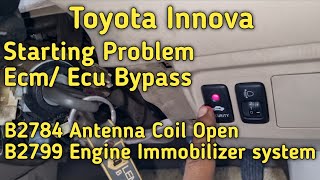
- Toyota Innova (2005-2015) — Known to suffer from immobilizer issues related to moisture affecting the control module or faulty wiring.
- Lexus GS350 (2007-2011) — This code relates to the push-start switch assembly. The diagnostic process is identical to other Toyota/Lexus models.
- Subaru Impreza / Legacy / Forester (2005-2014) — The code points to a fault in the antenna coil ring around the ignition cylinder or the immobilizer control module (IMM ECM).
Manufacturer-Specific Notes
- Toyota / Lexus: This code is exceptionally common. The cause is almost always the antenna coil integrated directly into the push-start button or ignition lock cylinder. Replacing the entire switch assembly is the standard repair.
- General Motors (GM): Some third-party diagnostic tools incorrectly list B2784 as a fault for a 'Transfer Case Range Position Sensor'. Always verify the code definition with a reliable source for the specific vehicle.
- Subaru: The immobilizer system is referred to as the 'IMM ECM'. The diagnostic process requires a proprietary 'Subaru Select Monitor' for full system access.
- All Manufacturers: When replacing the Immobilizer ECU, key registration is required. For many Toyota/Lexus models, this is done via a manual procedure involving bridging terminals in the OBD-II port for 35 minutes.
Real Owner Stories
2010 Toyota Prius with Intermittent No-Start
Car intermittently failed to start, with a flashing security light. Eventually, it failed entirely. The owner noted the key fob battery was dying every few days.
What they tried:
- Replacing the key fob battery multiple times.
- Attempting to program a new key, which failed because the car's system was not communicating.
Outcome: The owner diagnosed code B2784, pointing to the antenna coil in the push-to-start button. Replacing the push-to-start button assembly resolved the no-start issue.
Lesson: On a 2010-2015 Prius, a B2784 code almost always points to the push-start button. It's a cost-effective DIY repair; don't waste money on new keys before checking this common failure point.
Lexus RX330 Crank-No-Start Misdiagnosed as Fuel Pump
Vehicle would crank but not start, and the security light was flashing. The owner was told it was likely a bad fuel pump.
What they tried:
- The owner was about to purchase a new fuel pump based on the initial misdiagnosis.
- A technician scanned the car and found codes B2799 and B2784.
- Live data showed the 'Antenna Coil Status' as 'FAIL'.
Outcome: The technician diagnosed a failed transponder key amplifier (the antenna coil). After confirming the fix with a known-good test part, the amplifier was replaced, and the car started immediately.
Lesson: A flashing security light differentiates an immobilizer fault from a fuel pump failure. Always check for immobilizer codes before replacing the fuel pump in a 'crank, no start' situation.
2017 Toyota Yaris with B2784 After Interior Cleaning
Car would not start and threw code B2784. The owner recalled the car's interior had been professionally cleaned shortly before the problem started.
What they tried:
- The technician inspected the antenna coil around the ignition switch.
- Wiring continuity checks were performed and found to be okay.
- The technician inspected the main immobilizer ECU module located under the dashboard.
Outcome: The immobilizer ECU had corrosion from water damage. Replacing the immobilizer ECU and performing a key re-learning procedure fixed the vehicle.
Lesson: If a B2784 code appears after a windshield replacement or deep interior cleaning, suspect water intrusion. The immobilizer ECU is vulnerable to moisture.
How to Prevent This Code From Triggering
- Maintain Vehicle Body Seals (Annual Inspection) — Check for cracked or shrinking seals around the windshield, doors, and sunroof. A water leak is a primary cause of immobilizer ECU failure.
- Ensure Proper Drainage (Annually or after parking under trees) — Keep sunroof drains and cowl drains clear of leaves and debris. Clogged drains cause water to overflow into the cabin and onto sensitive electronics.
- Use Dielectric Grease on Connectors (When performing related repairs) — Applying a small amount of dielectric grease to the electrical connector seals provides an extra layer of protection against moisture and corrosion.
- Ensure Good 12V Battery Health (Test annually after 3 years) — Low or fluctuating system voltage stresses electronic modules over time. A healthy battery ensures stable power to the immobilizer system.
- Be Careful with Aftermarket Electronics (During installation) — Improperly installed aftermarket alarms or remote starters are a known source of interference and wiring damage that trigger immobilizer faults.
Frequently Asked Questions
I was told my fuel pump is bad. Could it be the immobilizer instead?
Yes, mechanics frequently misdiagnose this. Both cause a 'crank, no start' condition. A flashing security light confirms it is an immobilizer issue, not the fuel pump.
I had a new key made but it didn't fix the problem. What now?
If the car's antenna coil is broken, it cannot read any key. If a spare key also fails, the problem is the vehicle's hardware. Diagnose the antenna coil and wiring next.
Can a weak or dying 12V car battery cause code B2784?
A low battery rarely sets B2784 directly but causes unpredictable electronic glitches. Modern immobilizer systems require stable voltage to function. Test and replace batteries older than 4 years before starting complex diagnostics.
Can a dead key fob battery cause code B2784?
No. The immobilizer chip inside the key is a passive transponder that requires zero battery power. Hold the dead fob directly against the start button; if it fails to start, the antenna coil is bad.
Do I need to program a new push-start button?
No. The antenna coil and button assembly is a simple electronic switch, not a programmed computer module. The existing ECU and keys work immediately with a replacement button.
Why does the engine crank if the immobilizer is supposed to stop it?
The immobilizer allows cranking but disables the fuel injectors and ignition coils. This prevents theft while misleading drivers into suspecting a mechanical failure.
Can I just bypass the immobilizer system?
Bypassing the system permanently disables a critical anti-theft feature and violates insurance policies. It requires complex emulators and causes unpredictable electronic issues. Repairing the factory system is the only reliable solution.
Is it okay to buy a used push-start button online to save money?
Yes, this is a highly cost-effective solution for common failures like the Toyota Prius. Ensure the seller has a good return policy in case the part does not work.
Key Takeaways
- Code B2784 triggers a 'crank, no start' condition and a rapidly flashing security light because the vehicle cannot read the key's security chip.
- Replacing the push-to-start button assembly fixes this code in over 80% of affected 2010-2015 Toyota Prius models for under $100 using a used part.
- Test a spare key before buying parts; if the spare starts the engine, the primary key's transponder chip is dead, not the vehicle's antenna.
- A dead key fob battery will not cause code B2784, as the immobilizer chip is a passive transponder that requires zero battery power to function.
Helpful Videos
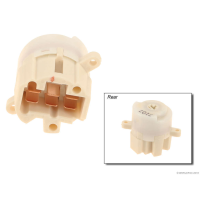
Shop the Parts Behind B2784
Below are the parts most often responsible for code B2784, ranked by how frequently each one is the actual culprit (per the diagnosis above). Tap any to see what we have for your vehicle.


The information in this article is provided for general reference and educational purposes only. Vehicle specifications, procedures, and part compatibility can vary by production date, trim level, and region. Always consult your vehicle's factory service manual and verify part numbers before purchasing or performing repairs. Safety-critical components such as airbags, seat belts, and braking systems should be installed by a qualified professional.
- 🧭 Diagnostic Flowchart
- 🎬 Helpful Videos
- 🛍️ Shop This Part
- What Does B2784 Mean?
- Can I Drive With B2784?
- Common Causes
- Symptoms
- Common Fixes & Costs
- Used vs. New Parts: Buying Guide
- What Happens If You Wait — Timeline
- Cost of Not Fixing It
- Diagnosis Steps
- When This Code Triggers (Freeze-Frame Conditions)
- Related Codes
- Climate & Environmental Factors
- How to Talk to a Mechanic About This Code
- Where to Take It: Dealer vs Independent vs Chain
- When to Walk Away From the Repair
- What Scan Tool You Need for This Code
- How to Clear the Code After You Fix It
- Will This Fail Emissions / State Inspection?
- Most Commonly Affected Vehicles
- Manufacturer-Specific Notes
- Real Owner Stories
- 2010 Toyota Prius with Intermittent No-Start
- Lexus RX330 Crank-No-Start Misdiagnosed as Fuel Pump
- 2017 Toyota Yaris with B2784 After Interior Cleaning
- How to Prevent This Code From Triggering
- Frequently Asked Questions
- I was told my fuel pump is bad. Could it be the immobilizer instead?
- I had a new key made but it didn't fix the problem. What now?
- Can a weak or dying 12V car battery cause code B2784?
- Can a dead key fob battery cause code B2784?
- Do I need to program a new push-start button?
- Why does the engine crank if the immobilizer is supposed to stop it?
- Can I just bypass the immobilizer system?
- Is it okay to buy a used push-start button online to save money?
- Key Takeaways
- 🎟️ Get 5% Off