

OBD-II Code B2861: Mirror Approach Light Circuit Fault / Steering Position Sensor Fault
What B2861 means, why it triggers, and how to fix it on your vehicle
- Code B2861 means a failed mirror puddle light on 2009-2024 Ram/Dodge vehicles, or a failed telescopic steering position sensor on 2008-2014 GM vehicles.
- Fix Ram puddle light failures by replacing the entire $30-$120 sealed assembly and applying silicone sealant to the new unit's seams to prevent repeat water intrusion.
- Resolve the GM steering sensor fault by installing a new $70-$250 sensor and performing a mandatory post-installation calibration using an advanced bi-directional scan tool.
- Test the battery and main ground straps before replacing any parts, as a resting voltage below 12.4V triggers false B2861 codes across all makes.
What Does B2861 Mean?
Code B2861 indicates the Body Control Module (BCM) detected an electrical fault. On Ram, Dodge, and Jeep vehicles, this means the mirror approach light (puddle light) circuit is open, shorted to ground, or shorted to power. On General Motors (GMC, Chevrolet, Cadillac) vehicles, this code points to a failed Telescopic Steering Wheel Position Sensor.
Technical definition: B2861 is a manufacturer-specific Body code. For Dodge, Ram, and Jeep, it is defined as 'Mirror Approach Light Control Circuit' with a suffix indicating the fault type (e.g., B2861-11 for short-to-ground). For GM vehicles, it is defined as 'Telescopic Steering Wheel Position Sensor Circuit Malfunction'. Japanese and European manufacturers do not use this specific code.
Can I Drive With B2861?
Yes. For Ram, Dodge, and Jeep puddle light faults, the vehicle is safe to drive, though a short circuit causes a parasitic drain that kills the battery in 2 to 10 days. For GMC and Chevy steering sensor faults, driving is safe but disables stability control and memory seats, requiring extra caution in adverse weather.
Common Causes
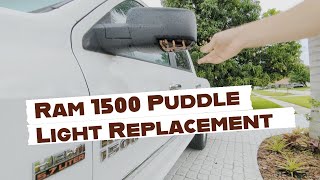
- Water Intrusion into Puddle Light Assembly (Ram/Dodge) (Very Common) — Factory seals on the puddle light housing fail easily. Rain or car wash water enters the housing, corroding the internal circuit board, LED, and connector pins, causing an immediate short or open circuit.
- Failed Telescopic Steering Wheel Position Sensor (GM) (Common) — The internal sensor tracking the steering column's telescopic (in/out) position fails mechanically or electrically, disrupting the signal to the BCM and disabling memory seat and stability functions.
- Damaged Wiring in Door Jamb (Common) — The wiring harness passing through the flexible rubber boot between the door and the vehicle body fatigues from constant opening and closing. Wires break, causing an open circuit, or chafe and short to the chassis.
- Degraded Vehicle Battery or Poor Ground Connection (Uncommon) — A weak battery causes low voltage conditions that trigger a cascade of false fault codes. A corroded main body or engine ground strap creates unstable voltages, leading the BCM to incorrectly report circuit faults.
- Corrosion in Main Door-to-Body Connector (Uncommon) — Water leaks past body plugs in the 'A' pillar and enters the main electrical connectors (like X500/X600 on GM vehicles) linking the door harness to the body harness, causing erratic electrical issues.
- Faulty Door Control Module (DCM) (Rare) — The specific driver circuit inside the Door Control Module that sends power to the puddle light burns out, preventing illumination even if the light and wiring are perfectly intact.
- Faulty LIN Bus Communication (Rare) — A fault in the Local Interconnect Network (LIN) bus wiring or a malfunction in the master module prevents communication with the light, triggering a fault code despite a healthy light circuit.
Symptoms
- Puddle light fails to illuminate or flickers — The light under the side view mirror remains off or flashes intermittently when unlocking the vehicle, indicating a poor connection, water damage, or a dead LED.
- Stability control disabled and warning lights active (GM) — A 'Service Suspension System' or traction control light appears on the dashboard because the BCM cannot verify the steering wheel's position.
- Parasitic battery drain — A short circuit in the mirror or door wiring creates a persistent electrical draw, draining the battery and preventing the vehicle from starting after sitting for 2 to 10 days.
- Driver memory functions inoperative (GM) — Memory seat and mirror recall features fail to work correctly because the steering position sensor data is missing.
- Erratic door functions — Power windows, locks, or mirror controls on the affected door act erratically, pointing to a corroded main door connector or a failing door module.
Diagnostic Flowchart
Tap your situation to follow the diagnostic path that matches what you're seeing on this code.
Common Fixes & Costs
- Replace Puddle Light Assembly — Parts: $30-$120, Labor: $50-$150, ~0.5 hr book time (DIY)
- Replace and Calibrate Steering Angle Sensor (GM) — Parts: $70-$250, Labor: $200-$500, ~2.5 hr book time (Professional)
- Repair Broken Wires in Door Jamb — Parts: $10-$40, Labor: $150-$400, ~2 hr book time (Intermediate)
- Clean or Repair Main Harness Connector — Parts: $20-$50, Labor: $120-$250, ~1.5 hr book time (Intermediate)
- Replace Door Control Module (DCM) — Parts: $160-$300, Labor: $100-$200, ~1.5 hr book time (Professional)
Used vs. New Parts: Buying Guide
When a used part is worth it: A used GM steering position sensor from a low-mileage donor is a budget-friendly option. Buying a used Ram/Dodge puddle light is strongly discouraged, as the primary failure cause is water intrusion and seal degradation; a used part will fail soon.
Donor-vehicle mileage cap: roughly under 60000 miles for the part to have meaningful remaining life.
Donor quality checklist:
- Verify the exact part number matches; variations exist even within the same model year.
- Ensure the donor vehicle was not scrapped for electrical or flood-related issues.
- Avoid puddle lights showing any sign of hazing, internal moisture, or corrosion on the connector pins.
Decision logic:
- If Part is a puddle light assembly. → Buy new (OEM or quality aftermarket). The savings from a used part are minimal and not worth the high risk of premature failure.
- If Part is a GM steering sensor and labor for replacement is high. → Favor a new OEM or reputable aftermarket part with a warranty. The cost of repeat labor negates any savings from a used part if it fails early.
- If Vehicle is older (>150K miles) and budget is the primary concern. → A used steering sensor is an acceptable risk, but it has significantly less remaining life.
Warranty tradeoff: Used parts offer a 30-90 day warranty. Aftermarket new parts (Dorman, ACDelco) come with a 1-year to limited lifetime warranty. New OEM parts carry a 1-2 year manufacturer's warranty.
Worst-case if a used part fails: $250-$600 if a used steering sensor fails after installation, due to repeat labor and purchasing another part.
What Happens If You Wait — Timeline
- Immediate: For Ram/Dodge: Puddle light stops working. For GM: 'Service Stability System' light appears, and memory functions fail. Code B2861 is stored. (MPG impact: 0%% · Added cost: $0)
- 2 days - 2 weeks: For Ram/Dodge: A parasitic draw begins, struggling to start the engine if parked for days. For GM: The safety system remains disabled. (MPG impact: 0%% · Added cost: $0-$20 (for a battery charge/jump start))
- 2 weeks - 4 months: For Ram/Dodge: Repeated deep-cycling causes permanent battery sulfation and strains the alternator. For GM: Driving without stability control is a significant safety risk. (MPG impact: 0%% · Added cost: $150-$350 (for a new battery and towing service).)
- 4+ months: For Ram/Dodge: The persistent short circuit overheats and damages the driver circuit within the Door Control Module (DCM). For GM: Constant safety risk. (MPG impact: 0%% · Added cost: $400-$800 (if the DCM is damaged or alternator fails prematurely).)
Cost of Not Fixing It
- Immediate to 1 Month: A shorted puddle light creates a parasitic battery drain, leaving you with a dead battery in 2 to 10 days. The GM steering sensor fault disables stability control and driver memory functions. (Added cost: $150-$350 for a new battery and towing or jump-start service.)
- 1-6 Months: Repeatedly deep-cycling the battery permanently damages it and strains the alternator. Driving without stability control significantly increases the risk of losing control in an emergency maneuver. (Added cost: $400-$800 for premature alternator failure.)
- 6+ Months: Ongoing electrical issues cause corrosion to spread in connectors, leading to complex failures in other door or body electrical systems. Continued driving without stability control is a habitual safety risk. (Added cost: $500-$1500 for complex harness or module diagnostics and repair.)
Diagnosis Steps
- Visual Inspection (Puddle Light or Steering Column)
For Ram/Dodge: Inspect the puddle light lens for cracks, condensation, or standing water inside. For GM/Chevy: Inspect the steering column area for damage or loose connectors near the adjustment levers.
Tools: Flashlight (Beginner) - Check for Power at the Puddle Light Connector (Ram/Dodge)
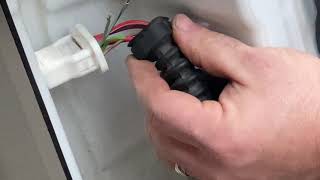
Pry the puddle light assembly out of the mirror housing. Disconnect it and use a multimeter to test for ~12V at the connector's pins when the door is open. If power is present, the light assembly is bad. No power means the issue is upstream.
Tools: Plastic trim tool, Multimeter (Beginner) - Scan Steering Angle Sensor Data (GM)
Use an advanced scan tool to view live data from the steering angle sensor module. As you telescope the steering wheel in and out, observe the position data. If the data is erratic, frozen, or shows 'invalid', the sensor has failed.
Tools: Advanced OBD-II Scan Tool (Intermediate) - Inspect the Door Jamb Wiring Harness
Pull back the rubber boot connecting the door to the vehicle body. Examine the wires inside for cracking, chafing, or complete breaks. Gently tug each wire to check for breaks hidden inside the insulation.
Tools: Small pick tool (Intermediate) - Check Battery Health and System Voltage
Verify the vehicle's power supply is stable. Use a multimeter to ensure the battery rests at ~12.6V (engine off) and the alternator charges at ~13.7-14.7V (engine running). Inspect main ground straps for corrosion.
Tools: Multimeter (Beginner) - Perform Parasitic Draw Test
Disconnect the negative battery terminal and connect a multimeter in series, set to measure milliamps (mA). Wait 30 minutes for modules to sleep. The draw must be under 50mA. If higher, pull fuses for the Door Control Modules (DCM) to isolate the faulty circuit.
Tools: Multimeter with milliamp function (Advanced) - Perform Wire Harness Continuity Test
Set a multimeter to resistance (Ohms). Disconnect the harness at the puddle light and the door-to-body connector. Test the suspect wire by touching probes to corresponding pins at each end. A reading of 'OL' confirms a broken wire.
Tools: Multimeter, Wiring diagram (Advanced) - Inspect Main Door-to-Body Connectors
Remove the kick panel trim in the footwell to access the large connectors where the door harness meets the body harness. Disconnect them and inspect for green or white corrosion caused by water intrusion.
Tools: Trim panel removal tools, Socket set (Advanced) - Test Steering Position Sensor Resistance (GM)
Disconnect the sensor connector under the dash. Connect an ohmmeter to the main signal leads. While an assistant turns the steering wheel lock-to-lock, monitor the resistance. If it exceeds 12,000 ohms or shows an open circuit, the sensor has failed.
Tools: Ohmmeter, Basic hand tools (Advanced) - Test LIN Bus Voltage at the Connector
Back-probe the LIN wire at the light or DCM connector. With the module awake, voltage fluctuates rapidly between ~1V and ~11V. A constant 0V indicates a short to ground; a constant 12V indicates a short to power.
Tools: Multimeter or Oscilloscope (Advanced)
When This Code Triggers (Freeze-Frame Conditions)
- Battery Voltage: 11.5V - 14.5V (Recorded during module self-test or component activation.)
- Ignition Status: OFF / RUN (Sets with key on (GM sensor) or key off when a door is opened or unlocked (puddle light).)
- Commanded State: Puddle Light Circuit ON (Logged when the BCM/DCM commands the light on and detects an improper voltage or current reading.)
- Fault Type: Circuit Open / Short to Battery (The BCM stores a specific status code (like -15) indicating the exact electrical nature of the failure.)
Related Codes
- B2860 — Indicates a fault in the 'Door Ambient Light Control' circuit (inside the door panel). If both codes are present, the fault is in a shared component like the door harness or Door Control Module.
- U0140 — 'Lost Communication With Body Control Module'. A short to ground in the door harness disrupts the network, triggering U0140 alongside B2861. Fix the B2861 circuit problem first.
- U0073 — 'Control Module Communication Bus Off'. Triggered when a malfunctioning module or sensor brings down the entire bus. It appears alongside B2861 due to electrical interference.
- B16E7 — 'License Plate Lamp Control Circuit'. Seeing multiple lighting circuit codes together points to a systemic issue, such as a failing BCM or a bad ground.
Climate & Environmental Factors
- High Humidity and Rain: Moisture penetrates the poorly sealed Ram/Dodge light housing and electrical connectors, causing immediate corrosion and short circuits.
- Cold Weather: Extreme cold makes PVC wire insulation hard and brittle. Repeated flexing of the door causes the insulation to crack, exposing wires and leading to shorts in the door jamb.
- Car Washes: High-pressure water from automated car washes forces its way past weak factory puddle light seals, causing immediate failure.
How to Talk to a Mechanic About This Code
Say this: "I have a B2861 code. On my Ram truck, please check for a bad puddle light or broken wires in the door jamb before quoting a module replacement. On my GM vehicle, I need a diagnosis for the telescopic steering position sensor, and please confirm you perform the calibration after replacement."
This directs the mechanic to the most likely, cheapest fixes first (for Ram) and verifies they have the required tools for the complete job (for GM), preventing an incomplete repair.
Avoid saying:
- 'My check engine light is on, can you look at it?'
- 'The internet said to replace the BCM.'
- 'Just fix whatever is wrong.'
Questions to ask before authorizing the repair:
- For a Ram/Dodge: Did you find water in the puddle light or see a broken wire in the door harness?
- For a GM: Did you confirm the sensor failed by checking live data with a scan tool?
- Is the post-replacement calibration included in the labor quote for the GM steering sensor?
- What is the warranty on the replacement part and your labor?
Where to Take It: Dealer vs Independent vs Chain
- Dealer:
Recommended for the GM steering sensor fix due to the calibration requirement. For the Ram puddle light, a dealer is a costly last resort.
Best for: Vehicles under warranty., Complex electrical issues or when a GM steering sensor calibration is required and a trusted independent shop isn't available.
Downsides: Highest labor rates., Defaults to replacing an entire mirror or door module assembly instead of a simpler wire or light repair. (Typical cost: +50% vs. baseline) - Independent Shop:
Best fit for the Ram/Dodge puddle light fault. A strong choice for the GM fault if you vet the shop first.
Best for: Out-of-warranty vehicles., Diagnosing and repairing the Ram puddle light and wiring issues., Well-equipped shops handle the GM steering sensor replacement and calibration.
Downsides: Diagnostic tool capabilities vary widely. You must verify they handle BCM codes and GM-specific calibrations. (Typical cost: +0% vs. baseline) - Chain Shop:
AVOID for diagnosis. Acceptable only if you've done the diagnosis and need a simple puddle light swapped. Do not use for the GM steering sensor.
Best for: Simple parts replacement like swapping a puddle light assembly if you've already diagnosed it yourself.
Downsides: Not equipped for in-depth electrical diagnosis or special calibrations. High potential for misdiagnosis. (Typical cost: -10% vs. baseline)
When to Walk Away From the Repair
If the estimated repair cost exceeds 40-50% of the car's private-party value, evaluate whether to fix it, sell it as-is, or trade it in.
- Car worth $12000, fix is $250: Fix it. A puddle light repair is a minor cost relative to the vehicle's value.
- Car worth $8000, fix is $750: Fix it. A GM steering sensor replacement is a necessary safety repair and is well below the 50% threshold.
- Car worth $3500, fix is $750: Borderline. The repair is over 20% of the car's value. Get a second opinion and consider the vehicle's overall condition.
What Scan Tool You Need for This Code
Minimum: A scanner that reads and clears manufacturer-specific Body Control Module (BCM) codes. Basic engine-only code readers will not see B2861.
A standard $20 reader only pulls 'P' (Powertrain) codes. You need a tool communicating with the BCM and DCM to properly diagnose the fault.
Budget: BlueDriver Pro (~$90) — Reads and clears BCM codes for GM and Ram/Dodge. It views live data but cannot perform the GM steering sensor calibration.
Mid-range: Foxwell NT510 Elite / NT530 (with GM software) (~$180) — Offers full system diagnostics and bi-directional control. It performs the Steering Angle Sensor (SAS) calibration required for the GM repair.
Professional: Autel MaxiCOM MK808 / Launch X431 Series (~$500-1200) — Provides professional-level diagnostics. Reads/clears all codes, views live data, and performs any required calibration or reset procedure for both Ram and GM faults.
Rent vs buy: Auto parts stores do NOT rent out scanners with the advanced calibration functions needed for the GM steering sensor fix. You must buy a capable scanner or go to a shop. For the Ram puddle light, a budget scanner is sufficient.
How to Clear the Code After You Fix It
- Fix the underlying mechanical or electrical fault.
- Use a compatible OBD-II scan tool to access the Body Control Module (BCM) or Door Control Module (DCM) and clear the fault codes.
- For GM steering sensor replacement, perform the mandatory calibration procedure with a bi-directional scan tool.
- Operate the repaired component several times to confirm the fix.
Drive cycle (~15 minutes): A formal drive cycle is not required. After clearing the code, start the vehicle and operate the affected system (doors, lights, steering) multiple times. The BCM re-runs its internal circuit checks immediately upon command.
Readiness monitors affected: None
Watch out for:
- Disconnecting the battery does not clear the code from the BCM's memory and causes other modules to lose their settings.
- The code returns immediately if the root cause (short circuit, broken wire) is not fixed.
- Skipping the steering sensor calibration on GM vehicles prevents the code from clearing and keeps warning lights on.
Will This Fail Emissions / State Inspection?
No — by itself this code doesn't fail OBD inspection (but it can keep readiness monitors from setting, which causes a separate fail).
- California: This body code (B-code) does not cause a failure on the OBD-II emissions (smog) check, which primarily looks for powertrain (P-codes) and readiness monitor status.
- New York: A B2861 code does not fail the emissions inspection. However, if the fault causes a safety-related warning light (like Stability Control) to illuminate, it fails the separate annual safety inspection.
- Texas: Texas does not fail vehicles for body codes during the emissions inspection. A non-operative puddle light is not a safety failure item.
Most Commonly Affected Vehicles
- Ram 1500, 2500, 3500 (2010-2018) — These 4th generation models are notorious for puddle light failure due to a poorly sealed housing design that allows water intrusion.
- Ram 1500 Classic (2019-2024) — As a continuation of the 4th generation design, the 1500 Classic uses the same mirror assembly and suffers from the exact same puddle light failures.
- Dodge Ram 1500 (2009-2010) — The earliest models of the 4th generation Ram initiated the trend with this faulty puddle light design.
- Dodge Durango (2011-2021) — Prone to door harness and module issues triggering B2861. TSB 31-002-20 addresses related corrosion issues on these platforms.
- Jeep Grand Cherokee (2011-2021) — Uses a similar DCM and wiring setup to the Durango, making it susceptible to the same door harness and water intrusion faults.
- GMC / Chevrolet Sierra, Silverado, Yukon, Suburban (2010-2014) — B2861 specifically indicates a fault with the telescopic steering wheel position sensor. TSB 23-NA-046 highlights related issues with water in body connectors.
- Cadillac Escalade, CTS (2008-2014) — B2861 points to the telescopic steering column sensor, causing memory function and stability system errors.
- Chrysler Pacifica (2017-2017) — A specific TSB mentions water intrusion into the dash-to-fascia wiring harness connector, causing electrical faults presenting as a B-prefix code.
Manufacturer-Specific Notes
- Ram / Dodge / Jeep: The primary cause is a design flaw in the puddle light seal. Replacing the light with a quality aftermarket version and adding silicone sealant is the definitive fix. TSB 08-003-11 Rev. B addresses lights staying on too long.
- GMC / Chevrolet: B2861 points to the telescopic steering wheel position sensor. After replacement, it MUST be calibrated using a compatible scan tool to extinguish warning lights.
- Chrysler / Dodge / Jeep: TSB 31-002-20 addresses corrosion in wiring harness connectors due to moisture. B2861 is often part of a wider problem caused by water intrusion in a main body connector.
- General Motors (All): TSB 23-NA-046 describes water leaking past A-pillar body plugs, corroding main door-to-body harness connectors (X500/X600). Inspect these if multiple electrical faults exist in one door.
Real Owner Stories
2013 Ram 1500 with flickering puddle lights and eventual failure.
Owner was on their 3rd set of puddle lights due to water damage. The driver's side light flashed but wouldn't illuminate.
What they tried:
- Swapped lights side-to-side, confirming the light itself was good.
- Tested for voltage at the connector and saw 12V, but a load test showed the voltage disappeared.
- Incorrectly concluded the Door Control Module (DCM) was bad and replaced it, but the problem remained.
Outcome: The actual fault was an intermittent break in the power wire inside the door harness that only failed under load. The owner wasted money on a DCM.
Lesson: A simple voltage test is misleading. A wire shows 12V with no load but fails when the component asks for power. Perform a load test and exhaustively check the wiring harness before replacing expensive modules.
2014 Ram 1500 at 55k miles with B2861 and a cascade of other electrical codes.
After sitting for a month, the truck threw a low voltage warning, code B2861, and CAN bus communication errors (U11E300).
What they tried:
- Replaced the original, aging Mopar battery.
- Found and replaced a broken engine-to-fender ground strap.
Outcome: Replacing the old battery and fixing the bad ground strap cleared almost all codes, including B2861.
Lesson: Multiple, unrelated electrical codes appearing at once are a huge red flag for a bad battery or poor ground connection. Verify the core electrical system before diagnosing individual component codes.
2005 Cadillac Escalade with stability control warnings.
Vehicle had stability control warnings pointing to a fault in the steering angle sensor system.
What they tried:
- A technician compared the signal from the suspect sensor to a known-good sensor using an oscilloscope.
- The bad sensor showed an erratic, noisy signal pattern when the wheel was turned.
Outcome: The diagnostic test confirmed the steering angle sensor failed internally.
Lesson: For the GM-specific version of B2861, diagnosing with an advanced scan tool or oscilloscope is the definitive test. This avoids guessing and replacing a part requiring expensive post-install calibration.
How to Prevent This Code From Triggering
- Seal New Puddle Lights (During replacement) — Applying a thin bead of clear RTV silicone around the housing seam and dielectric grease on the connector pins prevents moisture intrusion and corrosion.
- Periodically Inspect Door Jamb Boot (Every 1-2 years) — The rubber boot protects the wiring harness. A compromised boot allows water and debris in, accelerating wire fatigue and corrosion.
- Use Automotive Wire Protection (During any wire repair) — Use high-quality, heat-shrink butt connectors. Cover the repaired section with split-loom tubing or self-fusing silicone tape to guard against chafing.
- Maintain Battery and Ground Health (Annually) — A weak battery causes unstable voltage, triggering false body codes. Clean battery terminals and check that main ground straps are tight.
Frequently Asked Questions
Can I just replace the bulb in the puddle light?
No. The puddle light is a sealed unit containing an integrated LED and circuit board. You must replace the entire assembly.
Why did my puddle light fail right after a car wash?
Factory seals on original lights are insufficient. High-pressure water forces its way inside, immediately shorting the internal circuit board.
I have B2861 and other weird electrical codes. What's going on?
This strongly suggests a systemic voltage issue. Professionally load-test your battery and inspect the main engine-to-chassis ground straps. A weak battery or bad ground causes the BCM to set numerous false codes.
How can I prevent my new puddle light from failing again?
Apply a thin bead of clear silicone sealant around the seam where the lens meets the housing before installation. Add a small amount of dielectric grease to the electrical connector pins to block moisture.
I replaced the light and it still doesn't work. What's next?
If a new, tested light fails, the next most likely culprit is broken wires inside the rubber boot in the door jamb. Inspect that harness carefully before replacing the door control module.
The connector pins broke off. What is the part number?
You can buy a replacement pigtail connector (Mopar 68057289AA or aftermarket CE3368BK) instead of a whole new mirror. Cut the old connector off and splice the new one onto the harness wires.
Can a bad puddle light drain my battery?
Yes. A water-damaged, shorted internal circuit board creates a constant parasitic draw. This drains a healthy battery in 2 to 10 days if the vehicle sits parked.
Key Takeaways
- Code B2861 means a failed mirror puddle light on 2009-2024 Ram/Dodge vehicles, or a failed telescopic steering position sensor on 2008-2014 GM vehicles.
- Fix Ram puddle light failures by replacing the entire $30-$120 sealed assembly and applying silicone sealant to the new unit's seams to prevent repeat water intrusion.
- Resolve the GM steering sensor fault by installing a new $70-$250 sensor and performing a mandatory post-installation calibration using an advanced bi-directional scan tool.
- Test the battery and main ground straps before replacing any parts, as a resting voltage below 12.4V triggers false B2861 codes across all makes.
Helpful Videos
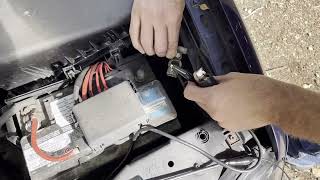
Shop the Parts Behind B2861
Below are the parts most often responsible for code B2861, ranked by how frequently each one is the actual culprit (per the diagnosis above). Tap any to see what we have for your vehicle.
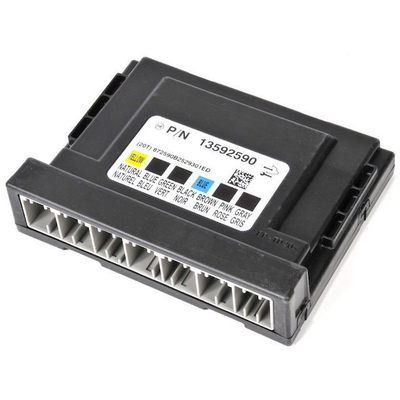

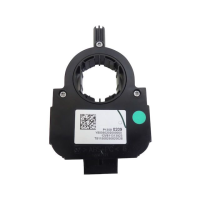

The information in this article is provided for general reference and educational purposes only. Vehicle specifications, procedures, and part compatibility can vary by production date, trim level, and region. Always consult your vehicle's factory service manual and verify part numbers before purchasing or performing repairs. Safety-critical components such as airbags, seat belts, and braking systems should be installed by a qualified professional.
- 🧭 Diagnostic Flowchart
- 🎬 Helpful Videos
- 🛍️ Shop This Part
- What Does B2861 Mean?
- Can I Drive With B2861?
- Common Causes
- Symptoms
- Common Fixes & Costs
- Used vs. New Parts: Buying Guide
- What Happens If You Wait — Timeline
- Cost of Not Fixing It
- Diagnosis Steps
- When This Code Triggers (Freeze-Frame Conditions)
- Related Codes
- Climate & Environmental Factors
- How to Talk to a Mechanic About This Code
- Where to Take It: Dealer vs Independent vs Chain
- When to Walk Away From the Repair
- What Scan Tool You Need for This Code
- How to Clear the Code After You Fix It
- Will This Fail Emissions / State Inspection?
- Most Commonly Affected Vehicles
- Manufacturer-Specific Notes
- Real Owner Stories
- 2013 Ram 1500 with flickering puddle lights and eventual failure.
- 2014 Ram 1500 at 55k miles with B2861 and a cascade of other electrical codes.
- 2005 Cadillac Escalade with stability control warnings.
- How to Prevent This Code From Triggering
- Frequently Asked Questions
- Can I just replace the bulb in the puddle light?
- Why did my puddle light fail right after a car wash?
- I have B2861 and other weird electrical codes. What's going on?
- How can I prevent my new puddle light from failing again?
- I replaced the light and it still doesn't work. What's next?
- The connector pins broke off. What is the part number?
- Can a bad puddle light drain my battery?
- Key Takeaways
- 🎟️ Get 5% Off