

OBD-II Code B2902: A Comprehensive Diagnostic Guide
What B2902 means, why it triggers, and how to fix it on your specific vehicle
- Identify your vehicle's specific B2902 definition first, as this manufacturer-specific body code means 'Rear Height Sensor Error' on a Subaru but 'Power Delivery Module Error' on a Nissan Leaf.
- Inspect the rear suspension on Subaru models immediately; a seized or broken plastic headlight level sensor linkage causes 80% of B2902 codes and costs under $50 to fix yourself.
- Check for Technical Service Bulletins (TSBs) before buying parts, specifically TSB NTB20-017 for Nissan Leafs requiring a $150 software update, or TSB 07-121-17 for 2017 Subarus with incorrect factory modules.
- Do not attempt to replace a Nissan Leaf Power Delivery Module (PDM) at home; this repair involves lethal high-voltage systems and requires a dealer-level scan tool for programming.
What Does B2902 Mean?
Code B2902 indicates an electrical fault in a body control system. Because it is a manufacturer-specific 'B' (Body) code, the exact definition depends entirely on your vehicle's make. You must look up the specific definition for your brand to begin diagnosis.
Technical definition: The official definition for code B2902 is specific to the vehicle manufacturer: * **Subaru:** Rear Height Sensor Error. Indicates a fault in the Automatic Headlight Leveling (AHL) or Steering Responsive Headlight (SRH) systems. * **Nissan:** Power Delivery Module (PDM) Memory Error. Indicates an internal fault or software glitch within the charging management module on EVs like the Leaf. * **Ford:** Rear Window Ajar Switch Input Failure. Points to the sensor detecting if the rear hatch glass is closed. * **General Motors (GM) / Opel:** Tilt & Telescope 4-Way Position Switch Circuit Malfunction. Points to an issue with the power-adjustable steering column. * **SAAB:** Right Outer Distance Sensor Internal Error. Indicates a fault in the parking assist system.
Can I Drive With B2902?
Yes, But With Caution. It is safe to drive, as this code isolates a body accessory rather than a critical powertrain system. However, accessory failures carry specific risks: on a Subaru, headlights aim dangerously low and reduce night visibility by 50%. On a Nissan Leaf, the vehicle fails to charge and will eventually strand you.
Common Causes
- Seized or Broken Sensor Linkage (Subaru) (Very Common) — The plastic linkage arm connecting the rear height sensor to the suspension seizes from rust, bends, or snaps off completely. This is the most frequent cause of B2902 on Subarus, especially in rust-belt states.
- Faulty Sensor or Switch (Common) — The component itself fails internally from wear and element exposure. This includes the Subaru rear height sensor, Ford window ajar switch, GM steering column switch, or SAAB parking sensor.
- Damaged or Corroded Wiring/Connectors (Common) — Wires or connector pins break, fray, or corrode. This frequently happens to undercarriage sensors (Subaru) or wiring harnesses routed through moving parts like a rear liftgate (Ford).
- Software/Firmware Glitch (Nissan) (Common) — On Nissan Leaf models, an EEPROM data error within the Power Delivery Module (PDM) triggers the code. This often requires a software reflash rather than a hardware replacement.
- Blown Fuse (Common) — The fuse protecting the specific accessory circuit blows due to an electrical short or age, cutting off power entirely.
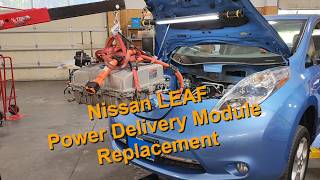
- Internal PDM Hardware Failure (Nissan) (Less Common) — The Power Delivery Module suffers a hard internal failure. The module stops communicating properly, reports its part number as an error to a scan tool, and requires complete replacement. 🎬 Watch: Step-by-step Nissan Leaf PDM replacement walkthrough.
- Incorrect Factory Control Module Installed (Subaru) (Rare) — Specific to early-production 2017 Subaru Legacy and Outback models (TSB 07-121-17), the factory installed the wrong headlamp control module, causing a false B2902 code.
Symptoms
- Dashboard Warning Lights — A specific warning light illuminates. Subaru displays a flashing 'SRH OFF' or headlight leveling light. Nissan displays an 'EV System Warning Light'. SAAB displays a 'PARKING ASSIST FAILURE' message.
- Headlights Aimed Too Low (Subaru) — The automatic headlight leveling system defaults to a fail-safe mode, pointing the headlights at the ground and severely reducing night visibility.
- Vehicle Refuses to Charge (Nissan) — The Nissan Leaf fails to charge on Level 1 or Level 2 AC chargers, or charging stops intermittently.
- Disabled Accessory Features (Ford/GM/SAAB) — The specific feature disables entirely. The GM power steering column stops adjusting, the SAAB parking sensors stop beeping, or the Ford displays a persistent 'Rear Window Ajar' warning.
Diagnostic Flowchart
Tap your situation to follow the diagnostic path that matches what you're seeing on this code.
Common Fixes & Costs
- Headlight Level Sensor & Linkage Replacement (Subaru) — Parts: $180-$250, Labor: $100-$150, ~0.8 hr book time (DIY)
- Power Delivery Module (PDM) Reprogramming (Nissan) — Parts: $0, Labor: $150-$250, ~1.0 hr book time (Professional)
- Rear Window Ajar Switch Replacement (Ford) — Parts: $25-$40, Labor: $50-$75, ~0.5 hr book time (DIY)
- Wiring Harness or Connector Repair — Parts: $10-$50, Labor: $125-$250, ~1.5 hr book time (Intermediate)
- Fuse Replacement — Parts: $1-$10, Labor: $0, ~0.1 hr book time (DIY)
- Steering Column Adjust Motor/Switch Repair (GM) — Parts: $50-$150, Labor: $350-$500, ~3.5 hr book time (Professional)
- Headlight Control Module Replacement (Subaru) — Parts: $350-$550, Labor: $165-$240, ~1.2 hr book time (Professional)
- Power Delivery Module (PDM) Replacement (Nissan) — Parts: $1500-$4000, Labor: $1000-$2000, ~8.0 hr book time (Professional)
DIY vs Professional
- Fuse Replacement 🟢 Beginner
Tools: Fuse puller or small pliers. - Headlight Level Sensor & Linkage Replacement (Subaru) 🟢 Beginner
Tools: Socket set, wrench, penetrating oil, jack and jack stands. - Rear Window Ajar Switch Replacement (Ford) 🟢 Beginner
Tools: Trim removal tools, small flathead screwdriver. - Power Delivery Module (PDM) Replacement (Nissan) 🟢 Beginner
Tools: Insulated high-voltage tools, dealer scan tool, engine hoist.
Used vs. New Parts: Buying Guide
When a used part is worth it: A used Subaru headlight level sensor from a non-rust-belt vehicle is a cost-effective solution. A used Nissan Leaf PDM is a massive gamble but may be the only financially viable option for an older vehicle.
Donor-vehicle mileage cap: roughly under 80000 miles for the part to have meaningful remaining life.
Donor quality checklist:
- Verify the donor vehicle lacks flood or fire damage.
- For the Subaru sensor, ensure the linkage arm pivot moves freely and lacks rust.
- Match the part number exactly to ensure compatibility.
Decision logic:
- If The part is a simple mechanical switch under $50 new → buy new for peace of mind and warranty.
- If The part is an expensive electronic module like a Nissan PDM → favor a new or professionally refurbished unit unless the vehicle's value is very low.
- If The part is a Subaru height sensor and you live in a rust-prone area → buy new, as used parts likely have hidden corrosion.
Warranty tradeoff: Used parts offer a 30-90 day warranty. Aftermarket new parts offer 1-year to lifetime warranties. OEM new parts carry a 12-month/12,000-mile warranty.
Worst-case if a used part fails: $1000-$2000 in wasted labor if a used Nissan PDM fails after installation.
What Happens If You Wait — Timeline
- Immediate: Warning light appears. Subaru headlights default to the lowest position. Nissan Leaf L1/L2 charging fails. (MPG impact: 0%% · Added cost: $0)
- 0-3 months: Subaru night driving becomes hazardous. Nissan Leaf owners are forced to rely on public DC fast chargers. (MPG impact: 0%% · Added cost: $50 (inconvenience costs))
- 3-6 months: On a Subaru, driving with a seized linkage puts constant stress on the sensor, destroying the internal electronics. (MPG impact: 0%% · Added cost: $150-$250 (sensor replacement required instead of just linkage))
- 6+ months: The primary consequence is safety risk (Subaru visibility) or total loss of function (Nissan Leaf battery depletion). (MPG impact: 0%% · Added cost: Potential cost of an accident or tow.)
Cost of Not Fixing It
- Immediate: On a Subaru, headlights aim dangerously low, reducing night driving visibility. On a Nissan Leaf, the vehicle fails to charge. (Added cost: 0)
- 0-6 months: For a Subaru, driving with a seized linkage puts stress on the sensor itself, turning a cheap linkage failure into an expensive sensor failure. (Added cost: $150-$250)
- 6+ months: For a Subaru, poor visibility at night drastically increases accident risk. For a Nissan Leaf, the inability to charge renders the vehicle unusable. (Added cost: Cost of an accident or a completely disabled vehicle.)
Diagnosis Steps
- Identify Your Vehicle's Definition
Confirm exactly what B2902 means for your specific make. Knowing the definition isolates the exact system you need to inspect.
Tools: Smartphone or Owner's Manual (Beginner) - Check for TSBs and Software Updates
Search for Technical Service Bulletins (TSBs) for your vehicle. Nissan Leaf owners must check NTB14-083 or NTB20-017 for a software fix. 2017 Subaru owners must check TSB 07-121-17 for an incorrect factory module.
Tools: Smartphone, Internet Access (Beginner) - Perform a Visual Inspection
Inspect the physical component. On a Subaru, check the driver's side rear suspension for a snapped or rusted height sensor linkage. On a Ford, inspect the rear window latch wiring. Look for severed wires or heavy green corrosion on connectors.
Tools: Flashlight, Jack and Jack Stands (Beginner) - Check the Fuses
Locate the fuse related to the faulty system (e.g., 'Headlight Leveler' or 'BCM'). Pull the fuse and verify the internal metal strip is intact.
Tools: Fuse Puller (Beginner) - Test Switch Continuity (Ford/GM)
Disconnect the suspected switch. Connect a multimeter set to Ohms across the terminals. Actuate the switch manually. The reading must change from 'OL' (open) to near 0 ohms (closed). If it doesn't change, replace the switch.
Tools: Multimeter, Trim Removal Tools (Intermediate) - Test Sensor Voltage and Signal (Subaru)
Back-probe the rear height sensor connector. Verify it receives a 5V supply. Check the signal wire; it should output ~2.5V on level ground. Bounce the rear suspension—the voltage must fluctuate smoothly between 0V and 5V. If it stays stuck at 0V or 5V, the sensor is dead.
Tools: Multimeter, T-pins, Wiring Diagram (Advanced) - Reset and Recalibrate
Clear the code. On Subarus, perform a manual recalibration: park on level ground, turn ignition ON (engine off), and cycle the headlight switch OFF to ON three times quickly. If the code returns immediately, a hard fault exists.
Tools: OBD-II Scan Tool (Intermediate) - Graph Sensor Output with a Scan Tool
Use a bidirectional scan tool to view live data for the sensor. Graph the voltage while moving the component (e.g., bouncing the suspension). Look for dropouts or erratic spikes indicating internal sensor failure.
Tools: Advanced OBD-II Scan Tool (Advanced) - Test the Circuit Wiring
Test the wiring harness between the sensor and the control module for continuity, shorts to ground, and shorts to power. This isolates a broken wire from a bad sensor.
Tools: Multimeter, Wiring Diagram (Advanced) - Test the Control Module
If the sensor, linkage, and wiring test perfectly, the control module itself is faulty. This requires a professional scan tool to verify module communication and internal faults.
Tools: Advanced OBD-II Scan Tool (Advanced)
When This Code Triggers (Freeze-Frame Conditions)
- Ignition Status: ON (The code sets shortly after the ignition turns on as the control module performs a self-test of its sensors.)
- 12V Battery Voltage: 11.0V - 14.5V (Low or fluctuating battery voltage during startup causes modules to set false codes.)
- Vehicle Speed: 0 mph (The initial check and code set occurs when the vehicle is stationary.)
Related Codes
- B2900 — On Subarus, B2902 indicates a fault in the external sensor circuit, while B2900 indicates an internal error within the Headlight Leveler Control Module itself.
- C1424 — A Subaru Vehicle Dynamics Control (VDC) code. The VDC system disables itself as a precaution when the headlight module flags a B2902 error. Fix the B2902 code first.
- C1422 — A Subaru ABS code triggered as a fail-safe measure alongside B2902. Diagnose and repair the B2902 fault first to clear the ABS warning.
Climate & Environmental Factors
- Road Salt and Humidity: On Subarus, the rear height sensor and linkage mount directly to the rear suspension. In regions with heavy snowfall and salted roads, corrosion seizes the pivot joints and snaps the linkage arms, making B2902 a highly predictable winter failure.
How to Talk to a Mechanic About This Code
Say this: "I have a B2902 code on my [Make/Model]. For Subaru: 'Please inspect the rear headlight level sensor linkage for rust before testing modules.' For Nissan: 'Please check if TSB NTB20-017 applies for a PDM reflash.' For Ford/GM: 'Please test the [window/steering] switch and wiring harness for continuity.'"
This directs the technician to the most common, vehicle-specific failure points first, preventing them from immediately quoting an expensive control module replacement.
Avoid saying:
- 'Just fix my warning light.'
- 'My car is acting weird, can you check it?'
- 'Do whatever you think is best.'
Questions to ask before authorizing the repair:
- For Subaru: Did you find the sensor linkage broken or seized? Can you show me the part?
- For Nissan: Did the scan tool show a part number error confirming hardware failure, or did the software reflash fail?
- What is the warranty on this specific repair?
Where to Take It: Dealer vs Independent vs Chain
- Dealer:
Necessary for Nissan Leaf software and high-voltage work. Recommended for complex Subaru TSBs.
Best for: Nissan Leaf PDM reprogramming or replacement., Diagnosing known TSBs, like the incorrect module on 2017 Subarus.
Downsides: Highest labor rates., May recommend module replacement when a simpler wiring repair is possible. (Typical cost: +50% vs. baseline) - Independent Shop:
Best choice for the common Subaru sensor/linkage failure and Ford/GM switch issues.
Best for: Subaru headlight sensor and linkage replacement., Ford window ajar switch replacement., Out-of-warranty vehicles.
Downsides: May lack the specialized tools for Nissan PDM programming. (Typical cost: +0% vs. baseline) - Chain Shop:
Avoid for diagnosis. This code requires specialized knowledge.
Best for: Simple parts replacement if you have already diagnosed the exact switch.
Downsides: Technicians lack the diagnostic experience for manufacturer-specific 'B' codes. (Typical cost: -10% vs. baseline)
When to Walk Away From the Repair
If the estimated repair cost exceeds 50% of your car's current private-party value, consider selling it.
- Car worth $3900, fix is $4000: Walk away. A PDM replacement on an older Nissan Leaf costs more than the car is worth.
- Car worth $12000, fix is $250: Fix it. Replacing the headlight level sensor on a Subaru restores a key safety feature for a fraction of the car's value.
What Scan Tool You Need for This Code
Minimum: A scanner that reads manufacturer-specific Body ('B') codes. A basic $20 reader only shows Powertrain ('P') codes and will not see B2902.
You must pull codes from the Body Control Module, Headlight Module, or PDM. Basic scanners cannot communicate with these modules.
Budget: BlueDriver Pro Scan Tool (~$100) — Reads and clears 'B' codes for most brands and displays live data to diagnose a faulty Subaru sensor.
Mid-range: Foxwell NT510 Elite (~$180) — Offers OE-level diagnostics for a specific brand. Graphs live sensor data and performs system calibrations.
Professional: Autel MaxiCOM MK808 (~$450) — Full bidirectional control to test components and perform advanced functions like Subaru headlight calibration.
Rent vs buy: Auto parts stores read codes for free, but their basic tools often miss 'B' codes. Buying a tool like the BlueDriver is a worthwhile investment.
How to Clear the Code After You Fix It
- Perform the physical repair or software update.
- Reconnect the 12V battery if disconnected.
- Use a compatible OBD-II scan tool to clear the B-code from the specific module.
- For Subaru, perform the headlight leveler re-initialization procedure.
- For Nissan, program the new PDM using a dealer scan tool.
Drive cycle (~15 minutes): After clearing the code, a 15-minute drive with varied conditions allows the module to re-run its self-tests. For Subaru, cycling the ignition and headlights is required.
Readiness monitors affected: This is a Body ('B') code and does not affect emissions readiness monitors.
Watch out for:
- Disconnecting the 12V battery fails to clear the code from the module's permanent memory; a scan tool is required.
- Failing to perform a required recalibration (Subaru) causes the code to return immediately.
- Clearing the code without fixing the root cause results in the code returning instantly.
Will This Fail Emissions / State Inspection?
No — by itself this code doesn't fail OBD inspection (but it can keep readiness monitors from setting, which causes a separate fail).
- California: A 'B' code will not cause a smog check failure. However, if a headlight warning light is on, inspectors may refuse to test as a safety precaution.
- New York: An inspector will fail the vehicle during the safety inspection portion if the headlights are clearly malfunctioning due to the B2902 fault.
- Texas: A B2902 code will not cause an emissions test failure, but malfunctioning headlights will fail a commercial safety inspection.
Most Commonly Affected Vehicles
- Subaru Forester (2009-2018) — Extremely common failure of the rear headlight level sensor (84031FG000) and linkage due to suspension-level corrosion.
- Subaru Outback / Legacy (2017-2019) — Affected by TSB 07-121-17 where an incorrect headlamp control module was installed at the factory. Also suffers from the standard sensor corrosion issues.
- Nissan Leaf (2013-2019) — Indicates a PDM memory error. TSBs NTB14-083 and NTB20-017 address this with a software update. If the update fails, the PDM requires replacement.
- Ford Explorer (2008-2010) — Commonly indicates a failure in the 'rear window ajar' switch circuit or a broken wire in the liftgate harness.
- Cadillac / GMC Escalade / Yukon (2007-2014) — Points to a fault in the power tilt/telescope switch. Often caused by loose internal steering column bolts stressing the wiring.
- SAAB 9-5 (2010-2011) — Sets a B2902 code for an internal fault in the right outer parking assist sensor.
Manufacturer-Specific Notes
- Subaru: Disconnecting the 12V battery causes the Steering Responsive Headlight (SRH) system to lose calibration and set a B2902 fault. This requires a manual recalibration procedure by cycling the ignition and headlight switch.
- Nissan: If the scan tool reads the PDM part number as '292C0-ERROR', the module has suffered a hard internal failure and cannot be fixed with the TSB software reflash.
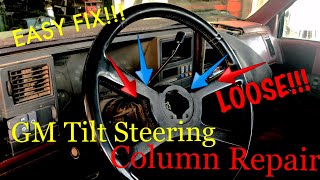
- General Motors: The root cause of B2902 on GM trucks is often four loose E8 inverted Torx bolts deep inside the tilt mechanism. The wobbly column stresses the position switch wiring until it breaks.
Real Owner Stories
2010 Subaru Forester with headlight warning light
The headlight leveling warning light illuminated and the beams aimed very low, making night driving difficult.
What they tried:
- A shop tested the system by unplugging sensors, confirming communication.
- The owner suspected the control module and considered a used replacement.
Outcome: The owner discovered the rear sensor linkage was seized with corrosion. Replacing the seized sensor and linkage restored the system.
Lesson: Always perform a visual inspection of the Subaru rear height sensor linkage for rust before assuming a control module is dead.
2018 Nissan Leaf with EV warning light
The 'EV System Warning Light' appeared. A dealer diagnosed B2902 and quoted a full PDM replacement.
What they tried:
- The owner requested the TSB NTB20-017 software reflash.
- The dealer attempted the reflash, but the scan tool reported the part number as '292C0-ERROR'.
Outcome: The 'ERROR' reading confirmed internal hardware damage. The software update failed, forcing the owner to pay over $2,000 for a new PDM.
Lesson: A software reflash is the first step for a Nissan Leaf, but a part number error confirms a hard failure requiring module replacement.
2008 Ford Explorer with 'Rear Window Ajar' message
The dashboard constantly displayed a 'Rear Window Ajar' message, and the interior dome light flickered while driving.
What they tried:
- The owner pushed on the glass to ensure it latched.
- They disassembled the rear liftgate trim and jumped the sensor connector to bypass the switch.
Outcome: The issue persisted until the owner found a broken wire inside the flexible rubber boot between the liftgate and the body. Soldering the wire fixed the issue.
Lesson: Don't immediately assume the switch is bad. Repeated opening and closing fatigues wires inside the liftgate hinge boot.
2010 Cadillac Escalade with loose steering column
The power tilt steering wheel felt wobbly. Eventually, the power adjustment stopped working and a B2902 code appeared.
What they tried:
- A dealer quoted over $400 for the repair.
- The owner attempted a DIY fix but lacked the special steering pivot pin remover tool.
Outcome: The root cause was four loose internal bolts within the tilt mechanism. The wobble stressed the position sensor wiring until it broke. A professional repaired the wiring and tightened the bolts.
Lesson: On GM trucks, a wobbly steering column causes the B2902 code. Fixing the wiring without tightening the internal bolts guarantees a repeat failure.
How to Prevent This Code From Triggering
- Lubricate the Subaru headlight level sensor linkage (Annually, before winter) — Applying marine grease to the exposed pivot points prevents them from seizing due to road salt, stopping the primary cause of failure.
- Apply dielectric grease to exposed connectors (During any undercarriage work) — Filling exposed connectors with dielectric grease prevents water intrusion and pin corrosion.
- Address a wobbly GM steering column immediately (As soon as noticed) — Tightening the loose internal bolts early prevents the excessive movement from snapping the position switch wiring.
Frequently Asked Questions
Why does code B2902 mean different things on different cars?
Powertrain (P) codes are standardized across all brands, but Body (B) codes are manufacturer-specific. Automakers assign B2902 to completely different accessory systems, meaning it controls headlights on a Subaru but charging on a Nissan.
What does the 'SRH OFF' light mean on my Subaru?
SRH stands for Steering Responsive Headlights. A flashing light means the system is disabled due to a fault, most commonly a broken rear height sensor triggering code B2902.
Will disconnecting the battery clear the B2902 code for good?
No. Disconnecting the battery temporarily turns off the warning light, but the code returns immediately once the module runs its self-test. You must fix the underlying hardware or software issue.
What are common mistakes when diagnosing B2902?
The biggest mistake is replacing expensive parts before checking Technical Service Bulletins (TSBs). Many B2902 codes require a simple software update (Nissan) or a specific updated factory part (Subaru) rather than a standard replacement.
Can I fix a B2902 code myself?
You can easily fix mechanical issues like a broken Subaru linkage arm or a blown fuse at home. Leave software updates, high-voltage Nissan PDM repairs, and complex wiring shorts to professionals.
Is it safe to drive with code B2902?
Yes, the vehicle will drive, steer, and brake normally. However, Subaru headlights will aim dangerously low at night, and a Nissan Leaf will eventually strand you if it refuses to charge.
Can a weak or dead battery cause a B2902 code?
Yes. A weak 12V battery causes control modules to lose calibration during startup, triggering false codes on Subarus and Nissans.
How much does it cost to fix code B2902?
Costs range from $10 for a fuse to $400 for a Subaru sensor repair. Nissan Leaf PDM software updates cost $150-$250, while a full PDM replacement exceeds $2,500.
Key Takeaways
- Identify your vehicle's specific B2902 definition first, as this manufacturer-specific body code means 'Rear Height Sensor Error' on a Subaru but 'Power Delivery Module Error' on a Nissan Leaf.
- Inspect the rear suspension on Subaru models immediately; a seized or broken plastic headlight level sensor linkage causes 80% of B2902 codes and costs under $50 to fix yourself.
- Check for Technical Service Bulletins (TSBs) before buying parts, specifically TSB NTB20-017 for Nissan Leafs requiring a $150 software update, or TSB 07-121-17 for 2017 Subarus with incorrect factory modules.
- Do not attempt to replace a Nissan Leaf Power Delivery Module (PDM) at home; this repair involves lethal high-voltage systems and requires a dealer-level scan tool for programming.
Helpful Videos
Shop the Parts Behind B2902
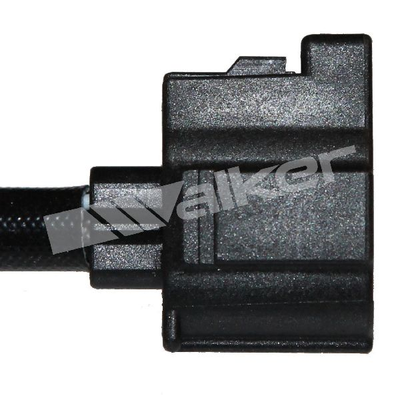
Below are the parts most often responsible for code B2902, ranked by how frequently each one is the actual culprit (per the diagnosis above). Tap any to see what we have for your vehicle.



The information in this article is provided for general reference and educational purposes only. Vehicle specifications, procedures, and part compatibility can vary by production date, trim level, and region. Always consult your vehicle's factory service manual and verify part numbers before purchasing or performing repairs. Safety-critical components such as airbags, seat belts, and braking systems should be installed by a qualified professional.
- 🧭 Diagnostic Flowchart
- 🎬 Helpful Videos
- 🛍️ Shop This Part
- What Does B2902 Mean?
- Can I Drive With B2902?
- Common Causes
- Symptoms
- Common Fixes & Costs
- DIY vs Professional
- Used vs. New Parts: Buying Guide
- What Happens If You Wait — Timeline
- Cost of Not Fixing It
- Diagnosis Steps
- When This Code Triggers (Freeze-Frame Conditions)
- Related Codes
- Climate & Environmental Factors
- How to Talk to a Mechanic About This Code
- Where to Take It: Dealer vs Independent vs Chain
- When to Walk Away From the Repair
- What Scan Tool You Need for This Code
- How to Clear the Code After You Fix It
- Will This Fail Emissions / State Inspection?
- Most Commonly Affected Vehicles
- Manufacturer-Specific Notes
- Real Owner Stories
- 2010 Subaru Forester with headlight warning light
- 2018 Nissan Leaf with EV warning light
- 2008 Ford Explorer with 'Rear Window Ajar' message
- 2010 Cadillac Escalade with loose steering column
- How to Prevent This Code From Triggering
- Frequently Asked Questions
- Why does code B2902 mean different things on different cars?
- What does the 'SRH OFF' light mean on my Subaru?
- Will disconnecting the battery clear the B2902 code for good?
- What are common mistakes when diagnosing B2902?
- Can I fix a B2902 code myself?
- Is it safe to drive with code B2902?
- Can a weak or dead battery cause a B2902 code?
- How much does it cost to fix code B2902?
- Key Takeaways
- 🎟️ Get 5% Off