

OBD-II Code B2924: Incorrect Environmental Identifier
The Ultimate Guide to Diagnosing and Fixing B2924 on GM, Ford, and More
- Code B2924 on 2018+ GM vehicles indicates a corrupted Body Control Module (BCM) software environment, immobilizing the vehicle and requiring a tow.
- Do not replace the BCM or starter; the definitive fix is a 1-to-2-hour software recovery procedure using GM's Service Programming System (SPS).
- Always test the 12V battery first, as a voltage drop below 12.0V from a dead battery or jump-start is the primary trigger for this memory corruption.
- Quote GM Technical Service Bulletin #23-NA-163 to your repair shop to prevent a costly $1,000+ misdiagnosis and ensure they perform the $150-$550 software flash.
What Does B2924 Mean?
B2924 is a manufacturer-specific Body Control Module (BCM) code, primarily affecting 2018+ General Motors vehicles. It signifies a critical software memory corruption within the BCM, destroying the security 'handshake' data required to recognize the key fob and engine control module. Following a sudden power interruption—such as a jump-start or battery replacement—the BCM forgets its identity, triggering an immediate no-start condition.
Technical definition: For modern General Motors vehicles (circa 2018+), B2924 00 is officially defined as 'Incorrect Environmental Identifier'. This indicates the Body Control Module (BCM) has suffered an internal software corruption, usually following a low-voltage event. This corruption prevents the BCM from authenticating with the Engine Control Module (ECM) and other modules on the vehicle's security network. On some other vehicles, its meaning is entirely different; for instance, on a Chevrolet Captiva, it means 'Vehicle inclination sensor signal circuit', and on older Ford models (e.g., 2007-2008 Expedition), it points to an internal fault within the audio unit.
Can I Drive With B2924?
No — Do Not Drive. The vehicle is completely immobilized. It will either not crank at all, or it will start for one to two seconds and immediately stall. The vehicle's theft-deterrent system has electronically disabled the engine, making it undrivable. Towing to a qualified repair facility is required.
Common Causes
- Body Control Module (BCM) Software Corruption (Very Common) — This is the primary cause on affected GM vehicles. A sudden voltage change from a jump-start, battery replacement, or a deeply drained battery corrupts the BCM's memory, triggering the code. This is a known sensitivity issue with the 'GEN3R' BCM used in these models.
- Weak or Failing Vehicle Battery (Common) — A battery with low static voltage (below 12.2V) or one that fails a load test is the root trigger for the BCM software corruption. The low voltage itself causes the glitch that sets code B2924.
- Poor BCM Ground Connection (Uncommon) — A loose, corroded, or damaged body ground for the BCM, such as ground G218 on some GM models, causes intermittent voltage drops. This mimics a failing battery and triggers the same software corruption, as noted in GM TSB PIT5405C.
- Improperly Installed Aftermarket Electronics (Uncommon) — Aftermarket remote starters, alarms, or stereos that are incorrectly wired into the vehicle's CAN bus or power systems interfere with BCM communication or cause voltage instability, leading to memory corruption.
- Wiring Harness Issue (Rare) — Physical damage, corrosion, or a loose connection in the wiring going to the Body Control Module or related security system components interrupts communication and sets this code.
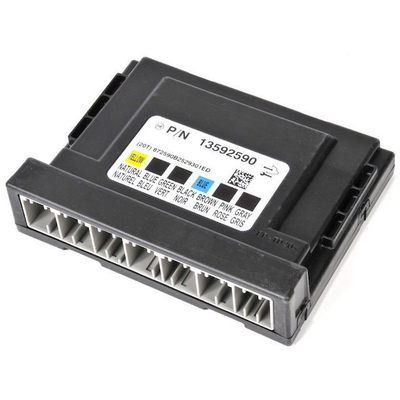
- Faulty Body Control Module (BCM) (Very Rare) — While a software glitch is far more common, the BCM can fail due to an internal hardware fault. This is extremely rare for this code and should only be considered after the software-based repair has failed multiple times. GM bulletins explicitly advise against replacing the BCM for this code.
- Faulty Vehicle Inclination Sensor (Rare) — On the few models that use B2924 for the vehicle's tilt or inclination sensor (part of the alarm system), a failure of the sensor itself or its circuit triggers the code. This is not applicable to the common GM no-start issue.
- High-Powered Two-Way Radio Interference (Very Rare) — Strong radio frequency (RF) interference from high-wattage two-way radios or other powerful transmitters disrupts BCM communications and triggers various body codes, including B2924.
Symptoms
- Engine will not crank or start — This is the most prevalent symptom. When you press the start button or turn the key, you hear a single click from a relay, but the starter motor does not engage.
- Engine starts and immediately stalls — The engine fires and runs for 1-2 seconds before shutting down abruptly. This happens because the Engine Control Module (ECM) does not receive the correct security authorization from the BCM.
- Security or 'Service Theft Deterrent System' Message — A warning message related to the security or anti-theft system displays on the Driver Information Center (DIC) or instrument cluster.
- Key fob is inoperative — The vehicle does not respond to the key fob's lock, unlock, or remote start commands. The passive entry and push-to-start functions also fail, as the car cannot detect the key's presence.
- Electronic Parking Brake Stuck or Inoperative — The electronic parking brake engages and cannot be released, further preventing vehicle movement.
Diagnostic Flowchart
Tap your situation to follow the diagnostic path that matches what you're seeing on this code.
Common Fixes & Costs
- BCM Software Recovery and Reprogramming — Parts: $0, Labor: $150-$550, ~2 hr book time (Professional)
- Replace Vehicle Battery
— Parts: $150-$400, Labor: $50-$100, ~0.5 hr book time
(DIY)
: OEM
: OEM - Inspect and Repair BCM Ground — Parts: $5, Labor: $100-$200, ~1 hr book time (Intermediate)
- Replace Body Control Module (BCM)
— Parts: $250-$500, Labor: $150-$300, ~1.5 hr book time
(Professional)
: OEM
: OEM
Used vs. New Parts: Buying Guide
When a used part is worth it: A used BCM from a junkyard can be a cost-effective option IF you use a 'cloning' service. This service copies the software and security data from your original (corrupted) BCM onto the used donor BCM, making it plug-and-play.
Donor-vehicle mileage cap: roughly under 100000 miles for the part to have meaningful remaining life.
Donor quality checklist:
- Match the part number exactly. Even a single digit difference means incompatibility.
- Ensure the donor vehicle had the same key options (e.g., remote start, keyless entry) as your vehicle.
- Avoid BCMs from flood-damaged or fire-damaged vehicles.
Decision logic:
- If The original BCM is physically damaged (e.g., water intrusion) and cannot be read for cloning → Buy a new OEM BCM. A used one cannot be programmed from scratch without the original's data in most non-dealer scenarios.
- If Budget is the primary concern and the original BCM is electronically readable → A used BCM combined with a mail-in cloning service is the most affordable path.
- If You need the vehicle back on the road as quickly as possible → Go to a dealer or qualified independent shop for a new OEM BCM and professional programming. This is the fastest but most expensive option.
Warranty tradeoff: Used parts from junkyards typically have a 30-90 day warranty, but this doesn't cover programming or labor costs. New OEM parts have a 1-year or longer warranty. Aftermarket new parts vary.
Worst-case if a used part fails: $300-$600 if a used BCM fails after programming; you will have to pay for another part and potentially another programming fee.
What Happens If You Wait — Timeline
- Instantaneous: A low-voltage event (e.g., jump-start, dead battery) corrupts the BCM's security memory. The vehicle is immediately immobilized with a no-start or start-and-stall condition. Key fobs become inoperative. (MPG impact: N/A% · Added cost: $75-$250 for a tow to a repair facility.)
- 1-7 Days: The vehicle remains completely disabled. The owner wastes money on incorrect DIY fixes like replacing the key fob battery ($15) or calling a locksmith who cannot perform the required programming ($100-$200 wasted). (MPG impact: N/A% · Added cost: $115-$415 in incorrect repairs and alternative transportation costs.)
- 1-4 Weeks: A shop unfamiliar with the TSB misdiagnoses the issue as a failed BCM and quotes a replacement. If the owner approves, they pay for an unnecessary part and labor. (MPG impact: N/A% · Added cost: $600-$1000+ in unnecessary repairs (the difference between the cost of a new BCM vs. the correct software fix).)
- 1+ Month: If the vehicle is left sitting with the original dead battery, the battery permanently fails due to sulfation. Now, in addition to the BCM reprogram, a new battery is also required. (MPG impact: N/A% · Added cost: $150-$400 for a new battery, on top of the towing and reprogramming costs.)
Cost of Not Fixing It
- Immediately: Vehicle is completely immobilized and undrivable. It will not start, or will start and immediately stall. (Added cost: Towing costs ($75-$250) to a repair facility.)
- Ongoing: The vehicle remains a 'brick'. There is no scenario where the vehicle will 'fix itself' or become drivable without professional intervention. (Added cost: Cost of alternative transportation.)
- Long-term (if left with dead battery): A deeply discharged battery leads to sulfation, permanently damaging the battery and requiring replacement in addition to the BCM reprogram. (Added cost: $150-$400 for a new battery.)
Diagnosis Steps
- Review Vehicle History for Voltage Events
Ask the owner: Did this problem occur immediately after a battery replacement, a jump-start, using a battery charger, or after the vehicle sat for an extended period? A 'yes' strongly indicates the known GM software corruption issue.
Tools: None (Beginner) - Verify Battery and Charging System Health
Confirm the vehicle's 12V battery is healthy. Use a digital multimeter to ensure static charge is above 12.4V. A reading of ~12.2V indicates a 50% state of charge, and below 12.0V is considered discharged and a likely trigger for the fault. Use a professional carbon pile or digital load tester to check its cranking amps and ability to hold a load. A weak battery is the root cause, so this must be ruled out first.
Tools: Digital Multimeter, Professional Battery Load Tester (Beginner) - Scan for All DTCs with a Professional Scan Tool
Use a professional-grade OBD-II scanner capable of reading manufacturer-specific Body (B), Chassis (C), and Communication (U) codes. Confirm B2924 00 is present. The key diagnostic pattern is B2924 plus three or more codes from the B3925-B3927 range.
Tools: Professional OBD-II Scanner (e.g., GM GDS2) (Intermediate) - Look for the 'Smoking Gun' Code: B389A
Within the BCM codes, look specifically for DTC B389A ('Multiple Environment IDs Present'). This code confirms the memory corruption scenario outlined in GM TSBs. Pro Tip: If B389A is not present but the other codes and symptoms are, disconnect the negative battery terminal for 60 seconds, reconnect it, and re-scan. This action often triggers B389A to set, confirming the diagnosis.
Tools: Professional OBD-II Scanner (Advanced) - Check Technical Service Bulletins (TSBs)
For any GM vehicle, search for TSBs #21-NA-277 and its successor, #23-NA-163. These bulletins precisely describe the B2924 code cluster, its cause, and the required software recovery procedure. Also check for TSB PIT5405C, which addresses poor BCM ground connections that cause this fault.
Tools: TSB Database Access (e.g., ALLDATA, Mitchell 1) or Internet Search (Intermediate) - Inspect BCM Ground Integrity (Pro Tip)
If the software fix fails or the issue is intermittent, locate and inspect the primary BCM ground point. On many affected GM platforms, this is G218, typically located behind the driver's side kick panel or lower dash. Disassemble the ground, clean all contact surfaces to bare metal, and re-secure it. A voltage drop test between the BCM ground wire and the negative battery post should show less than 0.2 volts (200mV). A higher reading indicates a poor ground that must be repaired.
Tools: Trim removal tools, Socket set, Multimeter (Advanced) - Initiate BCM Software Recovery (Professional Only)
This is the definitive repair and is not a DIY task. The vehicle must be at a GM dealer or a qualified independent shop with access to GM's online Service Programming System (SPS). They will follow TSB #23-NA-163, which often requires contacting the GM Technical Assistance Center (TAC) for a special Vehicle Configuration Index (VCI) code to restore the BCM's memory before reprogramming.
Tools: GM GDS2/MDI 2, J2534 Pass-Thru Device, GM SPS Subscription (Professional)
When This Code Triggers (Freeze-Frame Conditions)
- Trigger Event: Low Voltage Condition (The code is not set during normal driving but is triggered by an event that causes a sudden drop or interruption in vehicle voltage.)
- Battery Voltage (at time of event): < 10.5V (A momentary or sustained drop in system voltage, often during an engine crank attempt with a weak battery, a jump-start, or battery disconnection/reconnection.)
- Vehicle State: Key On / Engine Start Attempt (The fault occurs when the BCM is performing its power-on self-test and security handshake with other modules.)
- Ambient Temperature: Often Low (< 32°F / 0°C) (Cold temperatures reduce battery efficiency, making a low-voltage event more likely, which is the direct trigger for the B2924 software corruption.)
Related Codes
- P0513 — This code for 'Invalid Immobilizer Key' is a direct symptom of B2924. The BCM's failure (B2924) prevents it from sending the correct security key data to the ECM, which then logs P0513. Seeing both together strongly points to the BCM software corruption.
- B3925, B3926, B3927 — These are 'sibling' codes to B2924, all indicating an 'Incorrect Environmental Identifier' from different modules. You don't diagnose them separately. According to GM TSBs, the presence of B2924 along with three or more of these codes as a group is a key confirmation that the specific BCM software corruption has occurred.
- B389A — This code for 'Multiple Environment IDs Present' is the 'smoking gun' that confirms a BCM memory corruption event. GM service bulletins state that the presence of this code validates that the special software reprogramming procedure is the correct fix. The TSB even advises technicians to cycle the battery power to try and set this code if it's not already present.
- B3978, B3979, B3980, B3981 — This is another group of 'Incorrect Environmental Identifier' codes that set along with B2924. They relate to modules like the Inflatable Restraint Sensing and Diagnostic Module and the HVAC Control Module. Their presence further confirms a widespread loss of module identity originating from the BCM corruption.
Climate & Environmental Factors
- Cold Weather: This is the most significant environmental factor. Frigid temperatures dramatically reduce a battery's ability to produce and deliver power, as the chemical reactions inside slow down. An aging or partially discharged battery that might work fine in warm weather easily drops below the critical voltage threshold during a cold start, triggering the BCM software corruption that sets code B2924.
- High Humidity / Moisture: While not a direct cause of the B2924 software glitch, high humidity leads to condensation and moisture ingress into the BCM and its connectors over time. This causes corrosion and unrelated electrical faults that potentially lead to voltage instability or a full BCM failure in the long term.
How to Talk to a Mechanic About This Code
Say this: "My car won't start and I suspect it's showing code B2924 due to a recent battery issue. I'd like to schedule a diagnostic, but I want to be clear: please reference GM Technical Service Bulletin #23-NA-163. I believe the BCM needs the software recovery procedure, not a full replacement."
This immediately signals to the service advisor that you are an informed customer. It directs them away from the common misdiagnosis of a 'failed BCM' and toward the correct, less expensive software fix, saving diagnostic time and preventing a quote for unnecessary parts.
Avoid saying:
- 'My car won't start, I think it's the battery or starter.'
- 'The anti-theft light is on, can you just fix it?'
- 'I was told I need a new Body Control Module.' (This accepts a likely misdiagnosis from the start)
Questions to ask before authorizing the repair:
- Have you confirmed that my vehicle has a GEN3R BCM and is covered by TSB #23-NA-163?
- Can you confirm you will be attempting the SPS software recovery procedure *before* considering any hardware replacement?
- What is the estimated labor cost for the reprogramming procedure specifically?
- If the reprogram is successful, will you guarantee the work and for how long?
Where to Take It: Dealer vs Independent vs Chain
- Dealer:
Recommended. The dealer is the most reliable and direct path to the correct software fix, despite the higher cost. They are best equipped to handle the specific requirements of TSB #23-NA-163.
Best for: Vehicles under warranty., This specific B2924 code, as they have direct access to GM's Service Programming System (SPS) and Technical Assistance Center (TAC) as required by the TSB.
Downsides: Highest labor rates., May still attempt to upsell a BCM replacement if the customer isn't firm about following the TSB. (Typical cost: +50% vs. baseline) - Independent Shop:
Acceptable with verification. A good choice ONLY if you call ahead and confirm they are equipped for and experienced with GM online module programming. If they seem unsure, go to the dealer.
Best for: Out-of-warranty vehicles where cost is a major factor.
Downsides: MUST be vetted. You have to confirm they have a J2534 Pass-Thru device and an active GM SPS subscription to perform online programming. Many independent shops do not have this capability. (Typical cost: +0% vs. baseline) - Chain Shop:
AVOID. Chain shops are not equipped for the specific software programming needed to fix code B2924. Taking your vehicle here for this issue will likely result in wasted time and money on incorrect repairs.
Best for: Battery testing and replacement (but use a memory saver!).
Downsides: Almost certainly cannot perform the required BCM software recovery. High likelihood of misdiagnosis (e.g., selling a starter, battery, or alternator unnecessarily). (Typical cost: -10% vs. baseline)
When to Walk Away From the Repair
If the total estimated repair cost exceeds 50% of the car's current private-party value, you should pause and evaluate your options.
- Car worth $8000, fix is $450: Fix it. The cost of the correct BCM reprogram is very low compared to the vehicle's value.
- Car worth $3000, fix is $1200: Walk away. If a shop is incorrectly quoting a full BCM replacement and the cost is this high relative to the car's value, it's not worth it. Sell the car as a 'mechanic special'.
- Car worth $5000, fix is $2500: Get a second opinion. If the cost is this high, it implies other major repairs are needed besides the B2924 fix. If the high cost is ONLY for the B2924 issue, the shop is misdiagnosing it; go elsewhere.
What Scan Tool You Need for This Code
Minimum: A scanner that can read manufacturer-specific Body Control Module (BCM) codes. A basic engine-only code reader will NOT see code B2924.
A cheap, generic OBD-II reader shows 'No Codes Found' because it only checks the Engine Control Module. You need a tool that sees the 'B' (Body), 'C' (Chassis), and 'U' (Network) codes to find B2924 and its related 'smoking gun' codes like B389A.
Budget: FOXWELL NT301 Plus or ANCEL AD410 (~$80) — These scanners read and clear codes from the BCM, ABS, and SRS systems, in addition to the engine. This is the minimum required to properly diagnose that B2924 and its related codes are present.
Mid-range: FOXWELL NT510 Elite for GM or Autel MaxiCheck MX808 (~$150) — Provides full-system access to read all GM-specific codes, view live BCM data, and offers some basic reset functions. The Autel MX808 provides broad coverage and user-friendly interface. The Foxwell NT510 Elite is specifically strong for GM vehicles.
Professional: Autel MaxiSys MS906BT or TOPDON Phoenix Series (~$600-1200) — Offers full bidirectional control and OE-level diagnostics. While these tools cannot perform the final online SPS programming themselves without a separate PC and subscription, they are essential for advanced troubleshooting if the initial TSB procedure fails.
How to Clear the Code After You Fix It
- The primary repair is BCM reprogramming by a professional; this clears the fault.
- If the battery was disconnected, all readiness monitors will be reset.
- Perform a complete GM drive cycle to allow emissions monitors to run for inspection purposes.
Drive cycle (~20 minutes): From a cold start, idle for 2-3 minutes with A/C on. Accelerate to 55 mph and hold steady for 3-5 minutes. Let the vehicle coast down to 20 mph without using the brake. Accelerate back to 55-60 mph and hold for 5 minutes. Coast down again. This may need to be repeated.
Readiness monitors affected: Catalyst monitor, O2 sensor monitor, EVAP monitor, EGR system monitor
Before emissions retest: drive at least 50 miles to fully set monitors.
Watch out for:
- Attempting to clear code B2924 with a standard scanner will not work; the underlying software corruption remains.
- Simply disconnecting the battery will not fix the code and will erase all emissions readiness monitors, guaranteeing an emissions test failure until a full drive cycle is completed.
- The Catalyst and EVAP monitors can be difficult to set and may require multiple drive cycles.
Will This Fail Emissions / State Inspection?
Yes — this code typically fails an OBD-II emissions inspection.
- California: A vehicle with an active trouble code (even a 'B' code in many cases) or incomplete readiness monitors will fail the Smog Check. After the repair, a full drive cycle is required to set all monitors.
- New York: The NYS inspection includes an OBD-II scan. An active B2924 code or the resulting no-start condition constitutes an automatic failure. Any stored trouble codes must be resolved.
- Texas: In the 17 counties requiring emissions testing, an OBD-II scan is performed. The presence of any Diagnostic Trouble Code (DTC) will cause a failure. Also, for 2001+ vehicles, only one readiness monitor is allowed to be 'Not Ready'.
Most Commonly Affected Vehicles
- Chevrolet Malibu (2019-2022) — Highly susceptible to BCM software corruption. For 2019+, the standard engine is a 1.5L Turbo with a CVT, which is a change from earlier models.
- Chevrolet Equinox (2018-2022) — A very common vehicle for this issue. A dead battery or jump-start almost guarantees a BCM memory loss and a no-start condition. Covered extensively in TSBs.
- GMC Terrain (2018-2022) — Shares the same platform, BCM, and software vulnerability as the Chevrolet Equinox. The repair procedure is identical.
- GMC Acadia (2019-2022) — Prone to the 'Incorrect Environmental Identifier' fault in the BCM after battery replacement. TSB #23-NA-163 provides specific diagnostic paths for this model.
- Buick Envision (2018-2022) — Affected by the same BCM software issue. The 2021 redesign did not resolve the underlying BCM sensitivity.
- Chevrolet Blazer (2019-2025) — Covered under GM TSB 23-NA-163. The issue occurs on models with either the 2.5L I4 or the 3.6L V6 engine.
- Cadillac XT5 (2020-2022) — Also affected by the BCM memory corruption issue that plagues many GM models on this platform. The diagnostic and repair process is the same.
- Ford Expedition / Lincoln Navigator (2007-2008) — On these specific models, B2924 has a completely different meaning and points to an internal audio unit (radio) fault, not a security issue.
Manufacturer-Specific Notes
- General Motors (Chevrolet, GMC, Buick, Cadillac): For 2018+ models, this code is a known software defect, not a hardware failure. The fix is a specific dealer-level reprogramming procedure outlined in TSB #23-NA-163, which often requires a special VCI code from GM's Technical Assistance Center (TAC). Do not replace the BCM.
- Ford / Lincoln: On some older models like the 2007-2008 Expedition and Navigator, B2924 is not related to the security system. It indicates an internal fault in the audio control module (the radio), which requires repair or replacement of the head unit.
- Chrysler / Jeep / Dodge: While less common, some Chrysler products exhibit similar BCM-related no-start issues after a voltage drop. The codes are different, but the principle of BCM memory corruption applies. The fix is often a 'BCM reset' or reprogramming using their proprietary wiTECH scan tool.
- General Motors (Professional Diagnosis): The diagnostic path for TSB #23-NA-163 is split into two procedures ('A' and 'B'). Path A is for vehicles where no previous repair attempts have been made. Path B is for vehicles where a technician has already (and unsuccessfully) attempted a standard immobilizer relearn, which further complicates the corrupted data.
- General Motors (Warranty): As of early 2026, there are no active recalls or special coverage/extended warranty programs issued by GM for the B2924 fault. Repairs on vehicles outside of the original bumper-to-bumper warranty period are typically the financial responsibility of the owner. The issue is addressed via Technical Service Bulletins (TSBs), which are repair guides for technicians.
Real Owner Stories
2019 Chevy Equinox with a no-start after the battery died.
The owner let the vehicle sit for several days, and the battery discharged. After charging the battery, the vehicle would not crank and displayed a 'Push Brake To Start' message, even with the brake pedal depressed.
Outcome: The technician used a professional scan tool to find code B2924 and noted the brake pedal position sensor was 'inactive' in the BCM data stream. Instead of replacing parts, the technician performed a 'soft reset' of the BCM using the scan tool, which restored communication. The vehicle started normally afterward.
Lesson: This case demonstrates the classic B2924 scenario. A low voltage event corrupted the BCM's memory, causing it to ignore inputs like the brake pedal sensor. The fix is a software reset, not a hardware replacement, saving hundreds of dollars.
2019 Chevy Equinox stranded after multiple jump-starts and a new battery.
The owner had a failing alternator and had to jump-start the car frequently over several weeks, which damaged the battery. They replaced the battery and then the alternator, but the car still wouldn't start—it had power, but the starter wouldn't engage, producing only a single click.
Outcome: This is a textbook case of B2924 being triggered by severe and repeated voltage fluctuations. While the owner correctly identified the failing battery and alternator, they were left with the BCM software corruption. The required fix is the TSB #23-NA-163 software recovery at a dealer.
Lesson: Replacing the parts that caused the voltage drop (like the battery and alternator) will not fix the resulting B2924 code. The BCM's software is scrambled and must be professionally reprogrammed. This prevents owners from wasting money on starters or other unrelated parts.
Misdiagnosis leads to a shop quoting an unnecessary BCM replacement.
A GM vehicle owner experienced the typical no-start condition after a battery event and took it to a repair shop unfamiliar with the specific TSB for B2924.
Outcome: The owner, being informed about TSB #23-NA-163, insisted the shop attempt the software recovery procedure first. The shop complied, and the procedure successfully restored the BCM's function for a fraction of the cost of replacement (typically $150-$550).
Lesson: You must be your own advocate. Knowing about TSB #23-NA-163 and mentioning it to the service advisor saves you from a costly misdiagnosis. Always insist on the software recovery procedure before agreeing to a BCM replacement for this code.
How to Prevent This Code From Triggering
- Use an OBD-II memory saver when changing the battery. (Every time the battery is disconnected.) — This device plugs into the OBD-II port and provides continuous power from an external source (like a jump pack), preventing the voltage drop that corrupts the BCM's memory.
- Proactively replace the vehicle battery every 3-5 years. (Once per 3-5 years.) — Batteries degrade over time, especially in extreme climates. Replacing the battery before it fails completely is the single best way to prevent the sudden low-voltage condition that triggers code B2924.
- Use a battery tender or maintainer. (If the vehicle is stored or driven infrequently (less than once a week).) — Modern cars have a constant parasitic draw that drains a battery over a few weeks. A tender keeps the battery at an optimal charge level, preventing it from dropping into the low-voltage danger zone.
- Perform an annual battery and charging system test. (Annually, during regular service.) — A professional load test identifies a weakening battery or a failing alternator before they cause a catastrophic voltage drop. This allows for scheduled replacement instead of a surprise no-start and BCM corruption.
- Ensure aftermarket electronics are installed correctly. (During installation of any aftermarket part.) — Improperly wired accessories like remote starters or high-power stereos create voltage instability or interfere with CAN bus communication, potentially leading to BCM data corruption.
Frequently Asked Questions
Can I fix code B2924 myself by replacing the battery?
No. While a bad battery likely caused the problem, installing a new one will not fix the corrupted software in the Body Control Module (BCM). The BCM must be professionally reprogrammed after the new battery is installed.
Will replacing the BCM fix a B2924 code?
You should not replace the BCM. GM's official service bulletins explicitly warn against replacing the BCM for this issue, as the problem is software-based. A new BCM is an unnecessary expense and still requires the same complex programming.
My repair shop quoted me over $1,000 to replace the BCM. Is this correct?
This is a frequent and costly misdiagnosis. The vast majority of B2924 cases on affected GM vehicles are resolved with a software procedure costing $150 to $550. Insist the shop follows GM Technical Service Bulletin #23-NA-163 first.
What is the difference between a standard 'Immobilizer Relearn' and the fix for B2924?
A standard key relearn fails because the BCM's foundational software is corrupted. The fix for B2924 requires a 'Special Data Reset' using GM's Service Programming System (SPS) to restore the BCM's memory before a normal key relearn can occur.
Why did my car die right after a jump-start?
The 'GEN3R' BCMs used in many modern GM vehicles are highly sensitive to voltage fluctuations. A jump-start or dead battery scrambles the security memory in the BCM, triggering code B2924 and disabling the car.
How can I prevent code B2924 from happening?
Maintain a healthy battery and replace it proactively every 3 to 5 years. When replacing the battery, use an OBD-II memory saver device to maintain constant voltage to the vehicle's modules during the swap.
How do I ensure the repair shop performs the correct, lower-cost fix?
Tell the service advisor to reference 'GM Technical Service Bulletin #23-NA-163 for BCM memory corruption.' This proves you are an informed customer and directs them to the correct software reprogram instead of an expensive BCM replacement.
Can a mobile mechanic fix code B2924?
Only if they possess a J2534 pass-thru device and an active subscription to GM's Service Programming System (SPS). You must verify they can perform online GM module programming before booking the service.
Key Takeaways
- Code B2924 on 2018+ GM vehicles indicates a corrupted Body Control Module (BCM) software environment, immobilizing the vehicle and requiring a tow.
- Do not replace the BCM or starter; the definitive fix is a 1-to-2-hour software recovery procedure using GM's Service Programming System (SPS).
- Always test the 12V battery first, as a voltage drop below 12.0V from a dead battery or jump-start is the primary trigger for this memory corruption.
- Quote GM Technical Service Bulletin #23-NA-163 to your repair shop to prevent a costly $1,000+ misdiagnosis and ensure they perform the $150-$550 software flash.
Shop the Parts Behind B2924
Below are the parts most often responsible for code B2924, ranked by how frequently each one is the actual culprit (per the diagnosis above). Tap any to see what we have for your vehicle.


The information in this article is provided for general reference and educational purposes only. Vehicle specifications, procedures, and part compatibility can vary by production date, trim level, and region. Always consult your vehicle's factory service manual and verify part numbers before purchasing or performing repairs. Safety-critical components such as airbags, seat belts, and braking systems should be installed by a qualified professional.
- 🧭 Diagnostic Flowchart
- 🛍️ Shop This Part
- What Does B2924 Mean?
- Can I Drive With B2924?
- Common Causes
- Symptoms
- Common Fixes & Costs
- Used vs. New Parts: Buying Guide
- What Happens If You Wait — Timeline
- Cost of Not Fixing It
- Diagnosis Steps
- When This Code Triggers (Freeze-Frame Conditions)
- Related Codes
- Climate & Environmental Factors
- How to Talk to a Mechanic About This Code
- Where to Take It: Dealer vs Independent vs Chain
- When to Walk Away From the Repair
- What Scan Tool You Need for This Code
- How to Clear the Code After You Fix It
- Will This Fail Emissions / State Inspection?
- Most Commonly Affected Vehicles
- Manufacturer-Specific Notes
- Real Owner Stories
- 2019 Chevy Equinox with a no-start after the battery died.
- 2019 Chevy Equinox stranded after multiple jump-starts and a new battery.
- Misdiagnosis leads to a shop quoting an unnecessary BCM replacement.
- How to Prevent This Code From Triggering
- Frequently Asked Questions
- Can I fix code B2924 myself by replacing the battery?
- Will replacing the BCM fix a B2924 code?
- My repair shop quoted me over $1,000 to replace the BCM. Is this correct?
- What is the difference between a standard 'Immobilizer Relearn' and the fix for B2924?
- Why did my car die right after a jump-start?
- How can I prevent code B2924 from happening?
- How do I ensure the repair shop performs the correct, lower-cost fix?
- Can a mobile mechanic fix code B2924?
- Key Takeaways
- 🎟️ Get 5% Off