

OBD-II Code B2955: Security System Sensor Circuit Malfunction
What B2955 means, why it triggers, and how to fix it
- Code B2955 indicates a circuit fault in your vehicle's anti-theft system, which actively disables the engine and causes a no-start condition.
- On 2015-2016 GM models like the Trax, Encore, Colorado, and Canyon, this code is almost always caused by a known factory software glitch or a tight wiring harness, not a failed part.
- Before spending $150+ on diagnostics, remove all other keys from your ring, try your spare key, and ensure your battery voltage is above 12.6V.
- Do not ignore an intermittent B2955 code; it will eventually become a permanent hard fault, resulting in a $150-$250 emergency tow when the vehicle refuses to start.
What Does B2955 Mean?

B2955 means the Body Control Module (BCM) detects a fault in the anti-theft system's sensor circuit. This system (often called Pass-Key/Passlock on GM vehicles) uses a transponder chip in your key to authorize engine starts. The code indicates a communication breakdown or electrical fault between the key's transponder and the security module, preventing the engine from starting.
Technical definition: The official SAE/ISO definition for B2955 is "Security System Sensor Data Circuit Malfunction." The BCM detects that voltage or signal from the immobilizer antenna circuit is outside its expected range, incorrect, interrupted, or absent. The BCM interprets this as an open circuit or a short, and sends a 'start disable' password to the Engine Control Module (ECM).
Can I Drive With B2955?
Yes, But With Caution. You can drive if the engine starts, but you risk being stranded the next time you try. The fault is intermittent and worsens with temperature changes. While not a safety hazard in motion, it is a severe reliability issue.
Common Causes

- Body Control Module (BCM) Software Glitch (Very Common) — On many General Motors vehicles, a software error in the BCM incorrectly flags a security circuit problem. GM issued Technical Service Bulletins (TSBs), such as 16-NA-128, advising dealers to update the BCM software to fix this issue rather than replacing parts.
- Immobilizer Antenna Wiring Harness Issue (Very Common) — The wiring connecting to the immobilizer antenna (the ring around the ignition switch) is often pulled too tight, pinched, or loose. TSB PIT5382D documents this factory routing defect on vehicles like the 2015 Chevrolet Colorado and GMC Canyon.
- Defective Transponder Chip in Key (Less Common) — The electronic chip inside the ignition key can fail. If the BCM cannot read a valid signal from the key, it sets this code and disables the engine. Testing a spare key isolates this issue.
- Faulty Immobilizer Antenna (Reader Coil) (Less Common) — The immobilizer antenna coil energizes the key's chip and reads its signal. It can break internally, causing a communication failure. A B2955 code with a '00' symptom byte specifically points to this component failing.
- Low or Unstable Battery Voltage (Uncommon) — A weak battery causes low voltage conditions that trigger unpredictable behavior in the BCM. GM service bulletins require technicians to verify battery voltage is stable (12.6V to 15.5V) before diagnosing or reprogramming the BCM.
- Water Intrusion and Connector Corrosion (Uncommon) — Liquid spills in a center console or water from a car wash can enter and corrode the immobilizer connector pins, causing high resistance and a circuit fault.
- Interference from Other Electronics or Keys (Rare) — The immobilizer uses a low-power radio signal. Other transponder keys, fobs, aftermarket electronic devices, or metallic trim rings on the same keychain disrupt the signal and trigger the code.
Symptoms

- Engine will not start (No-Crank or Starts and Stalls) — The engine refuses to start. You turn the key and nothing happens, or the engine fires up for a second and immediately shuts down as the security system disables it.
- Security Light is On or Flashing — The dashboard displays a solid or flashing warning light, typically an icon of a car with a lock or key.
- 'Service Theft Deterrent System' Message — The driver information center shows a text message like 'Service Theft System' or 'Service Immobilizer'.
- Remote Start Works, Key Does Not — The vehicle starts successfully using the remote fob but stalls when using the physical key in the ignition. This isolates the failure to the circuit between the key and the ignition cylinder's antenna.
Diagnostic Flowchart

Tap your situation to follow the diagnostic path that matches what you're seeing on this code.
Common Fixes & Costs
- Reprogramming the Body Control Module (BCM) — Parts: $0, Labor: $150-$250, ~1.0 hr book time (Professional)
- Securing or Rerouting the Immobilizer Wiring Harness — Parts: $0-$10, Labor: $150-$200, ~1.0 hr book time (DIY)
- Replacing the Immobilizer Antenna/Reader Coil
— Parts: $40-$90, Labor: $150-$200, ~1.0 hr book time
(Intermediate)
2015 Chevrolet Colorado / GMC Canyon: OEM
2015-2016 Chevrolet Trax: OEM - Replacing and Programming a New Key
— Parts: $70-$150, Labor: $100-$200, ~1.0 hr book time
(Professional)
2015 Chevrolet Colorado: OEM
2016 Chevrolet Trax: OEM - Repairing Damaged Wiring or Connectors — Parts: $5-$50, Labor: $150-$300, ~2.0 hr book time (Intermediate)
Used vs. New Parts: Buying Guide
When a used part is worth it: A used immobilizer antenna (reader coil) is acceptable as it is a simple, durable component. Buying a used Body Control Module (BCM) is NOT recommended unless you have access to professional programming tools, as it must be reprogrammed with your vehicle's VIN.
Donor-vehicle mileage cap: roughly under 100000 miles for the part to have meaningful remaining life.
Donor quality checklist:
- For a BCM, verify the donor vehicle did not have electrical or flood damage.
- Match the part number exactly. Even a slight variation leads to incompatibility.
- Ask for the donor vehicle's VIN to help a programmer reset the used module.
Decision logic:
- If The required part is the immobilizer antenna → A used part is a reasonable, low-risk way to save money.
- If The required part is the Body Control Module (BCM) → Buy a new OEM part. A used BCM is high-risk, requires expensive reprogramming, and may not work, erasing any initial savings.
- If The vehicle is over 10 years old and budget is the top priority → A used BCM is an option, but only if you have a confirmed appointment with a shop that can and will program a used module.
Warranty tradeoff: Used parts from a salvage yard typically have a 30-90 day warranty. New aftermarket or OEM parts carry a warranty of 1 year or longer.
Worst-case if a used part fails: $300-$600 if a used BCM is faulty or cannot be programmed. This includes the cost of the part plus the non-refundable labor for installation and programming attempts.
What Happens If You Wait — Timeline
- First Occurrence: Vehicle fails to start once. 'Service Theft Deterrent System' message appears. After a 10-20 minute wait, the car starts normally. The issue is dismissed as a one-time glitch. (MPG impact: 0%% · Added cost: $0)
- 1-4 Weeks: The no-start condition becomes intermittent, happening once or twice a week. The owner tries simple fixes like the 10-minute relearn procedure, which does not solve the root cause. (MPG impact: 0%% · Added cost: $150-$250 (Potential cost of one emergency tow if stranded).)
- 1-3 Months: The failure rate increases, occurring almost daily. The vehicle is fundamentally unreliable. The owner is forced to schedule a diagnostic appointment, costing $150-$200 just for the initial check. (MPG impact: 0%% · Added cost: $300-$450 (Cost of diagnosis plus a likely second tow).)
- 3+ Months: The intermittent fault becomes a permanent, hard fault. The vehicle will not start under any circumstances. This forces the final repair, ranging from a wiring adjustment to a BCM reprogram ($150) or component replacement ($200+). (MPG impact: 0%% · Added cost: $450-$800+ (Total cumulative costs including towing, diagnostics, and the final repair).)
Cost of Not Fixing It
- Immediate: Intermittent no-start condition, with a high risk of being stranded without warning. (Added cost: $150-$250 for an emergency tow.)
- 1-3 Months: The intermittent failure becomes a permanent no-start condition, forcing a repair. (Added cost: $150-$400 for emergency tow plus diagnostic fees, which are often higher than scheduled appointments.)
- 6+ Months: This fault does not cause cascading damage to other vehicle systems. The ultimate cost is the eventual forced repair when the vehicle will no longer start at all. (Added cost: No significant additional component damage cost, but the final repair bill is unavoidable.)
Diagnosis Steps

- Check for Interference and Try a Spare Key
Remove all other keys, fobs, and electronic devices from your keychain. Try starting the car with just the single ignition key. If it fails, try your spare key. If the spare key works consistently, the primary key has a bad transponder chip.
Tools: Spare key (Beginner) - Scan for All Trouble Codes and Symptom Bytes
Use a professional OBD-II scanner to confirm B2955. Check for related codes like B3935 or B3055. Note any symptom bytes, like 'B2955 00', which indicates a failed immobilizer antenna.
Tools: Professional OBD-II Scanner (Beginner) - Check for Technical Service Bulletins (TSBs)
Search online for TSBs related to code B2955 for your specific VIN. GM issued bulletins indicating a BCM software update (TSB 16-NA-128) or wiring harness adjustment (TSB PIT5382D) is the required fix, not parts replacement.
Tools: Internet access, Vehicle VIN (Beginner) - Inspect the Immobilizer Wiring Harness
Remove the plastic shrouds around the steering column to access the ignition lock cylinder. Inspect the wiring harness connected to the immobilizer ring. Look for a harness that is stretched tight, pinched, or corroded. Adjust the steering wheel to its lowest and most extended position to check for tension.
Tools: Screwdriver set, trim removal tools (Intermediate) - [PRO TIP] Test the Immobilizer Antenna Circuit
Disconnect the immobilizer antenna harness and BCM connectors. Using a multimeter, test the low reference circuit end-to-end for resistance (should be < 2 ohms). Check the B+ power circuit with a test lamp to ground; it should light for ~3 seconds when the ignition turns ON. Check the serial data circuit for voltage (often 12-13V). Readings outside these specs indicate a wiring fault.
Tools: Digital Multimeter, Test Lamp, Vehicle-specific wiring diagrams (Advanced) - [PRO TIP] Analyze Scan Tool Data PIDs
Navigate to the BCM data stream on an advanced scan tool. Look for 'Immobilizer Key Status'. When a known good key turns in the ignition, this status must change to 'Valid' or 'OK'. If it remains 'Invalid' despite a good key and intact circuit, the BCM requires a software update or replacement.
Tools: Advanced Bi-directional Scan Tool (Advanced) - Have a Dealer Check for BCM Software Updates
If the wiring and components test normal, take the vehicle to a shop with J2534 programming capabilities to check for a BCM software update. The shop must use a stable power supply during programming to prevent module failure.
Tools: Professional diagnostic and J2534 programming tools (Professional) - Perform 10-Minute Key Relearn Procedure (GM)
If the BCM or immobilizer module is replaced, perform a key relearn. Turn the key to 'ON' (without starting) for 10 minutes until the security light stops flashing. Turn OFF for 5 seconds, then repeat two more times (30 minutes total). The vehicle will start after the third cycle.
Tools: None (Intermediate)
When This Code Triggers (Freeze-Frame Conditions)
- Ignition Status: ON / RUN (The BCM performs the security check when the key is turned.)
- Battery Voltage: 12.0V - 12.6V (Key On, Engine Off. Low or unstable voltage causes module communication errors.)
- Security Key Status: Invalid / No Signal / Circuit Fault (The BCM sets the code when it fails to receive a valid signal from the key transponder.)
- Engine State: Off / No Start (The code is typically set during the starting sequence, resulting in a no-start condition.)
Related Codes
- B3935 — Means 'Transponder Authentication Failed'. When B3935 appears with B2955 on 2014-2015 GM trucks, TSB PI1180A points directly to a BCM software update as the solution.
- B3055 — Means 'No Transponder Modulation'. This indicates the BCM received no signal at all from the key. If you see B3055, the issue is likely a dead key transponder or a completely failed antenna.
- B2960 — Means 'Security System Sensor Data Incorrect but Valid'. It suggests the BCM receives a structurally valid signal, but the data doesn't match its memory. This points to a key programming mismatch rather than a circuit fault.
- B2955 00 — The '00' is a symptom byte viewed with a professional scan tool. It indicates a direct internal failure of the immobilizer antenna (reader coil) itself.
Climate & Environmental Factors
- High Temperature: Intermittent starting issues associated with B2955 are more frequent in hot weather. Heat causes electronic components and wiring to expand, worsening a marginal connection in a tight wiring harness.
- Cold Temperature: Extreme cold makes wires brittle and susceptible to breaking if they are already under tension near the steering column.
- Humidity / Water Intrusion: High humidity or direct water intrusion (liquid spills, car washes) causes corrosion on the pins of the immobilizer antenna connector, increasing resistance and triggering the code.
How to Talk to a Mechanic About This Code
Say this: "I'd like to schedule a diagnostic for an intermittent no-start condition with a B2955 security code. I know for this model, a BCM software update or a wiring harness issue near the ignition are common causes covered by TSBs. Can you please investigate those possibilities before recommending part replacement?"
This signals you have done your research. It directs the technician to the most likely (and often cheapest) fixes first and makes them justify why they might need to skip to a more expensive repair, like replacing the BCM.
Avoid saying:
- 'Just fix whatever's wrong'
- 'My security light is on, can you look at it?'
- 'The car won't start, do whatever it takes'
Questions to ask before authorizing the repair:
- Did you find any Technical Service Bulletins (TSBs) for my VIN related to code B2955?
- Did you physically inspect the immobilizer wiring harness for tension, pinching, or corrosion?
- If you are recommending a BCM replacement, can you confirm that a software update was already attempted or is not applicable?
- What were the results of the electrical tests on the immobilizer antenna circuit?
Where to Take It: Dealer vs Independent vs Chain
- Dealer:
Best for: Vehicles where a BCM software update is the most likely fix (e.g., 2015-16 Trax/Encore)., Vehicles still under any form of warranty., Complex diagnostics where an independent shop has already failed.
Downsides: Highest labor rates., May default to module replacement instead of a more nuanced wiring repair. (Typical cost: +50% vs. baseline) - Independent Shop:
A good first stop for diagnosis, but you must confirm they have manufacturer-level programming tools before authorizing a fix. If a software update is needed, you will likely end up at the dealer.
Best for: Initial diagnosis, especially for physical issues like the wiring harness on a Colorado/Canyon., Out-of-warranty vehicles where cost is a primary concern., Component replacement like the immobilizer antenna.
Downsides: May not have the expensive, subscription-based tools (like GM's TIS2Web) required for BCM programming., Quality and diagnostic capability vary widely. (Typical cost: +0% vs. baseline) - Chain Shop:
AVOID. This is not the type of repair suited for a general-service chain shop.
Best for: Simple, unrelated maintenance like oil changes or tires.
Downsides: Technicians are generally not equipped or trained for complex electronic and anti-theft system diagnostics., High risk of incorrect diagnosis, leading to unnecessary parts replacement. (Typical cost: -10% vs. baseline)
When to Walk Away From the Repair
If the total estimated repair cost exceeds 40-50% of your car's current private-party value (from a source like Kelley Blue Book), you should strongly consider selling or trading it in rather than repairing it.
- Car worth $15000, fix is $400: Fix it. The repair cost is a small fraction of the vehicle's value.
- Car worth $3500, fix is $800: Borderline. The repair is nearly 25% of the car's value. On an older vehicle, this could be the start of more expensive electronic failures. Get a firm diagnosis and quote before proceeding.
- Car worth $2000, fix is $800: Walk away. The repair cost is 40% of the car's value. This money is better put towards a more reliable replacement vehicle.
What Scan Tool You Need for This Code
Minimum: A scanner that reads and clears codes from the Body Control Module (BCM). This is a 'B-code,' which basic engine-only code readers cannot see.
A basic $20 scanner only reads Powertrain ('P') codes. It cannot communicate with the BCM, so it incorrectly reports 'No Codes Found' even when the B2955 fault is active, leading to a diagnostic dead-end.
Budget: BlueDriver Pro Scan Tool (~$120) — Connects to your smartphone via Bluetooth and reads enhanced codes from the BCM, ABS, and other modules. It allows you to confirm the B2955 code and clear it after a repair.
Mid-range: Foxwell NT510 Elite for GM (~$180) — Provides manufacturer-specific diagnostics for GM vehicles. It reads BCM codes, views live data from the security system sensors, and offers limited bidirectional tests to help diagnose the circuit.
Professional: Autel MaxiCOM MK808 (~$500) — Offers full-system diagnostics, bidirectional control to test components, and advanced service functions. It performs key programming and immobilizer functions, necessary if a key or module is replaced.
Rent vs buy: Buy. The free 'loan-a-tool' scanners at auto parts stores are typically basic readers that cannot access BCM codes. Investing ~$100 in a capable scanner is cheaper than paying a shop's diagnostic fee.
How to Clear the Code After You Fix It
- Use an OBD-II scan tool to clear the code from the BCM.
- If the BCM or immobilizer was replaced, perform the 30-minute key relearn procedure.
- Cycle the ignition OFF and then ON to verify the security light goes out and the code does not return.
Drive cycle (~1 minutes): A traditional drive cycle is not required. The theft deterrent system runs its self-test every time the ignition is cycled to the ON position. A history code automatically clears after 100 malfunction-free ignition cycles.
Readiness monitors affected: None directly
Watch out for:
- Simply disconnecting the battery will not fix the root cause and the code returns immediately.
- Forgetting to perform the key relearn procedure after replacing the BCM or immobilizer module results in a continued no-start condition.
- Clearing the code with a scan tool without fixing the underlying wiring, software, or component fault leads to the code's immediate return.
Will This Fail Emissions / State Inspection?
Yes — this code typically fails an OBD-II emissions inspection.
- California: An illuminated Malfunction Indicator Lamp (MIL), which is triggered by a security system fault, causes an automatic failure of the Smog Check.
- New York: The NYS inspection includes an OBD-II scan. An illuminated 'Check Engine' light results in an automatic failure.
- Texas: In counties that require emissions testing, an active 'Check Engine' light is an automatic failure. This code illuminates the light and prevents you from passing inspection.
Most Commonly Affected Vehicles
- Chevrolet Colorado (2015) — A well-documented issue (TSB PIT5382D) where the immobilizer wiring harness is routed too tightly from the factory, causing an intermittent connection. The fix is to reroute the harness for more slack.
- GMC Canyon (2015) — Shares the same platform and the same tight wiring harness issue as the Chevrolet Colorado, covered by TSB PIT5382D.
- Chevrolet Trax (2015-2016) — Prone to a BCM software glitch that falsely triggers code B2955. TSB 16-NA-128 instructs technicians to reprogram the BCM and not replace any parts.
- Buick Encore (2015-2016) — Affected by the same BCM software issue as its platform-mate, the Chevrolet Trax, requiring a software update to fix per TSB 16-NA-128.
- Opel / Vauxhall Mokka (2015-2016) — This vehicle is a rebadged Buick Encore/Chevrolet Trax sold in Europe and is also affected by the BCM software glitch outlined in TSB 16-NA-128.
- Holden Trax (2015-2016) — Sold in Australia and New Zealand, this version of the Chevrolet Trax is also included in TSB 16-NA-128 for the BCM software reprogramming fix.
- Chevrolet / GMC Silverado, Sierra, Tahoe, Suburban, Yukon (2014-2015) — A TSB (PI1180A) was issued for a no-start condition where codes B2955 and B3935 are set together, which is resolved by a BCM software update.
- Saab 9-5, 9-3 (2007-2010) — On Saab models, B2955 indicates an internal fault in the ignition switch unit (ISM) or a failure of the BCM to measure the key's transponder value.
- Isuzu Ascender, i-Series (2003-2008) — As GM rebadges, these Isuzu vehicles trigger B2955 when the voltage seen by the Theft Deterrent Module (TDM) at the security system sensor signal circuit is out of range.
Manufacturer-Specific Notes
- General Motors (Chevrolet, GMC, Buick, Opel, Holden): GM has multiple TSBs for this code. Depending on the model, the cause is a BCM software glitch requiring a reprogram (TSB 16-NA-128), a tight wiring harness near the ignition (TSB PIT5382D), or a combination code issue fixed by a BCM update (TSB PI1180A). Always check TSBs before replacing parts.
- Saab: On Saab vehicles, B2955 points to an internal fault within the Ignition Switch Module (ISM) itself rather than just the external wiring or antenna. Diagnosis requires resistance checks between the BCM and the Content Theft Deterrent Control Module.
- Ford (PATS): While Ford uses different code designations for its Passive Anti-Theft System (PATS), a fault with the same components (transceiver, key transponder, wiring) occurs. A common Ford PATS code for a similar issue is B1681 or B1213.
Real Owner Stories
2015 GMC Canyon with intermittent no-start
Owner experienced intermittent 'Service Theft Deterrent System' message and a no-start condition, especially in warmer weather. The truck cranked but did not fire. The issue often resolved itself after waiting 15-20 minutes.
What they tried:
- Initially suspected a bad battery or key, but the spare key also failed and the battery tested good.
- Took it to a mechanic who could not replicate the problem, as the truck started perfectly at the shop.
Outcome: Owner found GM TSB PIT5382D online. They removed the steering column cover and discovered the immobilizer wiring harness was stretched tight. After unplugging it, rerouting it for more slack, and plugging it back in, the problem was permanently fixed.
Lesson: For a 2015 Colorado or Canyon with B2955, the very first step is to physically inspect the immobilizer wiring harness for tension, as this is a well-documented factory issue with a free fix.
2016 Chevrolet Trax with security light on
The security light came on, and the vehicle would either not start or would start and immediately stall. The code present was B2955.
What they tried:
- A local shop diagnosed the problem as a faulty BCM and quoted a high price for replacement and programming.
- The owner was skeptical and decided to get a second opinion from a dealership.
Outcome: The dealership service department found TSB 16-NA-128, which stated explicitly not to replace parts but to reprogram the BCM with updated software. The dealer performed the software update for a standard one-hour labor charge ($150), and the code never returned.
Lesson: On 2015-2016 Trax, Encore, and related models, B2955 is very likely a software glitch. Always ask the repair shop to check for TSBs and perform a software update before agreeing to a costly BCM replacement.
2017 Chevrolet Camaro with B2955 after liquid spill
Car would not start and could not be programmed to accept a new key. Codes B2955-00 (Security Sensor Data Circuit) and B2900 (VIN Mismatch) were present.
What they tried:
- Attempted to program a new key, but the vehicle would not detect it.
- Owner recalled spilling water in the center console cup holder some time ago.
Outcome: Upon disassembling the center console, the owner found visible water damage and corrosion on wiring and connectors beneath the console. A technician advised that the burned and corroded wiring must be repaired first before any key programming could succeed.
Lesson: An unusual event, like a liquid spill in the center console, causes this code. If the code appears suddenly, retrace your steps for any recent incidents that caused water damage to hidden wiring.
How to Prevent This Code From Triggering
- Maintain a healthy battery (Test annually after 3 years) — A weak battery provides unstable voltage, causing the BCM to generate false error codes like B2955. GM TSBs require a stable voltage of 12.6V-15.5V for diagnostics and programming.
- Protect electrical connectors (During any related maintenance) — Applying dielectric grease to the immobilizer connector seal during steering column work prevents moisture intrusion and corrosion, which cause high resistance and trigger circuit faults.
- Keep keychains minimal (Daily habit) — The immobilizer system uses a low-power radio signal. Multiple transponder keys, fobs, or large metal objects on the same keychain cause radio frequency (RF) interference, preventing the antenna from reading the correct key.
- Care for your key fob (As needed) — Protecting the key from drops and water damage prevents failure of the internal transponder chip. A damaged chip cannot send a valid signal, triggering the anti-theft system.
- Ensure clean, dry interior (Ongoing) — Liquid spills in the center console or dash area seep into hidden wiring harnesses and cause corrosion and short circuits, leading to unexpected electrical faults like B2955.
Frequently Asked Questions
Can I fix a B2955 code myself?
Yes, if the cause is a loose connector or a tight wiring harness near the steering column, which you can fix with basic tools. However, if the cause is a software glitch, it requires professional programming tools.
Will disconnecting the battery clear code B2955?
No. While it might temporarily turn off the warning light, the underlying circuit fault remains. The code returns as soon as the BCM runs its diagnostic check during the next startup attempt.
Why did my car start with remote start but not with the key?
Remote start systems use a separate bypass module to communicate with the security system. If the car starts remotely but dies when you insert the key, the primary immobilizer circuit (the antenna reading the key) is failing.
What is the GM Passlock / Passkey system?
Passkey and Passlock are GM's anti-theft systems. Modern versions (Pass-Key III+) use a transponder chip embedded in the key that communicates with the BCM via an antenna ring. A failure in this communication triggers code B2955.
The shop wants to replace my BCM. Is that necessary?
Rarely. In many documented B2955 cases, the BCM itself is fine but requires a software update (like TSB 16-NA-128) or a wiring repair. Always ask the shop to verify TSBs and attempt a software update before authorizing a $500+ BCM replacement.
My mechanic is stumped. What should I tell them?
Ask them to physically inspect the immobilizer wiring harness for tension or corrosion, especially on 2015 GM trucks. Also, have them check dealer resources for TSBs applicable to your VIN, as a simple reprogram is often the fix.
Can a bad battery cause security problems like B2955?
Yes. A weak battery causes unstable voltage, leading to false electronic module codes. GM requires technicians to verify battery voltage is above 12.6V before reprogramming a BCM to prevent failures.
Key Takeaways
- Code B2955 indicates a circuit fault in your vehicle's anti-theft system, which actively disables the engine and causes a no-start condition.
- On 2015-2016 GM models like the Trax, Encore, Colorado, and Canyon, this code is almost always caused by a known factory software glitch or a tight wiring harness, not a failed part.
- Before spending $150+ on diagnostics, remove all other keys from your ring, try your spare key, and ensure your battery voltage is above 12.6V.
- Do not ignore an intermittent B2955 code; it will eventually become a permanent hard fault, resulting in a $150-$250 emergency tow when the vehicle refuses to start.
Helpful Videos
Shop the Parts Behind B2955
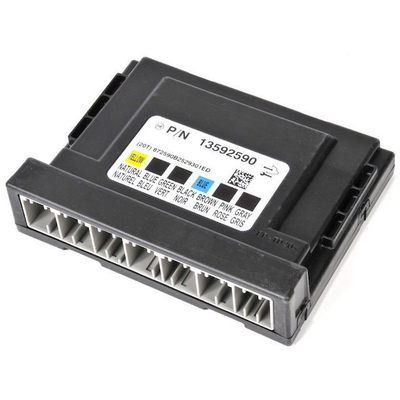
Below are the parts most often responsible for code B2955, ranked by how frequently each one is the actual culprit (per the diagnosis above). Tap any to see what we have for your vehicle.



The information in this article is provided for general reference and educational purposes only. Vehicle specifications, procedures, and part compatibility can vary by production date, trim level, and region. Always consult your vehicle's factory service manual and verify part numbers before purchasing or performing repairs. Safety-critical components such as airbags, seat belts, and braking systems should be installed by a qualified professional.
- 🧭 Diagnostic Flowchart
- 🎬 Helpful Videos
- 🛍️ Shop This Part
- What Does B2955 Mean?
- Can I Drive With B2955?
- Common Causes
- Symptoms
- Common Fixes & Costs
- Used vs. New Parts: Buying Guide
- What Happens If You Wait — Timeline
- Cost of Not Fixing It
- Diagnosis Steps
- When This Code Triggers (Freeze-Frame Conditions)
- Related Codes
- Climate & Environmental Factors
- How to Talk to a Mechanic About This Code
- Where to Take It: Dealer vs Independent vs Chain
- When to Walk Away From the Repair
- What Scan Tool You Need for This Code
- How to Clear the Code After You Fix It
- Will This Fail Emissions / State Inspection?
- Most Commonly Affected Vehicles
- Manufacturer-Specific Notes
- Real Owner Stories
- 2015 GMC Canyon with intermittent no-start
- 2016 Chevrolet Trax with security light on
- 2017 Chevrolet Camaro with B2955 after liquid spill
- How to Prevent This Code From Triggering
- Frequently Asked Questions
- Can I fix a B2955 code myself?
- Will disconnecting the battery clear code B2955?
- Why did my car start with remote start but not with the key?
- What is the GM Passlock / Passkey system?
- The shop wants to replace my BCM. Is that necessary?
- My mechanic is stumped. What should I tell them?
- Can a bad battery cause security problems like B2955?
- Key Takeaways
- 🎟️ Get 5% Off