

OBD-II Code B2957: Security System Sensor Circuit Low
What B2957 means, why it triggers, and how to fix it
- Code B2957 triggers a mandatory 10-15 minute engine lockout because the Body Control Module detects a sub-0.4V signal from the Passlock anti-theft sensor.
- Load-test your battery and clean the main ground connections before replacing parts, as voltage drops below 9.5V during cranking frequently cause false B2957 codes.
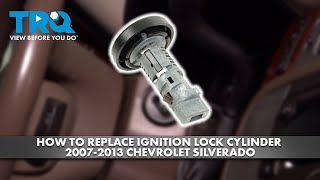
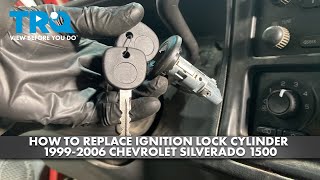
- The most common permanent fix is replacing the ignition lock cylinder housing (costing $200-$420), which contains the integrated Passlock sensor.
- After replacing the sensor or BCM, you must perform a mandatory 30-minute relearn procedure (three 10-minute cycles) before the engine will start.
What Does B2957 Mean?

Code B2957 means the Body Control Module (BCM) detects a voltage signal below the expected threshold from the GM Passlock anti-theft sensor. This low voltage makes the computer believe the vehicle is being hot-wired. The system responds by disabling the fuel injectors, preventing the engine from starting or shutting it off immediately after it fires.
Technical definition: The SAE/OBD-II definition for B2957 is "Security System Sensor Data Circuit Low." The BCM sets this code when the Passlock sensor signal voltage drops below 0.4 volts for one second after the key turns to the CRANK position. The BCM expects a specific voltage sequence from the Hall-effect Passlock sensor; a sub-0.4V reading indicates the signal is abnormally low or shorted to ground.
Can I Drive With B2957?
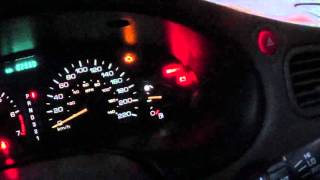
Yes, But With Caution. If the engine starts, you can drive the vehicle. However, this intermittent fault poses a high risk of leaving you stranded. When the security system fails, it initiates a mandatory 10-15 minute lockout before you can attempt a restart. 🎬 Watch: How to perform the GM security lockout reset procedure Continuing to crank the engine during a lockout causes premature wear on the starter motor and drains the battery. Repair it immediately to avoid being stranded in an unsafe location.
Common Causes

- Defective Ignition Lock Cylinder Housing (Passlock Sensor) (Very Common) — The Passlock sensor is integrated into the ignition lock cylinder housing. Over time, the sensor's delicate internal contacts wear out, sending a low voltage or no signal to the BCM.
- Weak or Failing Battery (Common) — A battery with low voltage causes undervoltage conditions throughout the electrical system. The BCM interprets this system-wide voltage drop during engine cranking as a specific fault in the Passlock circuit.
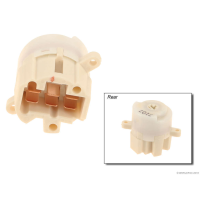
- Worn Ignition Switch Contacts (Common) — The electrical contacts inside the main ignition switch become burnt or corroded. This creates extra resistance and causes a voltage drop, leading to a signal that is too low for the BCM to read correctly.
- Damaged Wiring or Poor Grounds (Common) — The three wires running from the Passlock sensor to the BCM often chafe within the steering column and short to ground. Additionally, a corroded BCM or engine ground strap creates high resistance, skewing the sensor's voltage reading.
- Aftermarket Remote Starter Issues (Less Common) — Improperly installed aftermarket remote starters interfere with the Passlock wiring. A poor splice or a failed bypass module drops the circuit voltage and triggers the code.
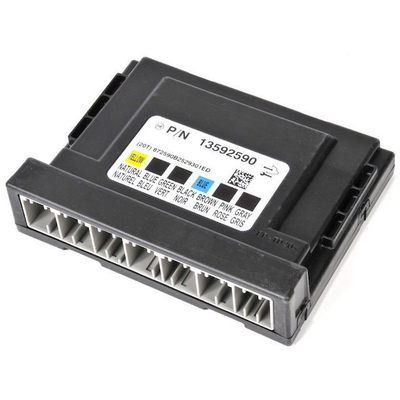
- Failing Body Control Module (BCM) (Rare) — The BCM's internal circuits that receive the Passlock signal can malfunction, causing it to incorrectly report a low voltage condition even when the sensor works perfectly.
Symptoms
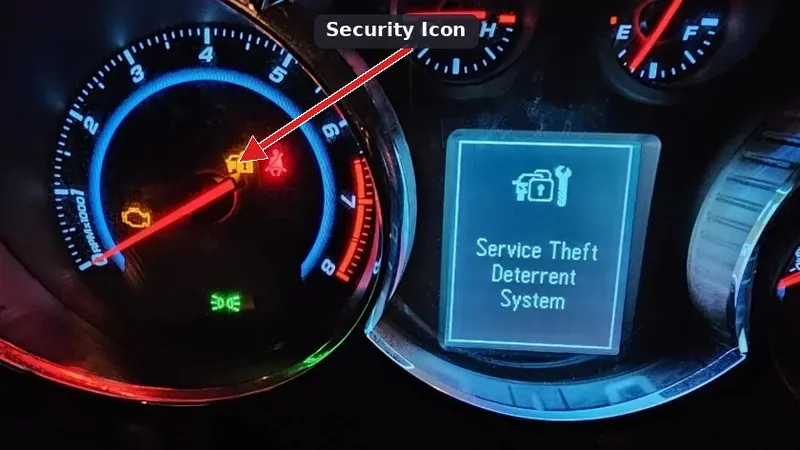
- Engine cranks but will not start — You turn the key, the engine turns over, but it will not fire up because the BCM disabled the fuel injectors.
- Flashing 'Security' light — The 'Security,' 'Theft,' or padlock icon on the dashboard flashes rapidly during the no-start event.
- Engine starts then immediately stalls — The engine catches and runs for one to two seconds before the security system shuts down the fuel injectors.
- Intermittent starting problems — The vehicle starts perfectly for weeks, then suddenly refuses to start without warning. This is often exacerbated by extreme cold weather.
Diagnostic Flowchart

Tap your situation to follow the diagnostic path that matches what you're seeing on this code.
Common Fixes & Costs
- Replace Ignition Lock Cylinder Housing — Parts: $70-$150, Labor: $130-$270, ~1.5 hr book time (Intermediate)
- Install Passlock Bypass Resistor — Parts: $1-$15, Labor: $75-$150, ~1.0 hr book time (Intermediate)
- Replace Ignition Switch — Parts: $40-$80, Labor: $130-$250, ~1.5 hr book time (Intermediate)
- Repair Damaged Wiring or Ground Connection — Parts: $5-$25, Labor: $130-$260, ~2.0 hr book time (Professional)
- Replace and Program Body Control Module (BCM) — Parts: $200-$450, Labor: $150-$300, ~2.0 hr book time (Professional)
Used vs. New Parts: Buying Guide
When a used part is worth it: Buying a used Ignition Lock Cylinder Housing is strongly discouraged because it is a high-wear electronic part. A used part only makes sense as a last resort for a tight budget on an older vehicle.
Donor-vehicle mileage cap: roughly under 50000 miles for the part to have meaningful remaining life.
Donor quality checklist:
- Verify the part number matches exactly.
- Ask for a functional warranty of at least 90 days.
- Avoid parts from vehicles with known electrical issues.
Decision logic:
- If The part is the Ignition Lock Cylinder Housing → Buy a new aftermarket (Dorman, Standard Motor Products) or OEM (ACDelco) part. The cost is low enough that the risk of a used part failing is unacceptable.
- If The part is a Body Control Module (BCM) → A used BCM works only if it is professionally cloned with your vehicle's original data. Otherwise, buy a new or remanufactured BCM.
Warranty tradeoff: Used parts typically have a 30-90 day warranty. New aftermarket parts offer one-year to limited lifetime warranties. OEM parts installed at a dealer have a 24-month warranty.
Worst-case if a used part fails: $200-$420 if a used ignition housing fails, requiring repeat labor and a new part.
What Happens If You Wait — Timeline
- 0-3 months: A single, random no-start event occurs. The 10-minute wait procedure works, and the problem doesn't reappear for weeks. (MPG impact: 0%% · Added cost: $0)
- 3-6 months: No-start events become more frequent. The 10-minute wait is a known annoyance, and the driver loses trust in the vehicle. (MPG impact: 0%% · Added cost: $0)
- 6-9 months: The failure is a weekly occurrence. Repeated cranking during failed attempts puts significant strain on the battery and starter motor. (MPG impact: 0%% · Added cost: $150-$400 (Risk of premature starter or battery failure).)
- 9+ months: The component fails completely. The 10-minute wait procedure no longer works. The vehicle is undrivable and requires a tow. (MPG impact: N/A% · Added cost: $75-$200 for a tow, plus repair costs.)
Cost of Not Fixing It
- Immediate: High risk of being stranded without warning, requiring a tow. (Added cost: $75-$200 for a tow.)
- 0-3 months: Increased wear on the starter motor and battery due to repeated, failed cranking attempts. (Added cost: $150-$400 for a new battery or starter.)
- 3+ months: Severe vehicle unreliability. B2957 does not cause cascading engine damage, but the inconvenience and secondary wear on the starting system compound rapidly. (Added cost: N/A)
Diagnosis Steps
- Verify Code and Observe Symptoms
Use an OBD-II scanner to confirm B2957 is active. Note the security light behavior during a start attempt. A flashing light during a crank-no-start confirms Passlock activation. Check for U-series codes like U1000, which indicate a broader communication failure.
Tools: OBD-II Scanner (Beginner) - Try the Temporary 10-Minute Relearn Procedure
Turn the key to 'ON' (without starting) and wait 10-12 minutes for the security light to stop flashing. Turn the key 'OFF' for 20 seconds, then attempt to start the engine. This temporarily bypasses a glitch to get you home.
Tools: None (Beginner) - Load-Test the Battery
A weak battery is the most common cause of false Passlock codes. Ensure resting voltage is above 12.4V. Load-test the battery to ensure voltage does not drop below 9.5V during cranking. Clean the battery terminals until shiny.
Tools: Multimeter, Battery Tester, Wire Brush (Beginner) - Test Passlock Sensor Circuit Voltages
Access the three-wire Passlock connector near the ignition cylinder. Backprobe the wires with the key ON: expect ~12V on power, <0.1V on ground, and ~5V on the yellow signal wire. Turn the key to CRANK. The yellow wire must drop to a steady 1.5V-4.0V. A drop below 0.4V confirms the 'Circuit Low' fault.
Tools: Multimeter, Backprobe Kit, Wiring Diagram (Advanced) - Analyze Scan Tool Live Data
Use a professional scan tool to monitor the 'Passlock Sensor Voltage' PID in the BCM. It should read ~5V in RUN and drop to a valid learned range (0.86V - 4.28V) during CRANK. A reading below 0.4V confirms the sensor or wiring has failed.
Tools: Professional OBD-II Scan Tool (Advanced) - Measure Passlock Sensor Resistance
Disconnect the sensor harness. Measure resistance (Ohms) between the signal wire (yellow) and ground wire (black) at the sensor connector with the key in RUN. It should read a steady value between 500Ω and 13,000Ω. Infinite resistance (open) or near-zero resistance (short) means the sensor is dead.
Tools: Multimeter (Advanced) - Inspect Grounds and Wiring
Clean and tighten the main battery-to-chassis ground and the BCM ground strap. Visually inspect the wiring harness running down the steering column for chafed or pinched wires. Wiggle the harness with the key ON to see if the voltage fluctuates.
Tools: Wrench Set, Wire Brush, Flashlight (Intermediate) - Isolate Fault: Sensor vs. BCM
If power and ground at the sensor connector are good, but the signal voltage drops below 0.4V during cranking, the Passlock sensor has failed. If the 5V reference or ground from the BCM is missing at the connector, the wiring harness or the BCM itself is faulty.
Tools: Multimeter (Advanced) - Check Passlock Sensor with an Oscilloscope
Connect an oscilloscope to the yellow signal wire and ground. Turn the key from ON to CRANK. You must see a clean, sharp drop from ~5V to the learned voltage. A noisy waveform indicates a failing sensor; a flatline at zero confirms a dead short to ground.
Tools: Oscilloscope, Backprobe Kit (Professional)
When This Code Triggers (Freeze-Frame Conditions)
- Vehicle Speed: 0 MPH (Vehicle is stationary during a start attempt.)
- Engine RPM: 150-300 RPM (Engine is being cranked by the starter but has not fired.)
- System Voltage: 9.5V - 11.5V (Voltage drops significantly during engine cranking.)
- Passlock Sensor Voltage: < 0.4 Volts (The direct trigger for the code; the BCM sees the signal voltage as shorted to ground.)
- Ignition Status: CRANK (The fault is specifically checked for and set when the key is in the CRANK position.)
Related Codes
- B2958 — Means 'Security System Sensor Data Circuit High.' It is the opposite of B2957, indicating a voltage greater than 4.8V on the Passlock signal wire due to a short to voltage.
- B2960 — Means 'Security System Sensor Data Incorrect but Valid.' The BCM receives a voltage in a valid range, but it does not match the specific resistance value it learned, pointing to worn contacts.
- B3033 — Means 'Security System Indicates Tamper.' Sets when the BCM detects an invalid voltage reading that doesn't correspond to any known state, resulting in a 10-minute lockout.
- U1000 — Means 'Class 2 Communication Malfunction.' If the Passlock module fails to communicate with the BCM over the data bus, it logs a U1000 code alongside security codes.
Climate & Environmental Factors
- Extreme Cold: Cold temperatures increase electrical resistance in the aging Passlock sensor wiring. This added resistance pushes the voltage signal outside the BCM's expected range, causing a no-start condition that disappears when the cabin warms up.
- High Humidity: High humidity accelerates corrosion on compromised wiring, connectors, or ground points, leading to increased resistance and voltage drops.
How to Talk to a Mechanic About This Code
Say this: "I have a GM vehicle with a crank-no-start and a flashing security light, and my scanner shows code B2957. Please start by load-testing the battery and checking the main BCM and engine ground connections before quoting a replacement ignition switch or BCM."
This directs the technician to check the cheapest and most frequent electrical culprits first, preventing them from immediately quoting an expensive part replacement.
Avoid saying:
- 'My car won't start.'
- 'The security light is flashing.'
- 'My mechanic friend said it's the computer.'
Questions to ask before authorizing the repair:
- What was the battery voltage during cranking?
- Did you check the voltage and ground on the 3-wire Passlock sensor connector? What were the readings?
- If you recommend a BCM replacement, have you confirmed the Passlock sensor and its wiring are good?
- Does your quote include the mandatory 30-minute security relearn procedure?
- What is your warranty on this specific repair, including labor?
Where to Take It: Dealer vs Independent vs Chain
- Dealer:
Best for: Vehicles still under warranty., When diagnosis confirms a failed BCM that requires replacement and programming.
Downsides: Highest labor rates., Unlikely to attempt a simple wiring repair or resistor bypass. (Typical cost: +50% vs. baseline) - Independent Shop:
Best fit. Most competent independent shops have fixed this common GM code many times and offer flexible repair options.
Best for: Out-of-warranty GM vehicles., Diagnosing and replacing the ignition switch or lock cylinder housing., Performing the resistor bypass fix.
Downsides: Ensure the shop possesses a scanner capable of reading BCM live data. (Typical cost: +0% vs. baseline) - Chain Shop:
AVOID. This code requires specific diagnostic steps beyond simple code reading. A chain shop is likely to misdiagnose the issue.
Best for: Battery testing and replacement.
Downsides: Technician skill varies widely., Lacks advanced diagnostic tools to read GM-specific BCM codes., High pressure to replace parts rather than perform detailed electrical diagnosis. (Typical cost: -10% vs. baseline)
When to Walk Away From the Repair
If the estimated repair cost exceeds 40-50% of the car's private-party value, seriously consider selling the vehicle as-is.
- Car worth $3500, fix is $350: Fix it. The repair cost is only 10% of the vehicle's value and restores its reliability.
- Car worth $2500, fix is $800: Borderline. This repair is 32% of the car's value. Get a second opinion or consider the cheaper resistor bypass fix.
- Car worth $2000, fix is $1200: Walk away. The repair cost is 60% of the car's value. Sell the car as a 'mechanic's special'.
What Scan Tool You Need for This Code
Minimum: A scanner that reads GM-specific Body Control Module (BCM) codes and views live data PIDs.
A basic $20 code reader only shows Powertrain ('P') codes and will not see the 'B2957' Body code. You MUST view live data from the BCM to confirm the fault.
Budget: BlueDriver Pro (~$100) — Reads and clears enhanced codes for GM vehicles and graphs live data for the Passlock sensor voltage.
Mid-range: Foxwell NT510 Elite for GM (~$180) — Provides full-system diagnostics for GM, including BCM live data. Offers bidirectional controls to initiate the security system relearn procedure.
Professional: Autel MaxiCOM MK808S (~$450) — Offers comprehensive all-system diagnostics, extensive live data graphing, and powerful bidirectional controls for dealership-level insight.
Rent vs buy: Auto parts stores scan codes for free, but their scanners rarely read BCM live data. Buying a budget pick like the BlueDriver is more effective for a one-time diagnosis.
How to Clear the Code After You Fix It
- Reconnect the battery if it was disconnected.
- Use an OBD-II scan tool to erase the B2957 code from the BCM's memory.
- Perform the mandatory 30-minute security relearn procedure (three 10-minute cycles).
- Perform a GM-specific drive cycle to reset emissions readiness monitors.
Drive cycle (~20 minutes): Start the engine cold and idle for 3 minutes with the A/C on. Accelerate to 55 MPH and hold a steady speed for 3 minutes. Coast down to 20 MPH without braking. Accelerate back to 55-60 MPH and hold for 5 minutes. Coast down again.
Readiness monitors affected: Catalyst (CAT), Evaporative System (EVAP), Oxygen Sensor (O2S), Oxygen Sensor Heater (HTR)
Before emissions retest: drive at least 50 miles to fully set monitors.
Watch out for:
- Skipping the 30-minute relearn after replacing the Passlock sensor guarantees a no-start condition.
- Clearing the code without fixing the hardware causes the code to return immediately on the next start attempt.
- Taking the vehicle for an emissions test immediately after battery disconnection results in an automatic failure.
Will This Fail Emissions / State Inspection?
Yes — this code typically fails an OBD-II emissions inspection.
- California: An illuminated Check Engine Light results in an automatic failure. Disconnecting the battery during repair resets readiness monitors, which must all be 'Ready' to pass.
- New York: Any diagnostic trouble code that illuminates the Malfunction Indicator Lamp causes a failure. A flashing 'Security' light is also grounds for failure during the safety inspection.
- Texas: The OBD-II test fails if the Malfunction Indicator Lamp is commanded on. The vehicle also fails if the MIL bulb itself does not light up with the key on, engine off.
Most Commonly Affected Vehicles
- Chevrolet Colorado / GMC Canyon (2004-2012) — Extremely common issue. The Passlock sensor is a frequent failure point, but the ignition switch itself is also a known weak link.
- Chevrolet Silverado / GMC Sierra (1999-2007) — The Passlock sensor in the ignition lock housing is the primary culprit. Often accompanied by a U1000 communication code on 1999-2002 models.
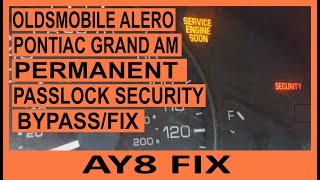
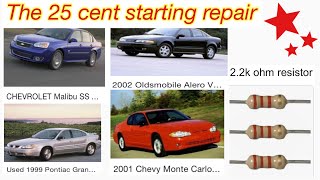
- Chevrolet Malibu / Oldsmobile Alero / Pontiac Grand Am (1999-2005) — These N-body platform cars are notorious for Passlock failures. The resistor bypass is a very common DIY fix for this generation.
- Chevrolet Impala (2000-2005) — Prone to ignition switch and Passlock sensor failures. Many owners are forced to memorize the 30-minute relearn procedure.
- Chevrolet Suburban / Tahoe / GMC Yukon (2000-2006) — The Passlock sensor frequently fails. Wiring in the tilt steering column is a primary point of inspection.
- Saturn Ion (2003-2007) — Shares the GM Passlock system. These vehicles were part of a major GM ignition switch recall (NHTSA #14V047) causing similar electrical gremlins.
- Pontiac G6 (2005-2010) — Passlock issues stem from a faulty BCM or the ignition switch assembly. BCM replacement requires programming.
- Hummer H3 (2006-2010) — Uses the Passlock II system. The ignition switch is a very common failure point, often exacerbated by heavy keychains.
Manufacturer-Specific Notes
- General Motors: This code is exclusive to GM vehicles equipped with Passlock I or II systems. These systems do not use a transponder chip in the key; they rely on a magnet and a Hall-effect sensor in the ignition cylinder.
- General Motors: The Passlock system is notoriously sensitive to low voltage. A weak battery or poor ground connection is the most common trigger for false B2957 codes.
- General Motors: The 'resistor bypass' is a widely implemented unofficial fix. It involves permanently wiring a resistor into the Passlock signal circuit to fool the BCM, disabling the security feature but resolving the no-start.
- General Motors: GM issued a major recall for faulty ignition switches (NHTSA Campaign #14V047) on vehicles like the Saturn Ion and Chevy Cobalt. A defective ignition switch causes erratic electrical behavior that triggers security codes.
Real Owner Stories
2005 Chevy Colorado with intermittent no-start
Owner experienced random crank-no-start issues for months. The security light flashed, requiring a 10-minute wait before the truck would start.
What they tried:
- Initially dealt with the intermittent problem and the 10-minute wait.
- Received a dealership quote of over $700 for the repair.
- Considered a permanent bypass module as an alternative.
Outcome: The underlying issue was the well-documented failure of the Passlock sensor in the ignition housing. The owner learned to live with the temporary relearn procedure, but the permanent fix requires replacing the housing or installing a bypass.
Lesson: Intermittent Passlock issues rarely fix themselves and usually get worse. Knowing the 10-minute temporary relearn gets you home, but a permanent repair is required to avoid being stranded.
2004 Chevy Impala with recurring B2957
Owner was tired of being stranded and performing the 10-minute relearn procedure repeatedly. Decided to attempt a permanent DIY fix.
What they tried:
- Purchased a pre-wired resistor connector for $10 to avoid soldering.
- Attempted the resistor bypass, but the car wouldn't start after multiple relearn procedures.
- Discovered that simply connecting the yellow signal wire and the black ground wire together allowed the car to start after three relearn cycles.
Outcome: The owner successfully bypassed the Passlock system by shorting the signal and ground wires. They accepted the trade-off of having the security light permanently illuminated.
Lesson: The resistor bypass is a common fix, but variations exist. Sometimes shorting the signal wire to ground is what the BCM needs to see. Always perform the full 30-minute relearn after any wiring modification.
Hummer H3 with frequent Passlock activation
The Passlock system activated almost every other time the owner tried to start the vehicle. The owner wanted a robust, permanent solution.
What they tried:
- Tried turning the key to 'ON' for a second before cranking, which worked temporarily.
- Designed a complex bypass using a relay, a momentary switch, and a resistor for under $25.
Outcome: The owner installed a hidden push-button start system. Turning the key to 'RUN' and pressing the button sent the correct resistance signal via the relay, starting the truck every time and eliminating the Passlock problem.
Lesson: Creative solutions beyond a simple resistor provide reliable fixes. Using a relay ensures the BCM only sees the bypass signal at the exact moment it's needed, mimicking the factory system perfectly.
How to Prevent This Code From Triggering
- Lighten your keychain (Daily habit) — Excessive weight puts constant stress on the ignition lock cylinder and internal contacts, accelerating wear and causing voltage drops.
- Maintain battery health and connections (Every 6 months) — The Passlock system is highly sensitive to voltage. Cleaning battery terminals and ensuring tight connections prevents voltage drops during cranking.
- Pause briefly in the 'ON' position before cranking (Every start) — Pausing for a second in the 'ON' position allows the BCM to stabilize and properly read the Passlock signal before the starter draws heavy current.
- Avoid forcing the key (As needed) — Forcing a stiff ignition damages the mechanical parts of the lock cylinder, misaligning the magnet that the Passlock sensor reads.
Frequently Asked Questions
What is the difference between Passlock I, II, and III?
Passlock I and II use a sensor in the ignition housing to read a magnet on the key cylinder and do not have a chip in the key. Passlock III (PK3) is a modern transponder system with a chip embedded in the key head. B2957 is almost exclusively related to Passlock I and II.
What are common misdiagnosis mistakes for B2957?
A common mistake is replacing the ignition lock cylinder without testing the battery and ground connections first. A weak battery causes a voltage drop during cranking that the BCM misinterprets as a Passlock sensor failure. Always load-test the battery before replacing expensive components.
Can the Passlock system be bypassed to fix B2957?
Yes, bypassing the Passlock system is a common unofficial fix. It involves cutting the Passlock sensor's signal wire and soldering in a specific-value resistor (often 2.2kΩ) to ground. This permanently sends an 'OK' signal to the BCM but disables the anti-theft feature.
How do I find the correct resistor value for the bypass?
Use a multimeter to measure the resistance (in Ohms) between the yellow signal wire and the black ground wire at the Passlock sensor connector while the key is in 'RUN'. Purchase a resistor that matches this value. If the sensor is completely dead, use a 2.2kΩ resistor and perform the 30-minute relearn procedure.
Can I fix code B2957 myself?
Yes, if you are comfortable with basic automotive electrical work. Replacing the ignition lock housing is a manageable DIY job, and the resistor bypass is suitable for those comfortable with soldering. Diagnosing the exact cause requires a multimeter and wiring diagram.
Will a new key fix a B2957 code?
No, a new key will not fix this code on a vehicle with Passlock I or II. The security sensor is located inside the ignition lock cylinder housing, not in the key itself. The key only needs to be cut correctly to mechanically turn the cylinder.
What is the 30-minute relearn procedure?
The 30-minute relearn forces the BCM to learn the resistance value of a new Passlock sensor or bypass resistor. Turn the key to 'ON', wait 10 minutes for the security light to stop flashing, then turn 'OFF' for 20 seconds. Repeat this cycle three times before starting the engine.
Why does my car start sometimes but not others?
The failure is typically due to worn electrical contacts inside the sensor. These parts work intermittently, making a good connection one moment and a poor one the next. Temperature changes and vibration also affect the resistance, causing unpredictable behavior.
Is it expensive to fix code B2957?
A professional replacement of the ignition lock cylinder housing typically costs between $200 and $420. Replacing the ignition switch costs $170-$330. A BCM replacement is the most expensive, ranging from $350 to $750, including required programming.
Key Takeaways
- Code B2957 triggers a mandatory 10-15 minute engine lockout because the Body Control Module detects a sub-0.4V signal from the Passlock anti-theft sensor.
- Load-test your battery and clean the main ground connections before replacing parts, as voltage drops below 9.5V during cranking frequently cause false B2957 codes.
- The most common permanent fix is replacing the ignition lock cylinder housing (costing $200-$420), which contains the integrated Passlock sensor.
- After replacing the sensor or BCM, you must perform a mandatory 30-minute relearn procedure (three 10-minute cycles) before the engine will start.
Helpful Videos

Shop the Parts Behind B2957
Below are the parts most often responsible for code B2957, ranked by how frequently each one is the actual culprit (per the diagnosis above). Tap any to see what we have for your vehicle.

The information in this article is provided for general reference and educational purposes only. Vehicle specifications, procedures, and part compatibility can vary by production date, trim level, and region. Always consult your vehicle's factory service manual and verify part numbers before purchasing or performing repairs. Safety-critical components such as airbags, seat belts, and braking systems should be installed by a qualified professional.
- 🧭 Diagnostic Flowchart
- 🎬 Helpful Videos
- 🛍️ Shop This Part
- What Does B2957 Mean?
- Can I Drive With B2957?
- Common Causes
- Symptoms
- Common Fixes & Costs
- Used vs. New Parts: Buying Guide
- What Happens If You Wait — Timeline
- Cost of Not Fixing It
- Diagnosis Steps
- When This Code Triggers (Freeze-Frame Conditions)
- Related Codes
- Climate & Environmental Factors
- How to Talk to a Mechanic About This Code
- Where to Take It: Dealer vs Independent vs Chain
- When to Walk Away From the Repair
- What Scan Tool You Need for This Code
- How to Clear the Code After You Fix It
- Will This Fail Emissions / State Inspection?
- Most Commonly Affected Vehicles
- Manufacturer-Specific Notes
- Real Owner Stories
- 2005 Chevy Colorado with intermittent no-start
- 2004 Chevy Impala with recurring B2957
- Hummer H3 with frequent Passlock activation
- How to Prevent This Code From Triggering
- Frequently Asked Questions
- What is the difference between Passlock I, II, and III?
- What are common misdiagnosis mistakes for B2957?
- Can the Passlock system be bypassed to fix B2957?
- How do I find the correct resistor value for the bypass?
- Can I fix code B2957 myself?
- Will a new key fix a B2957 code?
- What is the 30-minute relearn procedure?
- Why does my car start sometimes but not others?
- Is it expensive to fix code B2957?
- Key Takeaways
- 🎟️ Get 5% Off