

Ultimate Guide to OBD-II Code B2980: Accessory Power Relay Fault
The Definitive Resource on What B2980 Means, Why It Triggers, and How to Fix It for Good
- Code B2980 indicates the vehicle is stuck in accessory mode and cannot start, frequently triggering a 'Full Accessory Power Active' dashboard message on Ford models.
- A weak 12V battery causes over 80% of B2980 codes; always perform a load test to ensure cranking voltage remains above 9.6V before replacing expensive modules.
- Ford dealerships resolve many B2980 faults via a 1.5-hour Body Control Module (BCM) software update, eliminating the need for physical part replacement.
- General Motors vehicles log B2980 specifically for a 'Left Front Door Ajar Circuit Open,' requiring a $150 driver's door latch assembly replacement rather than battery diagnostics.
- Replacing a failed BCM costs between $600 and $1,200 and requires professional J2534 programming, making it strictly a dealer or advanced independent shop repair.
What Does B2980 Mean?
B2980 is a Body Control Module (BCM) code signifying a fault in the vehicle's power mode management system. The vehicle is stuck in accessory power mode and cannot start. The computer recognizes accessories have power but lacks the correct signals or voltage to engage the starter. This frequently presents as a 'Full Accessory Power Active' message on the dashboard.
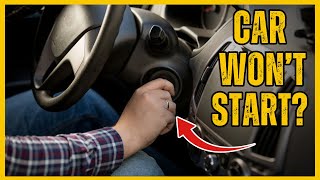
🎬 Watch: How to fix the Full Accessory Power Active message.Technical definition: The SAE/ISO definition for B2980 varies by manufacturer. General Motors defines it as 'Left Front Door Ajar Circuit Open'. Ford defines it as an accessory power control system fault, triggering a 'Full Accessory Power Active' message. Honda defines it as a 'short in the A/C pressure sensor circuit'. Always verify the definition for your specific vehicle.
Can I Drive With B2980?
No — Do Not Drive. No, the vehicle cannot be driven. The B2980 code is present during a no-start condition, meaning the engine will not crank. While the vehicle's accessories function, the fault immobilizes the car, creating a stranding risk rather than a driving safety hazard.
Common Causes
- Weak or Failing 12V Battery (Very Common) — The battery powers low-draw accessories but lacks the amperage to crank the engine. This voltage drop during the start attempt forces the BCM into accessory mode, setting the B2980 code.
- Body Control Module (BCM) Software Glitch (Common) — A BCM software error mismanages the vehicle's power states. This common issue on Ford models is often resolved with a system reset or a dealer software update.
- Faulty Body Control Module (BCM) (Common) — The BCM fails internally due to component degradation or voltage spikes. This prevents the module from processing ignition signals, requiring a replacement and professional reprogramming.
- Poor Electrical Connection or Ground (Less Common) — Corroded battery terminals, loose ground straps, or damaged wiring create high resistance in critical circuits. This interrupts communication between the BCM and PCM, leading to a no-start condition and random electrical issues.
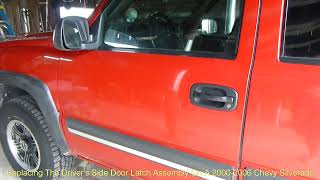
- Faulty Door Ajar Sensor (GM Specific) (Less Common) — On GM vehicles, this code specifically indicates a failed driver's door ajar switch circuit inside the door latch assembly. 🎬 See this walkthrough on replacing a GM door latch assembly. The BCM prevents starting or leaves accessories powered if it incorrectly reads the door as open.
- Faulty Brake Pedal or Ignition Switch (Less Common) — A failed brake pedal switch prevents the BCM from verifying it is safe to start a push-to-start engine. A failing traditional ignition switch sends incorrect key position signals, confusing the BCM.
- Aftermarket Remote Starter or Alarm Issues (Less Common) — Improperly installed aftermarket remote start systems interfere with the BCM's power-on sequence. A fault in these spliced wires prevents the vehicle from exiting accessory mode.
- Water Intrusion or Corrosion in Fuse Box/BCM (Rare) — Water leaking into the cabin or engine bay corrodes terminals in the main fuse box or the BCM. This frequently occurs on Ford models where the BCM sits in the passenger footwell, causing multiple electrical failures.
Symptoms
- "Full Accessory Power Active" Message — A dashboard message indicates accessory mode is on while the engine refuses to start, most common on Ford vehicles.
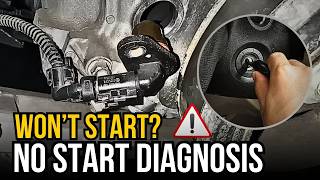
- Engine Will Not Crank or Start — Pressing the start button or turning the key results in nothing, or a single click from a relay. The starter motor does not engage. 🎬 Watch: Step-by-step guide to diagnosing a no-crank, no-start condition.
- Accessories Work Normally — The radio, dashboard lights, headlights, and power windows function correctly, indicating the battery has some power but not enough to start the engine.
- Intermittent No-Start Condition — The vehicle starts fine for weeks and then suddenly fails, especially after sitting for a period or in cold weather conditions.
- Single Audible Click From Engine Bay — A single, sharp click from the engine bay occurs when attempting to start. This is the starter solenoid failing to engage due to insufficient voltage.
- Flashing Security Light — A flashing anti-theft light accompanies the no-start condition, as the BCM is tied into the vehicle's immobilizer system.
Diagnostic Flowchart
Tap your situation to follow the diagnostic path that matches what you're seeing on this code.
Common Fixes & Costs
- Replace 12V Battery — Parts: $200-$300, Labor: $0-$50, ~0.5 hr book time (DIY)
- Reprogram Body Control Module (BCM) — Parts: $0, Labor: $150-$300, ~1.5 hr book time (Professional)
- Replace Body Control Module (BCM) — Parts: $300-$600, Labor: $300-$600, ~2.5 hr book time (Professional)
- Replace Ignition Switch or Brake Pedal Switch — Parts: $40-$150, Labor: $100-$250, ~1.0 hr book time (Intermediate)
- Repair or Replace Main Ground Straps/Cables — Parts: $20-$80, Labor: $50-$150, ~0.8 hr book time (DIY)
Used vs. New Parts: Buying Guide
When a used part is worth it: A used Body Control Module (BCM) is a cost-effective option for older vehicles if you have access to a technician who can program it, as dealerships often refuse to program used parts.
Donor-vehicle mileage cap: roughly under 100000 miles for the part to have meaningful remaining life.
Donor quality checklist:
- Match the part number exactly. Even a single-digit difference means incompatibility.
- Source the part from a vehicle that was not scrapped due to electrical or flood damage.
- Visually inspect the module's pins for any signs of corrosion, indicating moisture intrusion.
Decision logic:
- If The vehicle is less than 10 years old and the fault is a known software glitch. → Attempt a software update/reprogram on the existing BCM first.
- If A new OEM or remanufactured BCM is available for under $500. → Buy new or remanufactured for the warranty and easier programming.
- If The vehicle is over 10 years old and budget is the primary concern. → A used BCM is a viable option, but factor in the cost and difficulty of programming.
Warranty tradeoff: Used BCMs typically come with a 30-90 day parts-only warranty, which does not cover labor or programming costs. New OEM and quality remanufactured modules carry a 1-year or longer warranty.
Worst-case if a used part fails: $500-$1000 if a used BCM is dead on arrival or fails shortly after the warranty period, requiring repeat labor and programming fees.
What Happens If You Wait — Timeline
- 0-1 month: An intermittent no-start condition occurs, showing the 'Full Accessory Power Active' message. The car starts after a short wait or a jump-start. The root cause is a weakening battery. (MPG impact: 0%% · Added cost: $0-$150 (for a tow))
- 1-3 months: The no-start condition becomes frequent. Repeated jump-starts are required. The alternator is under constant strain trying to recharge a deeply discharged battery. (MPG impact: 0%% · Added cost: $100-$300 (multiple tows, potential time off work))
- 3-6 months: The alternator fails prematurely from being overworked. Voltage spikes from the failing alternator or repeated jumps damage the BCM or other modules. (MPG impact: 0%% · Added cost: $600-$1200 (cost of a new battery + new alternator replacement))
- 6+ months: Cascading electrical failure. If the root cause was a water leak, the BCM is heavily corroded, causing multiple electrical issues. Voltage instability leads to a massive repair bill. (MPG impact: 0%% · Added cost: $1500-$3000+ (cost of battery, alternator, and BCM replacement))
Cost of Not Fixing It
- Immediate: The vehicle will not start, leaving the driver stranded. This leads to towing fees and emergency transportation costs. (Added cost: $100-$500+)
- 1-3 months: Repeated jump-starts put severe strain on the alternator, causing premature failure. Voltage fluctuations also damage sensitive electronic modules. (Added cost: $500-$1000)
- 3+ months: Continually ignoring the problem causes cascading electrical failures. A failing BCM develops more faults, disabling lighting, security, and power accessories. (Added cost: $1000-$2500+)
Diagnosis Steps
- Check the Battery Voltage (Static Test)
Use a multimeter to test the 12V battery. A fully charged battery reads 12.4-12.6 volts with the engine off. A reading below 12.2V indicates a discharged battery, though a good static reading does not rule out a bad battery.
Tools: Digital Multimeter (Beginner) - Perform a Battery Load Test (Cranking Voltage Test)
With a multimeter on the battery terminals, have a helper attempt to crank the engine. Voltage must not drop below 9.6 volts during cranking. If it drops lower, the battery fails the load test and requires replacement.
Tools: Digital Multimeter (Beginner) - Inspect All Battery and Main Ground Connections
Check battery terminals for corrosion and ensure they are tight. Follow the main negative cable to the chassis and engine ground strap. Remove, clean, and tighten these connections to bare metal.
Tools: Wire Brush, Socket Set (Beginner) - Perform a Hard Reset
Disconnect the negative battery terminal for 30 minutes. Press the brake pedal for 10 seconds to drain residual power. This resets all vehicle control modules and clears temporary software glitches.
Tools: Socket Set or Wrench (Beginner) - Scan for All Trouble Codes
Use an advanced OBD-II scanner to read manufacturer-specific codes from all modules. Look for low voltage (P0562, B1318) or communication errors (U-codes) to pinpoint the root cause.
Tools: Advanced OBD-II Scanner (Intermediate) - Check for Technical Service Bulletins (TSBs)
Search online for TSBs related to your vehicle's B2980 code or 'Full Accessory Power Active' symptom. Manufacturers frequently release software updates to fix known BCM glitches.
Tools: Smartphone or Computer (Intermediate) - [PRO TIP] Perform a BCM Power & Ground Voltage Drop Test
With the BCM connected and ignition on, connect the positive multimeter lead to the positive battery post and the negative lead to the BCM's main power input pin. A reading above 0.2 volts indicates a power feed problem. Repeat for the ground side; a reading above 0.1 volts indicates a bad ground.
Tools: Digital Multimeter, Vehicle Wiring Diagram (Advanced) - [PRO TIP] Test Brake Pedal and Door Ajar Switch Inputs
Using a scanner's live data, monitor the Brake Pedal Position switch and 'Driver Door Ajar' status. The brake switch must change from 'Off' to 'On' when pressed. The door status must change from 'Open' to 'Closed' when shut.
Tools: Advanced OBD-II Scanner (Intermediate) - [ADVANCED] GM Door Latch Resistance Test
For GM vehicles, access the BCM connector and identify the driver's door ajar switch wires. Unplug the connector and measure resistance between these pins. With the door closed, resistance must be under 5 ohms. High resistance indicates a faulty latch switch.
Tools: Digital Multimeter, Vehicle Wiring Diagram (Advanced) - [ADVANCED] Honda A/C Pressure Sensor Test
For Honda models, identify the A/C pressure sensor signal wire. With the key on and engine off, back-probe the signal wire. Voltage must be between 0.5V and 4.5V. A reading of 0V or 5V indicates a short or faulty sensor.
Tools: Digital Multimeter, Back-probe Kit, Vehicle Wiring Diagram (Advanced)
When This Code Triggers (Freeze-Frame Conditions)
- RPM: 0 (The code is set during a failed start attempt, so the engine is not running.)
- Vehicle Speed: 0 mph (The vehicle is stationary when the no-start condition occurs.)
- Module Voltage: 9.5-11.5V (Freeze frame captures the voltage drop during the crank attempt, which is lower than the static battery voltage.)
- Ignition Status: Accessory/Run (The BCM receives the command to start but fails to proceed, leaving the system in an accessory state.)
Related Codes
- P0562 — This 'System Voltage Low' code is logged by the PCM. While B2980 is the BCM's reaction, P0562 is the direct cause, pointing to the battery or charging system.
- B1318 — This BCM-specific code means 'Battery Voltage Low'. Seeing B1318 alongside B2980 confirms the BCM is not receiving adequate voltage due to a weak battery or bad ground.
- U0100 — This 'Lost Communication With ECM/PCM' code appears when a failing BCM or bad ground disrupts the CAN bus network, indicating a network-wide problem.
- B2900 — This 'VIN Mismatch' code appears if you install a used BCM without professional reprogramming. The module must be programmed to your vehicle's VIN.
Climate & Environmental Factors
- Cold Weather: Low temperatures reduce a battery's cranking amps. A borderline battery fails in the cold, causing a voltage drop that triggers a B2980 code.
- High Humidity: Prolonged exposure to high humidity accelerates corrosion on battery terminals and ground points. Increased resistance causes intermittent electrical faults.
- Water Intrusion: Water leaks into the passenger footwell directly corrode the BCM board and connectors. On some F-150s, a clogged A/C evaporator drain leaks water onto the floor.
How to Talk to a Mechanic About This Code
Say this: "My car won't start and is showing symptoms of a B2980 code, like 'Full Accessory Power Active.' I'd like a diagnostic that starts with a proper battery load test, not just a voltage check. Please also check for any available TSBs related to a BCM software update before recommending any part replacements."
This signals you know the most common causes and directs the shop to perform the correct, low-cost diagnostic steps first. It prevents them from immediately quoting an expensive BCM replacement without proper validation.
Avoid saying:
- 'My car won't start, just fix it.'
- 'The internet says I need a new BCM.'
- 'Just do whatever you think is best.'
Questions to ask before authorizing the repair:
- What was the battery voltage during the load test? Did it drop below 9.6 volts?
- If you are recommending a BCM replacement, can you confirm you checked for software updates (TSBs) first?
- If the BCM needs replacement, does the quoted price include programming it to my vehicle's VIN?
- Can you show me the corroded ground connection or the water leak you found?
Where to Take It: Dealer vs Independent vs Chain
- Dealer:
A strong, safe choice, especially for Ford software updates. However, it is the most expensive option for what could be a simple battery or ground strap fix.
Best for: Vehicles under warranty., Diagnosing known manufacturer-specific software glitches and performing BCM updates., When you prefer a one-stop-shop that guarantees programming success.
Downsides: Highest labor rates, often 1.5x an independent shop., May be quicker to replace the entire BCM assembly rather than diagnose a simpler wiring or ground issue. (Typical cost: +50% vs. baseline) - Independent Shop:
The best fit if you find a well-equipped, reputable shop. They handle the entire job from battery test to BCM replacement, often with lower costs than a dealer.
Best for: Out-of-warranty vehicles where cost is a major factor., Fundamental electrical diagnostics like battery load testing and checking ground connections., Shops that specialize in electrical diagnostics and own J2534 programming tools.
Downsides: Not all independent shops have the expensive, subscription-based tools to program a new BCM. You must verify their capabilities beforehand., Quality varies greatly; vetting the shop's reputation for electrical work is crucial. (Typical cost: +0% vs. baseline) - Chain Shop:
Acceptable ONLY for a battery load test and replacement. AVOID for any further diagnosis of a B2980 code.
Best for: Free or low-cost battery testing and selling you a replacement battery.
Downsides: Technicians are often not equipped or trained for complex electrical diagnosis beyond a battery swap., Cannot perform BCM programming or diagnose network communication issues., High pressure to sell parts and services leads to misdiagnosis. (Typical cost: -10% vs. baseline)
When to Walk Away From the Repair
If the estimated repair cost for the BCM and any related issues exceeds 40-50% of your car's private-party value, you should seriously consider selling the car as-is or trading it in.
- Car worth $5000, fix is $2200: Walk away. The repair cost is nearly half the car's value. It's not a sound investment, especially if other maintenance is due.
- Car worth $18000, fix is $1600: Fix it. The repair cost is less than 10% of the vehicle's value and significantly cheaper than a new car payment.
- Car worth $3000, fix is $1500: Borderline, but likely walk away. A $1500 repair on a $3000 car is a 50% ratio. Unless the car is otherwise in perfect condition, that money is better put toward a replacement vehicle.
What Scan Tool You Need for This Code
Minimum: A scanner that reads manufacturer-specific codes (to see BCM faults) and displays live data for key systems (BCM voltage, brake switch status, door status).
A basic $20 code reader shows no codes at all, because B2980 is a Body Control Module code, not a standard engine code. You cannot diagnose the problem without access to BCM data.
Budget: BlueDriver Pro Scan Tool (~$100) — Reads and clears BCM codes, shows freeze-frame data, and graphs live data like module voltage, which is crucial for seeing voltage drops that trigger the B2980 code.
Mid-range: Foxwell NT510 Elite (~$180) — Reads live data from the BCM like door ajar and brake switch status, and performs service functions like battery registration after a replacement.
Professional: Autel MaxiCOM MK808 (~$450) — Provides full bidirectional control to test components directly from the scanner. This is extremely useful for confirming if the BCM itself or the component it controls has failed.
Rent vs buy: You can rent a basic OBD-II scanner from auto parts stores, but these typically do not read advanced BCM codes. For a B2980 diagnosis, buying a budget or midrange pick is a better investment.
How to Clear the Code After You Fix It
- Reconnect the battery if disconnected for the repair.
- Use an OBD-II scan tool to formally clear the B2980 code and any related codes from all modules.
- For a battery replacement on modern Ford vehicles, perform the BMS (Battery Monitoring System) reset procedure.
- Start the vehicle to confirm the no-start condition is resolved.
Drive cycle (~20 minutes): Since B2980 is a no-start code, a drive cycle is not needed to confirm the fix. The primary confirmation is that the vehicle starts reliably. After the repair, a 20-minute drive helps the vehicle's computers relearn idle and fuel trims. For vehicles requiring a BMS reset, let the vehicle sit undisturbed for 8 hours if a reset tool is unavailable.
Readiness monitors affected: Evaporative System, Catalyst, O2 Sensor
Before emissions retest: drive at least 50 miles to fully set monitors.
Watch out for:
- Disconnecting the battery clears the code from memory but does not fix the underlying problem, causing the code to return.
- Forgetting to perform the Battery Monitoring System (BMS) reset after installing a new battery leads to improper charging and premature failure.
- Clearing the codes resets all emissions readiness monitors, causing an immediate emissions test failure until a full drive cycle is completed.
Will This Fail Emissions / State Inspection?
Yes — this code typically fails an OBD-II emissions inspection.
- California: A vehicle with a B2980 code will not start, making an emissions test impossible. Clearing the code resets all OBD readiness monitors, which must be set to 'Ready' to pass the Smog Check.
- New York: New York's annual inspection requires the vehicle to run. A vehicle that cannot start fails immediately. Active body codes affecting vehicle operation also result in failure.
- Texas: Emissions testing is mandatory in 17 counties. A vehicle must run to be tested. If B2980 is accompanied by a check engine light, it causes an automatic OBD-II test failure.
Most Commonly Affected Vehicles
- Ford F-150 (2015-2023) — Extremely common issue, often related to BCM software glitches or a weak battery. Check for TSBs regarding a BCM software update.
- Ford Explorer (2016-2022) — Frequently experiences the 'Full Accessory Power Active' no-start condition. 2016-2018 models were subject to Customer Satisfaction Program 21N01 for a faulty cooling fan relay.
- Ford Fusion (2013-2020) — BCM failures and programming issues are a known cause of this code on Fusions, often requiring a dealer visit for software updates.
- Ford Edge (2015-2021) — Owners report similar 'Full Accessory Power Active' issues, often traced back to a weak battery or a BCM in need of a software update.
- Ford Mustang Mach-E (2021-2023) — Early models experience this issue due to 12V battery management software faults, where the main high-voltage battery fails to charge the 12V accessory battery.
- Chevrolet Silverado (2014-2020) — On these trucks, B2980 means 'Left Front Door Ajar Circuit Open'. The cause is almost always a failed microswitch inside the driver's door latch assembly.
- Hyundai Santa Fe (2013-2018) — Owners report no-start conditions with accessory power active, linked to faulty brake pedal switches or intermittent BCM faults.
- Kia Soul (2014-2019) — Electrical issues related to the BCM or fuse box trigger starting problems. A related part number is 91971B2980, a multi-box protector.
- Nissan Rogue (2017-2022) — Presents with various electrical issues leading to a no-start condition, sometimes related to the electronic shifter or brake switch.
Manufacturer-Specific Notes
- General Motors (Chevrolet/GMC): B2980 specifically means 'LF door ajar circuit open'. Diagnostics must focus entirely on the driver's door latch assembly and its internal switch, not the power mode system.
- Ford: This code is tied to the 'Full Accessory Power Active' message. The cause is frequently a software glitch fixed with a dealer BCM update or a water leak damaging the module.
- Honda: On models like the Pilot, B2980 indicates a 'short in the A/C pressure sensor circuit'. This distinct definition requires a completely different diagnostic path.
- Hyundai/Kia: Starting issues and electrical faults link to a 'multi-box protector' fusible link block. Its failure mimics a BCM or battery issue.
- Ford: Customer Satisfaction Program 21N01 covers 2016-2018 Explorers for a faulty cooling fan relay that drains the battery, leading to no-start conditions and B2980.
Real Owner Stories
2018 Ford F-150 with 55K miles
Owner came out to a dead truck displaying 'Full Accessory Power Active'. Radio and lights worked fine. The issue was intermittent.
What they tried:
- Tried jump-starting, which worked but the problem returned a few days later.
- An auto parts store voltage test showed the battery was 'good' at 12.5V.
- Considered replacing the BCM based on forum posts.
Outcome: A shop performed a proper load test. The battery voltage dropped to 8.9V under load, indicating it was bad. Replacing the 4-year-old battery for $280 and performing a BMS reset fixed the problem permanently.
Lesson: A simple multimeter test showing good voltage is not enough. A weak battery that fails a load test is the most common cause of B2980 on Fords.
2015 Chevy Silverado 1500 at 110K miles
Truck intermittently failed to recognize the driver's door was closed, leaving the radio on after exit and causing starting issues with a B2980 code.
What they tried:
- Replaced the battery, assuming it was a power issue; this did not fix the problem.
- Cleaned all main ground connections.
- Scanned for codes, which showed B2980 'Left Front Door Ajar Circuit Open'.
Outcome: The owner diagnosed a faulty microswitch inside the driver's door latch assembly. They replaced the entire latch assembly for $150 in parts and 2 hours of DIY labor. This resolved all symptoms.
Lesson: Always verify the code definition for your specific manufacturer. On GM trucks, B2980 is almost always the door latch switch, not a battery or general BCM power issue.
2019 Ford Explorer with 70K miles
Car wouldn't start and showed 'Full Accessory Power Active'. Owner noticed the passenger side carpet was damp and had a musty smell.
What they tried:
- Performed a hard reset by disconnecting the battery, which provided a temporary fix for a single start.
- The dealership initially quoted $1,600 to replace the BCM.
Outcome: The owner found Ford TSB 20-2170, describing a faulty A/C evaporator drain tube that leaks water onto the passenger floor, corroding the BCM. The fix required replacing the corroded BCM and installing the redesigned drain elbow. Identifying the root cause was critical.
Lesson: If you have a Ford with B2980, immediately check for water intrusion in the passenger footwell. A leaking A/C drain is a known cause of BCM failure.
How to Prevent This Code From Triggering
- Test the 12V Battery Annually (Once per year (especially before winter)) — A professional load test identifies a weakening battery before it fails and triggers a B2980 code. Batteries typically last 3-5 years.
- Clean Battery Terminals and Main Grounds (Every 2 years or during battery replacement) — Corrosion creates resistance, causing voltage drops that confuse control modules. Cleaning these points to bare metal ensures a solid electrical connection.
- Check for and Prevent Cabin Water Leaks (Annually, especially on affected Ford models) — Water intrusion is a primary cause of BCM failure. Proactively check that the A/C evaporator drain is not clogged to prevent water from leaking onto the BCM.
- Use a Battery Tender/Maintainer (If the vehicle sits for more than 2 weeks) — A battery tender keeps the battery at an optimal charge level, preventing deep discharge cycles that shorten its life and lead to software glitches.
- Avoid Improper Jump-Starting (As needed) — Incorrectly connecting jumper cables creates voltage spikes that damage sensitive electronics, including the BCM. Always follow the manufacturer's procedure.
Frequently Asked Questions
Can I drive my car with a B2980 code?
No, you cannot drive the car. The engine will not start. The vehicle is immobilized until the starting issue is resolved.
Why do my lights and radio work but my car won't start?
The battery has enough static voltage for low-draw accessories but lacks the amperage to engage the starter motor. This voltage sag confuses the BCM, preventing start attempts.
What is the most common misdiagnosis for code B2980?
The most common misdiagnosis is replacing the BCM before load testing the 12V battery or checking for software updates. A weak battery is the leading cause.
Can a bad ground wire cause code B2980?
Yes. A corroded main ground strap creates high resistance, causing widespread electrical problems that confuse the BCM.
How can I reset the BCM without a professional scan tool?
Disconnect the negative battery cable for 30 minutes. Touch the disconnected negative cable to the positive cable for 5 seconds to drain residual power. This clears temporary glitches but does not fix failed parts.
How much does it cost to fix a B2980 code?
A new battery costs $200-$350 installed. A dealer BCM reprogram costs $150-$300. Replacing the BCM ranges from $600 to $1,200.
What is the 'Stop Safely Now' message on a Ford?
This message appears when the system detects a critical power management fault and shuts down to prevent damage. It shares the same logic flaw that triggers the B2980 no-start condition.
Key Takeaways
- Code B2980 indicates the vehicle is stuck in accessory mode and cannot start, frequently triggering a 'Full Accessory Power Active' dashboard message on Ford models.
- A weak 12V battery causes over 80% of B2980 codes; always perform a load test to ensure cranking voltage remains above 9.6V before replacing expensive modules.
- Ford dealerships resolve many B2980 faults via a 1.5-hour Body Control Module (BCM) software update, eliminating the need for physical part replacement.
- General Motors vehicles log B2980 specifically for a 'Left Front Door Ajar Circuit Open,' requiring a $150 driver's door latch assembly replacement rather than battery diagnostics.
- Replacing a failed BCM costs between $600 and $1,200 and requires professional J2534 programming, making it strictly a dealer or advanced independent shop repair.
Helpful Videos






Shop the Parts Behind B2980
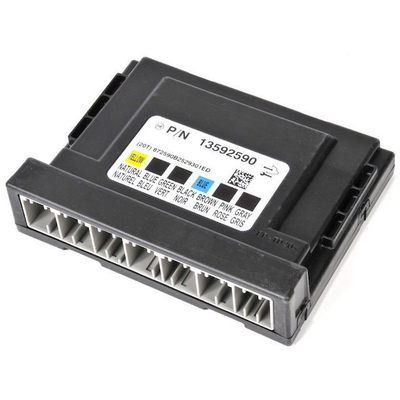
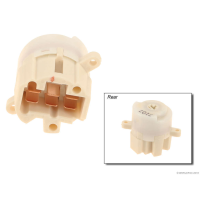
Below are the parts most often responsible for code B2980, ranked by how frequently each one is the actual culprit (per the diagnosis above). Tap any to see what we have for your vehicle.


The information in this article is provided for general reference and educational purposes only. Vehicle specifications, procedures, and part compatibility can vary by production date, trim level, and region. Always consult your vehicle's factory service manual and verify part numbers before purchasing or performing repairs. Safety-critical components such as airbags, seat belts, and braking systems should be installed by a qualified professional.
- 🧭 Diagnostic Flowchart
- 🎬 Helpful Videos
- 🛍️ Shop This Part
- What Does B2980 Mean?
- Can I Drive With B2980?
- Common Causes
- Symptoms
- Common Fixes & Costs
- Used vs. New Parts: Buying Guide
- What Happens If You Wait — Timeline
- Cost of Not Fixing It
- Diagnosis Steps
- When This Code Triggers (Freeze-Frame Conditions)
- Related Codes
- Climate & Environmental Factors
- How to Talk to a Mechanic About This Code
- Where to Take It: Dealer vs Independent vs Chain
- When to Walk Away From the Repair
- What Scan Tool You Need for This Code
- How to Clear the Code After You Fix It
- Will This Fail Emissions / State Inspection?
- Most Commonly Affected Vehicles
- Manufacturer-Specific Notes
- Real Owner Stories
- 2018 Ford F-150 with 55K miles
- 2015 Chevy Silverado 1500 at 110K miles
- 2019 Ford Explorer with 70K miles
- How to Prevent This Code From Triggering
- Frequently Asked Questions
- Can I drive my car with a B2980 code?
- Why do my lights and radio work but my car won't start?
- What is the most common misdiagnosis for code B2980?
- Can a bad ground wire cause code B2980?
- How can I reset the BCM without a professional scan tool?
- How much does it cost to fix a B2980 code?
- What is the 'Stop Safely Now' message on a Ford?
- Key Takeaways
- 🎟️ Get 5% Off