

OBD-II Code B2993: A/C Compressor Thermal Protector Circuit Short to Ground
An Expert Guide to What B2993 Means, Why It Triggers, and How to Fix It for Good
- Code B2993 is a Honda/Acura-specific fault indicating a short-to-ground in the A/C compressor's thermal protector circuit, which completely disables your air conditioning.
- Before replacing a $500 compressor, test the $50 thermal protector switch for internal shorts using a digital multimeter set to Ohms.
- If your scanner shows both B2993 (short) and B2992 (open), prioritize a wiring harness inspection, as this combination guarantees an intermittent wire break.
- Never bypass the thermal protector by grounding the wire; this removes the safety shutoff and risks a $2,000+ catastrophic compressor failure.
What Does B2993 Mean?
Code B2993 means the climate control module detected a short-to-ground in the A/C compressor's thermal protector wiring. This safety switch deactivates the compressor if it overheats. A short-to-ground means the signal wire is touching the vehicle's metal chassis, preventing accurate monitoring. As a failsafe, the module disables the A/C compressor.
Technical definition: A short to ground is detected in the A/C compressor thermal protector circuit. This manufacturer-specific Body (B) code, used by Honda and Acura, indicates the climate control module receives a continuous ground signal instead of the expected 5V reference voltage. This constant ground reading signifies a direct electrical fault.
Can I Drive With B2993?
Yes. You can drive safely. This code only disables the air conditioning system and does not impact engine operation, braking, or steering. The only consequence is a lack of cabin cooling.
Common Causes
- Failed A/C Compressor Thermal Protector (Very Common) — The thermal protector switch on the A/C compressor body fails internally, creating a permanent short circuit. This is the most frequent cause of code B2993.
- Damaged Wiring Harness (Common) — Wires leading from the climate control unit to the thermal protector chafe, melt, or pinch, causing the signal wire to touch the metal chassis (ground).
- Intermittent Wiring Fault (Common) — A broken wire inside the insulation alternates between open (triggering B2992) and shorted to ground (triggering B2993). This guarantees a harness issue.
- Faulty A/C Compressor Clutch Coil (Less Common) — The thermal protector circuit routes through the A/C compressor clutch coil. A failure within the coil's windings creates a short affecting the protector circuit.
- Aftermarket Compressor Incompatibility (Rare) — Aftermarket A/C compressors often feature thermal protectors with incorrect electrical resistance, triggering the code immediately upon installation.
Symptoms
- A/C blows warm or hot air — The computer prevents the A/C compressor from turning on as a safety measure, eliminating cabin cooling.
- A/C compressor clutch does not engage — When turning on the A/C, the typical 'click' of the compressor clutch engaging is absent, and the center pulley does not spin.
- A/C button light blinks — On specific Honda and Acura vehicles, the A/C indicator light on the dashboard flashes to indicate a stored HVAC Diagnostic Trouble Code.
- Both B2992 and B2993 codes are present (scan-tool only — no driver-felt sign) — Finding both an 'open' (B2992) and 'short' (B2993) code stored together guarantees a damaged wire intermittently losing connection and touching ground.
Diagnostic Flowchart
Tap your situation to follow the diagnostic path that matches what you're seeing on this code.
Common Fixes & Costs
- Replacing the A/C Compressor Thermal Protector — Parts: $40-$90, Labor: $150-$250, ~1.5 hr book time (DIY)
- Repairing Shorted Wiring Harness — Parts: $5-$25, Labor: $120-$360, ~2 hr book time (Intermediate)
- Replacing the A/C Compressor Clutch and Coil Assembly — Parts: $70-$200, Labor: $250-$450, ~3 hr book time (Intermediate)
- Replacing the entire A/C Compressor Assembly — Parts: $250-$700, Labor: $300-$500, ~2.5 hr book time (Professional)
DIY vs Professional
- Repairing Shorted Wiring Harness — Beginner: False
- Replacing the A/C Compressor Thermal Protector — Beginner: True
- Replacing the A/C Compressor Clutch and Coil Assembly — Beginner: False
- Replacing the entire A/C Compressor Assembly — Beginner: False
Used vs. New Parts: Buying Guide
When a used part is worth it: Buying a new OEM thermal protector is mandatory due to its low cost and critical safety function. A used A/C compressor assembly from a low-mileage donor vehicle is a cost-effective option if the entire compressor requires replacement.
Donor-vehicle mileage cap: roughly under 60000 miles for the part to have meaningful remaining life.
Donor quality checklist:
- Verify the donor vehicle was not scrapped due to engine or A/C system failure.
- Ensure the part number on the used compressor matches the original part exactly.
- Avoid parts from regions with heavy road salt use to prevent electrical corrosion.
Decision logic:
- If Only the thermal protector has failed → Buy a new OEM part. The cost savings of a used part are minimal and not worth the risk.
- If The entire compressor must be replaced and budget is a primary concern → Purchase a used OEM compressor from a verified low-mileage donor. Avoid used aftermarket compressors.
- If Reliability and warranty are the top priorities → Buy a new OEM or a reputable new aftermarket (e.g., Denso) compressor assembly.
Warranty tradeoff: Used parts offer a 30-90 day warranty for part replacement only. New aftermarket parts have a 1-year to limited lifetime warranty. New OEM parts offer the best warranty, especially when installed by a dealer.
Worst-case if a used part fails: $500-$1500 if a used compressor fails prematurely, requiring repeat labor costs and a replacement part.
What Happens If You Wait — Timeline
- Immediate: Code B2993 sets. The climate control module disables the A/C compressor clutch relay as a failsafe. The A/C system blows warm air. (MPG impact: 0%% · Added cost: $0)
- 1-6+ months (If Improperly Bypassed): If the thermal protector is bypassed by grounding the circuit, the A/C works, but the safety feature is gone. If low refrigerant occurs, the compressor overheats without shutting down. (MPG impact: 0%% · Added cost: $1500-$4000)
- Long-Term (After Improper Bypass & Overheating): A severe overheat event causes catastrophic compressor failure ('black death'). The compressor disintegrates internally, sending metal shavings throughout the entire A/C system. (MPG impact: N/A% · Added cost: $1800-$6000)
Cost of Not Fixing It
- Immediate: No air conditioning. The climate control module prevents the compressor from engaging, resulting in warm air blowing from the vents. (Added cost: $0)
- 1-6+ months (If Bypassed): Improperly bypassing the thermal protector disables the safety mechanism. An overheating event destroys the compressor. (Added cost: $1500-$4000)
- Long-Term (If Bypassed): Catastrophic compressor failure ('black death') contaminates the entire A/C system with metal shavings, requiring replacement of all major A/C components and a full system flush. (Added cost: $1800-$6000)
Diagnosis Steps
- Verify the Code with a Capable Scanner
Use an OBD-II scanner capable of reading Body (B) codes from the HVAC module to confirm B2993. Note any other codes, especially B2992 (Open Circuit). Clear the codes and turn the A/C on. If B2993 returns immediately, it confirms a 'hard' short circuit.
Tools: OBD-II Scanner (with Body/HVAC capability) (Beginner) - Visually Inspect the A/C Compressor Wiring
Inspect the wiring harness leading to the A/C compressor. Look for melted insulation near the exhaust, chafing against engine components, or pinched wires near mounting brackets. Focus on the single wire going to the thermal protector.
Tools: Flashlight, Inspection Mirror (Beginner) - Test for Short to Ground at the Compressor Connector
Disconnect the electrical connector at the thermal protector. Set a multimeter to Ohms (Ω). Place one probe on the harness-side connector pin and the other on a known good ground. Low resistance (under 1 ohm) confirms a short to ground in the wiring harness. An 'OL' reading means the wiring is intact.
Tools: Digital Multimeter (Intermediate) - Test the Thermal Protector Switch
With the connector unplugged, set the multimeter to Ohms (Ω). Measure resistance between the pin on the thermal protector switch and the compressor body (ground). A healthy, cold switch shows very low resistance (< 1 ohm). If it reads 'OL', the switch failed open (causing B2992). If the wiring passed Step 3 but the code persists, the switch is internally shorted to ground.
Tools: Digital Multimeter (Intermediate) - Check Reference Voltage (VREF)
Turn the ignition ON (engine off). Disconnect the thermal protector. Set the multimeter to DC Volts. Connect the black lead to ground and probe the harness-side connector pin with the red lead. You should see ~5 volts. A 0V reading confirms the short is pulling the voltage down.
Tools: Digital Multimeter (Advanced) - Isolate the Short Between the Module and Compressor
If Step 3 found a short, locate the climate control module using a wiring diagram. Disconnect the connector containing the thermal protector wire. Test for continuity to ground again from the compressor end. If the short disappears, the fault is inside the module. If it remains, the fault is in the wiring harness.
Tools: Digital Multimeter, Vehicle-specific wiring diagram (Advanced) - Inspect the A/C Compressor Clutch Coil Circuit
Disconnect the clutch coil and measure its resistance. Compare the reading to the manufacturer's specification (typically 3.9-4.3 ohms for Honda). A reading below 3 ohms indicates an internal short affecting the shared protector circuit.
Tools: Digital Multimeter, Vehicle-specific service manual (Advanced)
When This Code Triggers (Freeze-Frame Conditions)
- A/C Request Signal: ON (The code sets when the driver turns the A/C on and the module attempts to engage the compressor.)
- System Voltage: 12.6-14.8V (The fault is present as long as the vehicle's ignition is on and the climate control module is powered.)
- Ambient Temperature: Any (This electrical fault is detected regardless of outside temperature.)
Related Codes
- B2992 — This is the direct counterpart to B2993. B2992 indicates an 'Open' circuit, while B2993 indicates a 'Short'. Seeing both codes guarantees an intermittent wiring issue where a damaged wire alternately breaks contact and touches ground.
- P0645 — A generic powertrain code for 'A/C Clutch Relay Control Circuit'. A short in the clutch coil triggering B2993 affects the entire clutch control circuit, causing P0645 to appear. Inspect the clutch coil first.
- P0533 — A generic code for 'A/C Refrigerant Pressure Sensor 'A' Circuit High'. A fault in the shared wiring harness triggers both a temperature and pressure sensor code simultaneously.
Climate & Environmental Factors
- High Humidity / Coastal Regions: Salt-laden, humid air accelerates corrosion on electrical connectors and wiring. Moisture seeps past seals, causing copper to corrode and creating a pathway for a short to ground.
- Winter Climates (Road Salt): Road salt mixed with water creates a highly conductive slurry sprayed into the engine bay. This degrades wiring insulation located low on the vehicle, leading to shorts.
- Extreme Heat: High ambient temperatures force the A/C system to work harder, increasing compressor case temperatures. This thermal stress accelerates the failure of the thermal protector switch.
How to Talk to a Mechanic About This Code
Say this: "I have a Honda with an A/C problem and my scanner shows a B2993 code. I'd like to schedule a diagnostic to confirm if it's the thermal protector switch or a wiring short near the compressor."
This signals you are an informed customer. It directs the mechanic to the specific circuit, saving diagnostic time and preventing a broad search for refrigerant leaks.
Avoid saying:
- 'My A/C is blowing hot air.'
- 'Just fix the A/C, whatever it takes.'
- 'My friend said it's probably low on freon.'
Questions to ask before authorizing the repair:
- Did you test the wiring harness for a short to ground between the module and the compressor connector?
- If the wiring is good, did you test the thermal protector switch itself for an internal short?
- Can you show me the damaged wire or the failed part before you replace it?
Where to Take It: Dealer vs Independent vs Chain
- Dealer:
A good but expensive option. Best if you suspect a complex wiring issue or if your car is under warranty.
Best for: Vehicles under warranty, Complex electrical issues requiring proprietary wiring diagrams
Downsides: Highest labor rates, Defaults to replacing the entire compressor assembly instead of a cheaper component (Typical cost: +50% vs. baseline) - Independent Shop:
Best fit for most owners. An experienced independent mechanic diagnoses and fixes this specific electrical fault efficiently.
Best for: Out-of-warranty vehicles where cost is a major factor, Straightforward part swaps like the thermal protector or wiring repair
Downsides: Shop quality and diagnostic skill vary widely. Look for ASE certification. (Typical cost: +0% vs. baseline) - Chain Shop:
Avoid for this code. The risk of misdiagnosis is high. This fault requires specific electrical diagnostic skills.
Best for: Simple, unrelated maintenance like oil changes.
Downsides: Technicians lack experience with manufacturer-specific 'B' codes., High pressure to upsell unnecessary A/C system flushes. (Typical cost: -10% vs. baseline)
When to Walk Away From the Repair
If the estimated repair cost exceeds 50% of the car's private-party value, sell or trade it in instead of repairing it.
- Car worth $7000, fix is $300: Fix it. The repair cost is well below the threshold and restores a key comfort feature.
- Car worth $4000, fix is $2200: Walk away. The repair requires replacing the entire A/C system after a 'black death' failure, exceeding half the car's value.
What Scan Tool You Need for This Code
Minimum: A scanner that reads manufacturer-specific Body (B) codes for Honda/Acura HVAC modules.
A standard $20 code reader only checks for engine (P) codes and will not see the B2993 code, leading to guesswork.
Budget: BlueDriver Pro (~$100) — Confirms the presence of B2993 and other HVAC codes on supported Honda/Acura models. It reads and clears the code and provides live data.
Mid-range: Foxwell NT510 Elite for Honda (~$180) — Provides OE-level diagnostics for all Honda/Acura systems. It offers bi-directional control to test components like the A/C clutch relay directly.
Professional: Autel MaxiCOM MK808 (~$500-1200) — Offers full professional-level functions, extensive bi-directional controls, and detailed wiring diagrams directly on the tool.
Rent vs buy: Auto parts stores rent basic OBD-II scanners that CANNOT read this code. Buying a budget pick like the BlueDriver is a mandatory investment for this repair.
How to Clear the Code After You Fix It
- Use an OBD-II scan tool capable of reading HVAC codes to clear the B2993 code.
- Start the engine and turn the A/C system on to verify the compressor engages and the code does not immediately return.
- Perform a complete drive cycle to ensure all related systems function correctly.
Drive cycle (~20 minutes): Start the engine and idle for 2 minutes. Turn the A/C on MAX and confirm cold air. Drive for 10-15 minutes with a mix of city and highway speeds. Let the vehicle sit and cool down completely.
Readiness monitors affected: None. B2993 is a Body (B) code and does not affect powertrain readiness monitors required for emissions testing.
Watch out for:
- Clearing the code without fixing the short circuit causes the code to return instantly.
- Failing to check for low refrigerant, which causes the compressor to overheat and destroys the new thermal protector.
Will This Fail Emissions / State Inspection?
No — by itself this code doesn't fail OBD inspection (but it can keep readiness monitors from setting, which causes a separate fail).
- California: This code is a Body (B) code and does not illuminate the Malfunction Indicator Lamp (MIL). It will not cause a failure of the OBD-II portion of the Smog Check.
- New York: The NYS inspection checks for illuminated warning lamps related to safety systems, but the A/C system is excluded. It will not cause an emissions or safety inspection failure.
- Texas: The Texas vehicle inspection program focuses on safety items and emissions testing based on OBD-II data. A B-code for the A/C system will not cause the vehicle to fail.
Most Commonly Affected Vehicles
- Honda Civic Hybrid (2006-2015) — This model range is the most frequently cited for codes B2993 and B2992. The thermal protector is a known failure point.
- Honda Civic (2006-2011) — The non-hybrid 8th generation models commonly experience this issue with the thermal protector on the original Sanden compressor.
- Acura ILX Hybrid (2013-2014) — Sharing its powertrain and climate control systems with the Civic Hybrid, the ILX Hybrid is highly prone to this A/C system fault.
- Honda Accord Hybrid (2005-2007) — Early hybrid Accords use a similar A/C compressor and control system to the Civic Hybrid, making them susceptible to this fault.
- Honda Fit (2009-2014) — These models experience failures of the A/C compressor thermal protector, triggering related diagnostic codes.
- Honda CR-Z (2011-2016) — As a hybrid sharing components with the Civic and Fit, the CR-Z experiences faults in the thermal protector circuit.
- Acura RDX (2007-2012) — The first-generation RDX has a specific thermal protector part number associated with it, indicating it is affected by this failure.
Manufacturer-Specific Notes
- Honda/Acura: This code is exclusively used by Honda and its Acura division. It is not a standard SAE code.
- Honda/Acura: The thermal protector is a separate, replaceable part on original Honda/Sanden compressors. Many aftermarket compressors integrate it, requiring full compressor replacement if it fails.
- Honda: On 8th generation Civics (2006-2011), you can run a built-in HVAC self-diagnostic test by pressing and holding the recirculation and rear defogger buttons while turning the ignition on. The recirculation light blinks to indicate specific fault codes.
Real Owner Stories
2008 Honda Civic Hybrid with B2992 and B2993
A/C stopped working, blowing only hot air. A scan revealed both B2992 (open circuit) and B2993 (short circuit) codes in the HVAC module.
What they tried:
- Replaced the A/C compressor with a used unit, but the codes returned.
- Replaced the climate control unit, which also failed to solve the problem.
Outcome: The owner traced the wiring between the control unit and the compressor. The presence of both open and short codes pointed to an intermittent break in the wire that was also making contact with a ground source. Repairing the broken wire fixed the issue.
Lesson: Never replace expensive components like the compressor or control module when both B2992 and B2993 are present. This combination guarantees a wiring harness fault. A thorough wire trace is the mandatory first step.
2014 Honda Civic Hybrid with malfunctioning A/C
The A/C worked intermittently. The owner determined the thermal protector within the A/C clutch coil failed, not the main thermal protector on the compressor body.
What they tried:
- Incorrectly replaced the main thermal protector on the compressor body, requiring the difficult task of drilling out the old sensor.
- Performed a temporary bypass of the clutch coil's internal thermal sensor by connecting the two black wires leading to the clutch.
Outcome: Bypassing the clutch coil's thermal protector restored A/C function, confirming the coil assembly was the source of the problem. The owner replaced the clutch coil for a permanent repair.
Lesson: Some models feature two thermal protection devices: one on the compressor body and another inside the clutch coil. Bypassing is a valid diagnostic step to isolate the fault, but requires component replacement for a safe, long-term solution.
How to Prevent This Code From Triggering
- Periodically Clean the Engine Bay and Undercarriage (Every 6 months, especially after winter) — Washing away road salt, oil, and grime prevents the buildup of corrosive agents that degrade wiring insulation and electrical connectors.
- Apply Dielectric Grease to Electrical Connectors (Whenever a relevant connector is disconnected for service) — Dielectric grease is a non-conductive sealant that blocks moisture and oxygen from reaching metal pins, preventing corrosion-induced shorts.
- Keep the A/C Condenser Clean (Once per year) — A clogged condenser raises system pressure and temperature, forcing the compressor to work harder. This stresses the thermal protector and accelerates failure.
- Ensure Proper Refrigerant Charge (Check if A/C performance seems weak) — Running the system with low refrigerant causes the compressor to cycle excessively and overheat, chronically stressing the thermal protector switch.
Frequently Asked Questions
Can I just bypass the thermal protector to fix code B2993?
No. Bypassing removes the safety shutoff. An overheating compressor causes catastrophic failure ('black death'), contaminating the system with metal debris and costing over $2,000 to fix.
What is the most common mistake when diagnosing B2993?
Replacing the compressor without testing the wiring. If both B2993 (short) and B2992 (open) are present, it guarantees a damaged wire, not a failed compressor.
Will fixing code B2993 make my A/C cold again?
Yes. Repairing the short allows the module to re-enable the compressor, restoring cold air assuming no other mechanical faults exist.
Why don't I see code B2993 on my Chevrolet/Ford/Toyota?
B2993 is a manufacturer-specific Body code programmed by Honda/Acura. Other brands monitor this circuit differently or use generic powertrain codes.
Is the thermal protector the same as the A/C pressure switch?
No. The thermal protector monitors compressor case temperature to prevent overheating. Pressure switches monitor refrigerant levels to ensure safe operating pressures.
Key Takeaways
- Code B2993 is a Honda/Acura-specific fault indicating a short-to-ground in the A/C compressor's thermal protector circuit, which completely disables your air conditioning.
- Before replacing a $500 compressor, test the $50 thermal protector switch for internal shorts using a digital multimeter set to Ohms.
- If your scanner shows both B2993 (short) and B2992 (open), prioritize a wiring harness inspection, as this combination guarantees an intermittent wire break.
- Never bypass the thermal protector by grounding the wire; this removes the safety shutoff and risks a $2,000+ catastrophic compressor failure.
Shop the Parts Behind B2993
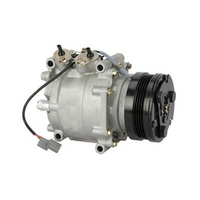
Below are the parts most often responsible for code B2993, ranked by how frequently each one is the actual culprit (per the diagnosis above). Tap any to see what we have for your vehicle.

The information in this article is provided for general reference and educational purposes only. Vehicle specifications, procedures, and part compatibility can vary by production date, trim level, and region. Always consult your vehicle's factory service manual and verify part numbers before purchasing or performing repairs. Safety-critical components such as airbags, seat belts, and braking systems should be installed by a qualified professional.
- 🧭 Diagnostic Flowchart
- 🛍️ Shop This Part
- What Does B2993 Mean?
- Can I Drive With B2993?
- Common Causes
- Symptoms
- Common Fixes & Costs
- DIY vs Professional
- Used vs. New Parts: Buying Guide
- What Happens If You Wait — Timeline
- Cost of Not Fixing It
- Diagnosis Steps
- When This Code Triggers (Freeze-Frame Conditions)
- Related Codes
- Climate & Environmental Factors
- How to Talk to a Mechanic About This Code
- Where to Take It: Dealer vs Independent vs Chain
- When to Walk Away From the Repair
- What Scan Tool You Need for This Code
- How to Clear the Code After You Fix It
- Will This Fail Emissions / State Inspection?
- Most Commonly Affected Vehicles
- Manufacturer-Specific Notes
- Real Owner Stories
- 2008 Honda Civic Hybrid with B2992 and B2993
- 2014 Honda Civic Hybrid with malfunctioning A/C
- How to Prevent This Code From Triggering
- Frequently Asked Questions
- Can I just bypass the thermal protector to fix code B2993?
- What is the most common mistake when diagnosing B2993?
- Will fixing code B2993 make my A/C cold again?
- Why don't I see code B2993 on my Chevrolet/Ford/Toyota?
- Is the thermal protector the same as the A/C pressure switch?
- Key Takeaways
- 🎟️ Get 5% Off