

OBD-II Code B2995: Auxiliary Water Pump Circuit Malfunction
What B2995 means, why it triggers, and how to fix it
- Code B2995 indicates an electrical failure in the secondary auxiliary water pump circuit, completely separate from the primary engine water pump.
- The #1 symptom is losing cabin heat and windshield defroster function when the vehicle is idling or stopped.
- In hybrid vehicles, this pump cools the inverter; driving with this code risks a $1,500+ inverter failure and sudden engine shutdown.
- Replacing the failed internal electric motor costs between $225 and $850, but always verify the $5 pump fuse hasn't blown before buying parts.
What Does B2995 Mean?
Code B2995 indicates the Body Control Module (BCM) detected an electrical fault in the auxiliary water pump circuit. This small, electric pump is separate from the main engine water pump and circulates coolant for the cabin heater, hybrid inverter, or turbocharger system. The code triggers when the pump fails to operate as commanded due to an open circuit, a short, or an abnormal voltage reading.
Technical definition: Code B2995 is a manufacturer-specific body code defined as an 'Auxiliary Electric Water Pump Circuit Malfunction.' The control module commands the pump on but receives no electrical response or feedback signal, indicating an open circuit, short to ground, or short to power within the circuit.
Can I Drive With B2995?
Yes, But With Caution. Yes, you can drive non-hybrid vehicles, as this code does not affect the main engine cooling system. However, you will lose cabin heat and defroster performance at idle, creating a severe visibility hazard in cold or wet weather. In hybrid vehicles, this pump cools the inverter; continued driving causes the hybrid system to overheat and shut down, leading to a complete loss of motive power and potential component damage.
Common Causes
- Failed or Seized Auxiliary Water Pump (Very Common) — The internal electric motor is the most common point of failure due to age and wear. The motor's brushes wear out, internal electronics fail, or the impeller seizes, causing the pump to work intermittently or stop entirely.
- Blown Fuse or Faulty Relay (Common) — The auxiliary water pump operates on a dedicated electrical circuit protected by a fuse and controlled by a relay. A blown fuse or a stuck relay immediately cuts power to the pump and triggers this code.
- Damaged Wiring or Connectors (Common) — The wiring harness leading to the pump degrades from heat, vibration, or abrasion. The electrical connector frequently corrodes, fills with moisture, or loosens, creating high resistance and a circuit fault.
- Internal Coolant Leak (Subaru TCV) (Very Common For Subaru) — Modern Subarus utilize a complex Thermo Control Valve (TCV). A known manufacturer defect allows coolant to leak internally, corroding the circuit board and logging codes identical in function to B2995.
- Low or Contaminated Coolant (Less Common) — Running the pump with low coolant causes it to run dry, overheat, and seize. Using incorrect or degraded coolant leads to internal corrosion, destroying the pump's impeller and seals.
- Faulty Control Module or Software Glitch (Rare) — Occasionally, a software anomaly or a burned-out driver circuit within the Body Control Module (BCM) sets the code erroneously. This is only suspected after confirming the pump and wiring are fully functional.
Symptoms
- No Heat or Defroster at Idle — The cabin air is warm while driving but turns cold when stopped because the auxiliary pump cannot circulate hot coolant to the heater core. This renders the windshield defroster ineffective.
- High-Pitched Buzzing or Whining Noise — A failing pump motor or an electrical short causes the pump to run continuously or emit a distinct buzzing sound from the engine bay, sometimes continuing after the vehicle is turned off.
- Engine Auto Start/Stop Inactive — On vehicles with an auto start/stop system, the BCM disables the feature if the auxiliary pump fails, as the vehicle cannot maintain cabin heat while the engine is off.
- Hybrid System Warning or Shutdown (also visible on scanner) — In hybrid vehicles, this pump cools the power inverter. Failure causes the hybrid system to overheat, triggering a master warning light (like the Prius red triangle) and forcing the car into a reduced-power limp mode.
- Check Engine Light (also visible on scanner) — The vehicle's computer illuminates the Check Engine Light or a specific system warning light on the dashboard immediately upon detecting the circuit fault.
Common Fixes & Costs
- Replace Auxiliary Water Pump 🎬 Watch: Step-by-step Prius inverter water pump replacement guide.
— Parts: $75-$450, Labor: $150-$400, ~1.5 hr book time
(Intermediate)
: OEM
: OEM
: OEM - Replace Blown Fuse or Relay — Parts: $5-$30, Labor: $0-$25, ~0.1 hr book time (DIY)
- Repair Wiring or Connector — Parts: $10-$50, Labor: $100-$250, ~1.5 hr book time (Professional)
- Replace Thermo Control Valve (Subaru)
— Parts: $200-$400, Labor: $500-$900, ~5 hr book time
(Professional)
: OEM
Used vs. New Parts: Buying Guide
When a used part is worth it: A used OEM pump from a low-mileage, accident-totaled vehicle is a cost-effective option for older, high-mileage cars where budget is the primary concern.
Donor-vehicle mileage cap: roughly under 60000 miles for the part to have meaningful remaining life.
Donor quality checklist:
- Verify the donor vehicle's mileage and reason for salvage (collision is better than electrical failure).
- Visually inspect the part for crusty coolant residue, corrosion on the electrical connector, or physical damage.
- Match the OEM part number exactly to ensure software compatibility.
Decision logic:
- If The vehicle is under 100,000 miles or the part cools a critical system (hybrid inverter, turbo). → Buy a new OEM or OEM-supplier part. The risk of catastrophic damage outweighs the savings.
- If The vehicle is over 150,000 miles and the pump is for cabin heat only. → A tested, used OEM part is an acceptable risk to save money.
- If A quality aftermarket brand offers a lifetime warranty. → Consider it, but be aware that aftermarket electronic quality is inconsistent compared to OEM.
Warranty tradeoff: Used parts typically include a 30-90 day warranty. Aftermarket new parts offer a 1-year to limited lifetime warranty. New OEM parts carry a 12-month/12,000-mile warranty.
Worst-case if a used part fails: $300-$800. If a cheap pump fails prematurely, you pay for the replacement part and full labor cost a second time.
Cost of Not Fixing It
- Immediate: Loss of cabin heat and defroster function, creating a significant safety hazard in cold or wet weather due to poor visibility. (Added cost: Negligible)
- 1-6 months (Hybrid Vehicles): Repeated overheating of the hybrid inverter causes premature failure of the power electronics, leading to a no-start condition or sudden shutdown while driving. (Added cost: $1500-$4000 for inverter replacement.)
- 1-6 months (Turbocharged Engines): Lack of coolant circulation after engine shutdown causes oil to burn inside the turbocharger's bearings, leading to accelerated wear and eventual turbo failure. (Added cost: $1000-$3500 for turbocharger replacement.)
- Ongoing: If the pump has an internal short, it runs continuously after the vehicle is shut off, leading to a drained 12V battery. (Added cost: $150-$350 for a new battery.)
Diagnosis Steps
- Check for Related Trouble Codes
Use an OBD-II scanner to check for concurrent codes. Codes related to thermostat control (P0597), coolant pump performance (P2601), or network communication (U-codes) isolate the root cause faster.
Tools: OBD-II Scanner (Beginner) - Inspect the Fuse and Relay
Locate the auxiliary water pump fuse in the fuse box. Visually inspect it for a broken filament. If intact, locate the pump's relay and swap it with an identical non-critical relay (like the horn) to test functionality.
Tools: Owner's Manual, Fuse Puller or Pliers (Beginner) - Listen for Pump Operation and Visually Check Flow
With the ignition on (engine off), turn the heater to maximum. Listen in the engine bay for a humming sound. On hybrids, remove the inverter coolant reservoir cap and look for turbulence indicating fluid circulation. No sound or flow confirms a failure.
Tools: Flashlight (Beginner) - Inspect Wiring and Connector
Visually inspect the wiring harness for cracking, melting, or rodent damage. Unplug the connector and check for green corrosion, moisture, or bent pins.
Tools: Flashlight (Intermediate) - Test for Voltage and Ground at the Connector
With the ignition on and heater activated, use a multimeter to check for battery voltage (12.0V-12.6V) on the power wire. Measure resistance between the ground pin and the chassis; it must be under 1.0 ohm. If power and ground are present but the pump is dead, the pump requires replacement.
Tools: Multimeter (Intermediate) - Measure Pump Motor Resistance
Disconnect the pump. Using a multimeter set to Ohms, measure resistance between the power and ground terminals on the pump. A healthy motor reads between 5 and 20 ohms. Infinite resistance (OL) indicates a broken winding; under 1 ohm indicates an internal short.
Tools: Multimeter (Advanced) - Provide Direct Power to the Pump (Bench Test)
Apply 12V power and ground directly to the pump's terminals using a power probe. If the pump runs, the vehicle's wiring or control module is faulty. If it fails to run, the pump is dead.
Tools: Power Probe or 12V Power Source with Jumper Wires (Advanced) - Check for Voltage Drop Under Load
Back-probe the connector's power and ground wires with the pump plugged in. Command the pump ON. The circuit must maintain voltage above 11.5V. A drop to 9V or less indicates high resistance in the wiring that must be traced.
Tools: Multimeter with back-probe pins (Advanced) - Scope the Control Signal (PWM Pumps)
Modern auxiliary pumps use Pulse-Width Modulation (PWM). Use an oscilloscope on the signal wire to verify a square wave pattern (50-250 Hz) when commanded on. A flat line indicates a module or wiring failure, not a pump failure.
Tools: Automotive Oscilloscope (Professional)
When This Code Triggers (Freeze-Frame Conditions)
- Engine Coolant Temp: 170-205°F (77-96°C) (The engine is fully warmed up and the BCM requests cabin heat, or the hybrid/turbo system requires cooling.)
- RPM: 650-1200 RPM (The code sets at idle when the main water pump's flow is insufficient and the auxiliary pump is commanded to activate.)
- Heater Setting: High / Defrost (The fault is detected when the driver turns the heat or defroster to maximum, placing direct demand on the auxiliary pump circuit.)
- System Voltage: 11.5-14.5V (The control module monitors circuit voltage; the code triggers if voltage is unexpectedly low (short to ground) or high (short to power).)
Related Codes
- P2601 — The generic Powertrain (P) code for 'Coolant Pump A Control Circuit Range/Performance.' B2995 is the Body (B) module equivalent for the exact same fault. Diagnosis is identical.
- P0C73 — Specific to hybrids, indicating an open circuit in the high-voltage battery coolant pump. Diagnosis focuses on the same electrical principles but targets a different pump.
- P0597 — Indicates a fault in the electronically controlled thermostat heater circuit. If P0597 is present, the heating issue stems from the thermostat, not the auxiliary pump.
- U0111 — Indicates lost communication with the Battery Energy Control Module. Seeing this alongside B2995 proves the root cause is a network or module failure, not the pump itself.
Climate & Environmental Factors
- Cold Climates: Failures are functionally impactful in cold weather. The pump runs longer to provide cabin heat, increasing wear. Failure directly results in a loss of defroster capability, creating a severe safety hazard.
- Road Salt / High Humidity: Salt spray and moisture infiltrate the pump's electrical connector, causing corrosion on the pins, high resistance, and eventual circuit failure.
- Hot Climates (Turbo/Hybrid): Higher ambient temperatures place a greater thermal load on turbochargers and hybrid inverters, forcing the pump to work harder and accelerating wear.
How to Talk to a Mechanic About This Code
Say this: "I have a B2995 code and my heat only works when the car is moving. I'd like to schedule a diagnostic to confirm if the auxiliary water pump has failed. Please check for power and ground at the pump's connector before recommending a replacement."
This shows you understand the most common symptom and cause. It directs the technician to perform a specific electrical test, preventing them from suggesting unnecessary work like a heater core flush.
Avoid saying:
- 'My heater is broken.'
- 'The check engine light is on, can you just fix it?'
- 'I think I need a new water pump.'
Questions to ask before authorizing the repair:
- Did you confirm there is 12-volt power and a good ground at the pump connector when the heat is on?
- If the pump needs to be replaced, does the estimate include bleeding the air from the cooling system afterward?
- Is the replacement part an OEM or a quality aftermarket brand, and what is the warranty on the part and your labor?
Where to Take It: Dealer vs Independent vs Chain
- Dealer:
Best for: Vehicles under warranty (especially the Subaru TCV extended warranty), Vehicles with active recalls related to this pump (common on BMWs), Complex, hard-to-access repairs where manufacturer-specific knowledge is required.
Downsides: Highest labor rates, often 1.5-2x more than an independent shop., Inflexible on using aftermarket parts to save money. (Typical cost: +50% vs. baseline) - Independent Shop:
Best fit for most common vehicles. A reputable independent shop easily diagnoses and replaces an auxiliary water pump at a significant savings over the dealer.
Best for: Most out-of-warranty vehicles where the pump is reasonably accessible., Cost-conscious owners seeking a balance of expertise and value.
Downsides: Quality and experience vary; requires finding a shop with ASE-certified technicians. (Typical cost: +0% vs. baseline) - Chain Shop:
Use with caution. Acceptable if you are 100% certain the pump is the failure and it is an easy replacement. Avoid for initial diagnosis.
Best for: Simple, clear-cut parts replacement where the diagnosis is already certain.
Downsides: Technician skill varies dramatically; lacks experience for nuanced electrical diagnosis., Business model encourages upselling unnecessary services like coolant flushes. (Typical cost: -10% vs. baseline)
When to Walk Away From the Repair
If the estimated repair cost for the auxiliary water pump exceeds 40-50% of your car's private-party value, evaluate your options.
- Car worth $4000, fix is $1800: Walk away. This repair is a significant percentage of the car's value.
- Car worth $12000, fix is $800: Fix it. This repair is a small fraction of the car's value and is necessary for safety and system longevity.
- Car worth $7000, fix is $1500: Borderline. The repair is costly relative to the car's value. Get a second opinion from another shop before proceeding.
What Scan Tool You Need for This Code
Minimum: A scanner that reads manufacturer-specific Body (B) codes. Basic code readers only see Powertrain (P) codes and miss B2995 entirely.
A generic OBD-II reader cannot communicate with the Body Control Module, leaving you with symptoms but no error code.
Budget: BlueDriver Pro Scan Tool (~$100) — Reads manufacturer-specific B-codes, provides freeze-frame data, and offers repair suggestions based on a database of verified fixes.
Mid-range: Innova 5610 (~$350) — Offers bi-directional control, allowing you to command the auxiliary pump to turn on directly from the scan tool to confirm functionality.
Professional: Autel MaxiPRO MP808S (~$500-700) — Provides full bi-directional control, ECU coding, and access to all vehicle modules for OE-level diagnostics.
Rent vs buy: Auto parts stores scan codes for free, but their basic scanners often miss B-codes. Buying a tool like the BlueDriver is a necessary investment for accurate diagnosis.
How to Clear the Code After You Fix It
- Use an OBD-II scan tool to clear the Diagnostic Trouble Code (DTC) from the module's memory.
- Perform a complete drive cycle to allow the vehicle's onboard diagnostics to run self-tests and confirm the repair.
- Rescan the vehicle to ensure the B2995 code has not returned and readiness monitors are set to 'Ready'.
Drive cycle (~30 minutes): A universal drive cycle includes a cold start, idling for 2-3 minutes, 15-20 minutes of mixed driving (40-60 mph cruising and stop-and-go), finishing with a brief idle period before shutdown.
Readiness monitors affected: Clearing codes resets all emissions-related readiness monitors to 'Not Ready', including Catalyst, EVAP, O2 Sensor, and EGR monitors.
Before emissions retest: drive at least 100 miles to fully set monitors.
Watch out for:
- Clearing the code without fixing the mechanical or electrical problem guarantees the code will return.
- Taking the vehicle for an emissions test immediately after clearing codes results in an automatic failure due to 'Not Ready' monitors.
- Disconnecting the battery to clear codes resets all readiness monitors and erases vehicle memory settings.
Will This Fail Emissions / State Inspection?
Yes — this code typically fails an OBD-II emissions inspection.
- California: An illuminated Check Engine Light results in an automatic smog check failure. After repair, all monitors except the EVAP monitor must be 'Complete' to pass.
- New York: A vehicle automatically fails the NYS inspection if the Check Engine light is on. Clearing the code right before the test results in failure due to 'Not Ready' status.
- Texas: In emissions-testing counties, an illuminated Check Engine Light is an automatic failure. Texas allows up to one 'Not Ready' monitor for vehicles 2001 and newer.
Most Commonly Affected Vehicles
- Honda Civic Hybrid (2006-2015) — Critical for cooling the IMA hybrid system inverter. Failure triggers immediate hybrid system warnings and limp mode.
- Ford / Lincoln Edge, Escape, Bronco Sport, Maverick (2015-2025) — Commonly fails on EcoBoost engines, causing a complete loss of cabin heat at idle.
- BMW Various models with N20, N26, N63, S63 engines (2008-2018) — Subject to multiple safety recalls (e.g., NHTSA 18V-248) where the pump's circuit board short circuits, posing a fire risk even when parked.
- GM (Chevrolet, GMC, Cadillac) Traverse, Acadia, Enclave, XT5 (2017-2025) — Known failure point on 3.6L V6 engines, leading to a lack of cabin heat when the auto start/stop feature activates.
- Toyota Prius (Gen 2, Gen 3) (2004-2015) — Critical component for cooling the hybrid inverter. Failure triggers the master warning light (red triangle) and shuts down the hybrid drive.
- Subaru Forester, Outback, Legacy, Crosstrek (2019-2022) — Thermo Control Valve (TCV) defect causes internal coolant leaks, corroding electronics. Covered by a 15-year/150,000-mile warranty extension (TSB 09-119-24).
Manufacturer-Specific Notes
- BMW: The auxiliary pump cools turbochargers after engine shutdown. Failure leads to premature turbo wear. Multiple recalls exist for pumps short-circuiting and creating fire risks.
- Mercedes-Benz: Features a 'REST' function using the auxiliary pump to circulate residual heat into the cabin for 30 minutes after shutdown. A malfunctioning pump disables this feature.
- Toyota / Lexus: The pump cools the high-voltage inverter. Failure guarantees a hybrid system warning light and forces the vehicle into a low-power limp mode to prevent catastrophic electronic damage.
- Subaru: Modern models use a Thermo Control Valve (TCV) replacing a traditional thermostat. These fail due to internal coolant leaks corroding the electronics, covered by an extended warranty.
Frequently Asked Questions
Is the auxiliary water pump the same as the main water pump?
No. The main water pump is a large, mechanically driven component that cools the engine block. The auxiliary water pump is a small electric pump used for secondary tasks like cabin heating or cooling hybrid electronics.
Can I drive my car with a B2995 code?
For non-hybrids, yes, but your defroster will fail at idle, creating a severe safety hazard. For hybrids, driving is strictly prohibited as the inverter will overheat and shut the vehicle down.
Why does my heater only work when I'm driving?
When driving, the main water pump spins fast enough to force coolant through the heater core. When idling, the main pump slows down, and the failed auxiliary pump cannot provide the necessary secondary flow.
Could my heating problem be the thermostat instead?
A failed auxiliary pump (B2995) causes no heat at idle. A stuck-open thermostat causes poor heating at all times and slow engine warm-up. A dedicated thermostat code like P0597 confirms a thermostat issue.
Is replacing the auxiliary water pump a DIY job?
It depends on the vehicle. On a Toyota Prius or Ford Edge, it is accessible for an intermediate DIYer. On a Subaru (TCV replacement), it requires removing the intake manifold and is best left to professionals.
How much does it cost to fix code B2995?
Replacing the pump typically costs between $225 and $850 depending on the vehicle. A Honda Civic Hybrid repair averages $350, while a complex Subaru TCV replacement exceeds $1,200. Always check for active manufacturer recalls, especially on BMWs, which cover the cost entirely.
Can a bad auxiliary water pump drain my battery?
Yes. If the pump fails due to an internal electrical short, it runs continuously even when the ignition is off, draining the 12V battery overnight.
Will a bad auxiliary pump make my engine overheat?
No. This pump serves secondary systems like the heater core or hybrid inverter, not the main engine cooling loop. The primary belt-driven water pump prevents engine overheating.
Key Takeaways
- Code B2995 indicates an electrical failure in the secondary auxiliary water pump circuit, completely separate from the primary engine water pump.
- The #1 symptom is losing cabin heat and windshield defroster function when the vehicle is idling or stopped.
- In hybrid vehicles, this pump cools the inverter; driving with this code risks a $1,500+ inverter failure and sudden engine shutdown.
- Replacing the failed internal electric motor costs between $225 and $850, but always verify the $5 pump fuse hasn't blown before buying parts.
Helpful Videos
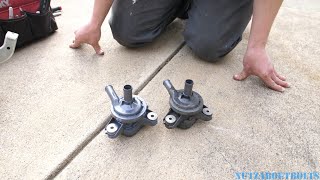
Shop the Parts Behind B2995
Below are the parts most often responsible for code B2995, ranked by how frequently each one is the actual culprit (per the diagnosis above). Tap any to see what we have for your vehicle.



The information in this article is provided for general reference and educational purposes only. Vehicle specifications, procedures, and part compatibility can vary by production date, trim level, and region. Always consult your vehicle's factory service manual and verify part numbers before purchasing or performing repairs. Safety-critical components such as airbags, seat belts, and braking systems should be installed by a qualified professional.
- 🎬 Helpful Videos
- 🛍️ Shop This Part
- What Does B2995 Mean?
- Can I Drive With B2995?
- Common Causes
- Symptoms
- Common Fixes & Costs
- Used vs. New Parts: Buying Guide
- Cost of Not Fixing It
- Diagnosis Steps
- When This Code Triggers (Freeze-Frame Conditions)
- Related Codes
- Climate & Environmental Factors
- How to Talk to a Mechanic About This Code
- Where to Take It: Dealer vs Independent vs Chain
- When to Walk Away From the Repair
- What Scan Tool You Need for This Code
- How to Clear the Code After You Fix It
- Will This Fail Emissions / State Inspection?
- Most Commonly Affected Vehicles
- Manufacturer-Specific Notes
- Frequently Asked Questions
- Is the auxiliary water pump the same as the main water pump?
- Can I drive my car with a B2995 code?
- Why does my heater only work when I'm driving?
- Could my heating problem be the thermostat instead?
- Is replacing the auxiliary water pump a DIY job?
- How much does it cost to fix code B2995?
- Can a bad auxiliary water pump drain my battery?
- Will a bad auxiliary pump make my engine overheat?
- Key Takeaways
- 🎟️ Get 5% Off