

OBD-II Code B3000: Control Module Internal Memory Fault
What B3000 means, why it triggers, and how to fix it
- Code B3000 is a manufacturer-specific 'ghost code' that requires a professional $100+ bidirectional scanner to reveal the true underlying Body Control Module (BCM) or immobilizer fault.
- A rapidly flashing dashboard security light paired with a crank-no-start condition indicates the immobilizer system has locked the engine.
- Test your main vehicle battery with a multimeter to ensure it reads at least 12.4 volts at rest, as low voltage triggers over 30% of false BCM codes.
- Never replace a $500+ Body Control Module based solely on a B3000 code; always verify power, ground, and water intrusion before condemning the unit.
What Does B3000 Mean?
Code B3000 means a vehicle's computer, most often the Body Control Module (BCM), detects an internal problem or communication failure. Think of it as a computer reporting a general error with itself. This code is a 'ghost code'—a generic placeholder generated when a basic scanner cannot read the true manufacturer-specific fault hiding behind it. Do not confuse this diagnostic trouble code with the Mazda B3000 pickup truck model, as they are completely unrelated.
Technical definition: The official SAE/ISO definition for code B3000 is 'Reserved for Future Use' or manufacturer-specific. It indicates an internal electronic failure, software corruption, or communication error within a control module. On many platforms, it points to a specific subsystem fault that a generic $20 scanner cannot correctly interpret.
Can I Drive With B3000?
Yes, But With Caution. If your car starts and drives, you can likely get to a repair shop. However, the underlying problem—often a failing BCM or immobilizer—causes a no-start condition at any time, leaving you stranded without warning. If a security light flashes while driving, do not shut the engine off until you reach a safe location, as it will not restart. Continuing to drive with erratic electrical functions (failing lights, wipers) is a severe safety hazard. There is no direct risk of engine or catalytic converter damage, but the risk of being stranded is extremely high.
Common Causes
- Scan Tool Incompatibility / Ghost Code (Very Common) — Basic code readers cannot understand manufacturer-specific immobilizer or airbag faults. When they encounter an unrecognized code, they display B3000 as a generic placeholder.
- Low Vehicle Battery Voltage (Very Common) — Modern cars are extremely sensitive to low voltage. A weak battery (under 12.4V) causes electronic modules to malfunction, reset, and generate false error codes like B3000.
- Immobilizer System Fault (Common) — A problem with the transponder chip in your key, a dead key fob battery, or a faulty ignition antenna prevents the car from starting and triggers this code.
- Body Control Module (BCM) Internal Failure (Common) — The BCM is the central computer for comfort and security features. Internal components fail from age, vibration, or voltage spikes. Software glitches or memory corruption from improper jump-starts also cause internal failures.
- Water Intrusion into a Module (Common) — Clogged sunroof drains or bad windshield seals leak water directly onto the BCM, causing rapid corrosion, short circuits, and module failure.
- Poor Power or Ground Connection (Less Common) — A loose or corroded main chassis ground strap interrupts power, causing the module to reset and log a fault.
- Failing Ignition Switch (Uncommon) — A worn-out ignition switch provides erratic voltage to the BCM and immobilizer, confusing the module into logging an internal fault.
Symptoms
- Engine cranks but won't start — The immobilizer system locks the engine to prevent theft, resulting in a crank-no-start condition.
- Flashing security light on the dashboard — A rapidly blinking light shaped like a key or a lock indicates the car's anti-theft system is active and blocking ignition.
- Erratic electrical functions — Features controlled by the BCM, like power locks, windows, interior lights, horn, or wipers, work intermittently or fail completely.
- Keyless entry or push-to-start system fails — The car fails to detect the key fob, preventing you from unlocking the doors or starting the engine.
- Airbag or SRS Light On — On Ford and Mazda platforms, a B3000 code is often a misinterpretation of a fault within the Restraints Control Module (RCM), illuminating the airbag light.
Diagnostic Flowchart
Tap your situation to follow the diagnostic path that matches what you're seeing on this code.
Common Fixes & Costs
- Replace Vehicle Battery — Parts: $150-$350, Labor: $25-$50, ~0.4 hr book time (DIY)
- Replace and Program New Key Fob — Parts: $75-$500, Labor: $50-$150, ~0.8 hr book time (Professional)
- Replace Body Control Module (BCM) — Parts: $300-$800, Labor: $200-$450 (includes programming), ~2.5 hr book time (Professional)
- Repair Power or Ground Wire — Parts: $5-$20, Labor: $100-$300, ~1.5 hr book time (Intermediate)
- Repair Door Ajar Circuit (GM Specific) — Parts: $10-$50, Labor: $75-$200, ~1.2 hr book time (Intermediate)
DIY vs Professional
- Replace Vehicle Battery 🟢 Beginner
Tools: Wrench set, terminal cleaner brush, safety glasses. - Repair Power or Ground Wire 🟢 Beginner
Tools: Multimeter, wire strippers, crimpers, soldering iron, heat gun, wiring diagrams. - Replace and Program New Key Fob 🟢 Beginner
Tools: Specialized automotive key programming tool (e.g., Autel, Xtool), access to key codes. - Replace Body Control Module (BCM) 🟢 Beginner
Tools: Professional scan tool, access to manufacturer software for programming/configuration.
Used vs. New Parts: Buying Guide
When a used part is worth it: For a Body Control Module (BCM), buying used is almost never recommended. It is only viable for older, low-value vehicles where a new part is unavailable and a specialist confirms they can 'virginize' (reset) and reprogram the used module.
Donor-vehicle mileage cap: roughly under 20000 miles for the part to have meaningful remaining life.
Donor quality checklist:
- Part number must be an exact match, including any suffix letters.
- Verify the donor vehicle's VIN did not have theft or flood history.
- Seller must guarantee the part is 'unlocked' or 'virginized' and offer a robust return policy.
Decision logic:
- If The part is a BCM for a vehicle made after ~2005 → Buy a new OEM or professionally remanufactured part. A used BCM is VIN-locked and contains security data from the donor car, making it a paperweight in your vehicle without specialized, risky programming.
- If A specialist locksmith or programmer explicitly agrees to install a used BCM you provide → Proceed with extreme caution. Understand that if the programming fails, you are responsible for the cost of the used part and the labor.
Warranty tradeoff: Used parts from a salvage yard typically have a 30-90 day warranty at best, covering the part only. New OEM and quality remanufactured parts come with a 1-year to lifetime warranty.
Worst-case if a used part fails: $500-1000 if a used BCM fails to program or fails shortly after install. This includes the cost of the useless part, repeat labor charges, and a potential tow to a dealer.
What Happens If You Wait — Timeline
- Immediate: The most common failure is a sudden no-start condition. The immobilizer fails to recognize the key or the BCM fails its startup self-test. The car is immediately inoperable. (MPG impact: 0%% · Added cost: $75-$200 for a tow to a repair shop.)
- 1-4 weeks: If the fault manifests as a parasitic drain, the BCM fails to 'go to sleep' and slowly drains the battery overnight. You experience weak starts, and eventually, a dead battery each morning. (MPG impact: 0%% · Added cost: $20-$40 for a jump start service or inconvenience of self-jumping.)
- 1-3 months: Repeatedly deep-cycling the main vehicle battery by jump-starting it every day causes permanent damage. A standard lead-acid battery is not designed for deep discharges and loses its ability to hold a charge. (MPG impact: 0%% · Added cost: $150-$350 to replace the now-ruined car battery.)
- 3+ months: Continued operation with a faulty BCM leads to unpredictable behavior of safety-critical systems like exterior lights, wipers, or horn. A BCM suffering from water damage and corrosion develops short circuits that pose a fire risk. (MPG impact: 0-5% (due to potential alternator strain)% · Added cost: $500+ if the BCM fault cascades and damages other connected modules.)
Cost of Not Fixing It
- Immediate: High risk of a no-start condition, leaving you stranded without warning. This leads to towing costs. (Added cost: $75 - $200)
- 1-3 months: A faulty BCM causes a parasitic battery drain, ruining a new or healthy battery by repeatedly deep-cycling it. (Added cost: $150 - $350)
- 3+ months: Continued erratic electrical behavior puts stress on other components like the alternator, or causes unpredictable safety issues (e.g., lights failing at night). (Added cost: $500+)
Diagnosis Steps
- Try Your Spare Key & Check Key Fob Battery
The simplest explanation is a problem with the key itself. Try starting the car with your spare key. If it works, the issue is your primary key. If not, replace the CR2032 battery inside your key fob.
Tools: Spare key, new key fob battery (e.g., CR2032) (Beginner) - Test the Main Vehicle Battery and Charging System
Use a multimeter to check the main 12V battery. A healthy battery reads 12.4 to 12.6 volts with the engine off. Readings below 12.4V indicate a discharged state causing module communication errors. With the engine running, the alternator must output 13.7 to 14.7 volts.
Tools: Multimeter (Beginner) - Use a Professional, Manufacturer-Specific Scan Tool
Scan the vehicle with a bidirectional tool (like FORScan or Autel). This reveals the true underlying code (like U0140, P1260, or U3000:49) pointing to the specific faulty module or immobilizer issue.
Tools: Professional OBD-II Scanner (Intermediate) - Inspect the Body Control Module (BCM) for Water Damage
Locate the BCM (often in the driver's or passenger's footwell area behind the kick panel). Visually inspect the module, connectors, and surrounding carpet for moisture, green corrosion, or water stains.
Tools: Flashlight, basic hand tools (screwdriver, socket set) (Intermediate) - Check BCM Power and Ground Circuits
Identify the main power and ground wires for the BCM using a wiring diagram. Use a multimeter to confirm the module receives battery voltage on its power pins. Check the resistance between the ground pins and the chassis; it must be less than 0.5 ohms.
Tools: Multimeter, vehicle-specific wiring diagram (Advanced) - Perform a Parasitic Draw Test
If the battery dies overnight, a faulty BCM is likely the cause. Disconnect the negative battery terminal and connect a multimeter in series set to measure amps. After all modules 'go to sleep' (30-60 mins), a normal reading is below 50 milliamps (0.05A).
Tools: Multimeter with 10A capability (Advanced) - Test the Immobilizer Antenna (Transceiver)
The immobilizer antenna is a ring around the ignition cylinder. Use an advanced scanner to monitor the immobilizer data stream and verify if a valid key code is received by the BCM.
Tools: Immobilizer system tester or advanced scan tool (Advanced) - Scope the CAN Bus Network
For persistent communication issues, connect an oscilloscope to the CAN High and CAN Low wires at the OBD-II port. A healthy network shows two clean, square-wave signals mirroring each other at 2.5V. Distorted signals indicate a shorted wire or a corrupted module.
Tools: Automotive Oscilloscope, wiring diagram (Professional)
When This Code Triggers (Freeze-Frame Conditions)
- Module Voltage: 11.8 - 12.5V (Key On, Engine Off. The code sets during the module's power-on self-test.)
- RPM: 0 (Key On, Engine Off. An immobilizer-related fault prevents the engine from starting.)
- Vehicle Speed: 0 mph (Key On, Engine Off. The fault is detected before the vehicle is in motion.)
- System Status: Self-Test Fail (The BCM or related module fails its internal diagnostic check upon startup.)
Related Codes
- U0140 — Means 'Lost Communication With Body Control Module.' It appears in other modules when the BCM fails and stops communicating. B3000 is what the BCM reports about itself; U0140 is what other modules report about the BCM.
- P1260 — A Ford/Mazda specific code for 'Theft Detected, Vehicle Immobilized.' A generic scanner shows B3000, but a professional scanner reveals P1260, directing you to the key, antenna, and immobilizer system.
- U3000:49 — A manufacturer-specific code for 'Control Module Internal Electronic Failure.' This is the true code a professional scanner finds when a generic scanner shows B3000. Seeing this confirms the module requires replacement.
- B1681 — A Ford/Mazda code meaning 'PATS Transceiver Signal Is Not Received'. It indicates the BCM is not getting a signal from the ignition antenna ring, which a generic scanner misinterprets as B3000.
Climate & Environmental Factors
- Cold Weather: Low temperatures slow battery chemical reactions. At 0°F (-18°C), a battery loses 50% of its cranking power, making low-voltage module faults like B3000 highly prevalent in winter.
- High Humidity / Moisture: Condensation on circuit boards causes microscopic short circuits (dendritic growth) and corrosion, permanently destroying the BCM and triggering internal fault codes.
How to Talk to a Mechanic About This Code
Say this: "I have a B3000 code and a no-start/flashing security light. I know this is often a generic code, so I'd like to schedule a diagnostic appointment for you to use a manufacturer-specific scanner to find the underlying fault, which might be in the BCM, immobilizer, or another module."
This signals that you understand the problem's complexity and that a simple code read is insufficient. It directs the technician to perform a proper, in-depth diagnosis and prevents them from simply guessing or replacing the most obvious part.
Avoid saying:
- 'My car won't start, can you fix it?'
- 'My car has a B3000 code, please replace the BCM.'
- 'Just do whatever you think is right.'
Questions to ask before authorizing the repair:
- What specific, manufacturer-level code (P-code, U-code, or specific B-code) did you find?
- Before condemning the BCM, did you verify it has proper power and ground, and check for signs of water damage?
- If a BCM replacement is needed, does your estimate include the necessary programming and key relearn procedures?
- Can you provide a printout of the codes found across all modules?
Where to Take It: Dealer vs Independent vs Chain
- Dealer:
Safest choice. The dealer is the best-equipped to handle the programming, security, and software-specific nature of BCM and immobilizer repairs. They have guaranteed access to the right tools and information.
Best for: Vehicles under warranty, Complex BCM programming and security-related repairs, When a manufacturer-specific software update or recall is involved
Downsides: Highest labor rates ($150-$250/hr) and OEM part costs., Defaults to module replacement rather than component-level wiring repair. (Typical cost: +50% vs. baseline) - Independent Shop:
Viable with caution. Choose an independent shop that specializes in your vehicle's brand or advertises advanced electrical diagnostics and module programming. Ask them specifically if they have the tools to program a new BCM for your car before you commit.
Best for: Out-of-warranty vehicles where cost is a major factor., Diagnosing underlying issues like bad grounds or water leaks.
Downsides: Diagnostic capability varies greatly; ensure the shop possesses the specific $1,000+ bidirectional scanner required for your vehicle brand., May not have the expensive tools to perform module programming, potentially requiring a second trip to a dealer anyway. (Typical cost: +0% vs. baseline) - Chain Shop:
Avoid. This type of repair is far outside the scope of a typical chain shop. They lack the specialized scanners and programming capabilities required for a BCM or immobilizer fault.
Best for: Simple, unrelated repairs like tires or oil changes.
Downsides: Technicians lack the training or tools for complex electrical diagnostics and module programming., High pressure to sell parts leads to misdiagnosis and unnecessary repairs. (Typical cost: -10% vs. baseline)
When to Walk Away From the Repair
If the estimated repair cost exceeds 40-50% of the car's private-party value, you should pause and carefully consider your options.
- Car worth $3500, fix is $1400: Walk away. The repair cost is a significant portion of the car's value, and a no-start condition makes it difficult to sell privately. Consider selling to a junkyard or as a 'mechanic's special'.
- Car worth $10000, fix is $1400: Fix it. The repair cost is well below the 40-50% threshold and restores a valuable asset to full function.
- Car worth $5000, fix is $1400: Borderline. This is a judgment call. If the car is otherwise in excellent condition with no other needed repairs, fixing it is worthwhile. Get a second opinion before authorizing the repair.
What Scan Tool You Need for This Code
Minimum: A scanner that reads manufacturer-specific codes (ABS, Airbag, BCM, etc.) from all vehicle modules. A basic engine-only code reader is NOT sufficient and is the primary cause of seeing a generic B3000 code.
A cheap scanner only reads generic engine codes (P0xxx). B3000 is a Body (B) code, and the true underlying fault is a more specific code stored in the Body Control Module, Immobilizer, or Airbag module, which basic scanners cannot access.
Budget: BlueDriver Pro or FORScan with Adapter (~$70) — These tools read enhanced codes from systems like the BCM, ABS, and Airbag on many models, which is essential for getting past the generic B3000. FORScan is software specifically for Ford/Mazda and is extremely powerful for the price when paired with a compatible OBD adapter.
Mid-range: Foxwell NT510 Elite or Autel AP200/HT200 (~$180) — Provides full-system, brand-specific diagnostics, allowing you to read and clear codes from every module in the car. The Foxwell NT510 Elite is pre-loaded for one car brand and offers deep diagnostic capabilities, including reading the specific immobilizer and BCM codes that hide behind B3000.
Professional: Autel MaxiCOM MK808 / MK906BT or Launch X431 series (~$500-1200) — Offers full bidirectional control, module coding, and key programming capabilities. These are professional-level tools required to actually program a new BCM or perform immobilizer relearn procedures after a replacement.
Rent vs buy: For this specific code, the free rental scanners from auto parts stores are usually too basic. If you are a DIYer, buying a budget or midrange pick that reads manufacturer-specific codes is a worthwhile investment. If the fix requires a new BCM, the repair must be done by a professional with a pro-level tool anyway.
How to Clear the Code After You Fix It
- Use a professional OBD-II scan tool to clear all codes from all modules.
- Perform a 'hard reset' by disconnecting the negative battery terminal for at least 30 minutes to discharge module capacitors.
- Reconnect battery and perform any required relearn procedures (e.g., key programming, BMS reset).
Drive cycle (~20 minutes): A specific drive cycle is not required for a B-code. After clearing, start the engine and let it idle for 2-3 minutes. Operate all BCM-controlled functions (lights, wipers, locks, windows) to confirm repair. Drive for 15-20 minutes in mixed conditions to ensure the code does not return.
Readiness monitors affected: None directly, but disconnecting the battery resets all emissions readiness monitors to 'Not Ready'.
Before emissions retest: drive at least 50 miles to fully set monitors.
Watch out for:
- Clearing the code with a basic scanner fails to erase it from all modules; the code reappears from another module's memory.
- If the root cause (e.g., a bad ground, faulty key) is not fixed, the code returns immediately upon the next self-test.
- Disconnecting the battery resets emissions monitors, leading to a failed smog test if not followed by a proper drive cycle.
Will This Fail Emissions / State Inspection?
Yes — this code typically fails an OBD-II emissions inspection.
- California: A B3000 code itself does not trigger the Check Engine Light and is not an emissions code. However, if the underlying fault prevents the state's test equipment from communicating with the vehicle's OBD-II system, it results in a failure. Any related warning light, like for the SRS system, is also grounds for failure.
- New York: New York's inspection includes an OBD-II scan. A fault that prevents the engine from starting or causes a safety system light (like Airbag) to illuminate fails the inspection.
- Texas: A BCM-related fault that prevents the scan tool from communicating or sets a related transmission code causes an automatic failure. If the battery was disconnected to clear the code, the vehicle fails due to 'Not Ready' readiness monitors.
Most Commonly Affected Vehicles
- Mazda 3 (2004-2011) — Almost always a 'ghost code' from a generic scanner. The true fault is often a U0151 (Lost Communication with RCM) or another airbag system code.
- Mazda 5 (2012-2015) — Strongly points to an internal failure of the Body Control Module (BCM), causing a no-start and flashing security light. Low battery voltage locks out the module.
- Mazda CX-3 (2016-2021) — Frequently linked to the failure of the Start Stop Unit (SSU), which logs an internal fault.
- Mazda CX-7 (2007-2012) — Highly suspect for water damage to the BCM located in the driver's kick panel. This is a known issue caused by clogged sunroof drains.
- Mazda CX-9 (2007-2014) — A common underlying issue on these vehicles is a water-damaged BCM in the passenger footwell.
- Mazda MX-5 Miata (2006-2020) — Almost always indicates a fault in the anti-theft immobilizer system. Start with the key fob battery, main car battery, and checking for corroded ground straps.
- Ford Focus, Ranger (2004-2011) — These vehicles show B3000 for immobilizer (PATS) faults (rapidly flashing theft light) or an internal fault in the Restraints Control Module (RCM).
- Chevrolet / GM Various (2000-2010) — On older GM vehicles, B3000 has a specific definition: 'LR door ajar circuit open,' pointing to a problem with the driver's side rear door sensor or its wiring.
- Subaru Outback, Forester (2015-2019) — Owners report B3000-range codes appearing alongside communication errors (U-codes) when the Body Integrated Unit (BIU) fails, often triggered by a dying battery.
Manufacturer-Specific Notes
- Mazda: B3000 is considered a 'ghost code' that appears when using a non-Mazda specific scan tool. The actual problem is a more specific 'U' code (communication) or 'P' code (PATS/immobilizer).
- Mazda: Safety Recall 3219D: For certain 2016-2018 Mazda3s, a defective relay inside the Front BCM causes windshield wiper failure. Dealers replace the F-BCM at no cost.
- Mazda: Service Alert MSA012122: Some Mazda3, CX-30, and MX-30 vehicles persistently store DTC U0300:57 (BCM internal malfunction) after a BCM replacement due to a software error. A dealer software update fixes it.
- General Motors (GM): On some GM vehicles, B3000 has a specific definition: 'LR door ajar circuit open,' pointing to a simple switch or wiring issue in the driver's side rear door.
- Ford: On platforms shared with Mazda, a B3000 code points to a fault within the Restraints Control Module (RCM), which manages the airbag system.
- Subaru: B3000 is not a native Subaru code. If it appears on a generic scanner, it is misreporting a communication fault (U-code) related to the Body Integrated Unit (BIU).
Real Owner Stories
2008 Mazda CX-7 with No-Start and Electrical Gremlins
Owner experienced intermittent failure of power windows, door locks, and turn signals, culminating in a no-start condition. A generic B3000 code was present.
What they tried:
- Initially suspected a dead battery or alternator, but both tested fine.
- Checked all related fuses, none were blown.
Outcome: The owner removed the BCM from the driver's kick panel. The module's case and circuit board showed visible water marks and corrosion. The board was cleaned thoroughly with electronics cleaner and dried. After reinstallation, all electrical functions were restored and the car started, resolving the B3000 code without replacing the module. The root cause was a clogged sunroof drain.
Lesson: On vehicles with known water leak issues, a B3000 code accompanied by erratic electrical behavior is highly indicative of a water-damaged BCM. A visual inspection for corrosion confirms the diagnosis before spending money on a replacement.
2000 Mazda B3000 (Ford Ranger) with Crank-No-Start
Truck cranked but did not start, and the 'THEFT' light on the dash flashed slowly when the key was in the start position. Battery was new and fuses were good.
What they tried:
- Used a remote starter button to confirm the engine turned over, but it did not fire up.
- Scanned for codes but none were present with a basic scanner.
Outcome: The slowly flashing THEFT light indicated a fault in the Passive Anti-Theft System (PATS). The issue was not the B3000 code itself, but the car's immobilizer failing to recognize the key. The owner had the key and vehicle reprogrammed by a locksmith.
Lesson: Pay close attention to the security/theft light on your dashboard. A rapidly flashing light during a no-start condition is a classic sign of an immobilizer (PATS) fault. A generic B3000 code is often a symptom, not the root cause.
2011 Mazda MX-5 with Sudden No-Start
Car was fine one day, then completely dead the next. The engine did not crank, and the key-shaped security light flashed rapidly. The main battery tested healthy.
What they tried:
- Replaced the CR2025 battery in the key fob, which did not solve the issue.
- Tried the spare key, which also did not work.
Outcome: The B3000 code pointed to a failure in the immobilizer system. The owner located and cleaned the main chassis ground points, especially the one on the Power Plant Frame (PPF). After cleaning the corrosion and retightening the connections, the car recognized the key and started normally.
Lesson: Before assuming an expensive module or key has failed, check the simplest solutions. Poor electrical grounds cause a host of confusing issues, including mimicking a total immobilizer failure. Cleaning ground points costs nothing but time.
How to Prevent This Code From Triggering
- Maintain Battery Health and Connections (Every 6 months) — Low voltage is a primary cause of module malfunction. Regularly test your battery, especially before winter. A resting voltage below 12.4V indicates a need for charging. Keep terminals clean and tight to ensure stable voltage delivery.
- Keep Vehicle Interior Dry and Clean Drains (Annually) — Water intrusion is the #1 killer of BCMs. Regularly check for wet carpets. If your car has a sunroof, clear the drain tubes with compressed air or flexible trimmer line to prevent them from overflowing into the cabin and onto electronics.
- Practice Proper Jump-Starting Procedure (As needed) — Incorrectly connecting jumper cables creates a voltage surge that instantly destroys sensitive electronics, including the BCM. Always connect positive to positive, then the negative clamp of the good car to its negative terminal, and finally the last negative clamp to a bare metal ground on the dead car's chassis.
- Address Electrical Issues Promptly (Ongoing) — Ignoring flickering lights or other minor electrical quirks allows potential problems to worsen. A small short or failing component puts extra strain on the BCM over time, leading to eventual failure.
Frequently Asked Questions
Why does my scanner show B3000 but online it says it's for a Mazda B3000 truck?
The Mazda B3000 is a pickup truck model, a rebadged Ford Ranger. The trouble code B3000 is a separate diagnostic code for a body system fault. Search results incorrectly mix them up, but they are completely unrelated.
Can I fix a B3000 code myself?
You can perform simple checks like trying a spare key, replacing the key fob battery, and testing the main car battery. However, replacing the Body Control Module or programming keys requires professional tools to avoid permanent immobilizer damage.
Will clearing the code make it go away?
You can clear the code, but if the underlying hardware or software problem isn't fixed, the code returns immediately upon the next startup.
How much does it cost to diagnose a B3000 code?
Most repair shops charge a diagnostic fee between $90 and $150 to use a professional scan tool to find the true fault code hidden behind the generic B3000.
Is it safe to buy a used Body Control Module (BCM)?
Buying a used BCM is highly discouraged. A used BCM is permanently tied to the donor car's VIN and immobilizer security data. It will not work in your car without specialized, dealer-level programming that many shops refuse to perform.
Can a weak battery cause code B3000?
Yes. Low voltage is a primary cause of electronic module malfunctions. A battery with a resting voltage below 12.4V causes modules to lose communication, store incorrect data, and generate generic fault codes like B3000.
My theft light is flashing rapidly, is this related to B3000?
Yes. A rapidly flashing theft light is a classic symptom of the vehicle's immobilizer system activating. A generic scanner reports this as B3000 because the car does not recognize the key.
What is the difference between B3000 and U3000:49?
B3000 is a vague error message meaning 'general module fault.' U3000:49 is a highly specific code meaning 'Control Module Internal Electronic Failure.' If a professional scanner reveals U3000:49, the module has permanently failed and requires replacement.
Key Takeaways
- Code B3000 is a manufacturer-specific 'ghost code' that requires a professional $100+ bidirectional scanner to reveal the true underlying Body Control Module (BCM) or immobilizer fault.
- A rapidly flashing dashboard security light paired with a crank-no-start condition indicates the immobilizer system has locked the engine.
- Test your main vehicle battery with a multimeter to ensure it reads at least 12.4 volts at rest, as low voltage triggers over 30% of false BCM codes.
- Never replace a $500+ Body Control Module based solely on a B3000 code; always verify power, ground, and water intrusion before condemning the unit.
Helpful Videos

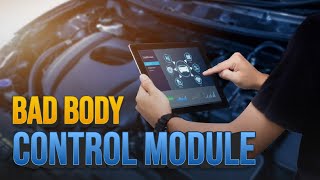
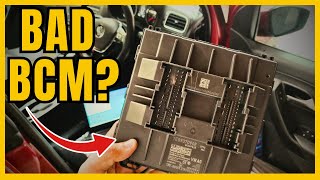
Shop the Parts Behind B3000
Below are the parts most often responsible for code B3000, ranked by how frequently each one is the actual culprit (per the diagnosis above). Tap any to see what we have for your vehicle.
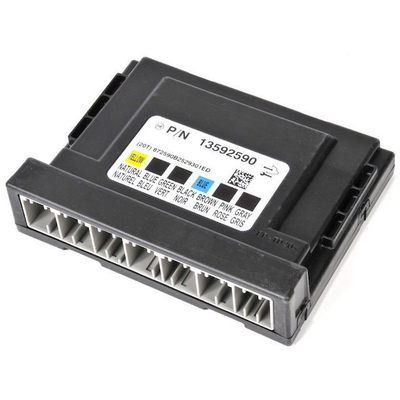




The information in this article is provided for general reference and educational purposes only. Vehicle specifications, procedures, and part compatibility can vary by production date, trim level, and region. Always consult your vehicle's factory service manual and verify part numbers before purchasing or performing repairs. Safety-critical components such as airbags, seat belts, and braking systems should be installed by a qualified professional.
- 🧭 Diagnostic Flowchart
- 🎬 Helpful Videos
- 🛍️ Shop This Part
- What Does B3000 Mean?
- Can I Drive With B3000?
- Common Causes
- Symptoms
- Common Fixes & Costs
- DIY vs Professional
- Used vs. New Parts: Buying Guide
- What Happens If You Wait — Timeline
- Cost of Not Fixing It
- Diagnosis Steps
- When This Code Triggers (Freeze-Frame Conditions)
- Related Codes
- Climate & Environmental Factors
- How to Talk to a Mechanic About This Code
- Where to Take It: Dealer vs Independent vs Chain
- When to Walk Away From the Repair
- What Scan Tool You Need for This Code
- How to Clear the Code After You Fix It
- Will This Fail Emissions / State Inspection?
- Most Commonly Affected Vehicles
- Manufacturer-Specific Notes
- Real Owner Stories
- 2008 Mazda CX-7 with No-Start and Electrical Gremlins
- 2000 Mazda B3000 (Ford Ranger) with Crank-No-Start
- 2011 Mazda MX-5 with Sudden No-Start
- How to Prevent This Code From Triggering
- Frequently Asked Questions
- Why does my scanner show B3000 but online it says it's for a Mazda B3000 truck?
- Can I fix a B3000 code myself?
- Will clearing the code make it go away?
- How much does it cost to diagnose a B3000 code?
- Is it safe to buy a used Body Control Module (BCM)?
- Can a weak battery cause code B3000?
- My theft light is flashing rapidly, is this related to B3000?
- What is the difference between B3000 and U3000:49?
- Key Takeaways
- 🎟️ Get 5% Off