

B3000 on 2014-2017 Mazda MAZDA6: Understanding an Undocumented 'Ghost' Code
The code B3000 is not a valid, documented trouble code for a 2014-2017 Mazda MAZDA6. It almost always indicates an error with the scan tool being used, especially consumer-grade models. Before taking any action, re-scan the vehicle with a professional-grade or Mazda-specific diagnostic tool like FORScan.
- B3000 is not a recognized fault code for the 2014-2017 Mazda MAZDA6.
- The most probable cause for seeing this code is an error from a consumer-grade OBD-II scanner.
- Do NOT replace any parts based solely on a B3000 reading.
- The first and only initial step is to have the vehicle re-scanned with a professional, Mazda-compatible diagnostic tool like FORScan to find the true fault.
- Do not confuse this code with information about the old Mazda B3000 pickup truck.
What's Unique About the 2014-2017 Mazda MAZDA6
The primary issue with code B3000 on a Mazda MAZDA6 is the widespread confusion with the Mazda B3000 pickup truck, a rebadged Ford Ranger produced from 1994-2008. Many databases and even some official Mazda documents mention 'B3000' in the context of this truck, leading to incorrect search results about fuel systems or unrelated check engine light causes. For the MAZDA6 sedan, this code should be treated as a 'ghost code' or data error until proven otherwise by a high-quality, Mazda-compatible scan tool like FORScan 🎬 Watch: How to use FORScan to read your Mazda's codes. or a professional iCarsoft/Autel unit.
Diagnostic Flowchart
Tap your situation to follow the diagnostic path that matches what you're seeing on this vehicle.
Symptoms You May Notice
- No symptoms are directly linked to code B3000, as it is not a defined fault.
- If other electrical issues are present (erratic wipers, turn signals, power locks, multiple warning lights), these may be symptoms of a failing Body Control Module (BCM), which could theoretically produce an undefined code on some scanners.
- A parasitic battery drain that kills the battery overnight can be a symptom of a faulty BCM that is failing to go into a 'sleep' state.
- The infotainment screen exhibiting 'ghost touch' or phantom inputs is a known issue on this platform, but is related to the Connectivity Master Unit (CMU), not typically the BCM. 🎬 See this walkthrough on fixing Mazda 6 ghost touch issues.
- Replacing parts based on the B3000 code alone. This code provides no specific diagnostic direction.
- Confusing the trouble code 'B3000' with information related to the 'Mazda B3000' pickup truck.
Most Likely Causes
- Scan Tool Error or Incompatibility 🔴 High Probability Generic or consumer-grade OBD-II scanners may not be fully compatible with Mazda's specific diagnostic protocols (CAN-bus network), leading to the display of 'ghost' codes. This is the most common reason for seeing a B3000 code.
How to confirm: Re-scan the vehicle's modules using a different, professional-grade scanner (Autel, Snap-on) or a Mazda-specific tool like FORScan with a compatible adapter. If the code does not reappear, the original reading was an error.
Typical fix: No repair is needed on the vehicle. Use a more reliable scan tool for future diagnostics.
Est. part cost: $0 - Internal Control Module Failure (BCM or RCM) ⚪ Low Probability While not common, any complex electronic module like the Body Control Module (BCM) or Restraints Control Module (RCM/SRS) can fail internally. Water intrusion from a leaking windshield seal or clogged sunroof drain is a known cause of BCM failure on Mazda6 models, though more documented on the prior generation. An internal fault could be misinterpreted as B3000 by a generic scanner.
How to confirm: A professional scan tool must be used to attempt communication with individual modules (BCM, RCM, PCM, etc.). The module that is unresponsive or reports an internal, un-specified error (often alongside U-series communication codes) is the likely culprit.
Typical fix: Replace the faulty control module. This repair requires programming the new module to the vehicle's VIN and configuration, which must be done by a dealer or a qualified independent shop using software like FORScan.
Est. part cost: $300-$1200
Diagnosis Steps
- Confirm the code is not a 'ghost code'. Re-scan the vehicle with a high-quality, professional scan tool (e.g., iCarsoft, Autel) or Mazda-specific software like FORScan. If B3000 does not return, no further action is needed.
- If the code reappears on a professional tool, identify which module stored the code (e.g., BCM, RCM, etc.). The tool should specify the source module.
- Check for any other stored Diagnostic Trouble Codes (DTCs), especially U-series codes, that provide more specific information about communication failures.
- If no other codes are present but electrical symptoms exist, perform a visual inspection of the likely suspect module (often the BCM, located in the driver's or passenger's footwell area) and its connectors for signs of water damage or corrosion.
- If wiring is intact and the module is unresponsive or continues to report an internal fault, the module itself has likely failed and requires replacement and programming.
Parts You'll Likely Need
- Body Control Module (BCM)
Related Codes That Often Appear With This One
- U-series codes (e.g., U0140, U0401, U3003) — If B3000 is triggered by a genuine module fault, it will likely be accompanied by U-series (network communication) codes, indicating that a module is not communicating correctly with the rest of the vehicle.
- P0601-P0607 — These codes indicate internal control module memory or processor faults. A generic scanner might misinterpret one of these specific PCM/ECM faults as a generic B3000 body code.
Technical Service Bulletins (TSBs) & Recalls
- MT-002-21a / MT-002-21: These TSBs discuss fuel compatibility and mention 'B3000', but they explicitly refer to the 1999-2001 Mazda B3000 *truck*, not a trouble code on a MAZDA6. They are a common source of confusion.
Platform-Specific Known Issues
- BCM Failure due to Water Intrusion: On older Mazda6 generations, BCM failure was commonly linked to water leaking from clogged sunroof drains or a bad windshield cowl seal, dripping onto the module in the A-pillar/footwell area. While less documented on the 2014-2017 models, it remains a plausible cause for BCM-related electrical chaos that could be misread as a B3000 code.
Mechanic-Grade Diagnostic Values
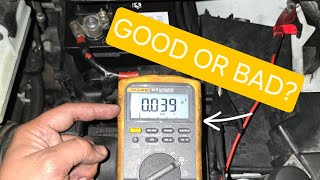
- Parasitic Battery Draw — expected: Around 55 mA or less after the vehicle has entered its 'sleep' mode (approx. 15-30 minutes after shutdown).. Failure: 🎬 Watch: How to test for parasitic battery draw with a multimeter. A sustained draw above 70-90 mA indicates a module or component is not shutting down properly. Draws of several hundred mA are common with a failing BCM or related component.
Scan Tool Commands That Help
- FORScan: BCM Module Configuration (As-Built format) — When replacing the BCM with a used unit. This function allows you to read the configuration data from the old BCM, save it to a file, and write it to the replacement module to ensure all vehicle options work correctly.
- FORScan: Clear DTCs (in BCM) — As a reset procedure. Some BCM-controlled outputs (like lights) are protected by internal Field-Effect Transistors (FETs). A short circuit can trip a FET, disabling the circuit. Clearing codes can sometimes reset the FET and restore function without replacing the module.
- Mazda IDS (Dealer Tool): Module Configuration / Programmable Module Installation (PMI) — This is the official dealer procedure for replacing a BCM. It saves the configuration of the original module and transfers it to the new one, and also performs necessary security procedures like key programming.
Wiring & Ground Locations
- Body Control Module (BCM) — Integrated with the interior fuse box, located in the passenger footwell, behind the kick panel and a small cover.. This is the primary module suspected of failure when unexplained electrical issues occur. Its location makes it susceptible to water damage from a leaking windshield or clogged sunroof drain, a common failure point.
- Main Chassis/Battery Ground — The primary ground strap from the negative battery terminal to the vehicle's chassis, typically near the battery.. A corroded or loose main ground can cause a wide range of bizarre electrical symptoms that can be mistaken for a module failure. Cleaning and tightening this ground is a critical first step in diagnosing any electrical problem.
- Engine/Transmission Ground — There are several ground points on the engine and transmission. One key ground is located on a bracket on top of the transmission.. Poor engine-to-chassis grounds can cause issues with charging, starting, and sensor readings. While less likely to cause BCM-specific symptoms, they contribute to overall electrical instability.
Real Owner Repair Stories
- Mazdaspeeds.org forum user 'originalmarshmello' (Mazda (model not specified, but behavior is relevant)) — A persistent 130mA parasitic battery drain traced to the 'ROOM' and 'BTN' fuses. The battery would die over time.
❌ Tried (didn't work) Inspecting the BCM/PJB (Passenger Junction Box) visually, which showed no damage. Pulling fuses isolated the circuit but didn't identify the specific component.
✅ What actually fixed it Replacing a faulty passenger door sensor. The sensor was faulty in a way that it turned the 'door open' light off on the dash, but never sent the proper signal to the BCM to allow the car to enter its low-power sleep mode. - Mazda6Club forum user (2009 Mazda 6) — Parasitic draw of 0.09 Amps (90mA) from the 'Room' circuit. Battery would drain in about 5 days.
❌ Tried (didn't work) Initial diagnosis pointed towards a BCM issue or other components on the 'Room' fuse circuit.
✅ What actually fixed it The user discovered an aftermarket OBD-II interface, which was connected to the car for an Android head unit, was preventing the vehicle's electronics from going to sleep. Removing the device resolved the parasitic drain.
OEM Part Supersession History
GJR9-67-560→Various— Part numbers for the BCM are extremely specific to the vehicle's model year, trim, and installed options (e.g., i-ELOOP, advanced keyless entry).
Heads up: You must physically inspect and match the part number from the original BCM. A BCM from a car with different options may physically fit but will not function correctly, even after programming. For example, part number G46C675Y0B is specifically cited for 2015-2016 models.
Model Year Variations Within This Range
- 2016-2017: The 2016 model year received a significant interior and electronic refresh, including a new dashboard and infotainment system. This can affect BCM part numbers and programming procedures compared to the 2014-2015 models. Always verify part numbers on the physical unit.
- All (trim dependent): Vehicles equipped with the i-ELOOP regenerative braking system have a different electrical architecture. This may require a specific BCM part number. It is critical to match the part number from the original module to ensure compatibility.
Helpful Videos
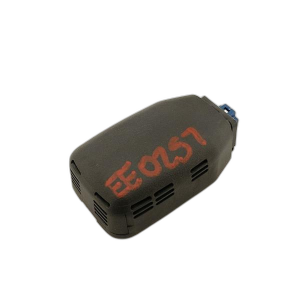
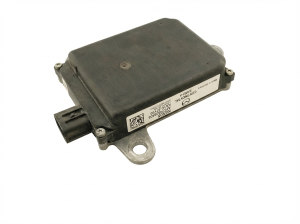
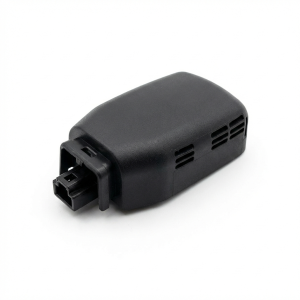
We Have This Part in Stock

The information in this article is provided for general reference and educational purposes only. Vehicle specifications, procedures, and part compatibility can vary by production date, trim level, and region. Always consult your vehicle's factory service manual and verify part numbers before purchasing or performing repairs. Safety-critical components such as airbags, seat belts, and braking systems should be installed by a qualified professional.
- Mazda MAZDA6:
- 🧭 Diagnostic Flowchart
- 🎬 Helpful Videos
- 🛍️ Shop This Part
- What's Unique About the 2014-2017 Mazda MAZDA6
- Symptoms You May Notice
- Most Likely Causes
- Diagnosis Steps
- Parts You'll Likely Need
- Related Codes That Often Appear With This One
- Technical Service Bulletins (TSBs) & Recalls
- Platform-Specific Known Issues
- Mechanic-Grade Diagnostic Values
- Scan Tool Commands That Help
- Wiring & Ground Locations
- Real Owner Repair Stories
- OEM Part Supersession History
- Model Year Variations Within This Range
- 🎟️ Get 5% Off