

OBD-II Code B3055: Key Not Detected
What B3055 means, why it triggers, and how to fix it
- Code B3055 triggers the anti-theft system and completely disables the engine because the vehicle cannot read your key's transponder chip.
- Before buying parts, test your spare key and unplug all 12V chargers or dash cams to rule out the two most common causes: a dead key chip and radio frequency interference.
- If you drive a 2014-2018 GM truck, inspect and clean the G218 ground point under the driver's side dash before replacing any security modules.
- Replacing a key or ignition lock cylinder requires a 30-minute security relearn procedure or professional programming tools to sync the new components.
What Does B3055 Mean?

B3055 means your car's Body Control Module (BCM) or Theft Deterrent Module (TDM) cannot detect the security chip in your key. Without this verification, the anti-theft system disables the engine as a safety measure.
Technical definition: The official SAE/ISO definition for B3055 is "No Transponder Modulation or No Transponder". The immobilizer module energizes the key's chip with a 125 kHz radio frequency signal via an exciter coil. B3055 sets when the module receives no return signal.
Can I Drive With B3055?
No — Do Not Drive. The vehicle's anti-theft system prevents the engine from starting or causes it to stall immediately, leaving you stranded. On specific models, if the fault occurs while driving, the car enters a 'fail enable' state and continues to run, but will not restart once turned off.
Common Causes

- Defective or Damaged Ignition Key (Very Common) — The transponder chip inside the key head fails internally, gets damaged from drops, or wears out over time. This is the most common reason for a B3055 code. Even a cracked key housing causes this fault.
- Radio Frequency Interference (RFI) & Aftermarket Mods (Very Common) — Devices like phone chargers, dash cams, wireless chargers, and improperly installed remote starts interfere with the key's signal. GM TSB PIC5650M specifically warns that RFI is a frequent cause and must be checked before replacing parts.
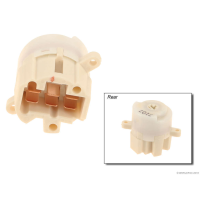
- Faulty Ignition Lock Cylinder / Transceiver (Common) — The transceiver—an antenna ring (exciter coil) around the ignition cylinder that reads the key—fails. This part is integrated into the lock cylinder housing and is a frequent failure point on GM models.
- Improper Key Position (Flip Keys) (Less Common) — On vehicles with a flip-style key, if the blade is not fully extended and locked straight, the transponder chip sits too far from the transceiver to be read. GM TSB PIT5030E addresses this specific user error.
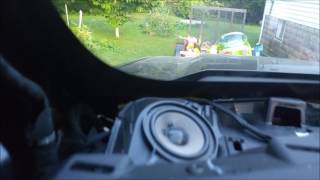
- Poor Ground Connection (Less Common) — On 2014-2018 GM trucks, a corroded G218 ground under the driver's side dashboard causes an intermittent BCM connection, triggering B3055. Sound-deadening material often gets trapped under this specific ground nut. 🎬 Watch: How to locate and clean the G218 ground point.
- Dead or Weak Key Fob Battery (Less Common) — On newer vehicles with push-to-start ignitions, a dead battery in the key fob prevents the vehicle from detecting its presence. Most vehicles have a backup slot in the center console to start the car with a dead fob.
- Low Vehicle Battery Voltage (Rare) — Security modules require at least 12.4V to operate correctly. A weak car battery causes intermittent communication errors and triggers security codes, usually accompanied by other electrical symptoms.
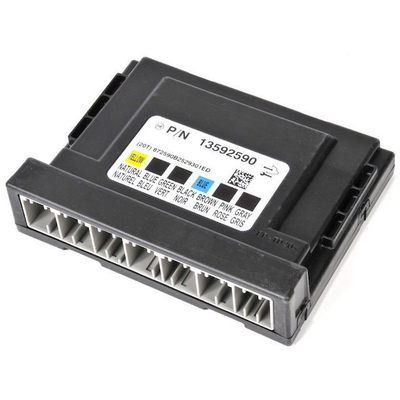
- Faulty Body Control Module (BCM) or Wiring (Rare) — The BCM itself fails, or the wiring between the ignition cylinder and the BCM chafes and breaks. This is the last component to check after ruling out all other causes.
Symptoms

- Engine will not crank or start — You turn the key and hear nothing, or just a single click from a relay. The starter motor is intentionally disabled by the security system.
- Engine starts and immediately stalls — The engine fires up for a second and shuts off as the anti-theft system cuts fuel and spark.
- Security light is on or flashing — The dashboard displays a warning light with a car and a lock or key symbol, indicating an active anti-theft fault.
- Message on Driver Information Center (DIC) — The dash displays messages like "Service Theft Deterrent System" or "No Key Detected".
- Intermittent no-start condition — The vehicle fails to start randomly but works perfectly on a subsequent attempt. This points heavily to RFI, a failing key transponder, or a poor ground.
- Immobilizer data PID shows 'Key Not Detected' (scan-tool only — no driver-felt sign) — On a professional scan tool, the live data parameter for the transponder key status reads 'Not Present' even when the key is turned to ON.
Diagnostic Flowchart
Tap your situation to follow the diagnostic path that matches what you're seeing on this code.
Common Fixes & Costs
- Replace Ignition Key — Parts: $70-$400, Labor: $50-$250, ~0.8 hr book time (Professional)
- Remove Source of RFI — Parts: $0, Labor: $0-$125, ~1 hr book time (DIY)
- Replace Ignition Lock Cylinder Housing — Parts: $60-$180, Labor: $136-$300, ~1.5 hr book time (Intermediate)
- Repair Poor Ground Connection — Parts: $0, Labor: $100-$200, ~1.2 hr book time (DIY)
- Replace Body Control Module (BCM) — Parts: $250-$800, Labor: $150-$400, ~2 hr book time (Professional)
Used vs. New Parts: Buying Guide
When a used part is worth it: A used ignition lock cylinder from a low-mileage donor saves money but requires programming its included keys to your vehicle. Never buy a used Body Control Module (BCM) because they are VIN-locked and require complex dealer programming.
Donor-vehicle mileage cap: roughly under 80000 miles for the part to have meaningful remaining life.
Donor quality checklist:
- For lock cylinders, ensure the key turns smoothly without binding.
- Verify the part number exactly; electronics from a different model year will not communicate.
- Avoid purchasing used transponder keys, as they are single-use and cannot be reprogrammed.
Decision logic:
- If The fault is a bad key → Buy a new OEM or high-quality aftermarket key. Used keys cannot be reprogrammed.
- If The fault is the ignition lock cylinder → A new aftermarket part (e.g., Dorman) is the best balance of cost and reliability.
- If The fault is the BCM → Buy a new or professionally remanufactured OEM part. Avoid used BCMs.
Warranty tradeoff: Used parts typically have a 30-90 day warranty. New aftermarket parts offer a 1-year to limited lifetime warranty. New OEM parts carry a 1-2 year warranty.
Worst-case if a used part fails: $200-$500 if a used electronic part fails after installation, requiring repeat labor and a new part.
What Happens If You Wait — Timeline
- Immediate (First Occurrence): An intermittent no-start occurs. The security light flashes, and the car starts on the second or third try. Often caused by RFI or early-stage key failure. (MPG impact: 0%% · Added cost: $0)
- 1-4 Weeks: No-start events become frequent. The vehicle is highly unreliable, and the owner wastes time attempting relearn procedures. (MPG impact: 0%% · Added cost: $50-$100 in lost time and alternative transportation.)
- 1-2 Months: The fault becomes near-permanent. The vehicle fails to start almost every time, requiring an emergency tow. (MPG impact: 0%% · Added cost: $75-$200 for a tow, plus the cost of an urgent repair.)
- 2+ Months: The vehicle is completely undrivable. Frustration leads to costly misdiagnosis, such as unnecessarily replacing the starter or battery. (MPG impact: 0%% · Added cost: $300-$1200+ in potential misdiagnosis costs.)
Cost of Not Fixing It
- Immediate: Vehicle will not start or will start and immediately stall, leaving you stranded. (Added cost: $75-$200 for a tow.)
- 1-7 Days: Repeated intermittent no-start events lead to extreme unreliability and wasted time attempting relearn procedures. (Added cost: Cost of alternative transportation and lost time.)
- 1+ Month: The vehicle remains completely undrivable until repaired. No progressive mechanical damage occurs. (Added cost: N/A)
Diagnosis Steps

- Try Your Spare Key
Start the vehicle with a known-good spare key. If the spare key works consistently, the original key is faulty and must be replaced.
Tools: Spare key (Beginner) - Eliminate Radio Frequency Interference (RFI)
Remove all other keys and RFID cards from your keychain. Unplug all aftermarket devices like phone chargers, dash cams, and USB cables from the vehicle's power outlets and try starting again.
Tools: None (Beginner) - Check Flip Key Position
If you have a flip-style key, fully extend and lock it in the straight position before inserting it into the ignition. An angled key head prevents the signal from being read.
Tools: None (Beginner) - Attempt the Security Relearn Procedure
Turn the key to 'ON' (without starting). Wait 10 minutes until the security light turns off. Turn the key 'OFF' for 30 seconds. Repeat this process two more times (30 minutes total) to resolve communication glitches.
Tools: Watch or timer (Beginner) - Check Vehicle Battery Voltage
Measure the main vehicle battery voltage. A reading below 12.4 volts indicates a weak battery causing electronic faults.
Tools: Multimeter (Intermediate) - Inspect Ground G218 (2014-2018 GM Trucks)
Locate ground G218 under the driver's side dash trim near the A-pillar. Remove the nut, pull back any trapped insulation, clean the terminal and body with a wire brush, and re-secure tightly.
Tools: Socket set, wire brush, trim removal tools (Intermediate) - Monitor Scan Tool Live Data
Navigate to the BCM or TDM data list. Monitor 'TDM Transponder Key'. If it reads 'Not Present' with a valid key turned to 'ON', the BCM is not receiving the key's signal.
Tools: Bi-directional scan tool (Professional) - Test Exciter Coil Resistance
Disconnect the battery. Measure the resistance across the ignition lock cylinder's exciter coil wires. Expect 5 to 20 ohms. A reading of infinity (OL) indicates a failed coil.
Tools: Multimeter, vehicle-specific wiring diagram (Advanced) - Check BCM Ground Circuit Resistance
Measure the resistance between the BCM's main ground pin and a clean chassis point. A reading higher than 10 ohms indicates a poor ground connection or broken wire.
Tools: Multimeter, vehicle-specific wiring diagram, back-probe pins (Advanced) - Observe Transponder Signal with Oscilloscope
Back-probe the signal wire from the exciter coil to the BCM. Look for a 125kHz carrier wave followed by a modulated return signal from the key. No return signal confirms a bad key or coil.
Tools: Oscilloscope, back-probe pins, wiring diagram (Professional)
When This Code Triggers (Freeze-Frame Conditions)
- Ignition Status: ON (The fault logs when the key is turned to the 'ON' or 'RUN' position.)
- Engine Speed: 0 RPM (This code sets before the engine cranks, as the security system disables the starter.)
- Battery Voltage: 9.5V - 12.5V (The fault occurs with normal voltage, but is highly likely if voltage drops below 12.4V.)
- Transponder Key Status: Not Present / Unknown (The module reports it is not receiving a valid key signal.)
Related Codes
- B3060 — B3055 means 'No Key Signal Detected', while B3060 means 'Unprogrammed Key'. If you see B3060, the car reads a key but doesn't recognize it.
- B3935 — B3935 means 'Transponder Authentication Failed'. The car read the key's signal but the key failed the security handshake, often due to a cloned key or RFI.
- P0513 — A generic engine computer code for 'Incorrect Immobilizer Key'. The BCM sets B3055 and tells the PCM to disable the engine, causing the PCM to log P0513.
- C0750-C0775 — Tire Pressure Monitor (TPM) codes. Severe RFI jams the Remote Control Door Lock Receiver (RCDLR), causing it to set both security codes and TPMS codes simultaneously.
Climate & Environmental Factors
- Cold Weather: Low temperatures reduce the efficiency of the key fob's lithium-ion battery, causing a weak signal. Cold also makes plastic components brittle.
- Humidity: High humidity promotes corrosion on critical electrical connections, especially ground points like G218, and causes condensation inside key fobs.
How to Talk to a Mechanic About This Code
Say this: "I have a no-start condition with the security light on, and my scanner shows code B3055. I've already tried my spare key and removed all phone chargers to rule out RFI. Please check the ignition lock cylinder and its wiring before quoting a BCM replacement."
This signals you are an informed consumer. It directs the shop to follow a logical diagnostic path, prevents them from immediately jumping to a costly BCM replacement, and saves diagnostic time.
Avoid saying:
- 'My car won't start, I think it's the computer.'
- 'Just fix it, whatever it takes.'
- 'The internet said to replace the BCM.'
Questions to ask before authorizing the repair:
- Did both of my keys fail to start the car?
- If you are recommending a new key, can you show me the failure on a transponder tester?
- If you are recommending an ignition lock cylinder, what was the resistance reading of the old part's transceiver coil?
- If you are recommending a BCM, can you confirm you have ruled out the key, RFI, the ignition cylinder, and all related wiring and grounds first?
- Does this repair require programming, and is that included in the quote?
Where to Take It: Dealer vs Independent vs Chain
- Dealer:
Best for: Vehicles under warranty., Complex Body Control Module (BCM) replacement and programming., When you want a guaranteed fix with OEM parts.
Downsides: Highest labor rates and part costs., May be less willing to try smaller fixes (like a ground repair) before suggesting a full module replacement. (Typical cost: +50% vs. baseline) - Independent Shop:
Good fit, provided they are a reputable shop with modern diagnostic tools capable of reading body codes and performing security relearn procedures.
Best for: Diagnosing common B3055 causes like a faulty ignition lock cylinder., Out-of-warranty vehicles where cost is a major factor., Investigating known TSBs like the GM G218 ground issue.
Downsides: Must be a well-equipped shop with access to professional scan tools. May not have the ability to program all keys/modules in-house. (Typical cost: +0% vs. baseline) - Chain Shop:
AVOID for B3055 diagnosis and repair. This is not a simple parts-swap issue and is outside their typical area of expertise.
Best for: Simple, unrelated maintenance like oil changes or tires.
Downsides: Technicians often lack the specialized training and tools for security system diagnostics. High potential for misdiagnosis. (Typical cost: -10% vs. baseline)
When to Walk Away From the Repair
If the estimated repair cost for a B3055 fault exceeds 40-50% of the car's private-party value, consider selling the vehicle as-is. A BCM replacement on a low-value older car often triggers this threshold.
- Car worth $3000, fix is $1400: Walk away. A BCM replacement quote on a low-value car is a classic 'walk away' scenario.
- Car worth $15000, fix is $450: Fix it. A new key and programming is a common repair and is well below the threshold.
- Car worth $8000, fix is $600: Borderline, but likely fix it. A new ignition lock cylinder is a significant but reasonable repair. Get a second opinion to confirm the diagnosis.
What Scan Tool You Need for This Code
Minimum: A scanner that can read GM-specific Body Control Module (BCM) codes. A basic $20 reader that only pulls 'P' (Powertrain) codes is not sufficient and will show 'No Codes Found'.
A basic code reader cannot see 'B' (Body) codes like B3055. You need a scanner that can read live data from the BCM, such as 'Transponder Key Status', to see if the car detects the key.
Rent vs buy: For a one-time check, some auto parts stores offer a free code reading service, but their basic loaner tools often cannot read BCM codes. If you plan to DIY the repair, buying a mid-range scanner is a good investment.
How to Clear the Code After You Fix It
- Use an OBD-II scan tool to clear the code from the BCM/TDM history.
- If a new key or module was installed, perform the required security relearn procedure.
- Start the vehicle successfully several times to confirm the fix.
Drive cycle (~5 minutes): A specific drive cycle is not required. A current B3055 code clears as soon as a valid key is detected and the engine starts.
Readiness monitors affected: None directly by the code, All monitors if the battery was disconnected for the repair
Before emissions retest: drive at least 100 miles to fully set monitors.
Watch out for:
- Disconnecting the battery does not reliably clear a B3055 code and resets all emissions monitors.
- The code returns immediately if the root cause (bad key, faulty cylinder, RFI) is not corrected.
- Forgetting to perform the security relearn procedure after replacing a component prevents the car from starting.
Will This Fail Emissions / State Inspection?
Yes — this code typically fails an OBD-II emissions inspection.
- California: A B3055 code causes an automatic smog check failure. The active security light constitutes a failed bulb check.
- New York: The NYS inspection includes checking for illuminated malfunction indicators. The active security light results in failure.
- Texas: In emissions counties, an active B3055 and security light causes the vehicle to fail the OBD portion of the inspection.
Most Commonly Affected Vehicles
- Chevrolet Equinox (2007-2017) — Frequently caused by a faulty ignition lock cylinder housing or issues with flip-key position on 2010+ models.
- Chevrolet Silverado 1500 (2014-2018) — Highly prone to issues from a poor G218 ground connection under the driver's side dash.
- Pontiac Vibe (2003-2010) — Failures are often the key or the theft deterrent module.
- Chevrolet Captiva (2008-2012) — Commonly affected by failures of the key transponder or the ignition lock cylinder.
- Chevrolet Spark (2016-2022) — Highly susceptible to RFI from aftermarket chargers and weak key fob batteries.
- Buick Enclave (2016-2023) — Highly sensitive to RFI and issues with flip-key positioning.
- Chevrolet Malibu (2007-2014) — Commonly experiences failures of the ignition key transponder or the ignition lock cylinder.
- GMC Sierra 1500 (2007-2018) — Often triggered by RFI or issues with flip-key positioning. The 2014-2018 models are affected by the G218 ground issue.
Manufacturer-Specific Notes
- General Motors (GM): GM has multiple TSBs for this code. PIC5650M warns about RFI from aftermarket electronics. PIT5030E notes flip-style keys not fully extended cause the code. PIT5405C details repairing the G218 ground on 2014-18 trucks.
- Saab: On GM-based Saabs, B3055 points to a failure in the Column Integration Module (CIM) or the Theft Warning Integrated Central Electronics (TWICE) module, requiring a Tech 2 tool to program.
- Saturn: On the Opel-based Saturn Astra, B3055 points to a failure of the Column Integrated Module (CIM). On the Vue and Aura, the failure is typically the ignition lock cylinder or key.
- Cadillac: The Pass-Key III+ system sends a challenge-response code to the key after the initial read. A failure during this second step sets B3055.
Real Owner Stories
2013 Chevrolet Malibu with 110K miles - Intermittent No-Start
The car randomly failed to start, with no crank and the security light on. It eventually died completely in a parking lot.
What they tried:
- Checked the battery (healthy 12.8V).
- Replaced the key fob battery (no change).
- Scanned for codes, revealing B3055 00: No Transponder Modulation.
- Checked for RFI by removing other keys and devices.
Outcome: After clearing codes and ensuring no other RF devices were near the ignition, the car started reliably. The intermittent issue was caused by radio frequency interference.
Lesson: Don't underestimate RFI. Before suspecting expensive components, unplug all aftermarket chargers and remove other fobs from your keychain.
2014 Chevrolet Silverado - Misdiagnosis and Wasted Money
Truck intermittently failed to start, displaying numerous service codes. A shop was unable to find the cause after two days.
What they tried:
- Replaced the main battery ground cable.
- Shop tested all battery cables and grounds but found no obvious faults.
- Owner suspected a faulty ECM or BCM.
Outcome: The owner removed the dash panel, found sound-deadening material under the G218 ground nut, cleaned the contact point thoroughly, and re-secured it. This completely solved all electrical issues.
Lesson: For 2014-2018 GM trucks, the G218 ground is a notorious failure point. You must remove the nut and physically clean the contact surfaces.
2013 Chevrolet Equinox - Failing Key Transponder
Car had an intermittent no-start with the security light on. Code B3055 was stored.
What they tried:
- Clearing the code only worked temporarily.
- A technician used a key tool to test the signal from the original key and confirmed it was intermittent.
Outcome: A technician cloned the data from the failing transponder onto a new chip and installed it inside the original key fob housing. This resolved the B3055 code permanently.
Lesson: If your spare key works perfectly, the problem is your primary key. A locksmith with cloning tools is often a faster and cheaper solution than a dealership.
How to Prevent This Code From Triggering
- Protect the Key from Physical Damage (Daily Habit) — Dropping the key on hard surfaces damages the internal transponder chip. Use a silicone key cover to cushion against impacts.
- Keep Keys Dry and Clean (As Needed) — Moisture causes short circuits or corrosion in the key's electronics. Periodically use compressed air to clean lint from the ignition cylinder.
- Proactively Replace Key Fob Battery (Every 2-3 Years) — On push-to-start systems, a weak fob battery causes intermittent detection issues. Replacing it is a simple, $5 fix.
- Avoid Low-Quality Aftermarket Chargers (Ongoing) — Cheap, unshielded USB chargers are a major source of Radio Frequency Interference (RFI) that jams the 125kHz signal the car uses to read the key.
- Maintain Vehicle Battery and Grounds (Annually) — Security modules are sensitive to low voltage. Cleaning battery terminals and checking major ground connections ensures the modules receive stable power.
Frequently Asked Questions
I hear a click but the engine won't crank. Is it my starter?
It is not your starter. The 'click' is a relay, and B3055 means the anti-theft system intentionally disabled the starter circuit. Diagnose the security fault instead of replacing the starter.
Can I just get a cheap key copy made?
No, a mechanical copy without a programmed transponder chip will not work. Using a non-transponder key triggers B3055 and prevents the engine from starting.
Why did my car start and then die?
The system allows the engine to start briefly before completing the security check. When the BCM fails to detect a valid key, it cuts fuel and spark as a theft deterrent.
My scan tool shows P3055, is that the same thing?
No, they are completely different. B3055 is a security key issue, while P3055 is a Powertrain code for the DC/DC Converter on newer GM vehicles. Confusing them leads to expensive misdiagnosis.
Can I permanently bypass the Passlock/Passkey system?
Permanently bypassing the system with resistors or software tunes is not recommended. It compromises vehicle security and causes secondary electrical issues. Repair the system correctly.
Why does my spare key work but the main one doesn't?
This confirms the transponder chip in your primary key has failed. You must replace the broken key and program the new one to your vehicle.
What does the symptom byte '00' mean with B3055?
The '00' symptom byte means 'No Transponder Modulation'. This confirms the control module energized the key but received absolutely no return signal, pointing to a dead key or broken transceiver coil.
Key Takeaways
- Code B3055 triggers the anti-theft system and completely disables the engine because the vehicle cannot read your key's transponder chip.
- Before buying parts, test your spare key and unplug all 12V chargers or dash cams to rule out the two most common causes: a dead key chip and radio frequency interference.
- If you drive a 2014-2018 GM truck, inspect and clean the G218 ground point under the driver's side dash before replacing any security modules.
- Replacing a key or ignition lock cylinder requires a 30-minute security relearn procedure or professional programming tools to sync the new components.
Helpful Videos

Shop the Parts Behind B3055
Below are the parts most often responsible for code B3055, ranked by how frequently each one is the actual culprit (per the diagnosis above). Tap any to see what we have for your vehicle.





The information in this article is provided for general reference and educational purposes only. Vehicle specifications, procedures, and part compatibility can vary by production date, trim level, and region. Always consult your vehicle's factory service manual and verify part numbers before purchasing or performing repairs. Safety-critical components such as airbags, seat belts, and braking systems should be installed by a qualified professional.
- 🧭 Diagnostic Flowchart
- 🎬 Helpful Videos
- 🛍️ Shop This Part
- What Does B3055 Mean?
- Can I Drive With B3055?
- Common Causes
- Symptoms
- Common Fixes & Costs
- Used vs. New Parts: Buying Guide
- What Happens If You Wait — Timeline
- Cost of Not Fixing It
- Diagnosis Steps
- When This Code Triggers (Freeze-Frame Conditions)
- Related Codes
- Climate & Environmental Factors
- How to Talk to a Mechanic About This Code
- Where to Take It: Dealer vs Independent vs Chain
- When to Walk Away From the Repair
- What Scan Tool You Need for This Code
- How to Clear the Code After You Fix It
- Will This Fail Emissions / State Inspection?
- Most Commonly Affected Vehicles
- Manufacturer-Specific Notes
- Real Owner Stories
- 2013 Chevrolet Malibu with 110K miles - Intermittent No-Start
- 2014 Chevrolet Silverado - Misdiagnosis and Wasted Money
- 2013 Chevrolet Equinox - Failing Key Transponder
- How to Prevent This Code From Triggering
- Frequently Asked Questions
- I hear a click but the engine won't crank. Is it my starter?
- Can I just get a cheap key copy made?
- Why did my car start and then die?
- My scan tool shows P3055, is that the same thing?
- Can I permanently bypass the Passlock/Passkey system?
- Why does my spare key work but the main one doesn't?
- What does the symptom byte '00' mean with B3055?
- Key Takeaways
- 🎟️ Get 5% Off