

B3055 on 2016-2019 Buick Cascada: No Start Causes and Fixes
This code means your car's security system can't detect the key, causing a no-start. The most common causes are radio frequency interference from other devices on your keychain, a weak key fob battery, or using a worn, non-extended flip key. Start by removing all other fobs and cards from your keychain.
- B3055 means your Cascada's security system doesn't recognize your key, preventing it from starting.
- Before spending any money, the first step is to remove all other fobs, cards, and phone chargers from your keychain and car to eliminate radio interference.
- Make sure your flip key is fully extended and locked straight before inserting it into the ignition.
- If the issue persists, try a spare key or replace the battery in your primary key fob.
- If these simple steps don't work, professional help is needed to diagnose a potential key, module, or wiring fault.
What's Unique About the 2016-2019 Buick CASCADA
The Buick Cascada, an Opel-based convertible, uses a sophisticated radio frequency-based immobilizer system common across many GM vehicles from the 2010s. This system is highly sensitive to interference. A key issue, highlighted in multiple versions of GM Technical Service Bulletin PIC5650, is that various aftermarket devices like phone chargers, LED lights, and even toll passes can 'jam' the signal between the key and the car, triggering a B3055 code. Another common issue, detailed in TSB PIT5030E, is with the flip-key fob itself; if the key isn't fully extended and locked into position, it can be misaligned with the sensor in the ignition, causing an intermittent no-start.
Diagnostic Flowchart
Tap your situation to follow the diagnostic path that matches what you're seeing on this vehicle.
Symptoms You May Notice
- Intermittent no-crank, no-start condition.
- Engine starts and immediately stalls.
- Security indicator light is illuminated on the dashboard.
- "No Fob Detected" message on the driver information center (if equipped with keyless start).
- "Service Theft Deterrent System" message on the driver information center.
- "Theft Attempted" message on the Driver Information Center (DIC).
- Replacing the starter motor. A starter failure typically presents as a single click or no noise, whereas a B3055 security issue will usually have all dashboard lights turn on normally but the engine will simply not crank, often with the security light on.
- Replacing the vehicle's main battery. While a weak battery can cause various electrical issues, B3055 specifically points to a security key communication failure. If the rest of the car's electronics work, the main battery is likely not the cause.
Most Likely Causes
- Radio Frequency Interference (RFI) 🔴 High Probability The vehicle's security system operates on specific radio frequencies (125 kHz, 315 MHz, 433 MHz) that can be easily 'jammed' by common aftermarket electronics like phone chargers, LED lights, USB power banks, and even other key fobs or building access cards on the same keychain.
How to confirm: Remove all other keys, fobs, access cards, and aftermarket electronics (like phone chargers) from the key ring and from inside the vehicle. Try starting the car again. If it starts consistently, one of the removed items was the cause. TSB PIC5650 specifically calls out this diagnostic step.
Typical fix: Isolate and remove the source of the interference from the vehicle or keychain. Advise the customer to keep such items separate.
Est. part cost: $0 - Improperly Extended Flip Key 🟡 Medium Probability The design of the flip key requires it to be fully extended and locked straight. If it's angled, the transponder inside may not align correctly with the exciter coil in the ignition cylinder. This is a known issue documented in GM TSB PIT5030E.
How to confirm: If the car fails to start, remove the key, ensure it is fully clicked open and straight, then re-insert it and try again. If this works, the angle of the key was the issue.
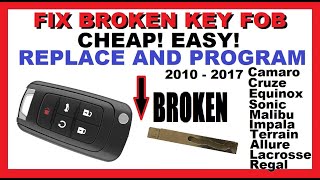
Typical fix: Ensure the key is fully extended before inserting it into the ignition. If the key is worn and loose, it may need to be replaced. 🎬 See how to swap your key blade to a new fob.
Est. part cost: $0-$350 - Defective or Weak Key Fob 🟡 Medium Probability → Shop Keyless Entry Transmitter The internal battery in the key fob powers the transponder. A weak battery or internal damage to the key's transponder chip can prevent it from sending a strong enough signal. In some cases, the transponder chip itself fails, which is a known, though less common, issue on similar GM keys.
How to confirm: First, replace the CR2032 battery in the key fob. 🎬 Watch: A quick guide to replacing your Cascada key battery. If that doesn't work, try starting the vehicle with a spare key. If the spare key works reliably, the primary key is faulty. A professional can test the key's signal output.
Typical fix: Replace the key fob battery. If the key is damaged or the internal transponder has failed, it will need to be replaced and programmed to the vehicle by a dealer or locksmith.
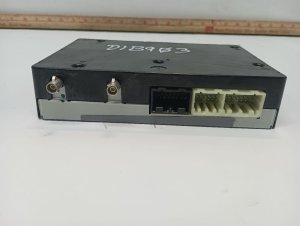
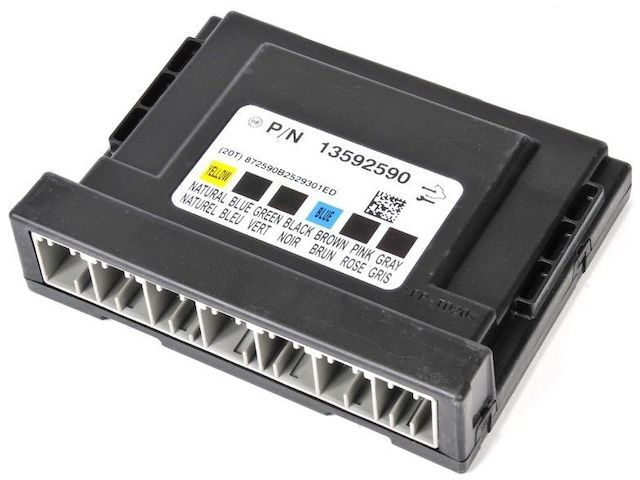
Est. part cost: $5-$350 - Faulty Body Control Module (BCM) ⚪ Low Probability → Shop Body Control Module While less common, the BCM is the central component in this system and can fail internally, preventing it from reading any key. As an Opel-based vehicle with unique electronics, parts availability can sometimes be a concern.
How to confirm: This requires professional diagnosis with a scan tool to monitor BCM data and rule out all other possibilities (keys, wiring, interference). If all keys fail to be read and there is no interference, the BCM is the likely culprit.
Typical fix: Replacement of the BCM, which must be programmed to the vehicle. This is a costly repair.
Est. part cost: $400-$800
Rare But Worth Checking
- Faulty Theft Deterrent Exciter Module/Antenna: → Shop Antenna This is the small coil around the ignition lock cylinder that energizes the key's transponder. If it fails, it cannot power up the key to get a signal. It's a rare failure but should be considered if new keys don't solve the issue. Diagnosis involves checking resistance and wiring between this module and the BCM.
Diagnosis Steps
- Verify the complaint. Confirm the no-crank/no-start condition and check for an illuminated security light or message on the DIC.
- Scan for all DTCs. Note B3055 and any other related codes 🎬 Watch a professional diagnostic scan for the B3055 code. like B3060, B3935, or TPMS codes. Check for symptom bytes (e.g., B3055 48) which can provide more specific information.
- Inspect the keychain. Per TSB PIC5650, remove ALL other keys, fobs, and RFID cards (toll passes, work badges, etc.) from the key ring.
- Inspect the key. If it's a flip key, ensure it is fully extended and locked straight, as per TSB PIT5030E. Try starting the vehicle again.
- Test with a spare key. If a spare key is available, try starting the vehicle with it. If the spare works, the original key is faulty.
- Replace the key fob battery (CR2032). This is a cheap and easy step to rule out a weak signal.
- Check for RFI sources inside the car. Unplug any aftermarket phone chargers, dash cams, LED lights, or other electronic devices and re-test. This is a major cause according to GM.
- Perform a key relearn procedure. In some cases, a 10-minute or 30-minute relearn procedure (cycling the key in the 'On' position) can resynchronize the system, though this is more common after component replacement.
- If the problem persists, professional diagnosis is needed to test the circuits for the theft deterrent exciter module and the Body Control Module (BCM) using a multimeter and schematics. Check the main BCM ground point (G103) for corrosion or looseness.
Parts You'll Likely Need
- Key Fob Battery
(OEM #CR2032)— The most common and cheapest fix for a weak transponder signal.
Trusted brands: Energizer, Duracell, Panasonic
OEM price range: $5-$10
Aftermarket price range: $2-$8 - Ignition Key / Fob
(OEM #13599912, 13586490 (Confirm by VIN))— The transponder chip inside the key can fail, or the flip mechanism can wear out, causing misalignment. The entire key assembly must be replaced and programmed.
Trusted brands: ACDelco (OEM), Keyless Ride
OEM price range: $150-$350
Aftermarket price range: $70-$150 - Body Control Module (BCM)
(OEM #13449560 (Confirm by VIN))— In rare cases, the module that reads the key fails. This is a last resort after all other causes are eliminated. Requires programming.
Trusted brands: ACDelco (OEM)
OEM price range: $400-$800
Aftermarket price range: $250-$500
Related Codes That Often Appear With This One
- B3060 — This code relates to the transponder signal circuit. It often appears with B3055 as they both point to a failure in reading the key's security information.
- B3935 — This is a general transponder system fault code, often logged alongside B3055 when the key communication fails.
- B2955 — This code for the 'Security Sensor Data Circuit' can be set along with B3055, indicating a problem in the communication line between the theft deterrent components and the BCM.
- C0750, C0755, C0760, C0765, C0775 — These are Tire Pressure Monitor (TPM) sensor codes. They are often seen with B3055 because the same module (the Remote Control Door Lock Receiver or RCDLR) is responsible for receiving signals from both the key fob and the tire pressure sensors. Widespread radio interference can disrupt both functions simultaneously, a key point in TSB PIC5650.
Technical Service Bulletins (TSBs) & Recalls
- PIC5650M: Addresses intermittent no crank, no start, or start/stall with security light on, listing B3055 as a primary code and pointing towards RFI from aftermarket electronics as a likely cause.
Platform-Specific Known Issues
- This vehicle is explicitly mentioned in GM Technical Service Bulletin #PIC5650M for intermittent no-start conditions with DTC B3055, often caused by radio frequency interference.
- The flip key design is a known point of failure, as detailed in TSB PIT5030E, where not having the key fully extended can cause a no-start and set this code.
- As a rebadged Opel, some unique body and electronic parts can be difficult to source, as noted by owners in forums.
Mechanic-Grade Diagnostic Values
- Theft Deterrent Exciter Coil Signal — expected: Using a specialized tool like the Xhorse Key Tool Max, the tool should display 'Coil detection present' when held near the ignition cylinder with the key on.. Failure: The tool shows no signal or 'Coil detection not present', indicating a faulty exciter coil or wiring.
- Passlock Sensor Voltage Drop (on related GM systems) — expected: The signal wire (typically yellow) will show approximately 5 volts with the key on. When the key is turned to 'crank', the voltage should drop to a specific, consistent value.. Failure: The voltage does not drop, or drops to an erratic value, indicating a problem with the lock cylinder sensor or wiring.
Hidden / Shadow Codes Worth Checking
- B3055 48: Wrong Transponder Key. This specific symptom byte indicates the BCM was able to read a transponder signal, but the key's value did not match any of the keys learned to the vehicle. (see via Professional-level scan tools (like Autel) that can read GM-specific symptom bytes.)
- B3055 00: No Transponder Modulation / No Sub Type Information. This indicates a general failure where the BCM received no signal at all from the key transponder. (see via Professional-level scan tools. This is often the default code when no more specific information is available.)
- B2955: Security Sensor Data Circuit. This code often appears with B3055 and points to a problem with the communication circuit between the immobilizer's components, such as the exciter coil antenna and the BCM. (see via Professional-level scan tools that can perform a full system scan.)
Scan Tool Commands That Help
- GDS2 / Professional Scan Tool: Immobilizer Data List — This is a primary diagnostic step. Monitor the 'Transponder Key' parameter. It should change from 'Not Present' to 'Present' when a valid key is inserted. Also watch the 'Immobilizer Environment Identification' parameter, which should not read 'No Key Detected' when a key is in the ignition.
- GDS2 / Autel / AutoProPAD: Immobilizer Programming / Add Key — This function is required after replacing a key or the BCM. It guides the technician through the process of learning the new component to the vehicle's security system.
- GDS2 / Professional Scan Tool: Clear All DTCs — After performing a fix (like removing RFI or replacing a key battery), clear all codes and cycle the ignition to see if B3055 returns immediately. A code that returns instantly is a hard fault.
Wiring & Ground Locations
- Body Control Module (BCM) — Located in the passenger footwell, behind the right-side trim panel of the center console.. The BCM is the module that receives and validates the key's transponder signal. All wiring from the ignition cylinder's exciter coil antenna terminates here. Physical access is required to test wiring or replace the module.
- G103 — Located on the cowl, at the left rear of the engine compartment, typically above the brake booster.. This is a primary grounding point for the Body Control Module (BCM). A loose or corroded G103 ground can cause the BCM to malfunction, leading to a variety of issues including the inability to read the ignition key, which sets B3055.
Real Owner Repair Stories
- YouTube channel 'Best Car Fixes' on an Opel Astra (Cascada platform) (2007 Opel Astra) — No-start, no-crank after the vehicle's main battery went dead. Scan tool showed B3055 48 (Wrong Transponder Key) and B3056 (No Transponder Key Programmed).
❌ Tried (didn't work) Initially suspected a bad key.
✅ What actually fixed it The key had lost its programming when the battery died. The technician used an Autel DS808 scan tool to perform the 'Program Transponder Key' function, successfully reprogramming the original key to the car. The car started immediately after. - Reddit user N_dixon, an automotive technician (Unknown GM Vehicle) — Towed in for a no-start, security light on, 'Theft Attempted' message on DIC. DTC B3055 was present. The key was physically broken and held together, and the main battery was weak (10.5V).
❌ Tried (didn't work) Customer insisted the starter was bad and the key was not the issue.
✅ What actually fixed it The technician replaced the failed main vehicle battery. Then, they programmed a new, uncut key that the customer provided. After programming the new key, the vehicle started and ran perfectly, confirming the broken key was the cause. - YouTube channel 'Hands On Auto Training' on a Chevrolet Malibu (similar GM platform) (2015 Chevrolet Malibu) — No-crank, no-start with B3055. Scan tool data showed 'environment identification: no key detected'.
❌ Tried (didn't work) The original key was not being read by the system, even though the exciter coil was confirmed to be putting out a signal.
✅ What actually fixed it The original key's internal transponder had failed. The problem was solved by programming a new key to the vehicle using an AutoProPAD scan tool.
When the Usual Fixes Don't Work
- In one documented case on a similar Opel platform, the B3055 code was not caused by a faulty part, but by the key losing its programming after the main vehicle battery died. The fix was not to replace the key or BCM, but to simply use a professional scan tool to re-program the existing key back to the vehicle's immobilizer module.
OEM Part Supersession History
Unknown→KR55WK50073 (FCC ID for 5-Button Flip Key w/ Remote Start)— This is the correct factory key fob for Cascada models equipped with remote start.
Heads up: The part number 13586490, sometimes associated with GM flip keys, is for vehicles like the Chevy Impala and explicitly excludes passive entry systems, making it likely incorrect for the Cascada.Unknown→23209427 (OEM PN for plain transponder key)— This is a basic transponder key without remote functions. It can be used as a cheaper, non-remote spare. It is also cross-referenced under aftermarket numbers like B119-PT and uses a Philips ID 46 Extended chip.
Helpful Videos
Used OEM Parts in Stock
New Aftermarket Parts Available


The information in this article is provided for general reference and educational purposes only. Vehicle specifications, procedures, and part compatibility can vary by production date, trim level, and region. Always consult your vehicle's factory service manual and verify part numbers before purchasing or performing repairs. Safety-critical components such as airbags, seat belts, and braking systems should be installed by a qualified professional.
- Buick CASCADA:
- 🧭 Diagnostic Flowchart
- 🎬 Helpful Videos
- 🛍️ Shop This Part
- What's Unique About the 2016-2019 Buick CASCADA
- Symptoms You May Notice
- Most Likely Causes
- Rare But Worth Checking
- Diagnosis Steps
- Parts You'll Likely Need
- Related Codes That Often Appear With This One
- Technical Service Bulletins (TSBs) & Recalls
- Platform-Specific Known Issues
- Mechanic-Grade Diagnostic Values
- Hidden / Shadow Codes Worth Checking
- Scan Tool Commands That Help
- Wiring & Ground Locations
- Real Owner Repair Stories
- When the Usual Fixes Don't Work
- OEM Part Supersession History
- 🎟️ Get 5% Off