

B3055 on 2007 Buick Rendezvous: No Start, Security Light Causes and Fixes
On a 2007 Buick Rendezvous, code B3055 means the anti-theft system can't read your key, causing a no-start and a flashing security light. The most common cause is a failed ignition lock cylinder or a worn-out key. Replacing the ignition lock cylinder is the most frequent repair.
- B3055 on your Rendezvous means the anti-theft system is activated, which is why the engine won't start.
- Before buying parts, try your spare key and remove all other fobs and chargers from the car to rule out simple fixes.
- The most common failure is the ignition lock cylinder housing (the part your key goes into), which contains a reader coil that wears out.
- Replacing the key or ignition cylinder requires a 30-minute 'relearn' procedure before the car will start.
What's Unique About the 2007-2007 Buick RENDEZVOUS
The Buick Rendezvous, like many other GM vehicles of this era (such as the Pontiac Aztek, Chevrolet Trailblazer, and GMC Envoy), uses the Pass-Key III (PK3) immobilizer system. This system is well-known for a specific weakness: the fine wires for the exciter coil inside the ignition lock cylinder housing become brittle and fail from age and repeated key rotations. This leads to intermittent or complete loss of communication with the key's transponder, making this a very common failure point on this platform.
Diagnostic Flowchart
Tap your situation to follow the diagnostic path that matches what you're seeing on this vehicle.
Symptoms You May Notice
- Engine will not crank or start.
- Engine starts and immediately stalls.
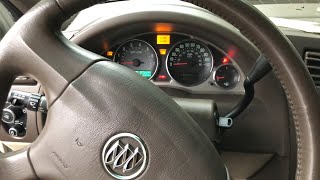
- Security light is on or flashing on the dashboard.
- "Service Theft System" message may appear on the driver information center.
- Replacing the starter motor. A no-crank symptom is often blamed on the starter, but if the security light is on, the anti-theft system is the primary suspect actively preventing the starter from engaging.
- Replacing the fuel pump. A start-and-stall symptom can seem like a fuel delivery issue, but with code B3055, the security system is actively cutting the fuel signal to the engine computer.
Most Likely Causes
- Faulty Ignition Lock Cylinder / Housing 🔴 High Probability → Shop Ignition Switch The internal wiring for the transponder reader coil inside the lock cylinder housing is a known weak point on this GM platform, failing from repeated use and age. The wires are thin and can break from the stress of key rotation over many years.
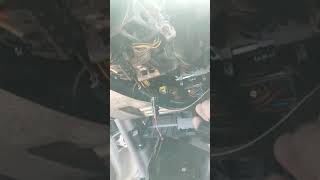
How to confirm: Wiggle the key in the ignition while trying to start the vehicle. If the security light flickers or the vehicle intermittently starts, the lock cylinder housing is likely the culprit. 🎬 Watch: A real-world example of this intermittent starting issue. A mechanic can also test for a 125 kHz signal at the cylinder with a specialized tool.
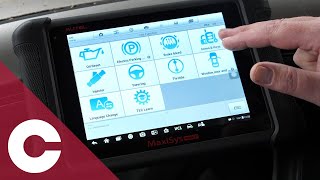
Typical fix: Replace the ignition lock cylinder and housing assembly. A security relearn procedure is required after replacement. The ACDelco D1462G is the OEM replacement part. 🎬 See this walkthrough on replacing the ignition lock cylinder.
Est. part cost: $60-$180 - Damaged or Worn Ignition Key 🟡 Medium Probability → Shop Ignition Switch The PK3 transponder chip in the key head can fail from being dropped, getting wet, or simply due to age.
How to confirm: Try starting the vehicle with a spare key. If the spare key works consistently, the original key's internal transponder chip is faulty. An automotive locksmith can also use a tool to test if the key is emitting a signal.
Typical fix: Replace the faulty key. A new key must be cut and programmed to the vehicle by a dealer or automotive locksmith.
Est. part cost: $50-$150 - Radio Frequency (RF) Interference ⚪ Low Probability As detailed in GM TSB PIC5650M, the Pass-Key III system is sensitive to interference from other electronic devices.
How to confirm: Remove all other keys, key fobs, building access cards, and aftermarket electronics (like phone chargers or LED lights) from the keychain and vehicle. Try starting the vehicle with only the single ignition key present. If it starts, RF interference was the issue.
Typical fix: Keep other electronic devices and fobs separate from the ignition key when starting the vehicle. Avoid using low-quality aftermarket chargers.
Est. part cost: $0
Rare But Worth Checking
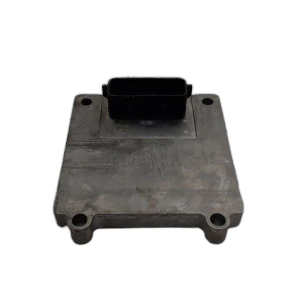
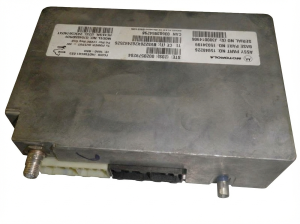
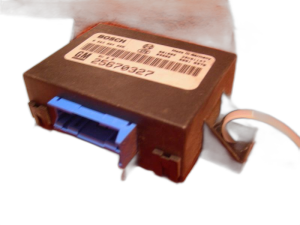
- Faulty Body Control Module (BCM): → Shop Body Control Module While the BCM is the computer that runs the security system, it is far less likely to fail than the mechanical and electrical components in the steering column. This should only be considered after ruling out the key and ignition lock cylinder. A replacement BCM requires professional programming with a tool like a Tech 2.
- Damaged Wiring Harness: A break or short in the wires between the ignition lock cylinder and the BCM can cause a loss of signal. This is uncommon but worth inspecting for chafing or corrosion if other repairs have failed.
- Low Vehicle Battery Voltage: → Shop Vehicle Battery A weak battery can cause a wide range of unpredictable electronic faults, including security system errors. Ensure the battery is fully charged (above 12.4V) before diagnosing other components, as low voltage can prevent modules from communicating correctly.
Diagnosis Steps
- Check the vehicle's battery to ensure it is fully charged (above 12.4V) and has clean terminals. A battery charger is recommended during diagnosis.
- Scan the Body Control Module (BCM) for B3055 and any other related codes. Note if the code is current or history.
- Remove any other keys, fobs, RFID cards, and aftermarket phone chargers from the vehicle to eliminate radio frequency interference.
- Attempt to start the vehicle with a known-good spare key. If the vehicle starts, the original key is defective.
- If no keys work, try wiggling the key in the ignition while attempting to start. If this allows the vehicle to start intermittently, the ignition lock cylinder/housing is the most likely cause.
- If a new part (key or ignition cylinder) is installed, perform the 30-minute security relearn procedure. With a fully charged battery, turn the key to 'ON' (engine off) for 10-11 minutes until the security light goes out. Turn the key 'OFF' for 10-30 seconds. Repeat this cycle two more times for a total of three cycles. On the fourth attempt, the car should start. 🎬 Watch: A professional guide to the security relearn procedure.
- If the relearn procedure fails, inspect the wiring harness between the ignition cylinder and the BCM for damage or loose connections.
- If all other components and wiring are confirmed to be good, the Body Control Module (BCM) may be faulty and require testing or replacement by a professional.
Parts You'll Likely Need
- Ignition Lock Cylinder Housing
(OEM #ACDelco D1462G)— This part contains the transponder reader coil and wiring that most commonly fails on this platform, causing the B3055 code.
Trusted brands: ACDelco (OEM), Dorman 924-719
OEM price range: $100-$180
Aftermarket price range: $60-$120 - Transponder Ignition Key
(OEM #Look for PK3 or '+' symbol on the key blade)— The internal PK3 chip in the key can fail from age or damage, preventing the car from recognizing it.
Trusted brands: ACDelco
OEM price range: $70-$150
Aftermarket price range: $40-$80 - Body Control Module (BCM)
(OEM #15234888, 10348331 (Verify by VIN))— A rare but possible cause of the B3055 code if the key and ignition cylinder are known to be good. Requires professional programming.
Trusted brands: GM Genuine Parts
OEM price range: $250-$450
Aftermarket price range: $150-$300 (Remanufactured)
Related Codes That Often Appear With This One
- B3060 — This code for 'Unprogrammed Transponder' often appears with B3055 as it relates to the same system failing to recognize the key.
- B3935 — This code for 'Transponder Authentication Failed' indicates a failure in the key verification process and can be set alongside B3055 during a security system fault.
Technical Service Bulletins (TSBs) & Recalls
- PIC5650M: Addresses intermittent no crank, no start, or start/stall concerns with the security light on, and lists B3055 as a potential DTC. It provides a long list of potential RFI sources to check.
Platform-Specific Known Issues
- The NHTSA lists Technical Service Bulletin #PIC5650M for the 2007 Buick Rendezvous, which directly addresses an intermittent no-crank or start/stall condition with the security light on. It specifically mentions DTC B3055 and warns that aftermarket devices like LED lights and phone chargers can cause radio frequency interference that triggers the fault.
Hidden / Shadow Codes Worth Checking
- B3055 00: No Sub Type Information. This indicates the BCM received no signal at all from the key's transponder chip. (see via GM GDS2 or other professional-grade scan tools that can read manufacturer-specific symptom bytes.)
- B3055 5A: Plausibility Failure. This indicates the BCM received a signal, but it was illogical, corrupt, or failed a credibility check. This can point towards radio frequency interference or an intermittent failure of the chip in the key. (see via GM GDS2 or other professional-grade scan tools.)
Scan Tool Commands That Help
- Tech 2: BCM Special Functions > Add/Replace Keys — Used to program new keys to the Body Control Module after replacing a key or the BCM itself. This is a faster alternative to the 30-minute manual relearn procedure.
- Tech 2: BCM Data Display > Security Data — To monitor the status of the Pass-Key III system in real-time. A technician can view parameters like 'Key In Ignition Switch Status' and 'Transponder Key State' to see if the BCM is recognizing the key's presence and reading its state correctly.
Wiring & Ground Locations
- BCM (Body Control Module) — Located in the center console, above the fuse block.. The BCM is the central computer for the Pass-Key III anti-theft system. All signals from the ignition key's transponder are processed here. A poor connection or faulty ground at the BCM can cause B3055.
- G201 — Located on the underside of the cross-car beam, on the left side of the dash.. This is a primary interior ground point that serves multiple modules, including the BCM and Instrument Panel Cluster (IPC). A loose or corroded G201 can cause intermittent communication failures for the anti-theft system, leading to a B3055 code.
- IPC/BCM/PK3 Fuse — Located in the center console fuse block (Fuse #30, 2A).. This fuse provides power to the Pass-Key III (PK3) system components. While a blown fuse is uncommon, it would cause a complete loss of communication and set code B3055.
- BCM Class 2 Serial Data Wire — A Tan wire running to the BCM. On the similar Trailblazer platform, it is at pin B11 of a BCM connector.. This is the communication line the BCM uses to send the 'fuel enable' password to the Powertrain Control Module (PCM). A fault on this wire can prevent the vehicle from starting even if the key is read correctly.
Real Owner Repair Stories
- YouTube video by 'Peter L' (2004 Pontiac Aztek (sister platform)) — No crank, no start, single click when turning the key.
❌ Tried (didn't work) Initially suspected a low battery, but jump-starting did not solve the no-start., Replaced the starter motor five months prior, so it was not the primary suspect initially.
✅ What actually fixed it The problem was a faulty rebuilt starter. The owner tapped on the starter with a crowbar, which allowed the vehicle to start one time, confirming the starter was the point of failure. Although not a B3055 case, it highlights a common misdiagnosis path where a no-crank is electrical. - Reddit user in r/askcarguys (2004 Pontiac Aztek (sister platform)) — Crank but no start after resolving a 'single click' no-crank issue by replacing the starter. Also had a history of parasitic battery drain and stalling at idle.
❌ Tried (didn't work) Replacing the starter motor (fixed the no-crank, but created a crank/no-start)., Using a battery jumper pack (allowed it to crank but not start).
✅ What actually fixed it The thread did not have a final confirmed fix for the crank/no-start, but other users pointed towards a parasitic draw that needed to be fixed, and general maintenance issues like dirty MAF/MAP sensors or old spark plugs causing the stalling. This illustrates how underlying electrical issues can complicate diagnosis.
OEM Part Supersession History
10316012, 10318410, 10322745, 10325745, 10329374, 10329981, 10330695, 10385466→15234888— Standard part consolidation and minor revisions over the production life of the vehicle platform.
Heads up: Part number 15234888 is listed for 2002-2005 Rendezvous models, but may also apply to later years. It is critical to verify the correct BCM part number by VIN before ordering, as programming is required.
Helpful Videos
We Have This Part in Stock

The information in this article is provided for general reference and educational purposes only. Vehicle specifications, procedures, and part compatibility can vary by production date, trim level, and region. Always consult your vehicle's factory service manual and verify part numbers before purchasing or performing repairs. Safety-critical components such as airbags, seat belts, and braking systems should be installed by a qualified professional.
- Buick RENDEZVOUS:
- 🧭 Diagnostic Flowchart
- 🎬 Helpful Videos
- 🛍️ Shop This Part
- What's Unique About the 2007-2007 Buick RENDEZVOUS
- Symptoms You May Notice
- Most Likely Causes
- Rare But Worth Checking
- Diagnosis Steps
- Parts You'll Likely Need
- Related Codes That Often Appear With This One
- Technical Service Bulletins (TSBs) & Recalls
- Platform-Specific Known Issues
- Hidden / Shadow Codes Worth Checking
- Scan Tool Commands That Help
- Wiring & Ground Locations
- Real Owner Repair Stories
- OEM Part Supersession History
- 🎟️ Get 5% Off