

B3055 on 2013-2018 Cadillac ATS: Causes and Fixes for 'No Key Detected' & Start Problems
This code means your Cadillac ATS cannot detect the key fob, often causing a no-start condition. The most common fix is replacing the CR2032 battery in your key fob. If that fails, check for RF interference from aftermarket devices as per a GM TSB. The next likely cause is a faulty Keyless Entry Control Module, a more complex repair.
- B3055 means your ATS doesn't recognize your key, usually preventing it from starting.
- Always start by replacing the key fob's CR2032 battery; it's the cheapest and most likely fix.
- Try your spare key to quickly determine if the problem is the key or the car.
- If new batteries and spare keys don't work, the issue is likely the car's Keyless Entry Control Module, which requires professional service for replacement and programming.
- Do not suspect the starter or main car battery if the security light is on; the problem is with the anti-theft system.
What's Unique About the 2013-2018 Cadillac ATS
The Cadillac ATS relies on a sophisticated keyless start system. A specific Technical Service Bulletin (TSB #PIC5650M) directly addresses intermittent no-start or stalling issues accompanied by the security light and code B3055 on this platform. Crucially, this TSB strongly advises technicians to investigate and eliminate sources of Radio Frequency (RF) interference from aftermarket devices (like phone chargers, LED lights, or even toll passes) *before* replacing expensive modules like the BCM or Keyless Entry Control Module. This indicates a known sensitivity in the communication between the key fob and the vehicle's security module, making it a documented issue rather than a random failure.
Diagnostic Flowchart
Tap your situation to follow the diagnostic path that matches what you're seeing on this vehicle.
Symptoms You May Notice
- Engine will not crank or start
- Engine starts and immediately stalls
- Security or anti-theft system light is illuminated on the dashboard
- A 'Service Theft Deterrent System' message appears on the Driver Information Center (DIC)
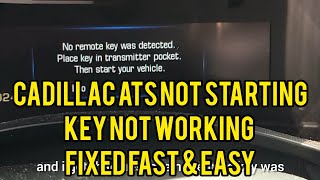
- A 'No Key Detected' or 'No Remote Key Was Detected, Place Key in Transmitter Pocket Then Start Your Vehicle' message appears on the DIC
- Keyless entry buttons (lock/unlock) work intermittently or not at all
- Replacing the starter motor. A no-crank condition might lead someone to suspect the starter, but if the security light is on, the issue is almost always with the anti-theft system, not the starter itself.
- Replacing the car's main battery. While a low vehicle battery can cause various electrical issues, B3055 specifically points to a communication failure with the key fob transponder. However, a stable 12V supply is required for proper diagnosis and programming.
Most Likely Causes
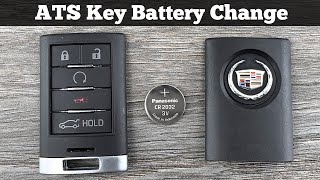
- Weak or Dead Key Fob Battery 🔴 High Probability → Shop Vehicle Battery Key fobs for keyless start systems transmit signals more frequently, leading to a typical battery life of 2-4 years. It's the most common and simple point of failure.
How to confirm: Try using your spare key fob. If the car starts, the battery in the primary fob is the issue. You can also try placing the problematic fob in the transponder pocket located inside the center console storage area; this pocket is designed to read the fob's passive transponder even with a dead battery. If the car starts using the pocket, a weak battery is almost certainly the cause.
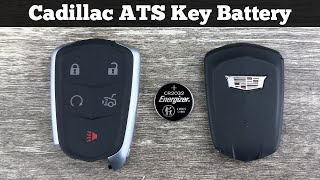
Typical fix: Replace the CR2032 battery inside the key fob.
Est. part cost: $2-$10 - Faulty Keyless Entry Control Module (K17) 🟡 Medium Probability → Shop Keyless Entry Module The manufacturer issued TSB #PIC5650M for intermittent no-start conditions related to this system, suggesting the control module can be a point of failure, though interference should be ruled out first. This module is also referred to as the Remote Function Actuator (RFA).
How to confirm: After ruling out the key fob and RF interference, a technician with a GM-compatible scan tool must check for communication with the K17 module and test its functions. The module is physically located in the trunk, typically behind the right-side trim panel.
Typical fix: Replace the Keyless Entry Control Module. The new module must be programmed to the vehicle by a dealer or qualified shop with access to GM's Service Programming System (SPS).
Est. part cost: $100-$250 - Damaged or Faulty Key Fob ⚪ Low Probability → Shop Keyless Entry Transmitter Dropping the key fob can damage the internal transponder chip or its solder joints, preventing it from communicating even with a new battery. A Reddit user described a case where a physically broken key fob was the direct cause of a B3055 code.
How to confirm: If a new battery doesn't fix the fob and the spare fob works perfectly, the original fob is likely damaged. A technician can also use a key tool to check if the transponder is emitting a signal.
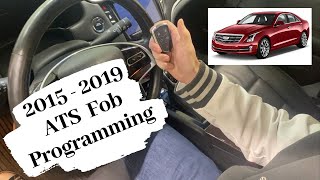
Typical fix: Replace the key fob. A new fob must be programmed to the vehicle. 🎬 Watch: How to program a new Cadillac ATS smart key.
Est. part cost: $150-$400 - Radio Frequency (RF) Interference ⚪ Low Probability As highlighted in TSB PIC5650M, the ATS's keyless system is sensitive to strong RF signals from aftermarket devices like phone chargers, LED lighting, dash cams, or even toll passes, which can 'jam' the signal from the key fob.
How to confirm: Remove all non-factory electronic devices from the car, especially those plugged into the 12V outlets. Also remove any new cards or tags from your keychain. Try starting the vehicle again. If it works, one of the devices was causing interference.
Typical fix: Relocate or remove the interfering device.
Est. part cost: $0
Rare But Worth Checking
- Faulty Body Control Module (BCM): → Shop Body Control Module While the Keyless Entry module is the primary component, it communicates through the BCM. In rare cases, a BCM fault can mimic a key system failure.
- Wiring or Antenna Fault: A damaged wire or a disconnected antenna for the keyless entry system can prevent the signal from being received, but this is less common than module or key fob failure. A user on CaddyInfo forums suspected a loose connection on the transponder reader by the ignition as a cause.
- Incorrect Key Position (for flip keys): On some GM vehicles with a physical ignition cylinder and a flip-style key, not having the key fully extended and locked can cause a B3055 code. While the ATS is push-to-start, this is a known issue in the GM family documented in TSB PIT5030E.
Diagnosis Steps
- Verify the complaint. Confirm the no-crank/no-start condition and check for the security light or 'No Key Detected' message.
- Try the spare key fob. This is the fastest way to determine if the issue is with the key or the vehicle.
- If the spare key works, replace the CR2032 battery in the non-working key fob.
- If no keys work, try placing a fob in the designated transponder pocket in the center console and attempt to start the vehicle. This bypasses the need for a strong battery signal and can overcome RF interference.
- Following TSB PIC5650M, unplug all aftermarket accessories (phone chargers, dash cams, LED lights) and remove any toll passes or access cards from the vehicle and keychain. Re-test.
- Scan the Body Control Module (BCM) and Keyless Entry Control Module (K17) for B3055 and any other related codes.
- Using a scan tool, check the live data for key status and transponder recognition.
- Inspect the wiring and connectors at the Keyless Entry Control Module (located in the right side of the trunk) for any visible damage or corrosion.
- If all keys, batteries, and wiring are good, and RF interference has been ruled out, the Keyless Entry Control Module (K17) is the most likely suspect and should be replaced and reprogrammed.
Parts You'll Likely Need
- Key Fob Battery
(OEM #CR2032)— This is the most frequent cause for a key not being detected. It's a simple and inexpensive first step.
Trusted brands: Energizer, Duracell, Panasonic
OEM price range: $5-$10
Aftermarket price range: $2-$8 - Keyless Entry Control Module
(OEM #13580552 (superseded by 13595822, 13523215, and others))— This module is responsible for receiving and validating the key fob's signal. It is a known failure point according to GM TSBs, though interference should be ruled out first.
Trusted brands: ACDelco, GM Genuine
OEM price range: $100-$250
Aftermarket price range: $80-$180 - Key Fob / Transmitter
(OEM #22856930 or 13508280 (FCC ID: NBG009768T, for 2013-2014) / 13589533 (FCC ID: HYQ2AB, for 2015-2018))— If the internal transponder chip is damaged, the entire key fob assembly must be replaced and programmed. It is critical to match the FCC ID from the old fob.
Trusted brands: ACDelco, Strattec
OEM price range: $170-$400
Aftermarket price range: $70-$150
Related Codes That Often Appear With This One
- B3060 — Often appears with B3055 as it relates to incorrect security system sensor data. Both are mentioned in TSB #PIC5650M.
- B3935 — Relates to transponder authentication issues and is also cited in TSB #PIC5650M for the same no-start condition.
- C0750, C0755, C0760, C0765, C0775 — These are tire pressure monitor sensor codes that are sometimes triggered concurrently with the BCM/security codes mentioned in TSB #PIC5650M, suggesting a broader radio frequency communication issue within the vehicle during the fault.
Technical Service Bulletins (TSBs) & Recalls
- PIC5650M: Addresses an intermittent no crank, no start, or start stall concern with the security light coming on, potentially setting code B3055. Critically, it points to RF interference as a primary cause to investigate before replacing modules.
- PIT5030E: While for vehicles with a physical ignition, it documents that B3055 can be set on other GM cars if a flip-key is not fully extended, showing the sensitivity of the transponder system.
Platform-Specific Known Issues
- A known issue documented in Technical Service Bulletin #PIC5650M describes an intermittent no crank, no start, or start/stall condition with the security light on, which can set DTC B3055. The bulletin strongly advises ruling out Radio Frequency Interference (RFI) from aftermarket accessories before proceeding with parts replacement.
Mechanic-Grade Diagnostic Values
- Keyless Entry Transmitter Signal (LF) — expected: A detectable 125-140 kHz signal burst when the system is active (e.g., door handle touched).. Failure: Absence of a signal when checked with a keyless entry detector tool (like Pico Technology TA330) near a transmitter antenna (e.g., in door handle).
Hidden / Shadow Codes Worth Checking
- B3055 00: The '00' is a symptom byte indicating 'No Sub Type Information'. This means the base DTC text string provides the complete description of the failure, without needing a more specific subtype. (see via A professional scan tool like the GM GDS2 will display the code with its symptom byte.)
Scan Tool Commands That Help
- GDS2: Module Diagnostics > BCM > Data Display > Transponder Key — Use this to verify if the BCM recognizes a key as being present when it is inside the vehicle. The parameter should read 'Present'.
- GDS2: Module Diagnostics > BCM > Data Display > Key Part Number — Use this to check if the BCM can read the specific part number from the transponder chip. If this parameter is blank for a specific key, that key is likely faulty.
- GM SPS (Service Programming System): Replace and Program ECU > K17 Keyless Entry Control Module — This function is required after installing a new Keyless Entry Control Module to download the correct vehicle-specific calibration file from GM's servers and program it to the module.
- GDS2: Data Bus Diagnostic Tool — If multiple communication codes are present, this tool can be used to poll the CAN bus and identify which modules are not responding, helping to pinpoint a wiring or module fault.
Wiring & Ground Locations
- K17 Keyless Entry Control Module — Located in the trunk, behind the right-side trim panel.. This is the primary module for processing key fob signals. All related antennas and communication lines connect here.
- G218 — On similar GM truck platforms, this BCM ground is located under the driver's side dash, near the speaker. The exact location on the ATS may vary but is typically in the driver's side A-pillar or kick panel area.. A poor connection at this critical BCM ground can cause a wide range of intermittent electrical problems, including communication DTCs like B3055. It's a known issue where sound-deadening material gets trapped under the ground terminal, causing a weak connection.
- G302 / G303 — According to a 2014 ATS wiring diagram, G302 is at the right kick panel and G303 is in the left rear passenger footwell.. The Keyless Entry Control Module (K17) is connected to the vehicle's ground distribution system, which utilizes these ground points. A fault at these locations could interrupt the module's operation.
- Keyless Entry Antennas — Multiple antennas are located throughout the vehicle, including in the door handles, trunk area, and inside the passenger cabin for detecting the key's location.. These antennas send the low-frequency challenge to the key fob and receive its response. A disconnected or faulty antenna can prevent the key from being detected in a specific zone or at all.
Real Owner Repair Stories
- YouTube video from a repair shop (2014 Cadillac ATS) — No start, multiple codes present including B3055 and antenna circuit codes.
❌ Tried (didn't work) Initial diagnosis pointed towards a faulty module.
✅ What actually fixed it The technician replaced the original Keyless Entry Control Module (K17) with a used module that had the exact same part number. After clearing the codes, the car started and functioned correctly without requiring a programming/relearn procedure.
When the Usual Fixes Don't Work
- While official service information states that a replacement Keyless Entry Control Module (K17) requires programming via GM's SPS, at least one documented case showed a 2014 ATS was fixed by swapping the module with a used one of the exact same part number, which worked immediately without any reprogramming. This suggests that in some instances, if the replacement module is identical, a costly programming procedure may not be necessary.
Model Year Variations Within This Range
- 2013-2014 vs 2015-2018: The key fobs use different FCC IDs and are not interchangeable. 2013-2014 models typically use FCC ID NBG009768T, while 2015-2018 models use HYQ2AB. Always match the FCC ID from the original fob when replacing it.
- 2013: A specific software update was released for the Keyless Entry Control Module under Service Bulletin 12227 for some 2013 models to improve the response time of the exterior door handle touchpads.
Helpful Videos
We Have This Part in Stock


The information in this article is provided for general reference and educational purposes only. Vehicle specifications, procedures, and part compatibility can vary by production date, trim level, and region. Always consult your vehicle's factory service manual and verify part numbers before purchasing or performing repairs. Safety-critical components such as airbags, seat belts, and braking systems should be installed by a qualified professional.
- Cadillac ATS:
- 🧭 Diagnostic Flowchart
- 🎬 Helpful Videos
- 🛍️ Shop This Part
- What's Unique About the 2013-2018 Cadillac ATS
- Symptoms You May Notice
- Most Likely Causes
- Rare But Worth Checking
- Diagnosis Steps
- Parts You'll Likely Need
- Related Codes That Often Appear With This One
- Technical Service Bulletins (TSBs) & Recalls
- Platform-Specific Known Issues
- Mechanic-Grade Diagnostic Values
- Hidden / Shadow Codes Worth Checking
- Scan Tool Commands That Help
- Wiring & Ground Locations
- Real Owner Repair Stories
- When the Usual Fixes Don't Work
- Model Year Variations Within This Range
- 🎟️ Get 5% Off