

B3055 on 2007-2009 Cadillac XLR: Key Fob Not Detected, Causes and Fixes
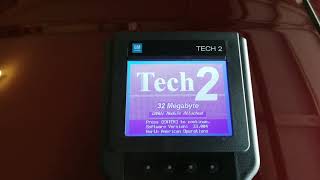
On a 2007-2009 Cadillac XLR, code B3055 almost always points to a failing Remote Control Door Lock Receiver (RCDLR) module. A key symptom is the car starting only when the fob is in the glovebox slot. This is because the long-range receiver in the module has failed, but the short-range antenna in the slot still works. Replacing the RCDLR requires professional programming with a GM Tech 2 scan tool and can cost between $400 and $700. The OEM part is discontinued, making sourcing a replacement cha
- If your XLR won't start and shows 'No Fob Detected', first try replacing the CR2032 battery in your key fob.
- Your next step should be to place the fob in the dedicated slot inside the glove compartment. If the car starts, the Remote Control Door Lock Receiver (RCDLR) is almost certainly failing.
- Code B3055 is often accompanied by TPMS codes (like C0765); this is another strong sign that the RCDLR module is the culprit.
- Replacing the RCDLR is not a DIY job for most people, as it requires expensive, specialized tools to program the new module to the car.
What's Unique About the 2007-2009 Cadillac XLR
The Cadillac XLR, based on the C6 Corvette platform, uses a Passive Entry Passive Start (PEPS) system. Unlike cars with a traditional ignition key, the entire security verification happens wirelessly. The RCDLR module in these cars is a known failure point, with issues ranging from an internal transistor failure to cold solder joints on the circuit board. This module also handles the Tire Pressure Monitoring System (TPMS), so it's common to see TPMS trouble codes appear alongside B3055, which is a strong indicator that the RCDLR itself is the root cause.
Diagnostic Flowchart
Tap your situation to follow the diagnostic path that matches what you're seeing on this vehicle.
Symptoms You May Notice
- Engine will not crank or start
- "No Fob Detected" or "No Remote Detected" message on the Driver Information Center (DIC)
- Security light illuminated on the dashboard
- Passive entry (doors unlocking as you approach) does not work
- Remote Keyless Entry (RKE) functions (lock/unlock buttons) have poor or no range
- Vehicle starts ONLY when the key fob is placed in the designated slot in the glove compartment
- TPMS warning light or "Service Tire Pressure Monitor" message on the DIC
- Replacing the starter motor. A starter issue typically presents as a single click or no sound, but it won't set a B-series security code.
- Replacing the ignition switch (push-button). While possible, this part is far less likely to fail than the RCDLR module for this specific symptom set.
Most Likely Causes
- Failing Remote Control Door Lock Receiver (RCDLR) 🔴 High Probability → Shop Keyless Entry Receiver A specific internal transistor and cold solder joints within the RCDLR module are known weak points on the XLR and C6 Corvette platform. The module is located above the center HVAC vents in the dashboard.
How to confirm: The most reliable test is to place the key fob in the glovebox slot. If the car starts consistently from the slot but not from your pocket or the cupholder, the RCDLR's long-range receiver has likely failed. The presence of concurrent TPMS codes is another strong indicator.
Typical fix: Replace the RCDLR module and perform the necessary programming (RCDLR Setup) and relearn procedures (Theft Deterrent Learn) with a GM Tech 2 scan tool.
Est. part cost: $150-$250 (If sourced as New Old Stock or used) - Weak or Dead Key Fob Battery 🟡 Medium Probability → Shop Vehicle Battery The vehicle does not provide a 'low fob battery' warning, so failure can be sudden.
How to confirm: Use a multimeter to test the fob battery (typically a CR2032). The voltage should be at or very close to 3.0 volts. A reading below 2.8V can cause intermittent issues. The simplest test is to replace the battery as a first step.
Typical fix: Replace the CR2032 battery inside the key fob.
Est. part cost: $1-$5 - Radio Frequency Interference (RFI) ⚪ Low Probability As noted in GM TSBs PIC5650M and 10-08-52-004, aftermarket electronics like cell phone chargers, dash cams, and even aftermarket LED bulbs can 'jam' the 125 kHz or 315 MHz signals used by the immobilizer and RKE systems.
How to confirm: Remove all aftermarket devices from the car, especially anything plugged into the 12V outlets. Also, remove any other RFID cards (office key cards, gas station passes) from your keychain. If the problem disappears, one of these items was the cause.
Typical fix: Identify and remove the source of the interference. Use higher-quality, well-shielded chargers if needed.
Est. part cost: $0 - Weak Main Vehicle Battery ⚪ Low Probability → Shop Vehicle Battery The XLR is known for having sensitive electronics that can malfunction when system voltage is low. Multiple forum users report a wide range of bizarre electronic issues, including starting problems, that were resolved with a new battery.
How to confirm: Test the vehicle's main 12V battery with a load tester. A simple voltage reading is not sufficient. Many auto parts stores offer this service for free.
Typical fix: Replace the vehicle's 12V battery.
Est. part cost: $150-$250
Rare But Worth Checking
- Defective Key Fob: → Shop Keyless Entry Transmitter While less common than a dead battery, the internal electronics of the fob itself can fail. If a new battery doesn't help and the spare fob works perfectly, the original fob is likely bad. In some cases, both fobs can go bad, as one owner on CorvetteForum discovered after replacing the RCDLR to no effect.
- Body Control Module (BCM) Failure: → Shop Body Control Module The BCM is a central computer for the car's body electronics. A BCM failure can cause a wide range of strange issues, including communication failures with the RCDLR that can manifest as code B3055. Diagnosis is complex and replacement requires cloning or programming by a specialist.
- Wiring or Connector Issues: A loose or corroded connector at the RCDLR module, BCM, or related wiring can cause intermittent communication loss, leading to the B3055 code. This should be investigated before replacing expensive modules.
Diagnosis Steps
- Verify the complaint. Confirm the 'No Fob Detected' message and that the security light is on.
- Test the key fob battery. Replace the CR2032 battery as a first step, as it's the cheapest and easiest fix.
- Attempt to start the vehicle using the spare key fob to rule out a faulty primary fob.
- Place the non-working key fob into the dedicated slot in the glove compartment and attempt to start the engine. If it starts, this points heavily towards a faulty RCDLR, as the slot uses a passive, short-range antenna that bypasses the failed long-range receiver.
- Check the main vehicle battery. Ensure it is fully charged and passes a load test. These cars are very sensitive to low voltage.
- Remove all potential sources of Radio Frequency Interference (RFI), such as aftermarket phone chargers, dash cams, and other RFID-enabled cards on your keychain, as detailed in TSB PIC5650M.
- Scan the vehicle for other trouble codes. If TPMS codes (C075x, C076x, etc.) are present with B3055, the RCDLR is the most probable cause.
- If all else fails, the RCDLR module requires replacement. This involves removing dashboard components to access the module above the radio/HVAC unit, 🎬 See this walkthrough on how to replace the RCDLR module. followed by programming by a qualified technician with a GM Tech 2 scan tool.
Parts You'll Likely Need
- Remote Control Door Lock Receiver (RCDLR)
(OEM #25940664)— This module contains an internal transistor and solder joints that are known failure points, causing the vehicle to lose its ability to detect the key fob for starting and passive entry. This part number supersedes several previous numbers including 10372535, 15266677, and 25907435. As of the early 2020s, this part is discontinued by GM but may be available as New Old Stock (NOS) or from used/salvage vehicles.
Trusted brands: ACDelco (OEM)
OEM price range: $150-$250
Aftermarket price range: N/A - Key Fob Battery
(OEM #CR2032)— This is the simplest and most common reason for a key fob to stop communicating with the vehicle.
Trusted brands: Energizer, Duracell, Panasonic
OEM price range: $2-$8
Aftermarket price range: $1-$5
Related Codes That Often Appear With This One
- B3060 — This is another transponder-related code, 'Unlearned Transponder Key,' often set along with B3055, indicating a failure in the security system handshake.
- B3935 — This code is also related to the transponder system, 'Transponder Key Problem,' and is listed in the same TSB as B3055.
- C0750, C0755, C0760, C0765, C0775 — These are all Tire Pressure Monitor (TPMS) codes. Their presence strongly points to a faulty RCDLR, as that single module is responsible for both keyless entry and TPMS functions.
Technical Service Bulletins (TSBs) & Recalls
- PIC5650M: Addresses intermittent no-crank/no-start, security light, and 'No Fob Detected' messages, listing B3055 as a primary code and pointing to
Platform-Specific Known Issues
- A known issue with the RCDLR module can cause the vehicle to start only when the fob is in the glovebox slot, as documented in GM technical articles and countless owner forums.
- The shared platform with the C6 Corvette means that Corvette forums are an excellent resource for diagnosing this issue, as it is common on both vehicles.
- The RCDLR module (P/N 25940664) is discontinued, making repairs difficult. Owners may need to source used parts from eBay or salvage yards and hope they are functional.
Mechanic-Grade Diagnostic Values
- Key Fob Battery Voltage — expected: 2.0 - 3.0 Volts. Failure: Voltage below 2.0V. Some forum users report issues with readings below 2.8V.
- RCDLR Auditory Clicks on Start Attempt — expected: A series of soft clicks from the RCDLR module (located above the radio).. Failure: Only a single click is heard instead of a series, indicating a faulty internal transistor.
- RCDLR Connector Voltage (Circuit 2440) — expected: Should be equal to battery positive voltage (~12.4V+).. Failure: A voltage drop (e.g., reading in the high 11V range) can cause intermittent fob detection issues, even with a fully charged main battery. This can be caused by poor contact at the fuse box (Fuse #11 in UBEC).
Scan Tool Commands That Help
- GM Tech 2: Module Setup > Keyless Entry > Program Key Fobs — This function is used to program new or existing key fobs to a new RCDLR module. You can invalidate all fobs and start fresh.
- GM Tech 2: RCDLR Setup — This procedure must be performed after installing a new RCDLR to configure it to the vehicle.
- GM Tech 2 / TIS2000: Theft Deterrent System Learn — After RCDLR setup and fob programming, this procedure syncs the immobilizer system. It can be a 10-minute or 30-minute automated process initiated by the scan tool.
- GM Tech 2 / TIS2000: Replace and Reprogram ECU (Pass-Thru Method) — When programming a new RCDLR, this is the required method using TIS2000 software connected to the Tech 2. It ensures the latest software is flashed to the module. The Radio and HVAC fuses must be pulled before starting this process.
Wiring & Ground Locations
- RCDLR Module — On the top right of the instrument panel, under the upper IP pad, located above the radio/HVAC unit.. This is the primary module that fails, causing code B3055. Physical access is required for replacement, and a 'tap test' on the dash above it can sometimes temporarily restore function, confirming a bad internal connection.
- RCDLR Fuse — Fuse #11 in the Underhood Block Electrical Center (UBEC).. This fuse provides power to the RCDLR. Removing it for 30+ seconds can reset a 'locked up' module during a failed programming attempt. A poor connection at this fuse can also cause low voltage to the module.
Real Owner Repair Stories
- CorvetteForum user 'Dano523' (C6 Corvette (shared platform)) — Intermittent 'No Fob Detected' message. Car would start after slapping the dashboard near the RCDLR location.
❌ Tried (didn't work) Replacing key fob batteries.
✅ What actually fixed it The owner removed the RCDLR, opened the module case, and re-soldered the header pins on the circuit board. This fixed the cold solder joints that were causing an intermittent connection, resolving the issue without needing to replace and reprogram a new module. - CorvetteForum user 'jwez' (2007 C6 Corvette) — Classic 'No Fob Detected' unless the fob was in the glovebox slot. Also had intermittent TPMS sensor communication issues.
❌ Tried (didn't work) New key fob batteries., New vehicle battery (though the old one was 8 years old).
✅ What actually fixed it Replacing the RCDLR module (P/N 25940664) completely resolved all issues. The owner drove over 1,200 miles post-repair with no further problems.
OEM Part Supersession History
10372535, 15266677, 15235325, 15294296, 15815693, 15853335, 25786622, 25907435→25940664— Standard part evolution and revisions by GM over the model years.
Heads up: Part number 25940664 is the final, most updated version for the 2005-2007 range but is now discontinued by GM. While many salvage yards claim interchangeability across all years, there were different part numbers for 2008-2009 and 2010-2013 Corvettes, suggesting potential differences.
Model Year Variations Within This Range
- 2008-2009: The key fob design changed from the earlier 'Bvlgari' style to a more standard GM fob. While the newer style fobs can often be programmed to work on 2007 models, the RCDLR part numbers also changed for the 2008+ model years, indicating potential internal differences. All North American XLRs use a 315 MHz frequency.
Helpful Videos
We Have This Part in Stock

The information in this article is provided for general reference and educational purposes only. Vehicle specifications, procedures, and part compatibility can vary by production date, trim level, and region. Always consult your vehicle's factory service manual and verify part numbers before purchasing or performing repairs. Safety-critical components such as airbags, seat belts, and braking systems should be installed by a qualified professional.
- Cadillac XLR:
- 🧭 Diagnostic Flowchart
- 🎬 Helpful Videos
- 🛍️ Shop This Part
- What's Unique About the 2007-2009 Cadillac XLR
- Symptoms You May Notice
- Most Likely Causes
- Rare But Worth Checking
- Diagnosis Steps
- Parts You'll Likely Need
- Related Codes That Often Appear With This One
- Technical Service Bulletins (TSBs) & Recalls
- Platform-Specific Known Issues
- Mechanic-Grade Diagnostic Values
- Scan Tool Commands That Help
- Wiring & Ground Locations
- Real Owner Repair Stories
- OEM Part Supersession History
- Model Year Variations Within This Range
- 🎟️ Get 5% Off