

B3055 on 2013-2020 Chevrolet Corvette: No Start, Security Light Causes & Fixes
Code B3055 on a C7 Corvette typically indicates a problem with the vehicle's anti-theft or immobilizer system, which fails to recognize the key fob. The most common causes are radio frequency interference or a weak key fob battery. The vehicle may fail to start and display a security warning light or a "No Fob Detected" message.
- B3055 means your Corvette's security system isn't recognizing your key fob, preventing it from starting.
- Before panicking, remove all phone chargers and other aftermarket electronics from the car and try again. This is the most common fix.
- The second step is to try starting the car with the fob in the backup slot in the center console. If it works, replace the fob's battery.
- If simple fixes don't work, professional diagnosis is needed as it may involve a faulty key fob or control module, which requires special programming tools.
What's Unique About the 2013-2020 Chevrolet CORVETTE
The C7 Corvette (2014-2019) utilizes a sophisticated keyless entry and start system that is sensitive to radio frequency (RF) interference. A GM Technical Service Bulletin (TSB), PIC5650M, specifically addresses intermittent no-start conditions with code B3055 🎬 Watch: See how code B3055 affects GM keyless start systems. on these and other models. The TSB highlights that the issue is often not a faulty component but external RF interference from devices like cell phone chargers, toll passes, or even aftermarket LED lights, which can 'jam' the 315 MHz or 434 MHz signal between the key fob and the car's multiple keyless entry antennas. The C7 has up to six of these antennas located throughout the vehicle, including behind the driver display, in the center console, in the rear quarter panels, and near the rear fascia, making the system susceptible to interference from multiple locations.
Diagnostic Flowchart
Tap your situation to follow the diagnostic path that matches what you're seeing on this vehicle.
Symptoms You May Notice
- Intermittent no-crank, no-start condition
- Engine starts and immediately stalls
- Security indicator light is illuminated or flashing on the dashboard
- "No Fob Detected" message on the driver information center (DIC).
- Keyless entry functions (door locks) may work poorly or not at all
- Remote Vehicle Start (RVS) is inoperative
- Replacing the car battery when it is perfectly fine. A no-start condition can be mistaken for a dead battery, but if the dashboard lights and accessories turn on, the battery is likely not the primary issue.
- Replacing the starter motor. The security system actively prevents the starter from engaging, so the starter itself is rarely the cause of this specific code.
Most Likely Causes
- Radio Frequency Interference (RFI) 🔴 High Probability As noted in GM TSB PIC5650M, the keyless system is highly sensitive to RFI from common aftermarket devices. The bulletin explicitly lists items like non-OEM phone chargers, USB power banks, aftermarket LED lighting, and even toll passes as potential sources of interference that can jam the key fob signal. Some owners have had to physically wrap unshielded 12V power outlet wiring in the console with aluminum foil to resolve persistent RFI issues.
How to confirm: Remove all aftermarket electronics from the vehicle, especially anything plugged into the 12V or USB ports. Also, remove any other keys or access cards from the key ring. If the car starts consistently after this, RFI is the cause. In severe cases, aftermarket accessories like satellite radio receivers may need to be completely disconnected, as simply pulling the fuse may not stop the interference.
Typical fix: Identify and remove the source of the interference. Avoid using low-quality aftermarket chargers or electronics in the vehicle. Use high-quality, shielded cables and chargers if necessary.
Est. part cost: $0 - Weak or Dead Key Fob Battery 🟡 Medium Probability → Shop Vehicle Battery
How to confirm: Try the vehicle's backup starting procedure. For the C7 Corvette, this involves placing the key fob in the designated transmitter pocket on the side of the steering column, with the buttons facing up. If the car starts this way, the fob battery is the most likely culprit.
Typical fix: Replace the CR2032 battery in the key fob.
Est. part cost: $2-$10 - Faulty Key Fob ⚪ Low Probability → Shop Keyless Entry Transmitter
How to confirm: Test the vehicle with a spare key fob. If the spare fob works reliably, the primary fob is likely damaged or has failed internally. Some owners report that the fob casing becomes loose over time, causing poor battery contact; squeezing the fob lengthwise while starting the car can temporarily confirm this internal issue. A technician can also test the fob's signal strength. A Reddit thread details a case where a physically damaged key with a broken microswitch caused a B3055 code.
Typical fix: Replace the key fob. A new fob must be programmed to the vehicle by a dealer or a qualified automotive locksmith using a tool like GM's GDS2 and the online Service Programming System (SPS).
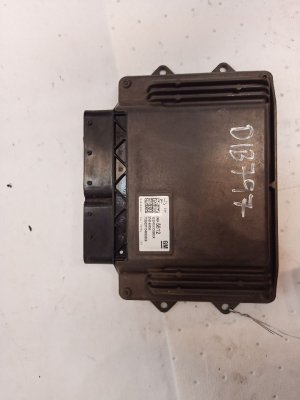
Est. part cost: $150-$400 - Body Control Module (BCM) or Remote Control Door Lock Receiver (RCDLR) Issue ⚪ Low Probability → Shop Keyless Entry Receiver While less common, the control modules themselves can fail. TSB PIC5650M, which lists B3055, points to intermittent issues that can sometimes be traced back to the control modules. The RCDLR for the C7 is located in the rear trunk area, behind the trim near the driver's side courtesy light, not behind the dash as in some other GM vehicles.
How to confirm: This requires a professional diagnosis with a GM-compatible scan tool (MDI/MDI2 with GDS2 software) to check for communication errors with the BCM and RCDLR, look for other DTCs, and monitor live data from the modules.
Typical fix: The fix may involve a software update or, in rare cases, replacement of the BCM or RCDLR. Module replacement requires professional programming to the vehicle's VIN.
Est. part cost: $400-$800
Rare But Worth Checking
- Wiring Harness or Antenna Issue: Corrosion or damage to the wiring between one of the six keyless entry antennas and the RCDLR can cause intermittent signal loss. This is more common on vehicles in harsh climates or if interior work (like installing sound deadening with foil backing) has been performed, potentially disturbing or shielding an antenna. A visual inspection of connectors and antenna locations may reveal issues.
- Low Vehicle Battery Voltage: → Shop Vehicle Battery While often misdiagnosed as the primary cause, a very low main vehicle battery can cause various electronic modules, including the BCM and RCDLR, to behave erratically and set codes like B3055. One technician on Reddit noted that stable 12V power is required to even program a new key, highlighting the importance of a healthy main battery. A known C7 issue involves a small black ground wire on the negative battery terminal becoming loose or damaged during battery replacement, which can cause widespread electronic problems.
Diagnosis Steps
- Check for a security light or "No Fob Detected" message on the dash.
- Remove all potential sources of Radio Frequency Interference (RFI) from the vehicle. This includes phone chargers, dash cams, toll passes, and other electronic devices plugged into USB or 12V outlets. If the problem persists, physically disconnect any aftermarket accessories like satellite radio tuners or radar detectors.
- Attempt to start the vehicle using the backup method: place the key fob in the transmitter pocket located on the side of the steering column with the buttons facing up.
- If the car starts using the backup pocket, replace the CR2032 battery in the key fob.
- If the car does not start with a new fob battery, try the spare key fob. If the spare works, the original fob is faulty.
- If neither fob works and RFI has been ruled out, check the main vehicle battery voltage to ensure it is above 12.4V. Inspect the negative battery terminal for a small, secondary black ground wire and ensure it is tight and undamaged.
- If all the above steps fail, the vehicle needs professional diagnosis. A technician will use a scan tool (GM MDI/MDI2 with GDS2 software) to read codes from the Body Control Module (BCM) and Remote Control Door Lock Receiver (RCDLR), check for communication, and test the keyless entry antenna and receiver circuits.
Parts You'll Likely Need
- Key Fob Battery
(OEM #CR2032)— This is the most common and simplest fix when the key fob signal is weak.
Trusted brands: Energizer, Duracell, Panasonic
OEM price range: $5-$10
Aftermarket price range: $2-$5 - Keyless Entry Transmitter (Key Fob)
(OEM #23465951, 22779880 (5-button w/ remote start); 23465955, 22816266 (6-button convertible w/ remote start))— If the fob's internal electronics fail, it must be replaced and programmed.
Trusted brands: ACDelco (GM Genuine)
OEM price range: $150-$300
Aftermarket price range: $50-$150 - Body Control Module (BCM)
(OEM #13594697, 23465732, 9042573 (Part numbers can supersede; verify with VIN))— In rare cases, the BCM itself fails and can no longer process the signal from the key. This is a last resort replacement that requires programming.
Trusted brands: ACDelco (GM Genuine)
OEM price range: $400-$600
Aftermarket price range: $250-$450
Related Codes That Often Appear With This One
- B3060 — Also related to the transponder key system, often indicating a general failure within the immobilizer circuit. It is listed alongside B3055 in TSB PIC5650M.
- B3935 — Relates to the transponder learning process, suggesting the car is having trouble programming or recognizing a key. It is also listed in TSB PIC5650M.
- C0750, C0755, C0760, C0765, C0775 — These are Tire Pressure Monitor (TPM) sensor codes. The TPM system also uses RF signals, and significant RFI can disrupt both the keyless entry and TPM systems simultaneously, as noted in TSB PIC5650M.
Technical Service Bulletins (TSBs) & Recalls
- PIC5650M: Diagnostic Tip - Security Light On Intermittently / No Crank/No Start Or Start Stall / Keyless Access Vehicle. This TSB is the most relevant document, explaining that RFI is a primary cause for B3055 and related symptoms. It lists numerous GM vehicles affected by this issue.
Platform-Specific Known Issues
- A known issue, documented in GM TSB PIC5650M, involves intermittent no-start conditions caused by Radio Frequency Interference from aftermarket devices like phone chargers, USB power banks, and even non-OEM LED lighting. Before any parts are replaced, removing these devices is the primary diagnostic step.
- The C7 Corvette has multiple (up to six) keyless entry antennas distributed throughout the car. One is in the center console, one behind the instrument panel, one in each rear quarter panel, one in the rear compartment, and one in the rear fascia. Damage or obstruction to these, for example during the installation of foil-backed sound deadening material, can block the fob signal and cause this code.
Scan Tool Commands That Help
- GM GDS2 (Global Diagnostic System 2): Immobilizer Learn (via SPS) — This function, accessed through the online GM Service Programming System (SPS), is required to program new or existing keys to the vehicle's immobilizer system after a key or module (BCM/RCDLR) replacement.
- GM GDS2: Add or Replace Key Fobs — This specific routine within the RCDLR module configuration is used to add a new key fob to the car's memory. The path is typically Module Diagnostics > Remote Control Door Lock Receiver > Configure/Reset Functions > Add or Replace Key Fobs.
- GM GDS2: Data Bus Diagnostic Tool — This tool, used with GDS2, can help verify if all modules on the CAN bus are communicating correctly. This is useful for diagnosing 'U' codes that may appear alongside B3055, pointing to a broader communication problem rather than just a key issue.
Wiring & Ground Locations
- RCDLR (Remote Control Door Lock Receiver) — In the rear trunk compartment, located behind the driver's side (left) interior trim panel, near the courtesy light.. This is the primary module that receives the signal from the key fob. A loose connector or damaged wiring at this location will directly cause a B3055 code.
- BCM (Body Control Module) — In the passenger side footwell, under the carpet and a protective panel.. The BCM is the master controller that communicates with the RCDLR. A bad connection, water intrusion, or faulty ground at the BCM can cause a wide range of electrical issues, including this code.
- Battery Negative Terminal Ground Wire — At the main vehicle battery in the trunk. A small, secondary black wire is attached to the main negative battery cable clamp.. This small wire is a critical ground for various electronic modules. It is often disturbed or damaged during battery replacement. A loose connection here can cause intermittent and difficult-to-diagnose electronic faults throughout the vehicle.
- G-Point (Chassis Ground) — There are multiple chassis ground points. One key location is a stud on the passenger side fender well in the engine compartment, near the air filter housing. Others are located at the base of the A-pillars and on the rear frame rails.. Corroded or loose chassis grounds are a common source of electrical gremlins on Corvettes. The RCDLR and BCM rely on clean grounds to function properly.
Real Owner Repair Stories
- Reddit user, r/Corvette (2010 C6 Corvette (similar keyless system)) — "No FOB Detected" message after a battery replacement, anti-theft alarm activating.
❌ Tried (didn't work) Charging the new car battery, Replacing key fob batteries, Using the backup slot, Key reprogramming procedures, Replacing the RCDLR module
✅ What actually fixed it The root cause was severe radio frequency interference. The final fix was to completely physically disconnect an aftermarket SiriusXM radio unit and a radar detector. Simply pulling the fuses for these devices was not sufficient to stop the interference. - CorvetteForum user (C6 Corvette) — Intermittent "No Fob Detected" message for over a year.
❌ Tried (didn't work) Multiple fob battery changes, Reprogramming fobs
✅ What actually fixed it The user finally replaced both key fobs with new OEM units and had them programmed. They noted the old fob's casing was loose, and squeezing it would sometimes allow the car to start, indicating an internal connection failure within the fob itself. - CorvetteForum user (C6 Corvette) — Frequent, intermittent issues with both the key fobs and the TPMS system acting up.
❌ Tried (didn't work) Standard RFI checks (removing chargers)
✅ What actually fixed it The user removed the center console and discovered the wires leading to the 12V power outlets were unshielded. They wrapped these wires in aluminum foil to shield them from emitting RFI, which resolved the intermittent fob and TPMS problems.
Model Year Variations Within This Range
- 2014-2020: The diagnostic tool required for the C7 generation is the GM MDI or MDI2 interface running GDS2 software. This is different from the Tech 2 scanner used on the C6 (pre-2014) generation. Furthermore, critical security functions like key programming require an online connection via the Service Programming System (SPS), and cannot be done fully offline with just GDS2.
Helpful Videos
Used OEM Parts in Stock
New Aftermarket Parts Available

The information in this article is provided for general reference and educational purposes only. Vehicle specifications, procedures, and part compatibility can vary by production date, trim level, and region. Always consult your vehicle's factory service manual and verify part numbers before purchasing or performing repairs. Safety-critical components such as airbags, seat belts, and braking systems should be installed by a qualified professional.
- Chevrolet CORVETTE:
- 🧭 Diagnostic Flowchart
- 🎬 Helpful Videos
- 🛍️ Shop This Part
- What's Unique About the 2013-2020 Chevrolet CORVETTE
- Symptoms You May Notice
- Most Likely Causes
- Rare But Worth Checking
- Diagnosis Steps
- Parts You'll Likely Need
- Related Codes That Often Appear With This One
- Technical Service Bulletins (TSBs) & Recalls
- Platform-Specific Known Issues
- Scan Tool Commands That Help
- Wiring & Ground Locations
- Real Owner Repair Stories
- Model Year Variations Within This Range
- 🎟️ Get 5% Off