

B3055 on 2015-2020 Chevrolet Impala: Key Not Detected, No Start Causes and Fixes
Code B3055 on a 2015-2020 Chevy Impala means the car's security system cannot detect or read the transponder in the ignition key. This is often caused by a faulty key fob, a dead key fob battery, or radio frequency interference. The most common fix is replacing the key fob and having it programmed, which can cost between $150 and $400.
- B3055 means your Impala's anti-theft system doesn't recognize your key, so it won't let the engine start.
- Before suspecting expensive parts, try your spare key, replace the key fob battery, and remove all aftermarket phone chargers and electronics from the car.
- If a new key is needed, it must be professionally programmed to your vehicle; this is not a simple DIY part swap.
- Do not mistake this security issue for a bad starter or a dead car battery, as the symptoms can be similar.
- For push-button start models, placing a fob with a weak battery in the designated transmitter pocket can serve as an emergency start method.
What's Unique About the 2015-2020 Chevrolet IMPALA

The tenth-generation Impala (2014-2020), built on the GM Epsilon II platform, uses a keyless access system that is exceptionally sensitive to radio frequency interference (RFI). GM has issued multiple technical service bulletins, like PIC5650M and its predecessors, that highlight how common aftermarket devices can 'jam' the 125 kHz, 315 MHz, or 433 MHz signals between the key fob and the car. Sources of interference explicitly called out by GM include non-OEM phone chargers, aftermarket LED lights, other vehicle fobs on the same keychain, building access cards, and even toll passes. This is a frequent point of confusion, as the intermittent no-start may not be a faulty part but rather an external electronic device interfering with the system.
Diagnostic Flowchart

Tap your situation to follow the diagnostic path that matches what you're seeing on this vehicle.
Symptoms You May Notice

- Engine will not crank or start
- Engine starts and immediately stalls
- Security indicator light is illuminated or flashing on the dashboard
- "No Fob Detected" or "Theft Attempted" message on the Driver Information Center (DIC).
- "Service Theft Deterrent System" message on the DIC.
- Keyless entry (RKE) functions work poorly or not at all
- Starter Motor
- Vehicle Battery
Most Likely Causes

- Faulty or Damaged Key Fob 🔴 High Probability → Shop Keyless Entry Transmitter Key fobs are easily damaged from being dropped or exposed to moisture, and the internal transponder chip can fail. A Reddit thread on r/Justrolledintotheshop detailed a technician's experience where a customer's car was towed for a no-start with code B3055; the key fob was physically broken with the blade separated and microswitches missing. Programming a new key completely resolved the issue after a weak vehicle battery was also replaced.
How to confirm: Try starting the vehicle with a spare key. If the spare key works consistently, the original key is faulty. A professional can also test the key's transponder signal.
Typical fix: Replace the key fob and have the new one professionally cut and programmed to the vehicle. 🎬 See how a professional programs a new smart key.
Est. part cost: $70-$200 - Radio Frequency Interference (RFI) 🟡 Medium Probability As noted in TSB PIC5650C and PIC5650K, these vehicles are highly susceptible to RFI. The issue is so common that GM explicitly warns technicians not to replace parts until interference is ruled out. Common sources include cheap aftermarket phone chargers (especially those plugged into 12V outlets), non-OEM LED lights, other vehicle keys/fobs, building/gate access cards, and toll passes.
How to confirm: Remove all other keys, fobs, and aftermarket electronic devices (especially anything plugged into the 12V outlets) from the vehicle and its immediate vicinity. Try starting the car with only the Impala key present. If it starts, RFI was the cause. The issue may be intermittent depending on whether the interfering device is active (e.g., an LED dome light turning on).
Typical fix: Identify and remove the source of the interference. Use high-quality, well-shielded electronic accessories. Avoid keeping other fobs or access cards on the same keychain as the Impala key.
Est. part cost: $0 - Dead or Weak Key Fob Battery 🟡 Medium Probability → Shop Vehicle Battery Key fob batteries, typically a CR2032, have a finite lifespan (3-5 years) and a weak battery may not have enough power for the transponder to reply to the car's signal.
How to confirm: If the vehicle has a keyless start system, the owner's manual specifies a transmitter pocket located inside the center console storage area. Place the fob in this pocket and try to start the car. This pocket has an integrated antenna that allows the car to read the fob even with a very weak battery. If it starts, the battery is the problem.
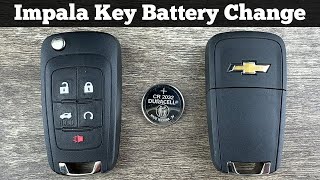
Typical fix: Replace the CR2032 battery inside the key fob. 🎬 Watch: Easy step-by-step guide to replacing your key fob battery.
Est. part cost: $2-$10 - Faulty Body Control Module (BCM) or Keyless Entry Control Module (KCM) ⚪ Low Probability → Shop Keyless Entry Module While less common, the module responsible for reading the key can fail internally due to voltage spikes or component failure. Replacement requires expensive programming.
How to confirm: This requires advanced diagnostics with a professional scan tool to check for communication with the module and to verify it is receiving power and ground as per the service manual diagnostic steps. A shop may charge $100-$200 for diagnostics alone.
Typical fix: Replace the faulty module and program the new one to the vehicle's VIN and keys. A pre-programmed module can sometimes be sourced from specialty suppliers to avoid dealer programming fees.
Est. part cost: $250-$550
Rare But Worth Checking
- Incorrect Key Usage (Flip Keys): A GM bulletin (PIT5030E) notes that on models with a flip-out key, if the key is not fully extended and locked straight, it can be misaligned in the ignition cylinder. This prevents a proper read of the transponder chip and can set a B3055. Ensure the key is fully extended before inserting it.
- Faulty Ignition Lock Cylinder/Antenna: → Shop Ignition Switch The exciter coil (antenna) that energizes the key's transponder is located around the ignition lock cylinder. A break in this coil's wiring or an internal failure can prevent it from powering the key chip. On a related GM vehicle, a user reported that tapping the dashboard near the ignition switch would sometimes allow the car to start, suggesting a loose connection in this area was the cause of their B3055 code.
Diagnosis Steps
- Check for a security light on the dash and any messages in the Driver Information Center.
- Test the battery in the key fob. Replace if voltage is low (typically below 3.0V).
- If you have a spare key, try to start the vehicle with it. If it works, the primary key is the issue.
- Remove all potential sources of Radio Frequency Interference (RFI) from the vehicle, including other keys, fobs, aftermarket chargers, and LED lights. Retest.
- For push-to-start models, place the key fob in the transmitter pocket located inside the center console storage area and attempt to start the engine. If it starts, the key fob battery is weak or there is RFI.
- For models with a physical key, ensure the key is fully extended and straight before inserting it into the ignition.
- If the issue persists, use a professional scan tool to read live data from the Theft Deterrent Module (TDM) or Body Control Module (BCM) to see if it recognizes a key is present.
- If no key is ever detected, a technician should inspect the wiring to the theft deterrent module. This involves disconnecting the module and testing for B+ voltage on the power circuit and less than 10 ohms of resistance on the ground circuit. 🎬 Watch: Professional diagnostic walkthrough for a B3055 no-start code.
- The signal circuit between the module and the BCM can also be tested for shorts to voltage or ground.
- If all wiring and keys are good, professional diagnosis is required to confirm module failure before replacement.
Parts You'll Likely Need
- Keyless Entry Remote Fob (5-Button Flip Key)
(OEM #13504199, 13500221, 23335584, 13587072 (FCC ID: OHT01060512))— The internal transponder chip fails or the fob gets physically damaged, which is the most frequent cause of this code when RFI and battery issues are ruled out.
Trusted brands: ACDelco (OEM), Strattec
OEM price range: $100-$200
Aftermarket price range: $50-$120 - Key Fob Battery
(OEM #CR2032)— The battery provides power for the transponder to communicate with the vehicle. A weak or dead battery is a simple and common cause for the 'No Fob Detected' symptom.
Trusted brands: Duracell, Energizer, Panasonic
OEM price range: $5-$10
Aftermarket price range: $2-$5 - Body Control Module (BCM)
(OEM #22915542 (Fits 2013-17 models, verify by VIN))— A rare but possible cause. The BCM is the central computer for the security system. A failure here can prevent key recognition. Replacement requires professional programming to match the vehicle's VIN and security information.
Trusted brands: ACDelco (OEM)
OEM price range: $300-$550
Aftermarket price range: $150-$300 (often requires programming)
Related Codes That Often Appear With This One
- B3060 — This code, "Unlearned Transponder Key," often appears with B3055 as it indicates a problem within the same security system, specifically that the key's signal was received but not recognized as valid.
- B3935 — This code is for a Transponder Authentication Error, indicating the module received a signal but could not validate it, which is a related fault in the same security system often triggered by the same causes like RFI.
Technical Service Bulletins (TSBs) & Recalls
- PIC5650M: The latest version of a long-running bulletin. It addresses an intermittent no crank/no start with security light on and DTCs B3055, B3060, B3935. It strongly points towards RFI as a primary cause that must be ruled out before parts replacement.
- PIC5650C: An earlier version that provides a detailed list of RFI sources, including aftermarket LED lighting, various phone chargers, USB power banks, toll passes, and other RFID cards that can 'jam' the key's signal.
- PIT5030E: Explains how an improperly extended flip-key (not locked straight) can cause a misalignment with the ignition cylinder's antenna, leading to a no-read condition and setting a B3055. It advises instructing the customer on proper key usage.
Platform-Specific Known Issues
- The 2015-2020 Impala is noted in multiple GM Technical Service Bulletins for being highly sensitive to Radio Frequency Interference from aftermarket
Mechanic-Grade Diagnostic Values
- Scan Tool Immobilizer Data PID: 'Environment Identification' — expected: Should display 'Key Detected' or similar when a valid key is in the ignition or near the antenna.. Failure: Displays 'No Key Detected' when the system fails to see the transponder.
- Scan Tool TDM Parameter: 'Transponder Key' — expected: Should read 'Present' when a learned key is turned to the ON position.. Failure: Reads 'Not Present', indicating the TDM does not see the key's transponder chip.
- Keyless Entry Antenna Coil Resistance — expected: Approximately 8 Ohms. This value is from a similar VAG system but provides a general baseline for what a healthy antenna coil should read.. Failure: An open circuit (infinite resistance) or a dead short (0 Ohms) indicates a faulty antenna.
Hidden / Shadow Codes Worth Checking
- B3055 00: This is the most common symptom byte for this code, which directly translates to 'No Transponder Modulation / No Transponder'. It confirms the module is not receiving any signal from the key chip, as opposed to an invalid signal. (see via A professional GM-compatible scan tool like a Topdon, Autel, or the dealer GDS2 can display DTCs with their symptom bytes.)
Scan Tool Commands That Help
- GDS2 (or equivalent professional scanner): Immobilizer Learn / Vehicle Theft Deterrent Learn — This function is required after replacing a key or the Body Control Module (BCM). It initiates a security access procedure, which typically takes around 10-13 minutes, to program the new component to the vehicle.
- GDS2 (or equivalent professional scanner): Add/Replace Key Fobs — Used to program additional key fobs. The function is located under the 'Remote Control Door Lock Receiver' module settings. It allows adding new fobs to the next available slot without erasing existing ones.
- GDS2 (or equivalent professional scanner): Immobilizer Data Display — This is a critical first diagnostic step. Viewing the live data stream for the immobilizer system shows parameters like 'Transponder Key' (Present/Not Present) and 'Environment Identification' (Key Detected/No Key Detected) to confirm if the module is seeing the key at all.
Wiring & Ground Locations
- Body Control Module (BCM) — On the 2015-2020 Impala, the BCM is located in the passenger-side footwell, mounted vertically on the side of the center console. It is accessible by removing the passenger-side kick panel.. The BCM is the central module for the theft deterrent system. A poor connection, corrosion at its connectors, or a bad ground can cause intermittent communication failures with the key transponder system, leading to code B3055.
- Keyless Entry Control Module (KCM) — The KCM, also known as the Remote Control Door Lock Receiver, is a separate module that works with the BCM. While its exact location can vary, it is typically found behind the dash or trim panels. A known OEM part number is 13599218.. This module is responsible for receiving the signals from the key fob. A failure or wiring issue with this specific module can prevent the key from being detected, triggering B3055.
Real Owner Repair Stories
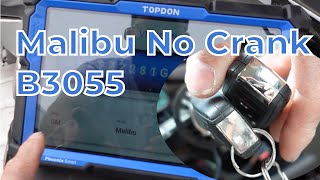
- Hands On Auto Training YouTube Channel (2015 Chevrolet Malibu (similar Epsilon II platform)) — No crank, no start, with security light on. Scan tool revealed DTC B3055 00 (No Transponder Modulation).
❌ Tried (didn't work) Clearing codes (B3055 returned immediately)., Cycling the ignition with the original key.
✅ What actually fixed it The original key's transponder was faulty. A new key was cut, the transponder chip was swapped into the new key shell, and the new key was programmed to the vehicle using an Autel AutoProPAD. This involved a 10-minute security relearn procedure which successfully resolved the code and the no-start condition.
Helpful Videos

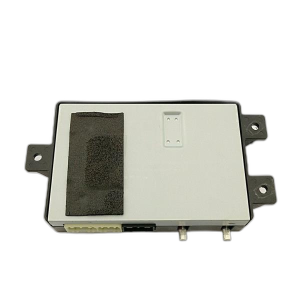
Used OEM Parts in Stock
New Aftermarket Parts Available


The information in this article is provided for general reference and educational purposes only. Vehicle specifications, procedures, and part compatibility can vary by production date, trim level, and region. Always consult your vehicle's factory service manual and verify part numbers before purchasing or performing repairs. Safety-critical components such as airbags, seat belts, and braking systems should be installed by a qualified professional.
- Chevrolet IMPALA:
- 🧭 Diagnostic Flowchart
- 🎬 Helpful Videos
- 🛍️ Shop This Part
- What's Unique About the 2015-2020 Chevrolet IMPALA
- Symptoms You May Notice
- Most Likely Causes
- Rare But Worth Checking
- Diagnosis Steps
- Parts You'll Likely Need
- Related Codes That Often Appear With This One
- Technical Service Bulletins (TSBs) & Recalls
- Platform-Specific Known Issues
- Mechanic-Grade Diagnostic Values
- Hidden / Shadow Codes Worth Checking
- Scan Tool Commands That Help
- Wiring & Ground Locations
- Real Owner Repair Stories
- 🎟️ Get 5% Off