

B3055 on 2007-2014 GMC Sierra 1500: Key and Security System Faults Explained
Code B3055 on a GMC Sierra means the truck's security system can't read the transponder chip in your key. This prevents the engine from starting. The most common fixes are trying a spare key, removing other RFID devices from your keychain, or replacing a faulty ignition key. A new key costs around $70-$150, but programming at a dealer can add to the cost.
- B3055 means your truck's anti-theft system isn't recognizing your key, which will prevent it from starting.
- Before spending any money, try your spare key and remove all other fobs or cards from your keychain to rule out a bad key or radio interference.
- If you have a flip key, make sure it's fully locked in the open position before putting it in the ignition.
- If simple steps don't work, the problem is likely the ignition switch or its wiring, and professional diagnosis is recommended.
- Do not replace the starter or battery for a no-crank condition until you have ruled out security system codes like B3055.
What's Unique About the 2007-2014 Gmc SIERRA 1500
On this generation of GMC Sierra, the Passkey III immobilizer system is sensitive to outside interference. GM has issued multiple service bulletins advising technicians to first check for Radio Frequency (RF) devices on the owner's keychain, as things like other car fobs, office key cards, or gas station payment tags can block the key's signal. TSB PIC5650M expands this to include aftermarket LED lights, cell phone chargers, and even decorative trim rings around the ignition cylinder as potential sources of RFI. Additionally, for models with a flip-style key, not having the key fully extended can cause an intermittent no-start and set this code, as documented in TSB PIT5030E.
Diagnostic Flowchart
Tap your situation to follow the diagnostic path that matches what you're seeing on this vehicle.
Generation note: This range covers the end of the second generation (GMT900, 2007-2013) and the first year of the third generation (K2XX, 2014). While the Passkey III anti-theft system operates on the same principles across these years, specific part numbers for the ignition switch, BCM, or TDM may differ. The diagnostic approach remains the same. The 2014 model year introduced a new electrical architecture (Global A) and direct fuel injection, but the fundamental Passkey III+ transponder system operation is similar.
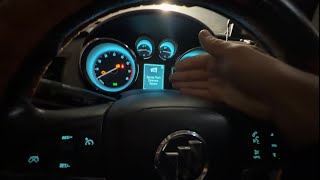
🎬 Watch: How to reset the theft deterrent system on 2014 modelsSymptoms You May Notice
- Engine will not crank (no-crank)
- Engine starts and immediately stalls.
- Security light is illuminated or flashing on the instrument cluster.
- Message on the driver information center like 'Service Theft Deterrent System' or 'Theft Attempted'.
- Replacing the starter motor when the engine doesn't crank, without checking for security codes first.
- Replacing the battery without confirming it has failed a load test.
- Replacing the BCM before thoroughly testing the keys, ignition cylinder, and wiring.
Most Likely Causes
- Radio Frequency Interference (RFI) from other devices 🔴 High Probability The Passkey III system operates at 125kHz and is susceptible to interference from other RFID devices that operate in a similar frequency range. TSB PIC5650M notes this is a primary diagnostic step before replacing parts.
How to confirm: Remove all other keys, fobs, and access cards from the keychain. Try starting the truck with only the single GMC key. Disconnect any aftermarket chargers or accessories.
Typical fix: Keep the vehicle key on a separate ring from other RFID-enabled items. Remove non-essential aftermarket electronic accessories.
Est. part cost: $0 - Defective or Damaged Ignition Key 🔴 High Probability → Shop Ignition Switch
How to confirm: Try starting the vehicle with a known-good spare key. If the spare key works reliably, the primary key is faulty. A technician can also use a tool like a VVDI Key Tool to check if the key's transponder is responding.
Typical fix: Replace the defective key. A new key must be cut and then programmed. In some cases of intermittent failure, a technician can clone the original transponder data to a new chip and place it in the key housing.
Est. part cost: $70-$250 - Incorrect Flip Key Position 🟡 Medium Probability On models with a flip-out key, if the key is not fully locked in the straight-out position, its transponder may be too far from the exciter coil in the ignition cylinder to be read properly. This is documented in TSB PIT5030E.
How to confirm: If you have a flip key, remove it, ensure it's fully extended and locked, then re-insert and try to start the engine.
Typical fix: Educate the driver on the correct usage of the flip key.
Est. part cost: $0 - Faulty Ignition Switch / Transponder Exciter Coil 🟡 Medium Probability → Shop Ignition Switch
How to confirm: If multiple known-good keys fail to start the vehicle, the problem is likely in the truck. The next step is to test the wiring and the exciter coil (part of the ignition lock cylinder assembly) that energizes the key's transponder. Physical wear can also cause the key to not turn properly, which requires cylinder replacement.
Typical fix: Replace the ignition lock cylinder assembly. A key relearn procedure is required after replacement, which can sometimes be done without a scan tool (the 30-minute relearn).
Est. part cost: $100-$285 - Wiring Harness Damage or Poor Connection ⚪ Low Probability
How to confirm: Visually inspect and test the wiring and connectors between the ignition switch, the Theft Deterrent Module (TDM), and the Body Control Module (BCM) for continuity, shorts, and proper voltage/ground using a multimeter as per the service manual. A known chafe point on this platform is the engine harness near the driver's side shock tower and ECM/TCM bracket.
Typical fix: Repair the damaged section of the wiring harness or clean/replace the faulty connector.
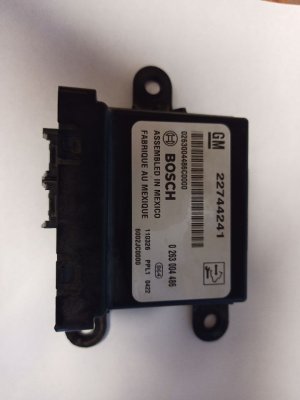
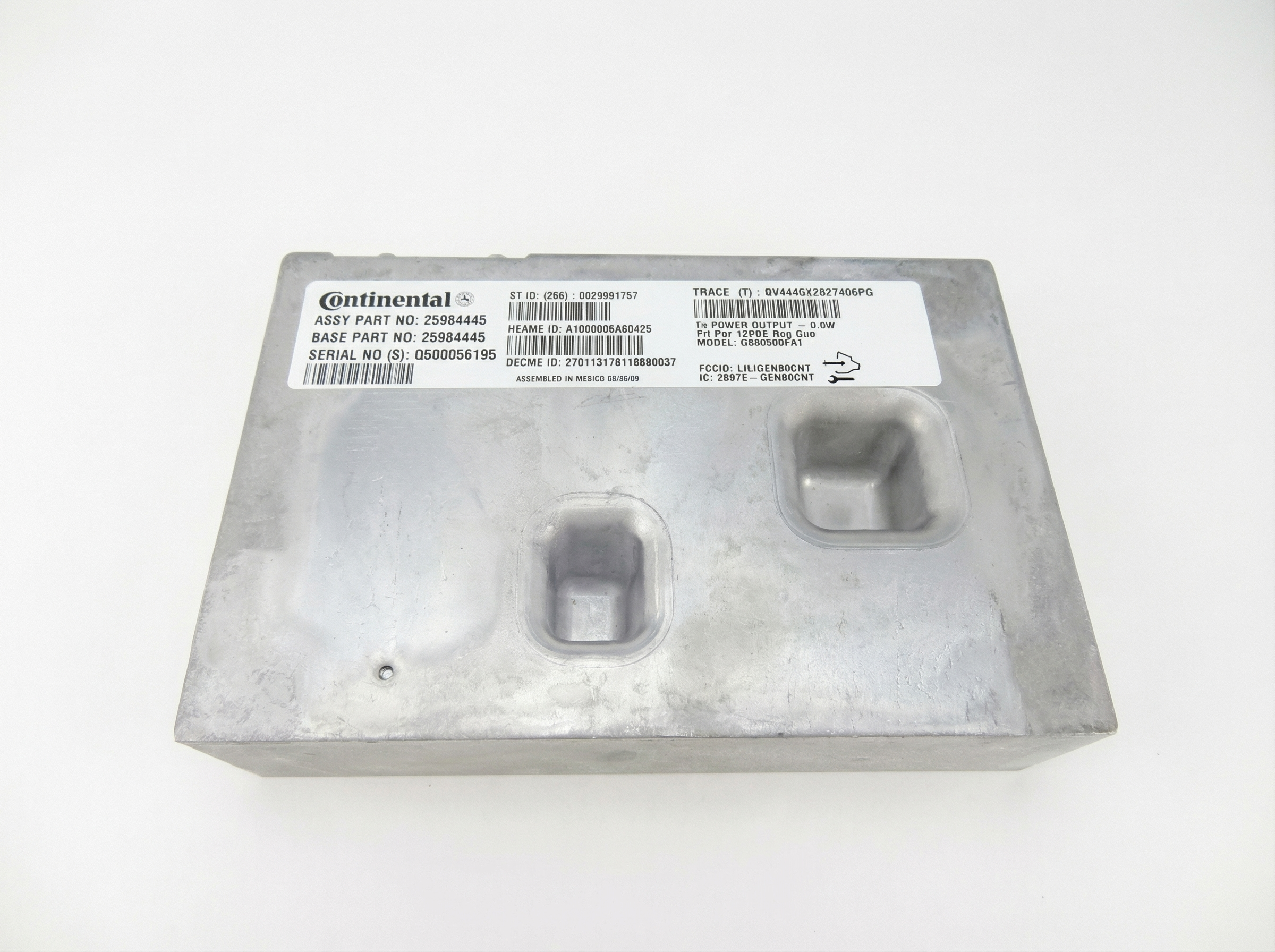
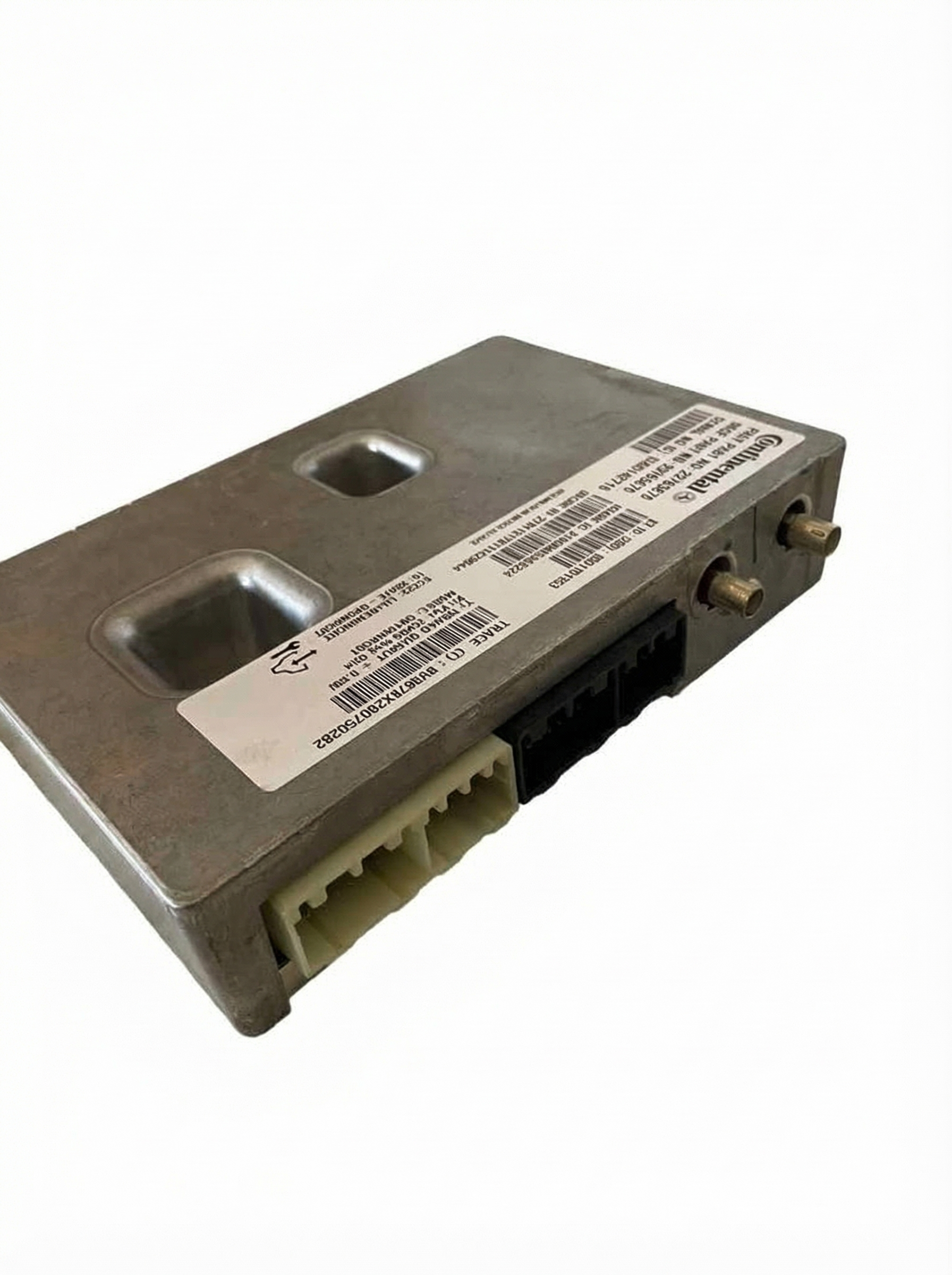
Est. part cost: $20-$300 - Failed Body Control Module (BCM) or Theft Deterrent Module (TDM) ⚪ Low Probability → Shop Anti-Theft Control Module
How to confirm: This is diagnosed by exclusion. If the keys, ignition switch, and wiring have all been confirmed to be good with a scan tool and multimeter, the module itself is the likely culprit.
Typical fix: Replace the faulty module. The new module must be programmed to the vehicle with a factory-level scan tool.
Est. part cost: $300-$600
Rare But Worth Checking
- Aftermarket LED Lights:
- Aftermarket Phone Chargers or USB Devices:
- Low System Voltage:
Diagnosis Steps
- Scan the Body Control Module (BCM) and Theft Deterrent Module (TDM) for B3055 and any other related codes. Note if the code is current or in history.
- Question the driver about and inspect the vehicle for any aftermarket electronic devices (phone chargers, LED lights, etc.) and remove them.
- Remove all other keys, fobs, and RFID cards from the keychain. Attempt to start the vehicle with only the primary key.
- If the vehicle has a flip key, ensure it is fully extended and locked in position before inserting it into the ignition.
- Attempt to start the vehicle with a known-good spare key. If the spare works, the original key is faulty.
- If no keys work, inspect the wiring and connector at the ignition lock cylinder for any visible damage or looseness.
- If a new ignition cylinder or key has been installed, perform the 30-minute key relearn procedure: Turn the key to 'ON' (not start) and wait for the security light to turn off (approx. 10 minutes). Turn the key off for 5 seconds. Repeat this process two more times for a total of three 10-minute cycles. 🎬 See a demonstration of the 30-minute key relearn procedure
- Using a multimeter, test the power, ground, and signal circuits for the immobilizer system at the TDM/BCM connector according to the service manual procedure.
- If all other components test good, the BCM or TDM is the suspected cause and requires replacement and programming.
Parts You'll Likely Need
- Transponder Ignition Key — The transponder chip inside the key head is the most common point of failure, either from damage or internal fault.
Trusted brands: ACDelco, Strattec
OEM price range: $70-$120
Aftermarket price range: $40-$80 - Ignition Lock Cylinder with Passkey
(OEM #25832354)— This part contains the exciter coil that powers the key's transponder. If the coil fails, no key will be read. It is often replaced as a complete assembly. This part number supersedes 12458191, 12533953, and 15822350.
Trusted brands: ACDelco (GM Genuine), Standard Motor Products, Dorman
OEM price range: $150-$285
Aftermarket price range: $80-$150 - Body Control Module (BCM) — The BCM is the central hub for body electronics and often integrates the Theft Deterrent Module (TDM). It's the last part to suspect after ruling out keys, wiring, and the ignition cylinder.
Trusted brands: ACDelco (GM Genuine)
OEM price range: $300-$600
Aftermarket price range: $200-$450
Related Codes That Often Appear With This One
- B3060 — This code relates to an unlearned key or a problem with the transponder signal, often set alongside B3055.
- B3935 — This is another transponder-related code that can be triggered by the same interference or hardware faults as B3055.
Technical Service Bulletins (TSBs) & Recalls
- PIC5650M: Discusses intermittent no crank/no start with security light and DTC B3055 caused by a wide range of RFI sources.
- PIT5030E: Notes that on vehicles with flip keys, not fully extending the key can cause a B3055 code.
- PIE0232: A GM engineering request to gather information on low-mileage 2013 models with this specific no-start and B3055 code.
Platform-Specific Known Issues
- A known issue, documented in TSB PIC5650M, involves intermittent no-crank or start-stall conditions with the security light on, specifically citing DTC B3055.
- TSB PIC5650M highlights that interference from RFID devices on the keychain, aftermarket LED lights, and phone chargers is a very common cause for this concern that can be misdiagnosed as a part failure.
- TSB PIT5030E notes that on vehicles with flip keys, not fully extending the key can cause a B3055 code to be stored in history due to a poor transponder reading.
Mechanic-Grade Diagnostic Values
- High Speed GMLAN Bus Resistance — expected: ~60 ohms. Failure: A reading of ~120 ohms indicates an open in the bus or a missing termination resistor (e.g., a disconnected module). A reading near 0 ohms indicates a short between the two LAN wires.
- Battery Voltage (Static) — expected: 12.6V or higher. Failure: Voltage below 12.4V indicates a discharged battery that can cause erratic module behavior.
- Battery Voltage (Cranking) — expected: Should remain above 10.0V. Failure: A drop below 10.0V during cranking indicates a weak battery or high resistance in the starting circuit, which can disrupt module communication.
Scan Tool Commands That Help
- Tech2 / GDS2: Immobilizer Data / TDM Data — Use this function to view live data from the Theft Deterrent Module. Look for parameters like 'Transponder Key Status' which should change from 'Not Present' to 'Present' when a valid key is inserted. This confirms if the TDM is seeing any key at all.
- Tech2 / GDS2: Immobilizer Learn / Add/Replace Keys — This function is required after replacing a key, the BCM, or the TDM. It initiates the security relearn procedure, which can be a 10-minute or 30-minute process depending on the components replaced.
Wiring & Ground Locations
- Engine Harness Chafe Point 1 — Driver's side of the engine bay, where the main engine harness passes the ECM/TCM bracket.. A GM service bulletin identifies a potential for the harness to rub against the sharp edge of the module bracket, which can damage wires related to various systems, including the communication lines to the BCM/TDM.
- Engine Harness Chafe Point 2 — Driver's side, where the harness passes near the upper control arm and the shock tower bolt.. Engine and suspension movement can cause the harness to chafe in these areas, potentially shorting or breaking critical data wires that the theft deterrent system relies on.
- Steering Column Harness — Inside the steering column shrouds, connecting to the ignition lock cylinder.. The wires from the transponder exciter coil run through this harness. Repeated tilting or telescoping of the steering wheel can, over many years, cause these wires to fatigue, break, or chafe, leading to an intermittent loss of signal from the key.
Real Owner Repair Stories
- YouTube channel 'ADD AUTOMOBILE SERVICES' (2013 Chevrolet Equinox (shares similar Passkey III system)) — Intermittent no-start with security light staying on. Code B3055 was present.
❌ Tried (didn't work) The original key would sometimes work and sometimes not, indicating an intermittent fault.
✅ What actually fixed it The technician used a VVDI Key Tool to read the data from the intermittently failing original key and 'cloned' it to a new super chip. This new chip was then placed inside the original key fob alongside the old one. This provided a reliable, redundant signal, permanently fixing the intermittent no-start issue. - Reddit user in r/Silverado (2014 GMC Sierra 1500) — Intermittent no-start with 'Service Theft Deterrent System' message. Would sometimes start on the second try with the security light on, then work normally on the third try. Occurred with both keys.
❌ Tried (didn't work) Owner had already replaced the transmission and both fuel pumps for other issues. The battery was also new.
✅ What actually fixed it Another user suggested the electrical portion of the ignition switch was the likely culprit, as a failing 'key in switch' signal can trigger the security system. The final fix was not posted by the original author, but this diagnosis points directly to the ignition switch assembly as the cause when multiple keys fail intermittently.
OEM Part Supersession History
12458191, 12533953, 15822350, 19168637→25832354— Part consolidation and design updates by GM over the years.
Heads up: While this part number (25832354) is listed for many GM vehicles, its primary application is for pre-2007 cars. However, the supersession chain is relevant as it shows a history of revisions to GM's lock cylinders. For the 2007-2014 Sierra, always verify the correct part number by VIN, as there are variations.
Model Year Variations Within This Range
- 2014: The 2014 model year marked the beginning of the K2XX generation, which introduced GM's Global A electrical architecture. While still using a Passkey III+ system, the BCM is a different design and communicates on a different network protocol than the 2007-2013 GMT900 trucks. Diagnostics may require GDS2 software instead of the older Tech2.
- 2010-2014 (approx.): Some vehicles in this range were equipped with a flip-style key. These keys are susceptible to causing a B3055 if not fully extended and locked, an issue not present on older solid-head keys. This was common enough to warrant a Technical Service Bulletin (PIT5030E).
Helpful Videos
We Have This Part in Stock

The information in this article is provided for general reference and educational purposes only. Vehicle specifications, procedures, and part compatibility can vary by production date, trim level, and region. Always consult your vehicle's factory service manual and verify part numbers before purchasing or performing repairs. Safety-critical components such as airbags, seat belts, and braking systems should be installed by a qualified professional.
- Gmc SIERRA 1500:
- 🧭 Diagnostic Flowchart
- 🎬 Helpful Videos
- 🛍️ Shop This Part
- What's Unique About the 2007-2014 Gmc SIERRA 1500
- Symptoms You May Notice
- Most Likely Causes
- Rare But Worth Checking
- Diagnosis Steps
- Parts You'll Likely Need
- Related Codes That Often Appear With This One
- Technical Service Bulletins (TSBs) & Recalls
- Platform-Specific Known Issues
- Mechanic-Grade Diagnostic Values
- Scan Tool Commands That Help
- Wiring & Ground Locations
- Real Owner Repair Stories
- OEM Part Supersession History
- Model Year Variations Within This Range
- 🎟️ Get 5% Off